27 Stunning best bedroom plants ideas To Copy In 2026
Your bedroom should feel like the most peaceful place in your home. Yet so many bedrooms feel flat, lifeless, and completely disconnected from nature. The right plants change everything about that. The best bedroom plants ideas do far more than add green color to a room , they purify the air you breathe, soften hard furniture lines, and create a living, breathing atmosphere that no candle or wall art can replicate on its own.
I’ve noticed that the moment one well-chosen plant enters a bedroom, the entire energy of the space shifts. The room feels warmer, quieter, and more intentional. Whether you live in a small studio apartment, a cozy rental, or a spacious master bedroom, plants work in every space and at every budget level. You do not need a green thumb or a designer’s eye to make them work beautifully.
This article covers 27 unique bedroom plant display ideas , from dramatic floor plants and trailing ceiling hangers to tiny nightstand pots and living wall installations. Each idea is practical, beginner-friendly, and visually inspiring. Interior stylists and experienced home decorators consistently recommend adding plants as the single most impactful and affordable bedroom upgrade available. You will find the perfect plant idea for your space right here. Start reading, start saving, and start transforming your bedroom today.
Snake Plant Corner Shelf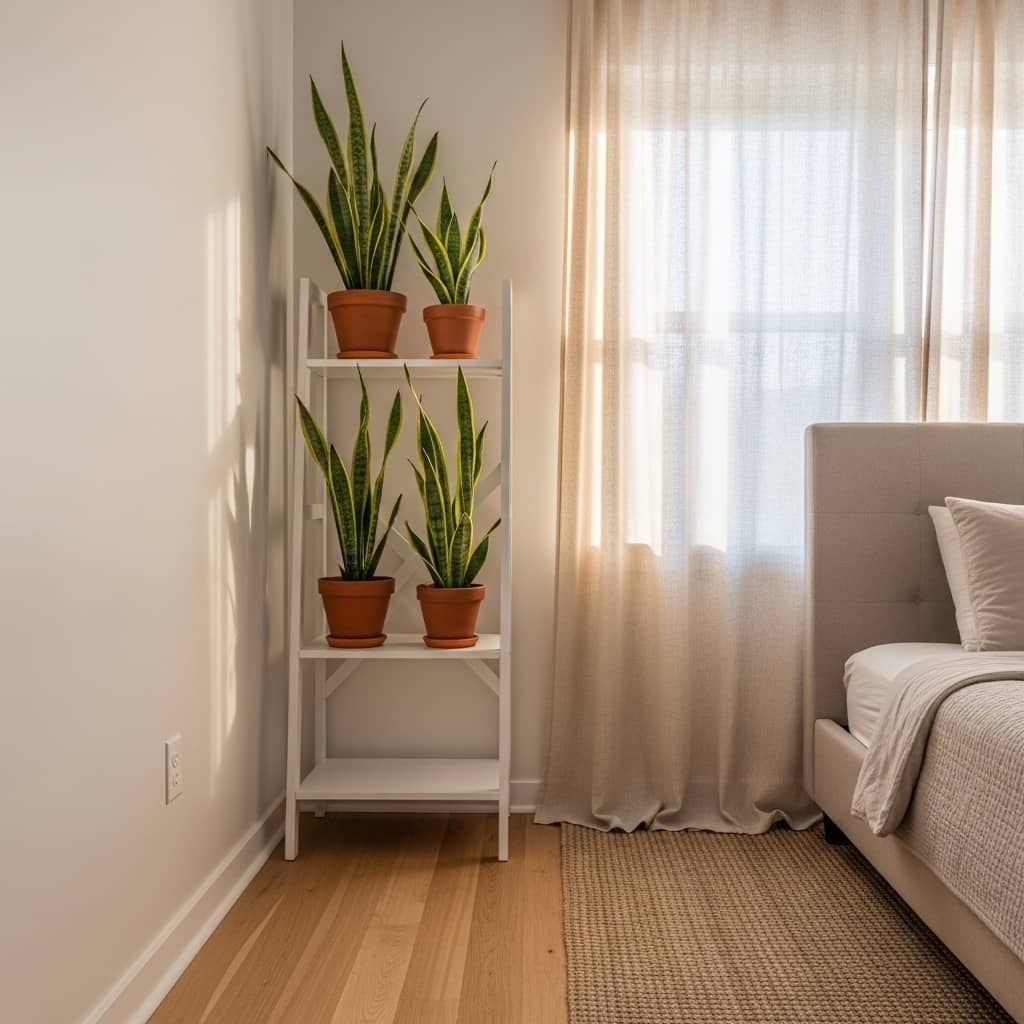
A snake plant on a corner shelf instantly makes any bedroom feel intentional. I’ve noticed that one tall snake plant in a terracotta pot adds bold vertical structure without crowding the room. This plant thrives in low light, making it a perfect fit for bedrooms that face north or have small windows. It also releases oxygen at night, which directly supports deeper, more restful sleep.
Styling a snake plant on a tiered shelf creates a layered, editorial look. You can group three pots in different heights to build visual rhythm. This plant decor idea works brilliantly in small apartments where floor space is limited. The tall, upright leaves draw the eye upward and make ceilings feel higher than they actually are.
- Purifies indoor air overnight
- Thrives in low-light bedrooms
- Adds strong vertical structure
- Perfect for small bedroom shelves
- Low-maintenance bedroom greenery
Terracotta pots pair beautifully with the snake plant’s deep green and yellow-edged leaves. I’ve seen this combination styled against cream walls in dozens of modern farmhouse bedrooms, and it always looks clean and grounded. The earthy tones of the pot balance the plant’s sharp silhouette. You get a polished result with almost zero effort.
Choosing the right pot color makes a big difference to the overall room feel. A matte black pot gives the snake plant a modern, dramatic edge. A white ceramic pot keeps the vibe soft and Scandinavian. Matching the pot to your bedside lamp or frame color ties the entire room palette together naturally.
Hanging Pothos Vines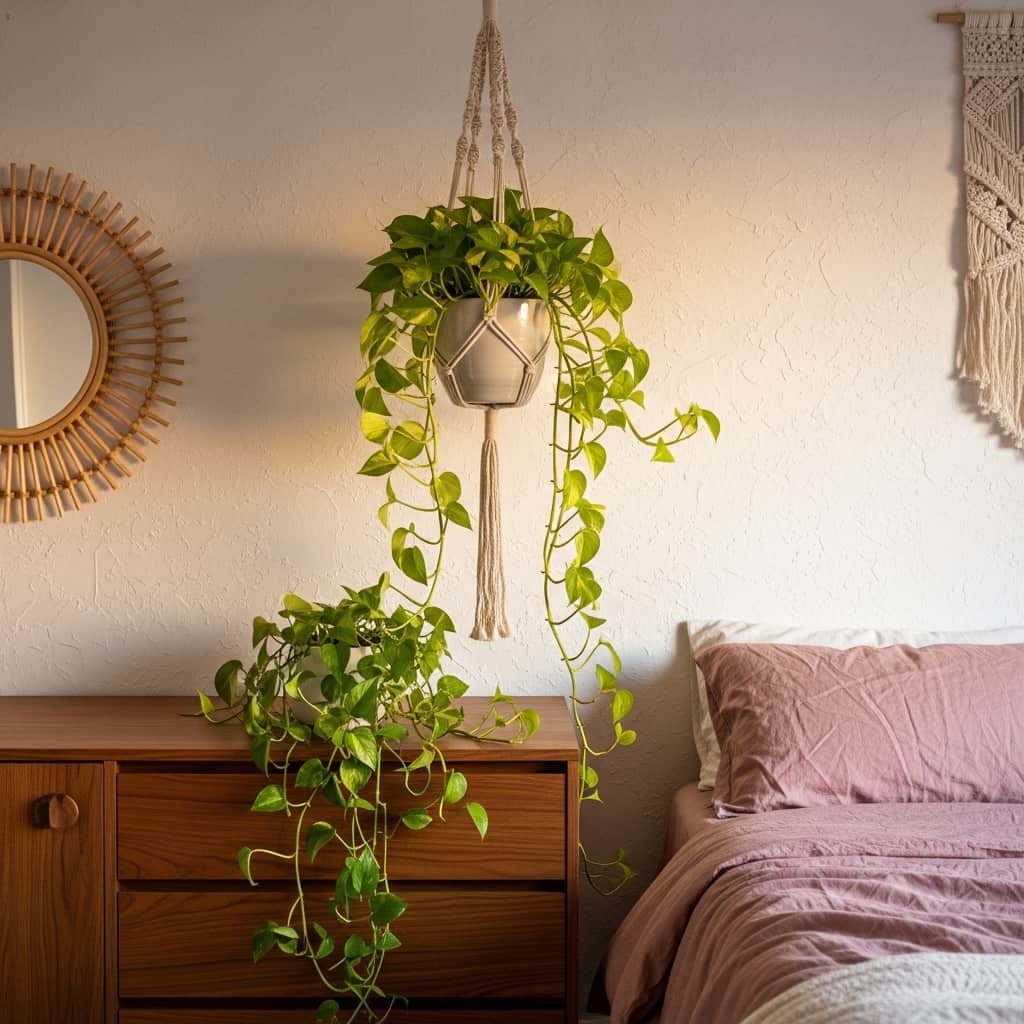
Trailing pothos in a hanging planter transforms a plain bedroom ceiling into a living, breathing focal point. I’ve tried this in narrow rooms where wall space was tight, and the result was stunning every single time. The vines cascade downward in long, glossy green trails that soften hard furniture edges. This indoor plant idea works in both boho and minimalist bedrooms with equal visual impact.
Pothos is one of the most forgiving plants you can place in a bedroom. It tolerates low light, inconsistent watering, and dry indoor air without complaint. That’s why many stylists recommend it as the first plant for beginner decorators. You hang it near a dresser or window, let the vines trail freely, and the room immediately feels warmer and more alive.
- Trails beautifully from ceiling hooks
- Tolerates low light and dry air
- Softens hard furniture lines visually
- Ideal for boho bedroom styling
- Fast-growing indoor trailing plant
A golden pothos with yellow-streaked leaves adds a burst of warm color against white or cream walls. You can let the vines drape over a dresser mirror for a romantic, layered look. Alternatively, train them along a curtain rod for an organic green canopy above the bed. This bedroom greenery idea photographs beautifully and always performs well on Pinterest.
Mixing pothos with a woven macramé hanger adds texture to the overall decor. The natural rope fibers complement the plant’s organic trailing form. I’ve noticed that adding a small terracotta saucer inside the hanger prevents water drips on the furniture below. This small practical detail protects your dresser while keeping the aesthetic completely intact.
Fiddle Leaf Fig Statement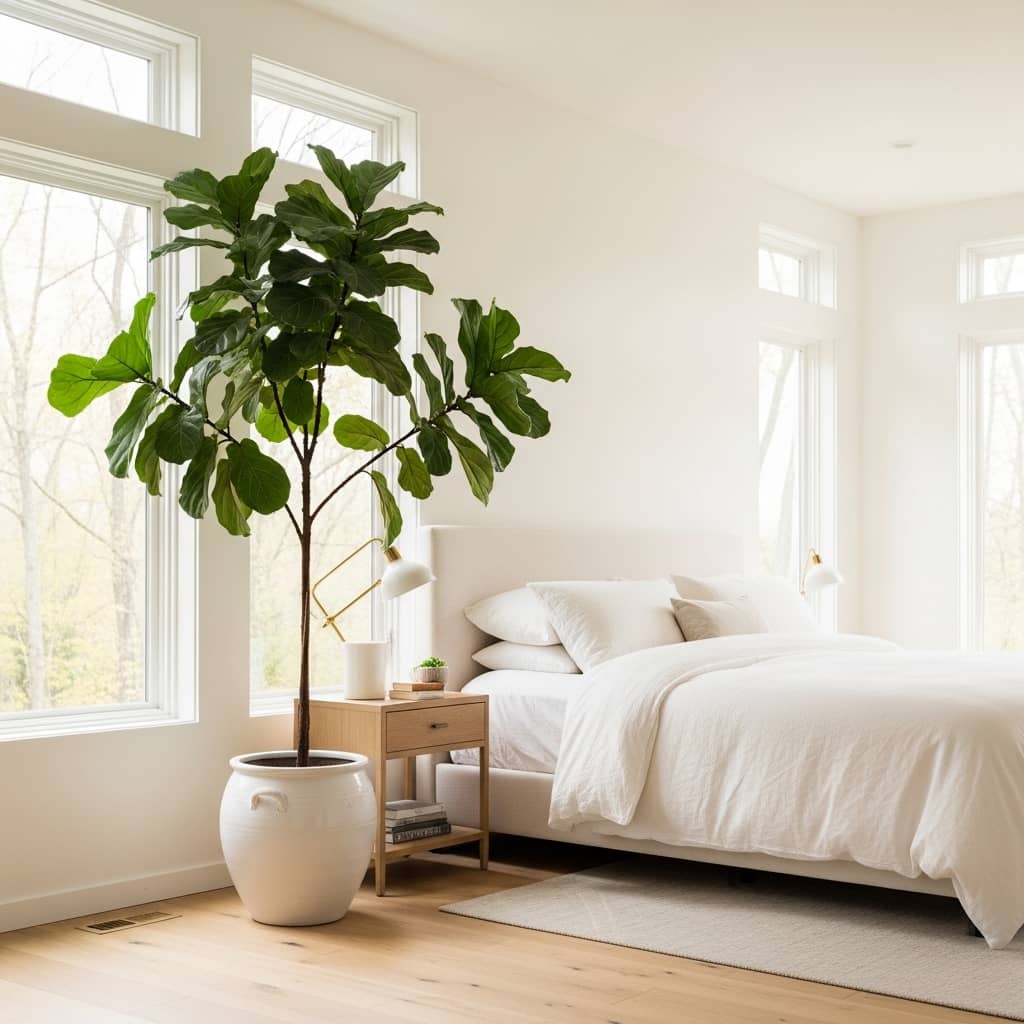
Few plants command attention in a bedroom the way a fiddle leaf fig does. Its broad, waxy, violin-shaped leaves create a lush, architectural presence that no wall art can replicate. I’ve seen this plant styled beside king-size beds in modern USA homes, and it instantly becomes the most photographed corner in the room. Place it near a tall window where it receives bright, indirect light for the best growth results.
The fiddle leaf fig works best as a single large floor statement rather than grouped with smaller plants. One well-grown specimen in a white ceramic or matte black floor pot looks like something straight out of a luxury interior magazine. This plant decor idea suits contemporary, Japandi, and transitional bedroom styles equally well. You invest in one plant and it carries the entire room’s visual weight effortlessly.
- Creates bold botanical focal point
- Suits modern and Japandi bedrooms
- Pairs best with white ceramic pots
- Loves bright, indirect window light
- Elevates minimalist room aesthetics
Caring for this plant requires some consistency, but the payoff is worth it. Water it every seven to ten days and wipe the large leaves with a damp cloth monthly. Clean leaves reflect more light and look healthier and more vibrant. I rotate mine a quarter turn weekly so every side of the plant receives equal light exposure and grows symmetrically.
Styling the fiddle leaf fig beside a reading chair or window bench creates a cozy reading nook aesthetic. You add a small side table, a warm floor lamp, and a knit throw, and suddenly that bedroom corner feels like a private retreat. That’s why many interior stylists recommend this specific corner setup when refreshing a master bedroom on a modest budget.
Lavender Bedside Pot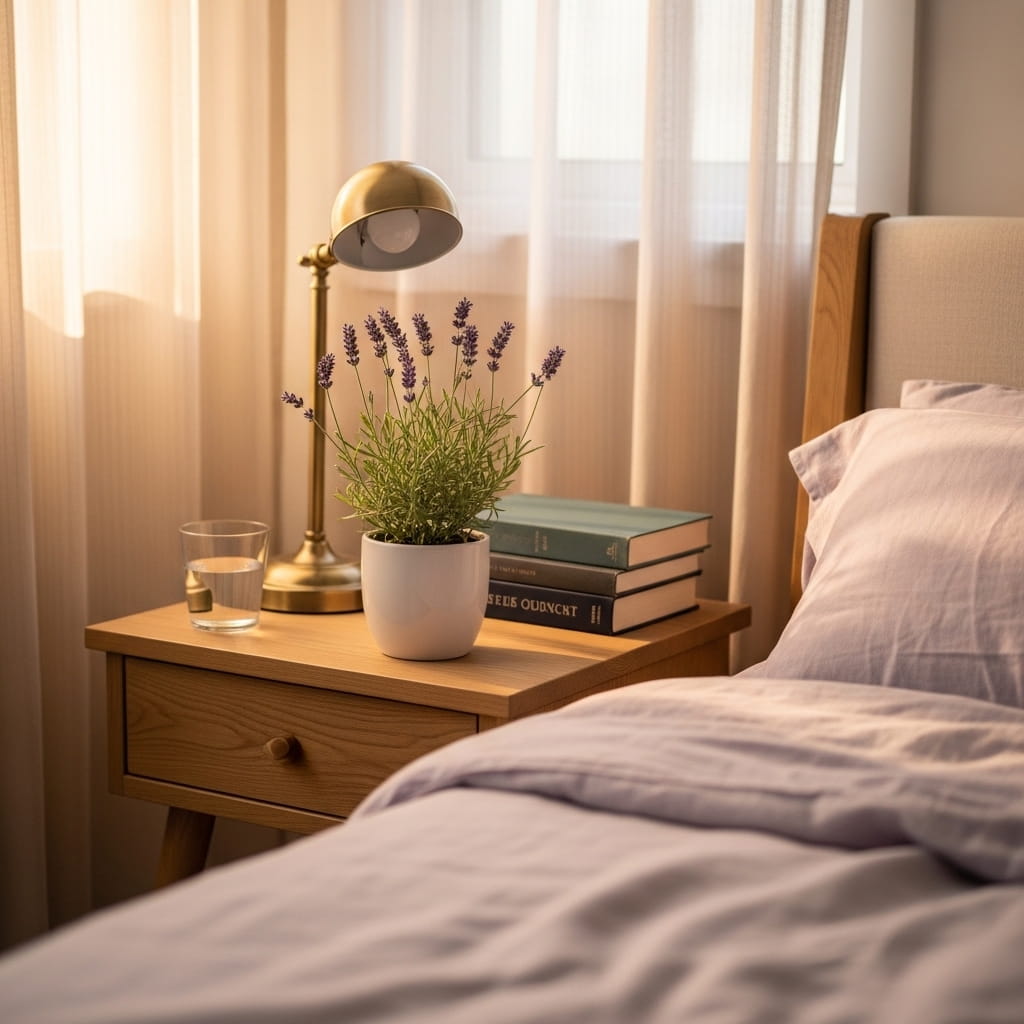
Placing a small lavender pot on your bedside table is one of the simplest best bedroom plants ideas you can try tonight. The gentle purple blooms and silver-green foliage add soft color without overwhelming the space. Lavender’s natural scent has been shown to lower heart rate and reduce anxiety, making it a genuinely functional addition to any sleep environment. I’ve kept lavender on my nightstand for two years and the difference in my sleep quality feels real.
This plant works exceptionally well in cottage-core, French country, and soft romantic bedroom styles. A white ceramic pot with a drainage hole keeps the roots healthy and the look clean. You place it directly on the nightstand beside your lamp for a layered, editorial vignette. The combination of warm lamplight and purple blooms photographs beautifully for Pinterest content.
- Naturally supports deeper sleep quality
- Adds soft color to nightstand styling
- Suits cottage-core bedroom aesthetics
- Pairs perfectly with linen bedding tones
- Small size fits any nightstand easily
Lavender needs at least four hours of direct sunlight daily to thrive indoors. Position the nightstand near a south-facing window if possible. You rotate the pot every few days so all sides receive equal light. In my experience, under-watering is better than overwatering with lavender because soggy roots kill the plant quickly.
Trimming spent lavender blooms encourages fresh new growth and keeps the plant looking neat. You can dry the cut stems in a small bundle and hang them near the window for extra fragrance in the room. This practical tip turns one plant purchase into two forms of bedroom decor simultaneously. It is a genuinely smart and budget-friendly decorating idea.
Monstera Leaf Bedhead Wall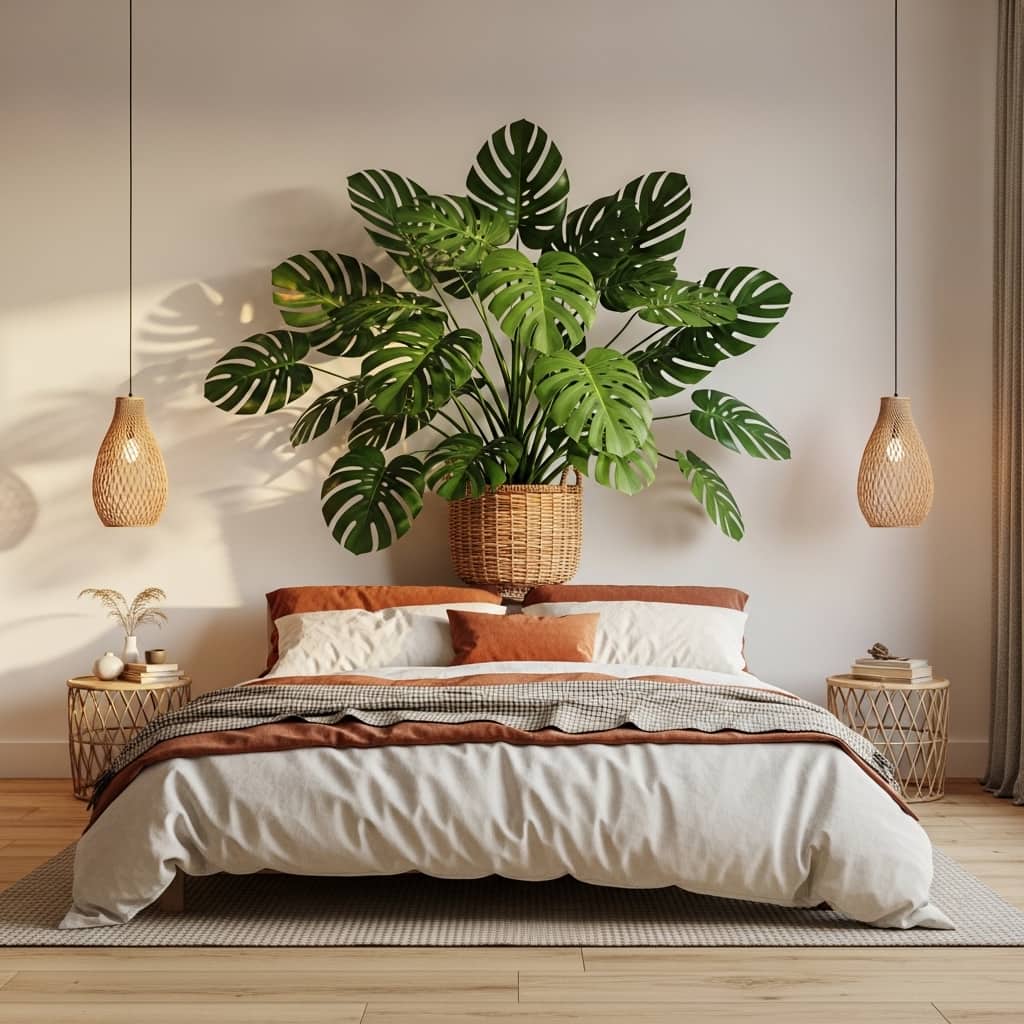
A monstera plant styled directly behind the bed head creates a dramatic natural backdrop that replaces traditional wall art entirely. The large, fenestrated leaves fan outward and upward, creating a lush canopy effect above the sleeping area. I’ve seen this exact styling choice go viral on Pinterest multiple times, and for good reason. It turns a plain bedroom wall into a living, breathing piece of organic decor.
Place the monstera in a large woven rattan basket to add texture at floor level. The combination of the natural basket fiber and the glossy, dark green leaves creates a rich layered look. This plant and pot pairing suits boho, tropical, and eclectic bedroom styles particularly well. The visual contrast between the organic leaf shapes and clean bedroom walls is what makes this idea so striking.
- Creates natural wall art behind bed
- Large leaves add bold tropical drama
- Rattan basket adds floor-level texture
- Suits boho and tropical bedrooms
- Goes viral consistently on Pinterest boards
Monstera plants grow relatively fast under the right conditions, which means the plant fills in the wall space progressively over time. You water it every one to two weeks and keep it in bright, indirect light. Wiping the leaves with a damp cloth removes dust and keeps the fenestrations looking crisp and defined. That’s why many home stylists choose monstera as their go-to bedroom statement plant.
Pairing this plant with warm pendant lighting above the bed creates dramatic leaf shadows on the wall at night. The silhouette effect adds a layer of visual interest that changes subtly as the plant grows. This is one of those bedroom plant ideas that gets better with time rather than requiring constant restyling. You plant it once and the room keeps improving on its own.
Air Plant Geometric Display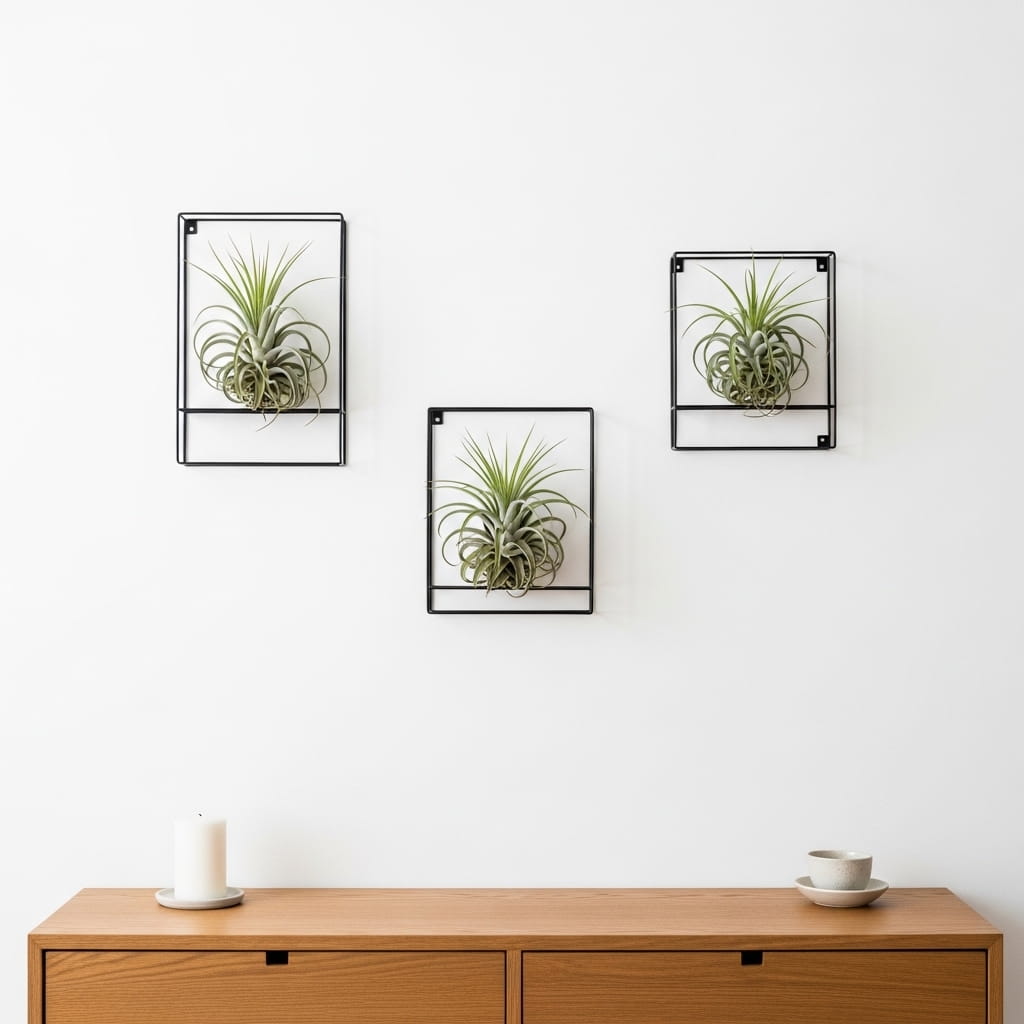
Air plants mounted inside geometric frames turn a blank bedroom wall into a modern, gallery-style green installation. Tillandsia plants require no soil whatsoever, which makes them uniquely versatile for creative wall displays. You simply soak them in water for twenty minutes once a week and they thrive without any potting mix. In my experience, this is the most beginner-friendly bedroom plant idea for people who tend to overwater traditional potted plants.
The geometric metal frame adds an architectural, sculptural element that suits contemporary and industrial bedroom styles beautifully. You mount three frames in a diagonal or triangular arrangement on the wall above a dresser or console table. Mixing frame sizes creates visual rhythm and prevents the display from looking too uniform. This indoor plant styling idea works especially well in bedrooms with limited floor space.
- Needs zero soil or traditional pots
- Mounts directly onto bedroom walls
- Perfect for small-space plant displays
- Suits modern and industrial aesthetics
- Easy weekly soaking care routine
Tillandsia air plants come in dozens of shapes and textures, from soft silver-green pups to dramatic curling forms. Mixing two to three different varieties inside your geometric frames adds botanical interest and visual depth. The textural contrast between the matte black metal frame and the feathery plant foliage is particularly eye-catching. This is the kind of detail that makes a bedroom look professionally styled on a tight budget.
Styling a single white candle or a small ceramic dish below the wall display grounds the arrangement visually. This creates a complete, curated vignette rather than a floating wall feature. I’ve noticed that adding a small driftwood piece to the display increases the organic feel of the installation. That single addition shifts the entire aesthetic from clinical to warmly artisan.
Boston Fern Hanging Basket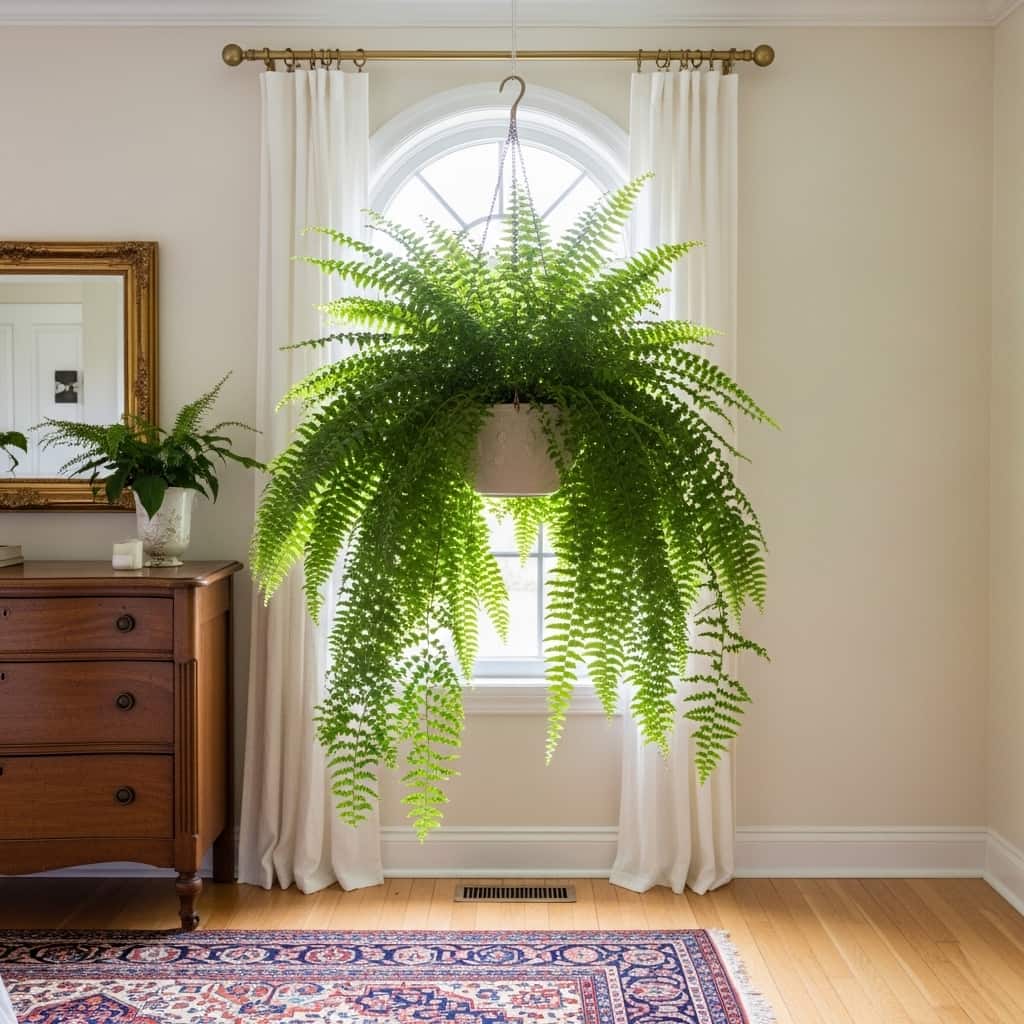
A Boston fern in a hanging basket near a bedroom window is one of the most romantic plant displays you can create at home. The feathery, arching fronds catch natural light and create a soft green curtain effect that makes the entire window area feel lush and garden-like. This fern also acts as a natural humidifier, releasing moisture into dry bedroom air during winter months. I’ve noticed a genuine improvement in morning skin hydration after adding one to my own bedroom.
Hanging the fern close to a window with bright indirect light keeps the fronds full, green, and healthy. You mist it lightly two to three times per week to maintain the humidity it needs to thrive indoors. Cream or white ceramic hanging pots look beautiful against the deep green foliage and blend naturally with most bedroom color palettes. This plant idea suits vintage, cottagecore, and maximalist bedroom styles particularly well.
- Natural humidifier for dry bedrooms
- Feathery fronds create lush window display
- Suits cottagecore and vintage aesthetics
- Pairs beautifully with brass and linen
- Misting keeps fronds full and green
Boston ferns are especially impactful in bedrooms with high ceilings where the hanging basket can be suspended at a dramatic height. You hang it from a ceiling hook using a sturdy jute rope for an extra layer of natural texture. The cascading green fronds at eye level feel deeply immersive and calming in the morning light. That visual alone is worth every bit of the care routine this plant needs.
Pairing a Boston fern with an antique wooden dresser below it creates a layered, collected aesthetic that feels intentional and editorial. You add a small vintage mirror, a stack of books, and a single candle on the dresser surface to complete the vignette. This combination photographs beautifully and consistently attracts saves on Pinterest home decor boards. It is a timeless bedroom plant styling choice with real staying power.
Aloe Vera Windowsill Row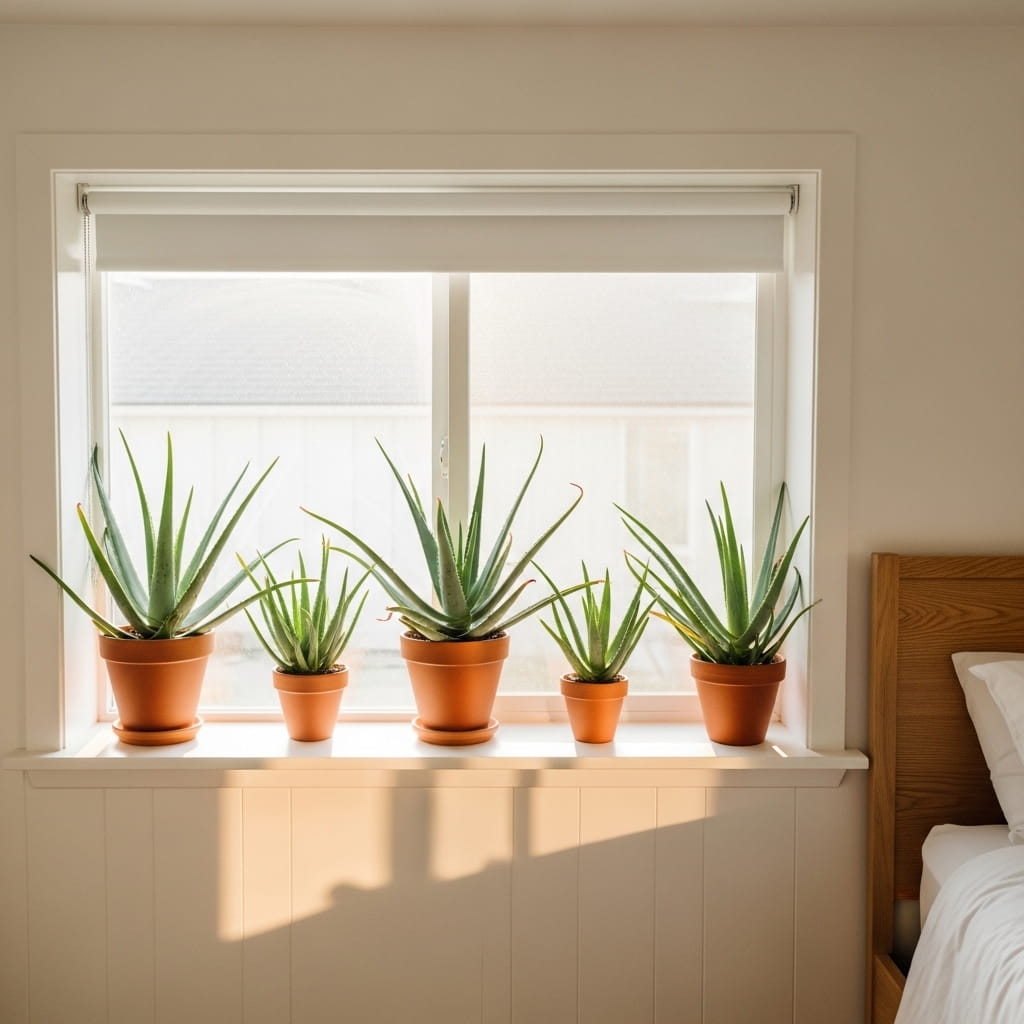
Lining up five aloe vera plants in graduated terracotta pots along a sunny windowsill creates a striking, desert-minimal display that looks both intentional and effortless. The spiky silhouettes contrast beautifully against the clean white windowsill surface, and the terracotta tones warm up the entire room palette instantly. Aloe vera plants love direct sunlight, making a south or west-facing bedroom window the ideal home for this collection. This is one of those plant display ideas that requires almost zero maintenance once it is set up correctly.
Each aloe vera plant also doubles as a practical household tool. You break off a lower leaf to access the soothing gel inside, which treats minor sunburns, dry skin patches, and skin irritation naturally. That’s why many home decorators and wellness enthusiasts treat this plant as both decor and a first-aid cabinet in one. Grouping several plants in different sizes adds visual rhythm and makes the windowsill feel like a curated collection rather than a random arrangement.
- Loves direct, sunny window positions
- Terracotta pots warm up the room palette
- Doubles as a natural skincare tool
- Perfect for desert-minimal bedroom styling
- Minimal watering needed year-round
Varying pot heights by choosing small, medium, and large aloe varieties creates a natural staggered silhouette along the windowsill. You do not need any additional accessories to make this display look complete. The plants do all the visual work on their own. In my experience, this is the best plant display idea for people who want a polished look without spending time on daily care.
Aloe vera also grows offshoots called pups over time, which you can repot and add to the collection for free. This means your windowsill display grows and evolves naturally without any additional plant purchases. Starting with three plants and letting the pups multiply is a smart, budget-friendly approach to building this display over a single growing season.
Peace Lily Bedside Glow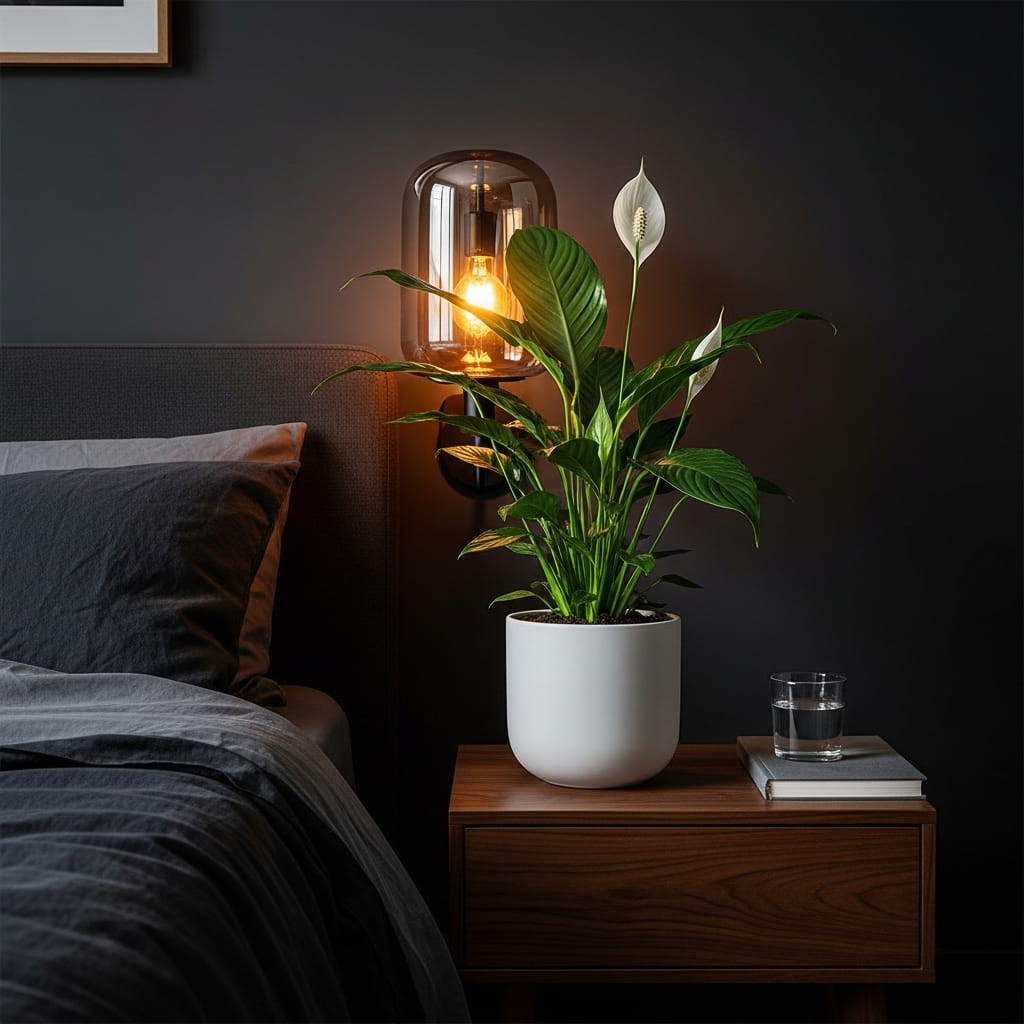
A peace lily on a dark nightstand creates one of the most atmospheric bedroom plant displays possible. The glossy dark green leaves and elegant white blooms reflect the warm glow of a bedside lamp, creating a soft, candlelit quality in the room at night. This plant is also a proven air purifier that removes benzene, formaldehyde, and carbon monoxide from indoor air. I’ve noticed that bedrooms with a peace lily consistently feel cleaner and more breathable than those without one.
This plant suits moody, sophisticated, and dark-toned bedroom aesthetics exceptionally well. Deep charcoal, navy, forest green, and slate gray bedroom walls make the white blooms pop against the background with striking contrast. The peace lily also tolerates lower light conditions, which makes it ideal for bedrooms that do not receive direct sunlight throughout the day. You water it only when the top inch of soil feels dry to maintain optimal health.
- Proven air purifier for indoor bedrooms
- White blooms glow beautifully under lamp light
- Thrives in low-light bedroom conditions
- Suits dark, moody bedroom color palettes
- Water only when top soil feels dry
Peace lilies bloom most reliably during spring and early summer, but the lush foliage provides year-round visual interest even between flowering periods. You feed the plant with a diluted liquid fertilizer once every six weeks during the growing season to encourage consistent blooming. The large, arching leaves add a graceful, organic softness to a styled nightstand that no candle or vase can replicate. This plant idea genuinely improves the room both visually and environmentally.
Pairing the peace lily with a warm amber lamp and dark linen bedding creates a cohesive, intentional bedroom aesthetic. The warm light, dark tones, and organic white bloom work together like a perfectly composed interior photograph. That’s why this specific styling combination appears so frequently in high-end home decor magazines and viral Pinterest bedroom boards. It is a genuinely beautiful and proven combination.
Spider Plant Shelf Cascade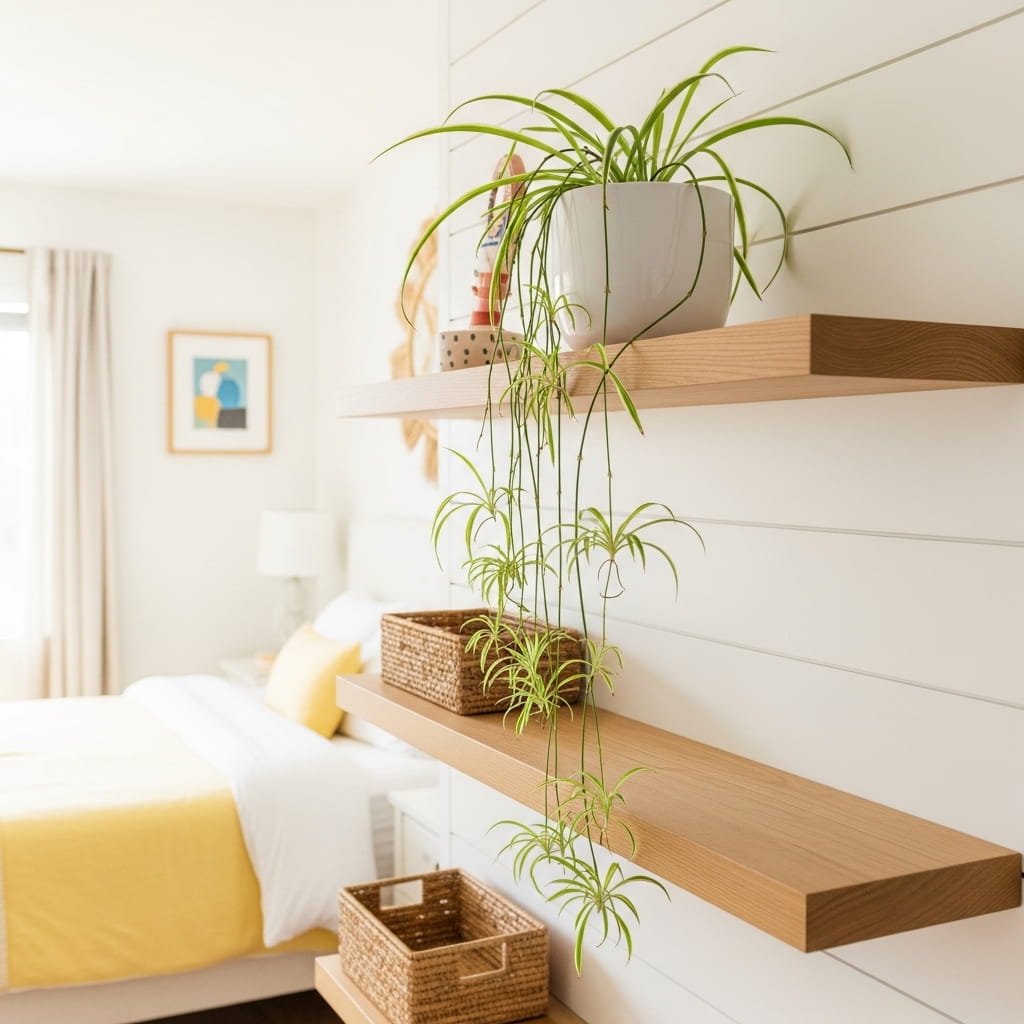
A spider plant on a high shelf with its baby plantlets cascading freely downward turns an ordinary shelf unit into a living waterfall of green. The arching stems travel outward in every direction, creating a dynamic, organic movement that static decor simply cannot replicate. I’ve noticed that this particular display always draws guests’ eyes upward, which makes low-ceilinged bedrooms feel surprisingly spacious. Spider plants also produce oxygen at night, making them a genuinely smart choice for sleeping spaces.
This plant idea suits modern farmhouse, Scandinavian, and eclectic bedroom styles with equal ease. A simple white or cream ceramic pot keeps the focus entirely on the plant’s natural movement and texture. You place it on the highest shelf so the plantlets have maximum space to hang without hitting anything below. Bright indirect light near a window keeps the leaves striped, full, and vibrant all year round.
- Produces oxygen actively at night
- Cascading plantlets create living wall art
- Baby pups grow for free propagation
- Suits farmhouse and Scandi bedrooms
- Bright indirect light keeps leaves striped
Spider plants are among the easiest plants you can propagate at home without any special tools or knowledge. You snip one of the baby plantlets from the stem and place it in a small glass of water on your windowsill. Within two weeks, roots appear and you have a brand new free plant ready for a pot. I’ve given away dozens of spider plant pups to friends who now have thriving green bedrooms of their own.
Styling two or three spider plants on a staggered floating shelf arrangement creates a full botanical wall feature with almost no investment. You mix the classic green-and-white striped variety with a solid green variety for added visual depth. The contrast between leaf colors and sizes keeps the display interesting at every angle. This is one of the most affordable bedroom plant display ideas that consistently looks expensive and intentional.
ZZ Plant Dark Corner Rescue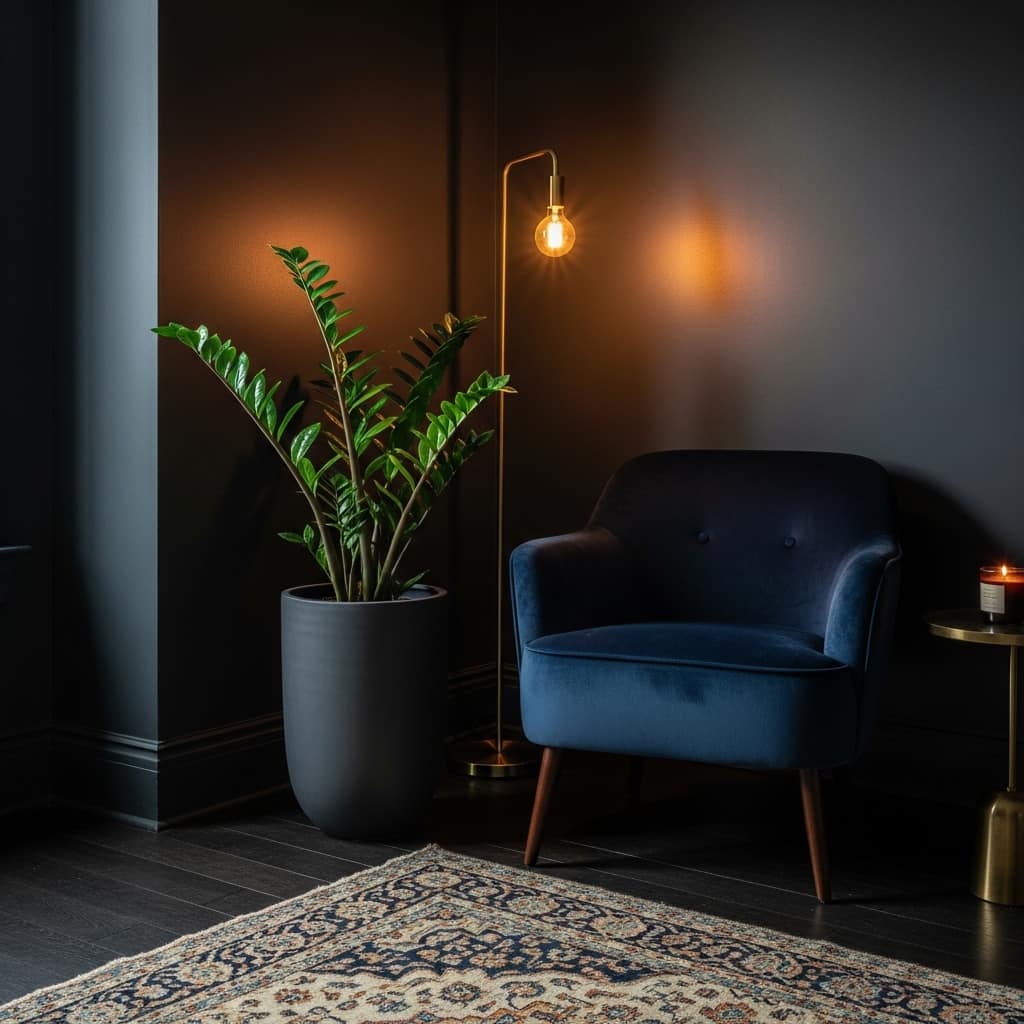
Most plants struggle in dark bedroom corners, but the ZZ plant not only survives there, it actually thrives. Its thick, glossy, deep-green leaves reflect ambient light beautifully, giving even the darkest corner a subtle glow and sense of life. I’ve placed ZZ plants in corners with zero direct sunlight and watched them grow steadily for months without any sign of stress. This plant is genuinely the best bedroom greenery solution for rooms that lack natural light.
The ZZ plant suits dark academia, moody, and sophisticated bedroom aesthetics particularly well. A tall matte charcoal or deep forest green ceramic pot amplifies the plant’s dramatic presence and ties directly into a dark-toned bedroom palette. You place the pot in the corner beside a velvet armchair or a tall floor lamp for a layered, editorial vignette. The glossy leaves catch every trace of ambient light and shimmer subtly throughout the evening.
- Thrives in near-zero natural light
- Glossy leaves reflect ambient room light
- Perfect for dark corner bedroom styling
- Suits moody and dark academia aesthetics
- Extremely drought-tolerant and low-maintenance
ZZ plants store water in their thick rhizome roots, which means they survive two to three weeks without watering without any visible damage. This makes them the ideal plant for frequent travelers or busy homeowners who cannot maintain a regular watering schedule. You water deeply once every two to three weeks and then leave the plant completely alone. In my experience, neglecting this plant is genuinely the key to keeping it healthy.
Pairing a ZZ plant with a vintage Persian rug and a brass floor lamp creates a layered, collected look that feels curated rather than accidental. The combination of rich textures , glossy plant leaves, plush velvet, woven rug fibers, and warm brass metal , creates a deeply satisfying sensory richness in the room. This specific corner setup photographs beautifully under warm evening lighting and consistently attracts saves on dark-toned bedroom boards.
Cactus Desert Vignette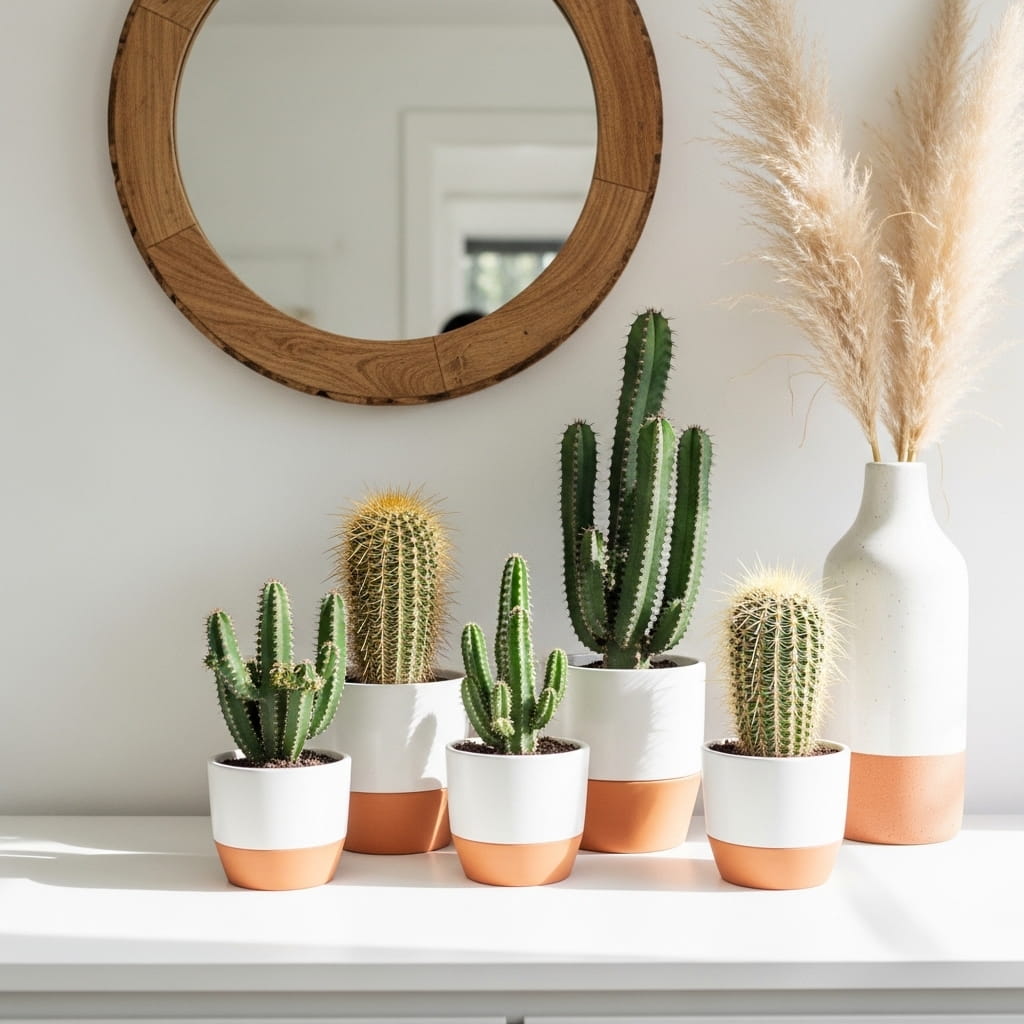
A curated cactus collection on a bedroom dresser creates a striking desert-minimal vignette that feels both artistic and effortless. Grouping five cacti in different shapes , tall columnar, round barrel, and spreading prickly pear , builds a natural sculptural arrangement that looks intentional from every angle. You vary the pot sizes and materials between terracotta, white ceramic, and matte concrete for added visual interest. This plant display idea suits Southwestern, bohemian, and minimalist bedroom styles perfectly.
Cacti are the ultimate low-maintenance bedroom plants for people with demanding schedules. You water them once every two to three weeks in summer and once a month in winter, and they ask for nothing else. They need a bright window with direct sunlight for at least four to six hours daily, so a south-facing dresser position works best. That’s why many interior stylists recommend cacti for bedroom dressers that sit directly under large windows.
- Watering needed only every 2–3 weeks
- Sculptural shapes add artistic dresser styling
- Mix pot materials for visual depth
- Perfect for sunny south-facing dressers
- Suits Southwestern and minimalist aesthetics
Pairing a cactus grouping with dried pampas grass in a tall ceramic vase creates a warm, textural desert landscape on the dresser surface. The feathery, cream-colored pampas plumes contrast beautifully with the spiky, geometric cactus forms beside them. This is one of those styling combinations that looks far more expensive than it actually costs to put together. I’ve styled this exact dresser vignette for under forty dollars and had people assume it belonged in a design magazine.
Adding a raw wood or rattan circular mirror above the cactus arrangement completes the vignette and grounds it within the broader bedroom design. The mirror reflects the plants and adds visual depth to the dresser area. A small selection of smooth river stones or a bleached skull placed among the pots adds authentic desert character to the display. Every element tells the same visual story without any single item competing for attention.
Eucalyptus Shower Bundle Bedroom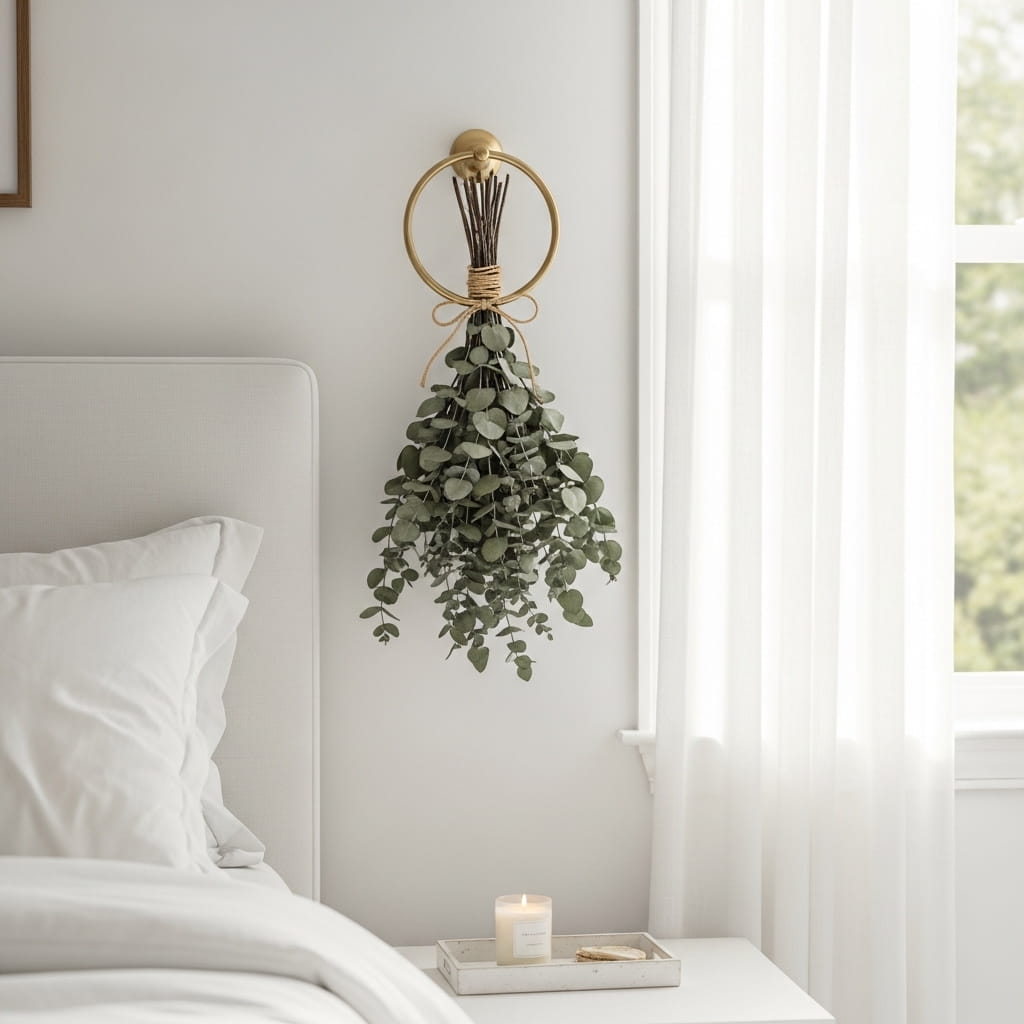
Hanging a eucalyptus bundle on a bedroom wall hook creates an instant spa-like atmosphere that engages the senses on multiple levels. The silvery-green leaves release a cool, clean, menthol-like scent that calms the nervous system and makes the air feel crisper and fresher. I’ve hung dried eucalyptus near a bedroom window for over a year, and the subtle fragrance genuinely changes how the room feels at night. This bedroom plant styling idea requires zero pots, zero soil, and almost zero maintenance.
Eucalyptus works especially well in white, cream, and neutral-toned bedroom palettes because the silvery-green leaf color complements almost every neutral shade. You bundle five to seven stems together with natural jute twine and hang them from a simple brushed gold or matte black wall hook. The organic bundle shape adds texture and movement to an otherwise flat wall surface. This is one of the simplest and most cost-effective bedroom green decor ideas available right now.
- Releases calming menthol-like fragrance naturally
- Zero soil or pot maintenance needed
- Complements white and neutral bedroom palettes
- Costs under ten dollars per bundle
- Dried stems last two to three months
Fresh eucalyptus bundles last approximately two weeks before drying naturally while still retaining their scent and visual appeal for several additional weeks. You replace the bundle once the leaves feel brittle and begin to drop. Dried eucalyptus in warm terracotta and brown tones adds a different seasonal aesthetic that suits autumn and winter bedroom styling particularly well. This single plant idea transitions naturally across all four seasons with minimal adjustments.
Styling a eucalyptus bundle beside a sheer linen curtain creates a layered, airy window display that looks effortless and thoughtfully designed. You add a small ceramic tray with a single candle on the nearby nightstand to complete the spa-inspired atmosphere. The combination of natural fragrance, soft light, and organic plant material creates a deeply relaxing sensory environment at the end of the day. It is genuinely one of the easiest bedroom refreshes you can accomplish in under five minutes.
Terrarium Glass Garden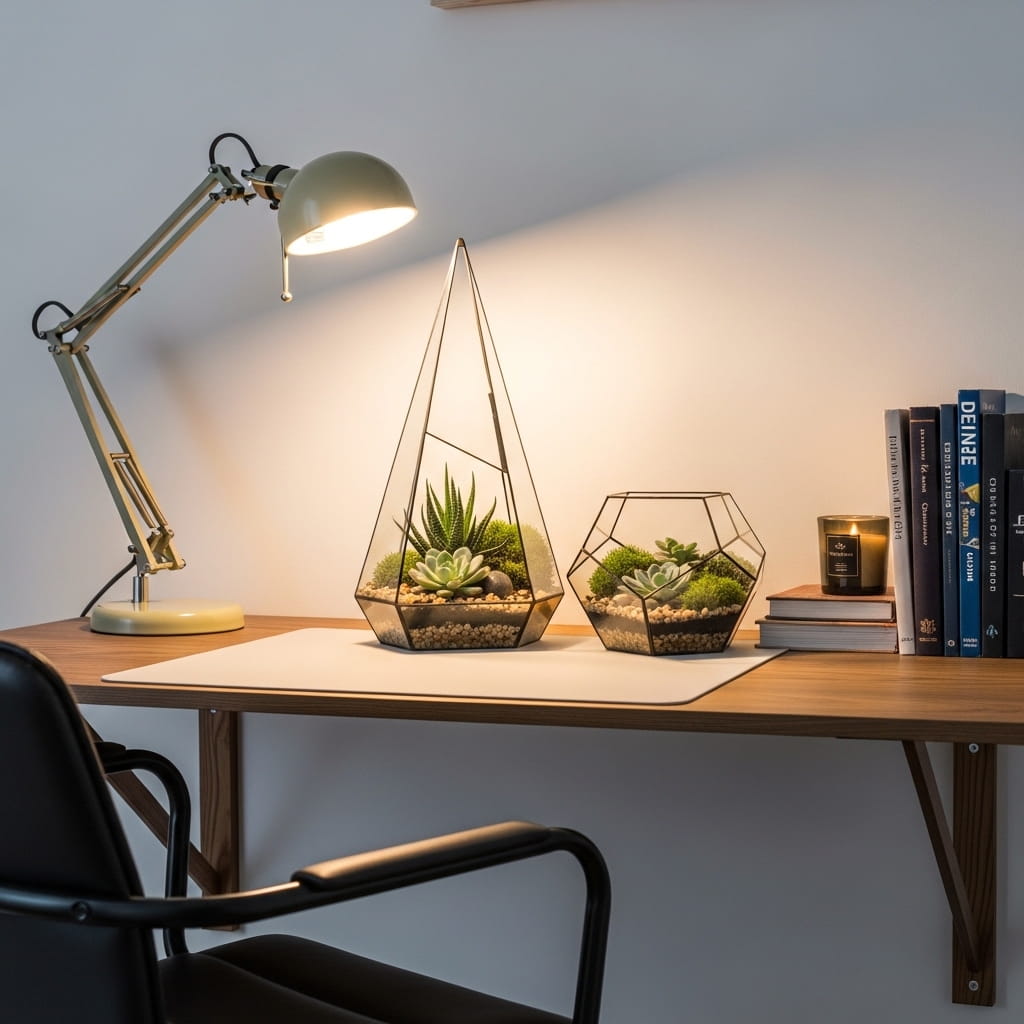
A glass terrarium on a bedroom desk turns a functional work surface into a miniature living art installation. The enclosed glass walls frame the tiny plants, stones, and moss inside like a three-dimensional botanical painting. I’ve built terrariums with succulents and mood moss for friends who said they were terrible with plants, and every single one of those terrariums is still thriving two years later. The enclosed environment creates its own microclimate that maintains moisture and reduces the need for frequent watering.
Geometric glass terrariums suit modern, eclectic, and industrial bedroom styles particularly well. A tall triangular terrarium paired with a low open bowl terrarium creates a dramatic height contrast that adds visual rhythm to the desk surface. You fill them with layers of pebbles, activated charcoal, soil, and small succulents or air plants for a complete, layered composition. Mixing textures , smooth stones, fluffy moss, and spiky succulent rosettes , inside the glass makes the display visually rich from every angle.
- Creates miniature botanical art installation
- Enclosed glass maintains its own humidity
- Geometric shapes suit modern desk styling
- Mix pebbles, moss, and succulents inside
- Perfect for small bedroom desk displays
Closed terrariums need watering only once every three to four weeks because the glass lid traps moisture and creates a mini water cycle inside. This makes them genuinely ideal for people who travel frequently or forget to water plants regularly. Open terrariums with succulents need slightly more frequent watering every one to two weeks depending on the bedroom’s humidity level. Labeling each terrarium with a small card tag adds a charming, botanical-shop aesthetic to your bedroom desk display.
Placing a terrarium in front of a warm desk lamp creates a beautiful backlit effect that highlights the plant silhouettes and glass geometry. The warm light bounces off the pebble layers and creates a jewel-box glow that looks particularly beautiful during evening hours. This is a bedroom plant idea that genuinely looks better at night than during the day. It rewards you with a different and equally beautiful display depending on the time of day and lighting conditions in your room.
Chinese Evergreen Color Pop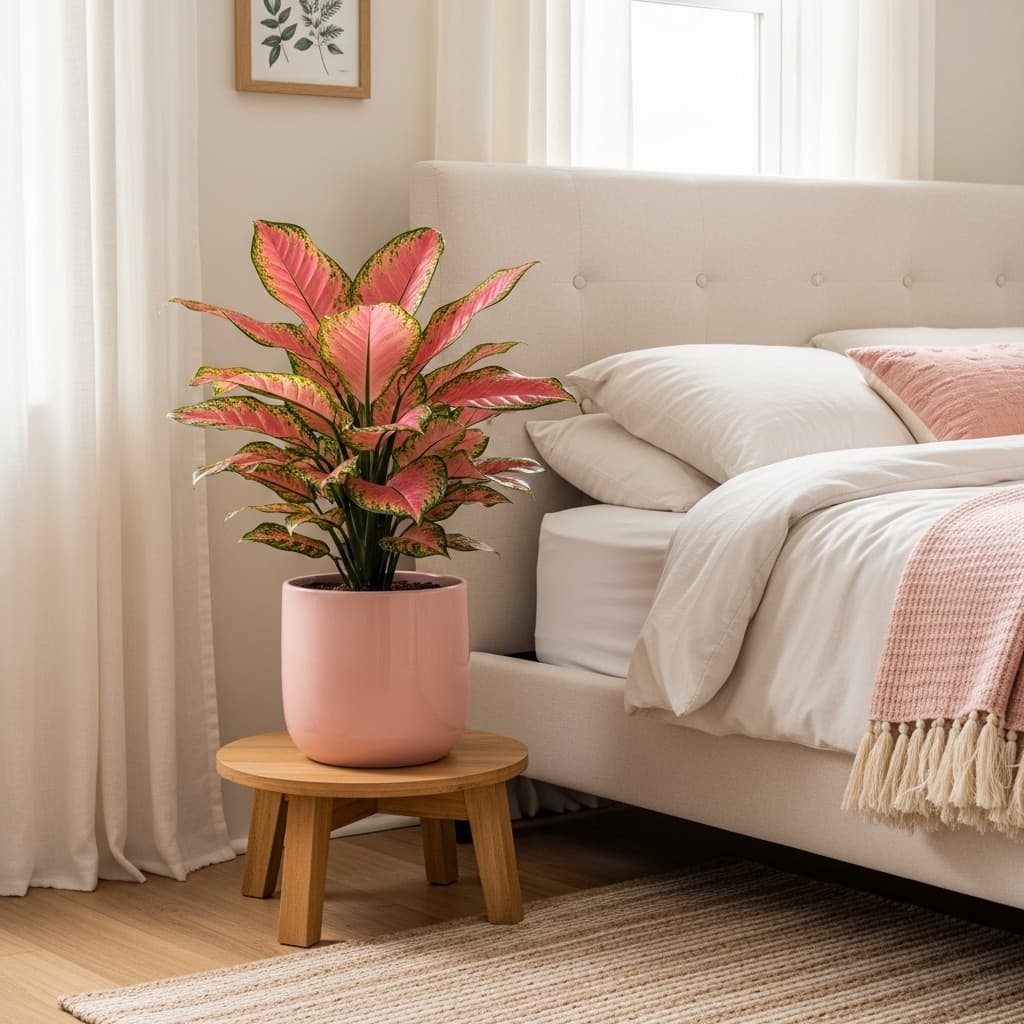
A Chinese evergreen with pink-and-green variegated leaves is one of the most effective color accent plants you can place in a neutral bedroom. The bold, patterned leaves introduce natural color without requiring you to repaint walls or buy new bedding. I’ve recommended this plant to multiple friends who wanted to add personality to their bedrooms without committing to a full redecoration project. It delivers a dramatic visual result for an investment that typically costs under twenty-five dollars.
The Chinese evergreen tolerates low to medium light, making it one of the most versatile bedroom plants for rooms with limited window access. You place it on a round wooden plant stand beside the bed to add a sculptural element at floor-to-mid height. The elevated stand displays the colorful leaves at eye level when you are sitting or lying in bed, which maximizes the visual impact of the plant’s variegated pattern. This bedroom plant idea suits modern organic, maximalist, and boho styles equally well.
- Bold variegated leaves add instant color
- Tolerates low to medium bedroom light
- Plant stand displays leaves at eye level
- Costs under twenty-five dollars typically
- Perfect for neutral bedroom color pops
Watering a Chinese evergreen every seven to ten days keeps the soil consistently moist without becoming waterlogged. You use a pot with a drainage hole and empty the saucer after watering to prevent root rot. Fertilizing once a month during spring and summer with a balanced liquid fertilizer encourages the vivid leaf coloring to stay bright and saturated. Dull leaf color usually signals that the plant needs more light or more frequent feeding.
Pairing a pink Chinese evergreen with blush ceramic pot and a cream upholstered bed frame creates a cohesive, feminine, and warmly modern bedroom aesthetic. The repetition of pink tones across the plant leaves, the pot, and the bedding palette ties the entire room together visually without any forced color coordination. That’s why many interior stylists use the Chinese evergreen as their first recommendation when a client wants to add warmth and color to a neutral bedroom on a budget.
Bamboo Palm Floor Feature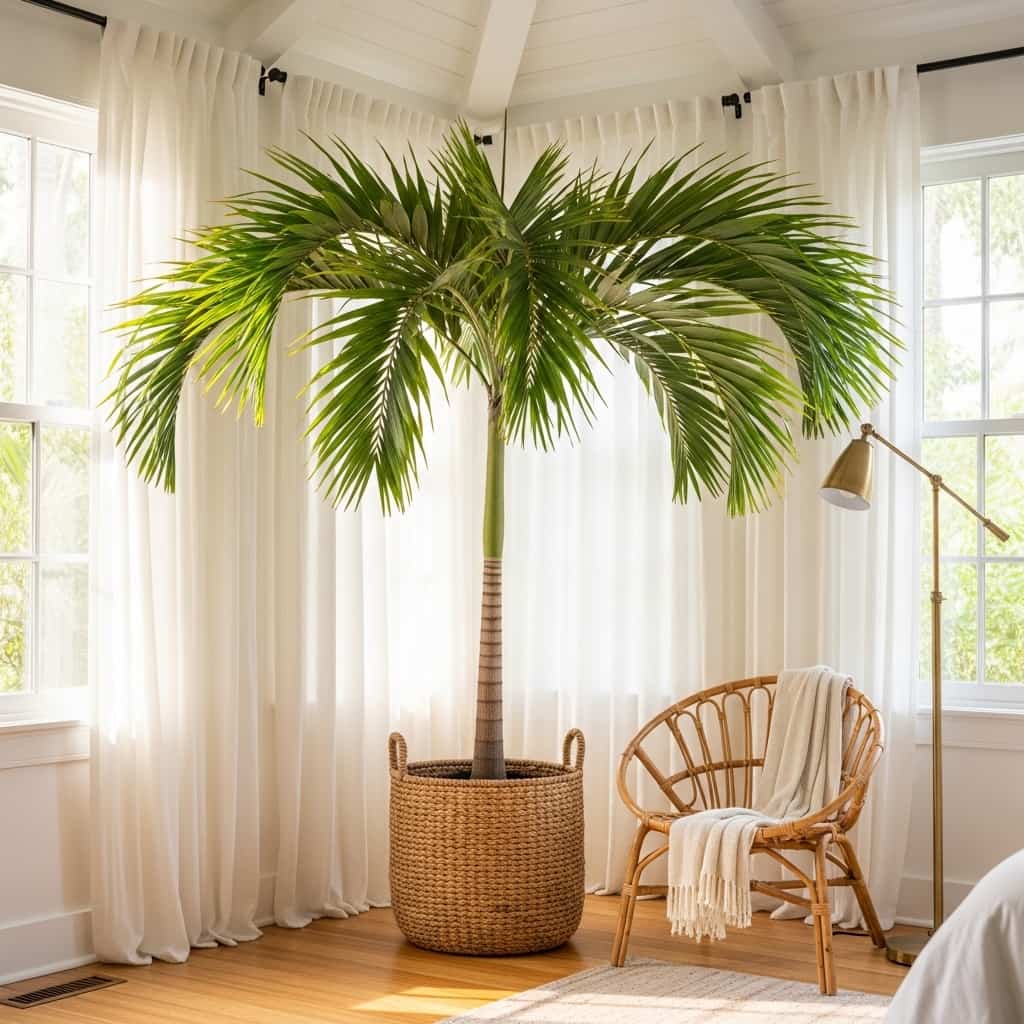
A bamboo palm in a large floor basket transforms an empty bedroom corner into a tropical resort-style retreat. Its graceful arching fronds create a natural canopy that wraps around a reading chair beneath it, making that corner feel like a private sanctuary within the room. This plant is also one of NASA’s top-rated air-purifying plants, actively removing formaldehyde, benzene, and carbon monoxide from indoor spaces. I’ve noticed that bedrooms with a bamboo palm feel noticeably fresher and more oxygenated compared to those without one.
The bamboo palm grows best in bright indirect light near large windows or glass doors. A woven seagrass or rattan floor basket adds natural texture at the base and complements the palm’s tropical character beautifully. You choose a basket slightly larger than the nursery pot to allow for root growth over the coming months. This bedroom plant display idea suits tropical, resort, and coastal grandmother aesthetics that are trending strongly across USA home decor platforms in 2026.
- NASA-rated top air-purifying indoor plant
- Creates resort-style tropical corner ambiance
- Woven seagrass basket adds natural texture
- Thrives in bright indirect bedroom light
- Pairs beautifully with rattan reading chairs
Watering a bamboo palm every seven to ten days and misting the fronds twice weekly keeps the foliage lush, green, and free from browning leaf tips. Brown tips usually signal dry air or inconsistent watering, both of which are easy to correct. Grouping the palm with a small side table, a brass floor lamp, and a single throw blanket on the chair beside it creates a complete, magazine-worthy reading nook. Every element works together to tell one cohesive visual story.
The bamboo palm’s height , which reaches four to seven feet indoors , makes it the ideal plant for master bedrooms with ceilings above eight feet. Taller plants in floor baskets add scale and grandeur to a room that can sometimes feel underfurnished with only a bed and dresser. In my experience, one large floor plant in a corner does more for a bedroom’s atmosphere than six smaller plants scattered randomly across shelves. Scale and placement matter enormously with floor plants.
Succulent Tray Centerpiece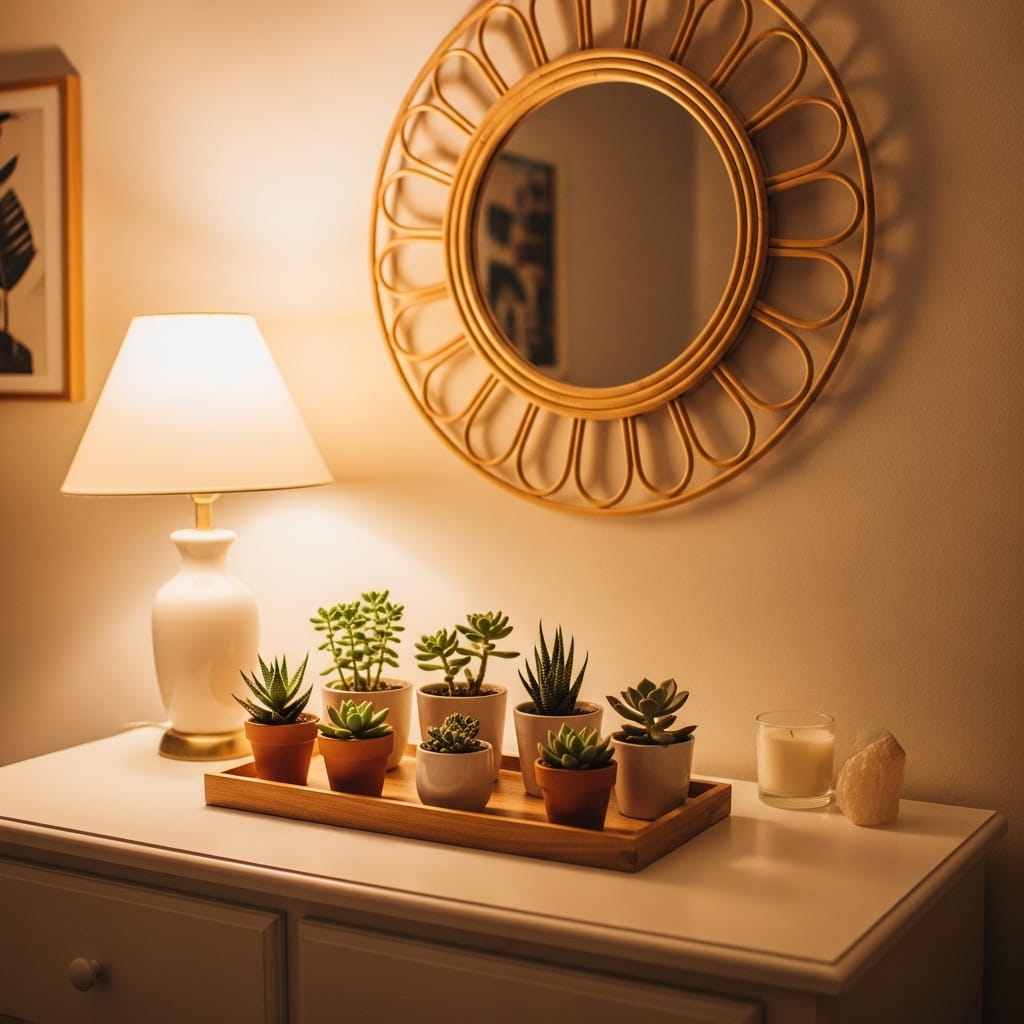
A wooden tray holding seven mixed succulents on a bedroom dresser creates a cohesive, curated plant display that looks like a miniature botanical garden. The tray acts as a visual container that groups the individual pots into one unified arrangement, preventing the display from looking scattered or accidental. I’ve built this exact display on a client’s dresser using a thrifted wooden serving tray and seven dollar-store succulents, and the result looked like it belonged in an Anthropologie catalog.
Mixing succulent varieties with different leaf shapes, colors, and heights within the same tray creates rich visual texture in a very compact footprint. You combine rosette-shaped echeveria, tall haworthia, and spreading sedum varieties for maximum contrast. Terracotta pots in different sizes bring warmth and cohesion to the collection. This bedroom plant tray idea is especially effective in small bedrooms where floor and shelf space is already limited.
- Groups multiple plants into one display
- Tray keeps arrangement looking intentional
- Mix rosette, tall, and spreading varieties
- Perfect for small dresser or nightstand display
- Budget-friendly , builds with inexpensive succulents
Succulents in a tray arrangement need bright indirect light to maintain their compact, vibrant rosette shapes. A dresser positioned near a south or east-facing window provides the ideal light exposure for most succulent varieties. You water the tray arrangement once every ten to fourteen days by watering each pot individually and emptying any water that collects in the tray bottom. Overwatering is the most common mistake people make with succulents, and a tray setup makes it easy to see exactly how much water each pot holds.
Styling the succulent tray with a single white candle, a small crystal, and a personal photo or framed print behind it turns the dresser surface into a meaningful personal altar as much as a decorative display. This combination of natural, living, and personal elements creates a dresser vignette that feels uniquely authentic and impossible to replicate exactly. That personal quality is what makes this kind of display resonate so deeply with people who see it on Pinterest and immediately save it for later.
Rubber Plant Bold Accent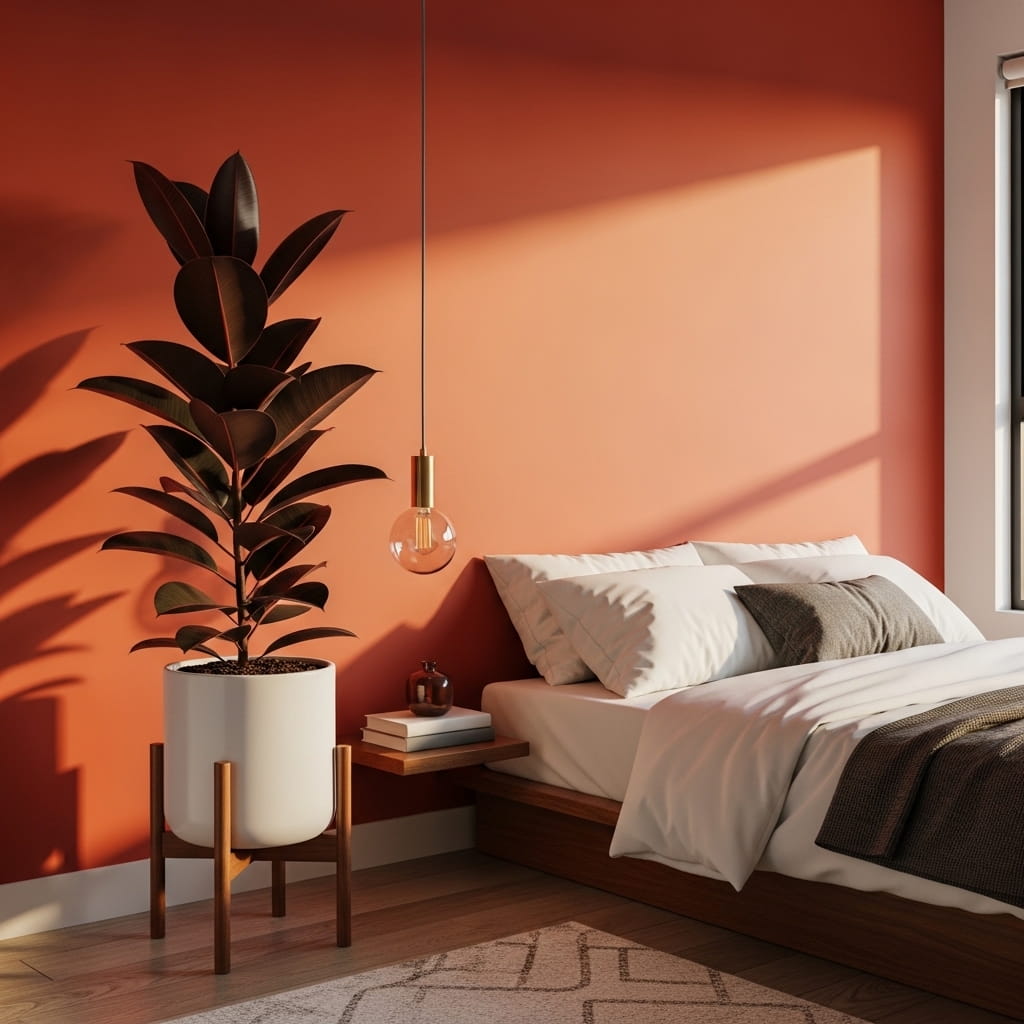
A burgundy rubber plant against a terracotta accent wall creates one of the most visually bold bedroom plant displays in 2026 interior design. The deep, wine-red tones of the rubber plant’s large glossy leaves echo the warm earthy orange of the wall behind it, creating a rich color harmony that feels sophisticated and intentional. This specific color pairing is trending strongly across USA-based interior design platforms right now. I’ve seen it styled in both budget apartment bedrooms and high-end master suites with equally stunning results.
The rubber plant grows best in bright indirect light and tolerates the occasional period of lower light without dropping its dramatic foliage. You position it on a wooden or metal plant stand to raise the leaves to a more visual mid-height between floor level and the bed’s headboard. This mid-height placement creates a natural visual bridge between the floor and the upper wall, which improves the room’s overall sense of balanced design. The large, waxy leaves also collect dust easily, so wiping them monthly keeps the plant looking its best.
- Burgundy leaves create bold color accent
- Pairs beautifully with terracotta wall tones
- Plant stand raises leaves to visual mid-height
- Thrives in bright to medium indirect light
- Wipe leaves monthly for maximum gloss
Rubber plants grow relatively quickly in ideal conditions, adding several new leaves each month during the spring and summer growing season. You pinch the top growth tip to encourage a bushier, fuller shape rather than a single tall stem. A fuller rubber plant creates a more lush, impactful display compared to a single-stemmed specimen. Feeding with a balanced liquid fertilizer once a month during the growing season supports the rapid, healthy growth this plant is capable of producing.
Pairing the rubber plant with a brass pendant lamp and minimal white bedding creates a modern, design-forward bedroom aesthetic that feels both bold and clean simultaneously. The contrast between the white bedding, the warm brass metal, and the deep burgundy leaves is exceptionally strong and photogenic. That’s why this specific combination appears so frequently on curated USA bedroom decor boards on Pinterest. It is a combination that rewards bold styling decisions with genuinely beautiful results.
Jasmine Vine Window Frame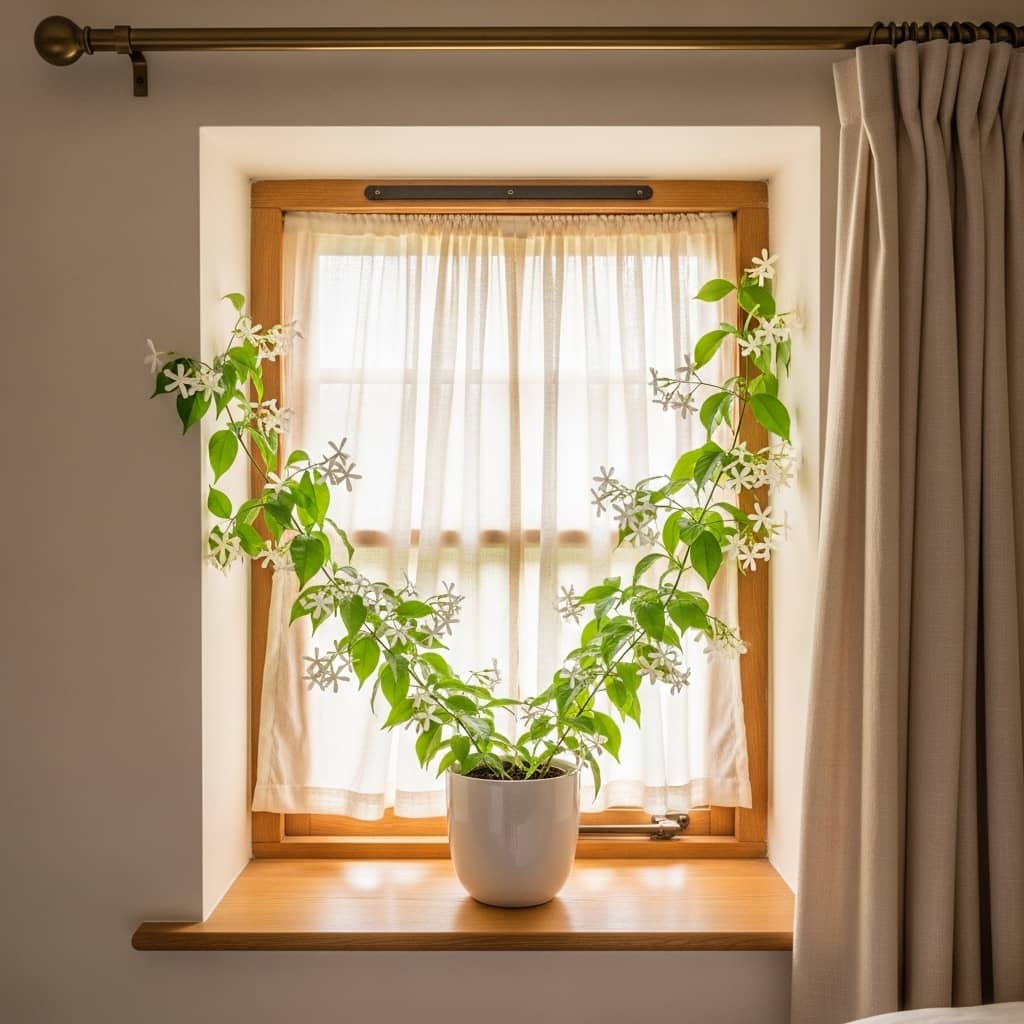
Training a jasmine vine along a bedroom window frame creates the most romantic, fragrance-filled plant display possible in a sleeping space. The star-shaped white blooms release a sweet, clean scent during evening hours that naturally calms the nervous system before sleep. I’ve seen this exact window styling idea stop people mid-scroll on Pinterest every single time because the combination of white flowers, trailing green vines, and soft morning light looks genuinely magical. This bedroom plant idea suits cottagecore, romantic, and vintage-inspired room styles beautifully.
Jasmine needs at least four to six hours of bright indirect sunlight daily, making a bedroom window the most ideal position in the entire home. You use small adhesive hooks to gently guide the vine’s growth along the window frame as it lengthens. The plant rewards consistent care with regular bursts of blooming throughout spring and summer. That’s why many interior stylists describe jasmine as one of the best investment plants for bedroom decor , one plant delivers both visual beauty and natural aromatherapy simultaneously.
- Releases sweet natural fragrance at night
- White blooms create romantic window display
- Guide vines along frame with small hooks
- Blooms repeatedly through spring and summer
- Perfect for cottagecore and romantic bedrooms
Watering jasmine consistently , every five to seven days , keeps the soil evenly moist without becoming waterlogged. You feed it with a high-potassium liquid fertilizer every two weeks during the blooming season to encourage continuous flower production. Removing spent blooms promptly encourages the plant to redirect energy into producing fresh new flowers. This simple deadheading routine takes less than two minutes and noticeably extends the overall flowering period.
Pairing a jasmine vine with sheer ivory curtains and a vintage brass curtain rail creates a layered window display that feels like something from a French countryside bedroom. The contrast between the delicate white jasmine blooms, the warm brass metal tones, and the soft ivory fabric creates a deeply romantic visual combination. In my experience, this is the bedroom plant idea that generates the most emotional responses from people who see it , because it genuinely looks and smells like a dream.
Philodendron Birkin Nightstand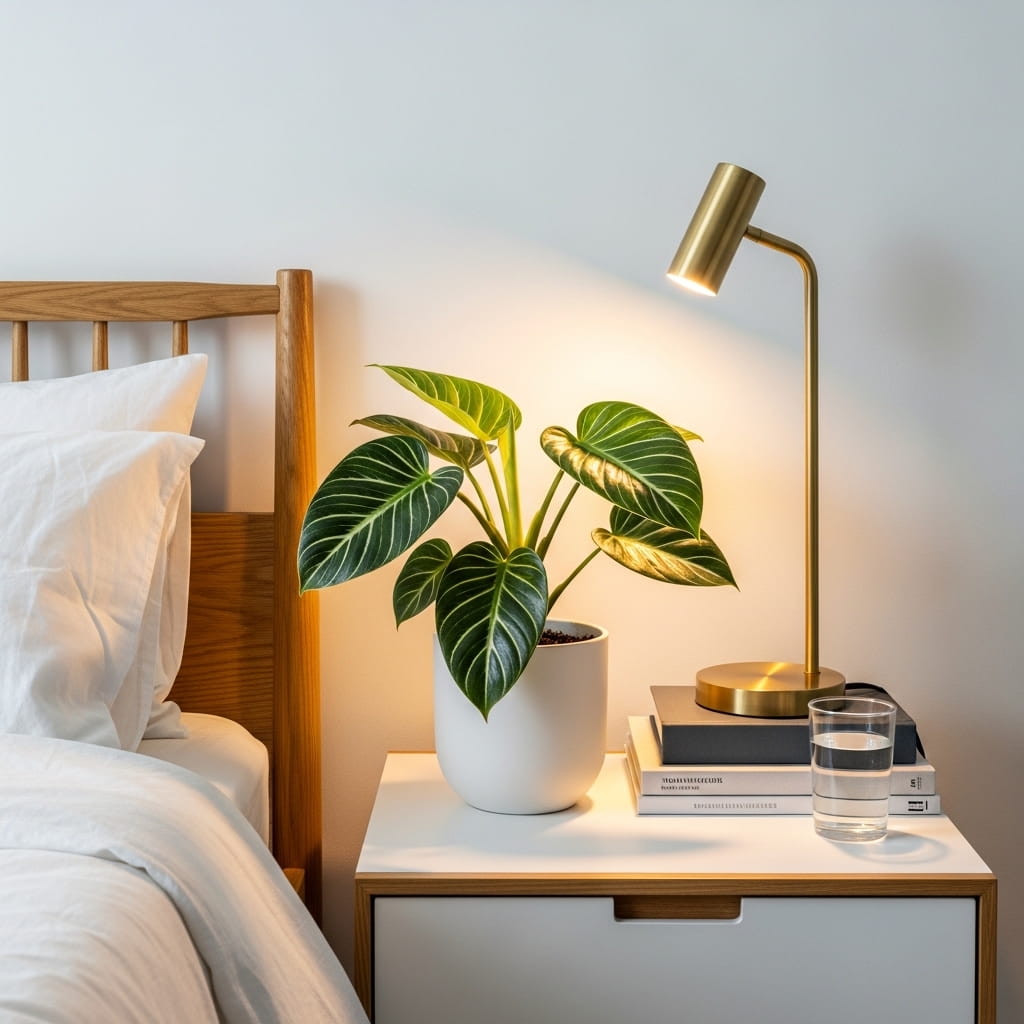
A philodendron Birkin on the nightstand is one of the most quietly stunning best bedroom plants ideas circulating on interior design platforms right now. Its dark green leaves with creamy white pinstripe veining look hand-painted, and the pattern becomes more defined and striking as the plant matures. I’ve placed one on my own nightstand and it consistently draws compliments from every person who enters the room. The compact, upright growth habit keeps it perfectly contained within the nightstand space without sprawling outward.
The Birkin tolerates low to medium bedroom light without losing its distinctive leaf patterning, which makes it genuinely reliable in bedrooms that rely on artificial lighting. You water it every seven to ten days and allow the top inch of soil to dry between waterings. The compact size , typically twelve to twenty-four inches tall , makes it ideal for styling directly on a nightstand beside a lamp and a small stack of books. This plant decor idea suits modern organic, minimalist, and editorial bedroom styles perfectly.
- Creamy pinstripe veining looks hand-painted
- Compact size fits any nightstand easily
- Tolerates low to medium bedroom light
- Leaf pattern intensifies as plant matures
- Perfect for modern organic bedroom styling
Styling the Birkin beside a warm brass or matte black bedside lamp creates a beautiful backlit effect that highlights the leaf veining during evening reading hours. The warm light picks out the cream lines against the dark green background and turns the plant into an almost glowing decorative object. This nighttime visual quality is something very few other plants can replicate at such a small scale. It makes the nightstand area feel genuinely designed rather than simply functional.
Repotting the philodendron Birkin every twelve to eighteen months into a pot one size larger encourages healthy root development and continued leaf production. You use a well-draining potting mix with added perlite to prevent root rot in the enclosed nightstand space. A simple ceramic pot in matte white or warm terracotta complements the leaf color without competing with the plant’s natural patterning. This is one of those bedroom plants that rewards attentive care with a continuously improving display over time.
Vintage Botanical Pressed Wall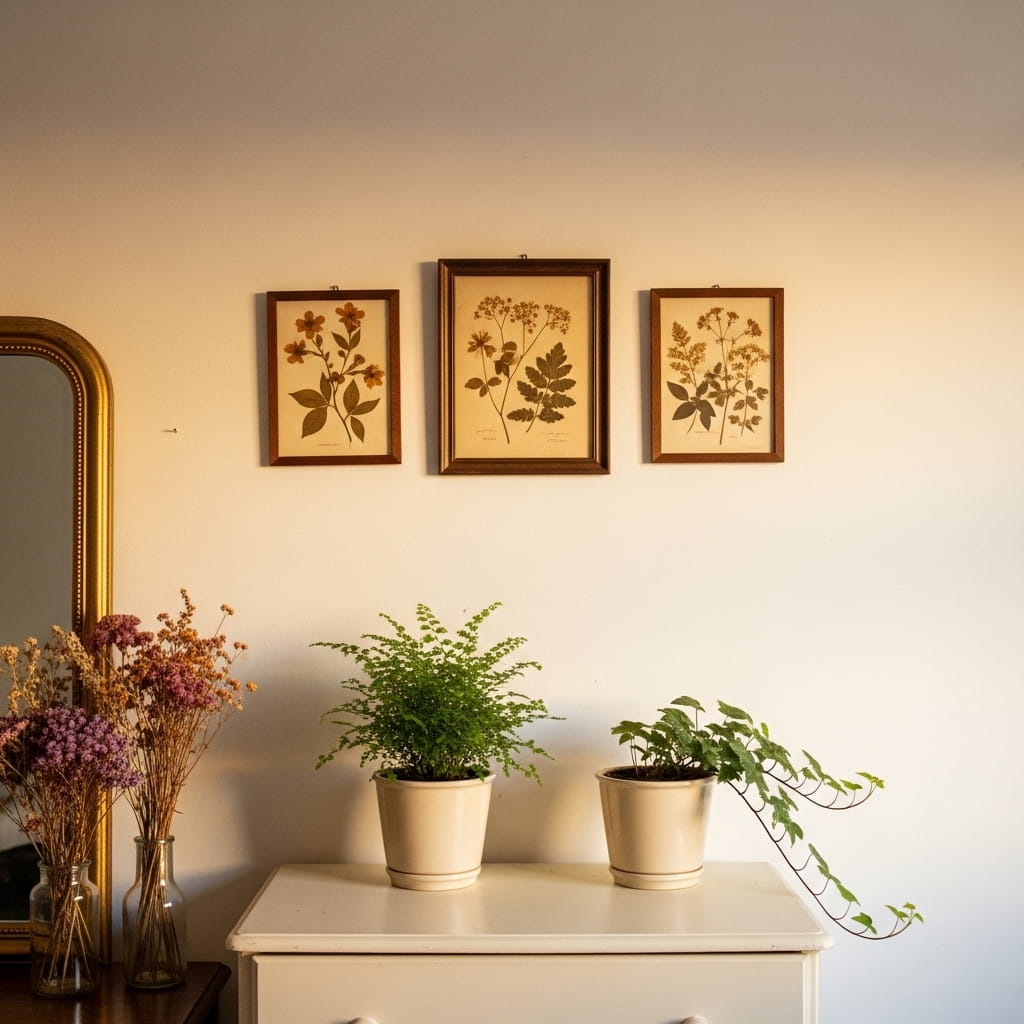
Mixing framed pressed botanical prints with small living plants on a dresser top creates a layered, collected aesthetic that blends art and nature seamlessly. The framed specimens on the wall and the living plants below them tell a cohesive botanical story across two different dimensions simultaneously. I’ve noticed that this combination consistently creates the most sharable bedroom wall moments on Pinterest because it rewards extended looking , the more time you spend looking, the more detail you discover. This plant styling idea suits romantic, maximalist, and cottagecore bedroom aesthetics brilliantly.
You choose three botanical prints in coordinating frames , mix vintage gilt, thin brass, and simple white wood for an intentionally collected look. Below them on the dresser surface, you position a small potted fern and a trailing ivy in matching cream ceramic pots. The living greenery connects the framed art to the physical room space, creating a display that feels three-dimensional and alive. This bedroom decorating idea works particularly well in rental apartments where wall painting is not an option but personality is still desired.
- Blends botanical art with living plants
- Creates layered, three-dimensional wall display
- Mix frame styles for collected vintage look
- Perfect for rental-friendly bedroom decorating
- Ivy and fern suit low-light dresser positions
Dried flower bunches in a tall glass vase add a third botanical layer to the dresser display without requiring additional wall space. You use dried lavender, dried eucalyptus, or dried pampas grass depending on the color palette of your bedroom. The contrast between the living plants, the dried botanicals, and the framed pressed prints creates a richly textural and emotionally layered decorative vignette. Every element belongs to the same natural world while expressing a different stage of botanical life.
Rotating the living plants with seasonal botanical finds keeps this display feeling fresh throughout the year. You swap the fern for a small chamomile plant in summer or add a tiny rosemary pot in autumn for seasonal fragrance. The framed prints stay constant while the living elements change, giving the display a stable anchor and a rotating focal point simultaneously. That combination of permanence and change is what keeps this plant wall idea feeling interesting and alive every single month.
Lemon Balm Herb Corner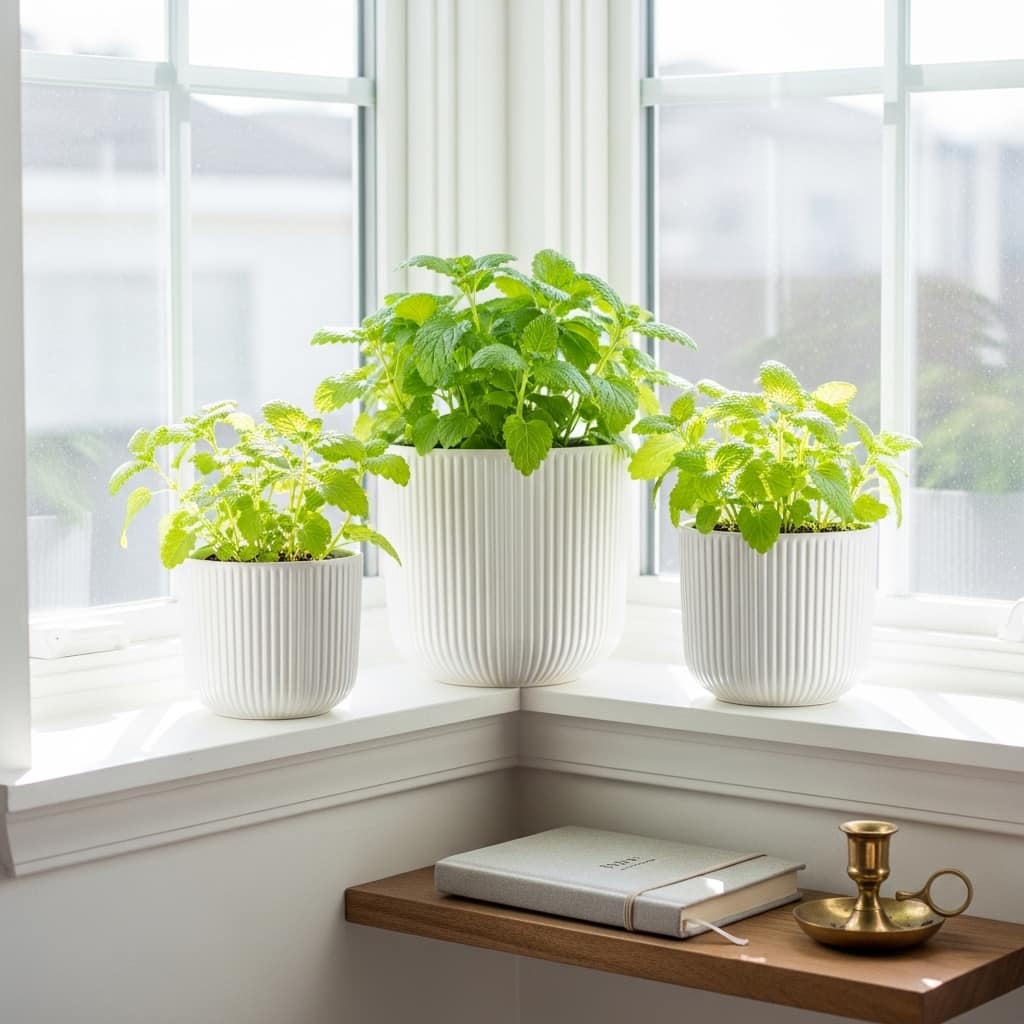
A small lemon balm plant on a sunny bedroom windowsill delivers both visual freshness and genuine sleep-support benefits in one compact pot. The bright, crinkled green leaves release a clean, citrusy lemon scent when brushed lightly, which has been shown to reduce anxiety and improve sleep onset time. I’ve kept lemon balm on a bedroom windowsill for over a year and the difference in how the room smells each morning is genuinely noticeable and uplifting. This indoor herb idea suits wellness-inspired, clean, and minimalist bedroom styling perfectly.
Grouping three lemon balm plants in graduated white ribbed ceramic pots creates a cohesive, spa-like window display with a clean and orderly visual rhythm. The varying pot sizes add subtle height variety without requiring any additional accessories or styling elements. Lemon balm thrives in direct morning sunlight, making a south or east-facing bedroom windowsill its ideal position indoors. That’s why many wellness-focused home stylists recommend this herb as a functional and beautiful alternative to scented candles in the sleeping space.
- Releases natural citrus calming fragrance
- Proven to reduce anxiety before sleep
- White ribbed pots create clean visual rhythm
- Thrives in direct morning window sunlight
- Healthier bedroom air alternative to candles
Lemon balm grows quickly and can be harvested regularly by pinching off fresh stem tips. You brew a simple sleep tea using the fresh leaves and warm water as part of a bedtime wellness routine. This practical harvesting step also encourages the plant to produce fresh bushy growth rather than becoming leggy and sparse over time. One small plant purchase delivers months of both decorative and practical value in the bedroom space.
Styling the lemon balm window corner with a small linen-covered journal and a single brass candle holder on the shelf below creates a complete morning ritual vignette. The combination of natural fragrance, soft morning light, and intentional decor objects creates a space that genuinely encourages slowing down and starting the day mindfully. In my experience, this specific bedroom corner setup has the most positive impact on morning mood and daily routine of any plant idea in this entire collection.
Staghorn Fern Wall Mount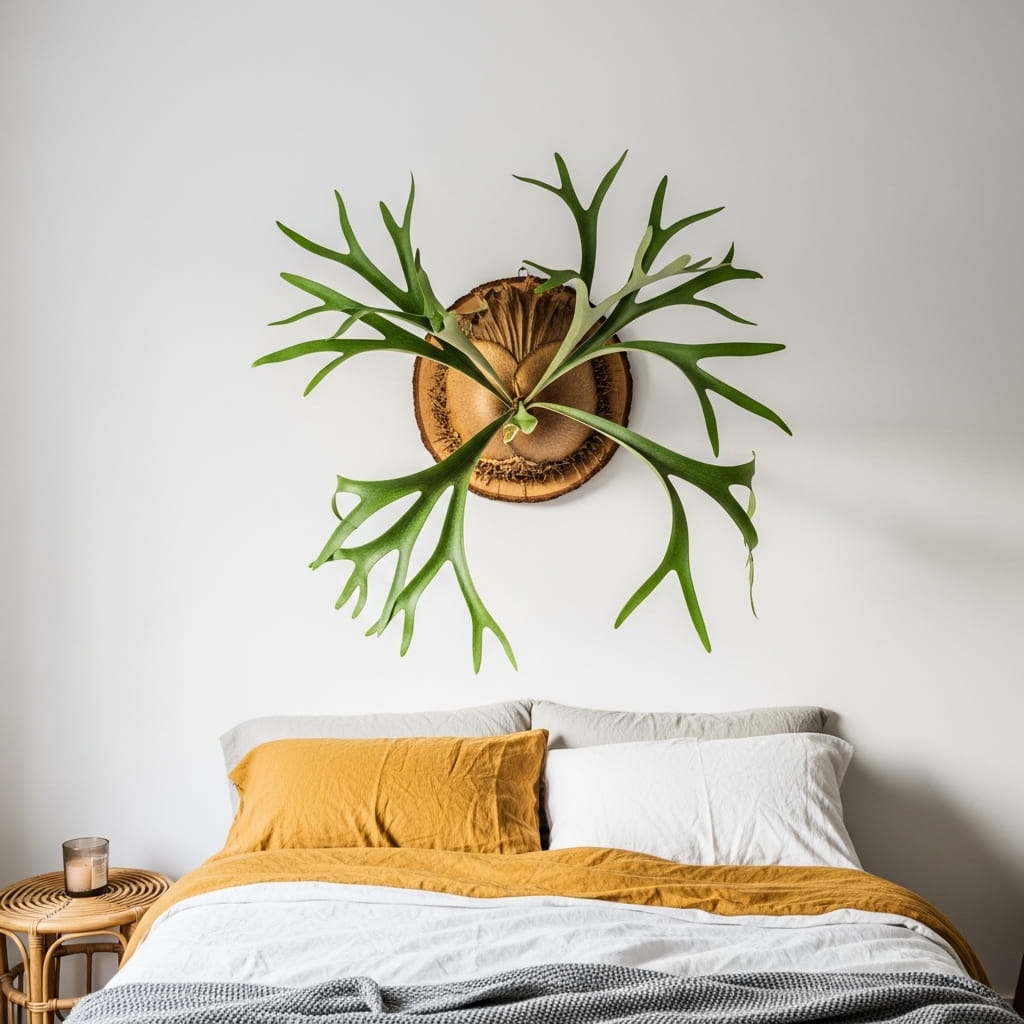
A staghorn fern mounted on a raw wood plaque hung on the bedroom wall functions as living wall art in the most literal and beautiful sense. Its distinctive antler-shaped fronds spread outward from the wooden base in an organic, sculptural form that no purchased artwork can replicate. I’ve mounted staghorn ferns for three different clients in their bedrooms, and every single person described it as the most-commented-on feature in their entire home. This plant wall idea suits botanical, contemporary, and natural modern bedroom styles exceptionally well.
The staghorn fern absorbs water and nutrients through its fronds rather than through soil roots, which makes the wall-mounted installation both practical and architecturally clean. You mist the fronds two to three times weekly and soak the entire wooden mount in a basin of water for twenty minutes once every two weeks. The round raw wood plaque adds a warm, artisan quality to the bedroom wall that complements both neutral and earth-toned bedroom palettes. This is genuinely one of the most impressive and conversation-starting plant display ideas available for a bedroom wall.
- Functions as dramatic living wall art
- Absorbs water through fronds, not soil roots
- Raw wood mount adds artisan wall warmth
- Suits botanical and natural modern bedrooms
- Mist fronds 2–3 times weekly for health
Hanging the staghorn mount at eye level beside the bed positions it as the primary visual focal point of the sleeping space. You center it on the wall between the window and the bed head for the most balanced compositional result. The organic, asymmetric spread of the fronds creates a natural contrast against the flat wall surface that becomes more dramatic as the plant grows larger and fuller over time. Each new frond that emerges adds to the living art installation automatically.
Pairing the staghorn wall mount with mustard linen bedding and a small rattan side table below creates a warm, intentional bedroom aesthetic with clear botanical character. The mustard tones echo the warm wood of the plaque mount while the rattan adds a second layer of natural material texture. This specific combination of living plant, organic materials, and warm earthy tones is trending consistently across USA interior design boards throughout 2026. It is a bedroom plant idea with genuine longevity and visual staying power.
Potted Rosemary Windowsill Herb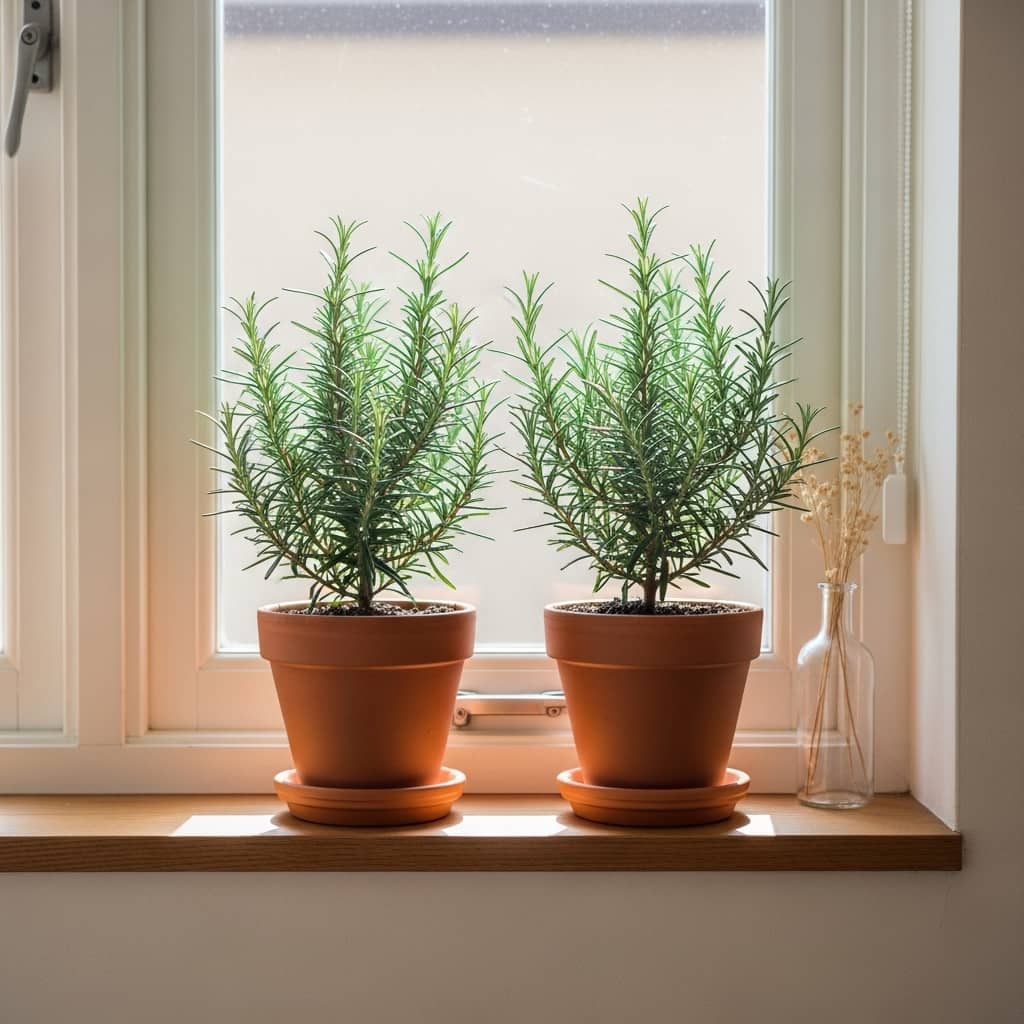
Two potted rosemary plants on a bedroom windowsill create a clean, Mediterranean-inspired display that delivers both visual simplicity and powerful sensory benefit. Rosemary’s piney, herbal scent has been shown in multiple studies to improve memory, focus, and cognitive clarity , qualities that make it particularly useful in a bedroom used for reading, journaling, or morning planning. I’ve kept rosemary on a bedroom windowsill through three consecutive winters and it consistently makes the room smell clean, fresh, and invigorating every single morning.
Rosemary grows best with at least six hours of direct sunlight daily, making a bright south or west-facing bedroom window its ideal home indoors. The narrow, needle-like foliage and upright growth habit keep the plant visually neat without requiring any regular pruning to maintain its shape. A simple terracotta pot suits the Mediterranean character of this plant perfectly and complements almost every neutral bedroom color palette. This is one of the cleanest and most understated herb-based bedroom plant ideas available.
- Scientifically proven to sharpen mental clarity
- Neat needle foliage stays tidy naturally
- Terracotta pot suits its Mediterranean character
- Thrives in six-plus hours of direct sunlight
- Ideal for bedrooms used for reading or journaling
Pinching fresh rosemary tips regularly encourages the plant to grow bushier and denser over time. You can use the harvested stems to infuse olive oil, season roasted vegetables, or simply bruise a single stem and set it on the nightstand for an instant, natural room fragrance. This dual-purpose quality , decorative display during the day and practical herb harvest during cooking , makes rosemary one of the most genuinely useful plants you can place in a bedroom window.
Pairing two rosemary pots with a small clear glass bottle holding dried wildflowers beside them creates a minimal, artisan windowsill composition that feels collected and thoughtful. The simplicity of the arrangement is precisely what makes it so visually effective. You do not need many decorative objects to create a beautiful windowsill vignette , you need the right two or three objects arranged with intention and care. This particular trio delivers that quality with complete consistency.
Trailing String of Pearls Shelf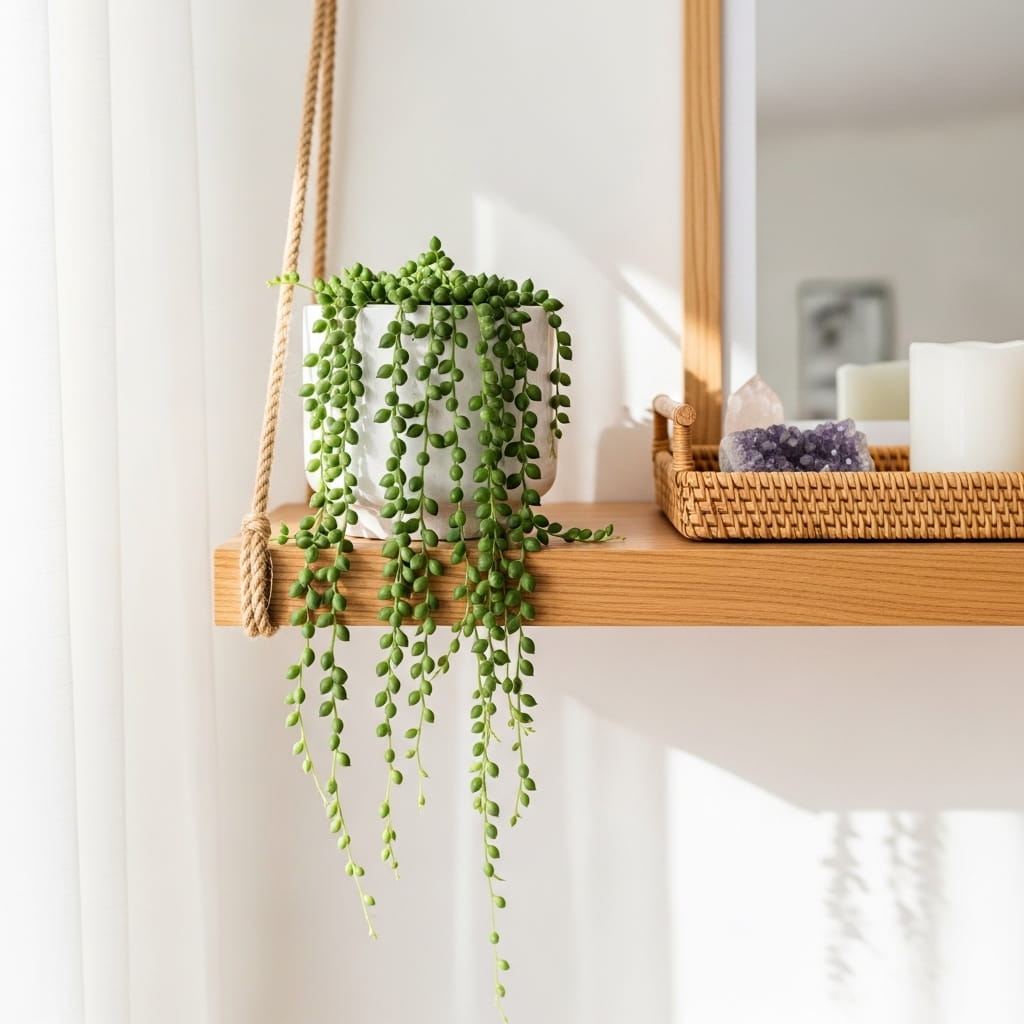
A string of pearls plant cascading from a floating bedroom shelf is one of the most visually distinctive and scroll-stopping plant display ideas in home decor. The small, perfectly round bead-like leaves trail in long, elegant strands that can reach eighteen to twenty-four inches over the course of a single growing season. I’ve seen this specific plant stop people mid-scroll on Pinterest more consistently than almost any other bedroom plant display. The combination of the unusual leaf shape and the dramatic trailing habit makes it genuinely unlike anything else in the plant world.
The string of pearls thrives in bright indirect light near a bedroom window and needs watering only every ten to fourteen days in a well-draining pot. It is a succulent, which means it stores water inside each bead-shaped leaf and tolerates inconsistent watering far better than tropical plants. You position the pot near the front edge of the shelf so the trailing stems have maximum open space to hang freely downward. This bedroom plant display idea suits boho, minimal, and organic modern bedroom styles perfectly.
- Bead-like leaves create unique cascading display
- Trailing stems reach 18–24 inches long
- Needs watering only every 10–14 days
- Thrives in bright indirect window light
- Suits boho and organic modern bedrooms
Styling the string of pearls shelf with a small rattan tray holding one white candle and two or three crystals creates a complete, curated shelf vignette without cluttering the display. The natural materials , rattan, wax, mineral crystals, and living plant , all belong to the same earthy, organic visual language. This keeps the shelf looking intentional rather than random. The trailing plant does the visual heavy lifting while the accessories ground the composition with warmth and texture.
Propagating string of pearls is straightforward and genuinely satisfying. You lay a few cut stems across a tray of dry succulent soil, mist lightly, and new roots appear within two weeks. Within two months, you have new plants ready to fill additional shelves. In my experience, starting with one string of pearls pot and propagating it across three shelves over a single season is one of the most rewarding and budget-friendly bedroom plant projects you can undertake.
Calathea Prayer Plant Display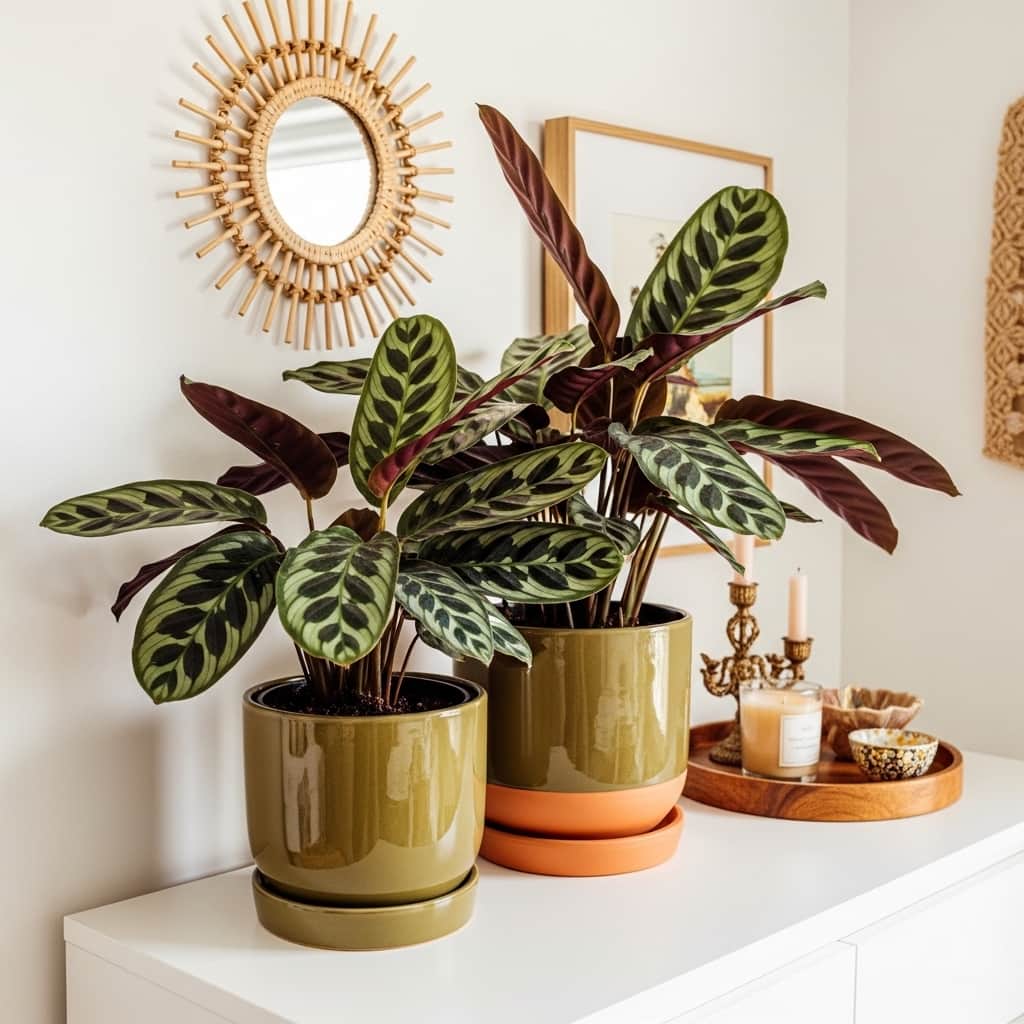
A calathea prayer plant on a bedroom dresser creates one of the most visually dramatic plant displays possible without requiring any additional styling accessories. The large, intricately patterned leaves , featuring deep green tops with pale stripe markings and rich purple undersides , look hand-illustrated and genuinely unlike any other houseplant foliage. Calatheas also move their leaves upward at night in a prayer-like gesture and open them again at dawn, creating a living rhythm within the bedroom that feels almost meditative to observe.
Pairing two calathea varieties in matte olive and terracotta pots of different sizes creates a botanically rich dresser display with outstanding visual depth. The varying leaf patterns between calathea varieties , peacock, rattlesnake, and medallion are three popular choices , add contrast and interest without disrupting the cohesive aesthetic. This bedroom plant idea suits maximalist-lite, tropical, and warm earthy bedroom styles that are trending strongly across USA home decor communities in 2026.
- Dramatically patterned leaves look hand-illustrated
- Leaves move upward nightly in prayer gesture
- Mix two varieties for richer visual contrast
- Suits warm earthy and maximalist-lite bedrooms
- Matte ceramic pots complement leaf color depth
Calatheas prefer consistent humidity and indirect light, which makes a bedroom positioned away from heating vents and air conditioning units the ideal environment. You mist the leaves two to three times weekly or place the pot on a shallow tray filled with pebbles and water to maintain the surrounding humidity naturally. Consistent moisture without waterlogging keeps the dramatic leaf patterning vibrant and prevents the edges from browning. That’s why many indoor plant stylists group calatheas with other humidity-loving plants to create a shared microclimate that benefits all the plants in the display.
Wiping calathea leaves with a damp cloth every two weeks removes dust and keeps the intricate patterning fully visible and brilliantly colored. Clean leaves absorb light more efficiently and maintain the deep, saturated color contrasts that make this plant so visually striking. In my experience, the calathea is the single most rewarding bedroom plant to care for attentively because the better you treat it, the more extraordinary its foliage becomes. The plant genuinely rewards the effort you put in with increasingly beautiful results over time.
Cozy Bedroom Moss Bowl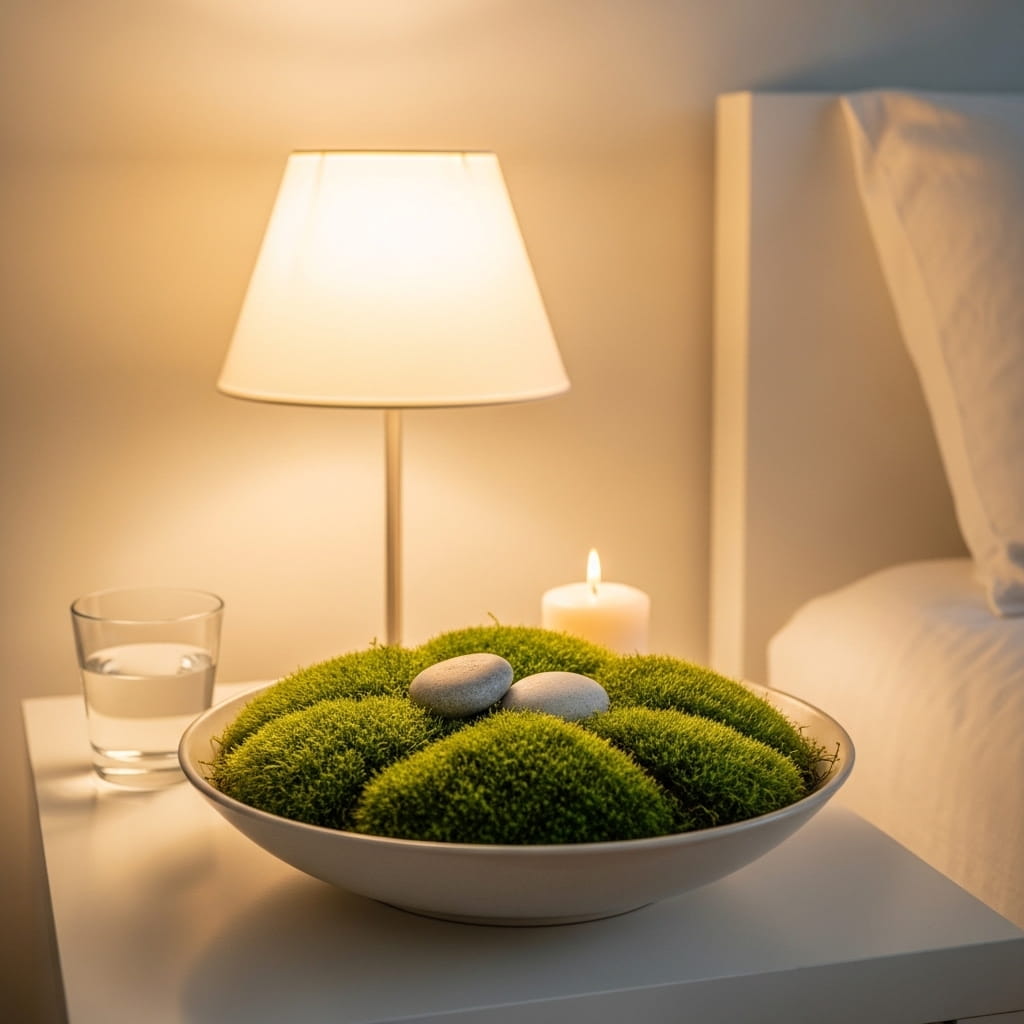
A shallow ceramic bowl filled with cushion moss and smooth river stones creates the most calming and zen-inspired bedroom plant display in this entire collection. The velvety, vivid green moss surface and the rounded stones together evoke a Japanese garden aesthetic that reduces visual noise and creates an immediate sense of peace in the room. I’ve placed a moss bowl on a bedroom side table for multiple clients seeking a calming, low-stimulation sleep environment, and every single person reported that it changed how the room felt instantly.
Living moss requires no soil, no drainage holes, and no complex care routine , you simply mist it lightly two to three times per week with clean water and keep it in soft indirect light. This makes a moss bowl the most maintenance-free living plant display you can create for a bedroom side table. The low, wide bowl shape keeps the entire display below eye level when seated on the bed, creating a calming, grounded visual quality that sits softly in the room rather than competing for attention.
- Velvety moss creates instant zen atmosphere
- No soil, drainage, or complex care needed
- Mist lightly 2–3 times weekly only
- Smooth river stones add grounded visual calm
- Perfect for low-stimulation sleep environments
Choosing a wide, shallow ceramic bowl in cream, sage, or matte white keeps the moss at the center of visual attention without any competing color or texture from the container. You press two or three smooth, cool-toned river stones gently into the moss surface for textural contrast and added visual weight. The organic combination of living plant material and natural stone creates a display that feels rooted, ancient, and deeply calming simultaneously. That rare emotional quality is precisely why moss bowls perform so strongly as saved and shared content on Pinterest home decor boards.
Refreshing the moss bowl seasonally by adding small decorative elements keeps the display feeling current without replacing the central moss. You add a tiny succulent rosette in spring, a small pinecone in autumn, or a miniature crystal cluster in winter. Each seasonal addition takes less than sixty seconds but shifts the entire mood of the display to match the time of year. This ongoing, evolving quality makes the moss bowl one of the most enduring and satisfying bedroom plant ideas in the entire article.
Conclusion
Your bedroom deserves to feel alive, calm, and genuinely beautiful every single day. These 27 best bedroom plants ideas prove that one small green addition can completely transform how a room looks, feels, and even breathes. You do not need to try all 27 ideas at once. Start with one plant that excites you most and build from there. I’ve seen a single well-placed plant turn a dull, lifeless bedroom into someone’s favorite room in the entire home , and that transformation is available to you right now. Save this article on Pinterest, share it with a friend who needs a bedroom refresh, and take that first step today.
Frequently Asked Questions
Which plants are best for a bedroom with no natural light?
The ZZ plant, snake plant, and pothos are your three strongest options for bedrooms with little to no natural light. All three tolerate low-light conditions reliably. The ZZ plant is particularly impressive in dark corners. Each one stays healthy with minimal care and consistent watering every two to three weeks.
How many plants should I put in my bedroom?
Start with one to three plants depending on your room size. One large floor plant or two to three small shelf plants create a noticeable impact without overwhelming the space. I’ve noticed that even a single well-chosen plant in the right spot transforms a bedroom completely. Quality of placement matters far more than quantity.
Are bedroom plants safe to sleep with overnight?
Yes, most bedroom plants are completely safe overnight. Plants like snake plants, peace lilies, and aloe vera actually release oxygen at night, which improves air quality while you sleep. Avoid plants with strong nighttime fragrances if you are sensitive to scent. Always keep toxic plants out of reach if you have pets or young children in the home.
What is the easiest plant to keep alive in a bedroom?
The snake plant is widely considered the easiest bedroom plant available. It survives low light, inconsistent watering, and dry indoor air without complaint. You water it once every two to three weeks and it stays healthy year-round. The ZZ plant and pothos are equally forgiving and almost impossible to kill with basic care.
How do I stop my bedroom plants from getting dusty leaves?
Wipe large leaves gently with a soft damp cloth once every two to three weeks. For small or delicate plants, use a soft dry paintbrush to dust the leaf surface carefully. Clean leaves absorb light more efficiently and stay visually vibrant longer. Dusty leaves also block light absorption, which slows healthy plant growth over time.
Can plants really improve bedroom air quality?
Yes, several bedroom plants actively remove toxins from indoor air. Peace lilies, bamboo palms, and spider plants are among NASA’s top-rated air-purifying plants for indoor spaces. They remove formaldehyde, benzene, and carbon monoxide from the air. Adding even one air-purifying plant to your bedroom creates a measurably cleaner and fresher sleeping environment.
What pots work best for bedroom plant styling?
Terracotta, matte ceramic, and woven rattan baskets work best for most bedroom styles. Terracotta suits minimalist and Southwestern aesthetics. Matte white or black ceramic suits modern and Japandi bedrooms. Woven seagrass and rattan baskets complement boho and tropical styles. Always choose pots with drainage holes to protect plant roots from waterlogging damage.