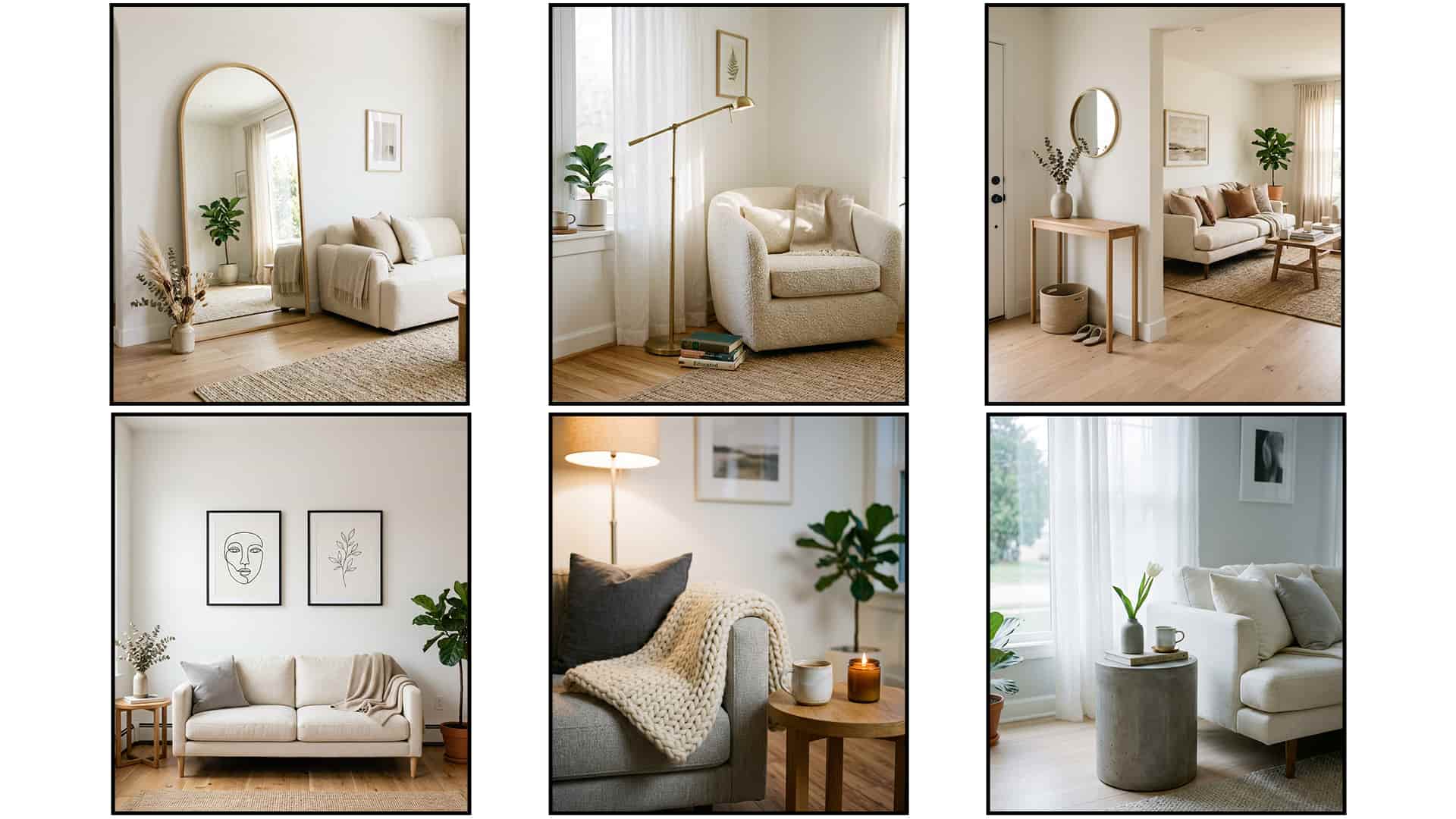
28 Minimalist Living Room Ideas for a Cozy Calm Retreat
Walk into a room where everything feels still, soft, and perfectly unhurried. No cluttered shelves. No mismatched furniture. Just clean surfaces, warm textures, and breathing room that makes you exhale the moment you walk in. That is exactly what well-planned minimalist living room ideas can do for your home , and the transformation is more achievable than most people think.
Many homeowners feel stuck between two painful extremes. Their living room either looks too cold and bare, or too crowded and chaotic. Finding that middle ground , where the space feels warm but uncluttered, simple but styled , is the real challenge. I’ve noticed that most people only need a handful of intentional changes to completely shift the way their living room looks and feels.
This article covers 28 cozy, creative, and budget-friendly ideas that solve real decorating problems. You will find ideas for small apartments, open-plan spaces, rental-friendly setups, and every neutral color palette imaginable. Experienced interior stylists consistently point to natural materials, layered textures, and purposeful negative space as the three pillars of a truly calm living room , and every idea in this list reflects those principles. Whether you are starting from scratch or refreshing a tired space, these ideas give you a clear, visual, and practical path forward.
Neutral Linen Sofa Setup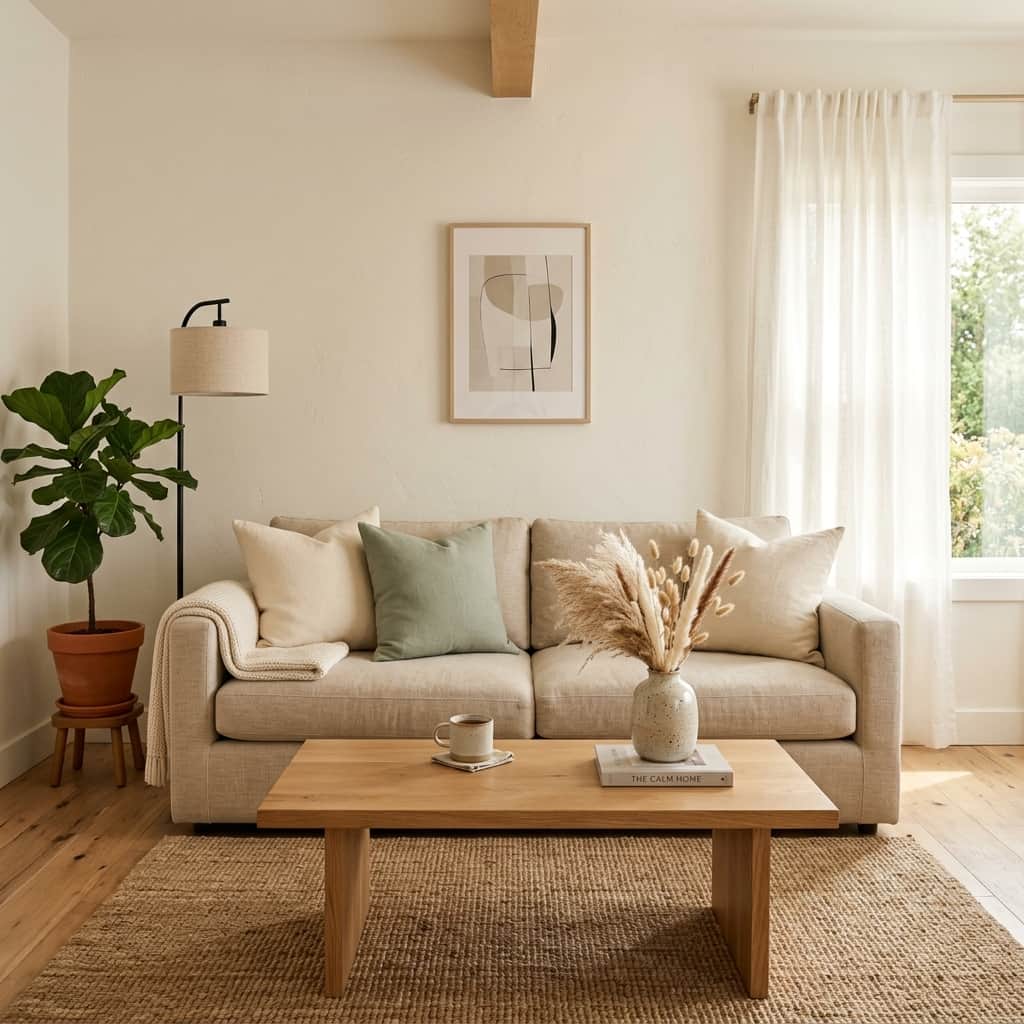
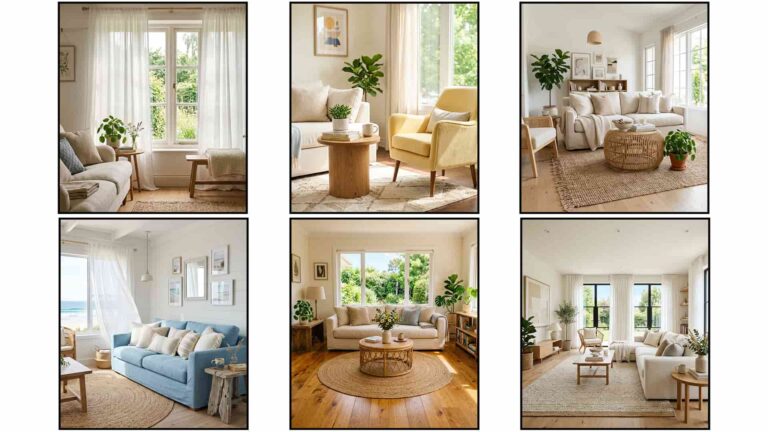
A neutral linen sofa instantly anchors a calm, breathable living space without overpowering the room. The fabric’s natural weave adds warmth and texture, making the room feel curated yet effortlessly lived-in and welcoming.
In my experience, oatmeal and ivory linen sofas photograph beautifully and feel incredibly soothing in person. They work best in light-filled rooms where natural tones can breathe freely and shine.
- Adds warmth without bold color
- Natural fabric feels soft daily
- Pairs well with wood accents
- Keeps the room visually light
- Works in small living spaces
Linen sofas age gracefully and develop a beautiful lived-in quality over time. That’s why many interior stylists recommend linen as the ideal fabric for a cozy, low-maintenance minimalist setup.
This idea works especially well in apartments with limited square footage. The neutral tone visually expands the space and makes even a compact room feel open, airy, and calm throughout the day.
Warm Wood Coffee Table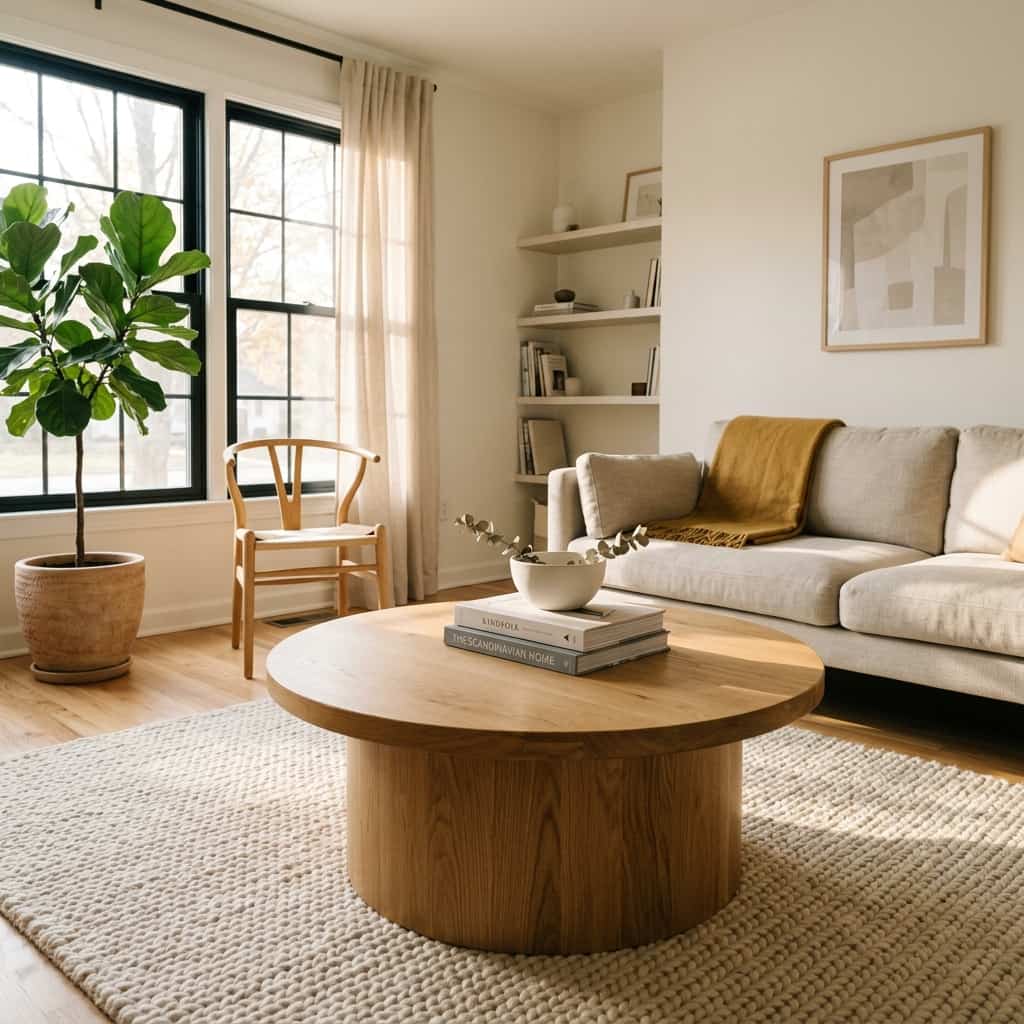
A round wooden coffee table softens a minimal living room and creates natural flow around the seating area. Its organic shape removes sharp angles from the space, making the entire room feel friendlier and more relaxed.
Wood grain adds visual texture without introducing pattern or color chaos. I’ve noticed that even a single quality wood piece shifts the entire room’s mood from sterile to genuinely warm and welcoming.
- Grounds the seating area naturally
- Adds organic texture instantly
- Round shape improves traffic flow
- Pairs with any neutral palette
- Suits both small and large rooms
Raw or lightly finished wood works best in minimal interiors because it stays honest and unpretentious. That natural quality is what gives a cozy minimalist living room its signature calm, grounded feeling every single day.
This style suits open-plan living areas and compact apartments equally well. Place one small tray on top for styling, and the table immediately looks intentional, polished, and Pinterest-worthy without any extra effort.
Sheer Curtain Natural Light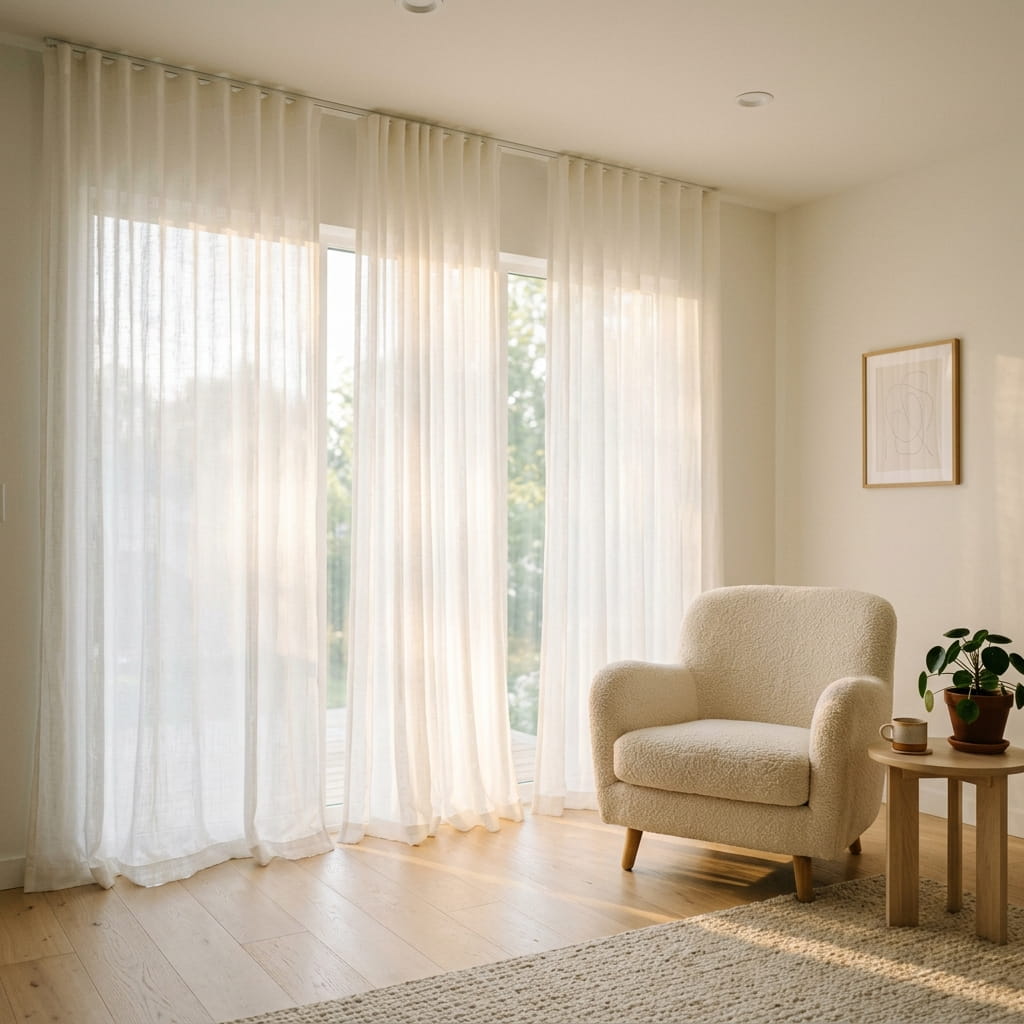
Sheer white curtains do something almost magical to a living room , they filter sunlight into a soft, golden glow that feels warm and dreamy all morning long. That gentle light transforms the entire room’s mood instantly.
I’ve tried both blackout and sheer curtains in minimal rooms. Sheer panels consistently win because they keep the space feeling alive, connected to the outdoors, and filled with natural, ever-changing light throughout the day.
- Softens harsh direct sunlight beautifully
- Makes small rooms feel larger
- Creates dreamy, photo-worthy lighting
- Pairs perfectly with neutral walls
- Low-cost, high-impact styling upgrade
Sheer curtains also make rooms feel taller and more spacious when hung high above the window frame. That’s why many stylists recommend installing the curtain rod just below the ceiling line for maximum visual impact.
This idea works beautifully in south-facing or east-facing living rooms. Morning light through sheer linen creates a warm, retreat-like atmosphere that no overhead lighting can ever fully replicate or replace.
Chunky Knit Throw Accent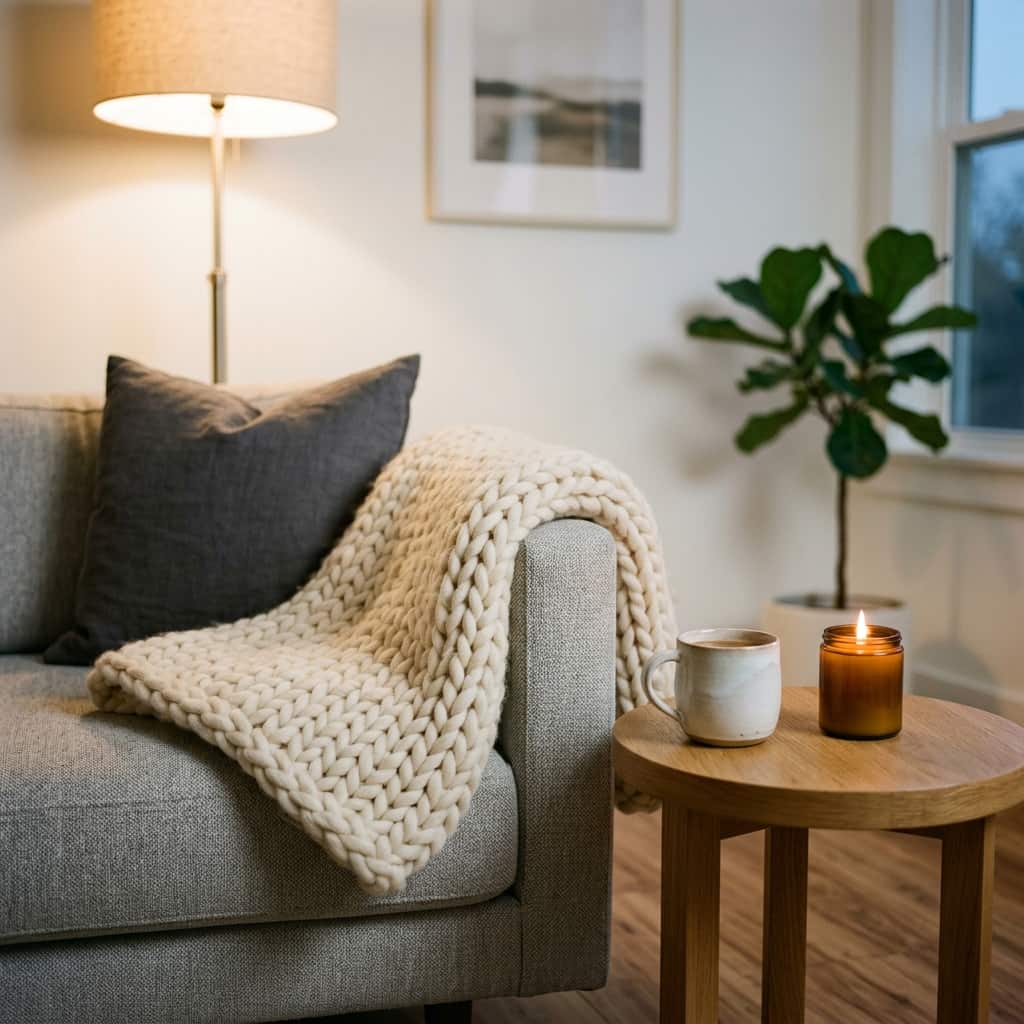
A chunky knit throw draped over a sofa arm adds instant coziness to any minimal living space. The thick, handcrafted texture creates a tactile richness that photographs beautifully and feels even better in real life.
Minimal rooms sometimes risk feeling too polished or untouchable. I’ve found that one casually draped knit throw immediately solves that problem, adding human warmth and visual softness to the entire setup.
- Adds cozy texture without clutter
- Cream tones stay neutral always
- Perfect for autumn and winter styling
- Creates an inviting, lived-in look
- Works on sofas, chairs, or benches
Chunky knit throws also serve a real practical purpose on cool evenings. That combination of genuine usefulness and strong visual appeal makes this one of the smartest small-budget decor choices for any cozy living room.
This accent piece works in any size living room and suits both modern minimal and Scandinavian-inspired interiors. Place it loosely, never folded perfectly, so the room looks relaxed and naturally styled rather than staged.
Low-Profile Minimalist Sofa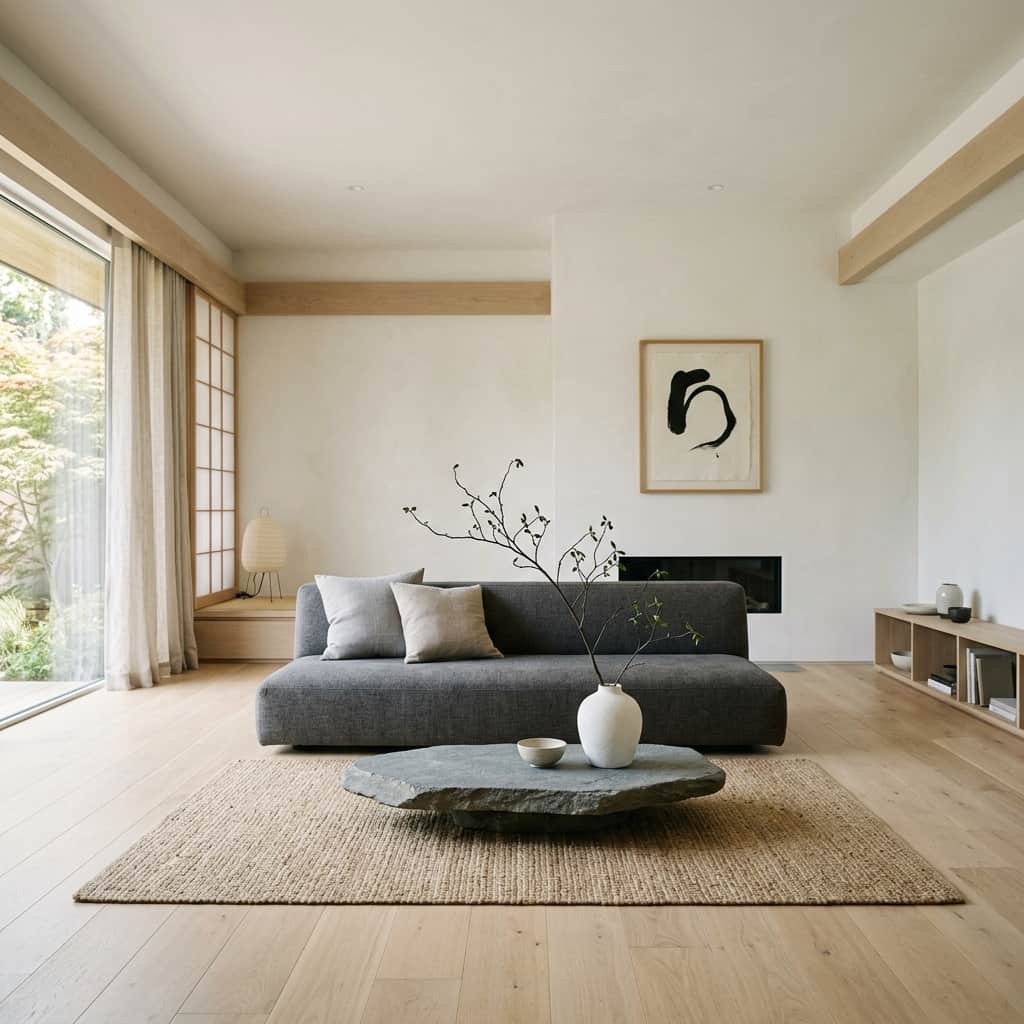
A low-profile sofa changes the entire geometry of a living room by keeping sightlines open and the space feeling wide and uncluttered. The result is a calm, grounded aesthetic that instantly signals intentional design.
Japanese and Scandinavian interiors both rely heavily on this low-to-the-ground approach. I’ve seen this style work beautifully even in rooms with low ceilings because it makes the ceiling feel higher by contrast.
- Opens up visual floor space
- Creates a grounded, calm aesthetic
- Works well in small living rooms
- Pairs beautifully with flat rugs
- Feels modern without being cold
Low-profile furniture also encourages a more relaxed, floor-level lifestyle that many people find genuinely restorative after long workdays. That’s why this style continues to grow in popularity across USA-based minimal interiors.
This setup suits open-plan apartments and dedicated living rooms equally well. Keep surrounding furniture at similar low heights so the room maintains its consistent, intentional horizontal flow from wall to wall.
Stone and Ceramic Vignette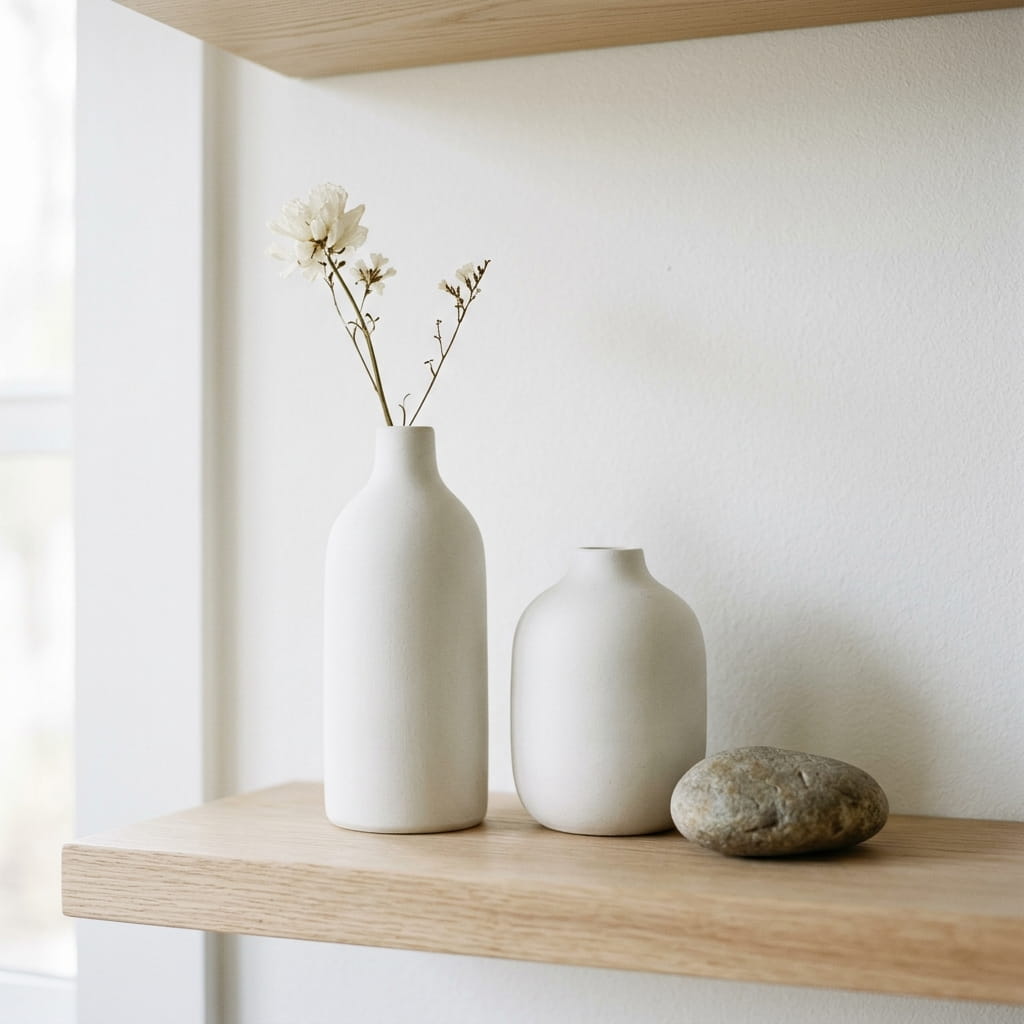
A small stone and ceramic vignette on a shelf or coffee table creates a quiet focal point that feels curated, artistic, and deeply calm. These natural materials bring the outdoors into the living space without overwhelming it.
Styling with stone and ceramics requires very little effort and almost no budget. I’ve noticed that three simple objects in varying heights always look more intentional than a shelf crowded with decorative items.
- Adds organic texture and interest
- Natural materials feel grounded
- Easy to restyle each season
- Works on shelves, tables, or mantels
- Creates a gallery-like, artful look
Matte finishes on ceramics absorb light softly and prevent the harsh reflections that shiny surfaces create in minimal rooms. That subtle quality makes the entire space feel quieter, more thoughtful, and genuinely retreat-like.
This vignette idea suits any corner of the living room and costs very little to create. Combine objects you already own with one or two inexpensive finds, and the result looks effortlessly stylish and completely personal.
Monochrome White Living Room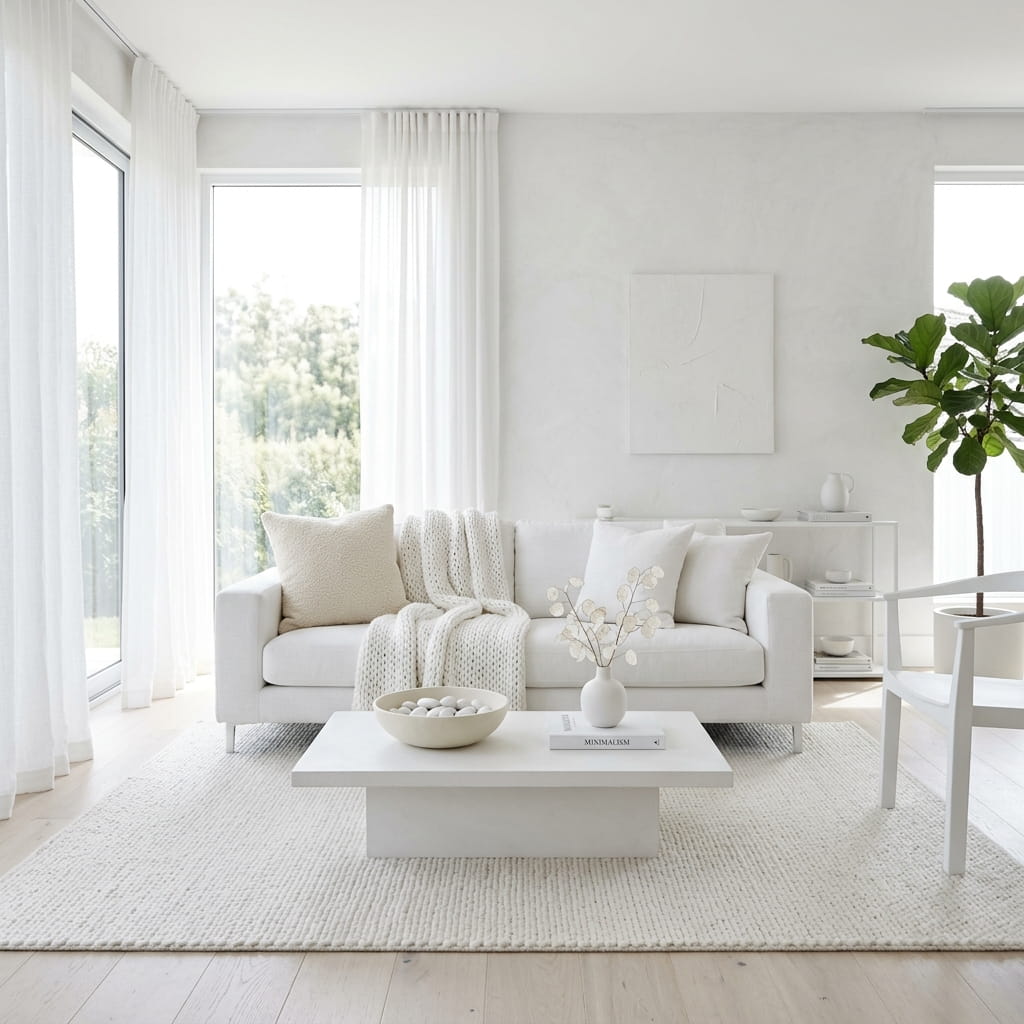
An all-white living room feels bold, serene, and remarkably sophisticated when the styling relies on texture rather than color. This is the approach that transforms a plain white room into a genuine calm retreat.
The secret to a successful monochrome white room is layering at least four different textures. I’ve tried this style and learned quickly that without varied textures, the room feels flat rather than refined and intentional.
- Multiple textures prevent visual flatness
- White expands small rooms visually
- Easy to accent with one color pop
- Feels clean and endlessly calming
- Photographs beautifully in natural light
White rooms also adapt to every season effortlessly. You simply swap one accent piece , a rust-toned throw in autumn or a sage green pillow in spring , and the entire room shifts its mood completely.
This approach suits rental apartments especially well because white paint is almost always already in place. Work with the existing walls and focus all your budget on quality textural pieces that create depth and visual richness.
Dried Botanicals Display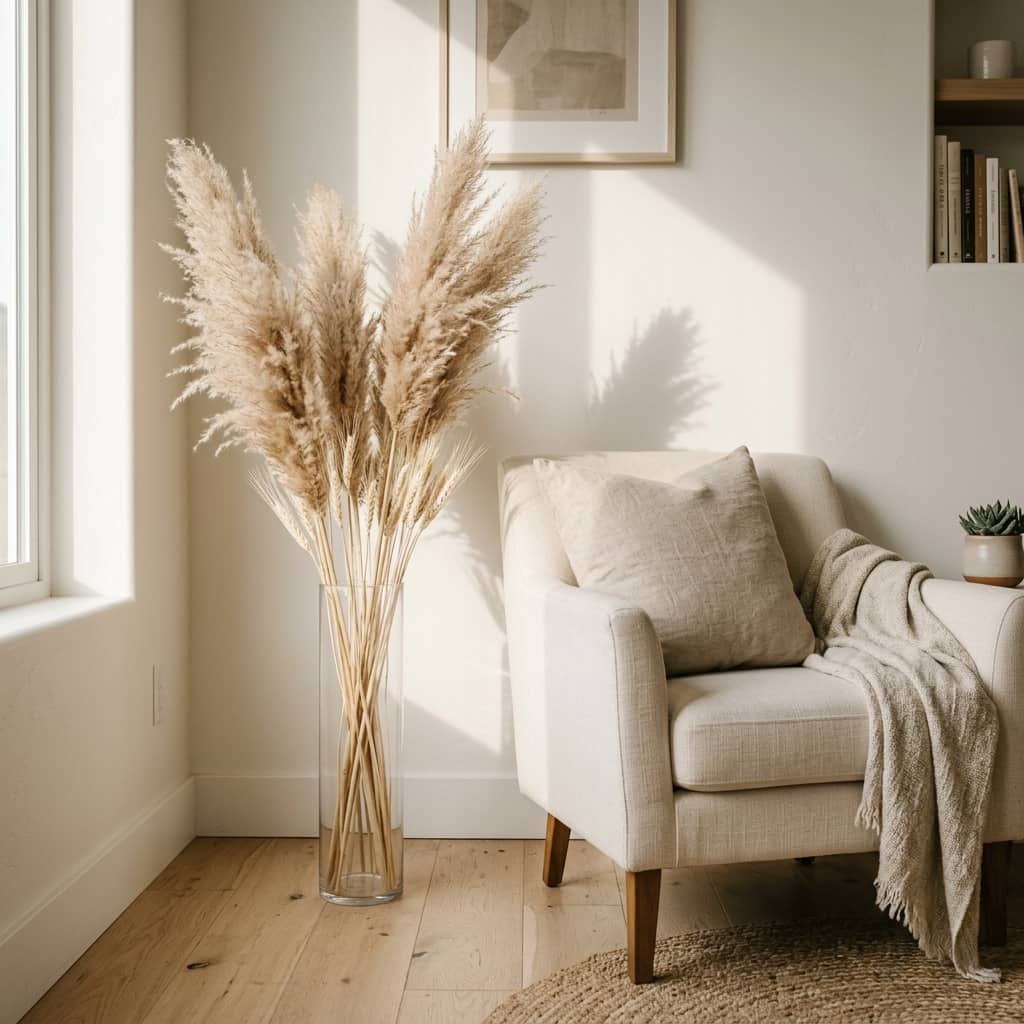
Dried botanicals bring effortless natural beauty into a minimal living room without the maintenance that fresh flowers require. A tall bunch of pampas grass in a simple vase makes an immediate and lasting visual impact.
I’ve had the same dried pampas arrangement for over two years, and it still looks stunning. That longevity combined with zero care requirements makes dried botanicals one of the smartest styling choices for any minimal living space.
- Zero maintenance after initial setup
- Adds height and natural movement
- Warm beige tones suit neutral rooms
- Works year-round without replacing
- Creates organic, editorial-style decor
Dried stems also cast beautiful soft shadows on white walls during golden hour light. That unexpected shadow play adds a layer of subtle visual interest that makes the room feel alive and artful throughout the day.
This idea suits every room size and works especially well in corners that feel empty or unfinished. One large dried arrangement immediately fills visual dead space and grounds the corner with natural warmth and elegance.
Floating Wall Shelves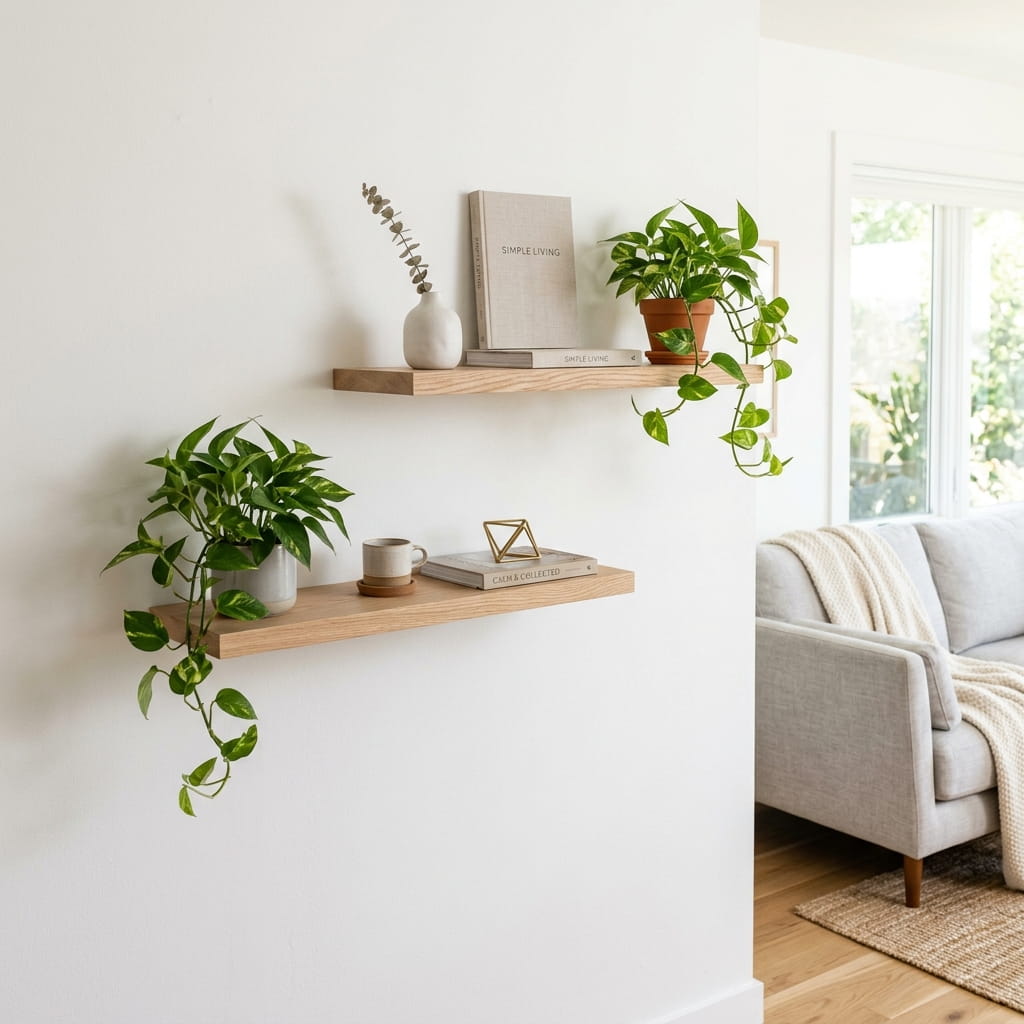
Floating shelves solve the age-old problem of needing storage without sacrificing the clean, open feel of a minimal living room. They draw the eye upward and add vertical interest to flat white walls.
The key is restraint. I’ve seen floating shelves styled with too many objects, and the result is visual noise rather than calm. Two or three carefully chosen pieces per shelf always look better than a fully packed display.
- Adds vertical interest to walls
- Creates stylish storage without bulk
- Keeps the floor visually clear
- Suits any wall size or shape
- Easy to restyle without tools
Asymmetric shelf placement feels more dynamic and intentional than perfectly symmetrical arrangements. That slight variation creates a gallery-wall effect that looks professionally designed without requiring any design background.
This storage solution suits rental-friendly living rooms because shelves install with minimal wall damage. They also work in narrow living rooms where floor-standing furniture would block natural movement through the space.
Sage Green Accent Wall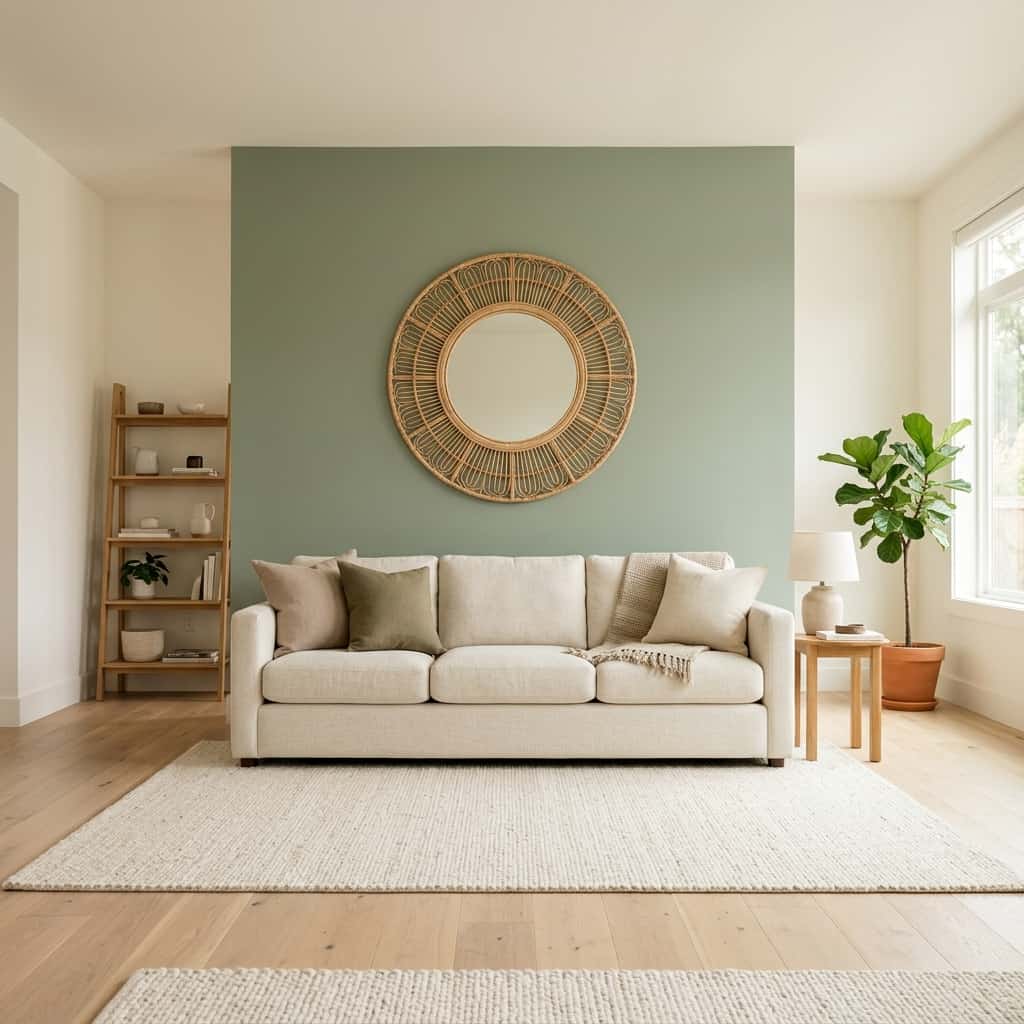
A single sage green accent wall introduces gentle, nature-inspired color without disrupting the calm of a minimal living space. This muted green works with nearly every neutral tone already present in the room.
Sage green has become one of the most popular accent colors in USA minimal interiors, and for good reason. I’ve noticed that it creates a bridge between the indoors and outdoors, making the whole room feel fresher and more alive.
- Adds color without overwhelming space
- Pairs with cream, white, and oak tones
- Creates a biophilic, nature-connected feel
- Works on one wall only for subtlety
- Suits both modern and organic aesthetics
A rattan or woven mirror centered on the sage wall adds a complementary organic texture. That combination of earthy green and natural woven material is one of the most reliably beautiful pairings in current minimal home decor.
This idea is also one of the most affordable room transformations available. One can of quality paint applied to a single wall completely shifts the room’s personality and creates a stunning Pinterest-worthy backdrop instantly.
Rattan and Natural Fiber Accents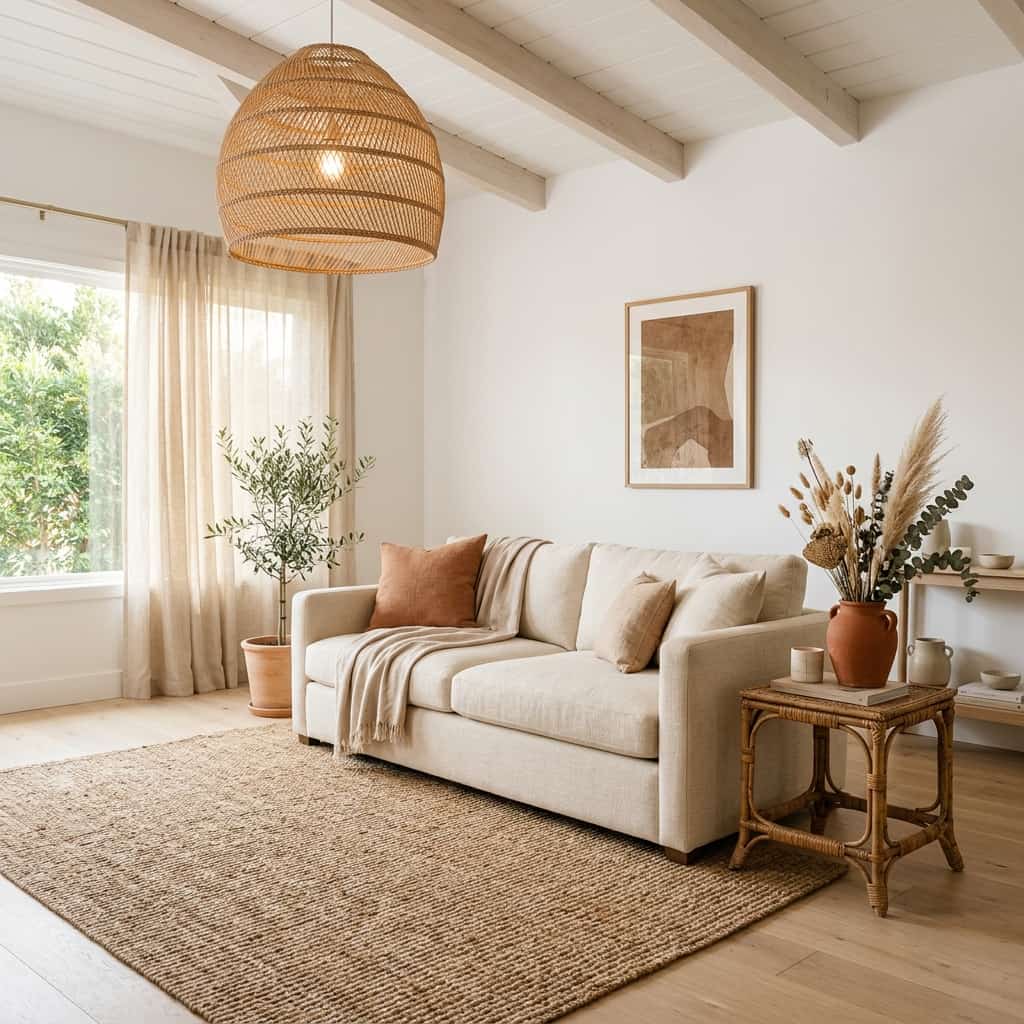
Rattan and natural fiber accents give a minimal living room an organic, resort-like warmth that no synthetic material can replicate. The woven textures add visual depth and a handcrafted quality that feels genuinely human.
That’s why many interior stylists consistently recommend rattan as the go-to material for warming up minimal spaces. It reads as both casual and elevated, which is a rare and valuable quality in any single decor material.
- Adds handcrafted warmth instantly
- Pairs with every neutral color scheme
- Brings natural texture without pattern
- Works as lighting, furniture, or accents
- Creates a relaxed, resort-inspired feel
A jute or sisal area rug anchors the seating area while reinforcing the natural fiber theme. I’ve seen this layered approach create rooms that feel deeply cozy and intentional despite using very few individual decor pieces overall.
This style suits coastal minimal interiors and warm-toned Scandinavian-inspired spaces equally well. The natural materials also age beautifully over time, developing character rather than looking worn or outdated after a few years.
Single Statement Artwork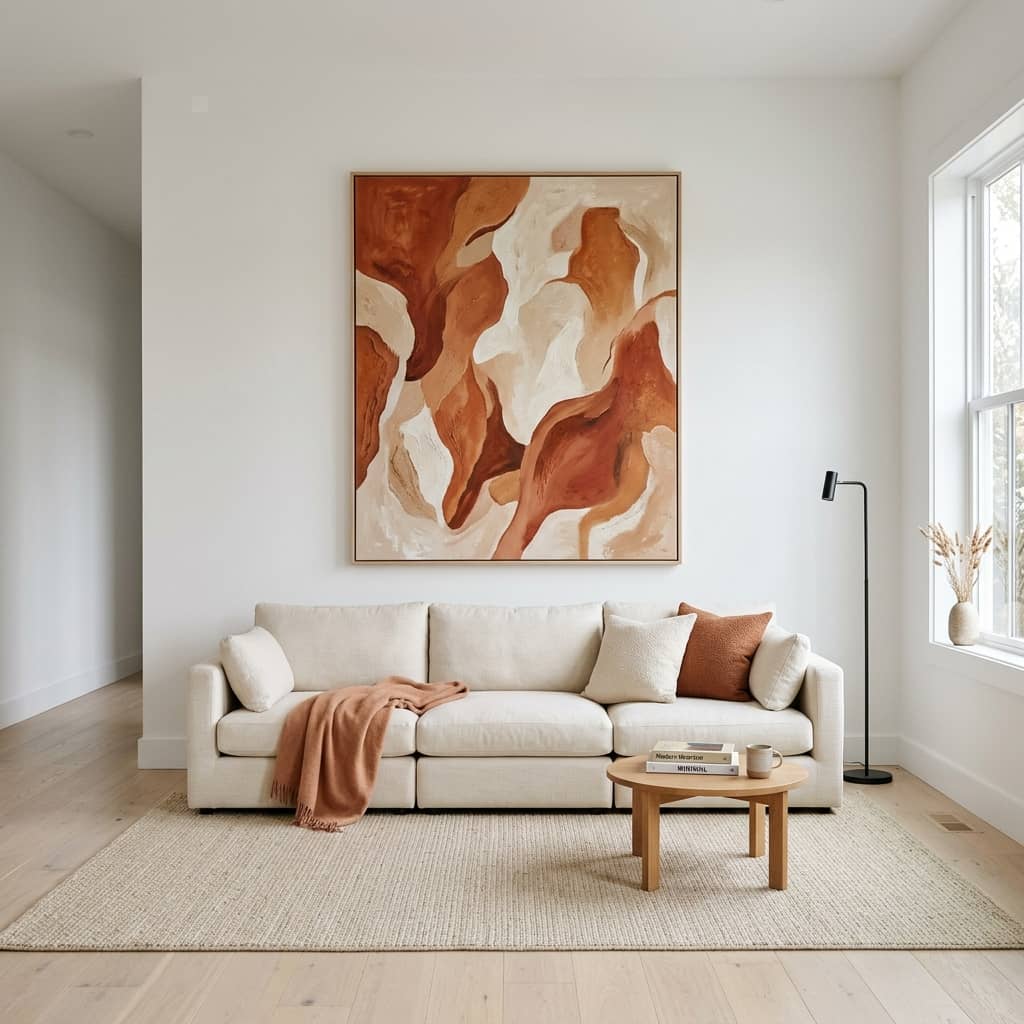
One oversized artwork hung on a clean white wall makes a far stronger visual statement than a gallery wall packed with multiple frames. The empty space surrounding it gives the piece room to breathe and truly impact the viewer.
I’ve rearranged many living rooms over the years, and replacing cluttered gallery walls with a single large piece consistently creates a more dramatic and calming result. Less, in this case, is genuinely and powerfully more.
- Creates an instant focal point
- Eliminates visual wall clutter
- Makes the room feel gallery-curated
- Works with any art style or medium
- Suits both large and small walls
Abstract art in warm, muted tones suits minimal living rooms best because it adds color and personality without clashing with the neutral base. Terracotta, sage, and warm cream tones are particularly reliable and widely loved choices.
This approach also makes decorating decisions simpler and less expensive. One quality art print or canvas costs less than an entire gallery wall setup and creates a cleaner, more sophisticated result every single time.
Bouclé Armchair Corner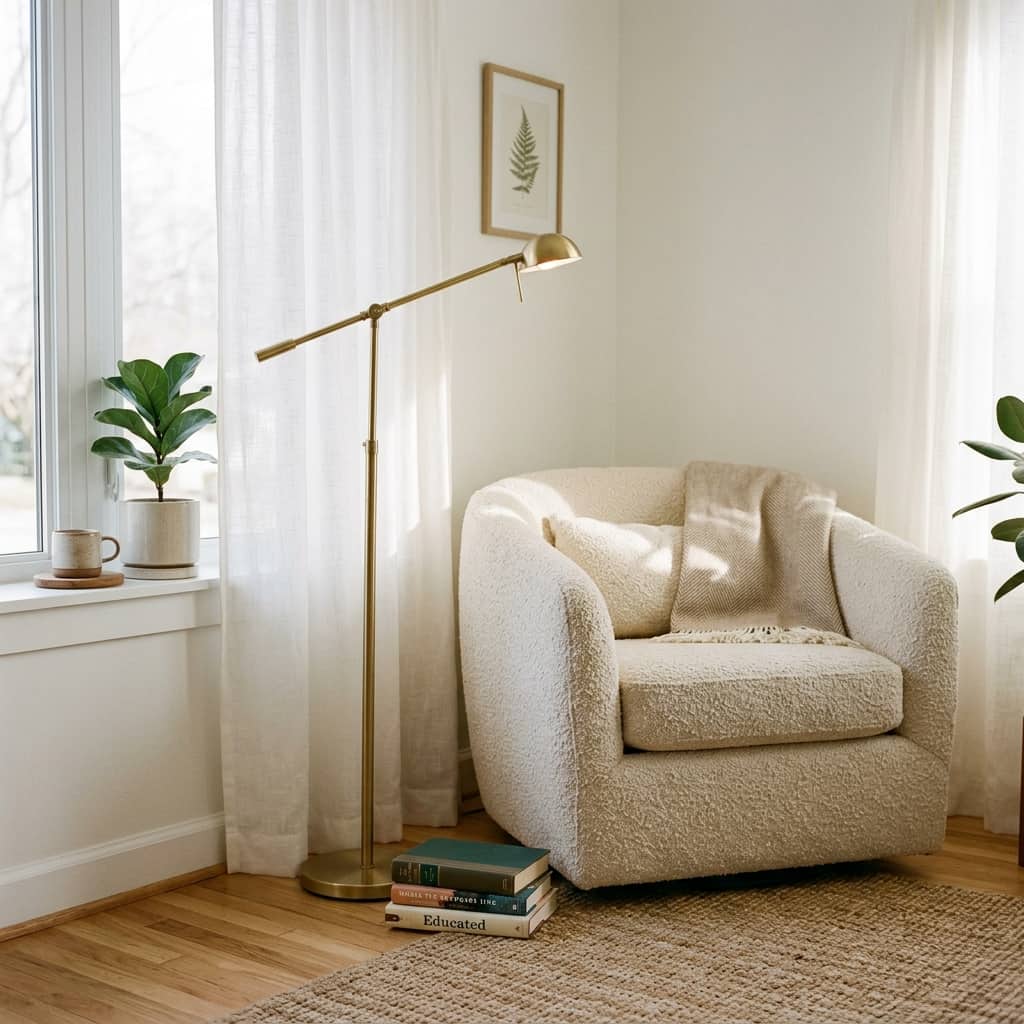
A bouclé armchair tucked into a quiet corner creates one of the most inviting spots in any minimal living room. Its looped, cloud-like texture immediately draws the eye and signals a place designed purely for rest.
I’ve styled several reading corners over the years, and a bouclé chair consistently outperforms every other option for combining visual beauty with genuine, everyday comfort. It earns its place in any calm space.
- Adds plush texture to minimal rooms
- Creates a dedicated cozy corner
- Cream tone suits every neutral palette
- Works in small and large spaces
- Pairs beautifully with brass lighting
A slim floor lamp positioned just behind the chair provides perfect reading light without adding visual bulk to the corner. That simple combination of one chair and one lamp is genuinely all you need for a functional, beautiful setup.
The bouclé armchair also works brilliantly as a solo accent piece in open-plan living spaces. It defines a distinct zone within a larger room without requiring walls, dividers, or any additional furniture pieces.
Japandi Shelf Styling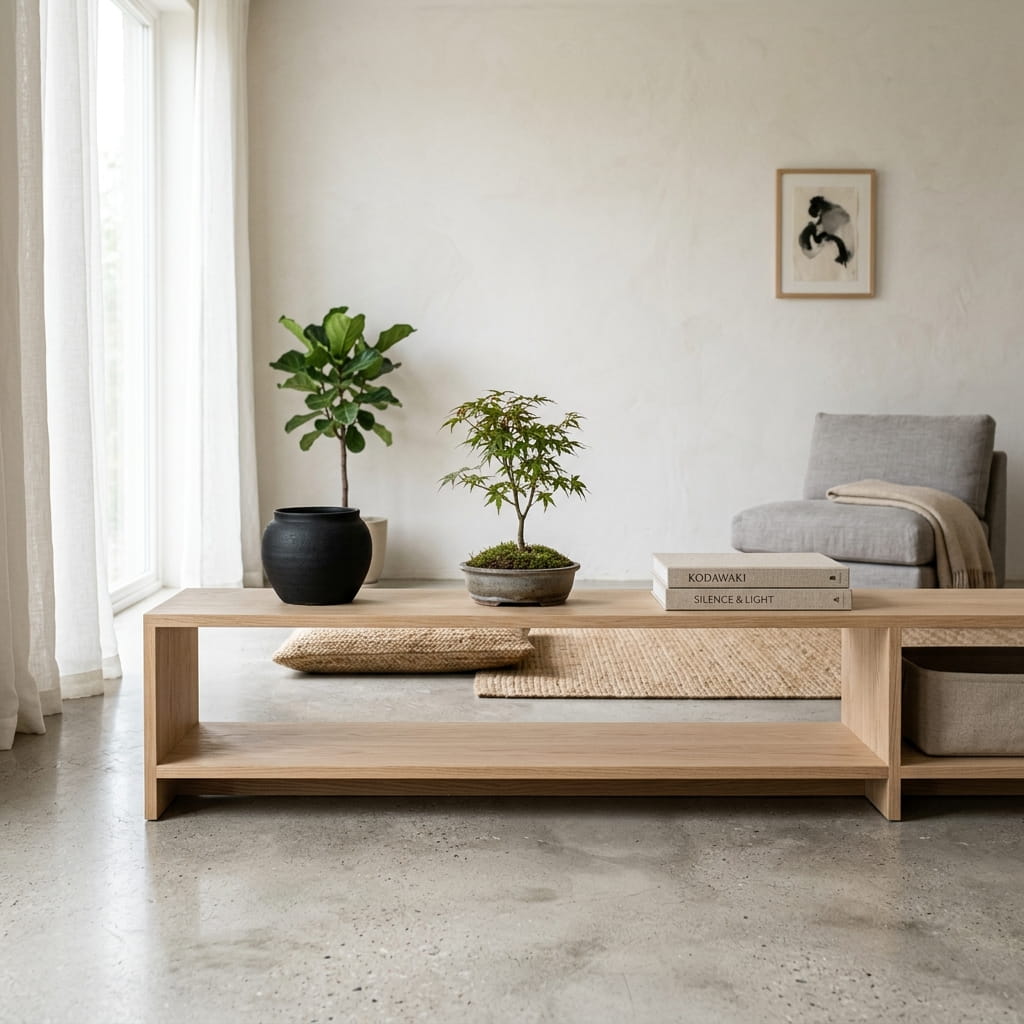
Japandi shelf styling blends Japanese minimalism with Scandinavian warmth into one quietly powerful aesthetic. Every object on the shelf carries intentional meaning, and the empty space between items is just as important as the items themselves.
That restrained approach to styling is what separates Japandi interiors from every other trend. I’ve noticed that once people experience this level of visual calm, they rarely want to return to heavily decorated spaces again.
- Each shelf object placed with intention
- Empty space treated as a design element
- Matte black ceramics add quiet contrast
- Low furniture creates grounded energy
- Works in any neutral-toned living room
Natural linen-covered books add color, texture, and personal character to the shelf without introducing visual noise. Removing dust jackets and replacing them with simple kraft paper or linen wraps is a quick, clever styling trick.
This shelf style suits work-from-home living spaces particularly well. The calm, organized visual environment supports focus and reduces mental clutter throughout a long workday spent in the same room.
Wabi-Sabi Textured Walls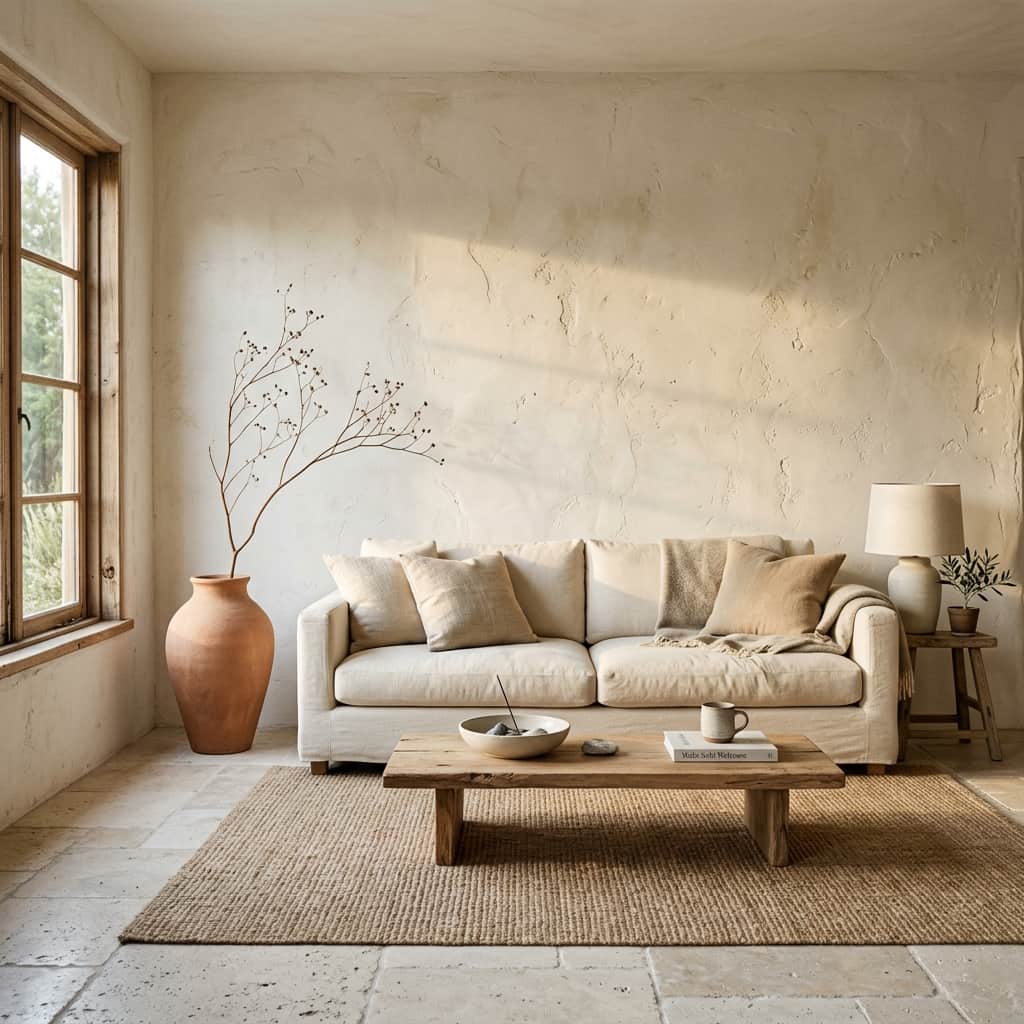
A wabi-sabi textured plaster wall celebrates natural imperfection in the most beautiful way possible. The uneven surface catches light differently throughout the day, creating a living wall that shifts and breathes with the hours.
This approach to walls moves completely away from the idea that perfection equals beauty. I’ve seen textured plaster walls transform ordinary rental apartments into spaces that feel genuinely unique, handcrafted, and deeply personal.
- Celebrates natural texture and imperfection
- Catches light differently all day long
- Adds depth without color or pattern
- Suits raw, organic, and earthy aesthetics
- Works as a single statement wall only
Pair a wabi-sabi wall with simple, unpolished natural objects like raw clay vessels, dried branches, or hand-thrown ceramics. That consistency of raw, honest materials creates a room that feels truly cohesive from floor to ceiling.
This wall treatment also works on a very tight budget using basic plaster compounds and simple layering techniques. No professional artist is required , the deliberate imperfection is actually the point and the intended final result.
Layered Neutral Rug Setup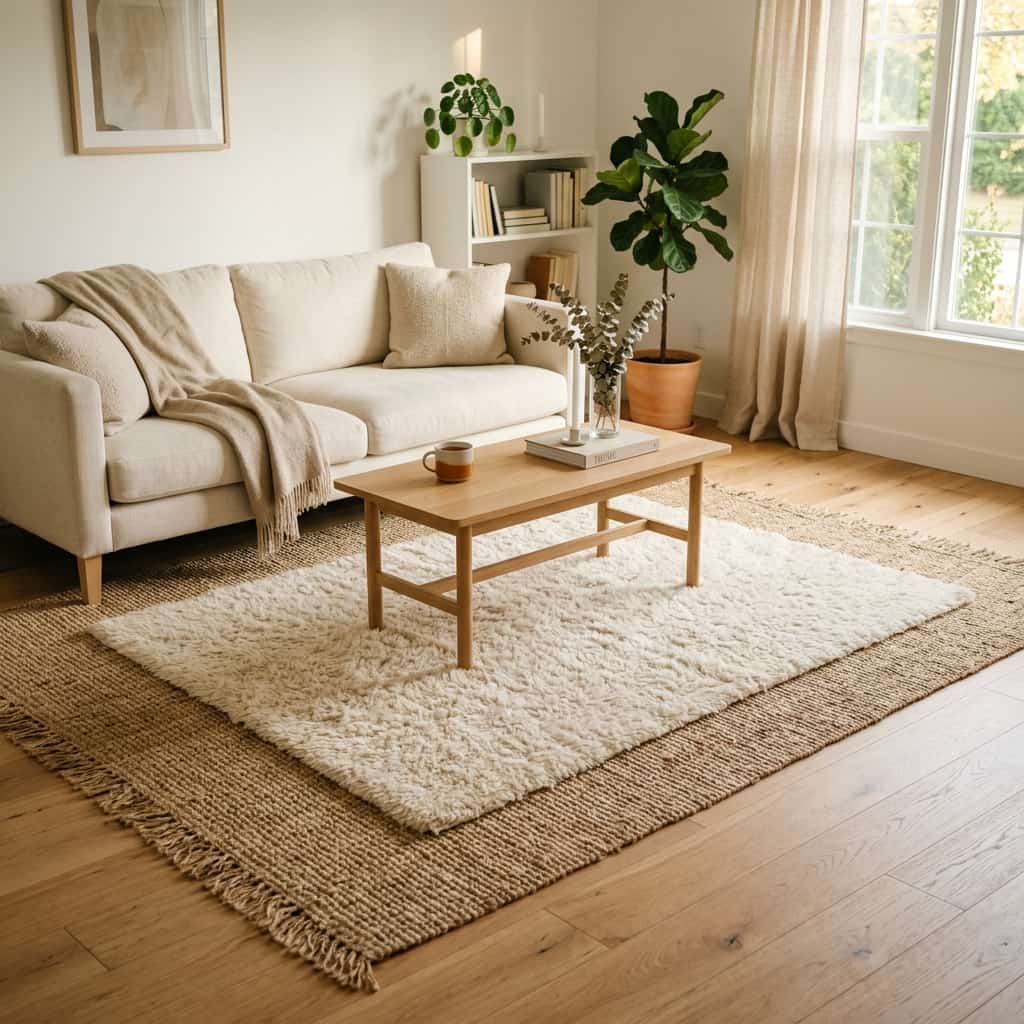
Layering two rugs creates instant depth, warmth, and visual richness in any minimal living room without adding any furniture or wall decor. This one simple trick makes the seating area feel defined, cozy, and completely intentional.
I’ve recommended this layering approach to many people decorating on a tight budget. Two affordable rugs layered together consistently look more expensive and thoughtfully styled than one single high-end rug placed alone.
- Defines the seating area clearly
- Adds warmth underfoot daily
- Creates budget-friendly visual richness
- Mixes textures for added depth
- Works on hardwood and tile floors
The key is contrast between the two rug layers , one flat-woven natural fiber base and one plush, softer top rug. That textural difference creates the visual layering effect that makes the floor feel genuinely designed.
Layered rugs also add practical insulation value during colder months, making the living room floor warmer and more comfortable. That combination of beauty and function is exactly what the best minimal decor always delivers.
Minimal Bookshelf Arrangement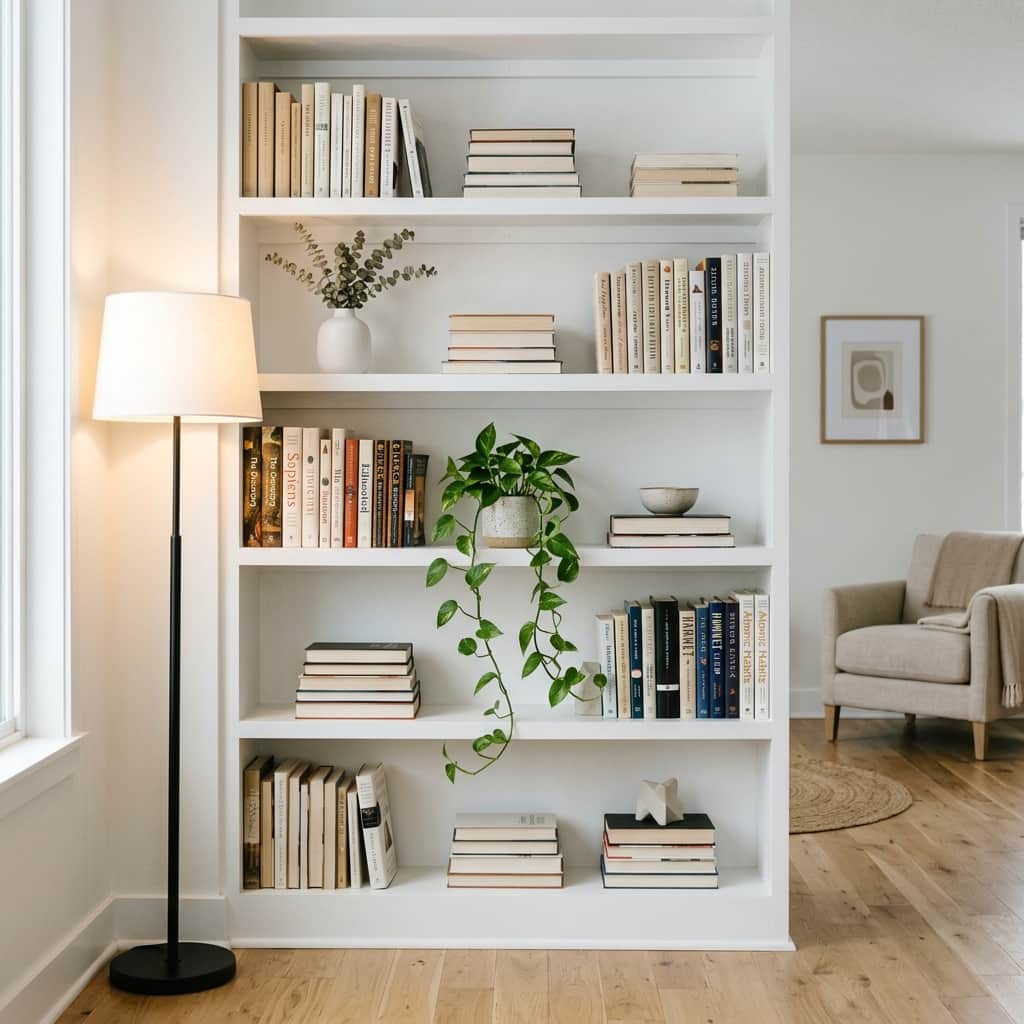
A thoughtfully arranged bookshelf becomes one of the most personal and visually striking features in a minimal living room. The key lies in treating the shelves as a composition rather than simply a storage solution.
That’s the shift most people miss , books don’t belong in rigid rows when styling for visual impact. I’ve found that alternating horizontal stacks with vertical groupings immediately makes any bookshelf look deliberately and professionally styled.
- Mix horizontal and vertical book groupings
- Add one small plant for organic life
- Ceramics between groups break the monotony
- Negative space between groups is essential
- Group books by color for a cleaner look
Grouping books by spine color creates gentle color blocking that looks artful without requiring any additional decor purchases. Even a minimal room benefits from this quiet, personal touch that reflects the people living there.
This bookshelf approach suits open-plan living rooms where the shelf acts as a room divider. Style both front and back faces of the shelf to create a design feature visible from every angle in the space.
Concrete and Soft Linen Mix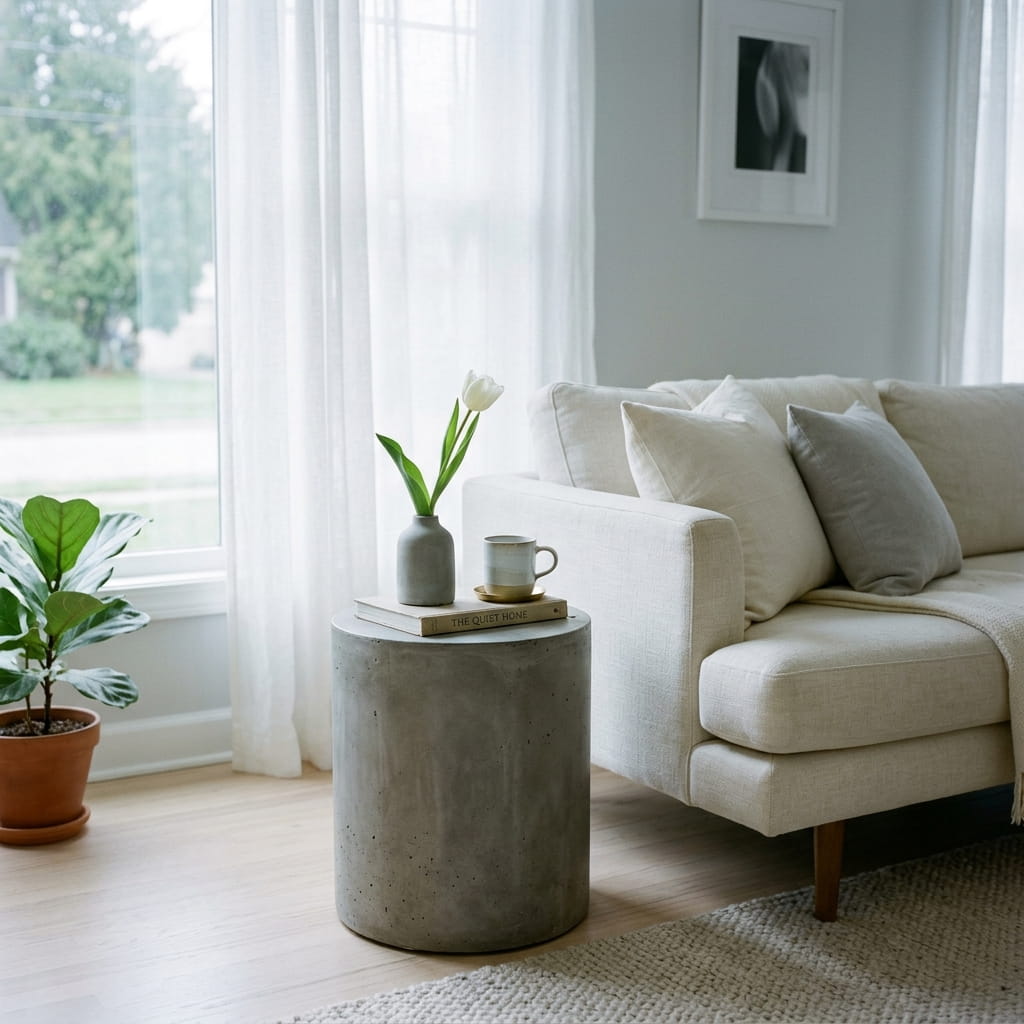
Pairing raw concrete with soft linen fabric creates one of the most visually compelling contrasts available in minimal interior design. The hard, industrial surface and the gentle woven fabric bring out the best in each other.
This hard-meets-soft contrast is a fundamental principle that experienced interior designers use constantly. I’ve noticed it appears in virtually every high-end minimal interior because the tension between materials creates effortless visual sophistication.
- Hard and soft textures create visual tension
- Concrete adds modern, industrial character
- Linen softens the room’s overall tone
- Cool gray palette keeps the space calm
- Works in modern apartments and lofts
A single fresh flower in a small concrete vase on the side table reinforces this contrast beautifully. The delicate organic bloom against the rough gray surface creates a quietly poetic moment within the larger minimal room.
This pairing also works across multiple scales , from a concrete coffee table paired with a linen sofa to concrete pendant lights above a soft upholstered sectional. The principle scales up and down effortlessly.
Arch Mirror Statement Piece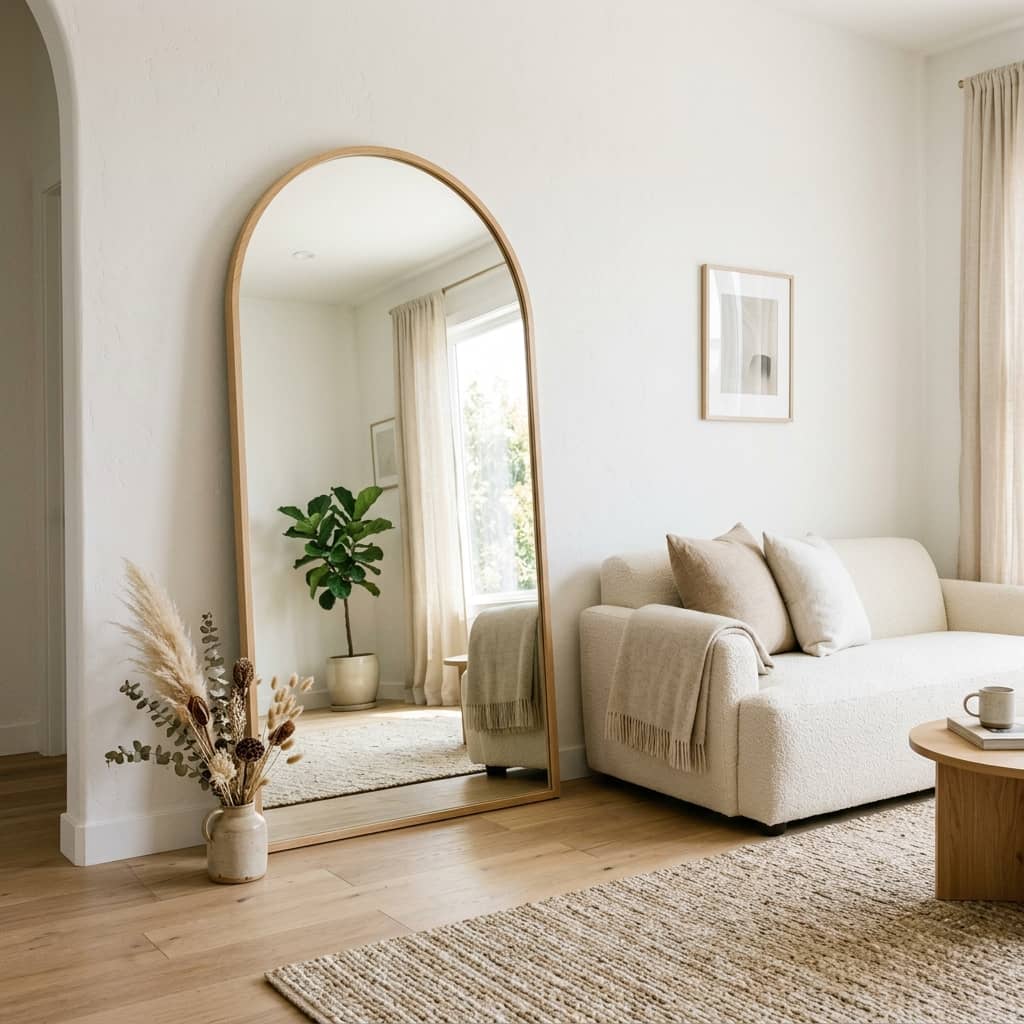
A large arched mirror leaning casually against a living room wall is one of the most powerful visual tools in minimal home decor. It doubles the perceived size of the room and reflects light into every corner effortlessly.
I’ve placed arched mirrors in compact apartments that immediately felt twice their actual size after the addition. The arched top softens the rectangular geometry of most rooms and adds an architectural quality without any renovation work.
- Doubles perceived room size instantly
- Reflects and amplifies natural light
- Arched shape adds soft architectural detail
- Leans against wall , no installation needed
- Works in any size or style of room
A small vignette of dried botanicals placed at the mirror’s base gives the leaning mirror a grounded, intentional look. Without it, the mirror can feel unfinished , that small addition makes the entire setup feel complete and curated.
This idea works especially well in rental living rooms where walls cannot be altered. Simply lean the mirror and style the base, and the result looks every bit as polished as a permanently mounted version would.
Warm Amber Candle Glow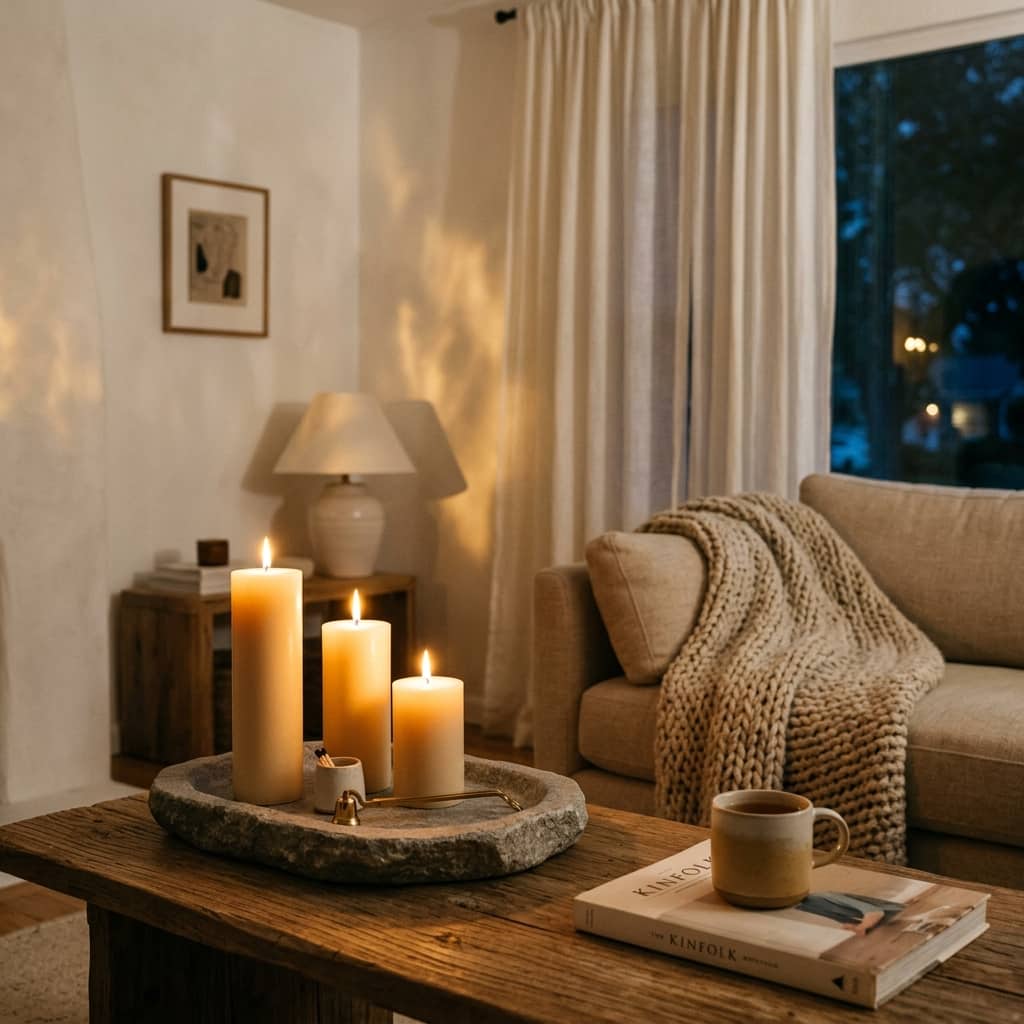
Candles transform a minimal living room from daytime functional space into an intimate evening retreat in under sixty seconds. The amber glow they cast on white walls creates warmth and atmosphere that no electric light fully replicates.
I’ve used this simple candle setup on countless evenings, and it reliably shifts the mood of the entire room. That’s why so many interior stylists treat candles not as decoration but as essential daily lighting tools for minimal spaces.
- Creates instant evening atmosphere
- Warm amber glow softens white walls
- Varying heights add visual rhythm
- Stone tray keeps styling intentional
- Costs very little for huge visual impact
Grouping candles in odd numbers , three or five , always looks more natural and visually balanced than pairs. That odd-number rule applies across all vignette styling and is one of the most reliable tricks in minimal home decor.
This setup suits small living rooms particularly well because candlelight makes compact spaces feel cozy rather than cramped. The soft, directional glow creates depth and warmth that expands the room’s emotional atmosphere beautifully.
Black Line Art Prints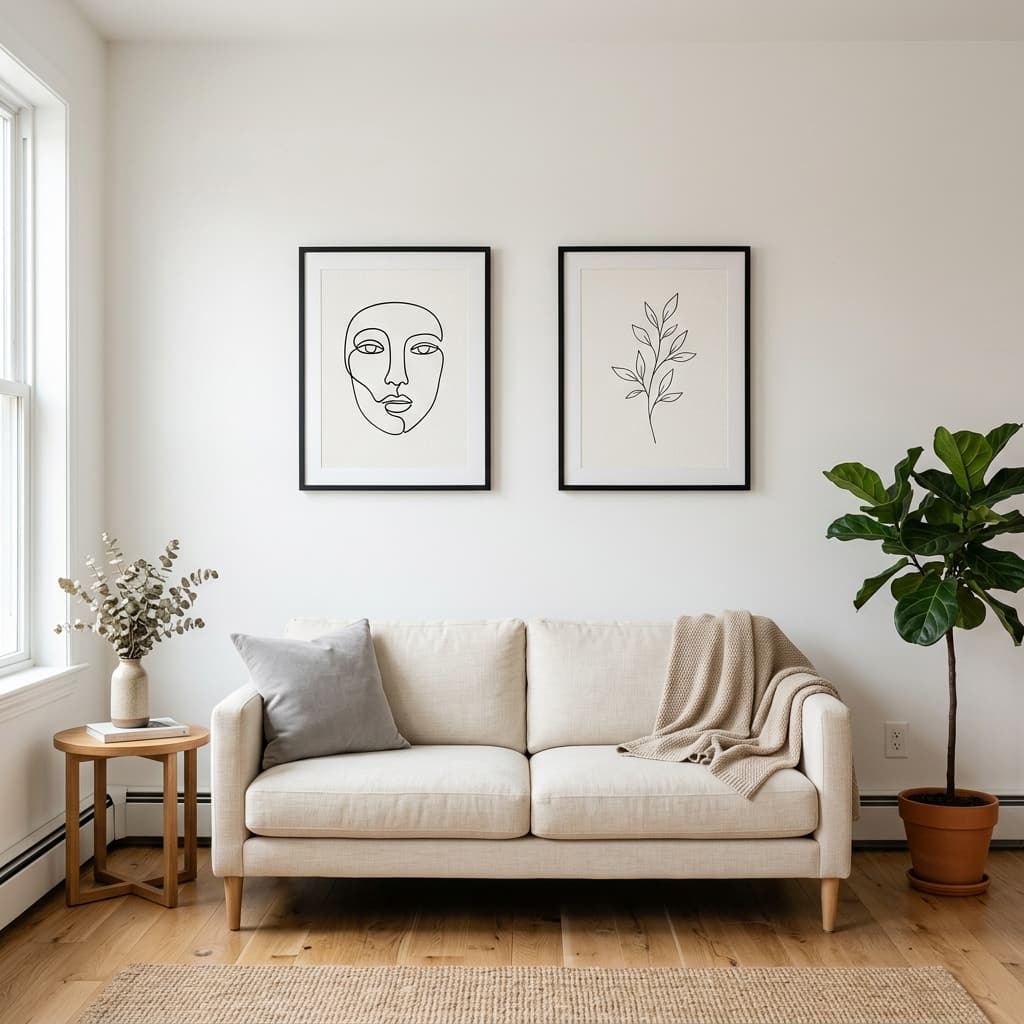
Simple black line art prints in thin frames add artistic character to a minimal living room without introducing color, pattern, or visual chaos. The graphic simplicity of line drawings suits minimal aesthetics perfectly and timelessly.
Two matching frames hung with deliberate spacing feel far more intentional than a large, crowded gallery wall. I’ve styled both approaches in the same room and the minimal paired prints consistently earn more compliments and lasting appreciation.
- Adds art without color complexity
- Thin black frames suit every wall tone
- Line art feels modern and timeless
- Pair two frames for clean balance
- Works on any wall size or height
Abstract line art and simple botanical illustrations are the two most popular choices for minimal living rooms right now. Both work because they add personality and visual interest while staying quiet enough to complement rather than dominate the space.
This wall decor idea is also highly affordable. Quality digital art prints downloaded and framed at home cost a fraction of original artwork prices and look equally polished in a well-styled minimal living room.
Cozy Window Seat Nook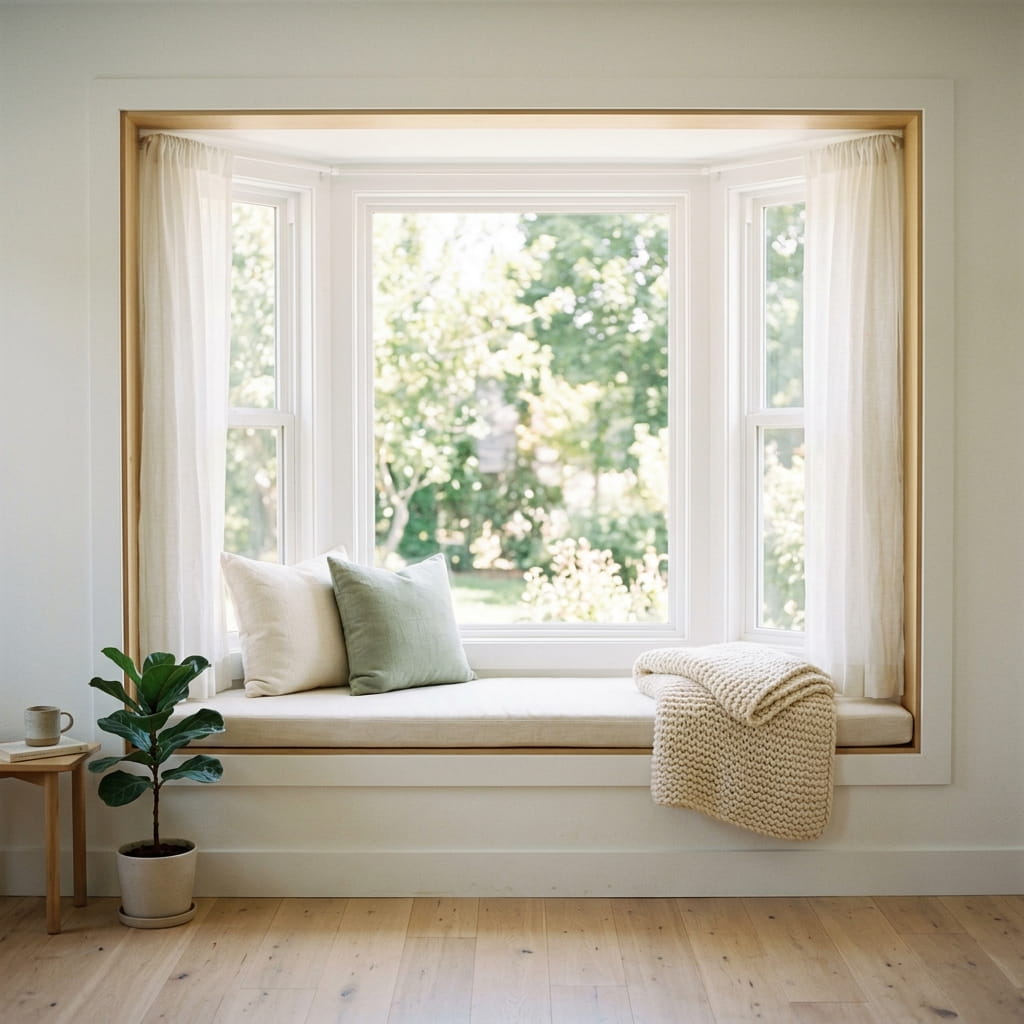
A window seat nook turns an underused bay window into the most beloved spot in the entire living room. This built-in feature adds architectural charm, extra seating, and a cozy retreat that feels purposeful and permanent.
Even without a true bay window, a simple bench cushion placed against a large window creates the same effect. I’ve seen this solution work beautifully in apartment living rooms where true built-in seating simply isn’t possible.
- Turns unused window space productive
- Creates a dedicated reading or rest spot
- Natural light makes the nook feel alive
- Linen and knit textures add coziness
- Works in both large and small rooms
The window seat also functions as hidden storage when fitted with a lift-up cushion lid. That practical bonus makes it one of the most space-efficient additions possible in a minimal living room with limited square footage.
This idea suits families, solo dwellers, and work-from-home professionals equally. The quiet, light-filled nook provides a natural retreat from the main activity zone of the living room throughout the day.
Organic Curved Furniture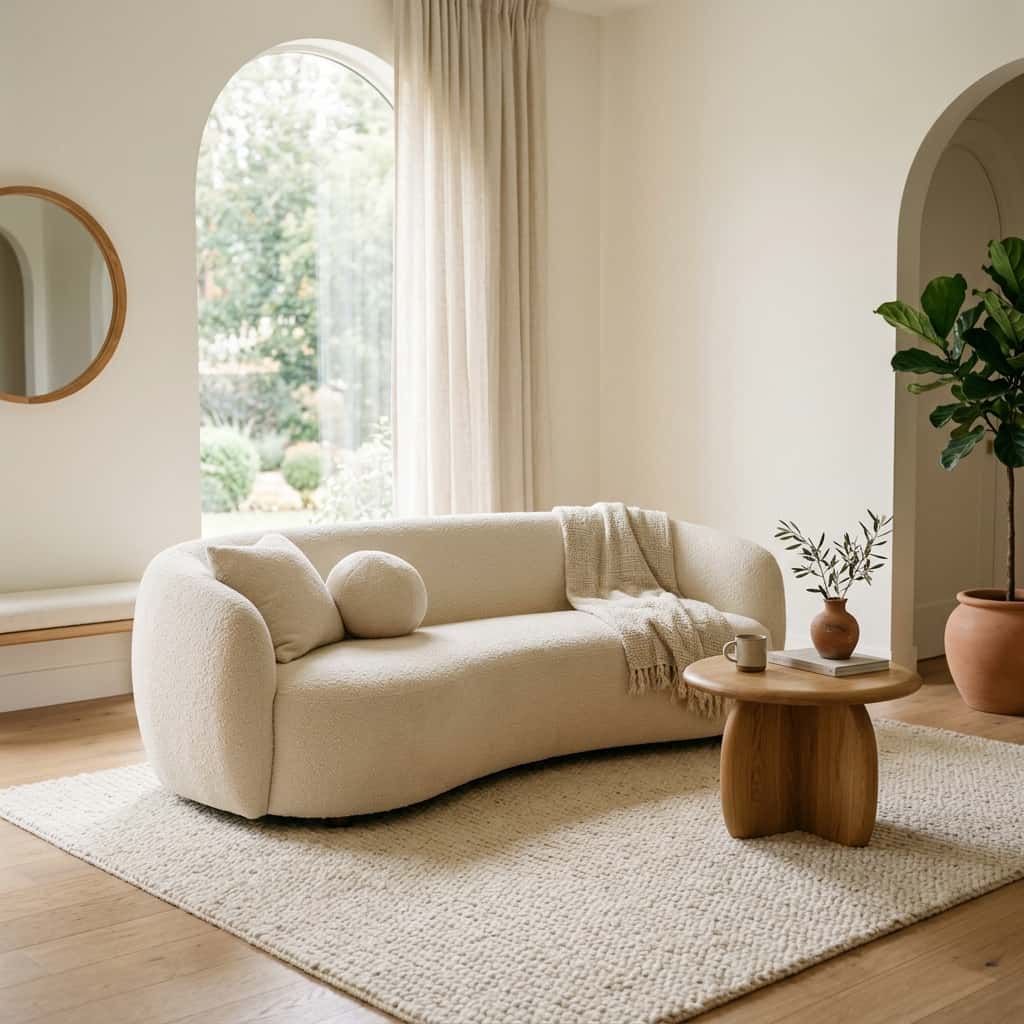
Curved furniture removes all sharp angles from a living room and creates a flowing, sculptural quality that feels both modern and deeply soothing. Rooms filled with soft curves naturally feel gentler and more welcoming than those dominated by hard right angles.
The organic modern trend has brought curved sofas and round side tables into mainstream minimal interiors, and the result is consistently stunning. I’ve noticed this shift makes rooms feel warmer and more approachable without sacrificing a clean, minimal aesthetic.
- Soft curves create visual flow
- Removes harsh right angles from space
- Sculptural quality elevates minimal rooms
- Bouclé fabric enhances the rounded form
- Suits modern, organic, and soft aesthetics
Pairing curved furniture with organic materials like clay, rattan, and linen reinforces the soft, nature-inspired mood of the room. Every element works together to create a space that feels deliberately gentle and beautifully cohesive.
This furniture approach suits living rooms of any size. In small spaces, curved pieces actually feel less visually bulky than angular furniture because the rounded forms flow into the surrounding space rather than cutting against it.
Warm Terracotta Accents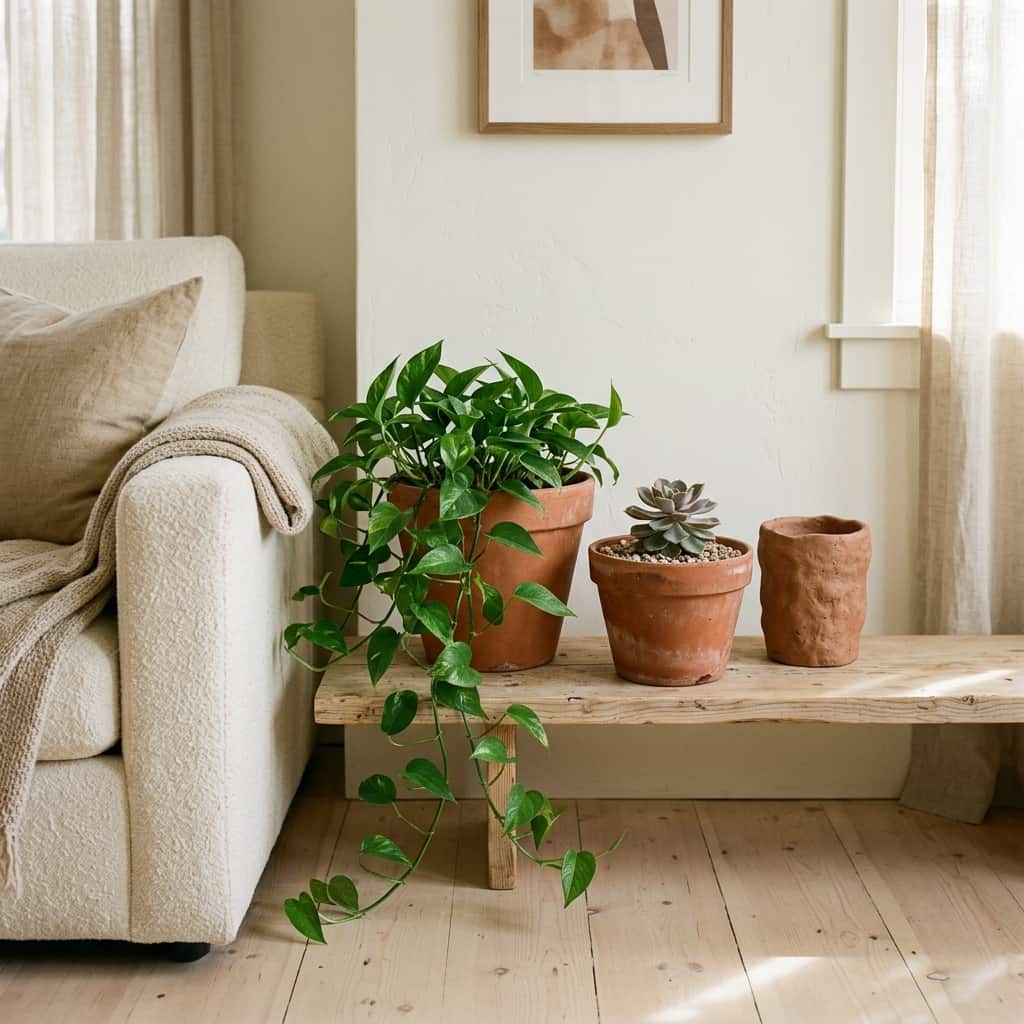
Terracotta clay pots bring instant warmth, earthy color, and organic life into a cool neutral living room. Their reddish-brown tone is one of the most reliable natural accent colors in minimal home decor today.
That warmth is what makes terracotta so enduringly popular. I’ve found that even one or two small terracotta pots on a shelf or coffee table shift a room from feeling sterile and cold to feeling grounded, lived-in, and genuinely inviting.
- Earthy tone warms neutral white rooms
- Grouped pots create sculptural interest
- Living plants add oxygen and life
- Works on shelves, floors, or tables
- Inexpensive but visually powerful accent
Grouping pots in three varying heights follows the same odd-number principle used in candle styling. The visual rhythm created by three different sizes feels far more natural and artful than two matching pots placed side by side.
This accent idea is especially practical for people who want to introduce color into a minimal room without committing to paint or large furniture changes. A small terracotta arrangement achieves that color shift gently and beautifully.
Soft Pendant Lighting Layer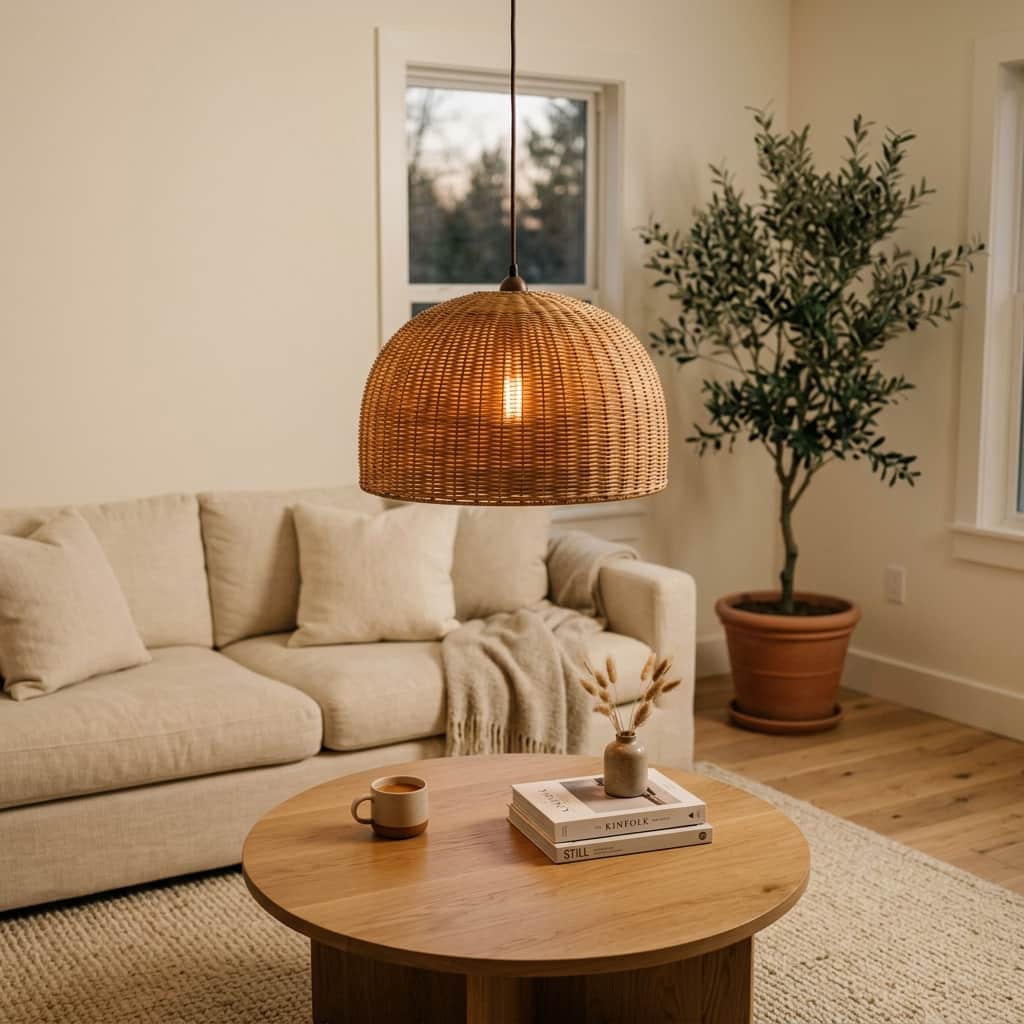
Pendant lighting completely changes the character of a minimal living room by adding a warm, focused glow that overhead recessed lights simply cannot deliver. One well-chosen pendant becomes both a light source and a sculptural centerpiece.
The height at which you hang the pendant matters enormously. I’ve noticed that most people hang pendant lights too high, which loses all the warmth and intimacy. Drop it lower , closer to the coffee table , and the effect becomes immediately dramatic and beautiful.
- Adds warmth and focused ambient light
- Rattan shades suit organic minimal rooms
- Low hanging creates intimate atmosphere
- Replaces cold overhead ceiling lighting
- Works above coffee tables or reading chairs
A rattan or woven shade filters light in a beautiful dappled pattern across the ceiling and walls. That subtle light play adds an extra layer of visual interest to the room that changes gently as evening deepens.
This lighting upgrade suits rental apartments perfectly because pendant lights install with a simple cord-and-hook setup that requires no electrical rewiring. The transformation it creates in the room’s atmosphere is completely disproportionate to its cost and effort.
Minimalist Gallery Ledge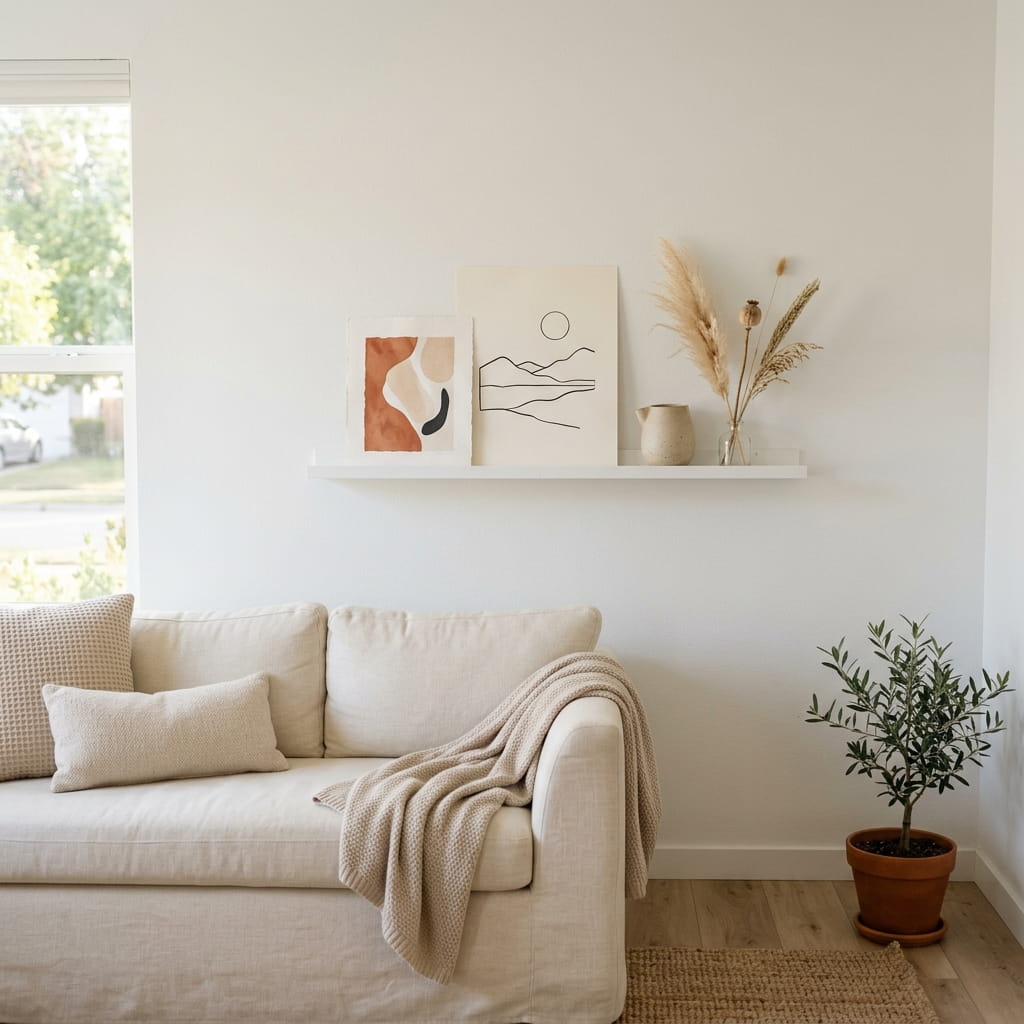
A picture ledge shelf lets you display and rotate art prints freely without ever putting a single nail into the wall. Prints simply lean against the wall on the ledge, creating an effortlessly casual gallery look that feels fresh and flexible.
That flexibility is the real advantage here. I’ve changed the artwork on my own picture ledge at least a dozen times without any wall damage, tool use, or effort. The result always looks intentional, current, and genuinely personal every single time.
- Rotate art anytime without wall damage
- Casual lean looks effortlessly styled
- Works perfectly in rental living rooms
- Mix print sizes for natural visual rhythm
- One ledge changes the entire wall’s mood
Layering two prints of slightly different sizes , one taller behind, one shorter in front , creates depth and dimension on the ledge. That simple layering technique makes the display look far more considered and professionally arranged.
This idea suits people who love refreshing their decor with the seasons. Swap botanical prints for abstract warm-toned art in autumn, or introduce holiday-inspired prints in winter without committing to permanent wall decor changes.
Indoor Plant Cluster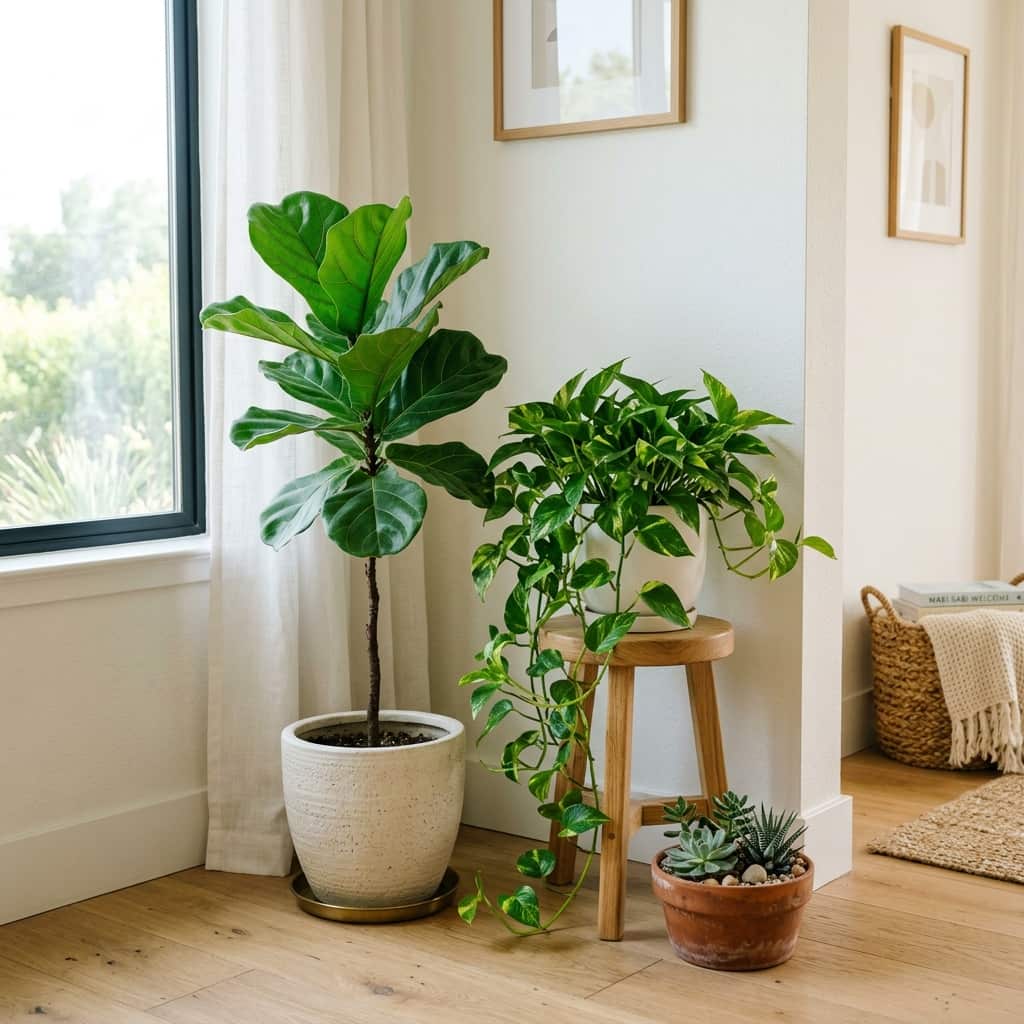
A carefully grouped cluster of indoor plants transforms a bare living room corner into a lush, living focal point. The layering of three different plant heights creates a natural, garden-like composition that adds extraordinary life to any minimal space.
Plants are genuinely one of the most powerful tools in minimal home decor because they introduce organic color, movement, and life without cluttering the room. I’ve seen a single corner plant cluster completely change the energy of an otherwise flat and lifeless living room.
- Adds organic color and living texture
- Three heights create natural visual depth
- Fiddle leaf fig anchors tall arrangements
- Trailing plants add graceful movement
- Purifies air while beautifying the room
The terracotta and white ceramic pot combination reinforces the warm neutral palette of the room while keeping the plant display feeling cohesive. Avoid mixing too many pot colors or finishes, as consistency is what makes the cluster look curated rather than chaotic.
This corner setup suits work-from-home living rooms especially well. Research consistently shows that indoor plants reduce stress and improve focus , making this decor choice both visually beautiful and genuinely beneficial for daily wellbeing.
Clean Entryway to Living Room Flow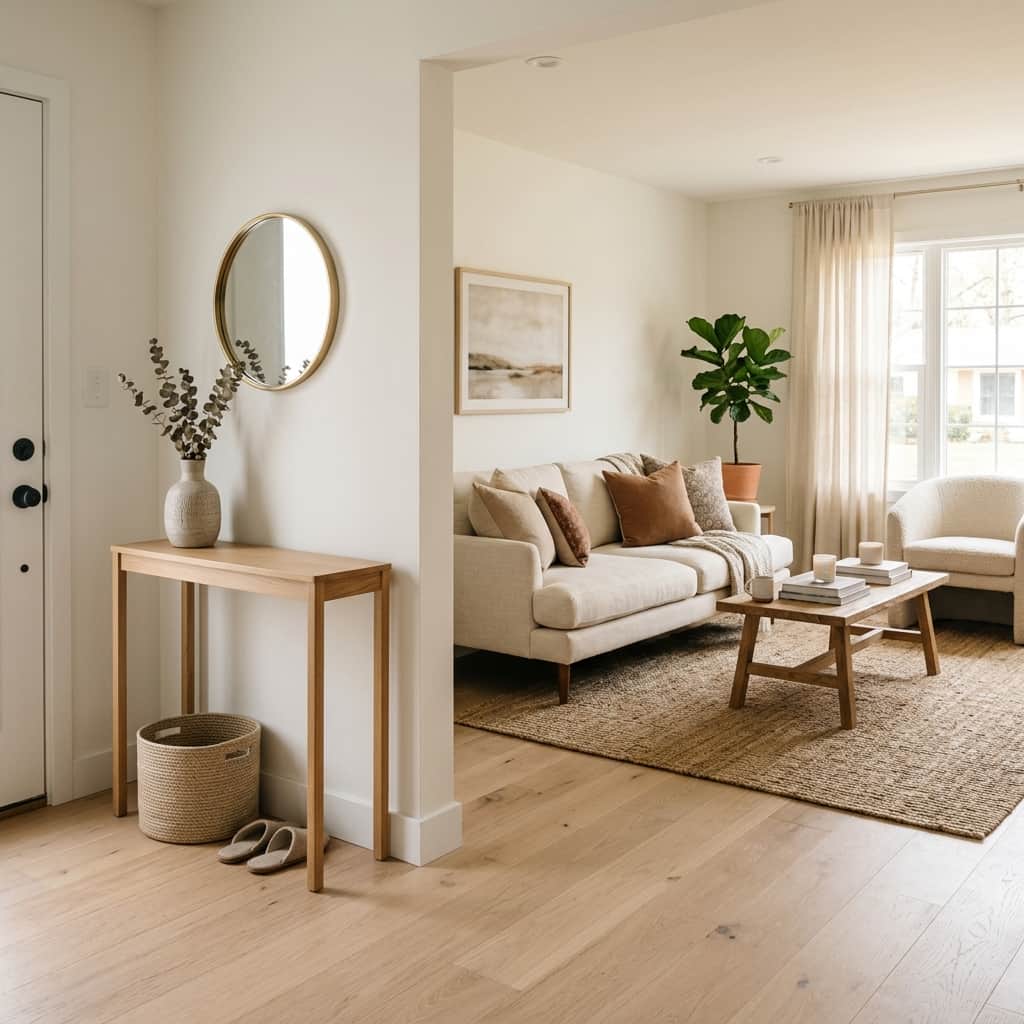
The transition from your front door into your living room sets the emotional tone for your entire home. A clean, minimal entryway that flows naturally into the living space creates an immediate sense of calm the moment anyone steps inside.
That first visual impression matters far more than most people realize. I’ve seen a simple console table and small mirror in an entryway completely change how the whole home feels , making even a modest apartment feel considered, welcoming, and genuinely well-designed.
- Clean entry creates an immediate calm impression
- Console table defines the transition zone
- One mirror reflects light into both spaces
- Consistent flooring visually connects both areas
- Small vase adds warmth without clutter
Keeping the same flooring material running from the entryway into the living room is the single most effective way to create seamless visual flow between the two spaces. That continuity makes the overall home feel larger and more intentionally designed.
This final idea ties the entire living room concept together. A calm entry that opens into a cozy, minimal living room creates a home that feels like a genuine retreat , the exact feeling every one of these 28 ideas is designed to deliver.
Conclusion
The right decor choices do not just change how a room looks , they change how you feel every single time you walk into it. I’ve seen people completely reshape their relationship with their home simply by clearing the clutter, adding one warm texture, and letting the space breathe. That is the quiet power behind cozy minimalist living room ideas , they work with your life, not against it. Start with just one idea from this list today. Try the layered rug, the arched mirror, or the dried botanical arrangement. Save this post on Pinterest so you can return to it whenever inspiration strikes. Share it with a friend who needs a fresh start in their own space. Your calm retreat is closer than you think.
Frequently Asked Questions
How do I make a minimalist living room feel cozy and not cold?
Layer natural textures like linen, chunky knit throws, and jute rugs throughout the space. Add warm amber lighting through candles or a pendant lamp. These small additions create genuine warmth without adding visual clutter to the room.
What colors work best in a minimalist living room?
Warm neutrals like oatmeal, ivory, cream, and warm white work best. Soft sage green and terracotta clay tones make excellent single accent colors. Avoid cool grays alone, as they tend to feel sterile without warm material pairings beside them.
How do I style a minimalist living room on a tight budget?
Start with what you already own and remove anything that feels unnecessary or cluttered. Add one textural throw, one dried botanical arrangement, and one layered rug. These three changes cost very little and create an immediate and noticeable visual improvement.
What furniture suits a small minimalist living room best?
Low-profile sofas, round coffee tables, and floating wall shelves all suit small minimal rooms well. Curved furniture also works because rounded forms take up less visual space. Avoid bulky sectionals or oversized pieces that block natural movement through the room.
How many decor items should a minimalist living room have?
A good rule is to keep surfaces to a maximum of three styled objects per area. Each object should serve a visual or practical purpose. I’ve noticed that rooms with fewer, better-chosen pieces always feel more intentional and calming than heavily accessorized spaces.
Do indoor plants suit minimalist living rooms?
Yes , indoor plants are one of the best additions to a minimal space. They add organic color, natural texture, and living energy without creating visual clutter. Group plants in odd numbers and use consistent pot materials to keep the display looking curated and intentional.
Is minimalist decor suitable for families with children?
Absolutely. Minimal living rooms with durable, washable materials like linen slipcovers and jute rugs handle daily family life well. The reduced clutter also makes cleaning faster and easier. Focus on quality, child-safe materials and keep breakable decor objects on high shelves out of reach.