28 Brilliant Hsucculent garden design Ideas 2026
Succulent garden design ideas have exploded in popularity across the USA because these plants deliver maximum beauty with minimum effort. They suit every space , from tiny apartment balconies to sprawling desert front yards. They work indoors on kitchen windowsills and outdoors in raised cedar beds. I’ve noticed that even a single well-styled succulent arrangement changes how a space feels instantly.
The challenge most people face is knowing where to start. Hundreds of varieties exist. Countless container styles compete for attention. Budget, space size, climate, and personal style all pull in different directions at once.
This article solves that problem directly. It covers 28 creative, practical, and visually stunning succulent garden ideas for 2026 , from beginner-friendly terracotta clusters to dramatic desert landscape front yards. Whether you rent a small apartment or own a large backyard, at least one idea here will feel made specifically for your space. Interior stylists and professional landscapers inspired many of these approaches, so the results genuinely work in real homes across every budget and style.
Terracotta Cluster Garden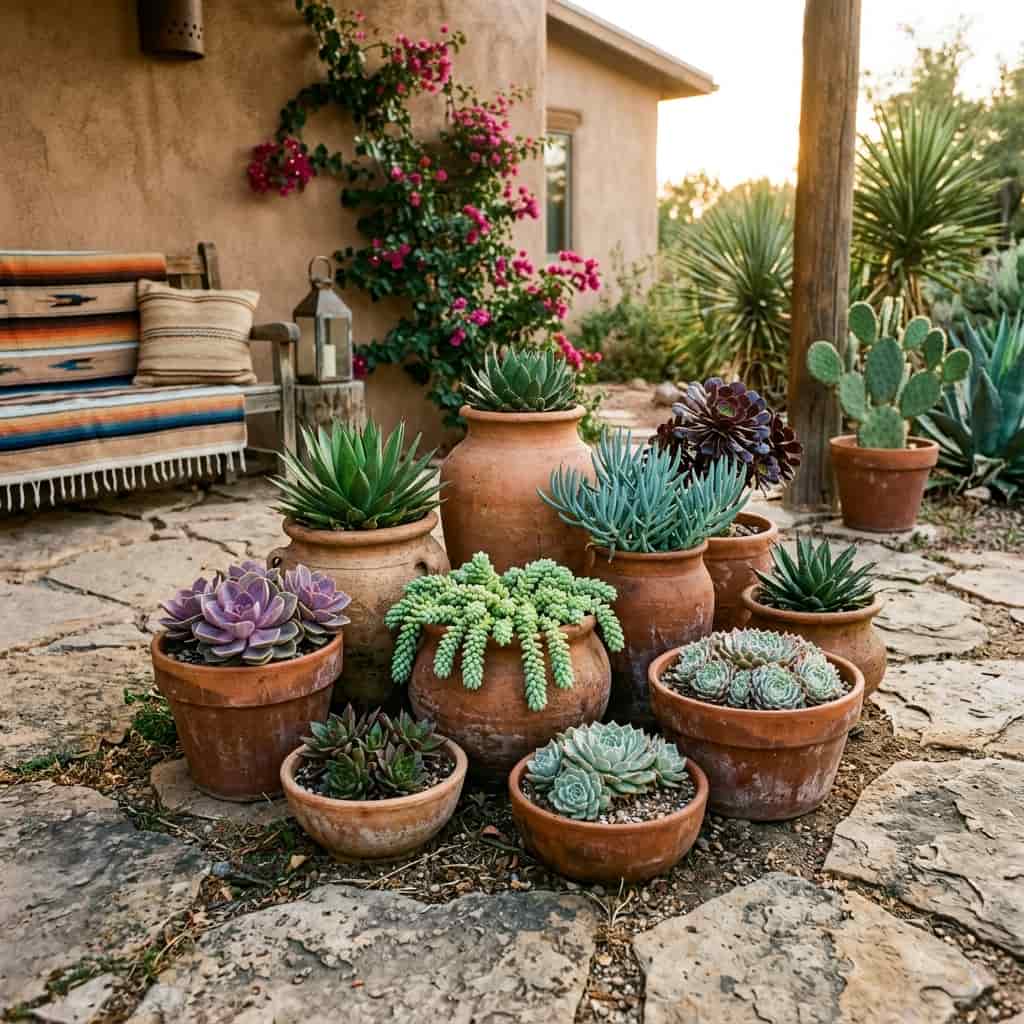
A cluster of terracotta pots instantly creates a warm, earthy focal point that feels both collected and intentional. Each pot adds rich orange texture and contrast against plump green succulent rosettes.
This low-budget setup costs under $40 and works perfectly on small patios, apartment balconies, or sunny front porches. The varying pot heights create natural visual rhythm.
- Adds warm earthy tones
- Budget-friendly patio styling
- Works on small balconies
- Easy to rearrange anytime
- Low-maintenance drought-tolerant plants
Terracotta clusters suit beginner gardeners because succulents thrive in these breathable, porous pots without much watering. I’ve noticed even three pots grouped together create a surprisingly strong visual anchor outdoors.
Professional landscapers often recommend odd-numbered groupings for the most balanced and natural-looking arrangements. This simple rule makes any outdoor corner feel professionally styled.
Vertical Succulent Wall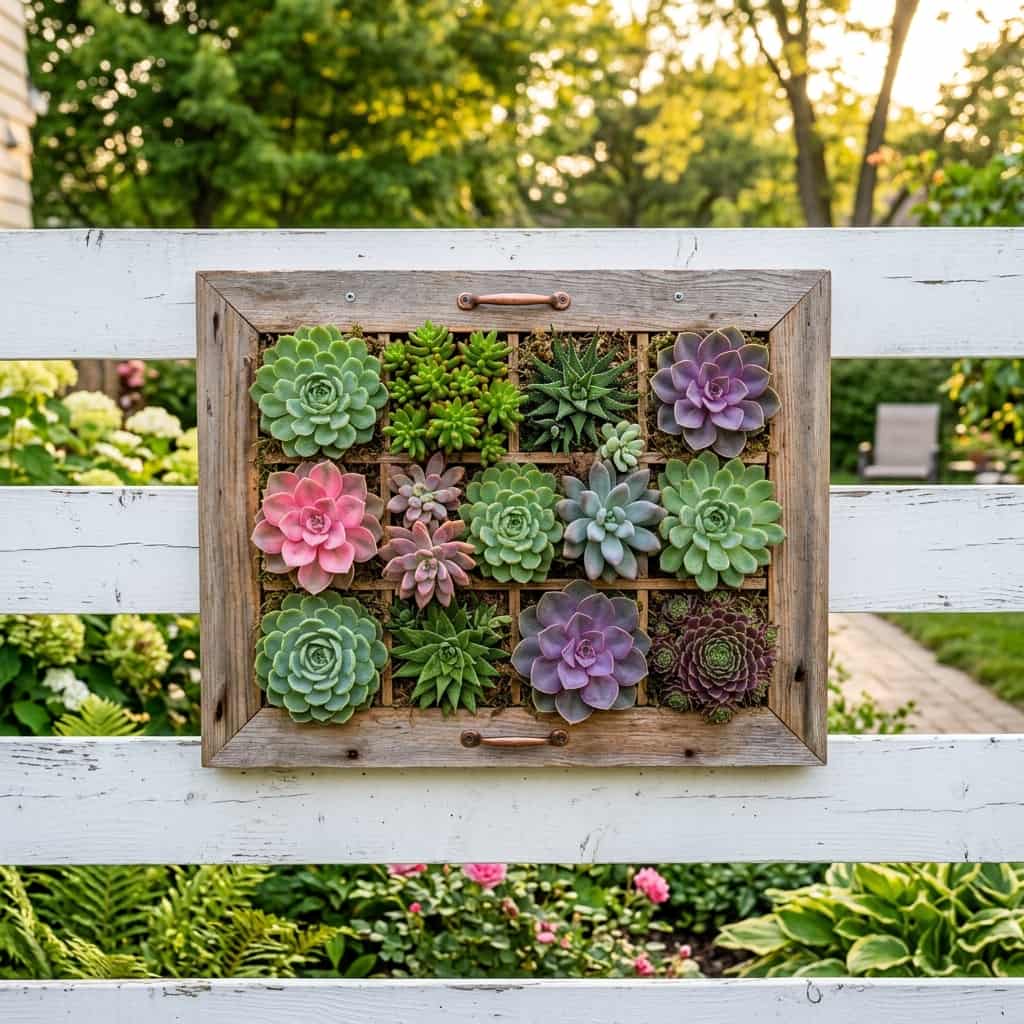
A vertical succulent wall turns any plain fence or outdoor wall into a living, breathing piece of art. Compact rosettes fill every pocket, creating a dense, jewel-toned tapestry of color and texture.
This design suits small yards or narrow urban balconies where horizontal space is limited. It adds major visual impact without using any floor space at all.
- Saves floor space creatively
- Creates a living wall feature
- Works on fences or walls
- Mix colors for bold impact
- Renter-friendly with brackets
In my experience, vertical succulent planters look most impressive when you mix textures , smooth echeveria next to spiky haworthia creates beautiful contrast. That visual variety is what stops the scroll on Pinterest.
This style works year-round in warm climates and can be moved indoors during colder months. It is a genuinely flexible and visually rewarding garden design choice.
Driftwood Succulent Display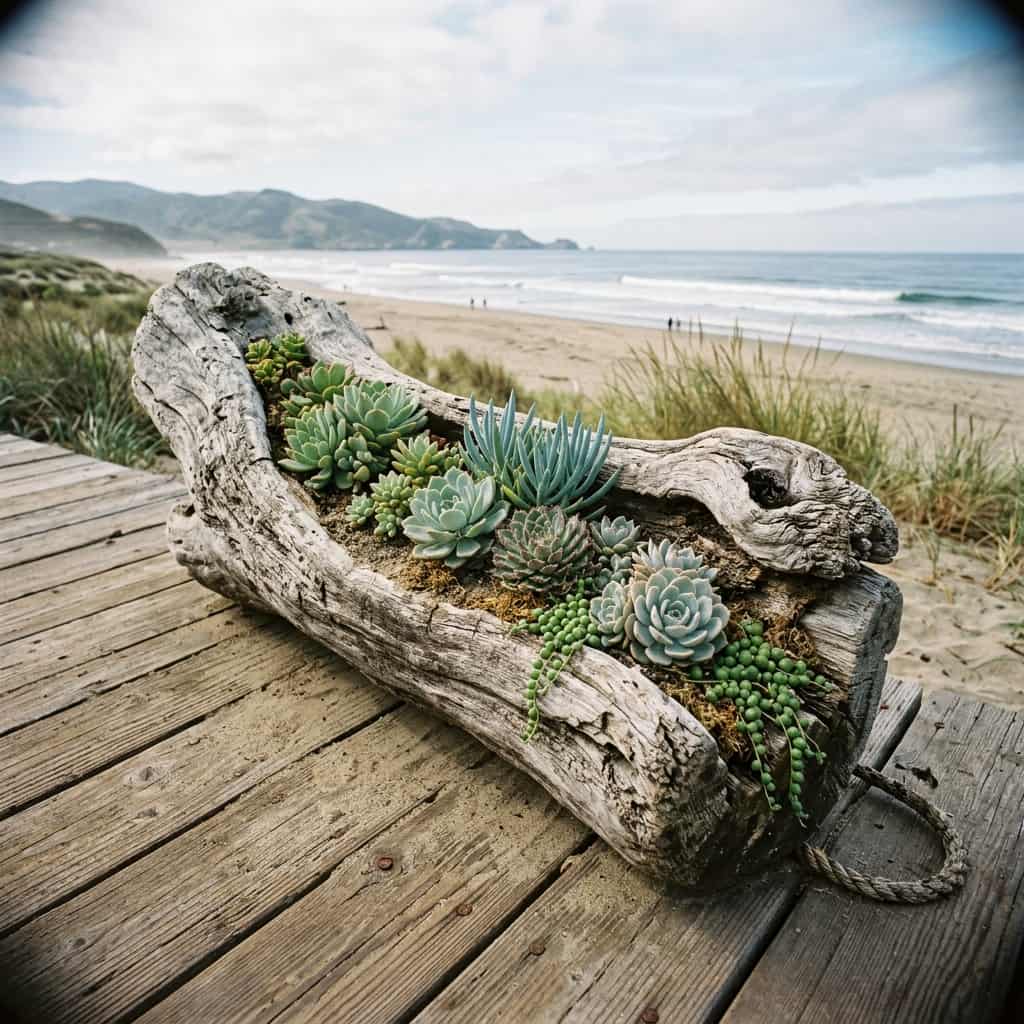
Driftwood pieces with succulents tucked inside their natural hollows create a coastal, organic display that feels completely one-of-a-kind. Each piece of wood tells its own story while the succulents add living color.
This display suits coastal homes, beachy patios, and boho-style garden corners. I’ve seen this style work beautifully for many people who want natural decor without spending much.
- Coastal boho garden feel
- Unique natural centerpiece
- Free DIY-friendly project
- Works on patios or porches
- Pairs with sandy earth tones
Driftwood is lightweight, weather-resistant, and naturally beautiful , making it one of the most budget-friendly succulent display options available. Many stylists recommend sourcing driftwood locally from beaches or riverbeds.
Tuck small echeveria or sedum varieties into the crevices using cactus mix soil. The contrast between rough, weathered wood and smooth, fleshy succulent leaves creates a stunning organic texture combination.
Glass Terrarium Garden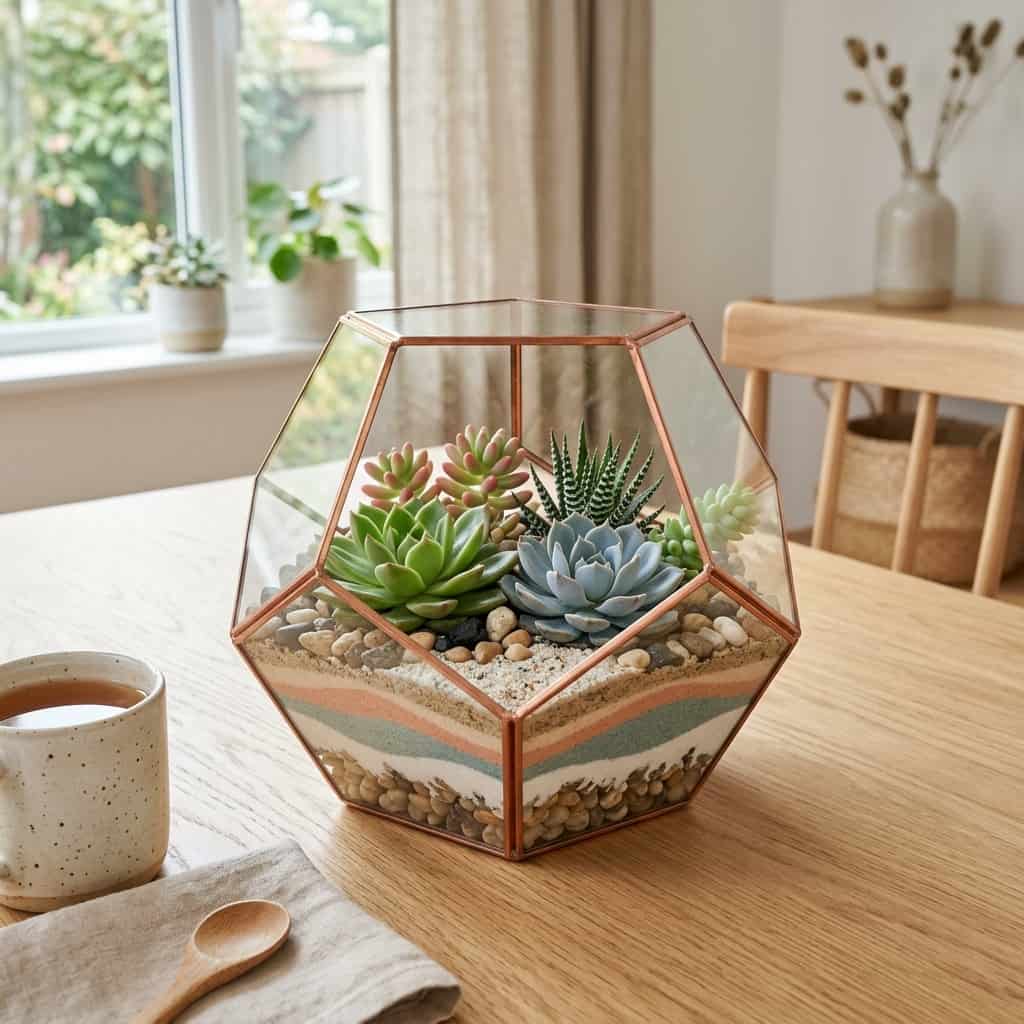
A geometric glass terrarium brings a sculptural, modern beauty to dining tables, coffee tables, and home office desks. The layered sand and gravel inside adds visual depth even before the succulents are planted.
This design costs between $20–$60 depending on terrarium size and works beautifully in small apartments where outdoor garden space is unavailable. It creates an indoor garden feel instantly.
- Modern minimalist table decor
- Perfect for small apartments
- Layered sand adds visual depth
- Low-maintenance indoor option
- Great gift or DIY project
Glass terrariums let you see every layer of the growing medium, which makes them feel like little living artworks. That’s why many interior stylists recommend them for dining tables and shelving displays.
Open terrariums work best for succulents since these plants need good airflow around their leaves. Avoid closed-lid versions, which trap moisture and cause rot , a common mistake beginners make.
Repurposed Wooden Crate Planter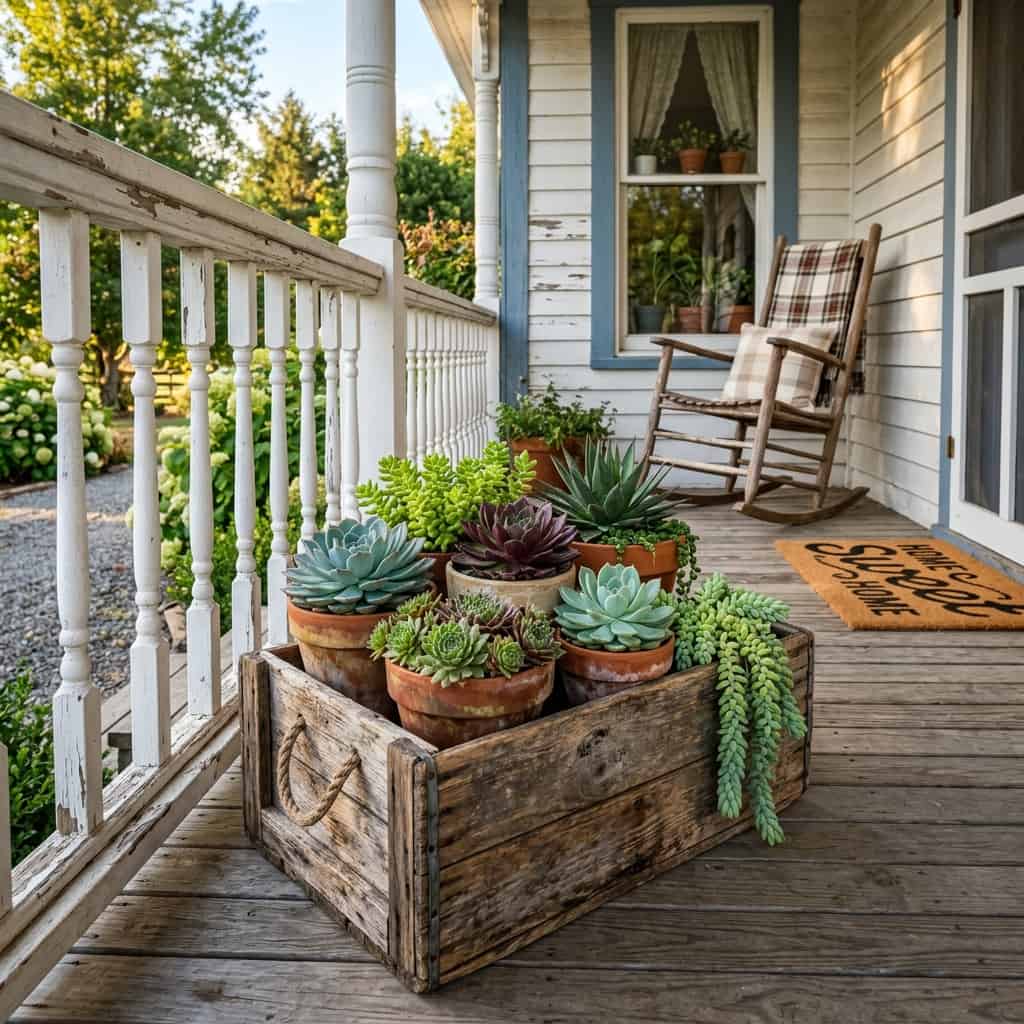
Old wooden crates become charming, rustic planters that look like they belong on a farmhouse porch or cottage garden path. The rough wood grain contrasts beautifully with the smooth, waxy succulent leaves.
This DIY project costs under $25 and suits farmhouse, rustic, and modern farmhouse home styles. I’ve tried this method in several outdoor setups, and it always draws compliments from visitors.
- Rustic farmhouse porch style
- Inexpensive DIY planter idea
- Works with seasonal refresh
- Mix heights for visual interest
- Recycles materials beautifully
Drill drainage holes in the crate base before planting so water drains freely. Lining the crate with burlap or landscape fabric prevents soil from spilling while still allowing healthy drainage.
Wooden crates also look gorgeous when stacked at different heights to create a tiered display. This layered approach maximizes planting space and creates a much more dynamic, eye-catching garden arrangement.
Succulent Rock Garden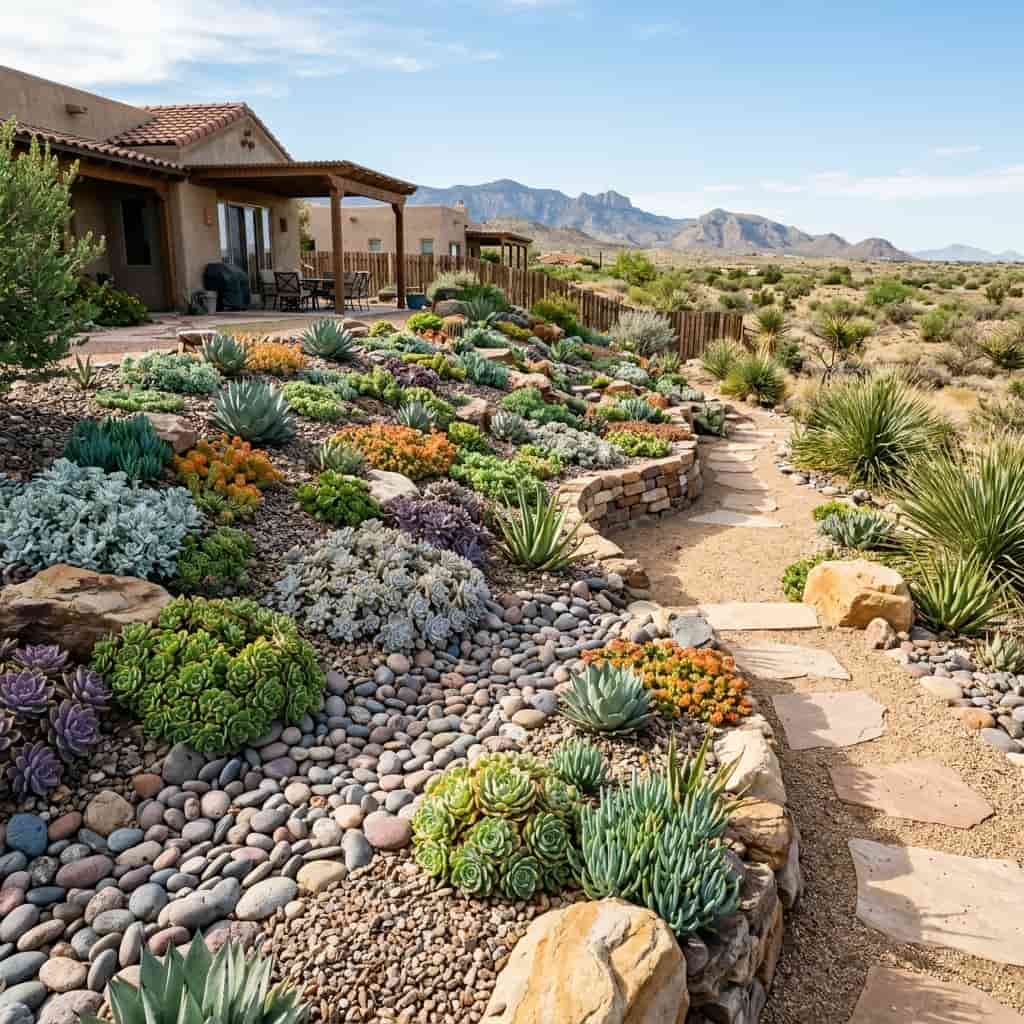
A rock garden filled with drought-tolerant succulents creates a naturally beautiful, almost maintenance-free landscape. River stones and boulders frame the plants while gravel mulch keeps weeds controlled.
This design suits dry climates, sloped yards, or anyone wanting a water-wise garden that still looks lush and full. It works brilliantly for large backyards and front yard curb appeal.
- Water-wise landscape design
- Covers sloped or uneven ground
- Year-round visual interest
- Low-maintenance outdoor area
- Suits warm dry climates
Sedum, stonecrop, and hens-and-chicks are the most popular succulent varieties for rock gardens because they spread naturally and require almost no watering once established. That’s what makes this design so appealing long-term.
In my experience, adding a few larger statement succulents like agave among the smaller ground covers creates a dramatic focal point. The size contrast makes the whole garden feel intentionally designed and visually exciting.
Hanging Basket Succulents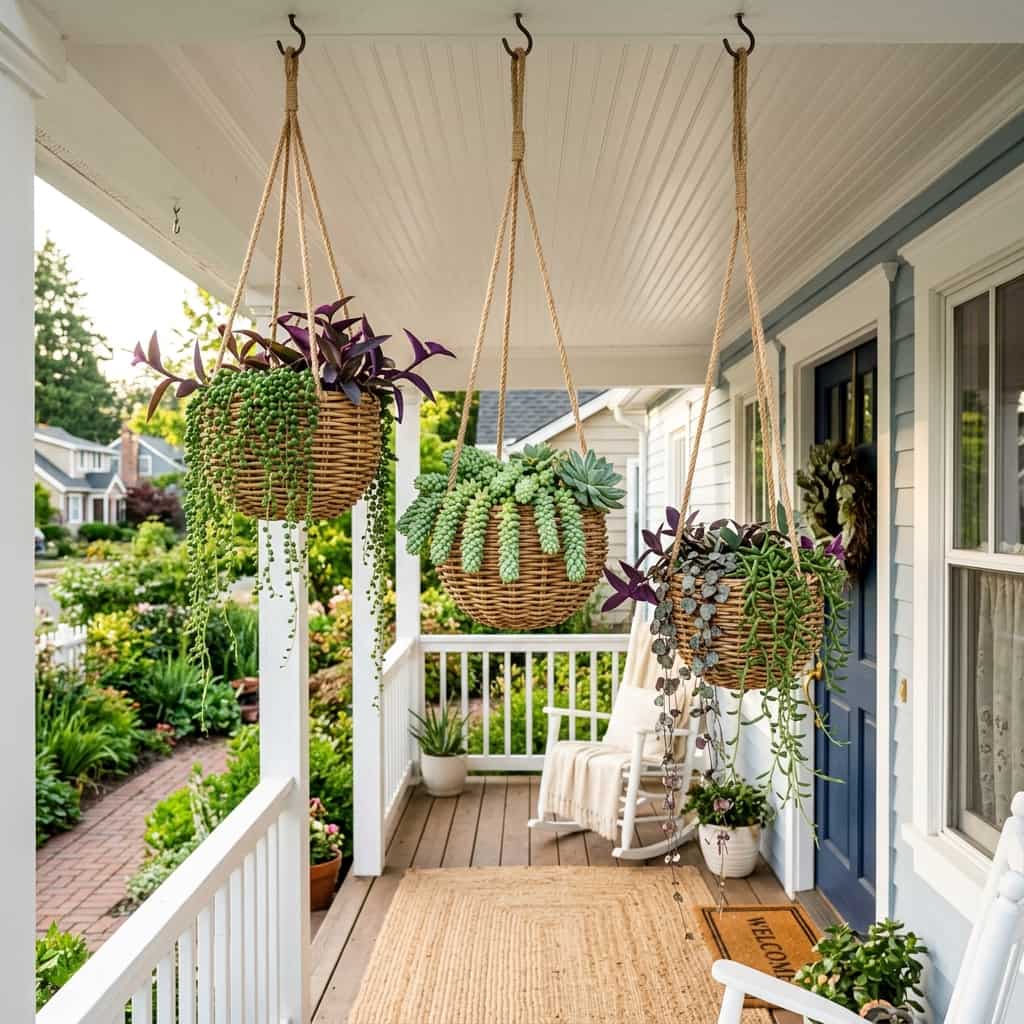
Trailing succulents spilling over the edges of hanging baskets create a lush, cascading display that instantly transforms a plain porch or patio ceiling. The movement and draping texture feel effortlessly stylish.
Hanging basket succulents work best on covered porches, pergolas, or indoor ceiling hooks near bright windows. They cost between $15–$35 per basket and look impressive even with minimal plants.
- Trailing succulents look lush
- Transforms plain porch ceilings
- Boho-coastal porch styling
- Works indoors near windows
- Low-water hanging garden
Burro’s tail and string of pearls are the most popular trailing succulent varieties for hanging baskets. Both grow quickly and create long, beautiful cascading strands that look stunning from below.
Always use a well-draining cactus mix and choose baskets with drainage holes to prevent waterlogging. I’ve noticed that even a single hanging basket near a front door makes a home feel instantly more welcoming and curated.
Succulent Fairy Garden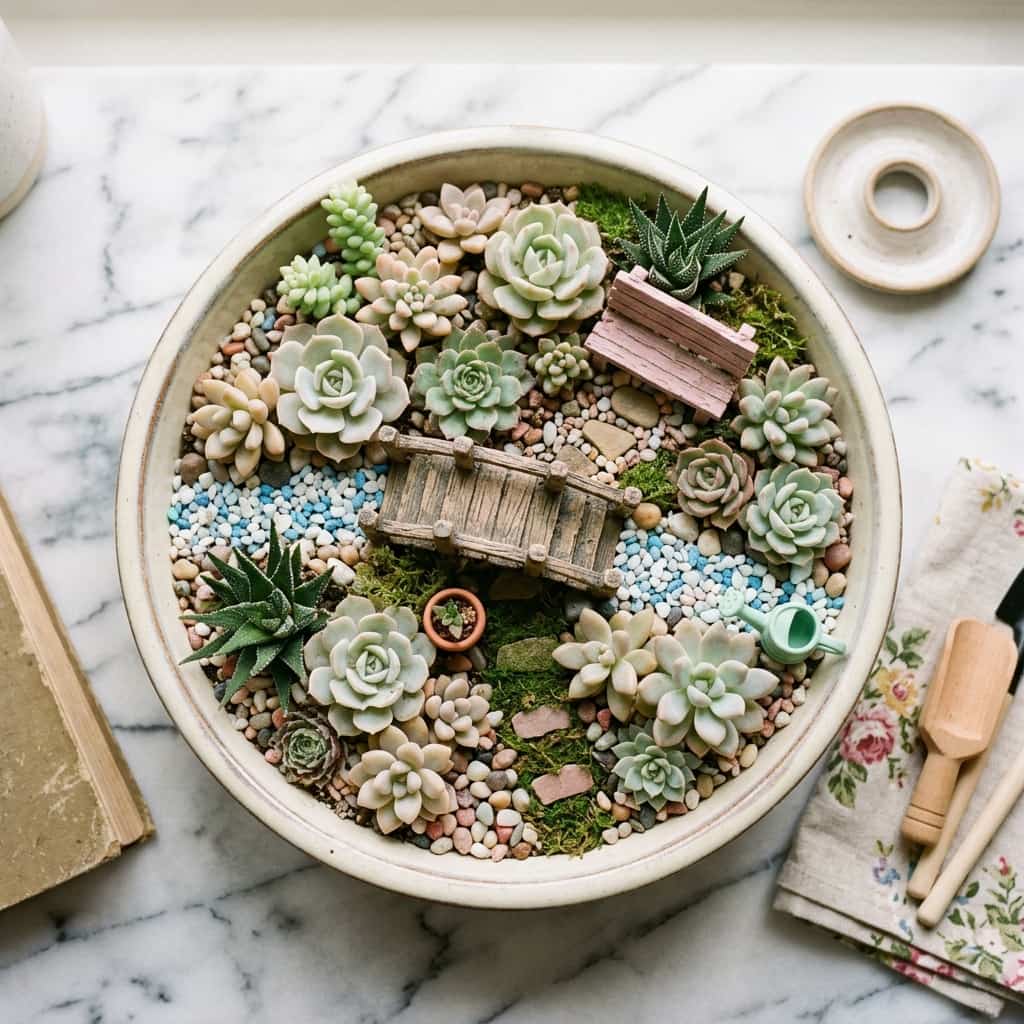
A succulent fairy garden inside a wide, shallow bowl creates a whimsical miniature landscape that feels magical and completely unique. Mini accessories like tiny bridges and benches add a storybook quality.
This design works on dining tables, coffee tables, and kids’ bedroom windowsills. It costs under $35 and makes a genuinely memorable handmade gift for any home decor lover.
- Whimsical cottagecore table display
- Perfect handmade gift idea
- Works on any flat surface
- Kids and adults both love it
- Fully customizable accessories
Use a wide, shallow dish or bowl with no drainage holes and add a layer of activated charcoal at the base to prevent root rot. This simple trick keeps the miniature garden healthy for months.
That’s why many plant stylists recommend fairy gardens as a starting point for beginners , they teach basic succulent care while delivering an immediately beautiful and rewarding visual result.
Painted Pot Succulent Garden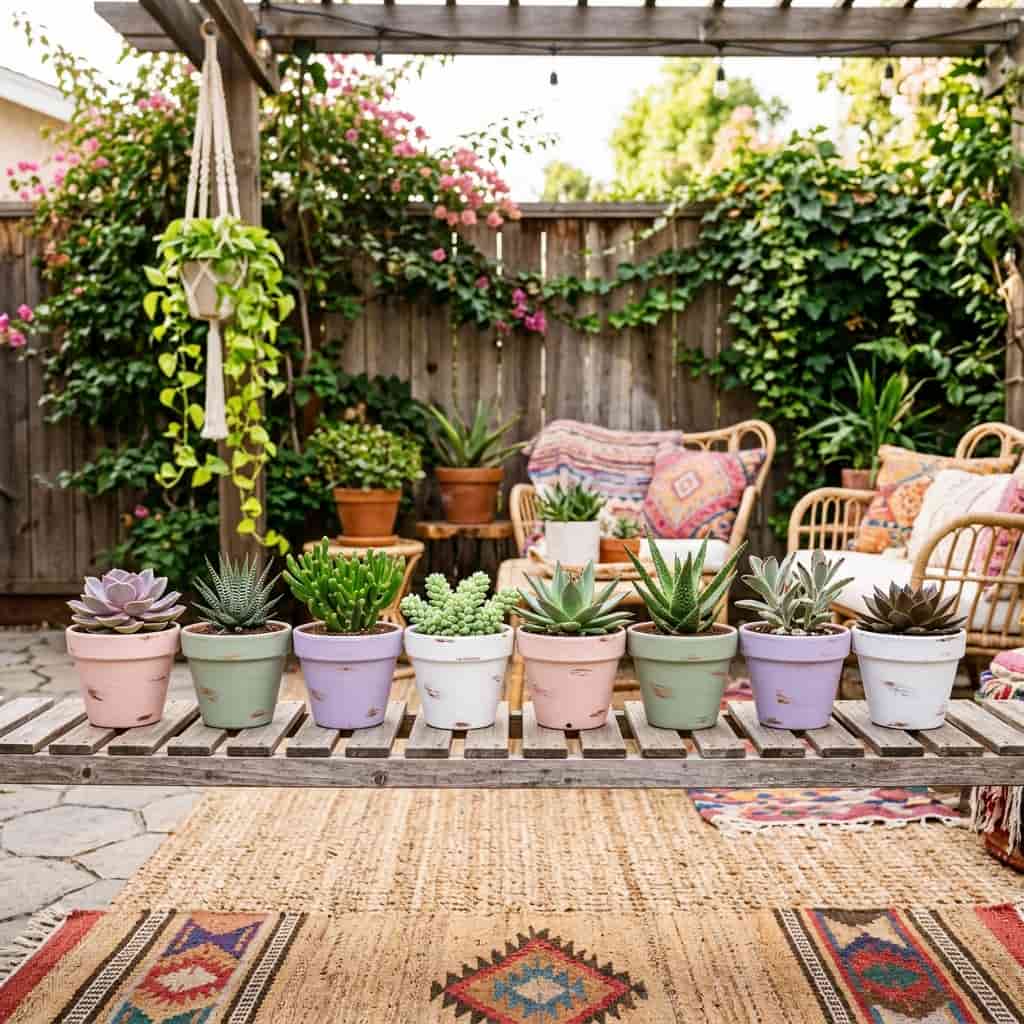
Hand-painted terracotta pots filled with colorful succulents instantly add personality and playful energy to any patio or balcony. Each painted pot becomes its own tiny piece of art and styling statement.
This is one of the most affordable succulent garden design ideas available , a single pot costs under $5 to buy and paint. The result looks like expensive boutique decor without the boutique price tag.
- Budget DIY patio upgrade
- Adds playful color outdoors
- Matches any home color palette
- Perfect weekend craft project
- Mix pastel or bold tones
Use outdoor acrylic paint or chalk paint sealed with a clear weatherproof varnish so the designs last through sun and rain. I’ve tried this on a dozen pots and the sealed paint holds up beautifully through an entire summer season.
Grouping painted pots in complementary colors creates a cohesive, curated look. Odd-numbered groupings of 3, 5, or 7 pots always look more natural and visually balanced than even-numbered arrangements.
Succulent Windowsill Row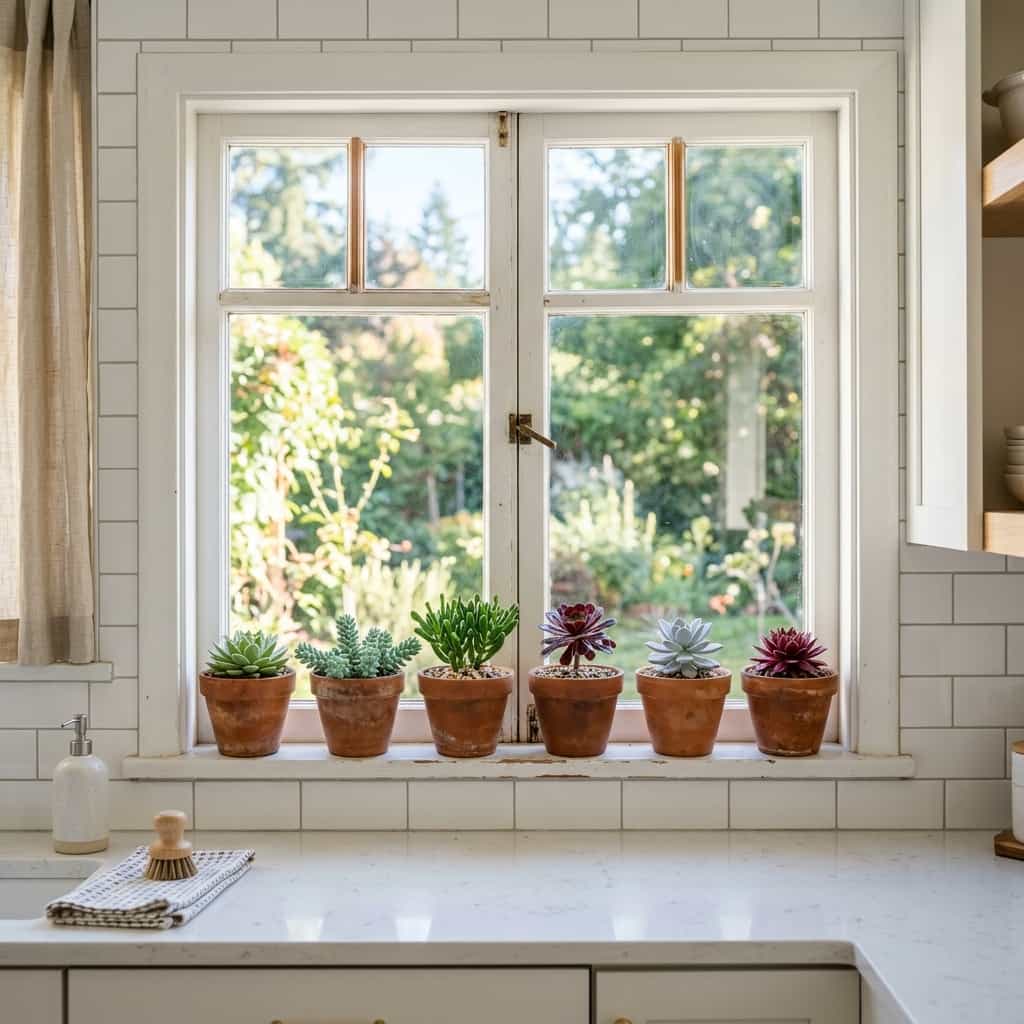
A neat row of small succulent pots along a sunny kitchen windowsill creates an effortlessly fresh, green accent that requires almost no effort to maintain. Natural window light keeps the plants healthy and happy.
This idea costs under $30 for the entire row and suits apartments, small kitchens, and any south or east-facing window. It is one of the simplest and most rewarding indoor succulent garden ideas to try.
- Fresh green kitchen accent
- Uses natural window light
- Budget-friendly indoor garden
- Suits any windowsill width
- Clean Scandinavian styling
South-facing and east-facing windows provide the ideal light conditions for indoor succulents. Avoid deep north-facing windows where light levels are too low , succulents will stretch and lean without enough brightness.
That’s why this windowsill row design works so well , it places plants exactly where they naturally thrive, making it both a decorative and genuinely practical indoor garden solution for everyday homes.
Succulent Wreath Display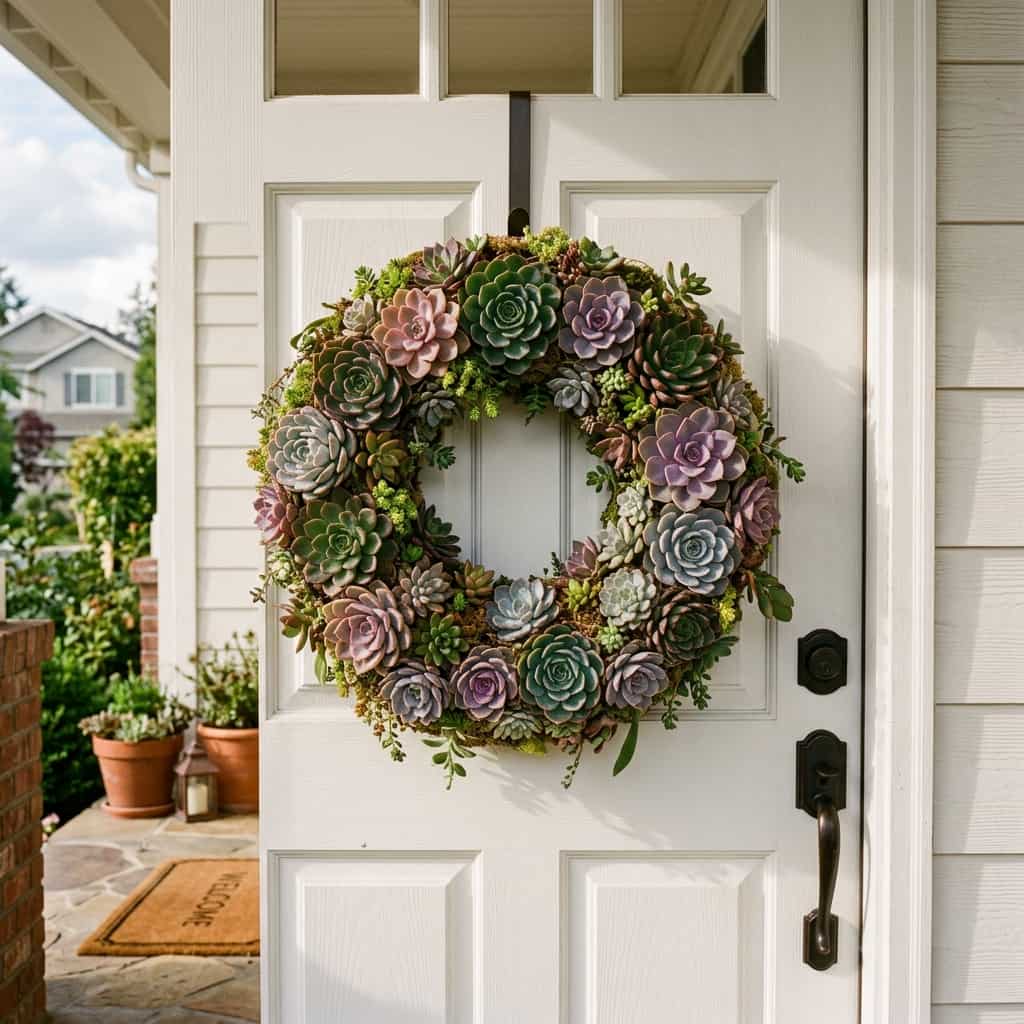
A living succulent wreath on a front door creates an unforgettable first impression that no artificial wreath can match. The tightly packed rosettes form a dense, jewel-toned circle of natural beauty.
This DIY wreath costs between $30–$60 depending on the size and number of plants used. It suits farmhouse, cottage, and modern homes equally well and works beautifully year-round in mild climates.
- Living wreath front door wow
- Farmhouse and cottage style
- Year-round curb appeal boost
- DIY-friendly weekend project
- Mix rosette sizes for depth
Use a wire wreath frame filled with sphagnum moss as the growing base. Secure each succulent cutting with floral wire and mist lightly every 10 days to keep the moss moist without overwatering the plants.
In my experience, echeveria and sempervivum varieties root the fastest into moss-based wreaths. Within 3–4 weeks the plants anchor themselves firmly and the wreath starts looking incredibly lush and full.
Raised Bed Succulent Garden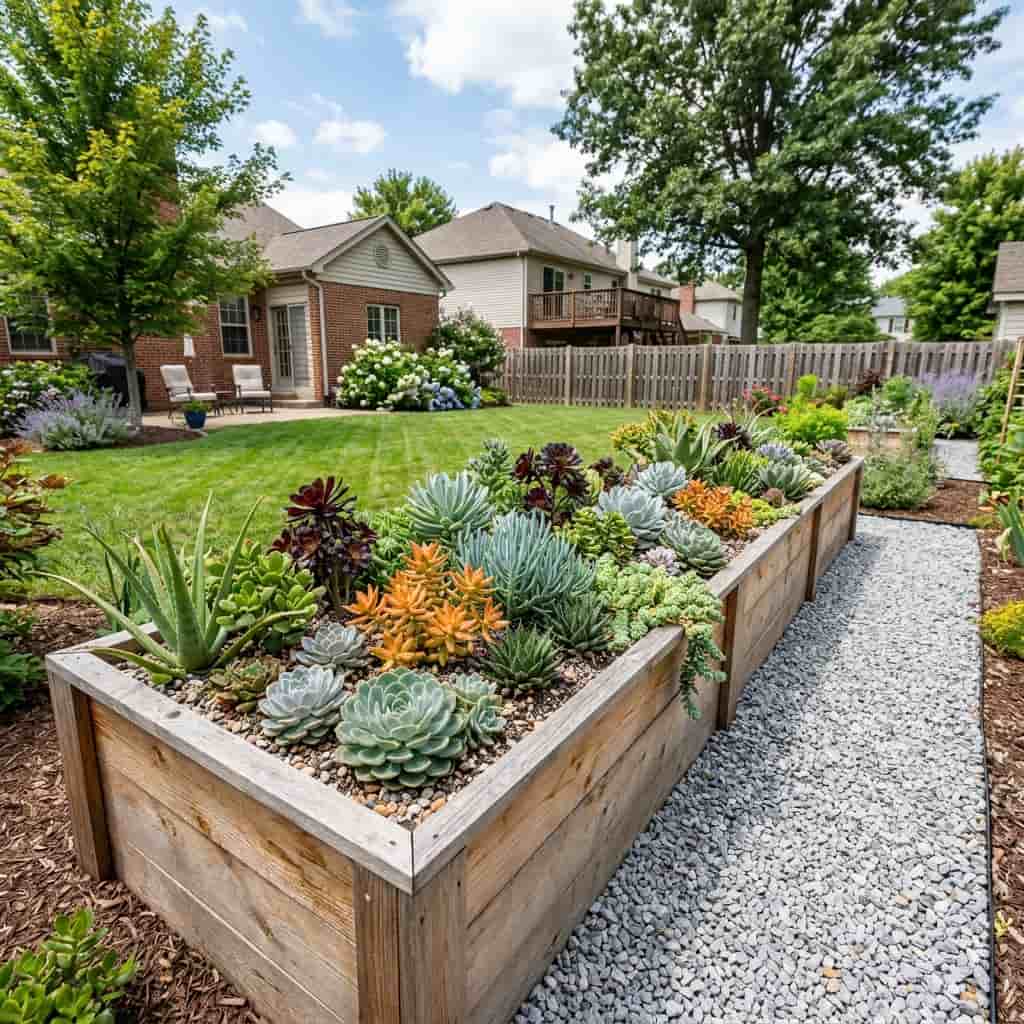
A raised cedar bed filled with mixed succulents creates a bold, organized garden feature that looks professionally landscaped without the professional price tag. The elevated height makes every plant visible and easy to admire.
Raised beds suit larger backyards, side yards, and front yard borders. A basic cedar raised bed costs between $50–$120 and provides years of beautiful, drought-tolerant gardening space.
- Bold backyard landscape feature
- Cedar wood naturally resists rot
- Easy access for maintenance
- Mix heights and textures freely
- Suits front or back yards
Fill raised beds with a mix of coarse sand, perlite, and regular potting soil for perfect drainage. Succulents planted in poorly draining soil develop root rot within weeks, so the growing medium truly matters here.
That’s why professional landscapers almost always recommend raised beds for succulent gardens in regions with heavy rainfall. The elevated position allows excess water to drain away from roots quickly and reliably.
Succulent Centerpiece Bowl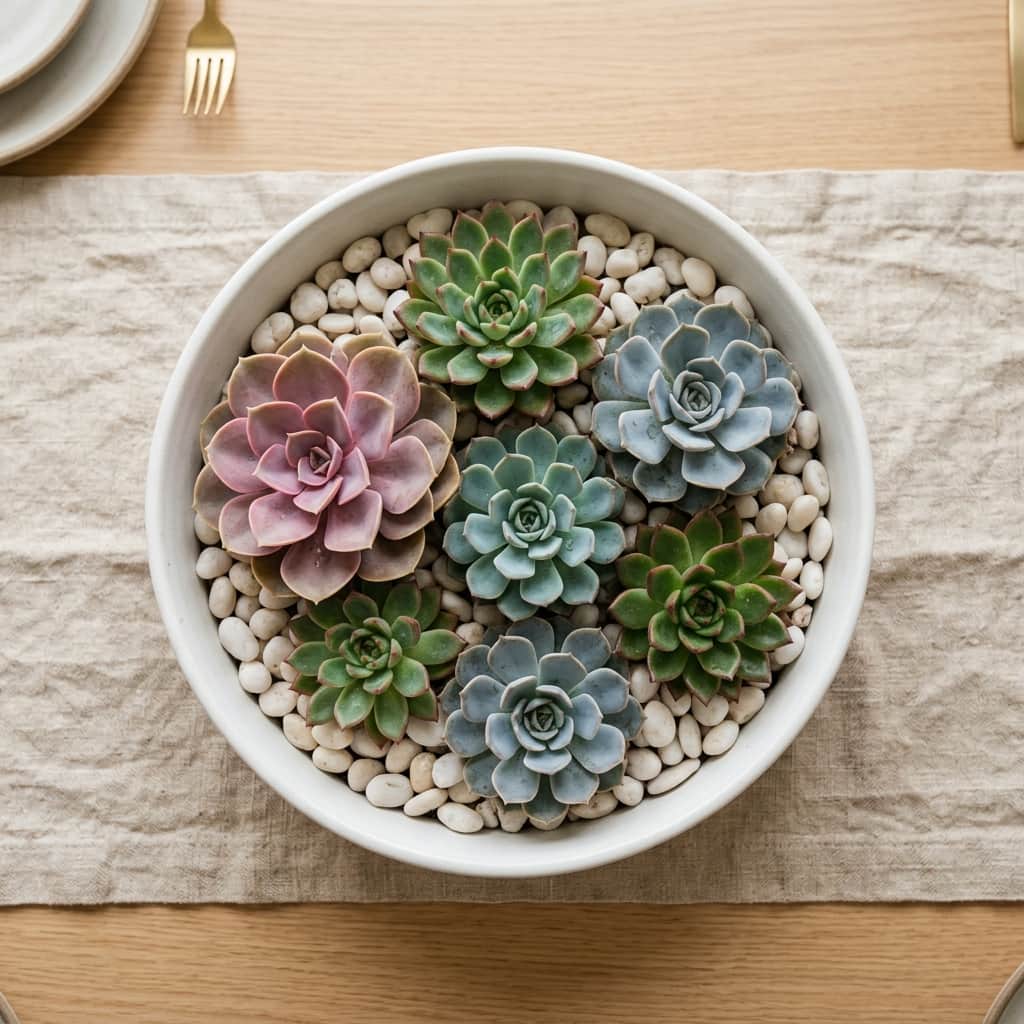
A wide ceramic bowl filled with arranged succulent rosettes creates a stunning dining table centerpiece that looks like it belongs in a high-end home magazine. The smooth pebbles around the plants add a clean, spa-like finish.
This centerpiece costs under $25 to create and suits modern, minimalist, and Japandi-style dining rooms perfectly. It replaces traditional floral arrangements with something longer-lasting and far easier to maintain.
- Elegant dining table centerpiece
- Lasts months with minimal care
- Modern minimalist dining style
- Replaces fresh-cut flower cost
- Pebble finish adds polish
Add a small succulent variety like haworthia or aloe vera alongside echeveria rosettes for interesting height and texture contrast. Varying the plant shapes makes the bowl arrangement feel professionally composed rather than randomly filled.
I’ve noticed that ceramic bowl centerpieces draw more compliments at dinner parties than traditional candle arrangements. Guests always ask about the plants, which makes the display both a decor statement and a natural conversation starter.
Succulent Stepping Stone Path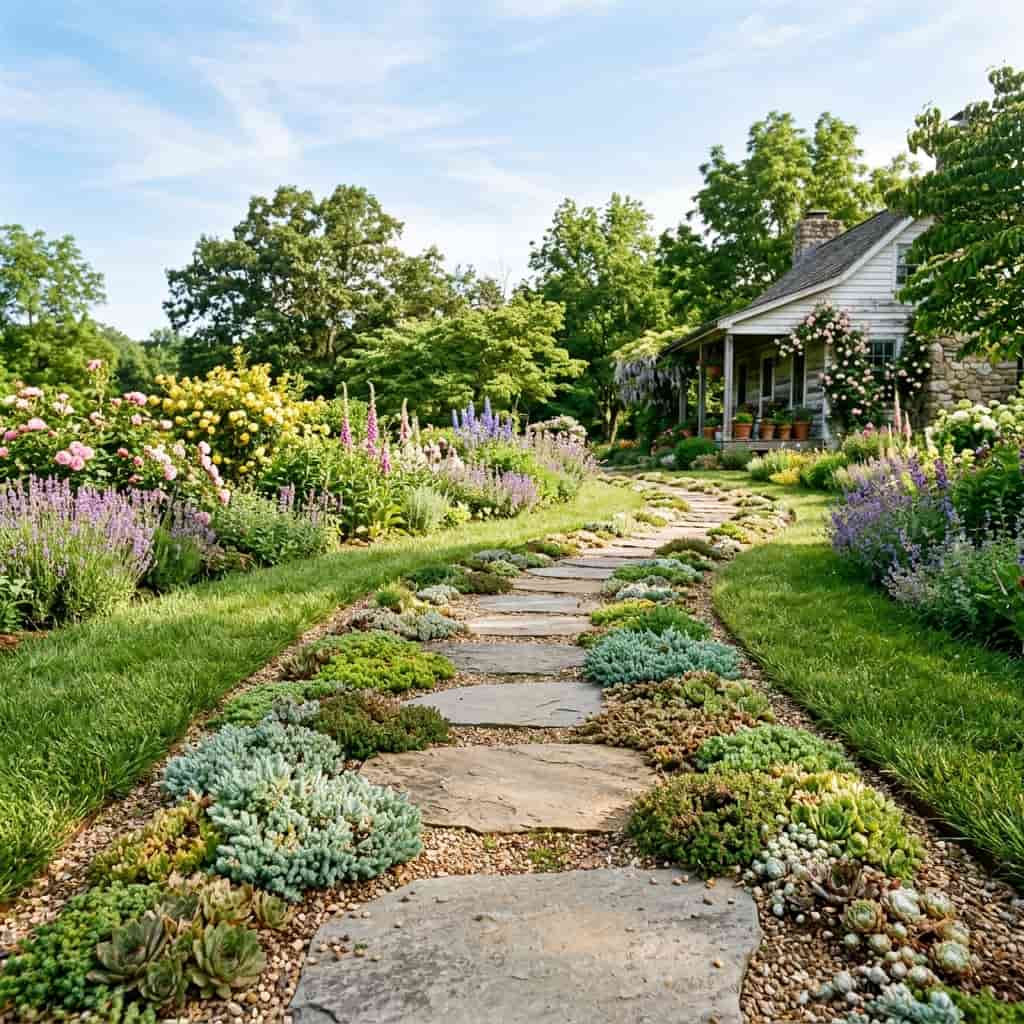
Ground-cover succulents planted between stepping stones create a lush, living pathway that looks magical in any garden. The plants soften the hard edges of stone and fill gaps with rich, natural color.
This design suits cottage gardens, backyard paths, and front yard walkways. Low-growing varieties like sedum and thyme-leaf stonecrop cost under $15 per flat and spread quickly to fill gaps beautifully.
- Living garden path border
- Softens hard stone edges
- Spreads naturally over time
- Cottage and rustic garden style
- Low-maintenance ground cover
Sedum varieties tolerate foot traffic surprisingly well when planted beside , rather than directly on , stepping stones. I’ve seen paths styled this way look completely established and lush within a single growing season.
Choose varieties rated for your USDA hardiness zone to ensure they survive winter temperatures without damage. Hardy sedums survive temperatures as low as minus 30 degrees Fahrenheit, making them suitable for most USA gardens.
Indoor Shelf Succulent Display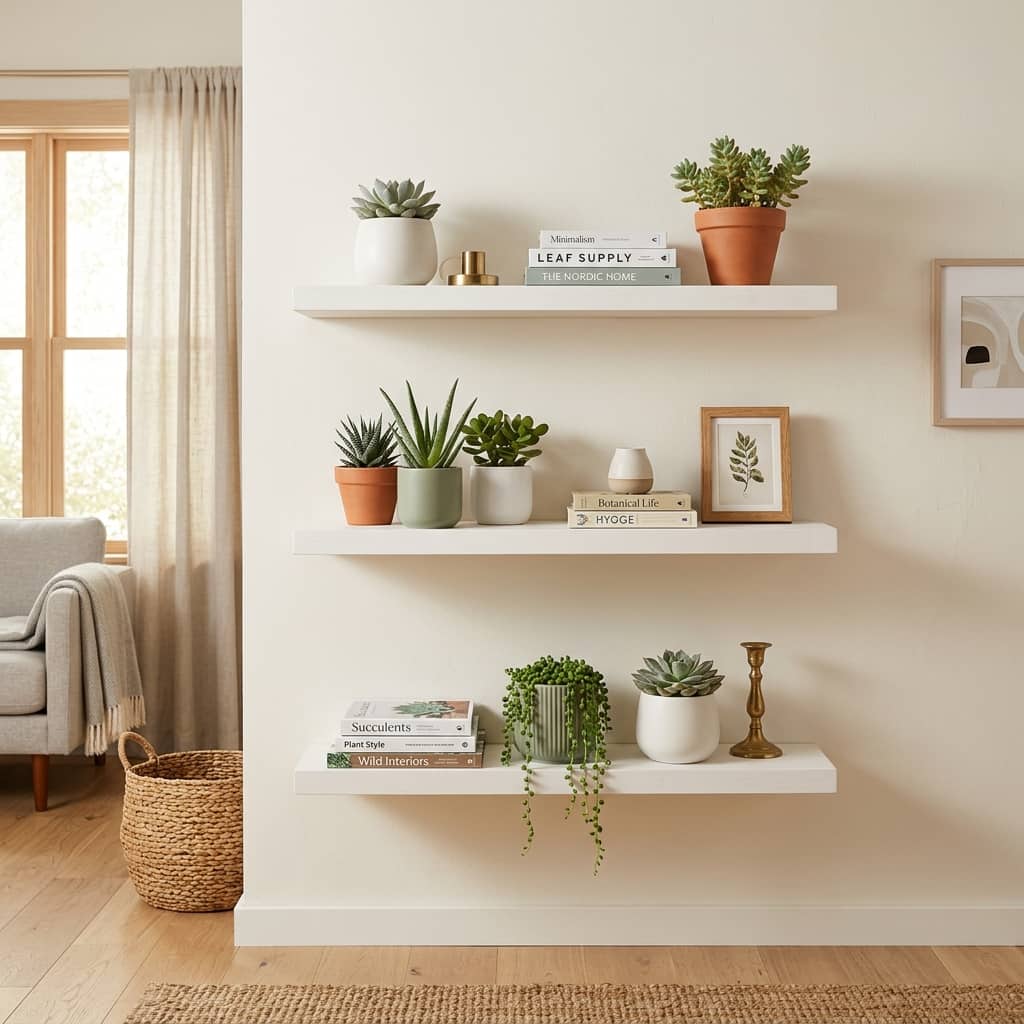
Floating shelves styled with small succulent pots create a living wall display that doubles as gallery-style home decor. Each shelf layer adds depth and visual interest while keeping the living room feeling airy and uncluttered.
This setup suits modern apartments, minimalist living rooms, and home offices. Three floating shelves cost between $30–$80 and can hold 6–12 small succulent pots depending on arrangement style.
- Living wall shelf display
- Doubles as gallery-style decor
- Suits modern apartment styling
- Mix pot sizes and materials
- Airy and uncluttered feel
Place taller succulent varieties like aloe or sansevieria on lower shelves and compact rosettes on upper shelves. This reversed-height styling creates visual balance and makes every plant clearly visible from across the room.
That’s why many interior stylists recommend this layered shelf approach for small living rooms , it draws the eye upward, making low ceilings feel taller and the entire room feel more spacious and intentionally designed.
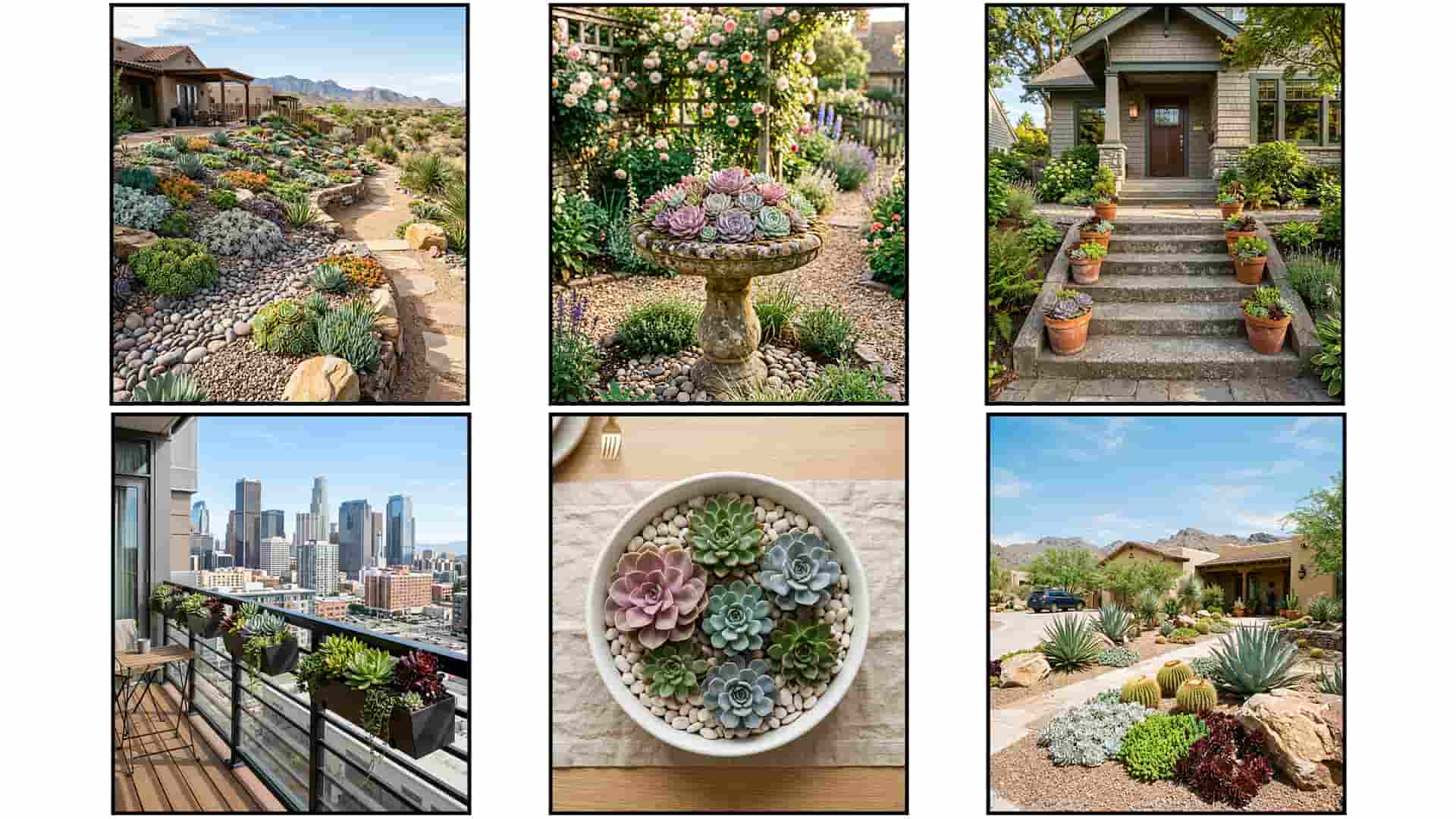
Succulent Birdbath Planter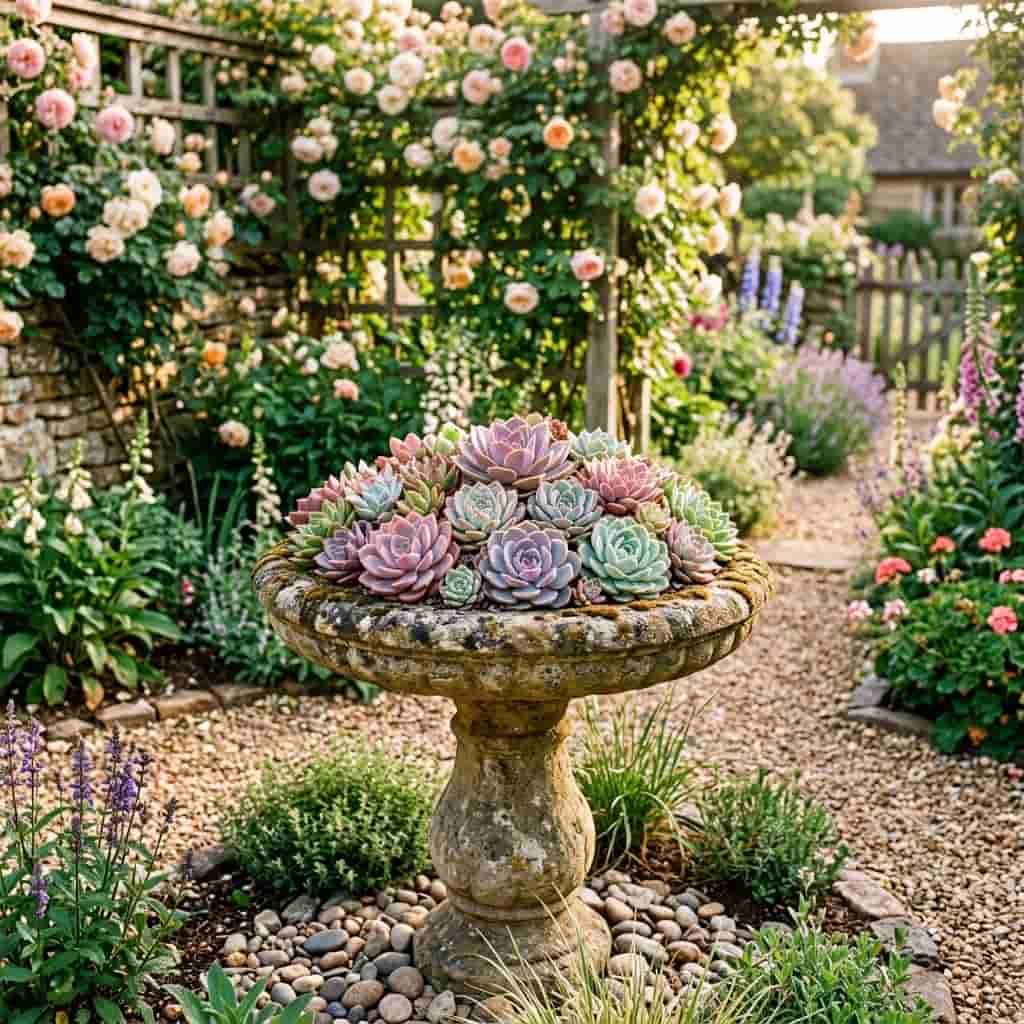
A stone birdbath repurposed as a succulent planter creates an unexpected, charming garden focal point that stops every visitor in their tracks. The wide, shallow basin holds dozens of rosettes beautifully.
This idea costs almost nothing if you already own a birdbath. Even a thrifted stone birdbath costs between $10–$30, making it one of the most budget-friendly large-scale succulent garden design approaches available.
- Unexpected garden focal point
- Repurposes thrifted birdbath
- Holds dozens of rosettes
- Cottage garden charm instantly
- Budget-friendly large display
Drill a small drainage hole in the birdbath basin using a masonry drill bit before planting. Without drainage, standing water drowns succulent roots within days , proper drainage is non-negotiable for healthy plants.
In my experience, birdbath planters look most stunning when you fill the outer ring with trailing succulents like burro’s tail and place upright echeveria varieties in the center. That layered, overflowing effect feels genuinely magical.
Balcony Rail Succulent Planters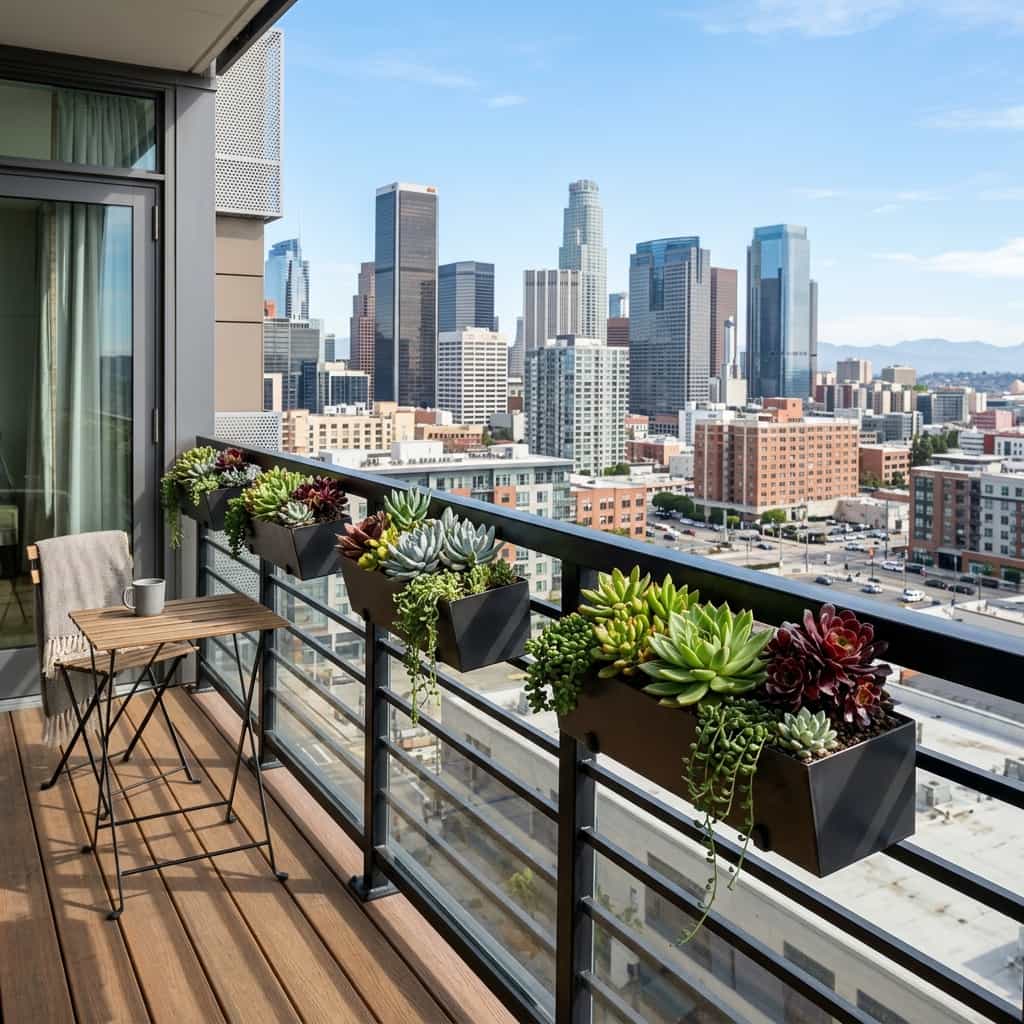
Slim rail planters fitted along a balcony railing transform even the tiniest outdoor space into a lush succulent garden. The plants grow at eye level when seated, creating a green privacy screen and beautiful view.
This renter-friendly setup costs between $25–$60 for a full railing and requires no drilling or permanent installation. It suits urban apartments, condos, and any small balcony with a standard railing width.
- Renter-friendly balcony garden
- Creates green privacy screen
- No drilling or wall damage
- Suits tiny outdoor spaces
- Modern urban balcony style
Choose rail planter brackets rated for outdoor UV exposure and rain so they maintain their shape and color through full summer seasons. Cheap plastic brackets warp in direct sun within weeks, reducing stability.
Succulents are genuinely the best balcony railing plant choice because they tolerate heat, wind, and reflected sunlight from nearby buildings , conditions that kill most other plants remarkably quickly.
Succulent Pallet Garden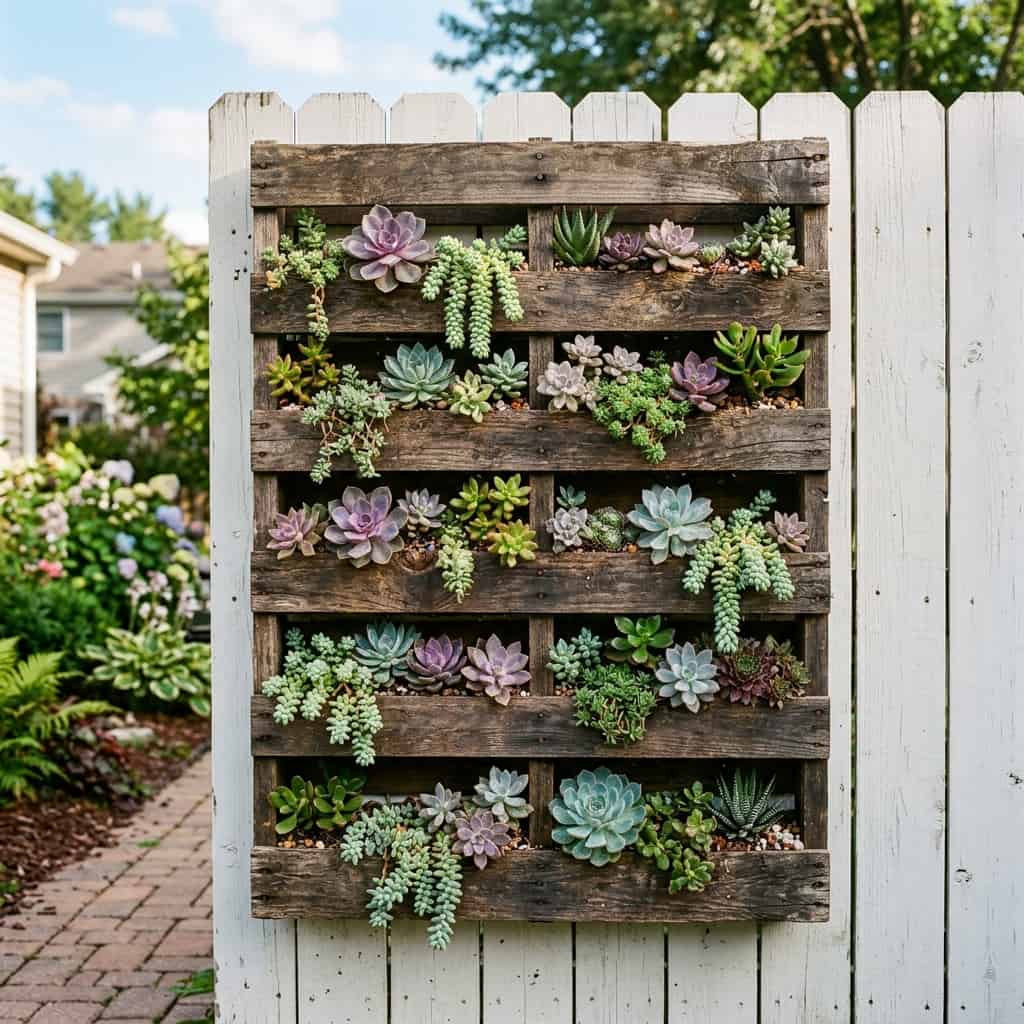
A reclaimed wooden pallet turned vertical becomes one of the most space-efficient succulent garden displays possible. Each horizontal slat opening holds 3–5 plants, creating a full living wall from a single free material.
This project costs almost nothing if a free pallet is sourced locally from hardware stores or garden centers. Lining the pallet back with landscape fabric and filling with cactus mix soil takes under two hours total.
- Free upcycled garden project
- Space-efficient vertical design
- Holds 20-plus plants easily
- Farmhouse and rustic style
- Weekend DIY beginner project
Sand the pallet lightly to remove splinters before planting. Choose heat-treated pallets marked “HT” rather than chemically treated ones , the chemical treatment used in some pallets is harmful to plants and soil.
I’ve built three pallet succulent gardens in different outdoor spaces, and the results always exceed expectations within 6–8 weeks once the plants establish and begin filling every gap with lush new growth.
Desert Landscape Garden Bed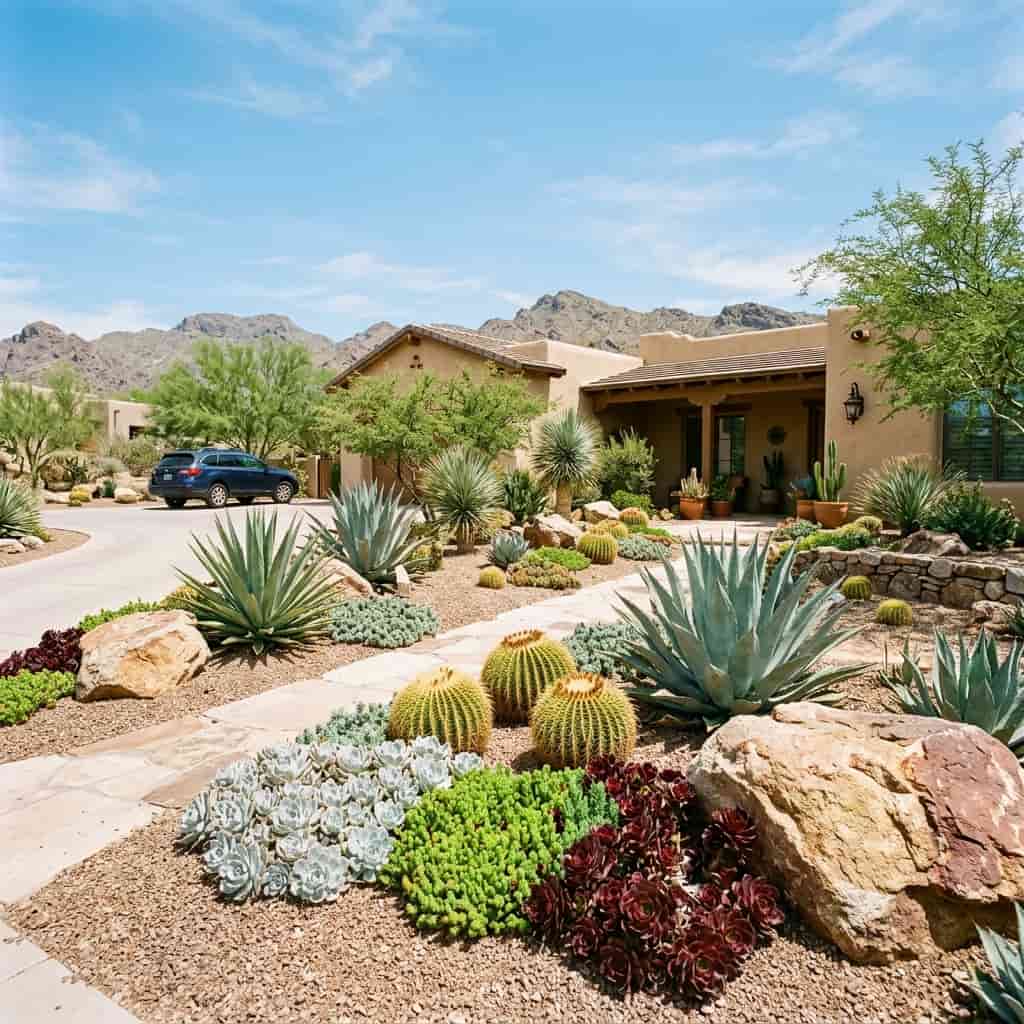
A desert landscape garden featuring agave, cacti, and ground-cover succulents creates a dramatic, water-wise front yard that looks striking in all seasons. The bold shapes and textures create genuine architectural interest.
This design suits dry southwestern climates in states like Arizona, California, Nevada, and New Mexico. A full front yard conversion costs between $200–$800 depending on yard size but eliminates lawn maintenance costs permanently.
- Dramatic architectural front yard
- Eliminates lawn watering costs
- Suits dry southwestern climates
- Year-round bold visual interest
- Professionally landscaped appearance
Decomposed granite mulch around desert succulents reflects heat away from the soil and prevents moisture from evaporating too quickly during peak summer temperatures. It also suppresses weed growth effectively.
That’s why many professional landscapers across the southwestern USA now recommend desert succulent gardens as the most sustainable, low-maintenance, and visually impactful front yard choice for warm-climate homeowners.
Succulent Wedding Centerpiece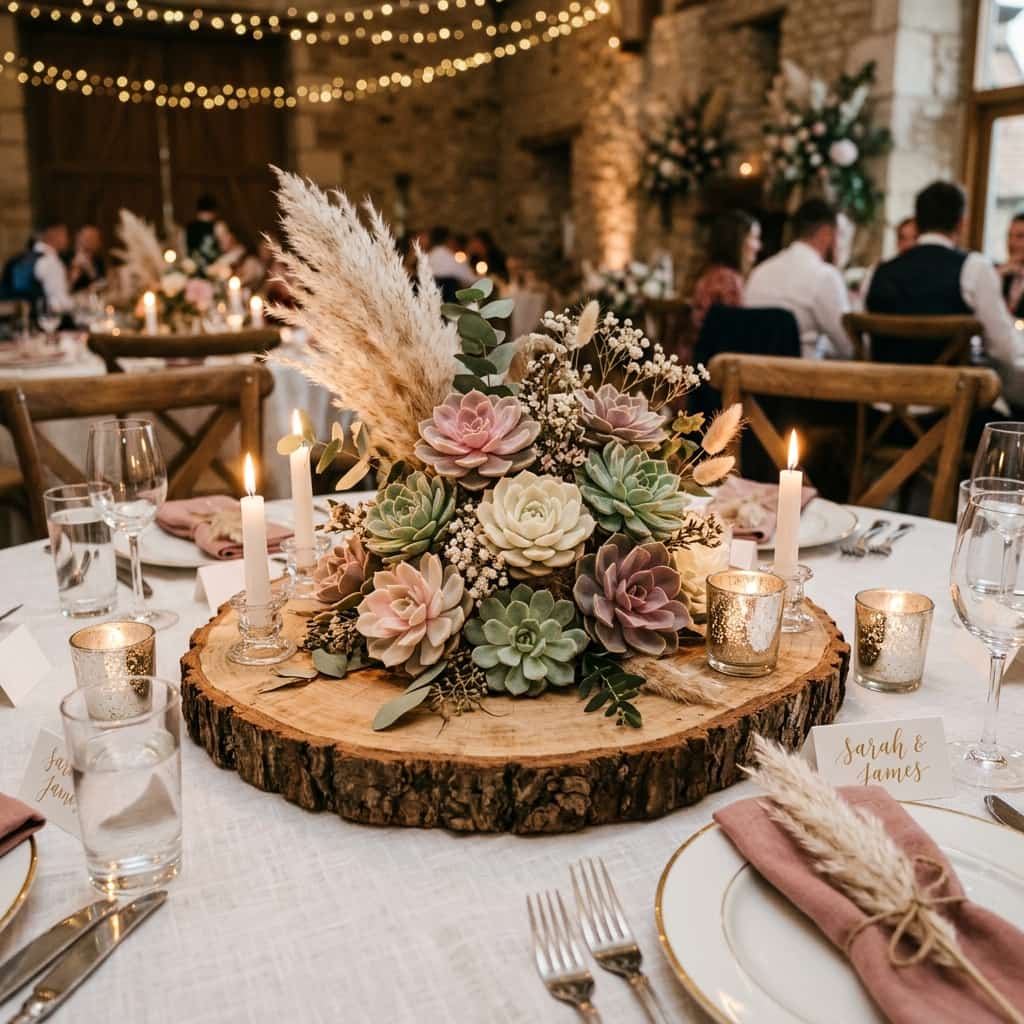
Succulent centerpieces for weddings and special events create a romantic, organic elegance that fresh flowers cannot replicate. Each rosette doubles as a living guest favor that attendees can take home and plant afterward.
This centerpiece design costs between $15–$40 per table and suits boho, farmhouse, and garden-style weddings beautifully. Guests genuinely appreciate receiving a living plant rather than a cut flower arrangement that wilts overnight.
- Living guest favor included
- Romantic boho wedding style
- Costs less than cut flowers
- Rosettes survive the whole event
- Guests plant them at home
Arrange the succulents 48 hours before the event so any disturbed roots have time to settle. Mist lightly with water and store in a cool, shaded area overnight to keep the plants looking perfectly fresh and vibrant.
I’ve seen this style work beautifully for many couples who want memorable, sustainable wedding decor. The combination of living plants, candlelight, and natural wood creates a warmth that photographed centerpieces simply cannot capture.
Monochromatic Succulent Arrangement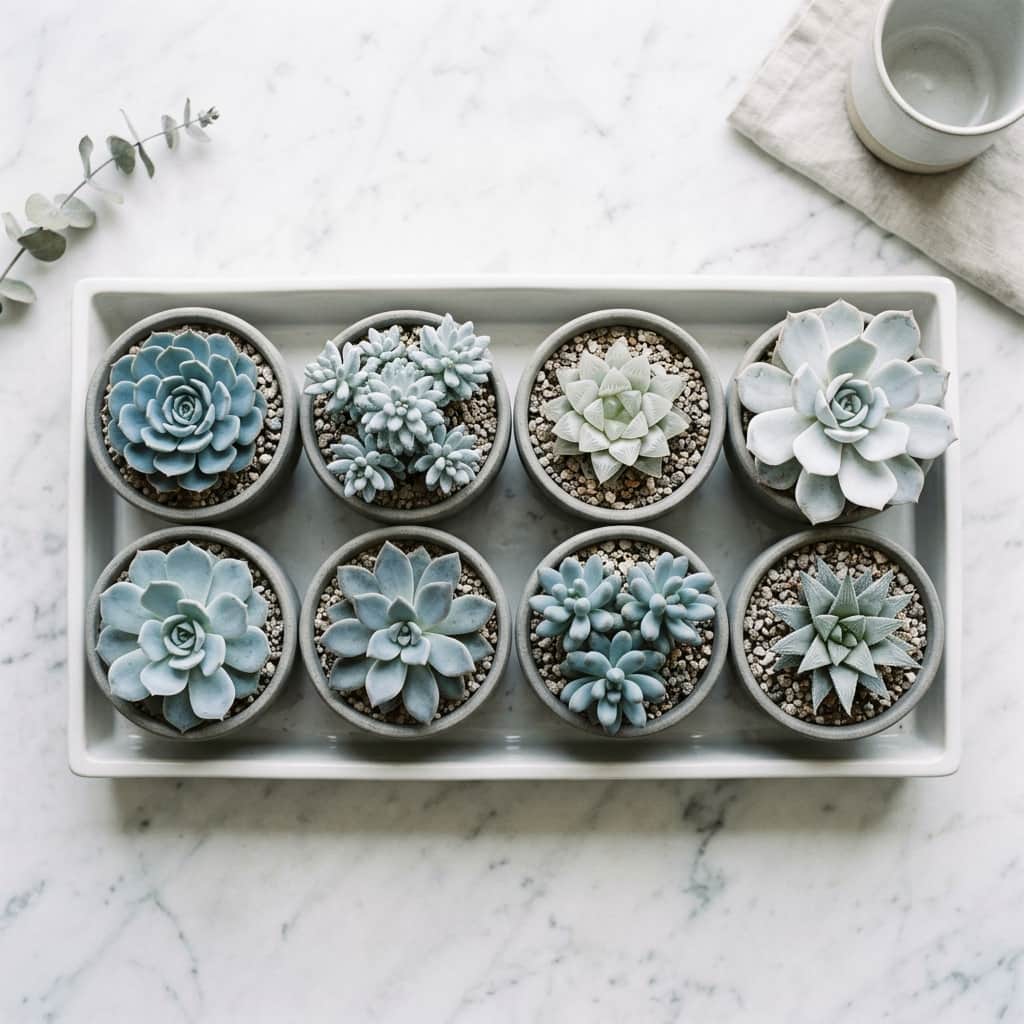
A monochromatic succulent arrangement using only one color family creates a sophisticated, gallery-worthy display that feels curated rather than collected. The subtle tonal variation between plants adds richness without visual chaos.
This arrangement suits minimalist, Japandi, and Scandinavian-style homes that favor calm, neutral palettes. Creating a full tray arrangement costs between $20–$50 and looks striking on coffee tables or dining sideboards.
- Sophisticated one-tone palette
- Japandi and minimalist style
- Creates gallery-worthy display
- Subtle tonal variation adds depth
- Suits neutral-palette interiors
Blue echeveria, silver sedum, and pale ghost plant create the most seamless monochromatic blue-gray arrangement. Grouping plants with similar color temperatures makes the overall display feel intentional and visually intelligent.
That’s why many interior stylists recommend monochromatic plant arrangements for modern homes , they provide natural texture and life without disrupting carefully chosen neutral color schemes or minimalist decor aesthetics.
Succulent Staircase Garden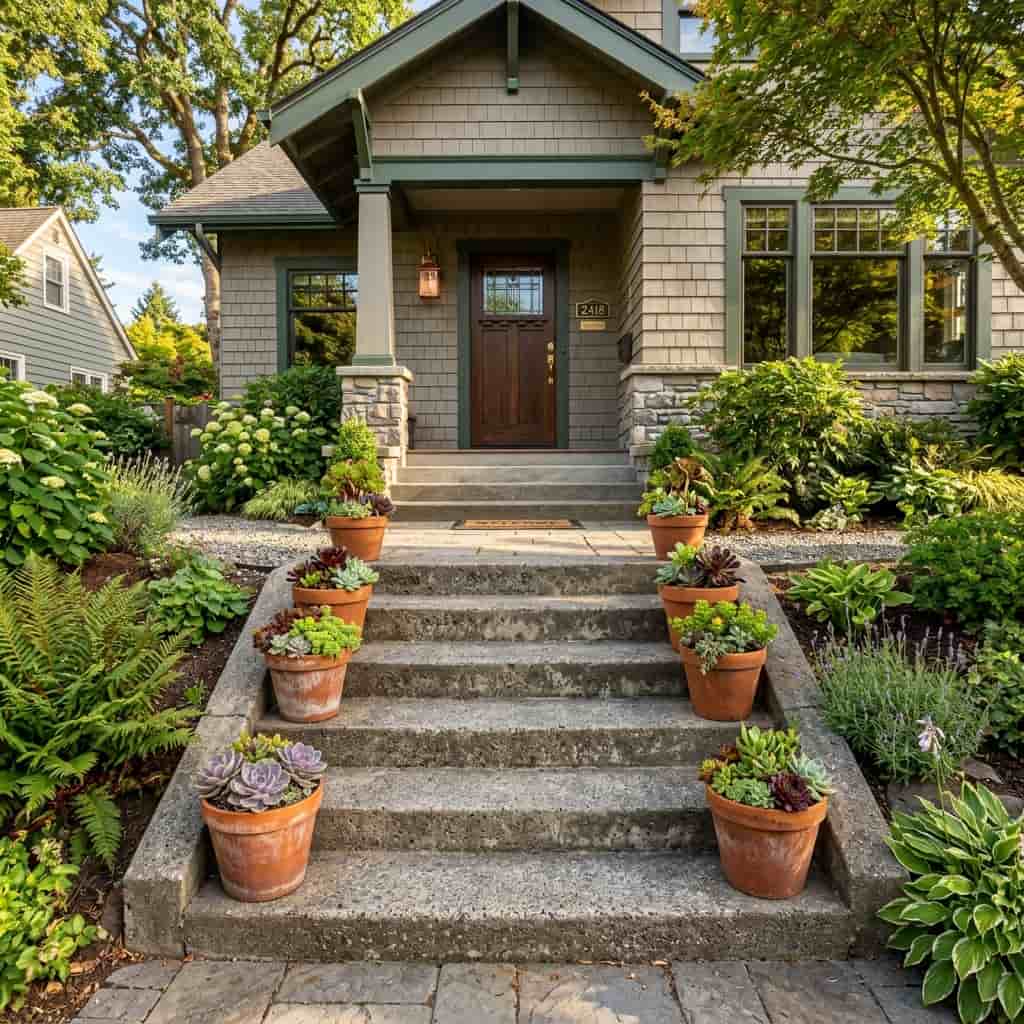
Placing succulent pots on each stair riser creates a gorgeous living staircase display that guides visitors toward the front door with natural beauty. The graduated sizes from bottom step to top feel intentional and elegant.
This styling idea costs between $30–$80 depending on the number of steps and pots used. It suits craftsman, cottage, and Mediterranean-style home exteriors where outdoor living spaces feel naturally extended and welcoming.
- Gorgeous front entry styling
- Guides visitors to front door
- Graduated sizes look elegant
- Budget-friendly curb appeal
- Works on 3 to 10 steps
Use terracotta pots in graduating diameters , 12 inches on the bottom step, reducing to 4 inches at the top. This natural size progression creates a beautiful visual rhythm that feels professionally landscaped.
Secure pots with non-slip rubber padding underneath on smooth concrete steps to prevent accidental tipping during windy days or when visitors move past them. Safety and style work perfectly together here.
Succulent and Gravel Tray Garden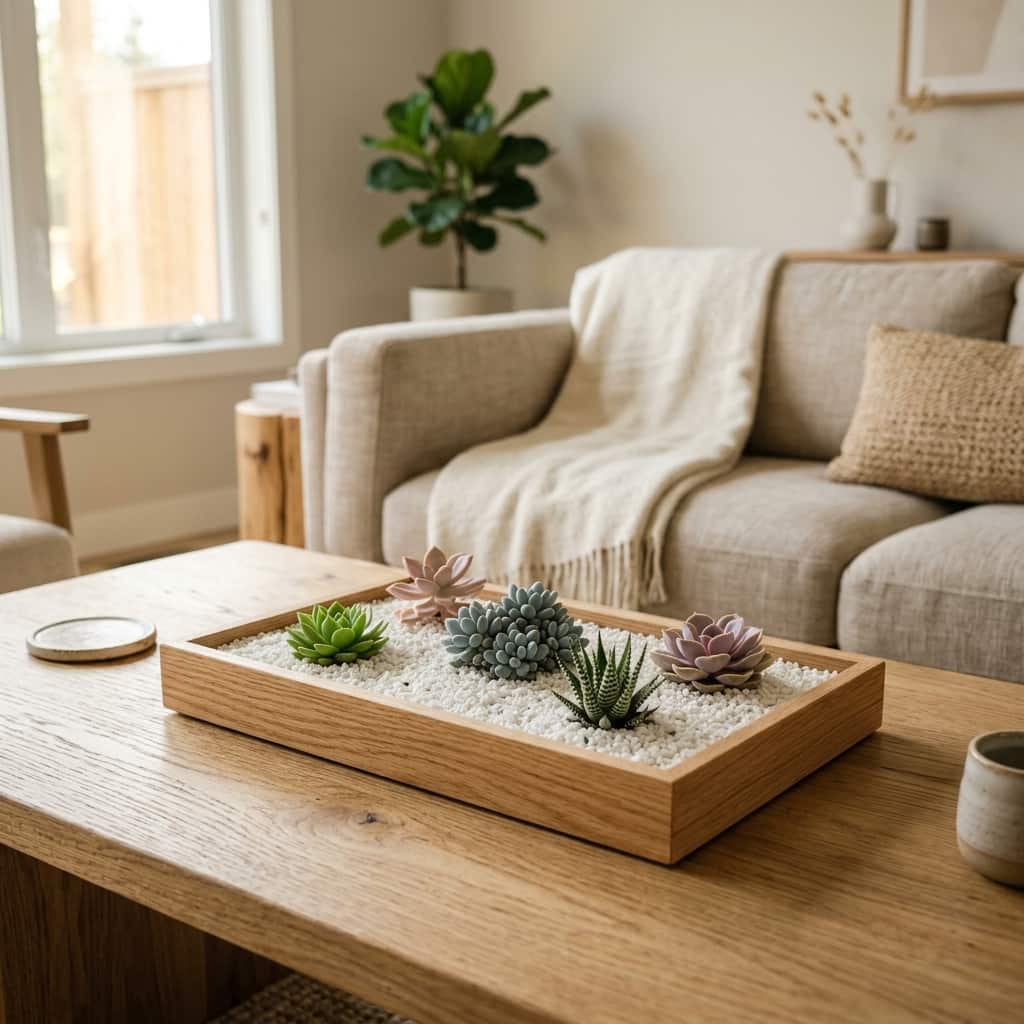
A shallow wooden tray filled with white gravel and small succulents creates a tabletop zen garden that brings calm, natural energy into any living room or home office. The gravel surface adds texture and a spa-like serenity.
This tabletop garden costs under $20 and suits coffee tables, office desks, and console tables in modern and Japandi-style homes. It requires watering only once every 10–14 days, making it genuinely low-effort.
- Tabletop zen garden effect
- Calm spa-like living room feel
- Under $20 budget project
- Watered every 10–14 days
- Suits coffee tables or desks
White decorative gravel reflects light upward through the succulent leaves, creating beautiful natural highlights. I’ve tried both colored and white gravel, and white consistently creates the most elegant and visually refined result.
Raking a simple pattern into the white gravel around the plants adds a mindful, meditative quality to the display. Many home stylists recommend this detail for home offices where calm focus is a daily priority.
Hanging Glass Globe Succulents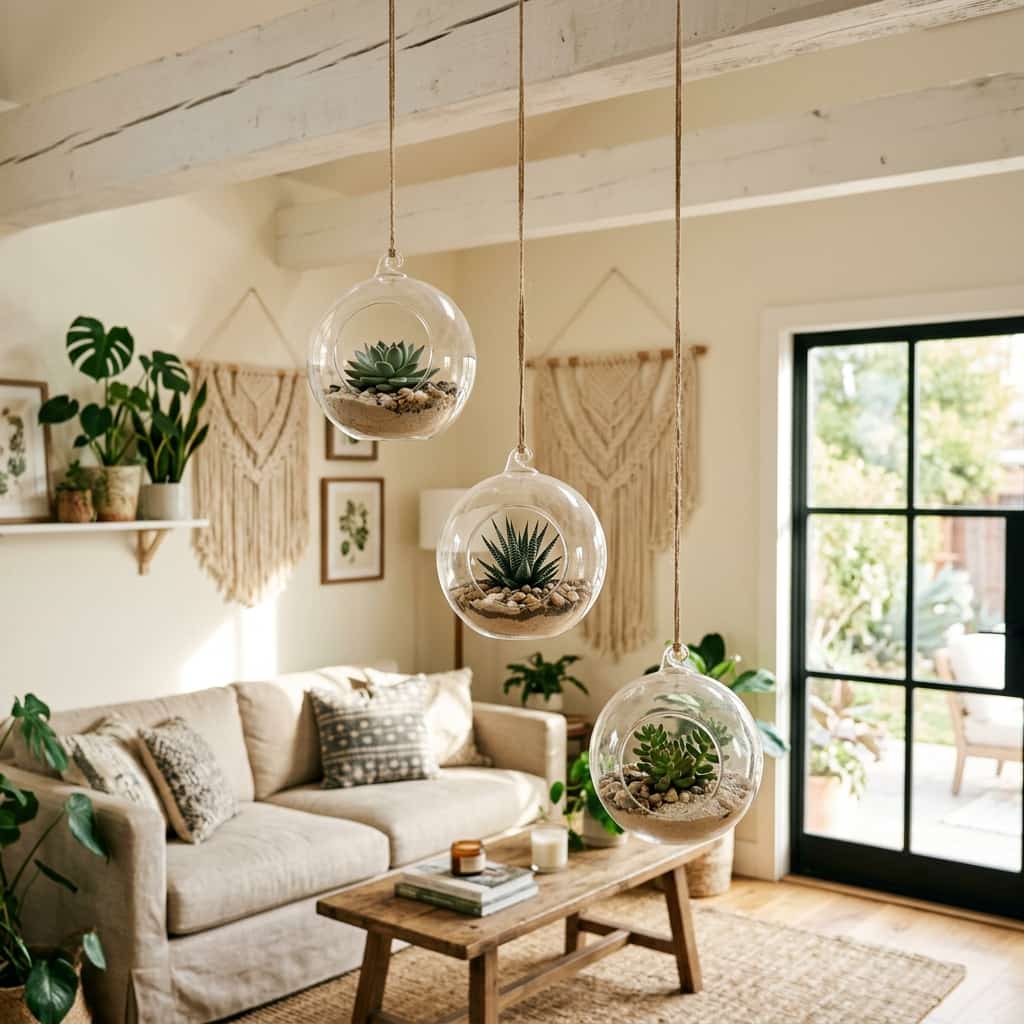
Clear glass globe terrariums hanging from ceiling hooks hold single succulents inside, creating floating living sculptures that feel both modern and magical. Each globe catches and refracts natural light beautifully.
This hanging display costs between $25–$50 for three globes and suits boho, modern, and coastal living rooms with high ceilings or exposed wooden beams. The floating effect creates an effortlessly curated, gallery-quality atmosphere.
- Floating living sculpture effect
- Catches and refracts natural light
- Modern and boho style fusion
- Suits high-ceiling living rooms
- Gallery-quality atmosphere instantly
Use open-top globe terrariums rather than sealed ones to ensure adequate airflow around succulent leaves. A single air plant or haworthia works best inside small globes where soil volume and drainage are naturally limited.
That’s why many interior stylists specifically recommend hanging globe displays for rental apartments , they require no wall damage, create enormous visual impact, and move easily to a new home when tenants relocate.
Succulent Herb Garden Combo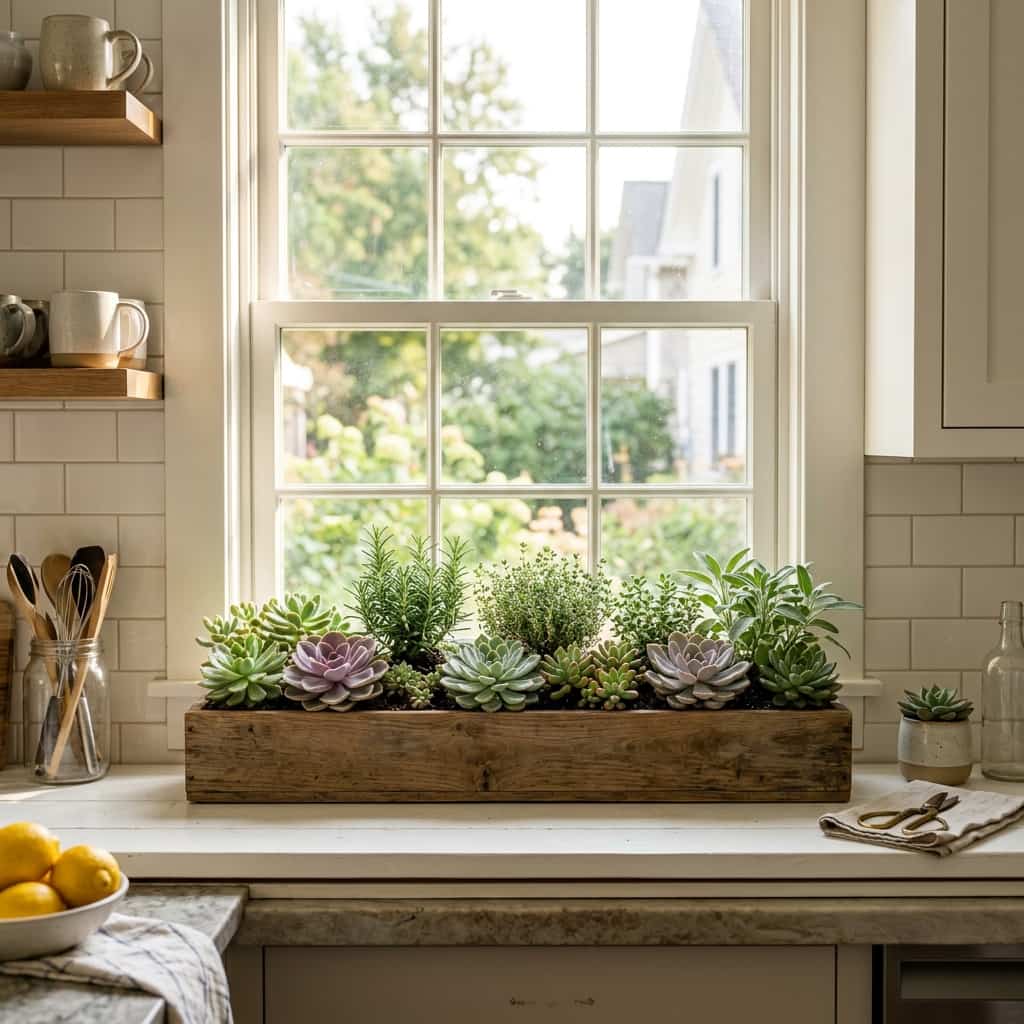
Combining succulents and culinary herbs in one long planter box creates a kitchen garden that is both beautiful and genuinely useful every single day. The contrasting leaf textures between succulents and herbs make the arrangement visually dynamic.
This dual-purpose planter costs under $35 and fits perfectly on kitchen windowsills, countertops, or small apartment balconies. It suits farmhouse, rustic, and modern kitchen styles equally well without feeling out of place.
- Beautiful and functional kitchen garden
- Contrasting textures add visual depth
- Under $35 budget-friendly setup
- Suits windowsills and countertops
- Farmhouse and modern kitchen style
Pair drought-tolerant herbs like rosemary, thyme, and sage with succulents since all three share similar watering needs. Avoid pairing succulents with basil or mint , those herbs need far more frequent watering and will cause overwatering problems.
In my experience, this succulent-herb combination surprises people most because it looks intentionally designed rather than practical. Guests always assume it came from a boutique plant shop rather than a simple weekend DIY project.
Colorful Echeveria Rainbow Garden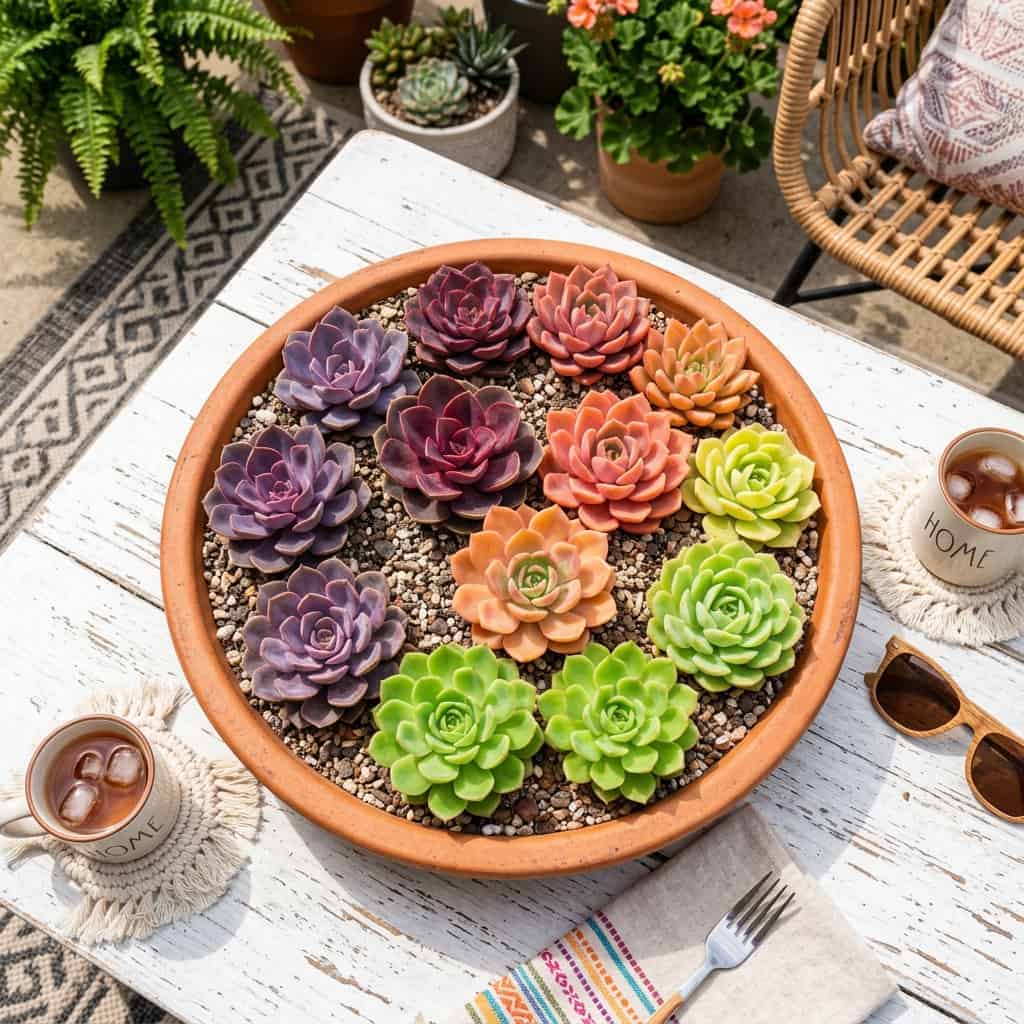
A rainbow arrangement of echeveria varieties organized by color gradient creates a breathtaking living artwork that looks almost too perfect to be real. The natural color range of echeveria alone spans nearly the entire color spectrum.
This arrangement costs between $25–$45 depending on variety availability and suits modern boho patios, colorful outdoor entertaining areas, and bright indoor spaces where bold color is welcome and celebrated.
- Living rainbow color arrangement
- Echeveria natural color spectrum
- Bold boho patio centerpiece
- Looks almost too perfect
- Inspires genuine wow reactions
Arrange the rosettes tightly together so the color gradient flows seamlessly from one tone to the next without visible gaps. Tight grouping also helps retain moisture slightly longer in hot outdoor conditions during peak summer heat.
That’s why many plant stylists recommend echeveria rainbow arrangements for outdoor entertaining tables , they become an instant conversation piece that guests photograph and share on social media before the first drink is even poured.
Succulent Moon Garden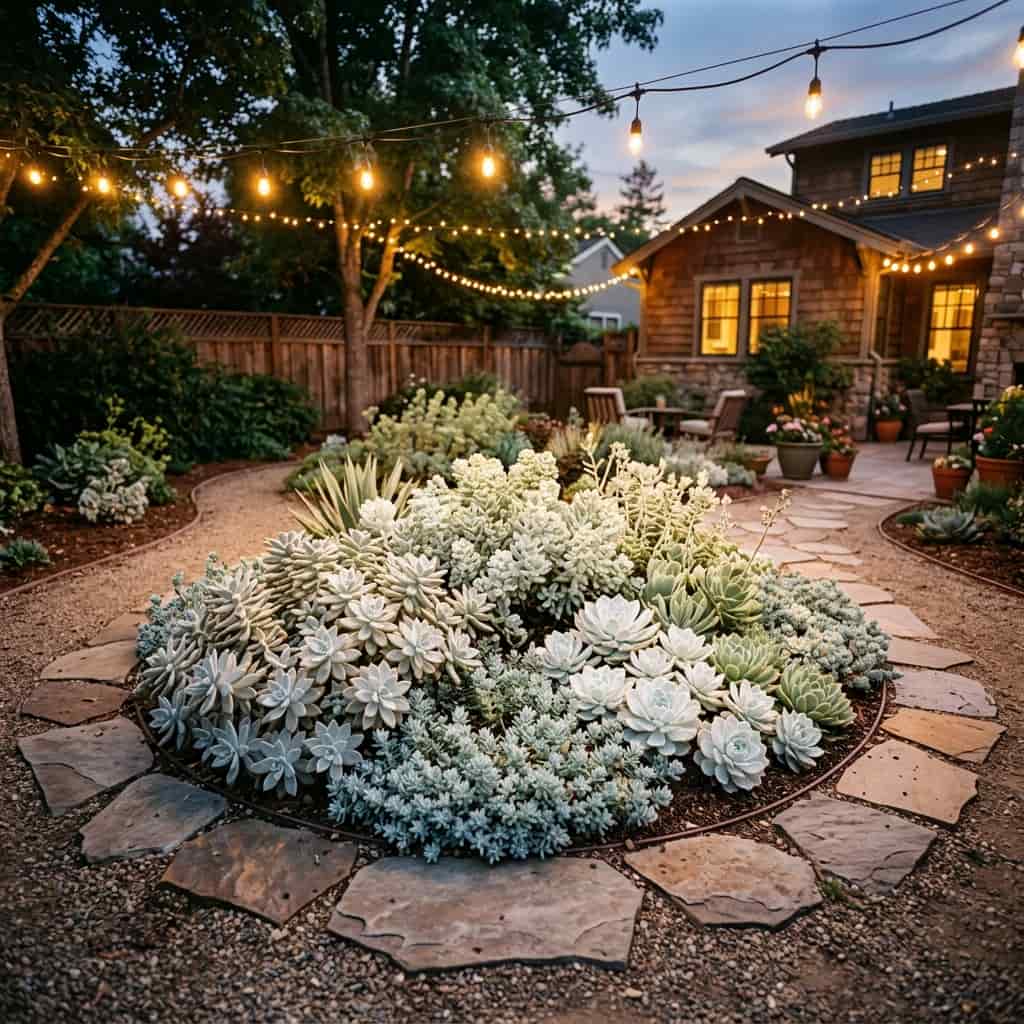
A moon garden planted exclusively with white, silver, and pale green succulents creates an ethereal, glowing outdoor space that comes alive after sunset. The pale foliage reflects every available light source with a soft, luminous quality.
This design costs between $60–$150 depending on garden size and suits romantic backyard gardens, meditation corners, and outdoor entertaining areas used frequently during evening hours. It is genuinely unlike any other garden design concept.
- Ethereal glowing evening garden
- Pale foliage reflects light beautifully
- Romantic backyard atmosphere
- Magical after-sunset visual effect
- Suits meditation garden corners
Ghost plant, silver sedum, and white echeveria are the three best varieties for a moon garden because their naturally pale tones create the strongest luminous effect under string lights or moonlight. Their waxy surfaces amplify reflected light remarkably well.
I’ve seen this style work beautifully for many homeowners who entertain outdoors in the evenings. Adding warm string lights overhead transforms the moon garden into a genuinely magical outdoor room that feels completely removed from everyday life.
Tiered Succulent Plant Stand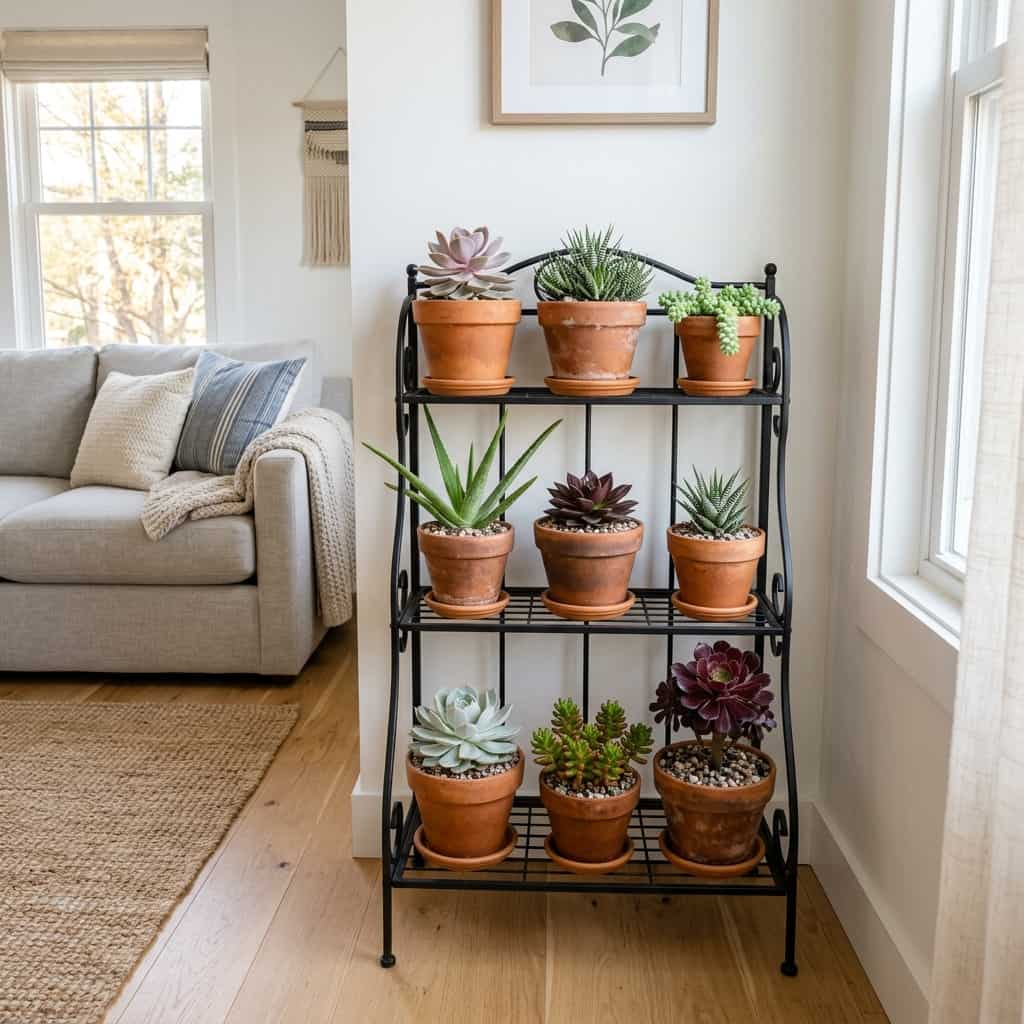
A three-tier metal plant stand holding multiple succulent varieties creates a stunning indoor garden corner that uses vertical space brilliantly without occupying much floor area. Each tier becomes its own styled vignette.
This display costs between $35–$80 for a quality metal stand and suits modern, boho, and minimalist living rooms, home offices, and bedroom corners. It solves the common problem of wanting many plants in a compact, organized way.
- Vertical indoor garden solution
- Each tier is its own vignette
- Compact organized plant display
- Suits living rooms and bedrooms
- Modern and boho style fusion
Place the tallest succulents like aloe vera on the bottom tier, medium varieties like echeveria in the middle, and compact haworthia on the top tier. This top-to-bottom size graduation creates natural visual balance and ensures every plant receives adequate light.
That’s why interior stylists consistently recommend tiered plant stands as the single most impactful small-space indoor garden solution. One stand replaces a cluttered collection of individual pots scattered across multiple surfaces throughout the entire room.
Conclusion
The right succulent garden design does something no other plant category quite manages , it makes a space feel intentional, alive, and effortlessly beautiful all at once. Whether you start with a $15 hanging basket or a full raised cedar bed, the impact is immediate and genuinely rewarding. I’ve seen how one well-placed terracotta cluster or a simple windowsill row completely changes how a home feels day to day. Pick one idea from this list and try it this weekend. Save this post on Pinterest so you can return to it whenever you need fresh inspiration. Share it with a friend who needs their space to feel a little more alive.
Frequently Asked Questions
What is the easiest succulent garden idea for beginners?
A terracotta cluster on a sunny patio is the easiest starting point. Group 3–5 pots together, use cactus mix soil, and water every 10–14 days. The setup costs under $30 and requires almost no prior gardening experience to achieve great results.
How do I start a succulent garden on a tight budget?
Start with a single repurposed container like a wooden crate, birdbath, or thrifted bowl. Fill it with cactus mix soil and buy 3–5 small succulent varieties costing $2–$5 each. A full display costs under $25 and looks genuinely impressive.
What is the best succulent garden design for a small apartment balcony?
Balcony rail planters and hanging baskets work best for small outdoor spaces. Both options require no floor space and suit standard apartment railings without drilling. Trailing succulent varieties like burro’s tail create a lush, full look even in compact areas.
Can succulents survive outdoors year-round in the USA?
Many succulent varieties survive year-round outdoors across most USA climate zones. Hardy sedums tolerate temperatures as low as minus 30 degrees Fahrenheit. In colder northern zones, bring tender varieties like echeveria indoors during winter months to prevent frost damage.
How do I keep indoor succulents healthy without much effort?
Place indoor succulents on a south-facing or east-facing windowsill for 4–6 hours of daily natural light. Water every 10–14 days and use well-draining cactus mix soil. Avoid overwatering , more indoor succulents die from too much water than too little.
What succulent varieties work best for a vertical wall garden?
Echeveria, sedum, and sempervivum work best for vertical wall planters because their compact rosette shapes fit neatly into individual pockets. All three tolerate the slightly drier conditions that vertical planters naturally create compared to traditional ground-level garden beds.
How do I make a succulent garden look professionally designed?
Use odd-numbered groupings of 3, 5, or 7 plants for natural visual balance. Vary pot heights, sizes, and materials across the arrangement. Mix succulent textures , smooth rosettes beside spiky or trailing varieties , to create depth. That combination consistently produces a professionally styled result.