27 Stunning living room plants decor To Copy In 2026
Your living room feels flat, lifeless, and somehow unfinished , even after buying new furniture and repainting the walls. Sound familiar? The missing element is almost always plants. Nothing else in home decorating adds warmth, natural texture, and genuine visual life the way a well-styled indoor plant does.
Living room plants decor is the single most impactful and accessible styling upgrade available for any home in 2026. A single large fiddle leaf fig, a trailing pothos shelf, or a floor-standing areca palm can completely change how a room feels , adding color, height, movement, and the kind of organic warmth that no purchased decorative object ever replicates.
I’ve noticed that homeowners who add even 2 to 3 well-chosen indoor plants to their living room consistently describe the space as feeling warmer, more personal, and significantly more finished than it did before the plants arrived. The room simply comes alive in a way that paint colors and furniture choices alone cannot achieve.
This guide covers 27 of the most stunning, trend-aligned, and practically achievable indoor plant styling ideas for living rooms in 2026. Interior stylists and plant-forward home decorators consistently recommend starting with one large-format statement plant before layering in smaller accent plants , because a single bold plant establishes the botanical direction of the entire room instantly. Whether you have a bright sunny living room or a dark low-light apartment space , this list has a perfect plant styling idea for your exact situation. Save this guide. Pick one idea. Start today.
Fiddle Leaf Fig Corner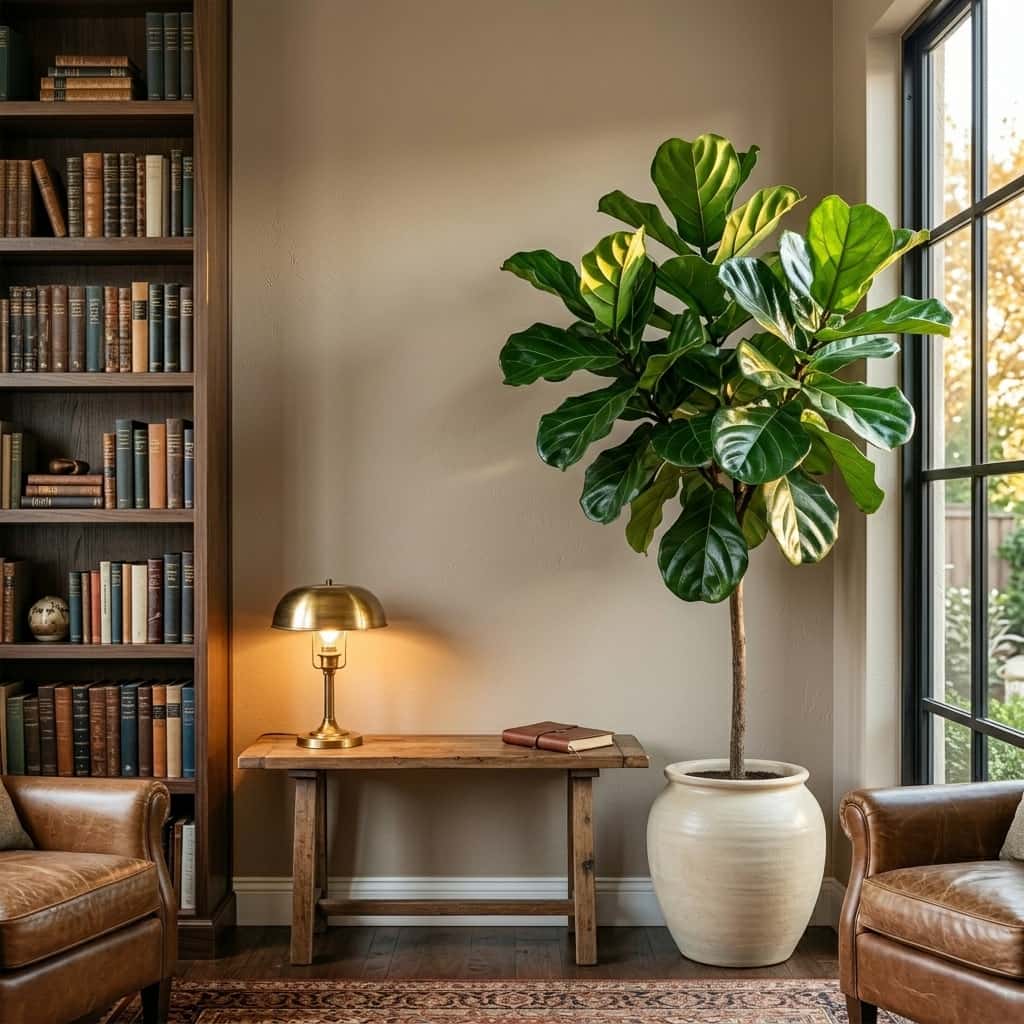
One large fiddle leaf fig in the right corner of a living room creates an instant focal point that no wall art can replicate. The broad, glossy leaves in deep emerald green catch afternoon window light beautifully , producing a naturally dramatic botanical statement in any modern or minimal space.
Fiddle leaf figs suit bright living rooms with consistent indirect sunlight near south or west-facing windows. They grow best when you avoid moving them frequently , placing the pot once in a well-lit corner and leaving it there rewards you with steady, impressive vertical leaf growth over time.
- Tall fig anchors empty living room corners
- Glossy leaves catch afternoon natural light
- Works in modern and minimal living rooms
- Single large plant creates bold visual impact
- Ceramic pot grounds the plant beautifully
Fiddle leaf figs remain one of the most searched and saved living room plants decor ideas across every major home styling platform in 2026. That’s why many stylists recommend starting your entire room plant styling plan with one statement fiddle leaf fig before adding any smaller greenery.
The single large plant approach consistently outperforms scattered small pots , delivering more visual impact, more natural height, and more genuine room-altering presence than filling a room with 8 to 10 individual small plant arrangements across multiple surfaces.
Hanging Pothos Shelf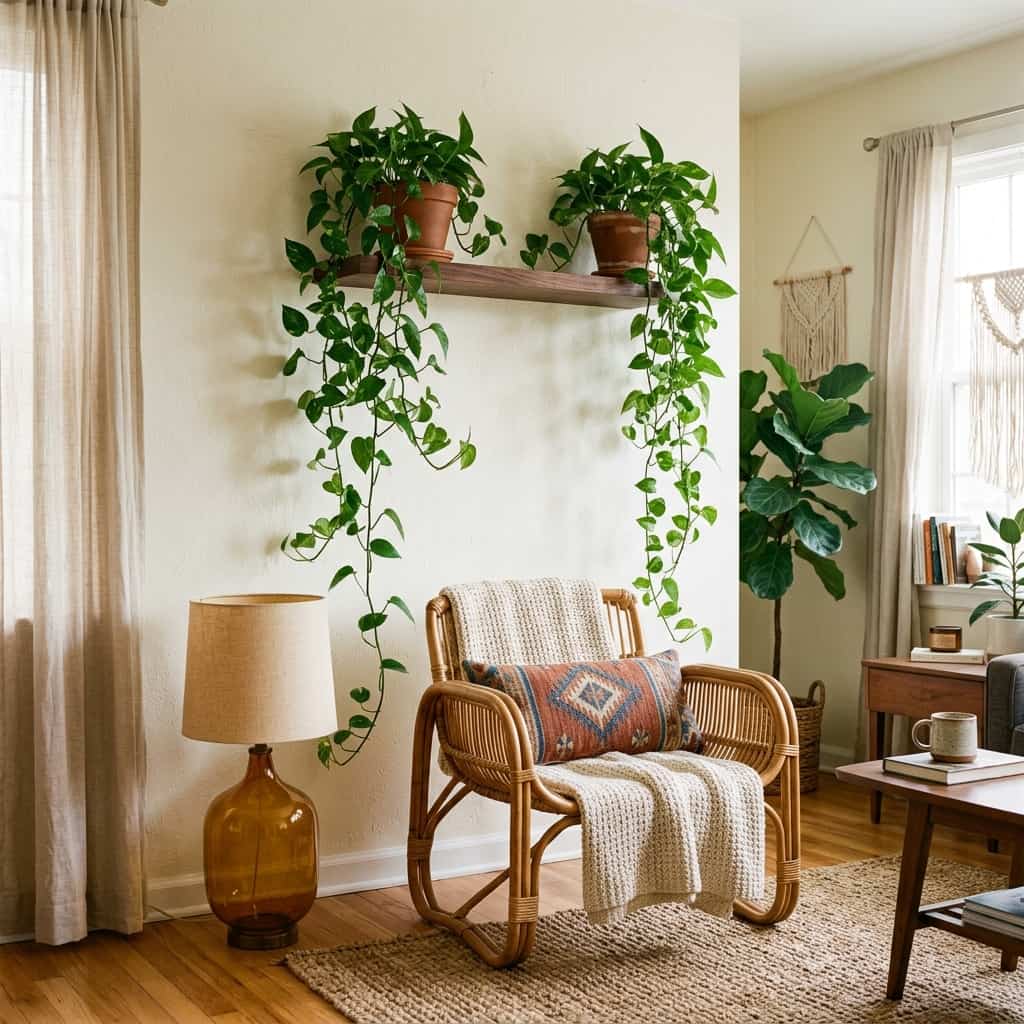
A shelf-mounted trailing pothos display creates the most effortlessly lush and vertically dynamic botanical wall feature in any apartment living room. The long golden-green vines cascading 18 inches below the shelf create a natural curtain effect that adds genuine depth, softness, and organic movement to a plain cream wall.
Golden pothos plants suit low-light living rooms and small apartments where direct sunlight is limited or inconsistent. Two pothos plants on a single shelf cost approximately $18 to $24 total at most garden centers , making this one of the most budget-accessible high-impact indoor plant styling ideas available for any living space.
- Trailing vines create natural wall curtain effect
- Pothos suits low-light apartment living rooms
- Two plants cost under $25 total
- Cascading green adds vertical room dimension
- Works on dark walnut and white floating shelves
I’ve noticed that golden pothos shelf displays consistently generate the highest engagement of any single plant styling idea on Pinterest , the long trailing vines create naturally beautiful photography that looks professionally styled without requiring any design expertise or expensive plant varieties.
That accessible combination of low purchase cost, minimal care requirements, and genuinely stunning visual results makes a trailing pothos shelf display the single most recommended starter plant styling project for anyone beginning their indoor plant decor journey in 2026.
Monstera Statement Planter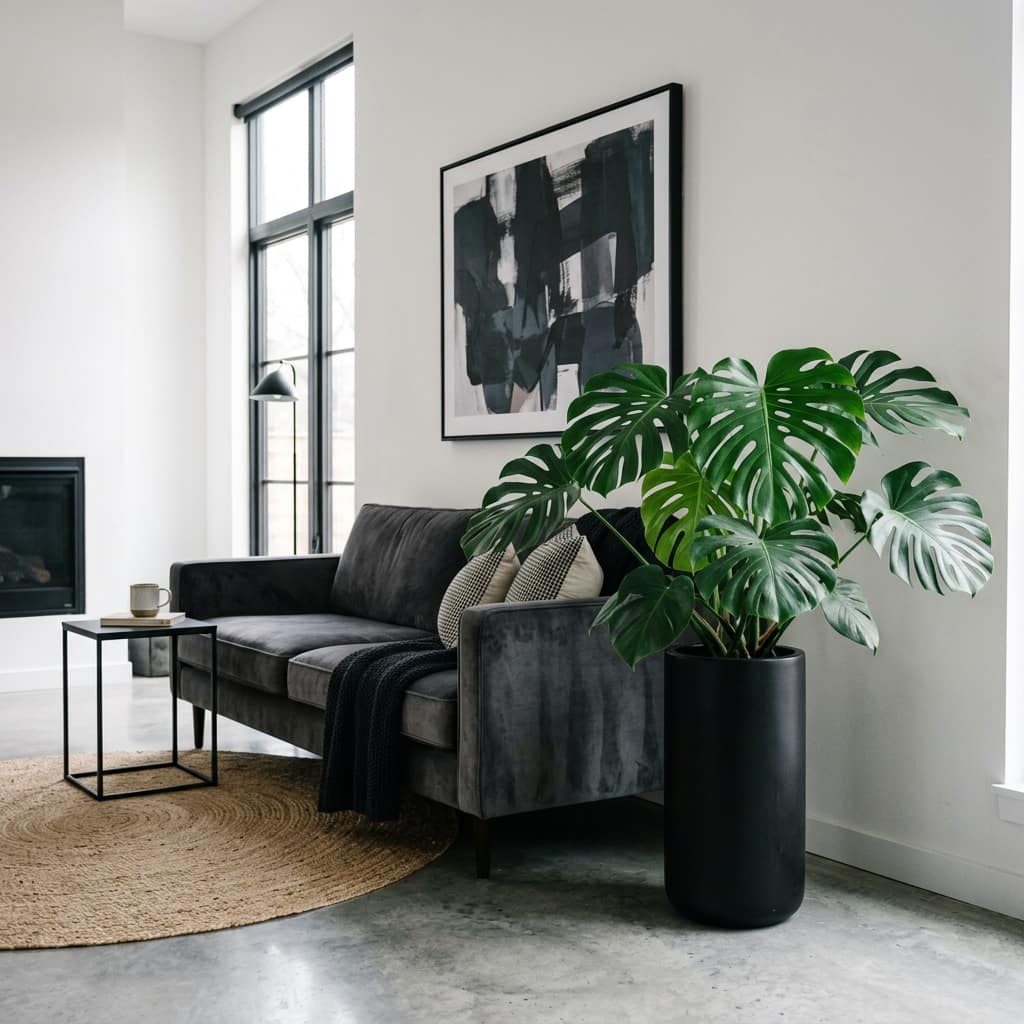
A large Monstera deliciosa in a tall matte black cylinder planter creates the most sculpturally dramatic indoor plant statement available for contemporary and moody living room aesthetics. The wide fenestrated leaves , split with natural holes , create a visually complex botanical silhouette that reads like living wall art beside a dark sofa.
Matte black planters suit charcoal, white, and dark-toned living rooms where the plant container itself contributes to the overall color story. The high contrast between the deep green Monstera foliage and the black ceramic planter surface creates a bold, graphic plant display with genuine visual tension and design confidence.
- Fenestrated leaves create living wall art effect
- Matte black planter suits moody modern rooms
- Wide leaves suit charcoal and white interiors
- Monstera grows 2–3 new leaves monthly indoors
- Single bold plant suits minimal room styling
Monstera deliciosa remains the most recognized and widely styled houseplant of 2026 , experts at multiple plant trend forecasting publications confirm it continues to dominate both online home decor searches and real-world interior styling projects across every design aesthetic from Japandi to industrial loft.
That universal cross-aesthetic versatility , the ability to look equally stunning beside a Japandi sofa, a mid-century credenza, or an industrial concrete floor , makes a large Monstera in a bold planter one of the most confidently future-proof indoor plant investments available for any living room.
Tiered Plant Stand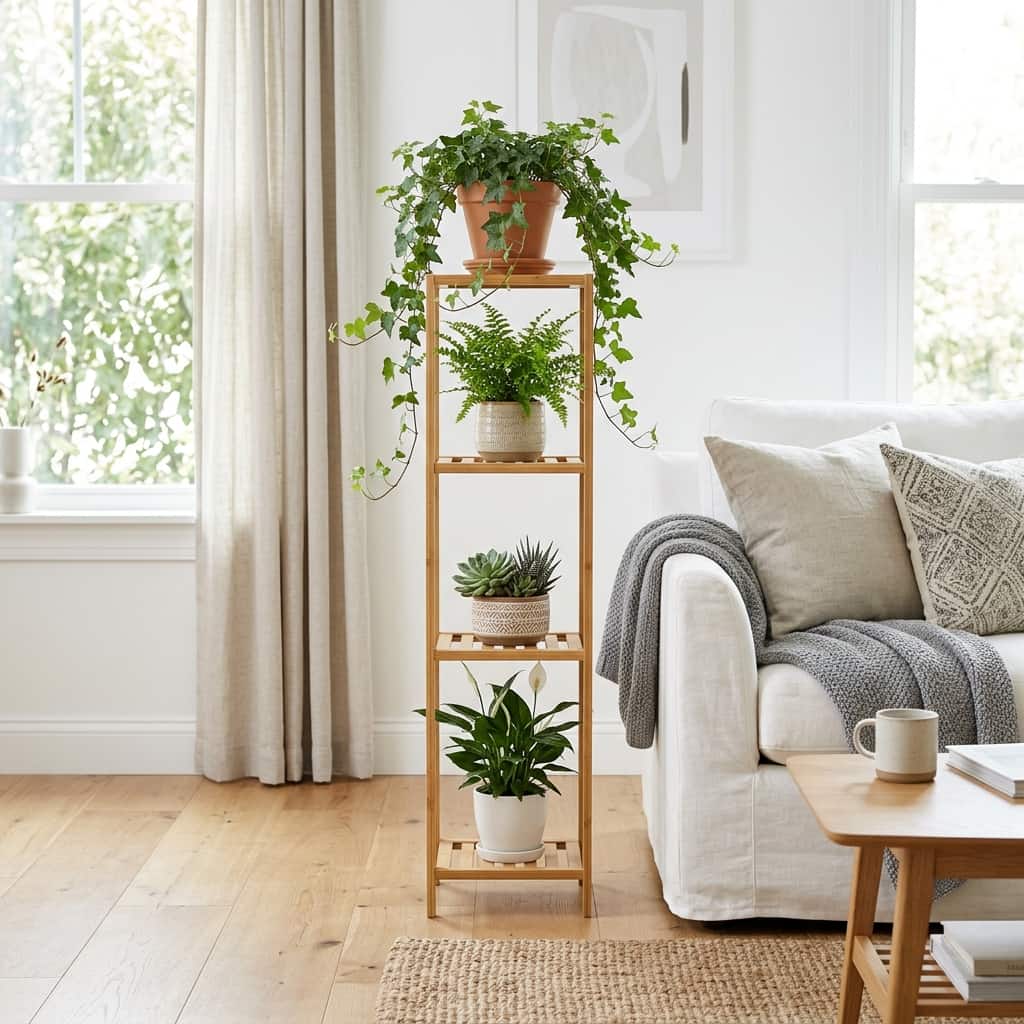
A 4-tier bamboo plant stand holding 4 varied plant species creates the most organized and height-layered indoor greenery display for Scandinavian and minimal living rooms. The staggered plant heights , from trailing ivy at the top to a compact peace lily at the base , create a visually dynamic botanical column that fills vertical space beautifully.
Tiered plant stands suit small living rooms where floor space is limited but vertical wall height remains available. A single slim bamboo stand holds 4 plants in a 14-inch footprint , delivering the visual impact of a large plant collection while occupying less floor area than one single oversized planter pot.
- Four-tier stand creates botanical vertical column
- 14-inch footprint suits small living room floors
- Varied species add color and texture contrast
- Bamboo stand suits Scandinavian and boho rooms
- Works beside sofas and empty wall corners
Tiered plant stands suit plant enthusiasts who want to display multiple species in a single cohesive arrangement. Grouping 4 plants at varied heights creates a curated, intentional display that looks significantly more designed than placing individual pots randomly across different surfaces and shelves throughout the living room.
That intentional grouping principle , confirmed by plant stylists and interior designers as one of the core plant arrangement strategies for 2026 , consistently produces more visually satisfying results than scattering individual plants across multiple room zones without a unifying display structure.
Trailing Ivy Window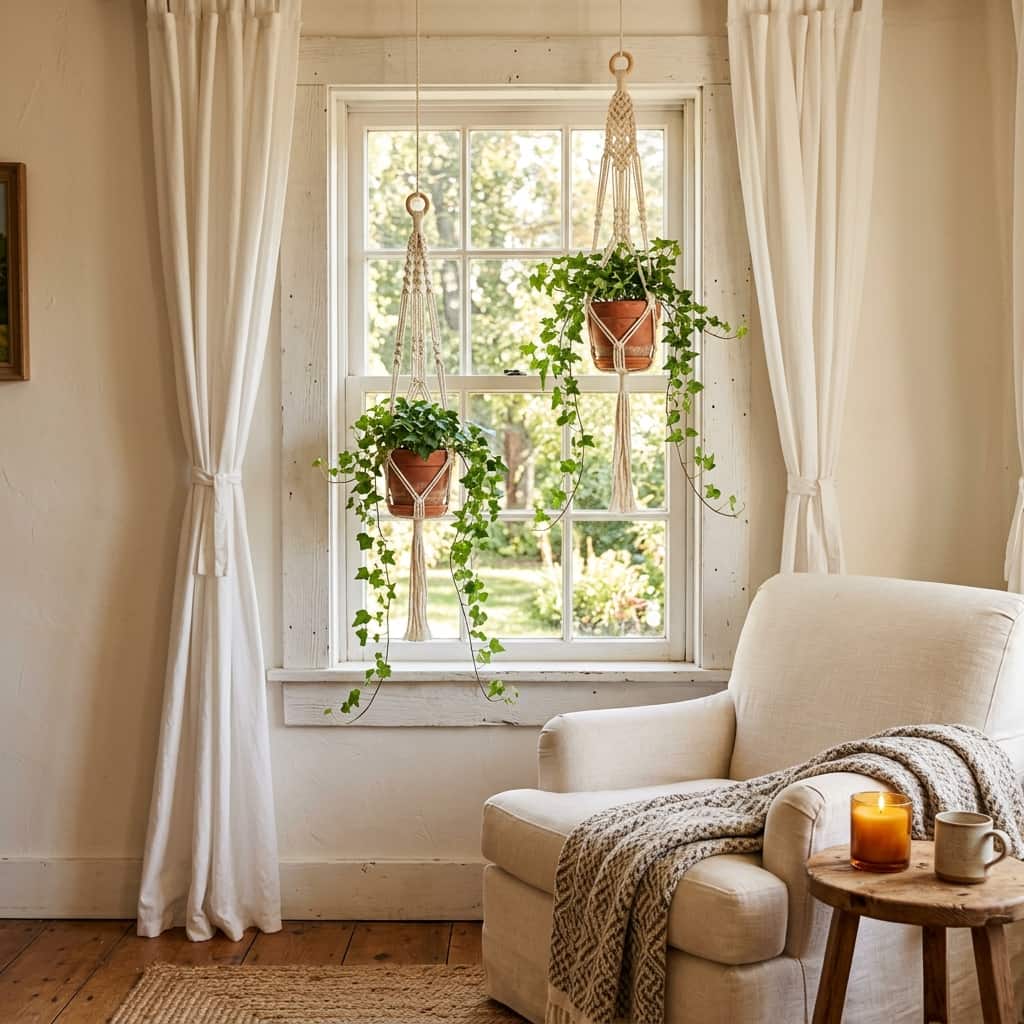
Two trailing ivy plants in macramé hangers flanking a south-facing window create the most warmly cottage-inspired and naturally light-filled plant display in any cozy living room. The cascading ivy vines frame the window opening in living green , creating a soft, botanical window border that feels genuinely romantic and deeply connected to the outdoor garden beyond.
Macramé plant hangers suit cottage, boho, and farmhouse living rooms where natural fiber textures and handcrafted materials align with the broader room aesthetic. Hanging the 2 ivy plants at slightly different heights , one 6 inches higher than the other , creates a relaxed, organic visual rhythm that feels collected rather than rigidly symmetrical.
- Trailing ivy creates soft green window border
- Macramé hangers suit cottage and boho rooms
- Two hangers at varied heights feel organic
- South-facing window provides ideal ivy light
- Living green frames outdoor garden views beautifully
Hanging window plant displays suit renters and apartment dwellers who want significant indoor greenery impact without using any limited floor or shelf surface space. The macramé hanger installation requires only 2 ceiling hooks per plant , making the entire display completely reversible and renter-friendly with minimal wall commitment.abeautifulmess
That renter-friendly practicality, combined with the warmly romantic visual effect of trailing ivy framing a sun-filled cottage window, makes a macramé hanging ivy display one of the most practically accessible and emotionally appealing plant styling ideas available for any small or rental living room.
Snake Plant Floor Display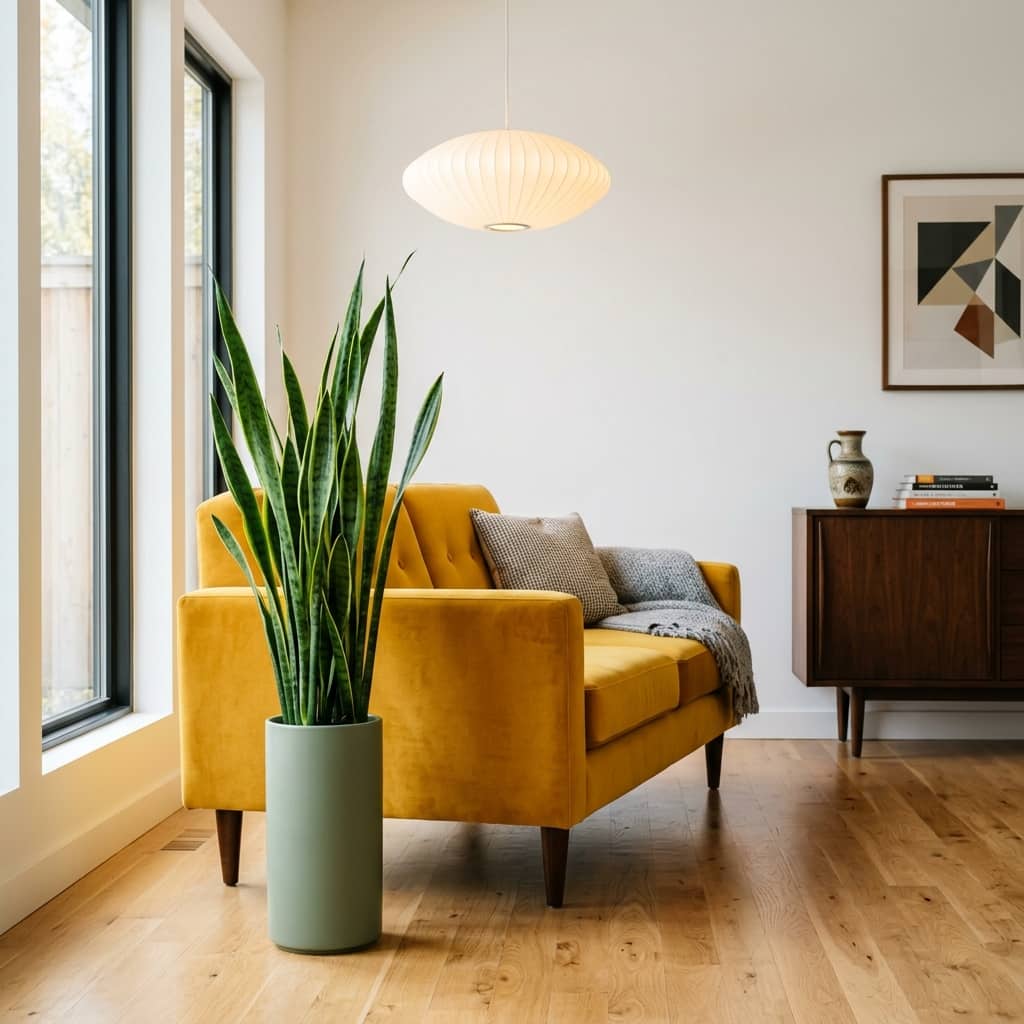
A tall snake plant on the living room floor beside the sofa creates the most architecturally bold and low-maintenance plant statement available for mid-century and minimal interiors. The rigidly upright architectural leaves , reaching 48 inches tall , create a strong vertical line that draws the eye upward and makes the room ceiling feel significantly higher.
Snake plants suit busy homeowners, working professionals, and anyone who wants striking indoor plant decor without demanding care routines. This plant tolerates low light, irregular watering, and dry indoor air remarkably well , thriving on neglect in a way that most popular statement houseplants simply cannot match in real-world living conditions.
- Upright leaves create architectural vertical statement
- Tolerates low light and irregular watering perfectly
- Sage green pot suits mid-century yellow sofas
- 48-inch height draws eye toward high ceilings
- Works for busy homeowners with limited time
Snake plants are confirmed by plant care experts as the single most forgiving large-format indoor plant available in 2026 , surviving 3 to 4 weeks without watering while maintaining their clean, structured appearance with zero leaf drooping or visible stress under standard indoor temperature and light conditions.
That extraordinary resilience makes a tall snake plant the most confidently recommended starting choice for anyone who loves the visual impact of large indoor plants but feels uncertain about their ability to maintain a consistent plant watering and care schedule throughout the week.
Fern Bookshelf Styling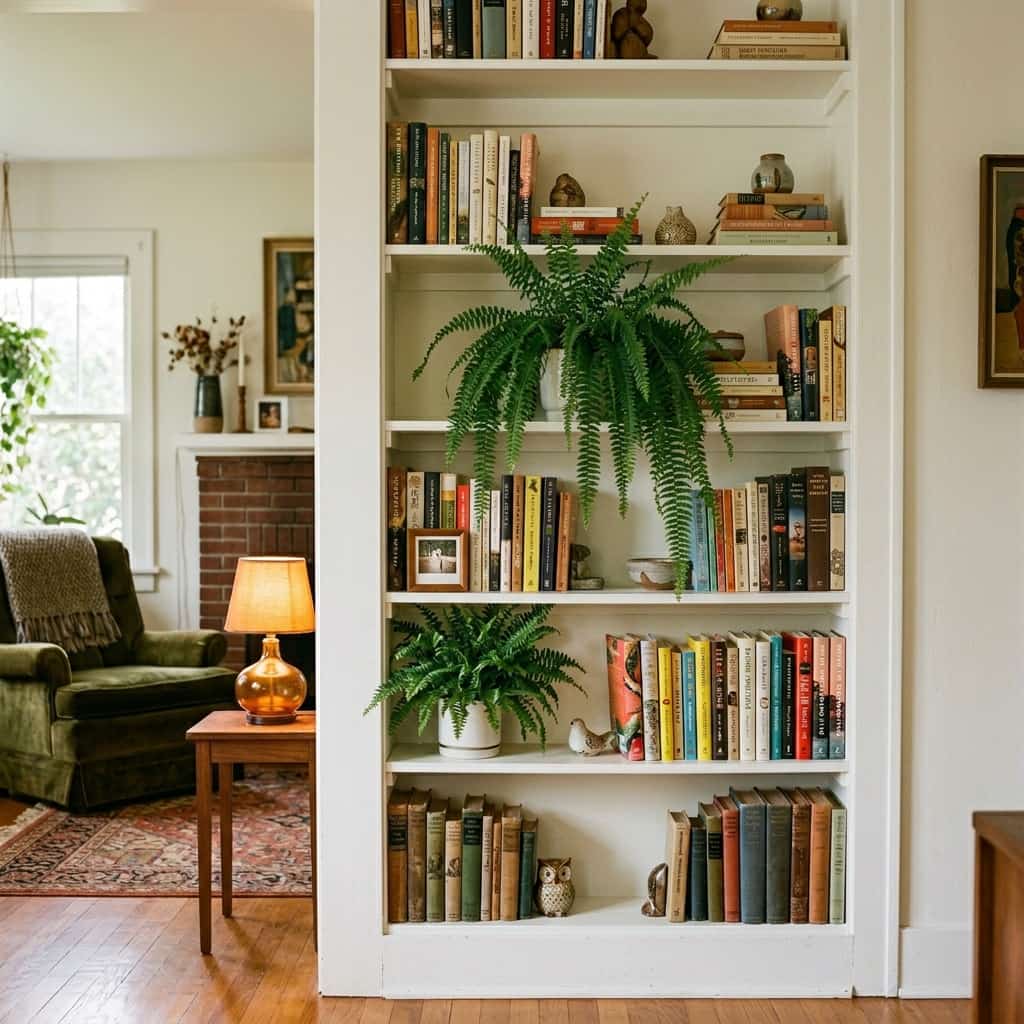
Three Boston ferns placed on alternating bookshelf levels create the most organically layered and texturally rich plant-and-book styling arrangement for eclectic living room built-in shelves. The soft, feathery fern fronds add natural movement and living texture between book spines and ceramic objects , breaking the rigidity of a flat bookshelf display with genuine botanical softness.
Boston ferns suit living rooms with consistent humidity and indirect light , placing them near a humidifier or misting the leaves twice weekly keeps the fronds full and vibrant. Avoiding dry air directly from heating vents prevents the fern fronds from browning at the tips, which remains the most common indoor fern care mistake.
- Alternating shelf ferns add organic bookshelf texture
- Feathery fronds soften rigid book spine lines
- Three plants suit five-shelf bookcase styling
- Boston ferns need consistent humidity to thrive
- Works in eclectic and warm-toned living rooms
I’ve seen bookshelf plant styling completely revitalize tired, cluttered living room built-ins , the introduction of 3 small ferns across alternating shelf levels creates a fresh, layered, nature-connected display that makes the same bookshelf look significantly more intentionally designed and visually interesting than books and objects alone ever achieve.
That transformative effect , achieved simply by placing affordable small plants on existing shelf surfaces , makes fern bookshelf styling one of the most cost-effective and immediately rewarding indoor plant decor projects available for any living room with existing built-in or freestanding shelving.
Tropical Corner Cluster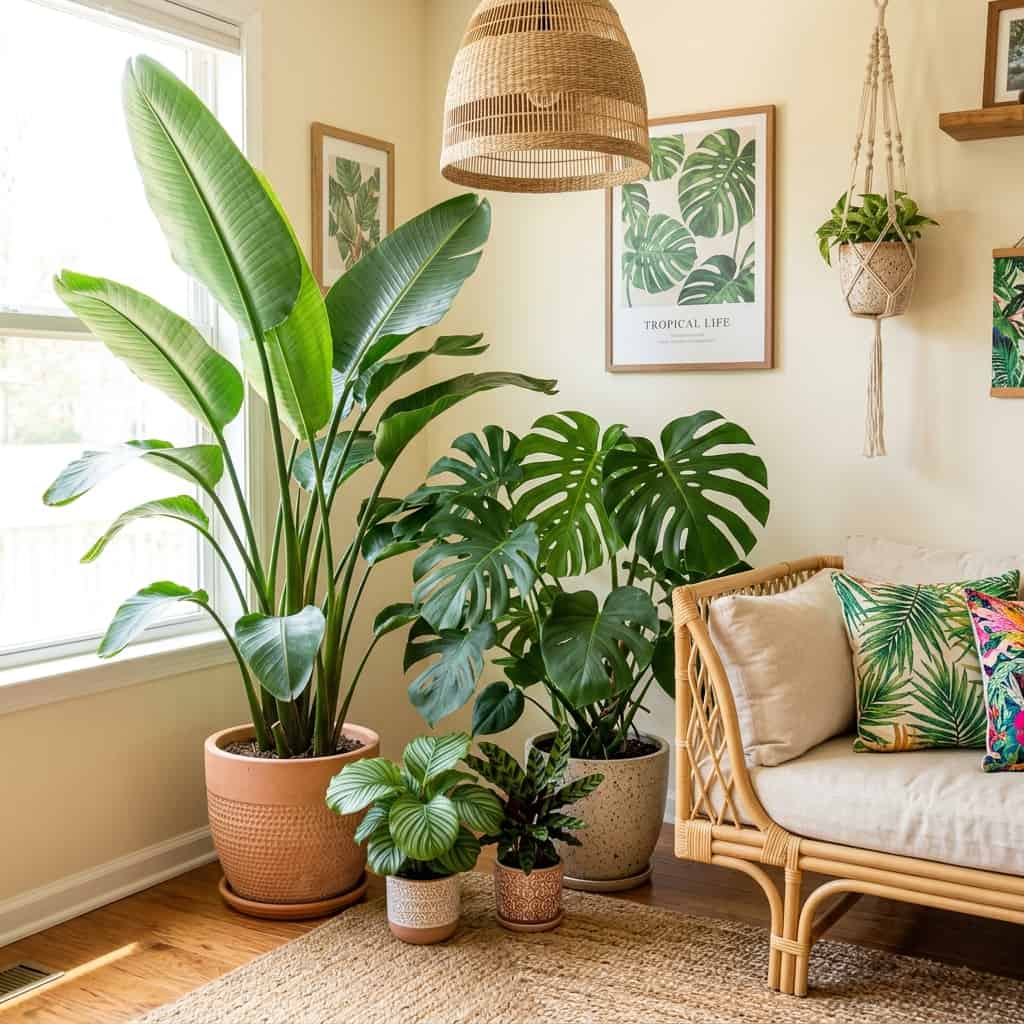
A 4-plant tropical corner cluster with varied heights , from a 5-foot Bird of Paradise down to two small calathea plants at ground level , creates the most lushly immersive and resort-inspired green corner available for tropical-themed and biophilic living rooms. The layered height arrangement fills the corner from floor to near-ceiling with vibrant tropical botanical energy.
Grouping plants with similar humidity needs in one corner simplifies care significantly , misting the entire cluster in one 2-minute routine rather than visiting individual plants across the room saves meaningful time weekly. Plant stylists consistently recommend this grouped care approach as the most practical strategy for maintaining large multi-plant indoor collections.
- Four-plant cluster creates lush tropical corner
- Varied heights fill floor-to-ceiling corner space
- Grouped plants share one simple care routine
- Bird of Paradise anchors the entire arrangement
- Works in tropical and biophilic living rooms
Tropical corner plant clusters suit design-bold homeowners who want their living room to feel genuinely immersive and nature-connected , a corner display so lush and layered that it creates the visual and atmospheric sensation of sitting inside a tropical garden rather than simply decorating a domestic interior.
That immersive natural atmosphere , the sense that the living room corner has been genuinely transformed into a private botanical garden moment , gives a tropical plant cluster an experiential quality and emotional daily richness that no wall art or decorative object can fully replicate in a living space.
Succulent Coffee Table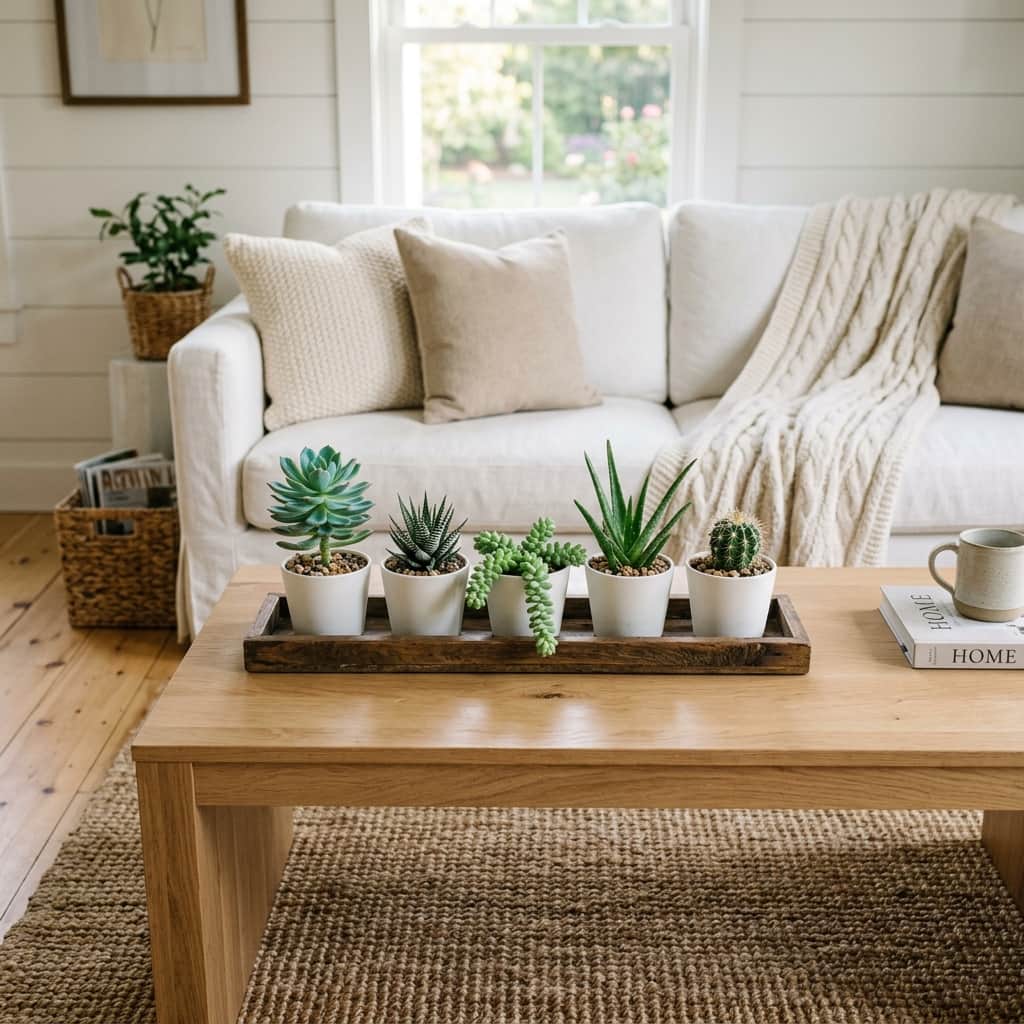
A wooden tray holding 5 matched succulent plants on the coffee table creates the most neatly organized and visually cohesive plant display for modern farmhouse and minimal living rooms. The varied succulent shapes , from tall spiky echeveria to compact round haworthia , create a miniature botanical garden within a single contained tray arrangement.
Tray succulent displays keep coffee table plant styling looking intentional rather than random. Containing all 5 pots within one wooden tray creates a visual boundary that signals deliberate arrangement , the same principle that interior stylists use for coffee table vignette styling across every major home decor publication and platform in 2026.
- Five succulents create miniature coffee table garden
- Wooden tray contains and organizes plant display
- Matched white pots create clean visual unity
- Works on rectangular and round coffee tables
- Succulents need watering only once every 2 weeks
Succulent coffee table displays suit busy homeowners, minimalists, and anyone who wants living room plants decor that looks beautiful daily while requiring almost no maintenance effort. Succulents need watering approximately once every 14 days indoors , making them the most reliably low-effort plant category available for coffee table styling.
That remarkable care simplicity , a beautiful, professionally styled plant display that requires only 2 minutes of attention every 2 weeks , makes a wooden tray succulent collection the most practically intelligent and visually rewarding plant decor investment available for any modern farmhouse or minimal living room coffee table.
Olive Tree Indoor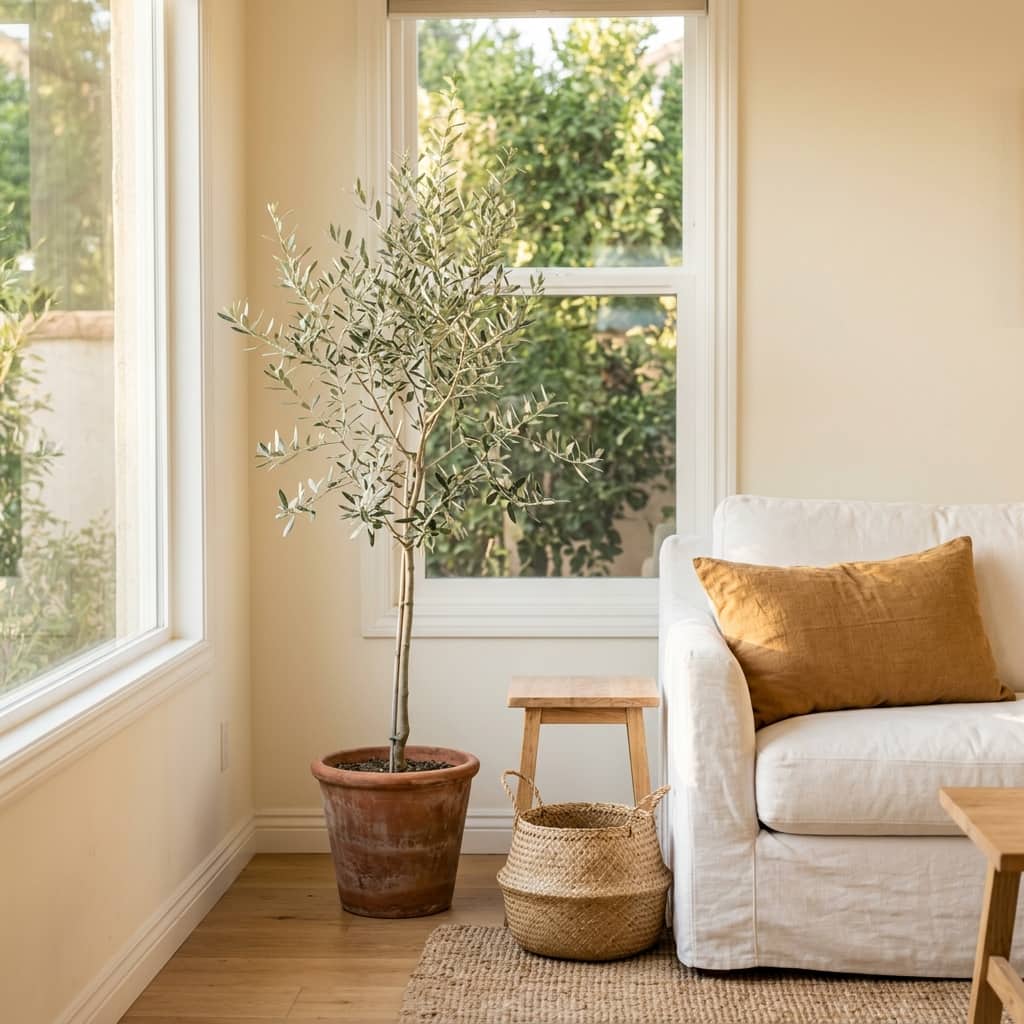
An indoor olive tree in a large terracotta pot creates the most warmly Mediterranean and organically sophisticated plant statement for light-filled, linen-toned living rooms. The slim silver-green olive foliage moves gently with air circulation , creating a quietly alive, naturally graceful indoor tree that looks genuinely collected from a Mediterranean farmhouse property rather than purchased from a garden center.
Indoor olive trees suit bright living rooms with at least 6 hours of indirect sunlight daily near south or west-facing windows. The terracotta clay pot material suits the olive tree’s Mediterranean origin story beautifully , the earthy orange-red clay surface matching the silver-green foliage in a natural color pairing that feels culturally and botanically coherent.
- Slim olive tree suits tall bright living rooms
- Silver-green foliage suits linen and cream tones
- Terracotta pot reinforces Mediterranean aesthetic
- South-facing windows provide ideal olive light
- Organic movement adds quiet room vitality daily
Indoor olive trees represent one of the most significant plant styling trends of 2026 , design forecasters at multiple major publications highlight the silver-leafed olive tree as the plant best positioned to replace the fiddle leaf fig as the primary large-format statement plant for sophisticated, nature-connected living room interiors this year.
That trend-forward positioning, combined with the genuinely beautiful silver-green foliage color and the warm cultural associations of Mediterranean living, makes an indoor olive tree in terracotta one of the most timely, elegant, and design-credible plant styling investments available for any living room in 2026.
Rubber Plant Grouping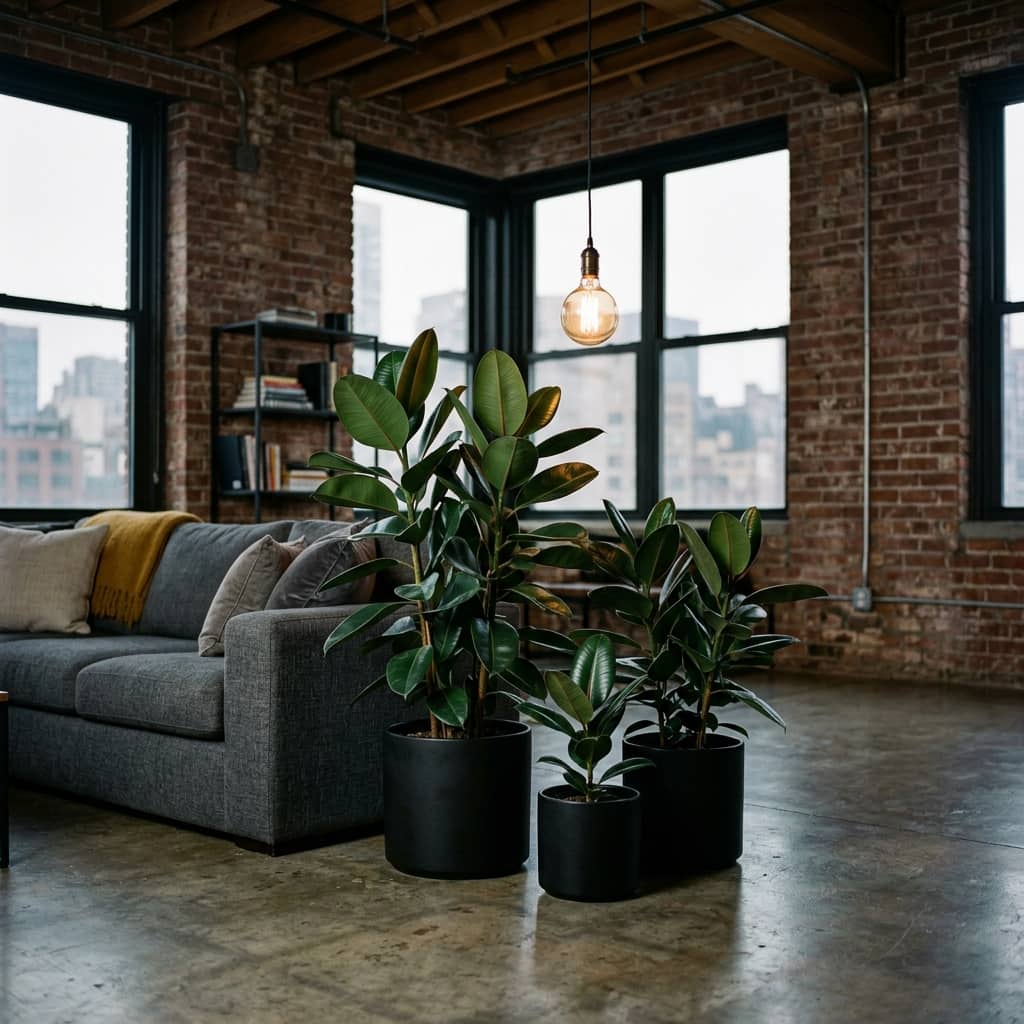
Three rubber plants in a stepped height triangle create the most sculpturally dramatic and moody plant grouping available for modern loft and industrial living rooms. The deep burgundy-green glossy leaves across all 3 plants create a rich, dark foliage story that suits concrete floors, black metal accents, and dark gray furniture beautifully.
Plant stylists in 2026 consistently recommend the triangle grouping rule , placing 3 plants of the same species at 3 varied heights creates a botanical composition with the visual balance and intentionality of a professional interior design installation. The matching black ceramic pots across all 3 sizes reinforce the grouped arrangement as a single unified display.
- Three rubber plants create stepped height triangle
- Burgundy-green leaves suit dark loft aesthetics
- Matching black pots unify the plant grouping
- Triangle formation creates sculptural plant composition
- Works on concrete and dark wood loft floors
Rubber plants are officially confirmed as one of the top trending houseplants of 2026 , multiple plant trend forecasters named the Ficus elastica as the year’s most design-forward large houseplant, citing its glossy dark foliage, architectural growth habit, and exceptional tolerance for indoor low-light and dry air conditions.
That trend confirmation, combined with the dramatic visual impact of 3 rubber plants grouped in a dark-toned loft living room, makes a rubber plant triangle arrangement one of the most timely and design-credible indoor plant grouping investments available for any contemporary or industrial-inspired living space this year.
Areca Palm Window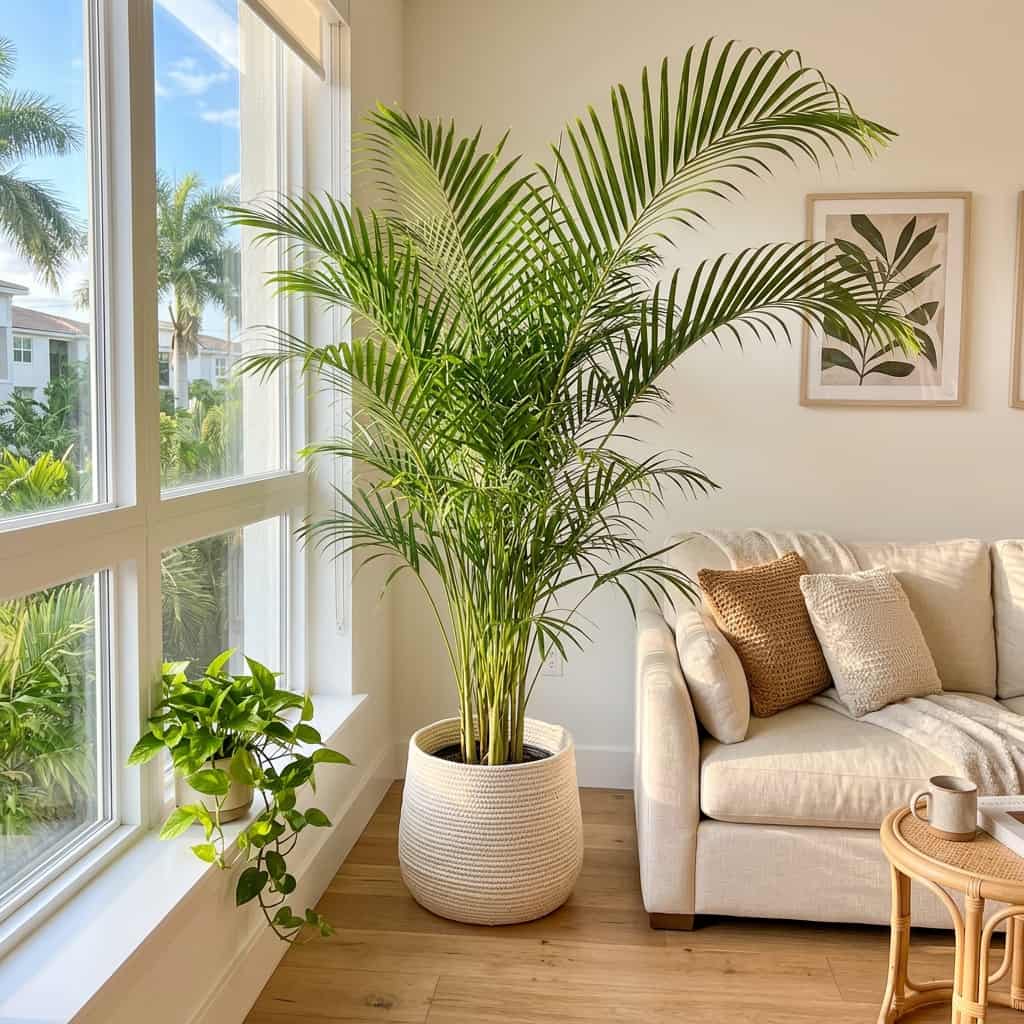
A 5-foot areca palm beside a floor-to-ceiling window creates the most tropically immersive and light-enhancing plant statement available for bright apartment living rooms. The arching feathery fronds filter incoming sunlight , casting beautiful dappled light shadows across the cream sofa and pale floor that shift gently throughout the day as the sun moves.
Areca palms suit south or west-facing living room windows where they receive 4 to 6 hours of bright indirect light daily. The cream woven basket planter suits the natural fiber aesthetic of linen sofas, rattan side tables, and jute rugs , creating a complete warm, tropical, organic material palette throughout the living room corner.
- Arching fronds filter and soften window sunlight
- Cream basket planter suits tropical room styling
- Works in bright south-facing apartment windows
- 5-foot height creates strong vertical floor plant
- Dappled light shadows animate the living room
Areca palms serve a genuine functional purpose beyond visual decoration , plant air quality researchers confirm that areca palms produce measurable amounts of indoor humidity and air moisture, making them one of the most practically beneficial large houseplants for dry apartment living rooms with central heating or air conditioning running year-round.
That documented air quality benefit , genuine humidity addition to dry indoor spaces , combined with the strikingly beautiful tropical visual presence of arching feathery fronds beside a bright window, makes an areca palm one of the most comprehensively valuable plant investments available for any well-lit apartment living room.
ZZ Plant Dark Corner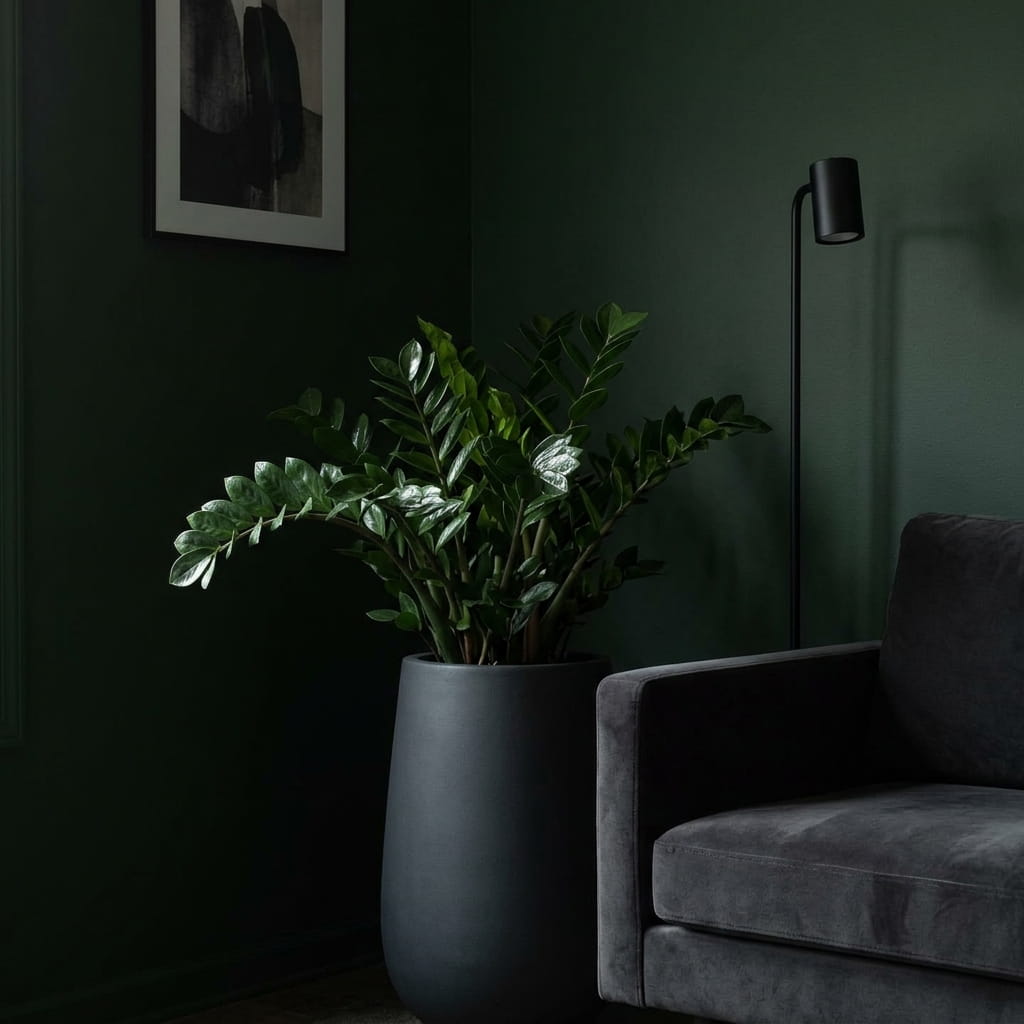
A large ZZ plant in a matte charcoal pot creates the most visually confident and practically ingenious dark corner plant solution for moody, low-light living rooms. The intensely glossy oval leaves , naturally wax-coated to reflect every available light source , glow with a deep green sheen even in corners that receive virtually no direct sunlight.
ZZ plants thrive in the genuinely dark corners that kill most other popular houseplants within weeks. Plant care experts confirm ZZ plants survive happily in rooms with less than 100 lux of ambient light , making them the single most reliable plant choice for any living room corner more than 8 feet from the nearest window.
- Glossy leaves shine in genuinely dark corners
- Survives under 100 lux ambient indoor light
- Charcoal pot suits moody dark-toned rooms
- Works in forest green and dark wall living rooms
- Requires watering only once every 3–4 weeks
I’ve noticed that ZZ plants consistently solve the most common living room plant frustration , wanting greenery in dark corners where every other plant has previously failed. Placing a ZZ plant in a previously plant-dead dark corner immediately gives the impression that the entire room has excellent natural growing conditions.easyplant
That problem-solving reliability , the confidence of knowing the plant will absolutely thrive in the darkest room corner rather than slowly deteriorating , makes a ZZ plant in a bold ceramic pot one of the most genuinely practical and frustration-free indoor plant investments available for any low-light living room in 2026.
Peace Lily Side Table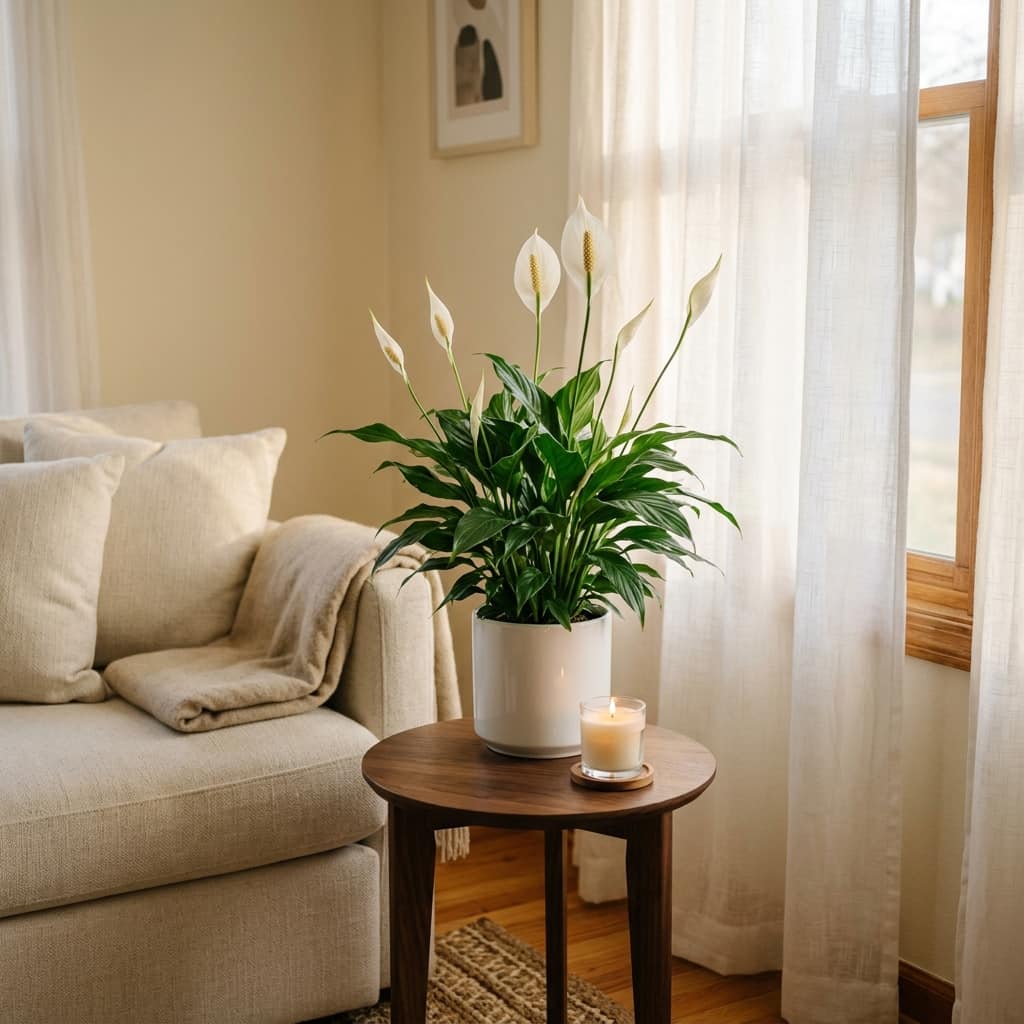
A peace lily on a walnut side table creates the most elegantly refined and naturally blooming plant accent for contemporary living rooms seeking subtle floral presence alongside indoor greenery. The white hood-shaped blooms rising above deep glossy leaves create a quietly sophisticated botanical display that communicates design restraint and genuine plant knowledge simultaneously.
Peace lilies suit living rooms with low to medium indirect light , one of the only popular flowering houseplants that blooms reliably in indoor light conditions without requiring direct sunlight. The white blooms complement cream sofas, white walls, and warm wood side table surfaces with effortless natural color harmony.
- White blooms add natural floral living room accent
- Blooms reliably without requiring direct sunlight
- Works on walnut and oak side table surfaces
- Glossy leaves suit cream and neutral room tones
- Signals plant styling knowledge and design restraint
Peace lilies provide a genuine air quality benefit that makes them one of the most recommended indoor plants for occupied living spaces , research confirms peace lily plants filter benzene, formaldehyde, and trichloroethylene from indoor air, making them both visually beautiful and functionally valuable in the rooms where families spend most time.
That documented air-purifying quality, combined with the elegant white blooms and the minimal care requirements of the peace lily plant, makes a side table peace lily one of the most holistically valuable indoor plant decor investments available for any contemporary or warm-toned living room environment.
Windowsill Herb Row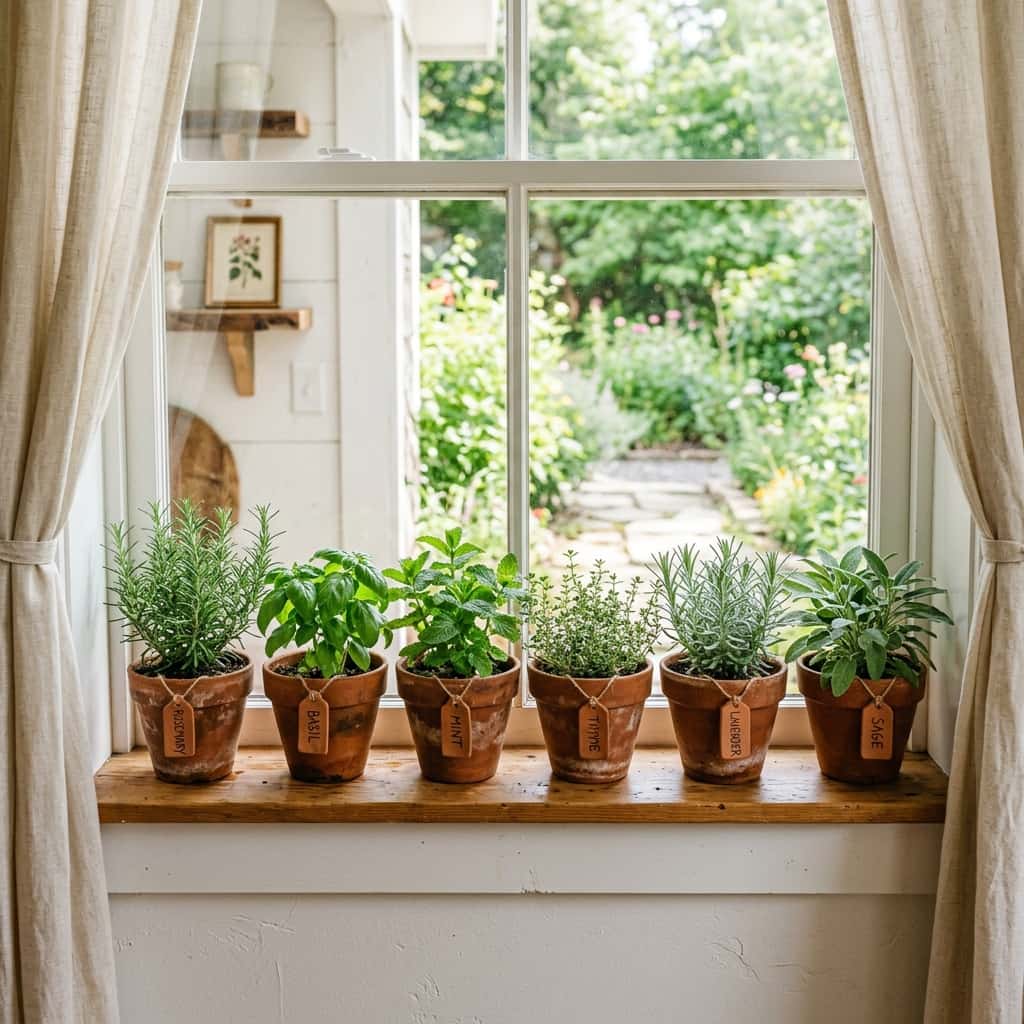
A row of 6 fresh herb plants in terracotta pots across a south-facing windowsill creates the most delightfully functional and naturally fragrant plant display available for farmhouse and cottage-style living rooms. The varied green tones , from deep basil green to silvery lavender foliage , create a rich botanical color palette across a single windowsill surface.
Growing herbs on the living room windowsill adds a layer of sensory richness that purely decorative plants cannot replicate , the natural fragrance of fresh rosemary, mint, and lavender fills the room with a clean, organic scent that makes the entire living space feel genuinely fresh, alive, and connected to the garden.
- Six herb pots create natural fragrant windowsill row
- Terracotta pots suit farmhouse room aesthetics
- Varied green tones create rich botanical palette
- Fresh herbs add living scent to the room
- Hand-written labels add charming personal detail
Herb windowsill displays suit farmhouse, cottage, and kitchen-adjacent living rooms where the fresh herbs serve both a visual decorating purpose and a genuine daily culinary function. Snipping fresh herbs directly from the living room windowsill for daily cooking creates a satisfying connection between the home’s decorated spaces and its daily domestic life.
That dual-purpose quality , a beautiful, naturally fragrant windowsill plant display that also provides fresh cooking herbs every single day , makes a terracotta herb row one of the most practically rewarding and sensory-rich indoor plant decor ideas available for any well-lit farmhouse or cottage-style living room.
Ficus Elastica Corner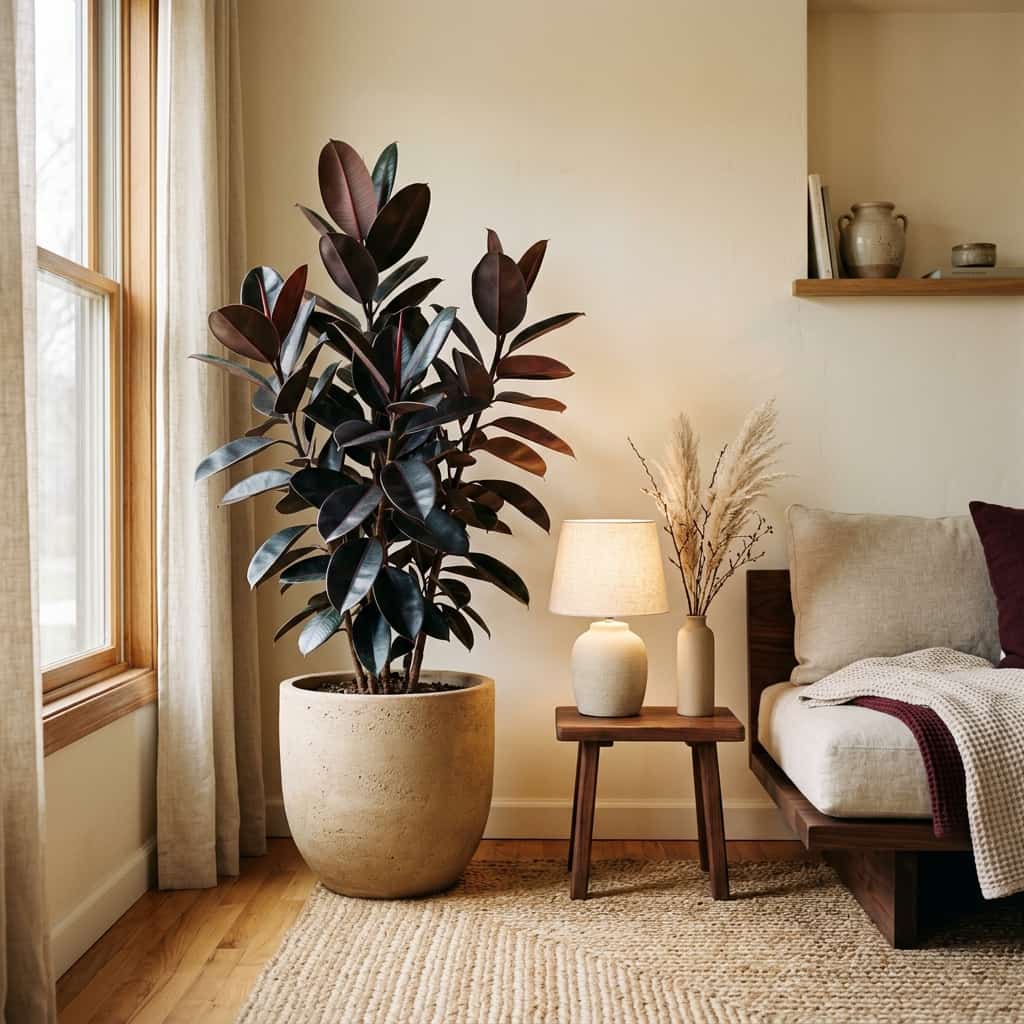
A burgundy Ficus elastica in a textured sand ceramic pot creates the most warmly sophisticated and color-richly dramatic indoor plant statement for Japandi and warm-toned minimal living rooms. The deep red-burgundy glossy leaves against a cream wall create a striking warm color contrast that makes the plant feel more like a sculptural art installation than a standard houseplant.
Ficus elastica plants suit Japandi living rooms perfectly because their clean, oval leaf geometry and upright architectural growth habit align with the Japandi design philosophy of natural materials, clean forms, and quiet visual confidence. The burgundy leaf color adds warmth to the cool restraint of a Japandi palette without disrupting its deliberate calm.
- Burgundy leaves create warm dramatic color contrast
- Sand ceramic pot suits Japandi neutral palettes
- Ficus elastica leads 2026 houseplant trend reports
- Works in warm cream and natural wood rooms
- Upright habit suits Japandi architectural aesthetics
Ficus elastica officially replaced the fiddle leaf fig as the most trend-forward large indoor plant of 2026 , plant trend experts cite its stronger root system, higher light tolerance range, and more resilient leaf response to indoor temperature fluctuations as key reasons for its rising dominance over its more finicky botanical cousin.
That practical superiority over the fiddle leaf fig , combined with equally impressive visual impact and a deeper, richer burgundy foliage color , makes a Ficus elastica in a Japandi-toned planter one of the most timely and confidently recommended large indoor plant investments available for any warm-toned living room in 2026.
Vertical Plant Wall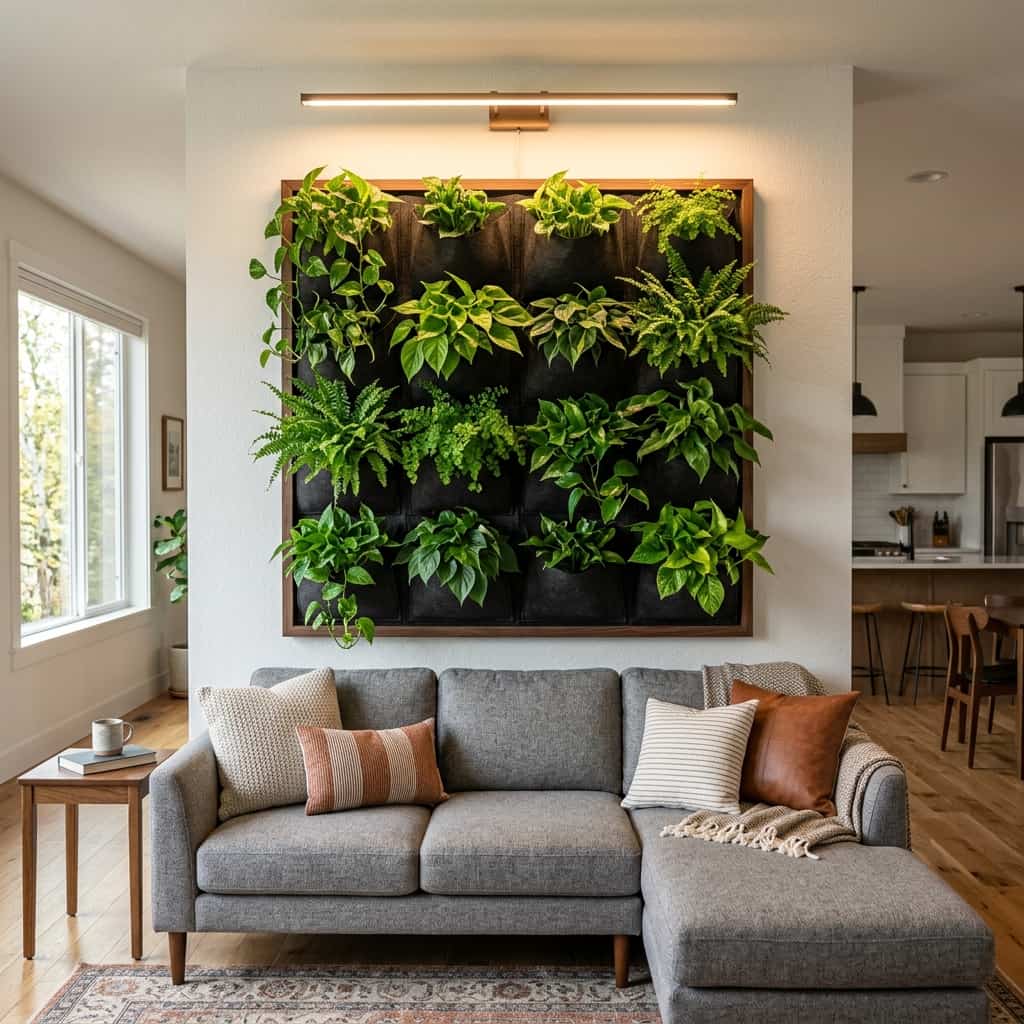
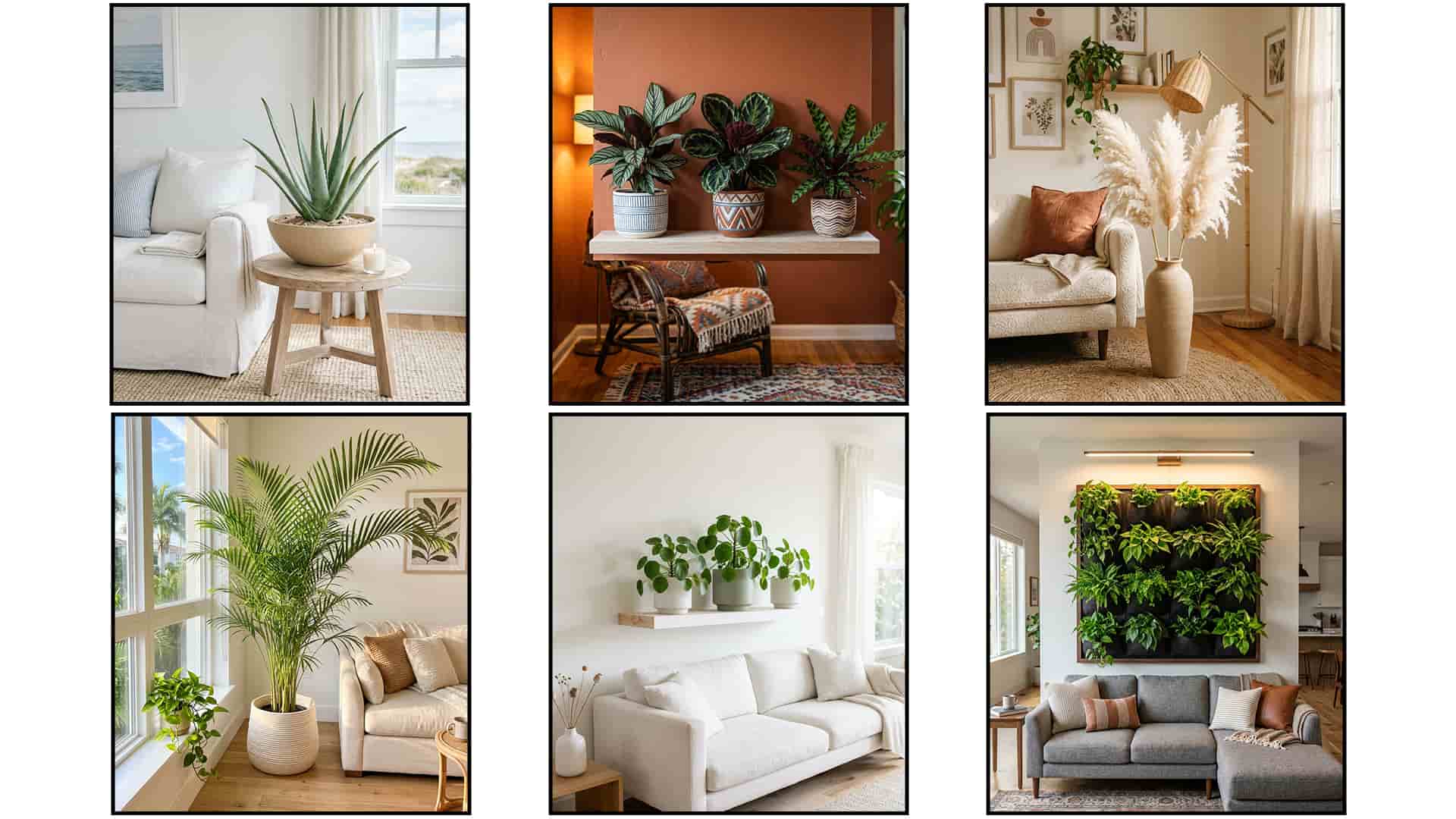
A DIY vertical plant wall panel holding 16 small plants across 4 rows creates the most visually dramatic and spatially innovative living room plants decor installation available for contemporary open-plan interiors. The grid of 16 varied pothos, philodendron, and fern plants creates a living wall effect that completely transforms a plain white living room feature wall.
Vertical plant walls suit small living rooms where floor space is limited but wall surface area remains available for large-scale botanical display. Mounting the plant panel at eye level behind the sofa creates an immersive green backdrop that makes the living room feel genuinely botanical , a room where nature has been invited to become a structural interior design element.
- 16 plants create immersive living wall display
- Vertical panel suits small floor-limited living rooms
- Grow lights ensure plants thrive year-round
- Pothos and ferns suit vertical pocket planters
- Transforms plain white wall into botanical feature
Vertical plant walls require a simple weekly maintenance routine , checking individual pocket planter soil moisture takes approximately 5 minutes, and bottom-watering each pocket from a spray bottle prevents soil overflow from staining the wall surface below. That minimal care investment produces a large-scale botanical display that consistently generates extraordinary Pinterest and social media engagement.
That combination of dramatic visual transformation, small-space practicality, and manageable weekly care commitment makes a DIY vertical plant wall one of the most boldly ambitious and genuinely achievable indoor plant styling projects available for any contemporary living room with a wide blank feature wall ready for transformation.
Hanging Macramé Planter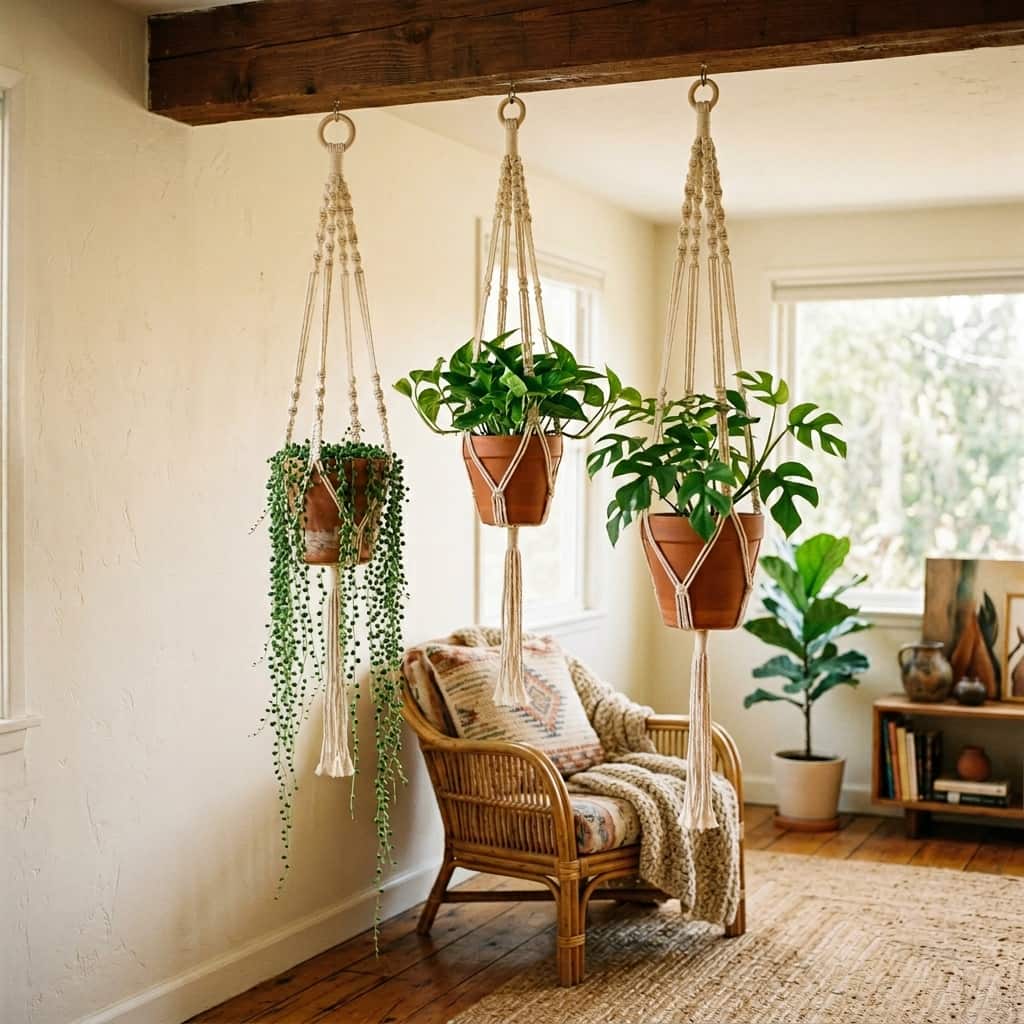
Three macramé hanging planters at varied heights from a wooden ceiling beam create the most bohemian and three-dimensionally layered plant display available for boho and cottage living rooms. The vertical cascade of 3 hanging plants at different drop lengths fills the ceiling-to-floor visual space with organic, handcrafted movement and warm natural fiber texture.
Varied drop lengths , one at 24 inches, one at 36 inches, one at 48 inches below the beam , create a staggered botanical cascade that looks deliberately designed rather than randomly hung. That intentional height variation transforms 3 individual hanging plants into a cohesive, artfully composed ceiling-level plant installation above the living room seating area.
- Three varied heights create intentional botanical cascade
- Macramé cord suits boho and cottage room aesthetics
- Ceiling beam mounting creates dramatic height display
- String of pearls trails beautifully from hanging pots
- Works in rooms with wooden ceiling beams
Hanging macramé planters suit renters, small apartment dwellers, and anyone who wants to display indoor plants at ceiling level without consuming any limited floor or shelf surface space. Three hanging planters require only 3 ceiling anchor points , making the installation completely reversible with minimal ceiling commitment.
That renter-friendly, floor-space-preserving quality makes a macramé hanging planter trio one of the most practically clever and visually beautiful indoor plant arrangements available for small boho living rooms where every square foot of floor space genuinely matters for comfortable daily movement and furniture arrangement.
Chinese Money Plant Shelf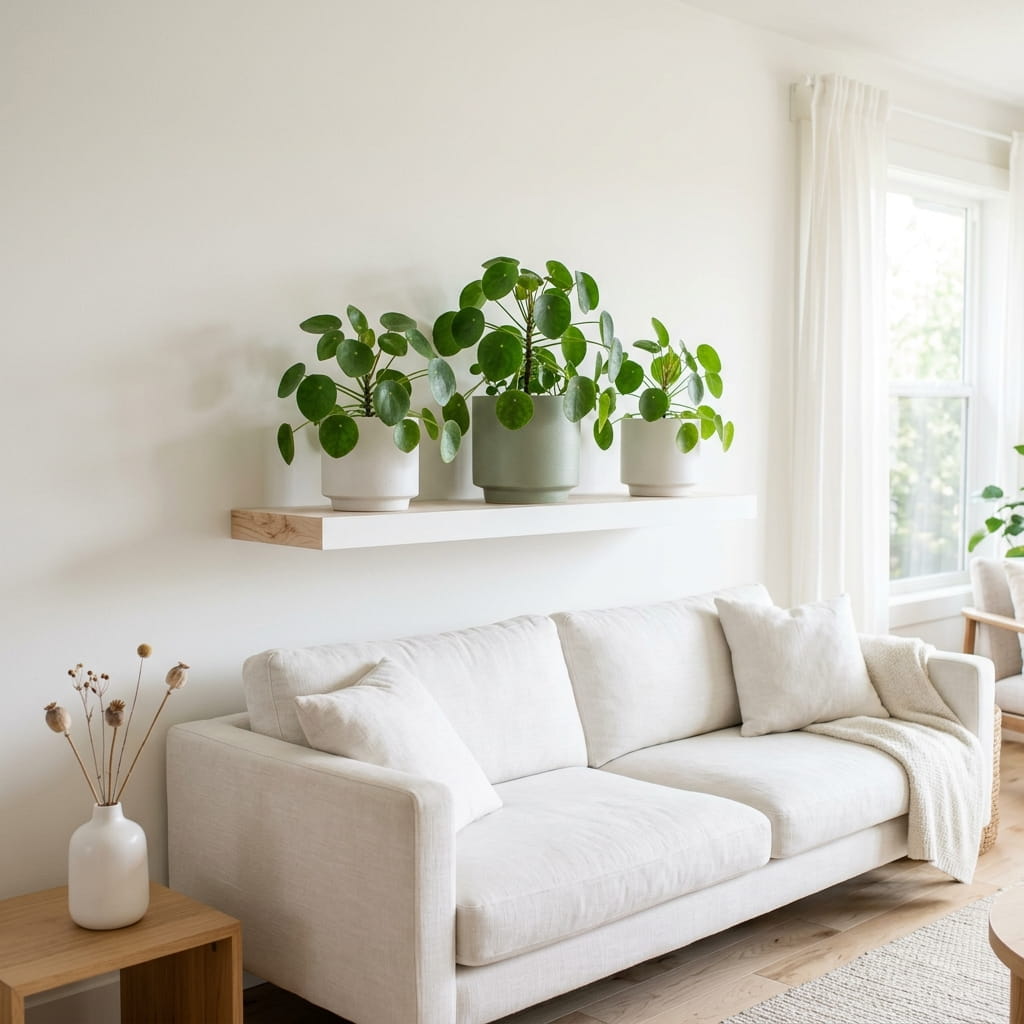
Three Chinese money plants on a white floating shelf create the most cheerfully geometric and distinctly Scandinavian indoor plant display for bright, minimal living rooms. The perfectly round coin-shaped leaves of the Pilea peperomioides create a playful botanical polka-dot effect across the shelf surface , a refreshingly graphic, circular leaf form unlike any other popular houseplant variety.
Chinese money plants suit Scandinavian and minimal living rooms because their compact, neatly contained growth habit suits shelf styling without overflowing or trailing onto adjacent surfaces. The round coin leaves in bright emerald green create a strong visual contrast against white walls and pale birch floors , delivering maximum botanical impact in a minimal shelf footprint.
- Round coin leaves create playful geometric display
- Compact growth suits Scandinavian shelf styling
- Three plants in a row create visual rhythm
- Bright emerald green suits white minimal rooms
- Each plant produces offshoots to share freely
Chinese money plants produce small offshoots called “pups” from the soil surface around the main stem , these free offshoots can be separated and potted individually, allowing one purchased plant to eventually multiply into 3, 5, or 8 additional plants over 12 to 18 months with no additional purchasing cost.
That remarkable self-propagating quality , a single plant purchase that freely generates multiple new plants over time , makes the Chinese money plant one of the most generously rewarding and financially efficient indoor plant investments available for any Scandinavian or minimal living room shelf display.
Statement Bird Of Paradise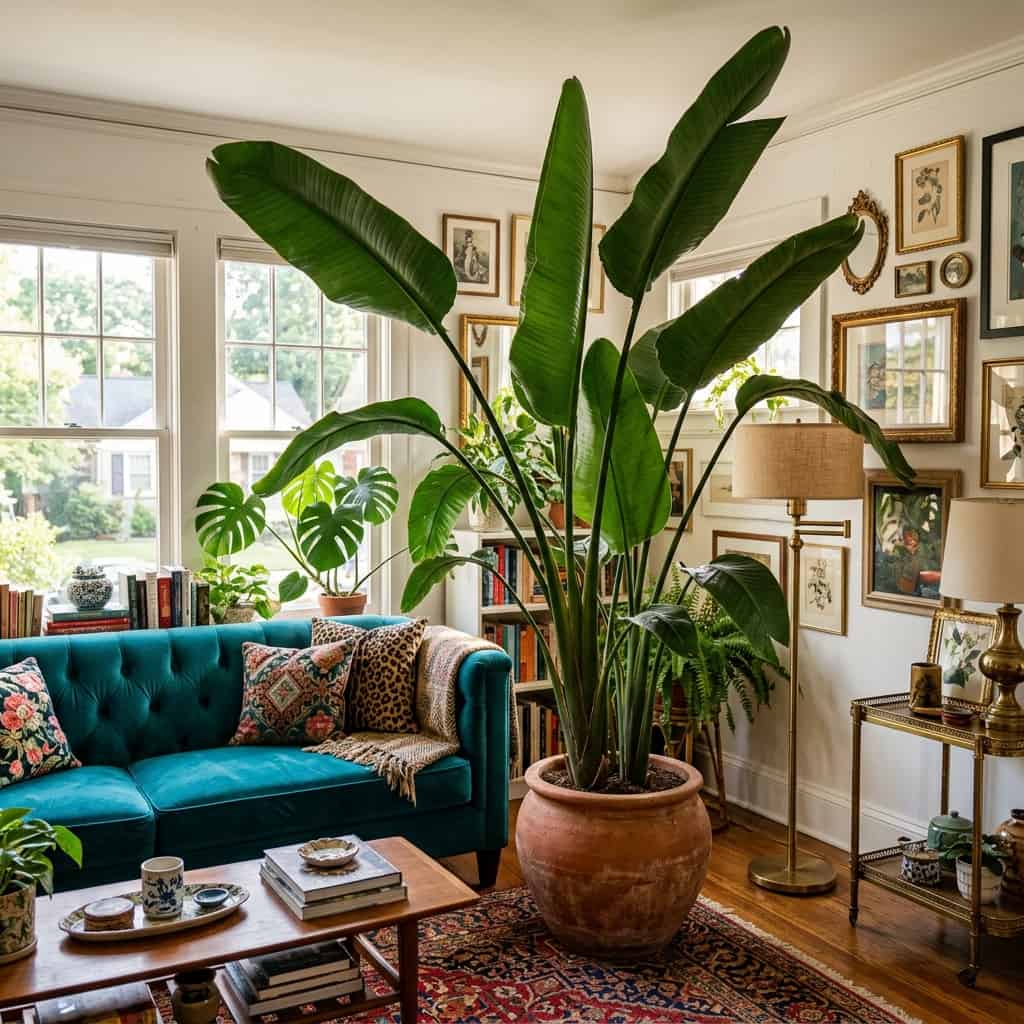
A 6-foot Bird of Paradise beside a jewel-toned sofa creates the most boldly theatrical and maximally impactful tropical plant statement available for statement-driven and richly decorated living rooms. The giant paddle-shaped leaves extending 24 inches wide create a living room plant presence so commanding that every other decorative element in the room naturally defers to it.
Bird of Paradise plants suit large living rooms with wide west or south-facing windows that provide 4 to 6 hours of bright indirect light daily. Placing the large terracotta pot directly on the floor beside the sofa , rather than on a stand or shelf , allows the full 6-foot height of the plant to command the room without any artificial elevation.
- Giant paddle leaves create bold tropical theater
- 6-foot height commands entire living room attention
- Terracotta pot grounds warm tonal room palette
- Works beside jewel-toned and richly colored sofas
- West-facing window provides ideal growing conditions
Bird of Paradise plants require 4 to 6 months after purchase to settle into indoor conditions before producing new leaf growth , however, once established, each new leaf unfurls over approximately 2 weeks, creating a visually exciting ongoing botanical performance that gives the living room a sense of living growth and natural seasonal change.
That slowly unfolding dramatic leaf growth , the exciting biweekly event of watching a new giant leaf uncurl from the plant stem , gives a Bird of Paradise an engaging, alive quality that makes it one of the most experientially rewarding large indoor plants available for any bold, plant-passionate living room.
Philodendron Heartleaf Vines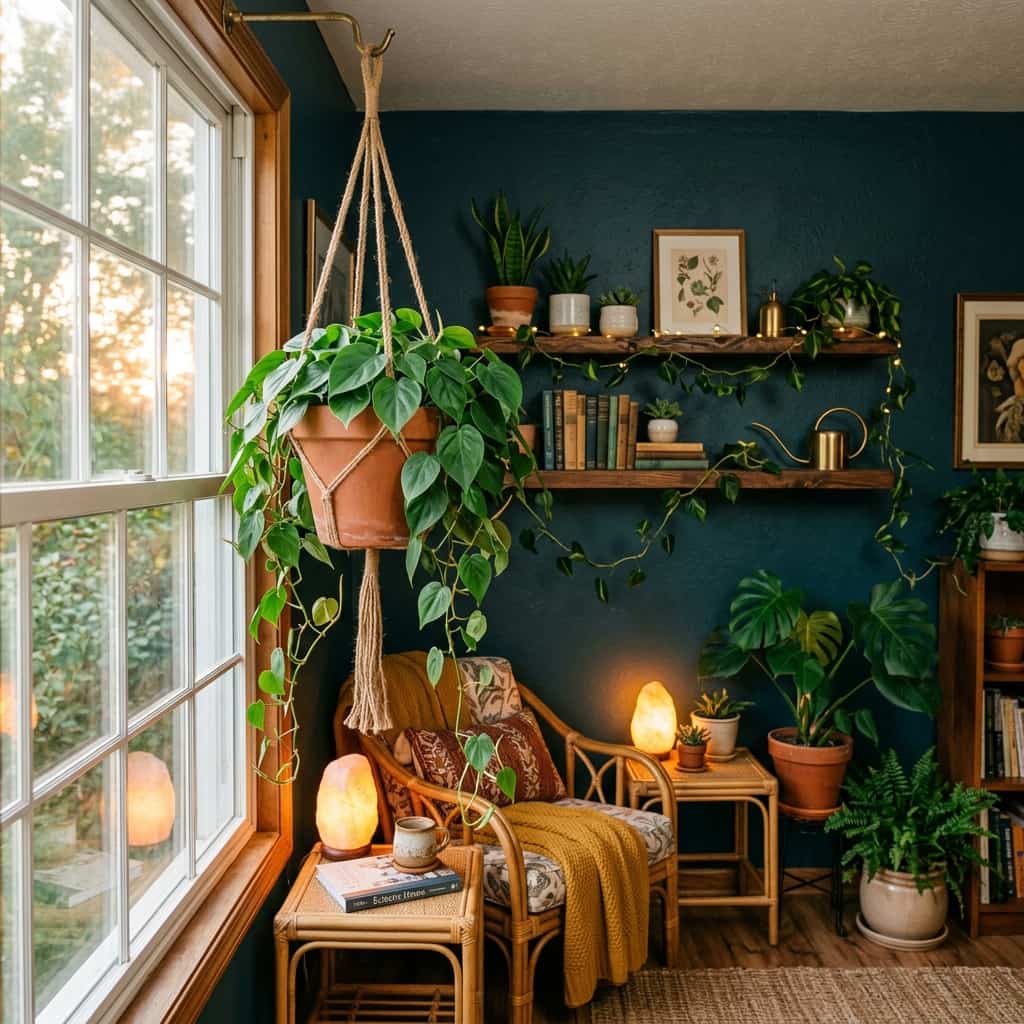
A trailing heartleaf philodendron cascading 24 inches from a ceiling-hung terracotta pot creates the most romantically lush and naturally vine-filled plant display for eclectic and warmly toned living rooms. The heart-shaped deep green leaves trailing along a floating shelf create a living garland effect , a botanical curtain of genuine natural warmth and movement.
Heartleaf philodendrons grow rapidly , producing new heart-shaped leaves every 7 to 10 days under bright indirect indoor light. That fast growth rate means a newly purchased small plant in a hanging pot visibly fills and extends its trailing vines across the shelf within 6 to 8 weeks of hanging, creating a quickly rewarding plant display result.
- Heart-shaped leaves create romantic vine display
- 24-inch cascade suits ceiling-hung terracotta pots
- Grows one new leaf approximately every 10 days
- Works on dark teal and jewel-toned accent walls
- Living garland effect suits eclectic room styling
Heartleaf philodendrons suit plant enthusiasts who want fast, visible growth results from their indoor plant investment , the rapid new leaf production creates a satisfying sense of botanical progress that slow-growing plants like fiddle leaf figs and ZZ plants simply cannot provide on the same rewarding weekly visual timeline.
That rapid, visibly rewarding growth pace , combined with the deeply romantic trailing vine aesthetic and the easy-care reliability of heartleaf philodendron indoors , makes this trailing plant one of the most emotionally satisfying and visually beautiful indoor plant investments available for any eclectic or warmly styled living room.
Calathea Patterned Display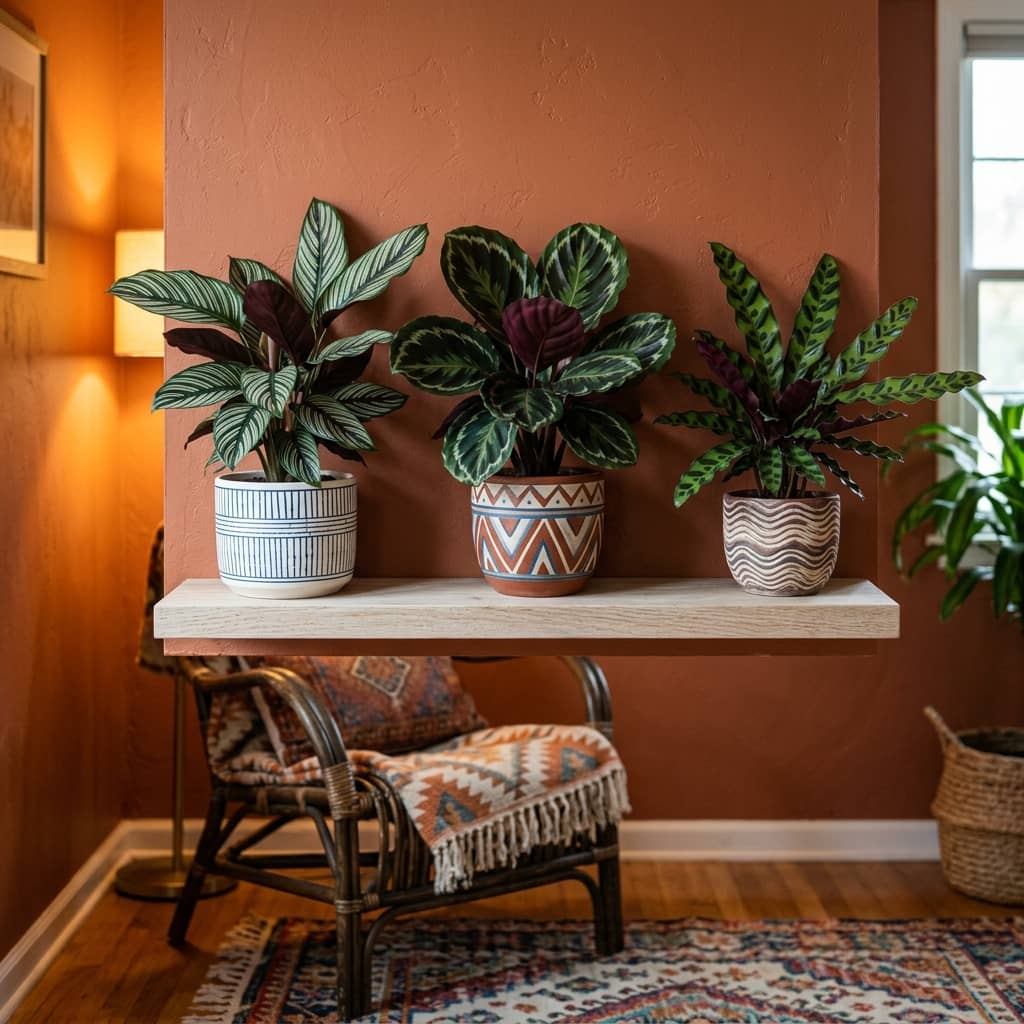
Three calathea plants with dramatically patterned foliage create the most visually complex and texturally rich plant shelf display available for bohemian and warm-toned living rooms. No other popular houseplant group offers the same variety of bold leaf patterning , white pin-stripes, green-and-burgundy medallions, and rattlesnake spots create a botanical pattern collection that rivals the most decorative printed textiles.
Calathea plants suit living rooms with low to medium indirect light and consistent humidity , placing them away from heating vents and misting the leaves twice weekly maintains the vivid leaf patterning that makes calathea plants so visually extraordinary. Avoiding direct sunlight prevents the dramatic leaf patterns from fading to pale, washed-out versions of their original intensity.
- Three calathea varieties create bold pattern collection
- Pin-stripe, medallion, and rattlesnake leaves contrast beautifully
- Works in warm terracotta and boho room aesthetics
- Mist leaves twice weekly to maintain patterning
- Patterned foliage rivals the most decorative textiles
Calathea plants are officially named among the 6 major houseplant trends for 2026 by multiple expert forecasters , their dramatically patterned foliage suits the 2026 interior design movement toward maximalist botanical displays where leaf pattern, color variety, and textural richness take center stage over clean, uniform greenery.
That trend alignment with the 2026 maximalist botanical movement, combined with the genuinely extraordinary leaf patterning that makes each calathea variety a miniature botanical artwork in its own right, makes a 3-calathea shelf display one of the most visually spectacular and trend-forward indoor plant arrangements available for any warm-toned living room.
Weeping Fig Living Corner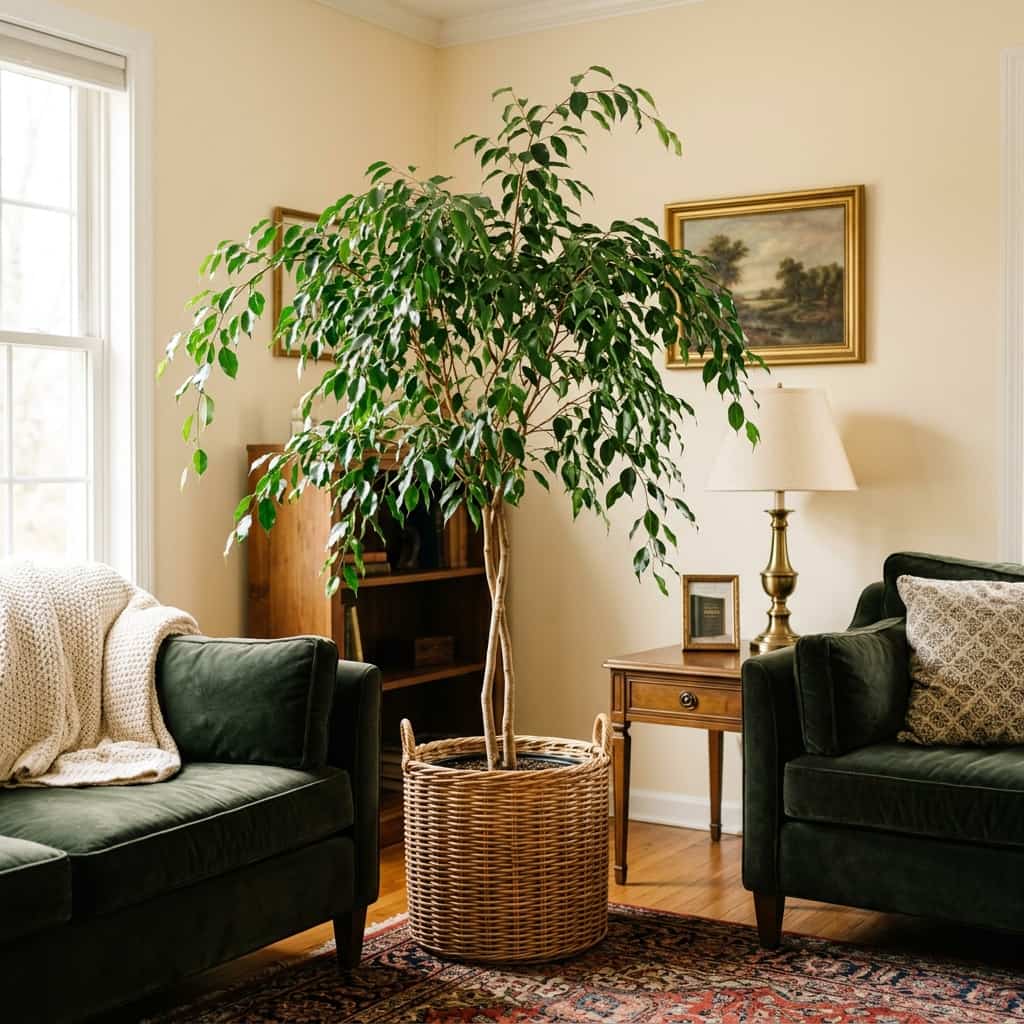
A tall weeping fig in a woven wicker basket creates the most gracefully traditional and botanically elegant indoor tree statement for classic and warm-toned living rooms. The arching branches with thousands of small glossy green leaves cascade softly downward like a living willow , creating an indoor tree presence with quiet, natural drama that fills a warm corner beautifully.
Weeping fig trees suit traditional living rooms with warm cream walls, Persian rugs, and brass accessories , the graceful arching branch habit and small rounded leaf scale suits classic interior styling more naturally than the bold, oversized tropical leaves of monstera and bird of paradise plants that dominate more contemporary design aesthetics.
- Weeping fig creates graceful traditional indoor tree
- Arching branches suit classic room corner styling
- Wicker basket suits warm and traditional aesthetics
- Small glossy leaves create elegant fine-detail display
- Works in warm-toned and traditional living rooms
Weeping figs suit homeowners who prefer classic, refined indoor plant aesthetics over bold tropical statements , the gentle, cascading branch silhouette of Ficus benjamina creates a timeless indoor tree presence that suits warm living rooms where the goal is quiet, organic elegance rather than maximalist botanical drama.
That quiet elegance , the subtle daily beauty of a gracefully arching weeping fig filling a warm corner with refined natural presence , gives this classic indoor tree a timeless room-styling quality that makes it one of the most enduringly beautiful and permanently relevant large plant investments for any traditional living room.
Aloe Vera Accent Table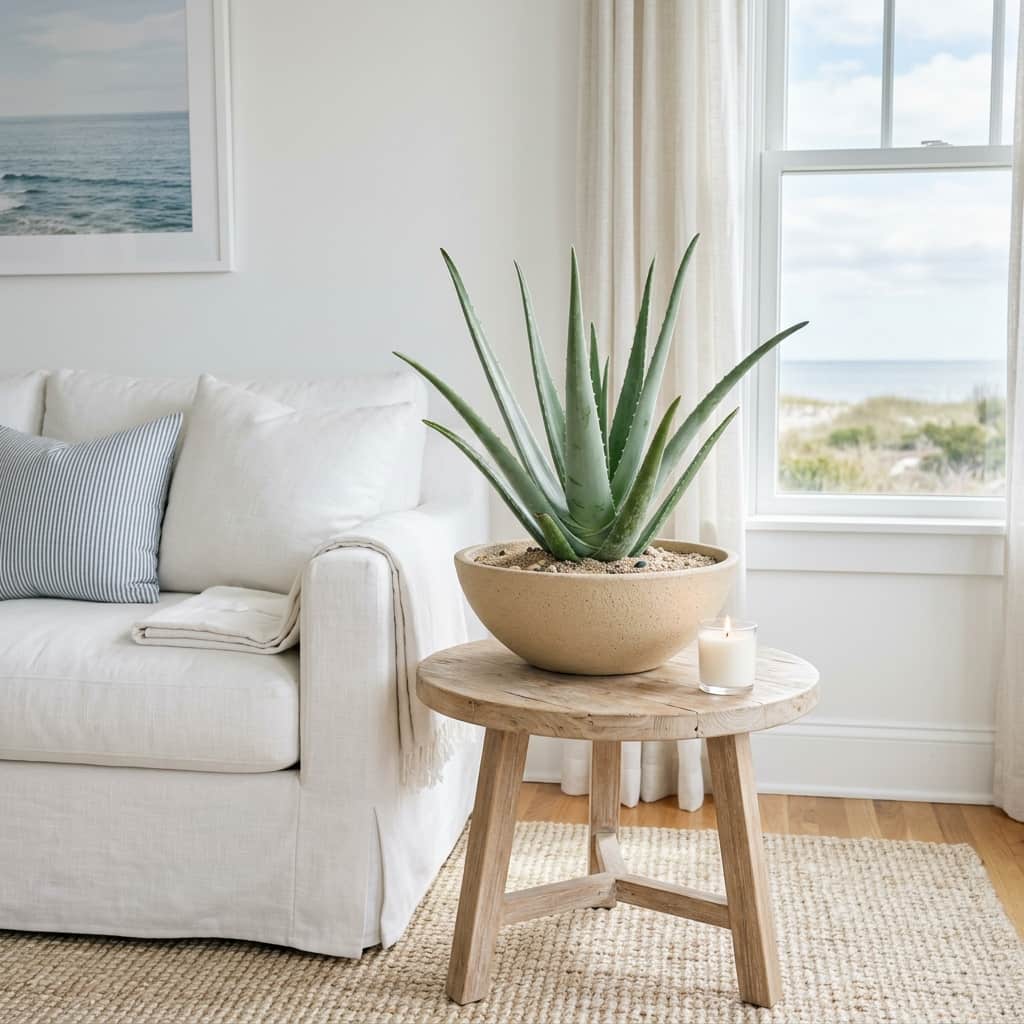
A large aloe vera in a wide shallow sand-colored ceramic bowl on a bleached wood accent table creates the most cleanly coastal and architecturally sculptural indoor succulent statement for minimal and coastal living rooms. The thick, upright fleshy aloe leaves in silvery green tones create a spiky, dramatic plant silhouette with genuine desert-inspired sculptural character.
Aloe vera plants suit coastal, minimal, and desert-inspired living rooms where the clean, spiky plant silhouette suits white painted walls, natural fiber rugs, and bleached wood furniture. Aloe thrives on minimal care , requiring watering only once every 2 to 3 weeks and tolerating the bright indirect light conditions of a coastal-style window-adjacent accent table.
- Spiky aloe silhouette creates sculptural coastal accent
- Wide shallow bowl suits the aloe’s spreading form
- Bleached wood table suits coastal neutral palettes
- Waters only once every 2–3 weeks indoors
- Works in minimal, coastal, and desert-inspired rooms
Aloe vera plants provide a genuine practical household benefit that makes them uniquely valuable beyond their decorative role , the clear gel inside aloe leaves soothes minor skin burns, cuts, and sun exposure immediately and naturally. Having a healthy aloe plant on the living room accent table means first-aid relief is always one leaf away.
That remarkable dual role , a strikingly sculptural coastal living room plant that also serves as an always-available natural first-aid tool , makes a large aloe vera one of the most comprehensively useful and practically intelligent indoor plant investments available for any coastal or minimal living room in 2026.
Dried Pampas Grass Vase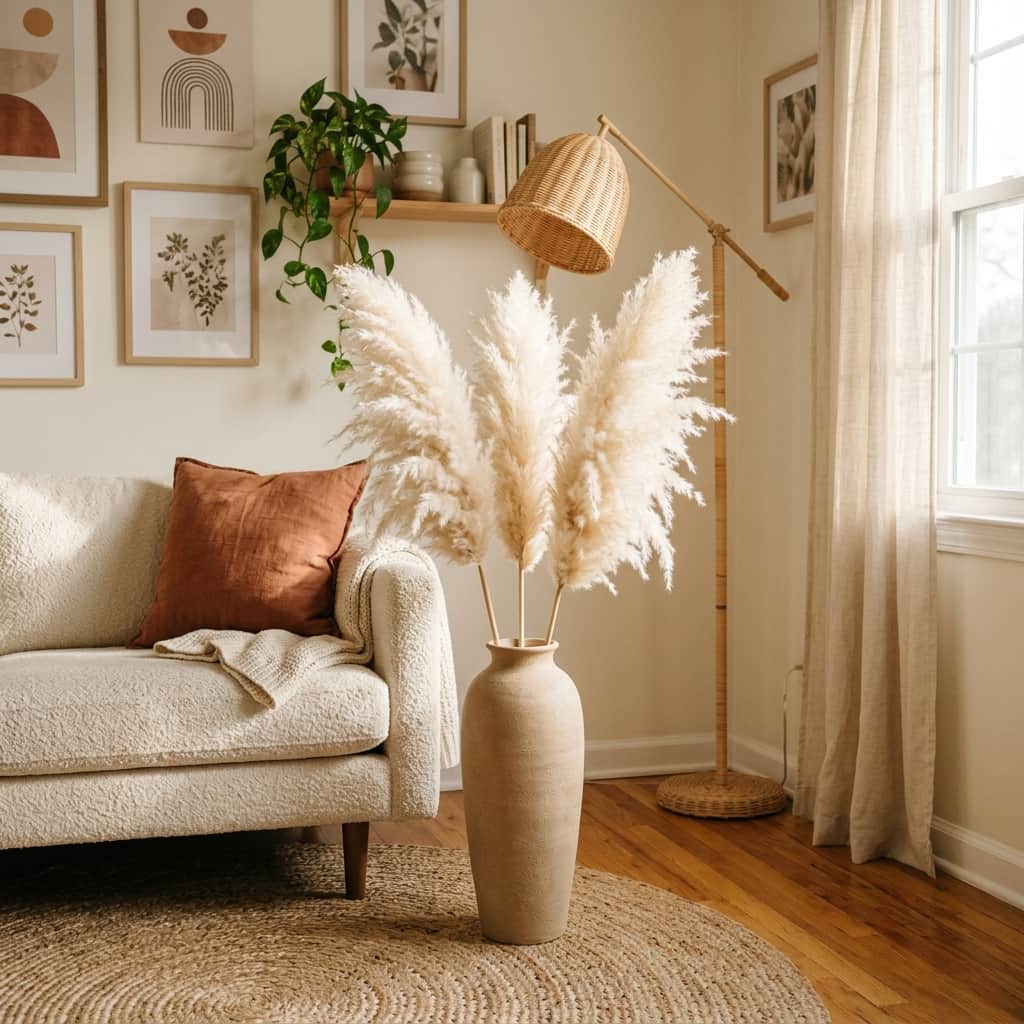
Three tall dried pampas grass stems in a large floor ceramic vase create the most warmly atmospheric and zero-maintenance botanical statement available for boho and neutral living rooms. The creamy white feathery plumes , reaching 5 feet at full display height , create a dramatically soft, whispery botanical floor installation that bridges the visual gap between living plants and fine art.
Dried pampas grass suits homeowners who want the visual presence and soft organic texture of tall indoor botanical displays without any watering, light requirements, or ongoing plant care maintenance. Once arranged in the floor vase, dried pampas grass maintains its full, feathery plume appearance for 12 to 18 months without any care or attention.
- Feathery white plumes create soft botanical drama
- Zero watering or light requirements , fully maintenance-free
- 5-foot height creates commanding floor-level presence
- Works in boho, neutral, and warm-toned living rooms
- Plumes last 12–18 months without any care
Dried pampas grass suits renters, travelers, and anyone who wants beautiful, large-scale botanical living room plants decor impact without the ongoing care commitment that live plants require. The dried arrangement installs in 2 minutes, requires no water or sunlight access, and creates a floor-level botanical statement that photographs beautifully in every light condition.
That combination of zero care requirements, dramatic 5-foot height, instantly beautiful visual impact, and outstanding photography performance makes dried pampas grass in a floor ceramic vase one of the most broadly accessible and reliably stunning botanical display investments available for any boho or neutral-toned living room in 2026.
Indoor Terrarium Display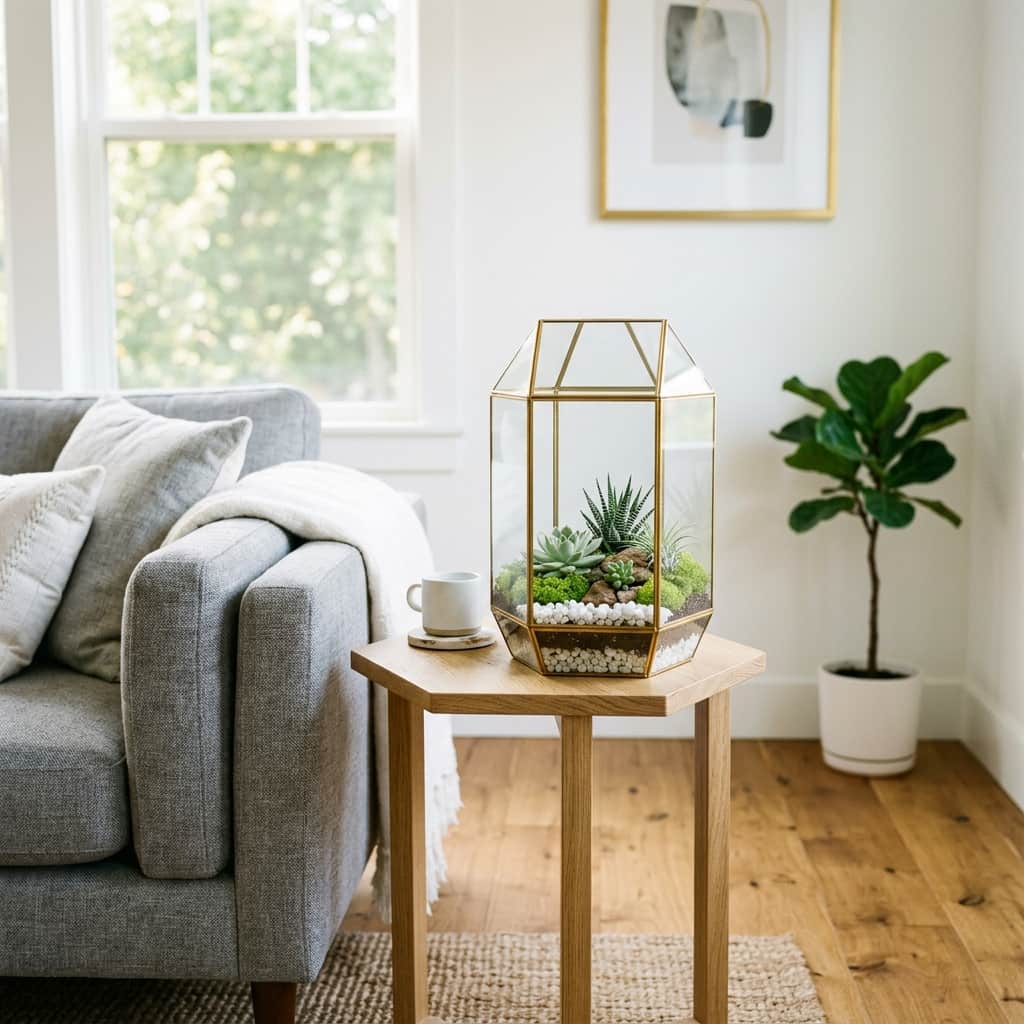
A large geometric glass terrarium creates the most self-contained and artfully miniaturized plant display for minimal and modern living room side tables. The layered interior landscape , white pebbles, sheet moss, mixed succulents, and one air plant , creates a complete miniature garden ecosystem visible through all 6 glass facets of the hexagonal terrarium structure.
Geometric glass terrariums suit minimal and modern living rooms where the clean angular geometry of the hexagonal glass container suits the straight lines, neutral tones, and deliberate simplicity of a minimalist interior. The terrarium functions as both a living plant display and a sculptural glass object , adding botanical life and geometric design interest simultaneously to the same side table surface.
- Geometric glass creates sculptural botanical display
- Layered pebbles and moss create miniature landscape
- Works on side tables and console table surfaces
- Hexagonal glass suits minimal modern aesthetics
- Self-contained ecosystem needs watering monthly
Terrariums are confirmed as one of the most consistently searched and saved indoor plant styling ideas across Pinterest in 2026 , the miniature contained garden inside a beautiful glass geometric vessel creates the most photographically compelling indoor plant image available, generating outstanding pin engagement from both plant enthusiasts and interior design followers alike.
That extraordinary social media photography performance , the beautiful, jewel-box quality of a glass terrarium in natural light , combined with the minimal monthly care requirements of a closed succulent terrarium ecosystem, makes a geometric glass terrarium one of the most photogenically rewarding and practically effortless indoor plant display investments available for any modern living room in 2026.
Conclusion
A living room without plants is a room still waiting to reach its full potential. Every idea in this guide proves that indoor plant styling creates immediate, lasting room transformation , adding natural warmth, organic texture, and genuine visual life that no wall art or decorative accessory can fully replicate.
The right living room plants decor choice makes your room feel like a home , alive, breathing, and beautifully connected to the natural world outside your window. I’ve seen one well-chosen plant completely change how someone feels about their living space every single day.
Save this post on Pinterest. Try one plant idea this week. Share it with a friend whose living room still needs that missing green touch. Your most beautiful room is closer than you think. 🌿
Frequently Asked Questions
What are the best low-maintenance plants for a living room?
Snake plants, ZZ plants, pothos, and succulents require the least care. Snake plants and ZZ plants survive 3–4 weeks without watering. Pothos tolerate low light and irregular care easily. Succulents need watering only once every 14 days. All four suit busy homeowners who want beautiful greenery without demanding routines.
How many plants should I put in my living room?
Start with one large statement plant and two smaller accent plants. That 3-plant combination creates genuine visual impact without cluttering the space. Group plants in odd numbers , 1, 3, or 5 , because odd-numbered arrangements always look more naturally balanced and intentionally styled than even-numbered plant groupings.
Which indoor plants grow best in low-light living rooms?
ZZ plants, pothos, peace lilies, snake plants, and heartleaf philodendrons all thrive in low-light conditions. ZZ plants survive under 100 lux of ambient light. Peace lilies bloom reliably without direct sunlight. Snake plants tolerate dark corners that kill most other popular houseplants within weeks of placement.
What size planter works best for large living room plants?
Choose a planter that measures 2 inches wider than the plant’s root ball diameter. Large statement plants like fiddle leaf figs and Bird of Paradise need planters at least 12 to 14 inches wide. Oversized pots hold too much soil moisture and cause root rot in most popular indoor plant varieties.
How do I style plants with my living room furniture?
Place tall plants in empty corners behind or beside sofas. Put trailing plants on floating shelves at eye level. Use coffee table trays for small succulent groupings. Position floor plants near windows for natural light access. Always choose planter colors that match 1 to 2 existing room materials for visual cohesion.
How often should I water living room houseplants?
Most popular houseplants need watering once every 7 to 14 days indoors. Succulents and ZZ plants need watering only every 2 to 4 weeks. Ferns and calathea plants need watering every 5 to 7 days. Always check soil moisture by pressing your finger 1 inch into the soil before watering any plant.
Can I mix different plant sizes in one living room?
Yes , mixing tall floor plants, medium shelf plants, and small tabletop plants creates the most visually dynamic and professionally styled living room plant display. Use the rule of 3 heights , one tall, one medium, one small , to create layered botanical depth across every room zone you style with plants.