26 Top beginner friendly indoor plant placement 2026
You walk into a room and something feels missing , but you cannot quite name it. That missing element is almost always greenery. The right beginner friendly indoor plant placement tips solve this problem faster than any new furniture piece or fresh coat of paint ever could. I remember placing my first pothos on an empty windowsill and genuinely not believing how much warmer and more alive the room felt within minutes. Plants do something no other decor element does , they breathe life into a space literally and visually at the same time. Furthermore, you do not need a green thumb, a large budget, or a spacious home to start decorating with plants beautifully.
Experienced home stylists and interior designers consistently confirm that even 1 well-placed plant in the right spot transforms an entire room’s atmosphere dramatically. Additionally, this article covers 26 specific plant placement ideas for every room in your home , from bedroom nightstands and bathroom shelves to kitchen counters and entryway corners. Moreover, every idea in this guide suits complete beginners, renters, and anyone working with a tight decorating budget. You will finish reading this article knowing exactly where to place your very first plant today.
Bright Window Sill Plants
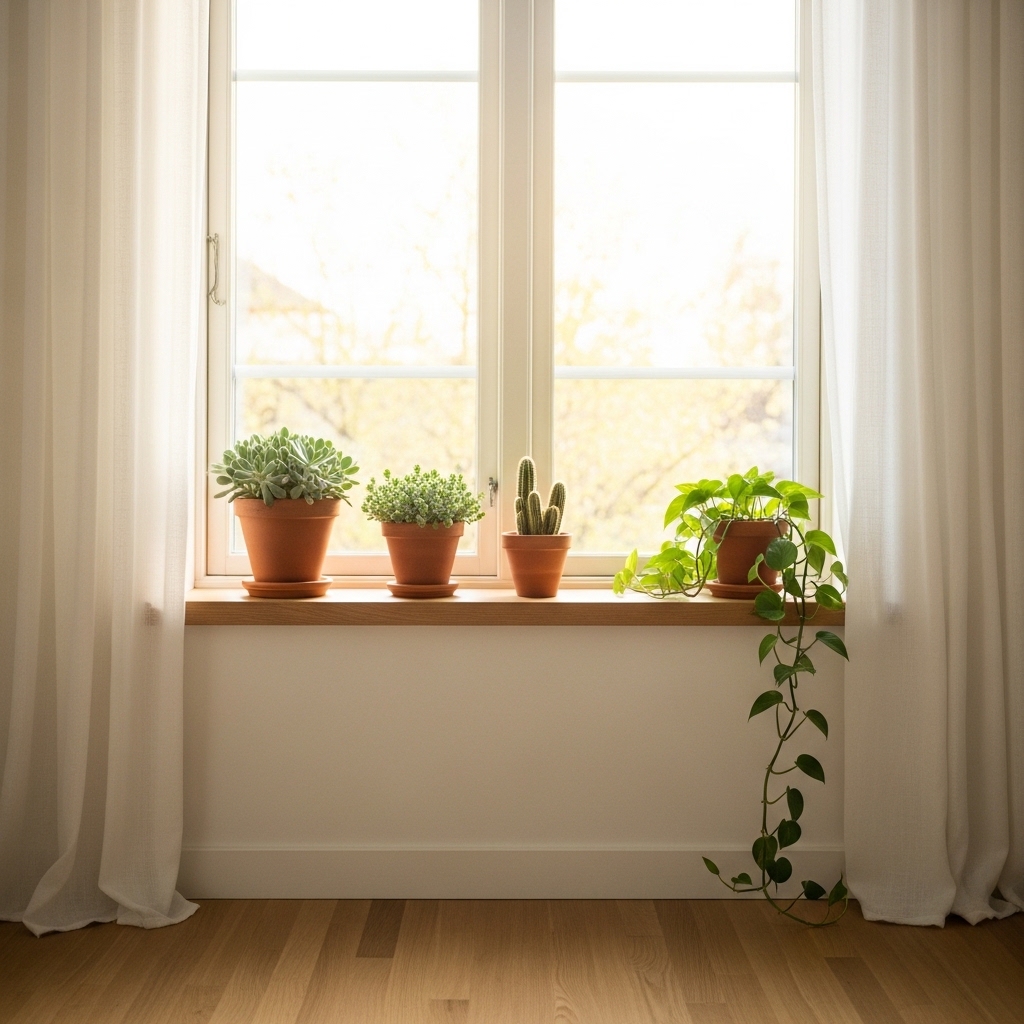
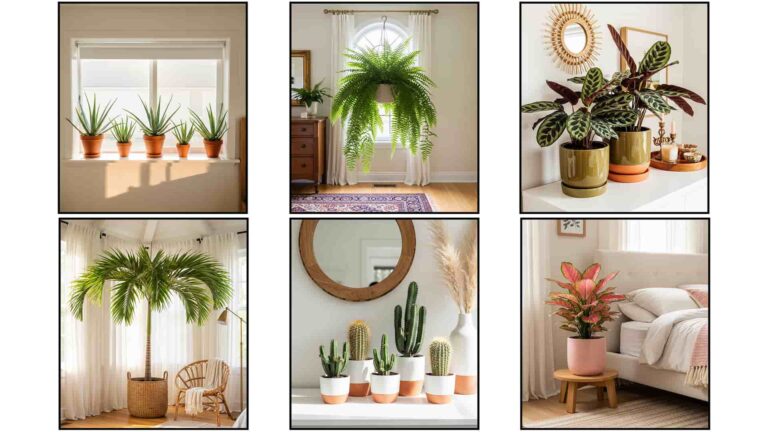
A bright window sill is the most rewarding spot to begin placing indoor plant at home. Natural sunlight fuels strong, healthy leaf growth without extra effort from you. Furthermore, window plants instantly transform a plain wall into a fresh, living focal point. You do not need a large collection to create real impact. Even 3 small succulents or a trailing pothos create a beautiful, intentional display. Additionally, this indoor plant placement idea keeps your floor and counter space completely free. This approach works especially well in small apartments and rental homes where every inch of floor space matters deeply.
- Boosts plants with natural sunlight
- Perfect for small rental apartments
- Creates instant green focal point
- Zero floor space needed
- Works great with trailing pothos
The right plant variety makes your window sill display thrive instead of fade. Low-maintenance choices like succulents, aloe vera, and string-of-pearls grow beautifully in bright indirect light. Moreover, terracotta pots work extremely well here because they allow excess moisture to evaporate quickly. This fast drainage prevents root rot, which tops the list of beginner plant mistakes by a wide margin. You can mix 2 terracotta pots with 1 white ceramic pot for simple visual contrast. I’ve noticed that grouping 3 plants in odd numbers always looks more balanced and natural on any window sill. Try these forgiving varieties first and build your collection gradually.
Bathroom Shelf Plant Corner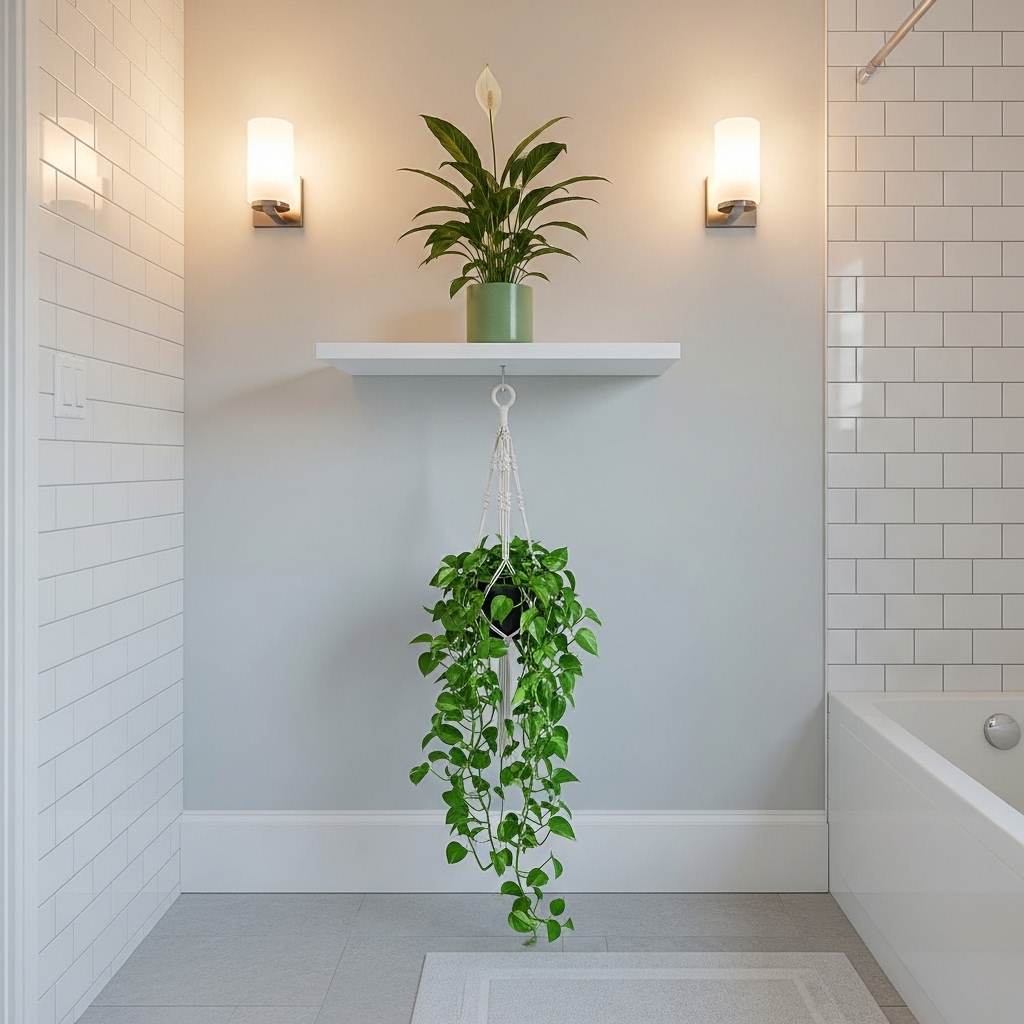
Most people completely overlook the bathroom when planning their indoor plant display at home. However, a bathroom shelf holds serious decorating potential that beginners often miss entirely. Moisture-loving plants thrive in humid bathroom air naturally, without extra misting or care from you. Peace lilies, pothos, and ferns grow exceptionally well in this space with minimal effort. Furthermore, a single lush plant on a floating shelf instantly elevates a plain bathroom into a spa-like retreat. Additionally, this house plant placement idea works perfectly in rental bathrooms because it requires no drilling, no tools, and no permanent changes whatsoever to the walls.
- Peace lily loves bathroom humidity
- No-drill rental-friendly plant setup
- Transforms plain bathrooms instantly
- Fits perfectly on small floating shelves
- Ferns thrive in moist humid air
Styling a bathroom plant corner with intention creates a look that feels completely custom and curated. Choose a shelf that sits above eye level to draw the eye upward and away from the small floor area. Additionally, placing a trailing plant like pothos lets vines drape naturally over the shelf edge. This cascading green detail adds incredible visual depth to a small bathroom wall. Combine 1 upright peace lily with 1 trailing plant for a balanced, layered effect. I’ve seen this exact combination transform even the most basic white-tile bathroom into something truly beautiful. Watering these bathroom plants takes under 2 minutes every single week.
Kitchen Counter Herb Station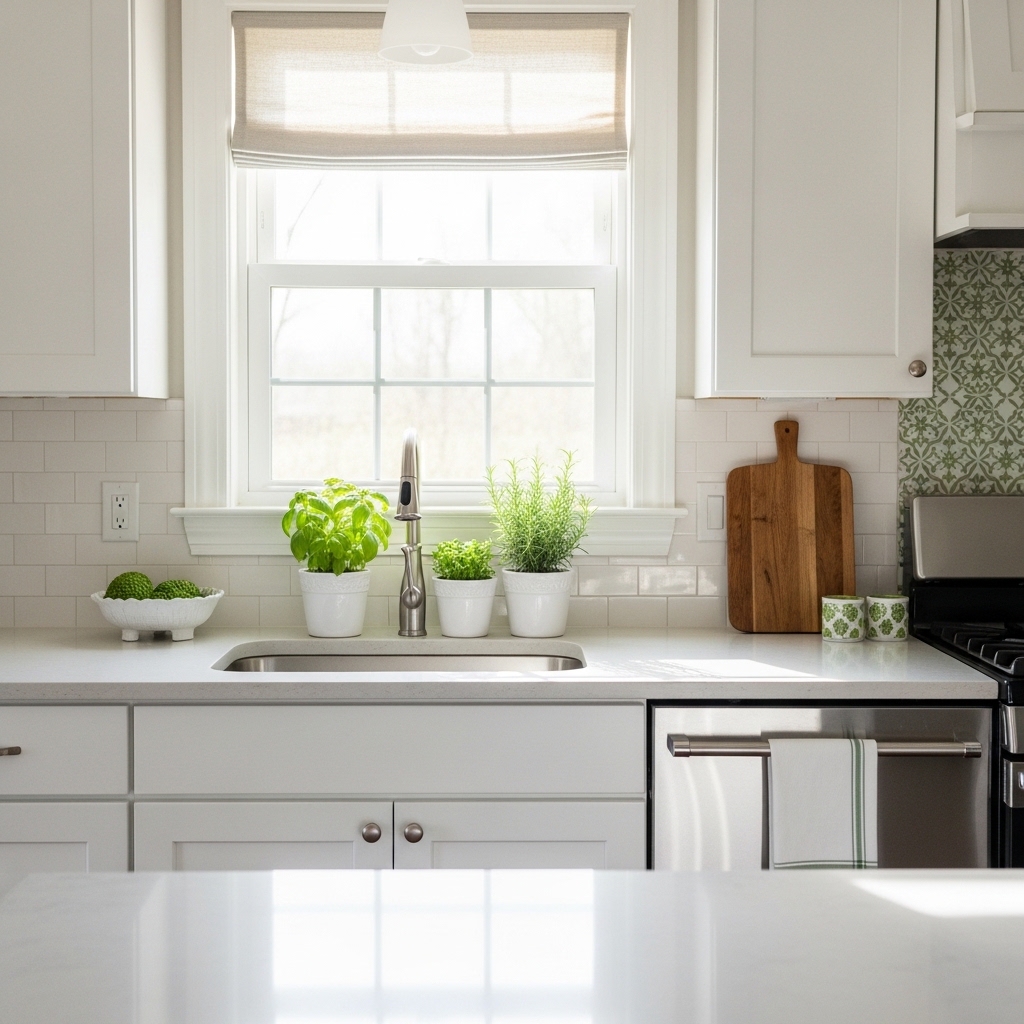
A kitchen counter herb station is one of the most functional and beautiful indoor plant ideas you can try today. Growing fresh basil, rosemary, or mint directly on your counter brings nature into your daily cooking routine instantly. Furthermore, small herb pots cost under $15 each and add incredible visual warmth to any kitchen. You gain a beautiful green accent plus a free supply of fresh flavor at the same time. Additionally, white ceramic pots on a light-colored counter create a clean, editorial look that photographs brilliantly. This beginner-friendly plant placement tip delivers instant, practical, and deeply visual results that you will notice immediately.
- Basil grows fast on kitchen counters
- White pots look editorial and clean
- Herbs add flavor plus green decor
- Costs under $15 per herb plant
- Perfect starter plant idea for beginners
Keeping kitchen counter plants healthy requires understanding light and water needs from day one. Most herbs need at least 6 hours of bright daily light, so placing them near a sunny window matters most. Moreover, overwatering kills herbs faster than any other beginner mistake , you should water herb pots only when the top inch of soil feels completely dry. Additionally, small self-watering ceramic pots solve this problem entirely and remove all guesswork from your routine. That’s why many home stylists recommend starting with rosemary or mint for first-time plant owners. Both varieties forgive irregular watering and still grow vigorously with truly minimal care.
Living Room Plant Cluster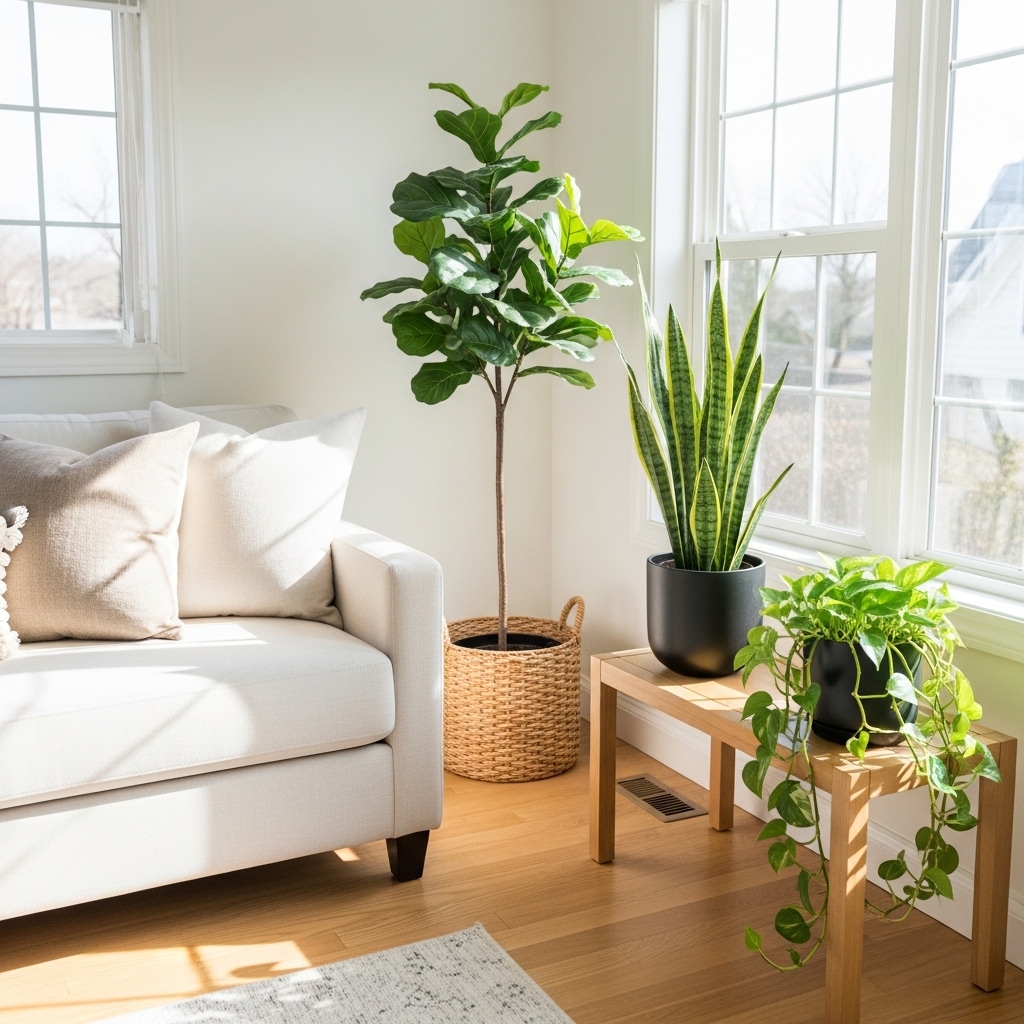
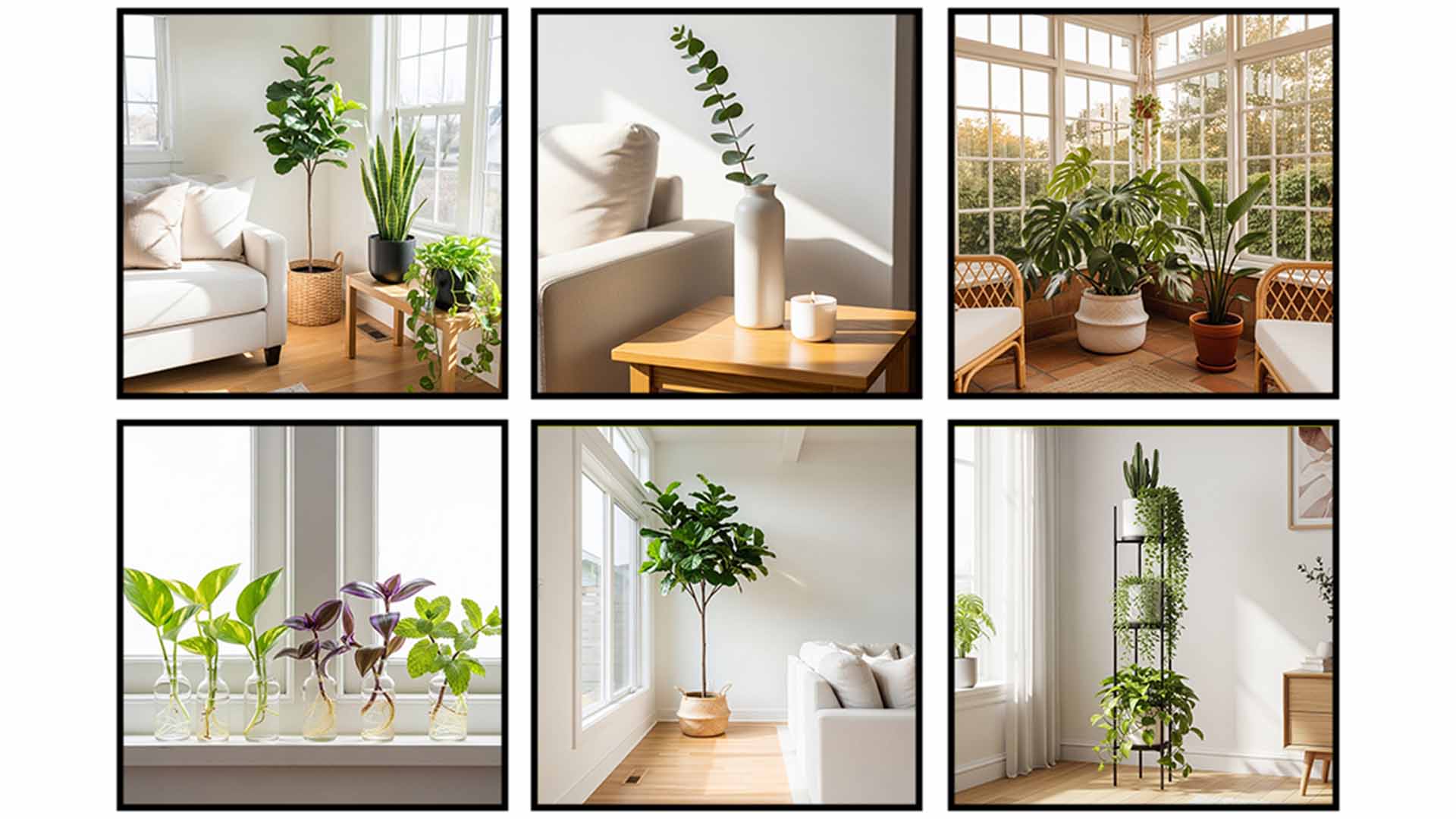
A plant cluster in your living room corner creates one of the most striking focal points in any home. Grouping 3 plants at different heights immediately adds visual depth and richness to a flat, empty corner. Furthermore, this indoor plant display strategy uses layering , a principle that top interior stylists consistently recommend for small spaces. You need 1 tall plant, 1 medium plant, and 1 small trailing pot to build the perfect trio. A fiddle leaf fig, a snake plant, and a pothos make an ideal beginner-friendly combination. Additionally, this plant grouping needs no expensive furniture, extra shelves, or decorative accessories to look polished and complete.
- Mix tall, medium, and trailing plants
- Fiddle leaf fig anchors the cluster
- No extra furniture or shelves needed
- Creates instant living room focal point
- Works beautifully in any empty corner
Placing your plant cluster near a window with natural light keeps every plant thriving without daily attention. Most beginner-friendly houseplants like snake plants and pothos tolerate low-light conditions surprisingly well. Moreover, using different pot materials adds texture variety that makes the display feel layered and curated. You can mix a rattan basket, a matte black ceramic pot, and a simple white planter for 3 distinct textures in one grouping. Additionally, elevating the small plant on a low stool breaks the flat visual line and adds dynamic height variation. This clever styling trick requires zero cost and zero decorating skill to execute absolutely beautifully.
Bedroom Nightstand Plant Vignette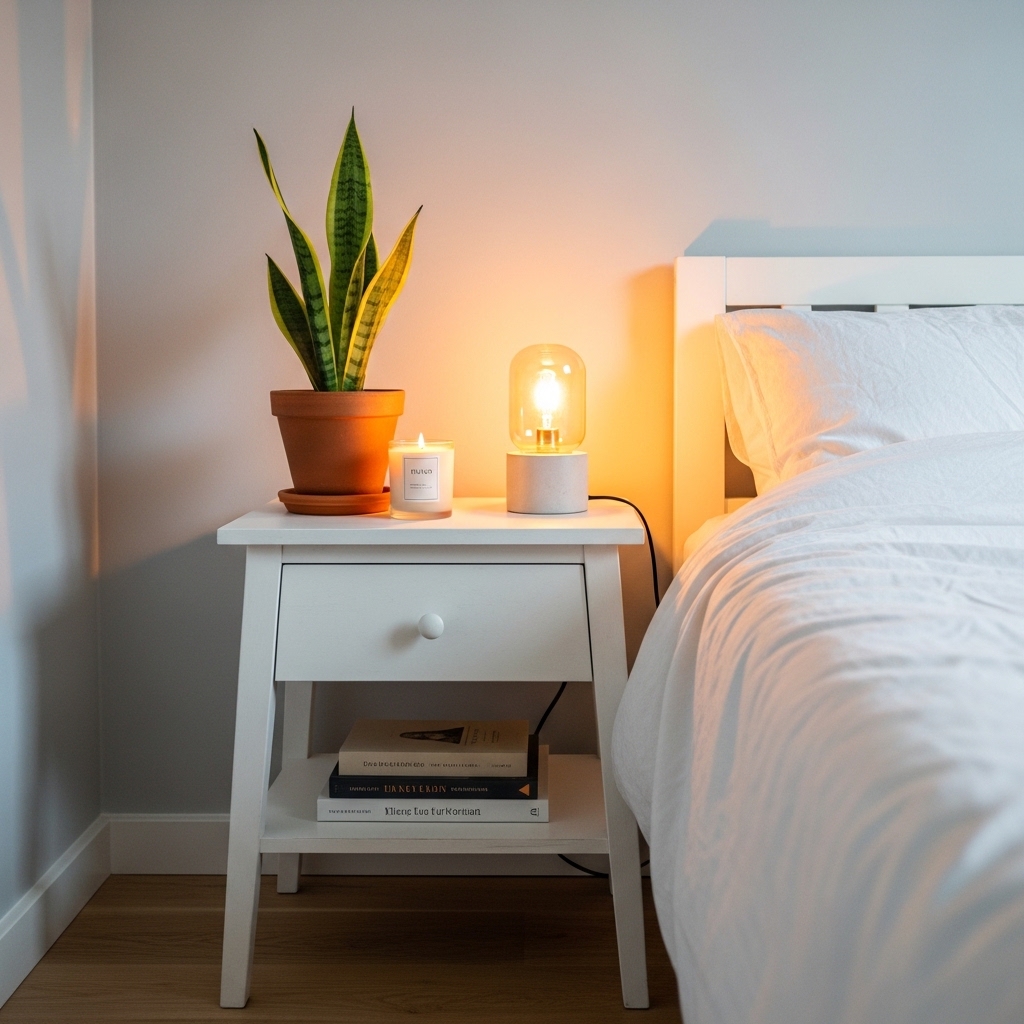
Adding a small plant to your bedroom nightstand immediately creates a calming, organic atmosphere that promotes deeper sleep and genuine relaxation. Research shows that indoor plant reduce stress levels and improve air quality in enclosed bedroom spaces noticeably. Furthermore, a compact snake plant or small succulent fits perfectly on a standard nightstand without blocking your lamp or alarm clock. You need only 1 plant, 1 candle, and 2 stacked books to create a complete, styled nightstand vignette. Additionally, this plant display idea requires minimal watering because snake plants survive perfectly on 1 watering every 10 to 14 days without any fuss.
- Snake plant survives with minimal water
- Promotes restful and deeper sleep
- Fits on any standard nightstand
- Creates instant calming bedroom atmosphere
- Terracotta pots add beautiful warm texture
Choosing the right plant size for a bedroom nightstand prevents visual clutter and keeps the space feeling peaceful. You want a plant that grows no taller than 12 inches so it stays proportional to your lamp. Moreover, low-light varieties like snake plants, ZZ plants, and small peace lilies thrive in bedrooms with limited natural light. Additionally, pairing your nightstand plant with a terracotta pot and a wooden candle holder creates a cohesive, earthy bedroom palette. I’ve noticed this simple plant-and-candle combination gets more compliments than almost any other bedroom styling detail. It feels genuinely inviting and completely cozy every single evening.
Hanging Macramé Plant Display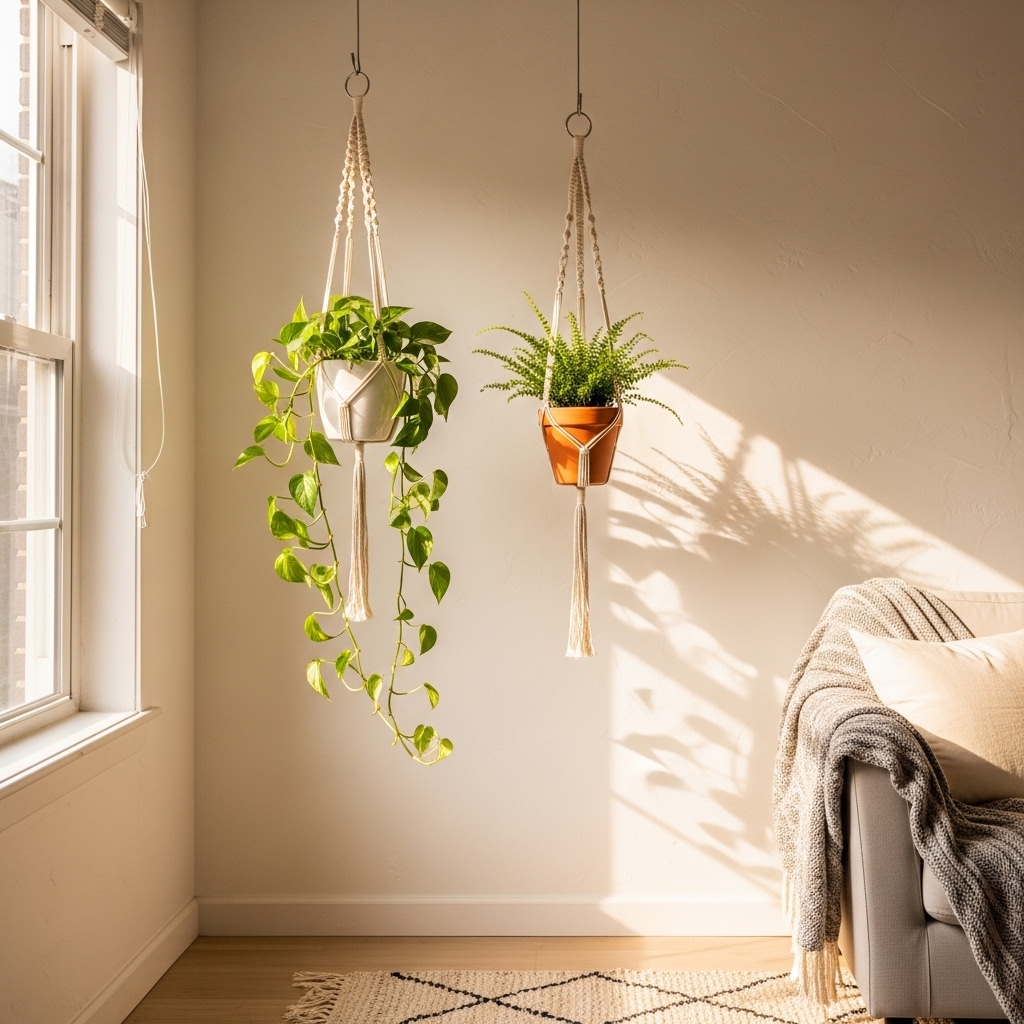
Hanging plants solve a problem that almost every beginner plant lover faces , too many plants, not enough surface space. A macramé hanger lifts your plants off counters and floors completely, which instantly opens up the room below. Furthermore, hanging a trailing pothos or small fern near a window allows vines to cascade downward naturally, creating a waterfall of green that adds real drama. Additionally, macramé hangers cost between $10 and $25 at most home goods stores, making this plant placement idea extremely affordable. You can hang 2 plants at different heights for a layered, visually rich effect that impresses every visitor.
- Trailing pothos cascades beautifully when hung
- Saves valuable counter and floor space
- Macramé adds boho overhead texture
- Costs only $10–$25 per hanger
- Hang 2 plants at different heights
Styling a macramé plant display requires choosing plants that trail naturally and tolerate varied light conditions. Pothos, spider plants, and string-of-hearts all cascade beautifully downward and adapt to different light levels well. Moreover, positioning hanging plants near a window ensures consistent daily light exposure throughout the space. You must check your ceiling hook load capacity before installing any hanger, especially in older apartments. Additionally, a tension rod mounted inside a doorframe offers a completely drill-free alternative for renters. In my experience, this doorframe plant display creates a dramatic green archway that every single guest notices immediately upon entering the room.
Entryway Welcome Plant Setup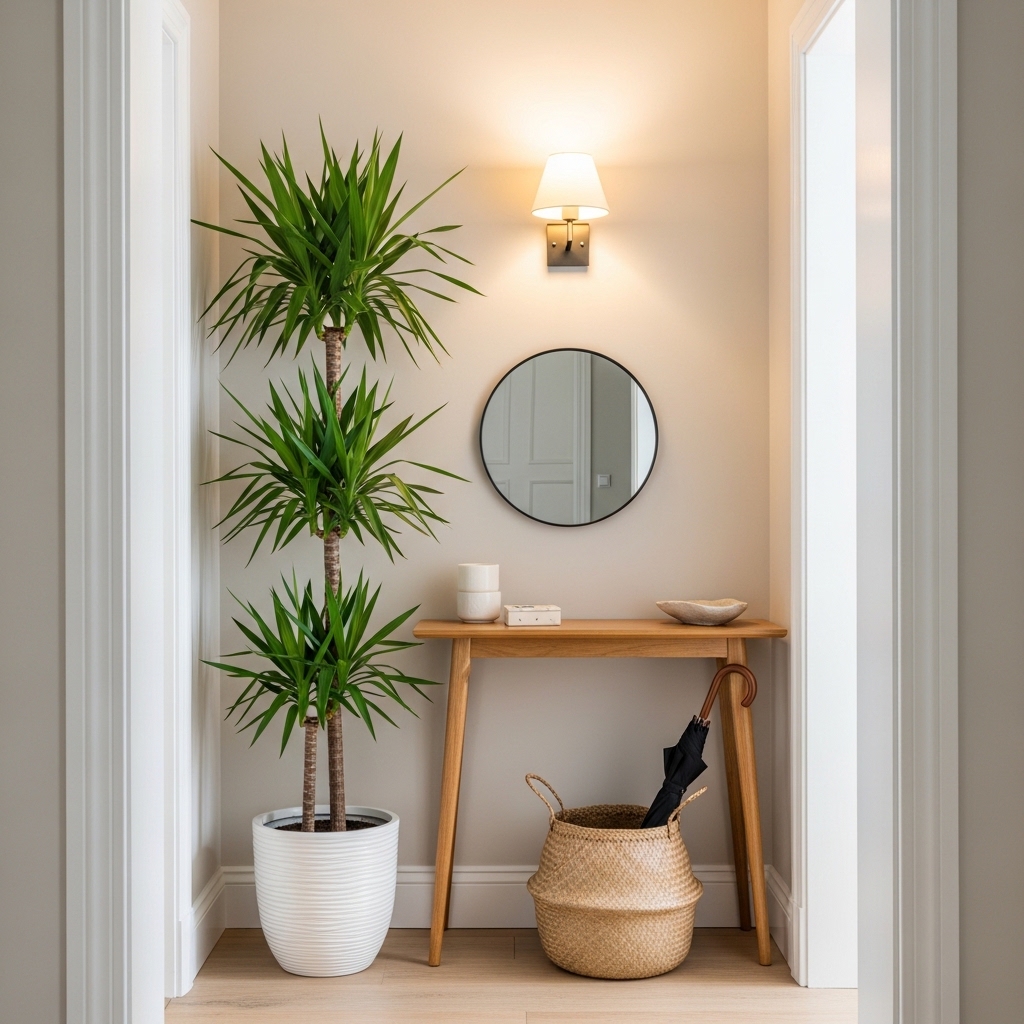
Your entryway sets the first impression of your entire home, and a single tall plant changes everything instantly. A slender dracaena or a tall snake plant fits beautifully in a narrow entryway without blocking foot traffic. Furthermore, tall plants in entry hallways draw the eye upward, which makes low ceilings feel much higher than they actually are. Additionally, a white textured pot beside a wooden console table creates a complete, styled vignette in under 10 minutes. This easy indoor plant idea works brilliantly in apartments, townhouses, and small rental homes where the entryway is narrow. You need only 1 plant to make a powerful first impression.
- Tall plants make low ceilings feel higher
- Dracaena thrives in low entryway light
- One plant creates a full vignette
- Works perfectly in narrow hallways
- Instantly elevates your home’s first impression
Choosing the right plant height for your entryway prevents the space from feeling crowded or cluttered. A plant between 3 and 5 feet tall works best in a standard hallway because it fills vertical space without overwhelming the floor area. Moreover, dracaena and snake plants both tolerate the lower light levels that most entryways experience throughout the day. Additionally, placing your plant on a small plant stand adds extra height and visual elevation to the display. I’ve seen this simple entryway plant setup completely transform a forgettable hallway into a welcoming, magazine-worthy entrance. It costs under $40 total and takes almost no maintenance to maintain beautifully.
Floating Shelf Plant Row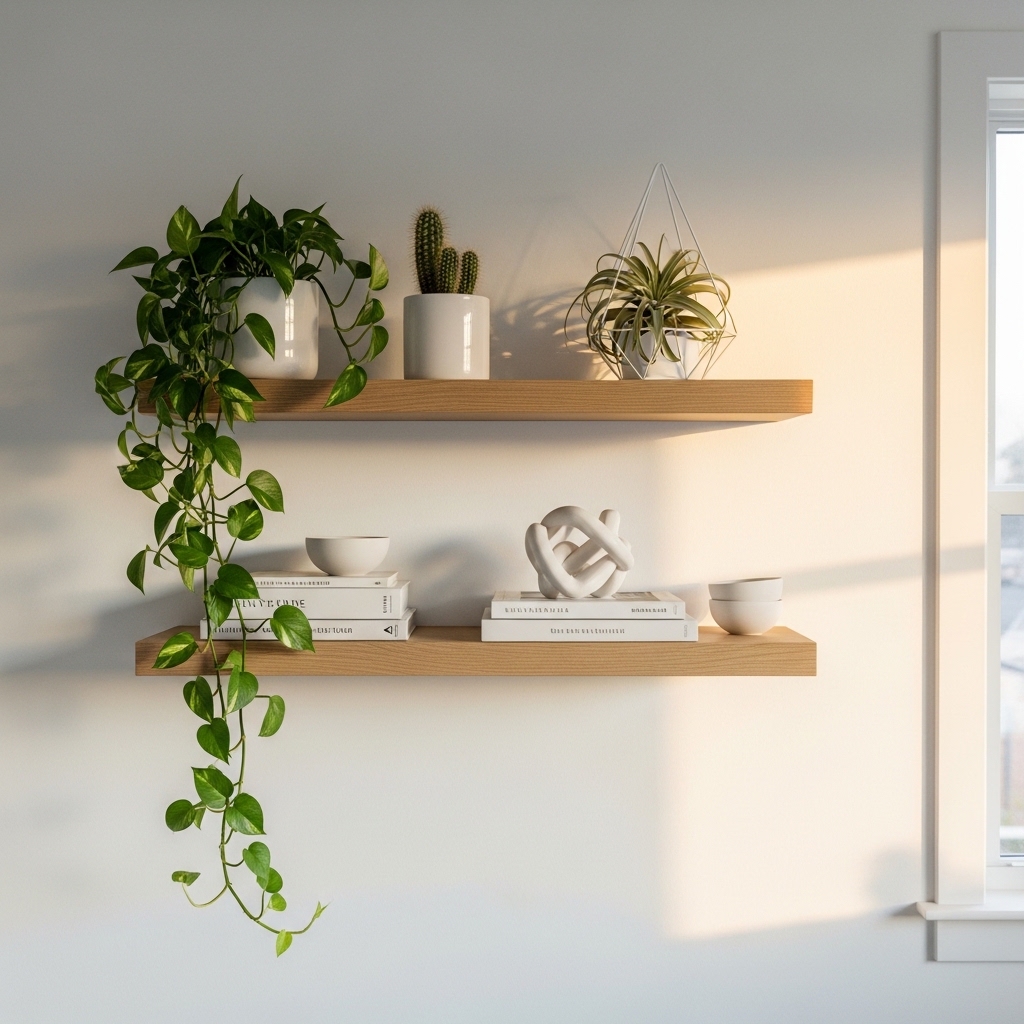
A floating shelf plant row turns any blank wall into a stunning green gallery display. You do not need a large room or expensive furniture to create this look effectively. Furthermore, floating shelves cost between $20 and $60 at most hardware stores and install in under 30 minutes. Mixing 1 trailing plant with 1 upright plant and 1 air plant on the same shelf creates natural visual variety. Additionally, air plants require zero soil and zero pots, making them the most beginner-friendly indoor plant option available. This wall plant display idea works perfectly in living rooms, home offices, and small studio apartments where floor space stays limited.
- Mix trailing, upright, and air plants
- Costs only $20–$60 per shelf
- Turns blank walls into green galleries
- Air plants need zero soil or pots
- Works perfectly in studio apartments
Styling your floating shelf plant row with a mix of plant types and decorative objects creates a display that feels intentional. You should leave at least 4 inches of clear space between each plant so each variety gets enough air circulation. Moreover, adding 2 or 3 small books or a white ceramic object between plants prevents the shelf from looking like a pure plant nursery. Additionally, rotating plants 180 degrees every 2 weeks ensures even light exposure on all sides of each plant. That’s why many interior designers recommend shelf plant displays as the best beginner-friendly indoor plant placement strategy for renters and apartment dwellers. The result looks incredibly curated and beautiful.
Cozy Reading Nook Plants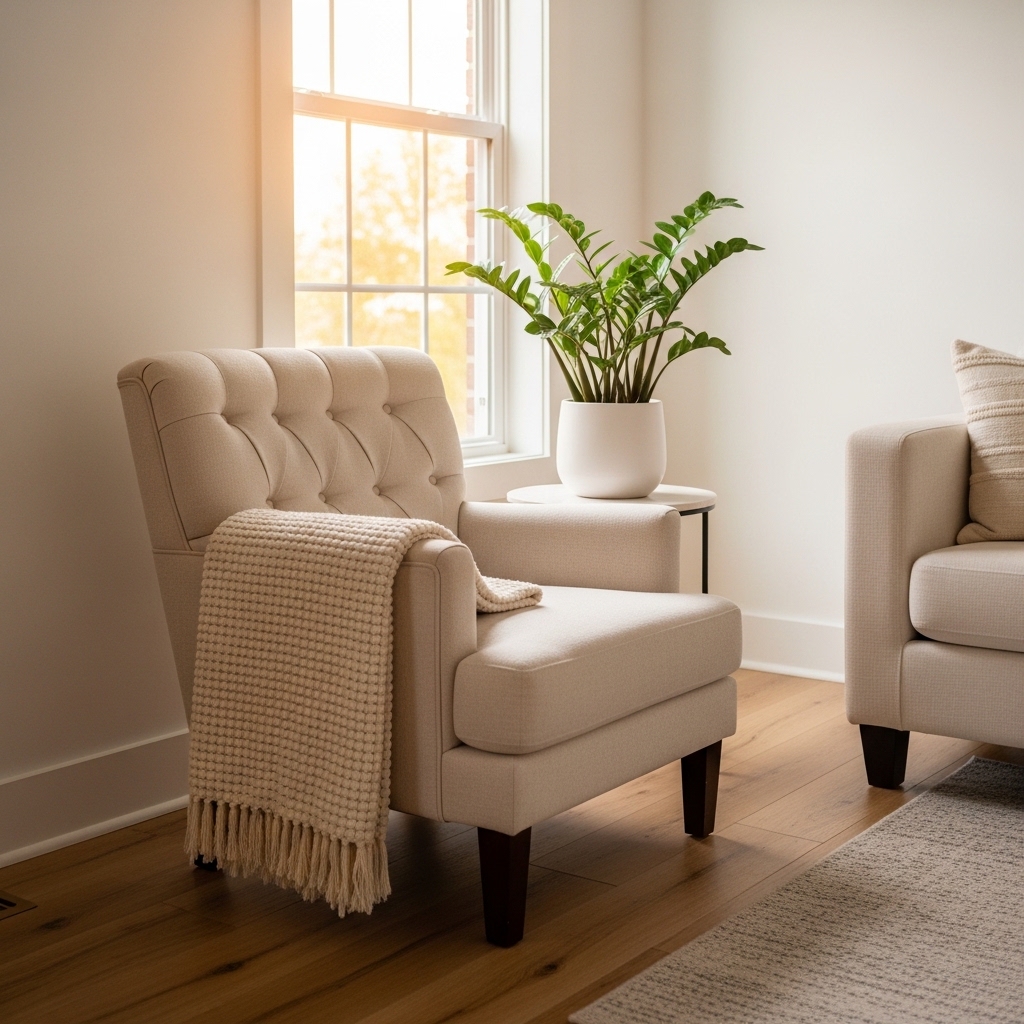
A reading nook feels instantly more inviting when you add a single well-placed plant beside your favorite chair. Plants introduce organic warmth and natural texture that no pillow or throw blanket can fully replicate on its own. Furthermore, a ZZ plant or small snake plant thrives in the low-to-medium light that most reading corners naturally receive. You need only 1 medium-sized plant on a small side table to completely transform the atmosphere. Additionally, this indoor plant styling idea works beautifully in apartments, spare bedrooms, and any underused corner that currently feels empty and uninspired. The result feels like a page from an interior design magazine.
- ZZ plant thrives in low reading nook light
- Adds organic warmth beside any armchair
- One plant transforms the full corner
- Perfect for spare bedroom corners
- Works in any low-light apartment space
Choosing a low-maintenance plant for your reading nook means you can enjoy the greenery without constant care interruptions. ZZ plants only need watering every 2 to 3 weeks and tolerate irregular light schedules remarkably well. Moreover, pairing a dark green ZZ plant with a cream armchair creates a rich, natural color contrast that photographs beautifully. Additionally, placing the plant at the same height as your armrest keeps the visual weight balanced across the entire corner. I’ve noticed that this exact plant-and-chair combination consistently ranks as one of the most saved home decor ideas across Pinterest boards focused on cozy living spaces. It creates genuine comfort and visual richness simultaneously.
Office Desk Plant Accent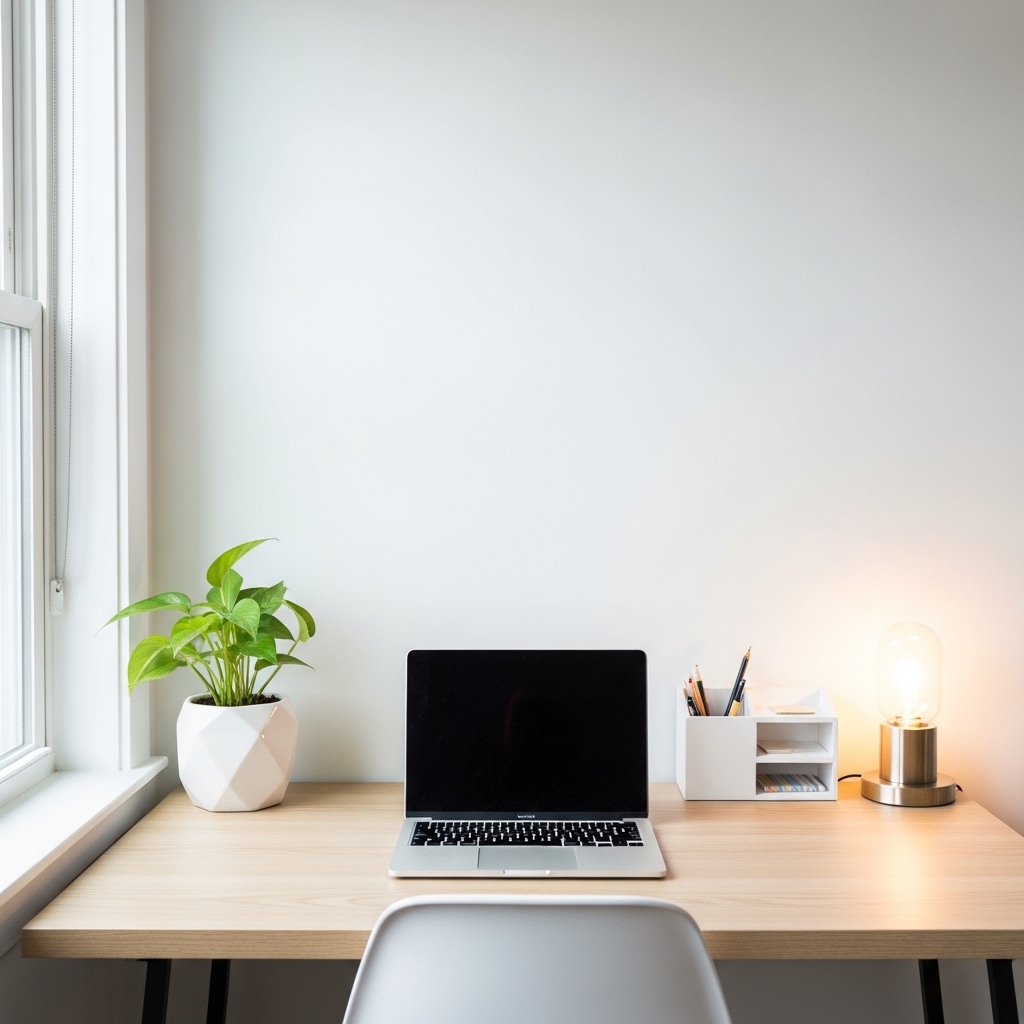
Adding a small plant to your home office desk immediately reduces visual fatigue and creates a calming, productive workspace. Studies show that workers with plants nearby report 15% higher focus levels compared to those working in entirely plant-free environments. Furthermore, a small pothos or succulent fits perfectly in the upper corner of any standard desk without occupying your working area. Additionally, a white geometric pot matches almost every desk color and aesthetic without clashing. This house plant placement idea requires zero floor space and adds a fresh, creative energy to any work-from-home setup. You notice the difference in mood within the very first morning.
- Pothos boosts desk focus and calm
- Fits perfectly in any desk corner
- White geometric pots match any aesthetic
- Reduces visual fatigue during work hours
- Zero floor or shelf space required
Keeping a desk plant healthy inside a home office requires understanding the light available in your specific workspace. Most home offices receive indirect window light, which suits pothos, succulents, and small cacti extremely well. Moreover, avoid placing your desk plant directly beside a heat vent because dry warm air damages delicate leaves quickly. Additionally, a self-watering insert inside your ceramic pot keeps the soil consistently moist without any daily monitoring from you. That’s why many productivity coaches and interior stylists recommend a desk plant as the single easiest upgrade you can make to a home office environment. It costs under $20 and delivers noticeable daily benefits.
Staircase Step Plant Styling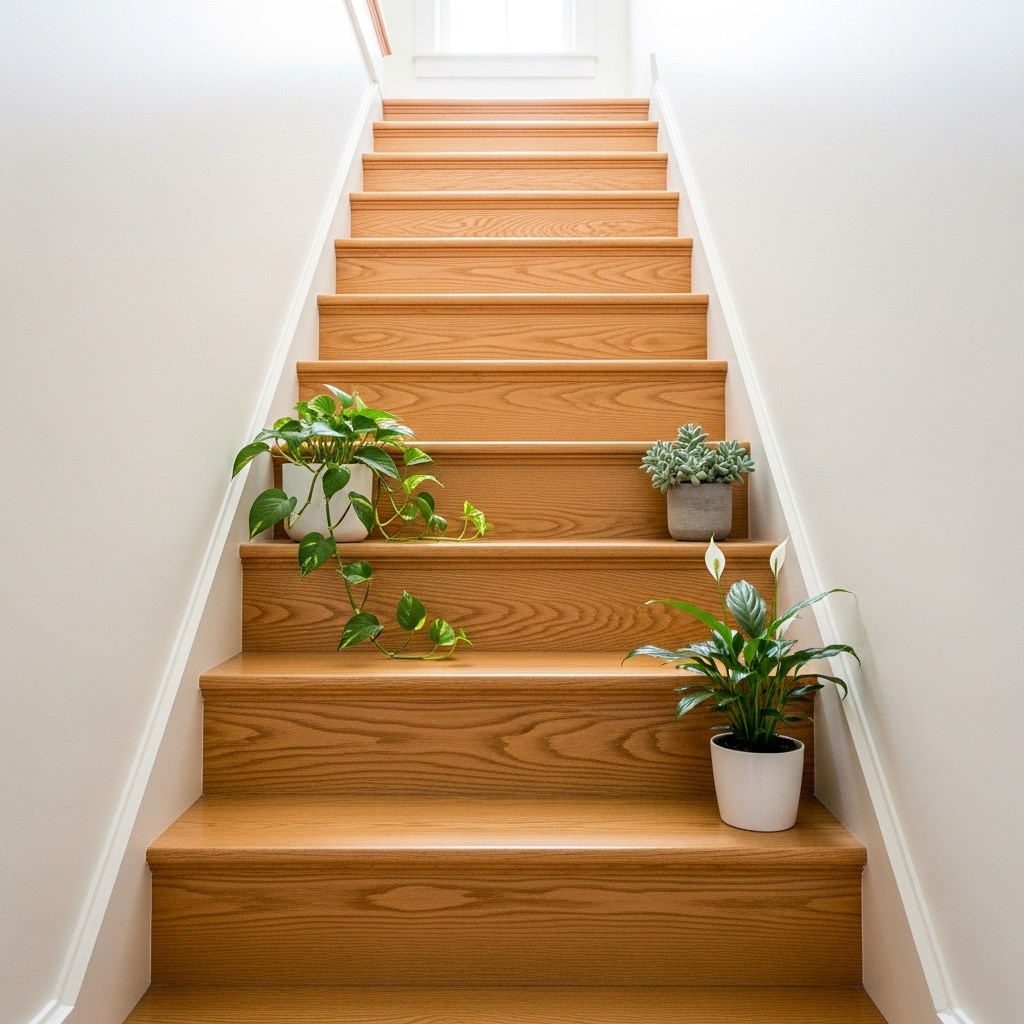
A staircase offers one of the most underused and visually powerful plant display opportunities in any multi-level home. Placing 3 small plants on alternating steps creates a flowing green installation that guides the eye naturally upward along the stairs. Furthermore, this indoor plant display idea costs almost nothing because you already own the staircase surface. You do not need shelves, hooks, or hardware of any kind to execute this look beautifully. Additionally, trailing pothos vines draping over the step edge add a lush, cascading effect that makes even a plain staircase feel like a botanical feature wall. This idea works in townhouses, duplexes, and any home with interior stairs.
- Trailing pothos drapes beautifully over steps
- No shelves or hardware needed
- Guides the eye naturally upward
- Works in townhouses and duplexes
- Three plants create a full installation
Choosing the right plants for staircase steps requires prioritizing stability and low maintenance above everything else. You want compact, sturdy plants that stay within their pots and do not tip over easily as people pass by them. Moreover, selecting plants with similar watering schedules makes your staircase plant care routine quick and completely effortless. Additionally, grouping plants in odd numbers , 3 or 5 , creates better visual balance than even groupings on any asymmetric surface like a staircase. I’ve seen this exact plant styling idea transform plain rental staircases into genuinely impressive botanical installations that visitors always stop to admire. It takes under 10 minutes to style and arrange.
Windowless Bathroom Air Plants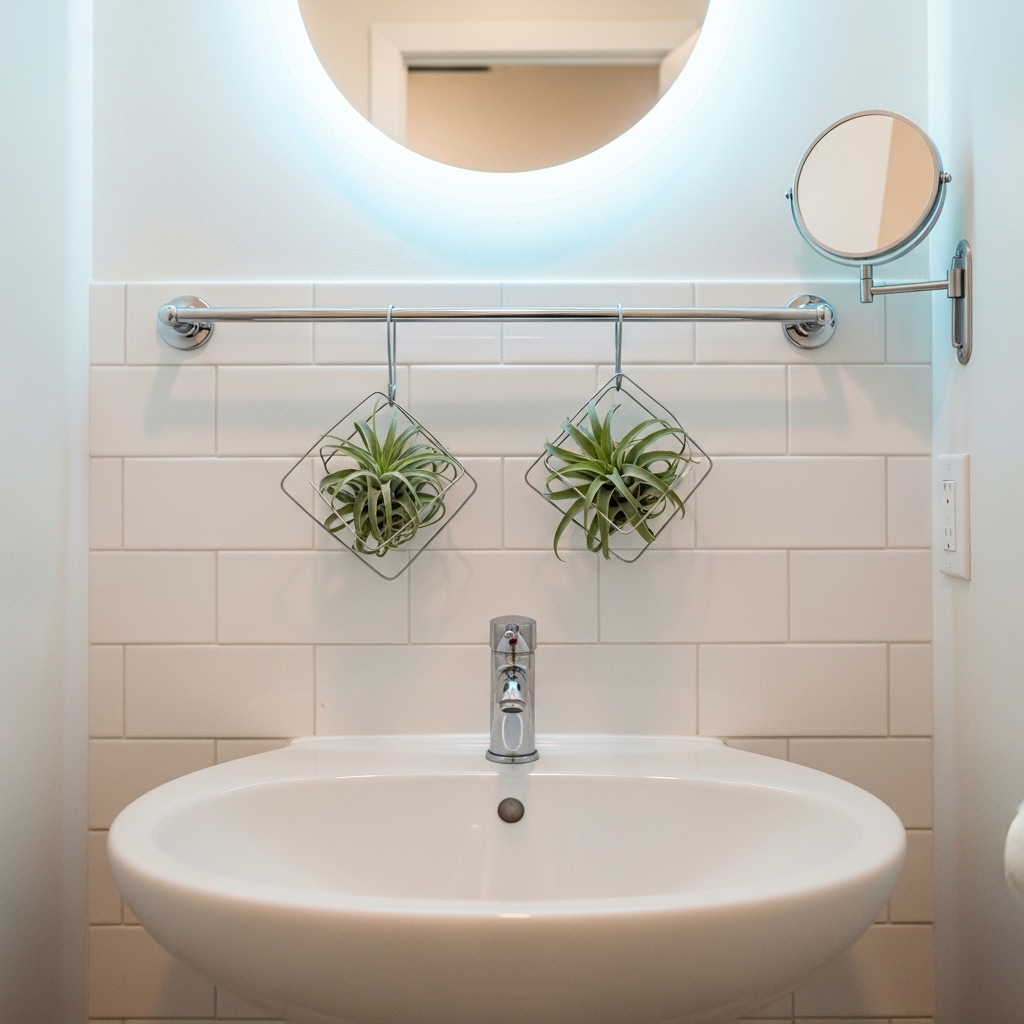
A windowless bathroom seems like the last possible place to grow any living plant, but air plants completely change that assumption. Air plants require zero soil, zero pots, and zero natural sunlight to survive and thrive in humid bathroom conditions. Furthermore, cool-spectrum bathroom LED vanity lights provide enough artificial light to keep air plants healthy for months at a time. Additionally, mounting air plants on small wire geometric frames attached directly to tile creates a modern, sculptural wall accent. This beginner-friendly indoor plant idea works in apartments, basement bathrooms, and any space with absolutely no natural window light. It costs under $15 for a starter air plant set.
- Air plants need zero soil or sunlight
- LED bathroom lights keep them alive
- Wire frames create sculptural wall art
- Perfect for windowless apartments
- Starter set costs under $15
Caring for air plants in a windowless bathroom requires 1 simple weekly routine that takes under 5 minutes total. You remove each air plant from its frame and soak it in room-temperature water for 20 to 30 minutes every 7 days. Moreover, you shake the excess water off gently and allow the plant to dry completely before returning it to its frame. Additionally, the natural humidity from daily showers supplements the plant’s moisture needs between weekly soakings. That’s why many interior designers recommend air plants as the single most forgiving and rewarding solution for homeowners who want greenery in difficult spaces. They survive beautifully with truly minimal effort from you.
Tall Corner Floor Plant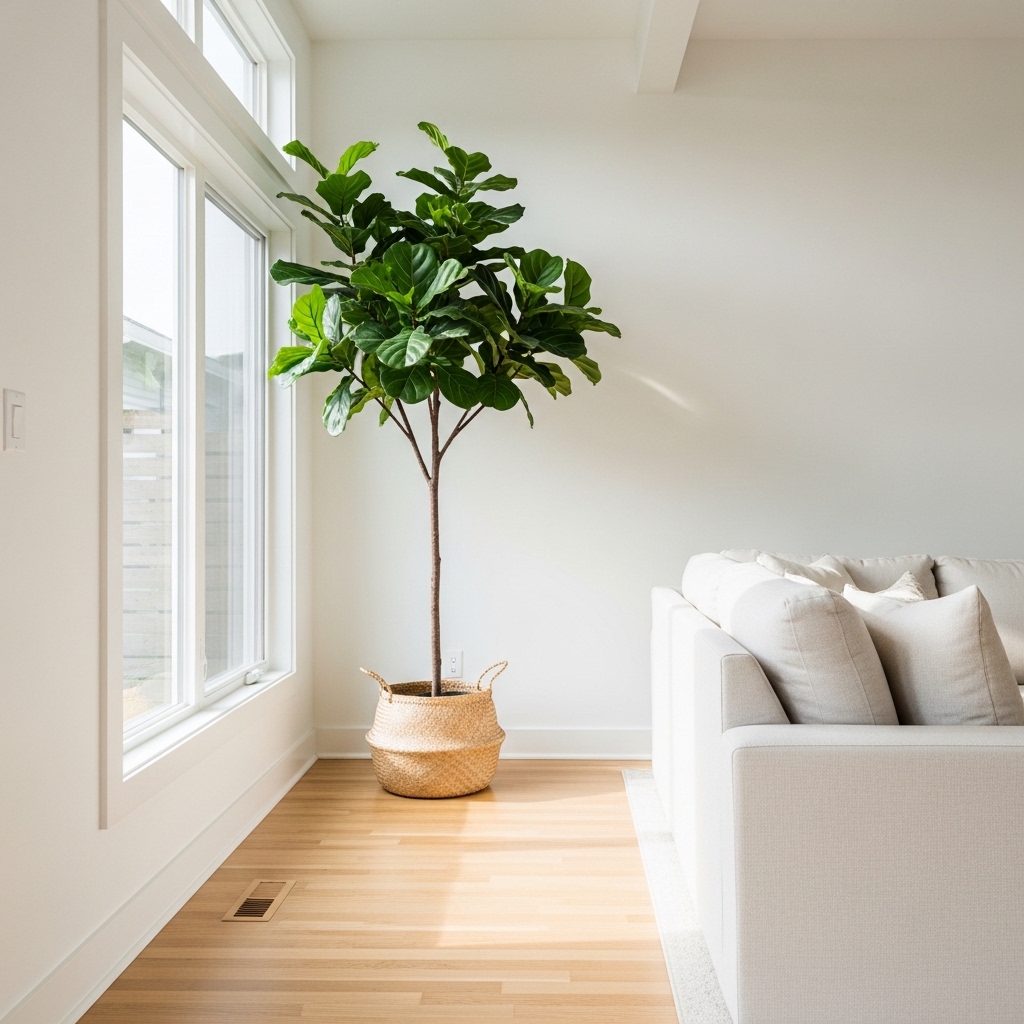
A single tall floor plant in a bare living room corner instantly eliminates the empty, unfinished feeling that frustrates so many homeowners. Large plants like fiddle leaf figs, bird of paradise, and tall dracaena fill vertical space beautifully without requiring any wall art, shelving, or additional furniture. Furthermore, placing a tall plant in a natural woven floor basket grounds the display and adds rich organic texture to the base. Additionally, this indoor plant placement strategy works in open-plan living rooms, large bedrooms, and any corner that currently feels awkward or visually incomplete. You create a full, styled corner with 1 plant and 1 basket in under 5 minutes.
- Fiddle leaf fig fills vertical corner space
- Woven basket adds rich organic texture
- Eliminates awkward empty corner feeling
- No wall art or shelving needed
- Works in open-plan living rooms
Keeping a tall floor plant healthy requires understanding its specific light and watering rhythm from the very beginning. Fiddle leaf figs need bright indirect light and dislike being moved frequently once they find a stable position. Moreover, watering this plant deeply once a week and allowing the soil to dry partially between waterings prevents the most common beginner mistake of overwatering. Additionally, wiping large leaves with a damp cloth every 2 weeks removes dust buildup and keeps photosynthesis running at full efficiency. In my experience, the fiddle leaf fig rewards consistent placement and consistent care with fast, dramatic vertical growth that transforms a room completely. Patience and routine are everything with this plant.
Dining Table Plant Centerpiece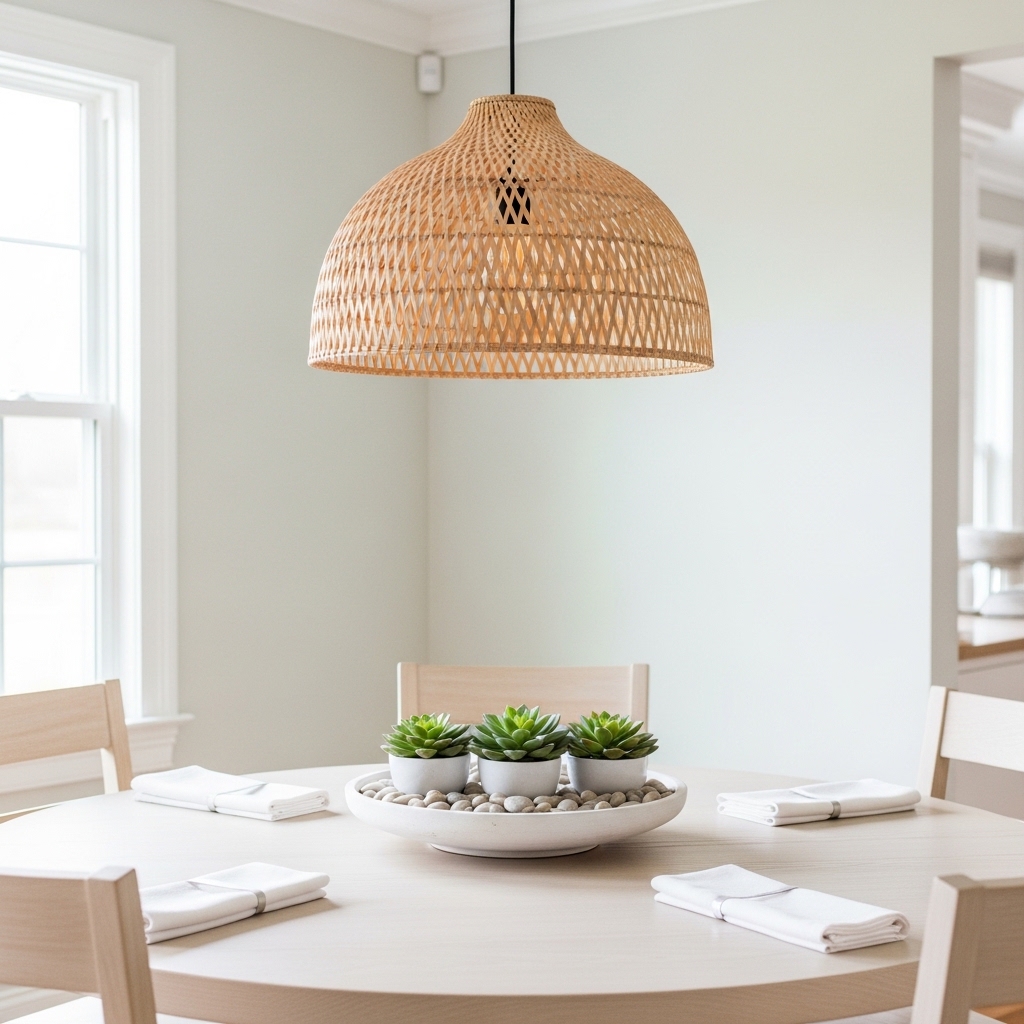
A plant centerpiece on your dining table adds a living, organic element that no candle or bowl of fruit can fully replace. Low, wide arrangements work best on dining tables because they sit below eye level and never block conversation across the table. Furthermore, grouping 3 small succulents in a shallow ceramic bowl with smooth river pebbles creates a modern, sculptural centerpiece that lasts for months. Additionally, succulents require almost no maintenance, making this indoor plant display idea perfect for busy households that want beauty without daily plant care. This dining table plant centerpiece works for everyday meals, casual dinner parties, and Thanksgiving table styling equally well.
- Keep centerpiece plants low and wide
- 3 succulents in 1 bowl look expensive
- River pebbles add beautiful natural texture
- Perfect for everyday and holiday dining
- Succulents need almost no daily care
Styling a dining table plant centerpiece with seasonal awareness keeps your decor feeling fresh and current throughout the year. You can swap succulents for small air plants in spring, add a mini pumpkin plant arrangement in autumn, or place a small potted rosemary tree trimmed into a cone shape at Christmas. Moreover, keeping the same ceramic bowl and river pebble base means you only replace the plants themselves rather than the entire centerpiece. Additionally, choosing a bowl in a neutral tone like white, cream, or warm gray ensures the centerpiece blends with every seasonal color scheme you use. That’s why many home stylists recommend this modular centerpiece approach as the most flexible and cost-effective option.
Bookshelf Plant Integration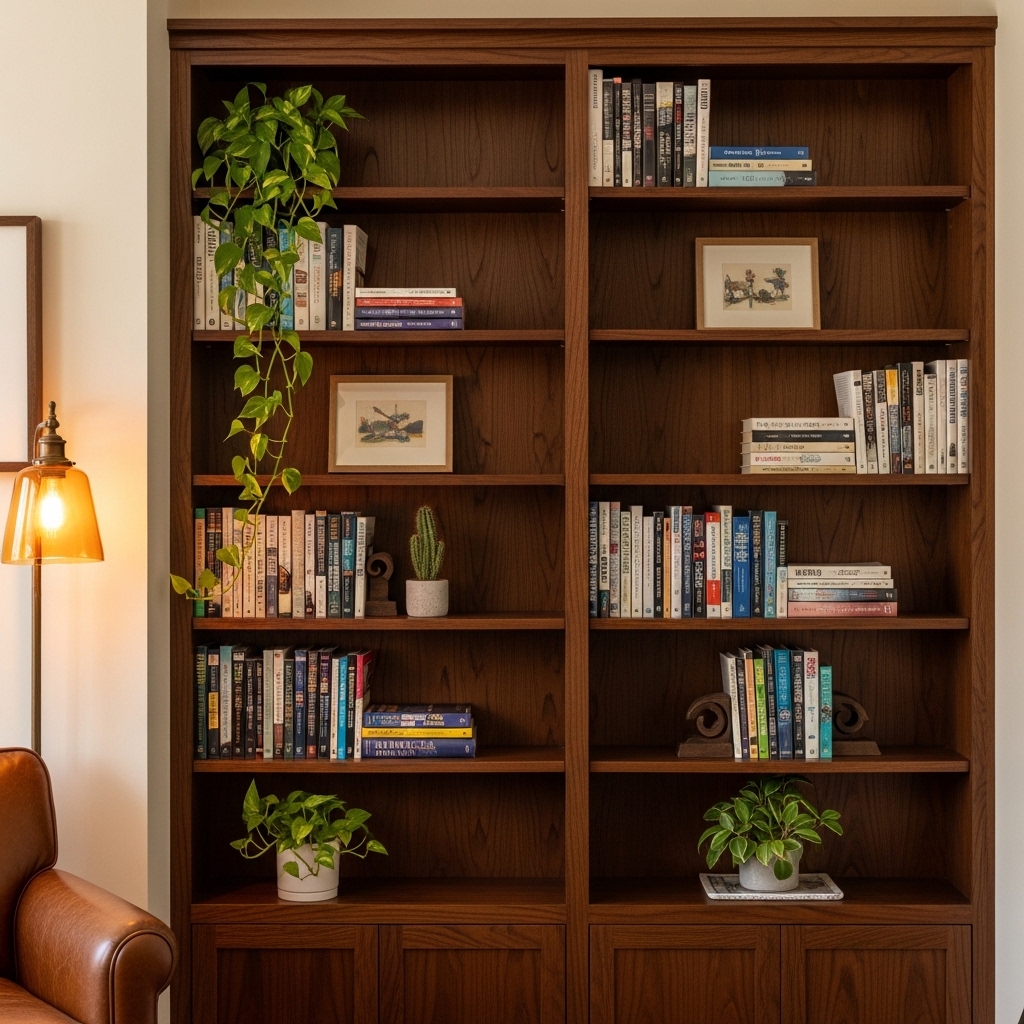
Integrating plants into an existing bookshelf display creates depth and visual life that books and objects alone cannot deliver. A trailing pothos draped naturally over a shelf edge softens the hard wood lines and adds a lush, organic contrast to the rows of rigid book spines. Furthermore, this beginner-friendly plant idea requires zero extra shelving, zero wall space, and zero investment beyond a single small plant. Additionally, small cacti placed between book stacks add a playful, unexpected detail that makes the entire shelf display feel curated and intentional. This house plant placement idea works in home offices, living room library walls, and any room with existing open shelving throughout the space.
- Trailing pothos softens hard shelf lines
- Cacti between books add playful detail
- Zero extra shelving or wall space needed
- ZZ plant thrives in low bookshelf light
- Creates a curated editorial shelf display
Choosing the right plants for bookshelf placement depends entirely on the light available near your shelving unit. Bookshelves placed against interior walls away from windows typically receive low ambient light throughout the day. Moreover, ZZ plants and pothos both tolerate this low-light bookshelf environment better than almost any other common houseplant variety. Additionally, keeping bookshelf plants in lightweight plastic nursery pots hidden inside decorative ceramic covers prevents accidental water damage to your books and shelf surfaces. I’ve noticed that even a single trailing pothos on an otherwise ordinary bookshelf creates an Instagram-worthy display that generates enormous engagement on social media. The investment is minimal but the visual return is extraordinary.
Laundry Room Plant Refresh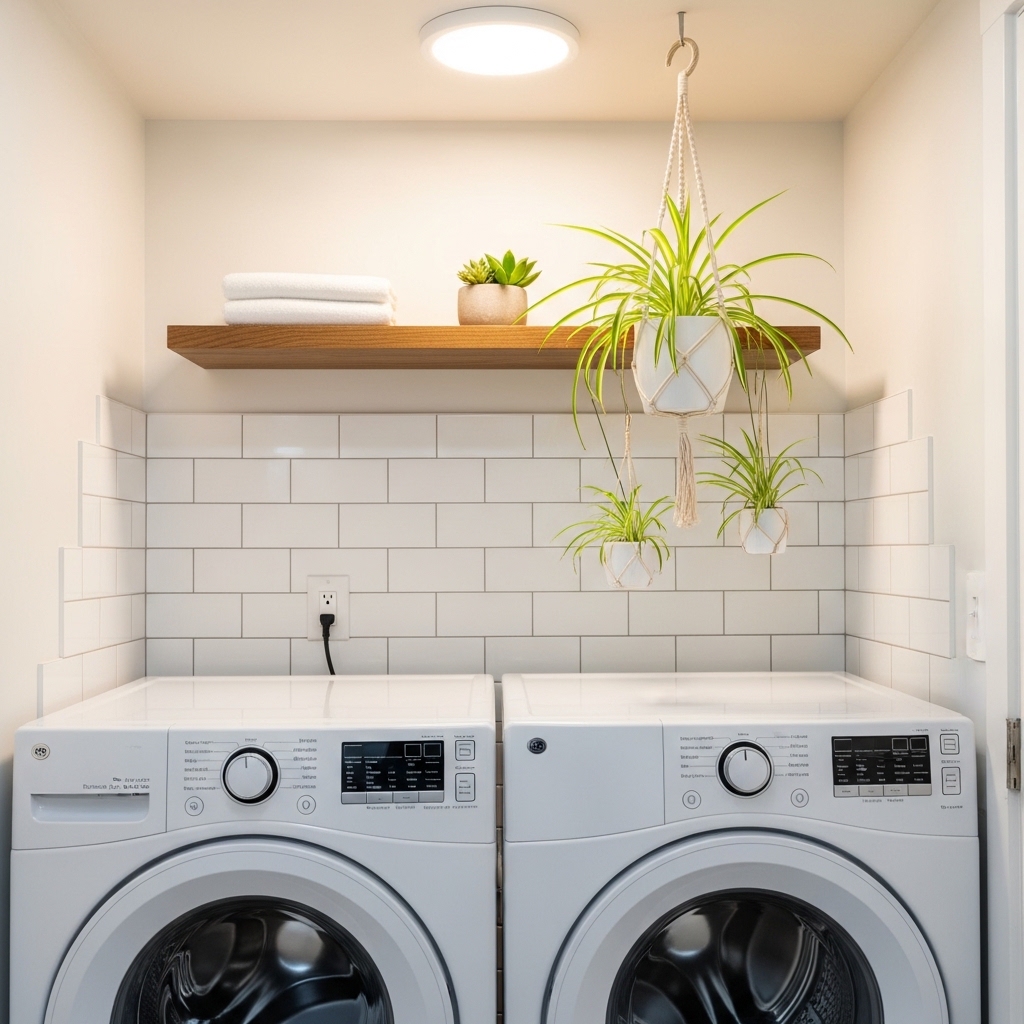
The laundry room sits at the bottom of almost every home decorating priority list, yet it deserves a fresh, styled look just as much as any other room. A small spider plant in a hanging pot above the washer and dryer adds an unexpected burst of green to a typically dull, functional space. Furthermore, spider plants actively filter airborne chemicals like formaldehyde and benzene, which laundry detergents and dryer sheets commonly release into the air. Additionally, this plant placement idea requires zero counter space because the plant hangs completely overhead. This indoor plant styling tip works in small laundry closets, stackable washer-dryer alcoves, and full-size laundry rooms across every home size.
- Spider plants filter laundry room chemicals
- Hangs overhead using zero counter space
- Transforms a dull functional room instantly
- Works in laundry closets and alcoves
- Succulent on shelf adds extra green detail
Keeping a laundry room plant healthy requires understanding that this space experiences regular temperature fluctuations and bursts of warm, humid air from the dryer vent. Spider plants tolerate these shifts remarkably well because they naturally adapt to varying humidity and temperature conditions. Moreover, the warm steam from laundry actually benefits spider plants by providing supplemental moisture between regular waterings. Additionally, watering your laundry room plant once every 10 days keeps it thriving without creating excess moisture that could damage your walls or cabinetry. That’s why many home organizers recommend the spider plant as the single best plant choice for laundry rooms. It is nearly impossible to kill.
Balcony Railing Plant Hooks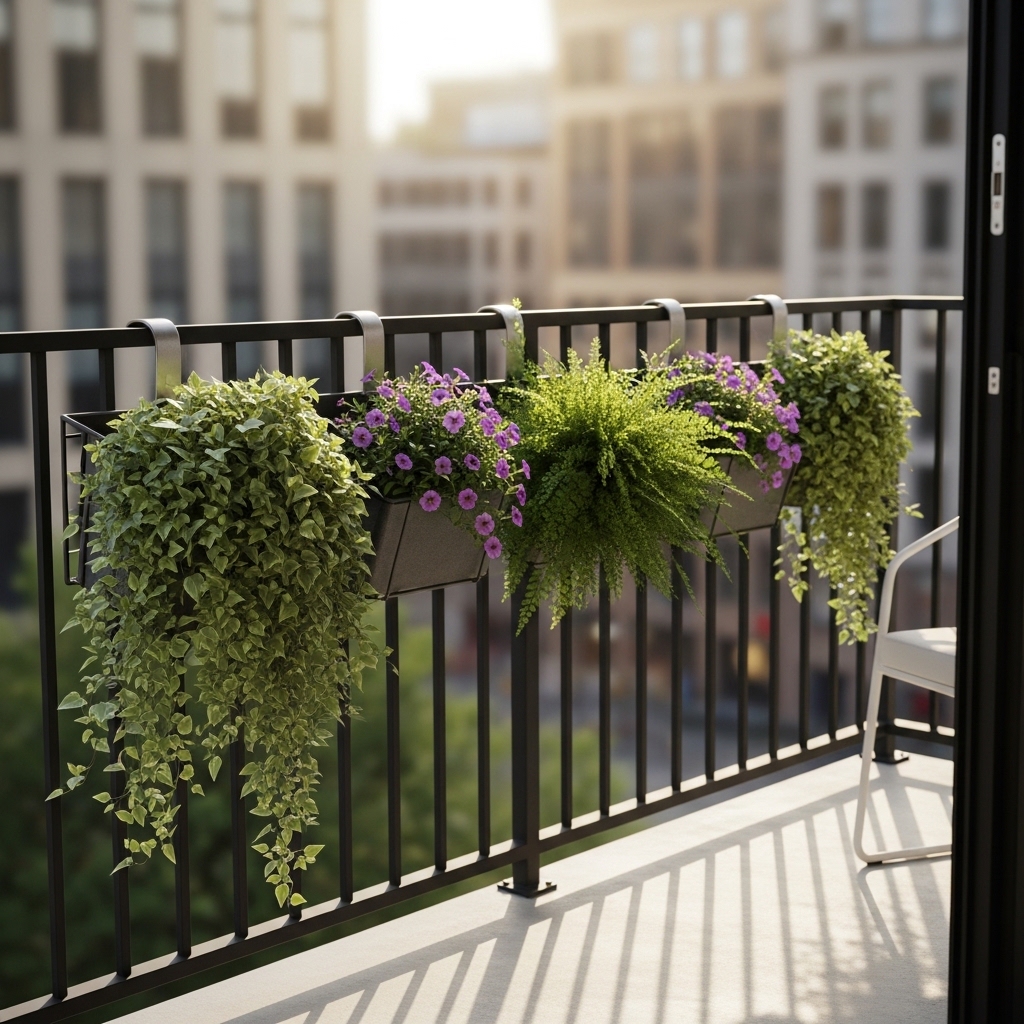
A balcony railing transforms into a lush vertical garden the moment you add simple hooked rail planters along its length. Most apartments have outdoor balconies that sit completely empty and unused, which makes this plant placement idea an immediate visual win. Furthermore, railing planters require zero floor space, zero tools, and zero permanent installation , they simply hook over any standard metal or wood railing securely. Additionally, trailing ivy and compact ferns spill beautifully over planter edges, creating a cascading green curtain effect along your entire balcony wall. This outdoor plant styling idea works brilliantly in urban apartments where outdoor square footage stays extremely limited but fresh greenery remains deeply desired.
- Trailing ivy spills over railing beautifully
- Zero tools or permanent installation needed
- Transforms empty balconies instantly
- Works on metal and wood railings
- Perfect for small urban apartment balconies
Choosing the right plants for balcony railing planters depends on your specific sun exposure and local climate conditions. South-facing balconies receive intense direct sunlight, which suits petunias, succulents, and herbs like basil and thyme extremely well. Moreover, north-facing balconies with limited sun work better with ferns, trailing ivy, and impatiens that prefer cooler, shadier growing conditions. Additionally, self-watering railing planters eliminate daily watering stress by storing a reservoir of water beneath the soil that plant roots draw from independently. I’ve noticed that apartment dwellers who install railing planters report feeling significantly happier with their outdoor space within the very first week. The transformation feels dramatic and immediate.
Propagation Station Display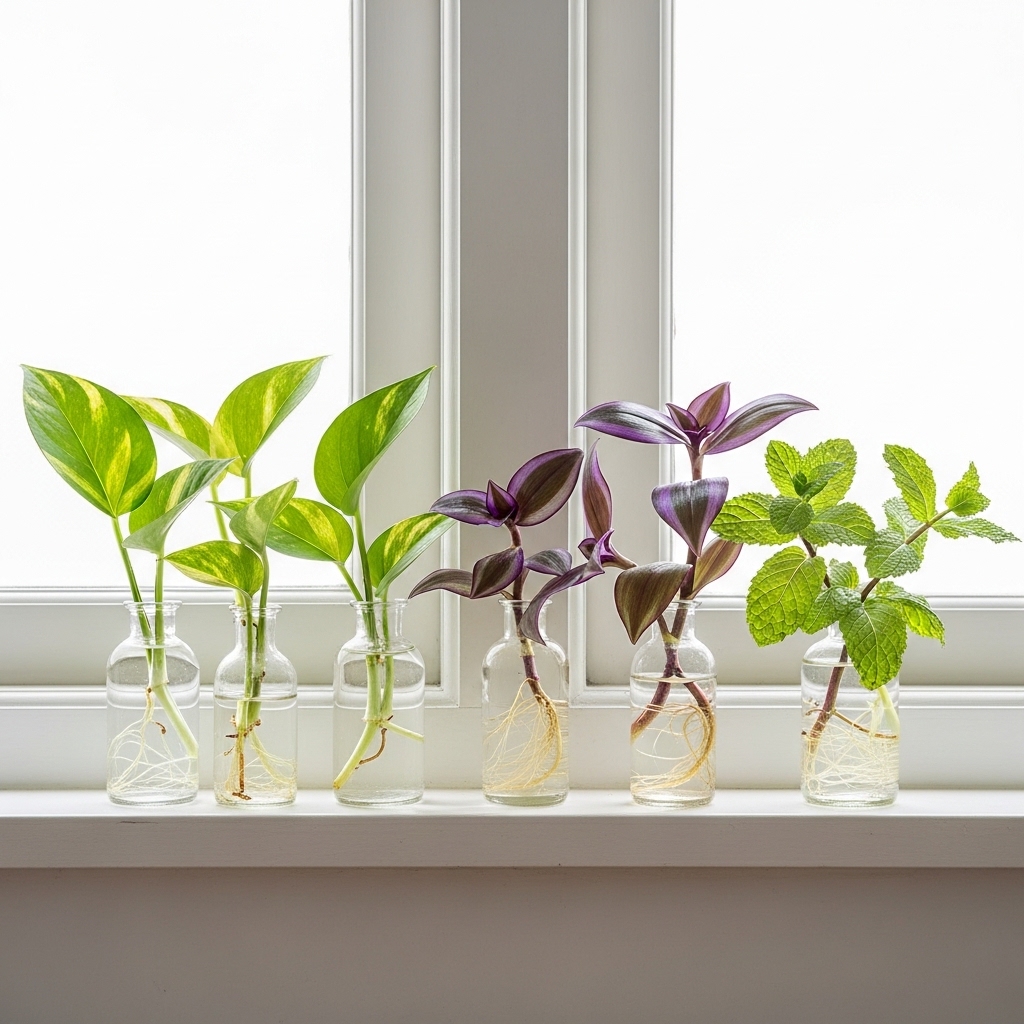
A propagation station display turns simple plant cuttings in water into one of the most visually striking and cost-free decorating ideas available to any beginner. Clear glass bud vases lined up along a sunny window sill show off white root systems growing in water, creating a living science display that doubles as genuine home decor. Furthermore, propagating pothos, tradescantia, and mint in water costs absolutely nothing beyond the initial plant cutting. Additionally, this beginner plant display idea works on any window sill, open shelf, or kitchen counter where natural light reaches consistently throughout the day. You grow new plants for free while creating a beautiful, Pinterest-worthy green display simultaneously.
- Propagate pothos cuttings in clear vases
- Roots growing in water look stunning
- Completely free plant display idea
- Works on any sunny window sill
- Tradescantia and mint root extremely fast
Styling a propagation station with visual intention turns a simple science project into a full home decor feature. You want to use glass vases of 3 different heights , tall, medium, and short , to create a layered, dynamic silhouette along your window sill. Moreover, grouping an odd number like 5 vases together always creates better visual balance than even-numbered arrangements on any flat surface. Additionally, changing the water in each vase every 5 to 7 days prevents algae buildup and keeps the glass crystal clear. That’s why many plant enthusiasts recommend propagation stations as the single best starter project for anyone exploring beginner-friendly indoor plant placement strategies for the first time. Results appear within days.
Kids Room Soft Plant Corner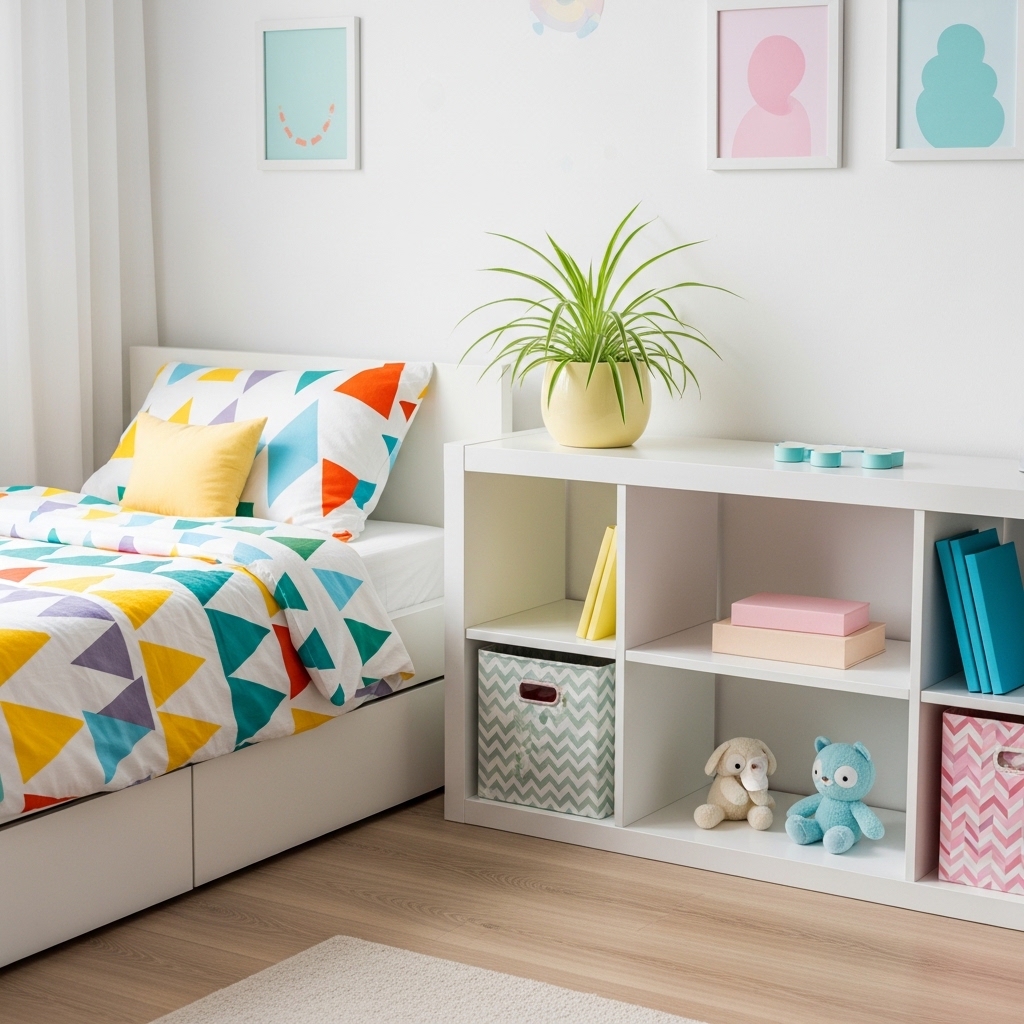
Adding a plant to a child’s bedroom creates a calm, nurturing environment that supports better sleep and sparks genuine curiosity about the natural world. Spider plants rank as the safest and most child-friendly houseplant because they are completely non-toxic to children and pets according to verified botanical safety lists. Furthermore, a small spider plant in a brightly colored pastel pot becomes a fun, visual accent that blends effortlessly into a child’s colorful bedroom decor. Additionally, involving children in basic plant care builds responsibility and daily routine naturally from a very young age. This indoor plant placement tip works in nurseries, toddler rooms, and children’s bedrooms of every size and layout.
- Spider plants are non-toxic and child-safe
- Pastel pots add fun playful bedroom color
- Teaches children basic plant care habits
- Thrives in typical bedroom light conditions
- Perfect for nurseries and toddler rooms
Placing a kids room plant at low bookcase height rather than high shelf height keeps it safely within your child’s reach for supervised watering and care. You want the plant positioned away from direct bed proximity so falling soil or water never reaches sleeping areas during watering. Moreover, using a pot with a built-in drainage saucer prevents accidental water spillage on wood furniture or carpeted floors in the bedroom. Additionally, choosing a plastic pot over ceramic in a child’s room eliminates breakage risk entirely when curious hands inevitably reach for the plant. In my experience, children who care for a single bedroom plant develop a genuinely deeper connection with nature that shapes their habits for years to come.
Minimalist Single Stem Vase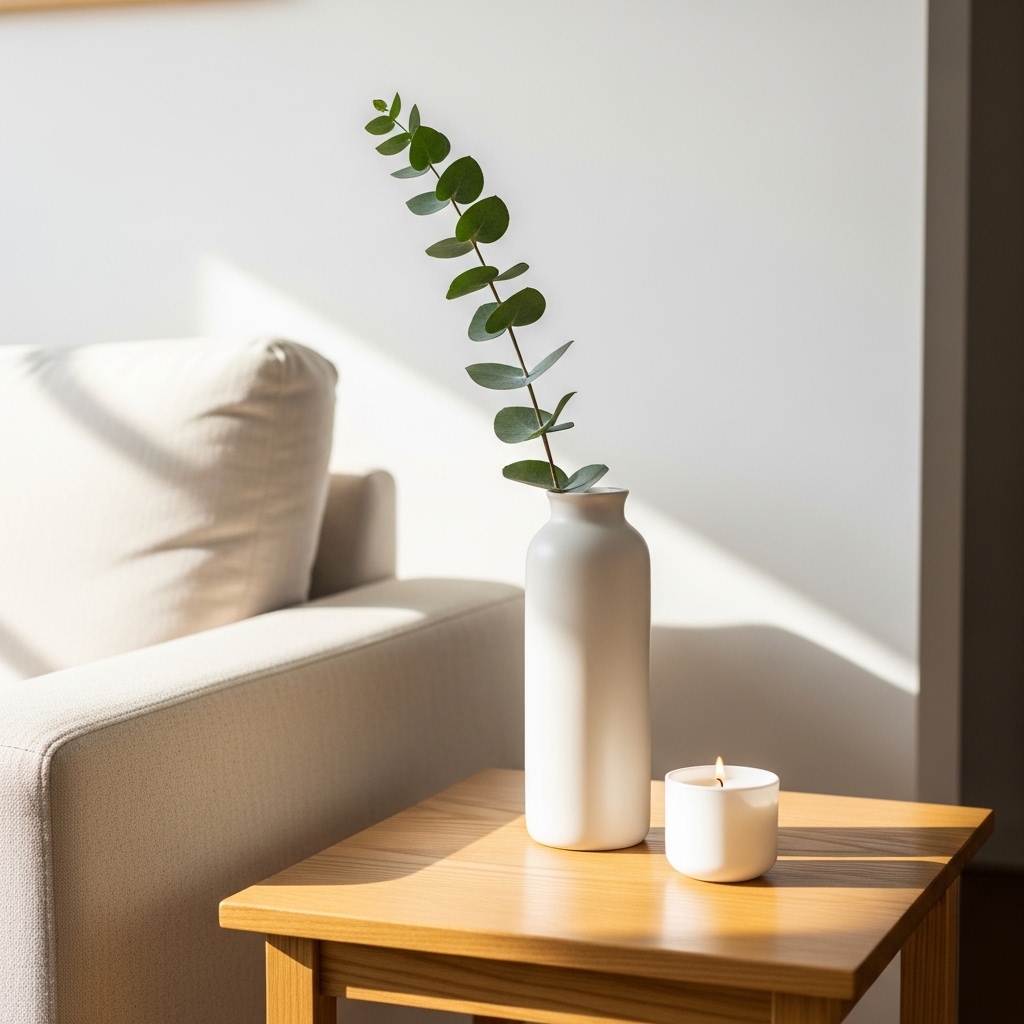
Sometimes one single plant stem in a beautiful vase makes a stronger visual statement than an entire shelf full of complicated arrangements. A single eucalyptus branch, monstera leaf, or olive branch in a tall ceramic vase creates an effortlessly elegant, gallery-worthy display that costs under $5 per fresh stem. Furthermore, this minimal plant styling approach suits Japandi, Scandinavian, and modern minimalist interiors perfectly because it relies entirely on negative space and natural form. Additionally, you can swap the stem weekly at a local grocery store or farmer’s market to keep the display feeling seasonal and perpetually fresh. This beginner-friendly indoor plant idea requires zero plant knowledge and zero ongoing care commitment whatsoever.
- Single eucalyptus stem looks gallery-worthy
- Costs under $5 per fresh weekly stem
- Perfect for Japandi and minimalist homes
- Swap stems seasonally for fresh looks
- Zero plant knowledge or care needed
Choosing the right vase shape amplifies the beauty of a single stem display more than almost any other styling decision. A tall, narrow-necked vase forces the stem upward in a dramatic vertical line, while a wide low vase allows branches to spread naturally outward in a softer, organic arc. Moreover, matching your vase material to existing decor objects in the room , wood, ceramic, glass, or stone , creates instant visual cohesion throughout the space. Additionally, placing the single stem vase beside 1 small candle and 1 decorative object creates a complete, three-point vignette on any side table or console. That’s why many interior stylists use this exact single stem technique as their go-to quick-fix for empty or unfinished surfaces throughout a home.
Tiered Plant Stand Styling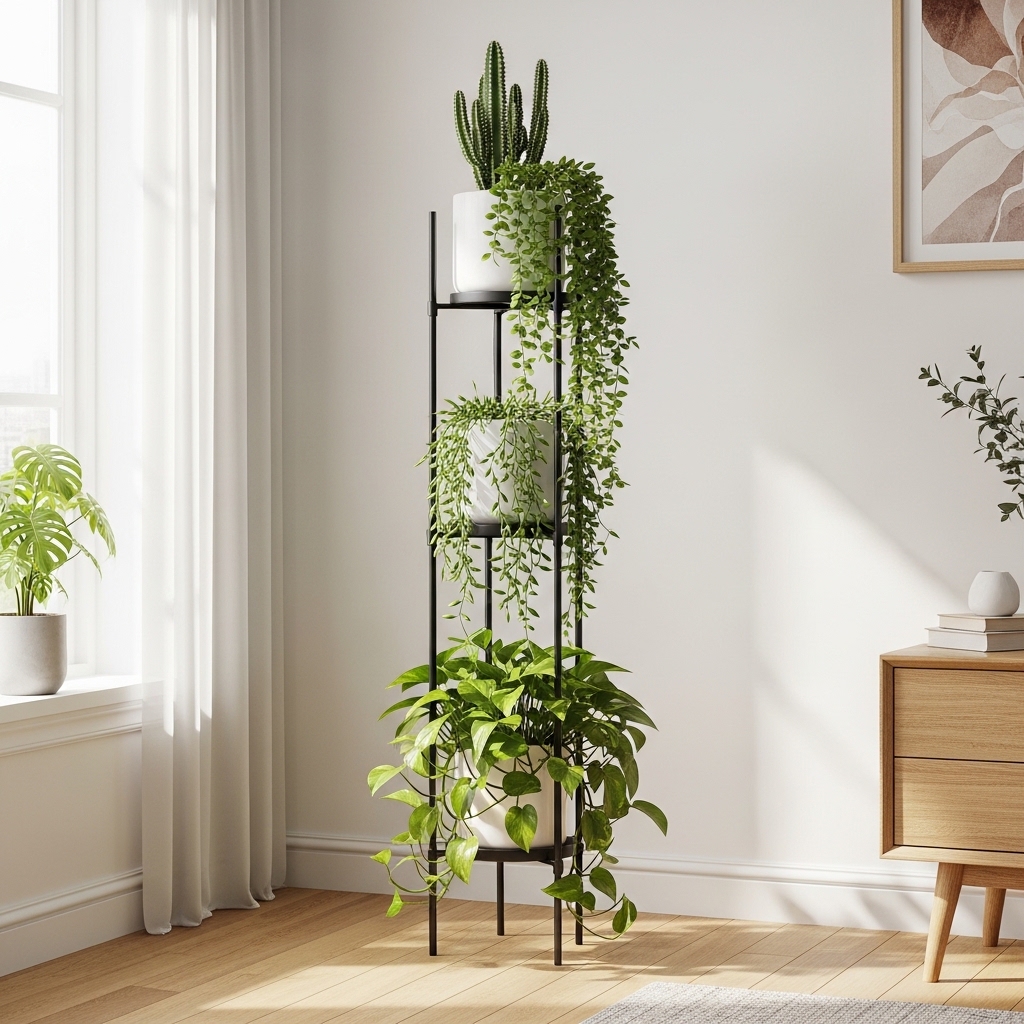
A tiered plant stand solves the single biggest challenge beginner plant owners face , displaying multiple plants beautifully in a very small floor footprint. A slim 3-tier metal stand holds 3 different plants at 3 different heights while occupying only about 12 square inches of floor space. Furthermore, arranging plants from smallest at the top to largest at the bottom creates a visually stable, pyramid-like silhouette that feels balanced and intentional. Additionally, tiered plant stands cost between $25 and $60 at most home goods retailers and arrive almost fully assembled. This indoor plant display idea works in living rooms, bedrooms, home offices, and any corner that needs a compact green statement instantly.
- Holds 3 plants in minimal floor space
- Creates balanced pyramid plant silhouette
- Costs only $25–$60 at home stores
- String-of-pearls trails beautifully from mid-tier
- Works in bedrooms and home offices
Choosing plants with complementary growth habits for each tier of your stand creates a dynamic, layered display that looks professionally styled. Place a slow-growing cactus or succulent at the top tier where it receives the most intense light. Moreover, position a trailing string-of-pearls or pothos at the middle tier so its vines cascade elegantly downward past the lower shelf. Additionally, anchor the bottom tier with a larger, bushy pothos or peace lily that fills the base and grounds the entire composition visually. I’ve seen this exact tiered plant arrangement completely transform an empty apartment corner into a lush, layered display that photographers frequently use as a background for lifestyle content. The impact genuinely surprises most beginners.
Open Kitchen Shelf Plants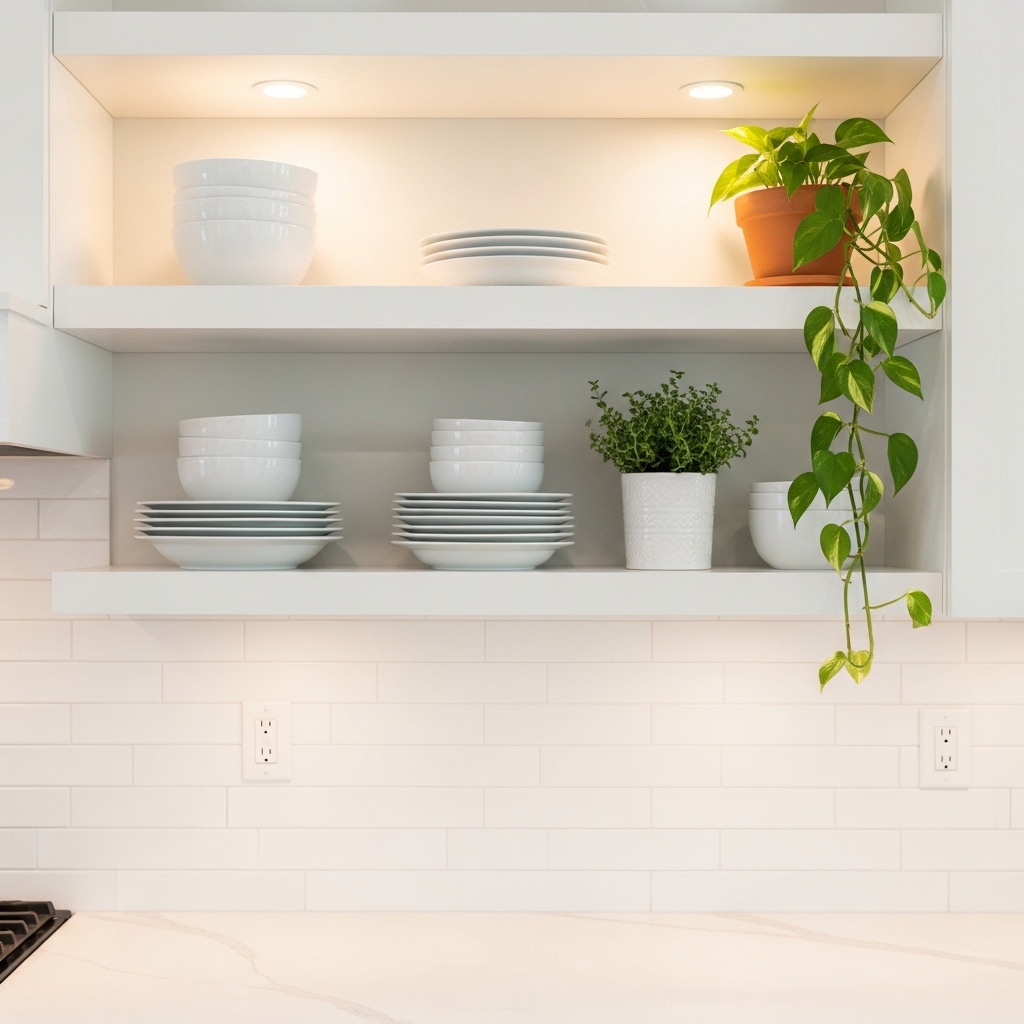
Open kitchen shelves offer a natural and functional home for small plants that blend beauty with everyday practical use. A small trailing pothos placed at the end of an open shelf adds a lush green detail that softens the hard edges of stacked dishes and rigid kitchen surfaces. Furthermore, fresh herb pots like basil or thyme on an open kitchen shelf provide both visual greenery and instant access to fresh cooking ingredients daily. Additionally, keeping kitchen shelf plants in lightweight ceramic pots prevents shelves from bowing under excessive weight over time. This plant placement tip works across farmhouse kitchens, modern apartment kitchens, and any open-shelf layout that currently feels flat and one-dimensional.
- Pothos softens hard kitchen shelf edges
- Fresh basil gives greenery plus flavor
- Lightweight ceramic pots protect shelves
- Trailing plants drape beautifully over edges
- Works in farmhouse and modern kitchens
Styling open kitchen shelf plants requires balancing greenery with the existing dishware and functional kitchen objects already living on those shelves. You never want plants to crowd out everyday items like plates, glasses, or small appliances that you reach for multiple times daily. Moreover, limiting each shelf to 1 or 2 small plants prevents the kitchen from feeling more like a greenhouse than a functional cooking space. Additionally, choosing plants with contained, upright growth habits , like small herbs or a compact aloe , keeps the shelf tidy and avoids trailing vines tangling with kitchen items. That’s why experienced home stylists always recommend a less-is-more approach when integrating plants into highly functional kitchen spaces.
Bedroom Dresser Plant Moment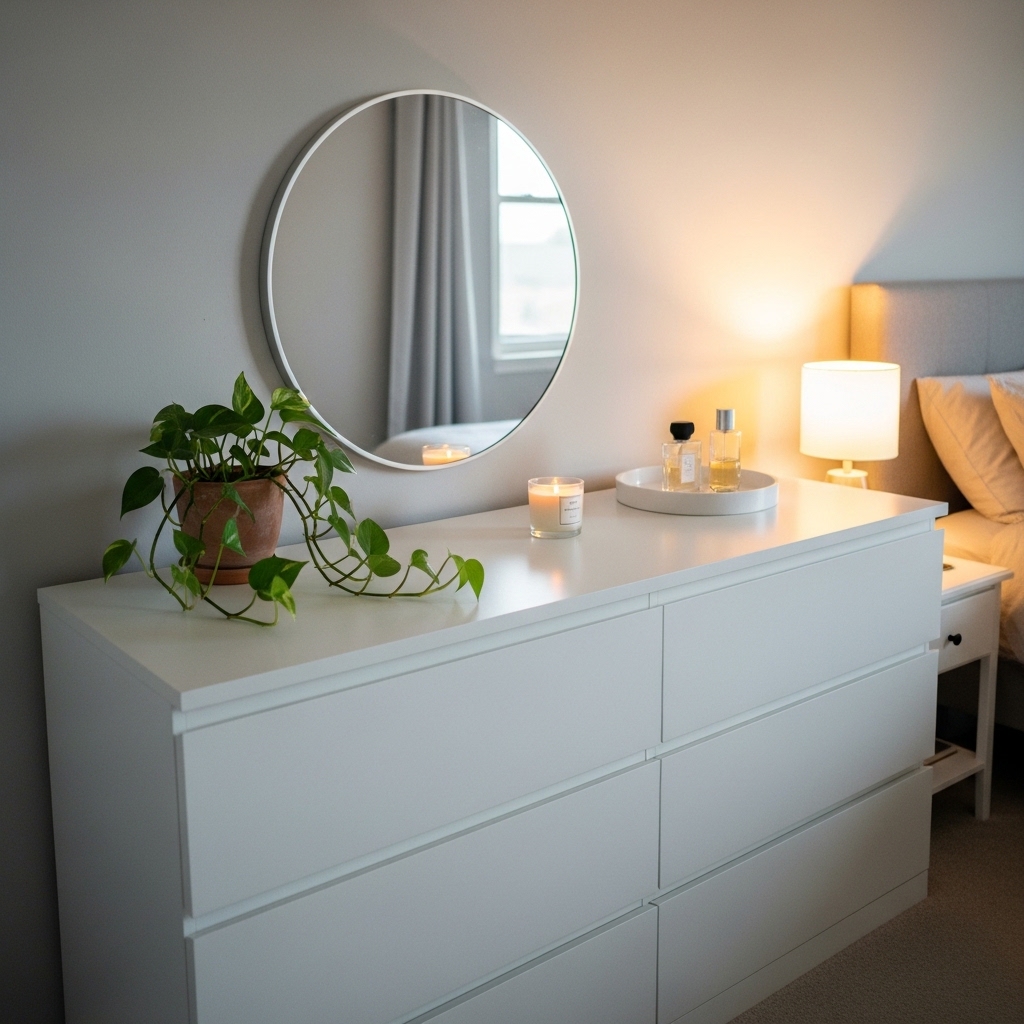
A bedroom dresser top offers valuable, often wasted styling real estate that one small plant can elevate instantly. Placing a trailing pothos or compact peace lily beside your mirror and perfume tray creates a complete, intentional vignette that feels curated and personal. Furthermore, the reflective surface of a dresser mirror doubles the visual impact of your plant by reflecting its lush green leaves back into the room. Additionally, this indoor plant placement idea works in primary bedrooms, guest rooms, and even teenager bedrooms where a dresser top already holds existing everyday objects. You simply add 1 plant to an arrangement you already have and the entire dresser display transforms immediately.
- Trailing pothos adds life to dresser tops
- Mirror reflection doubles the green impact
- Works beside perfume trays and candles
- One plant transforms the full dresser display
- Peace lily stays compact and stays tidy
Choosing the right size plant for a dresser top keeps the display proportional and prevents the plant from visually overpowering your mirror or personal items. A plant between 6 and 10 inches tall works perfectly on a standard dresser because it stays visible without blocking your reflection entirely. Moreover, using a matching terracotta or white ceramic pot that coordinates with your bedroom color palette keeps the plant feeling like a deliberate design decision rather than an afterthought. Additionally, placing the plant slightly off-center rather than directly in the middle of the dresser creates a more dynamic and organic composition. In my experience, this one small adjustment , off-center placement , makes an enormous difference in how polished and intentional the entire dresser vignette looks.
Sunroom Jungle Corner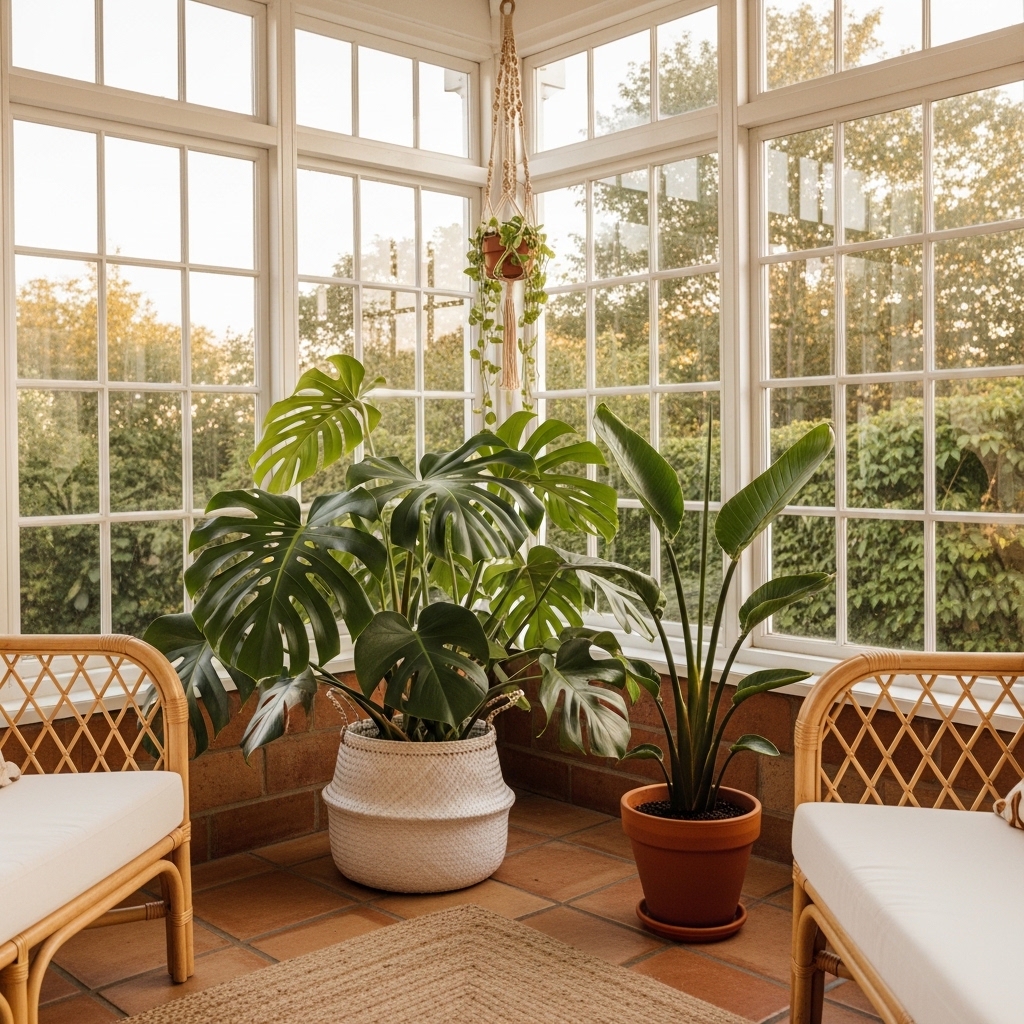
A sunroom naturally receives more direct light than any other room in the house, making it the single best location for building a bold, lush indoor jungle corner. Grouping large tropical plants like monstera, bird of paradise, and hanging string-of-hearts together in one bright corner creates an immersive green sanctuary that feels genuinely transportive. Furthermore, tropical plants grow faster and produce larger, more dramatic leaves when placed in the abundant natural light that sunrooms deliver throughout the entire day. Additionally, layering 3 plants of significantly different heights in a sunroom corner creates a full, magazine-worthy botanical display. This plant placement idea works in dedicated sunrooms, glass extensions, and bright enclosed porches across most USA home styles.
- Monstera thrives in bright sunroom light
- Bird of paradise grows dramatically fast here
- Layer 3 plants at very different heights
- Rattan furniture complements tropical plant aesthetics
- Creates an immersive green sanctuary corner
Building a sunroom jungle corner gradually prevents the common beginner mistake of buying too many plants at once without understanding their individual care needs. Start with 1 large anchor plant like a monstera and add 1 new plant every 3 to 4 weeks as you grow more comfortable. Moreover, grouping tropical plants together in a sunroom actually benefits their health because the plants collectively increase local humidity through natural transpiration. Additionally, sunroom floors benefit from a waterproof woven mat or terracotta tile beneath your plant cluster to protect surfaces from drainage water. That’s why many experienced plant collectors describe their sunroom jungle corner as the most rewarding and joyful space in their entire home. The growth rate and visual transformation genuinely astonish most first-time jungle builders.
Neutral Toned Shelf Vignette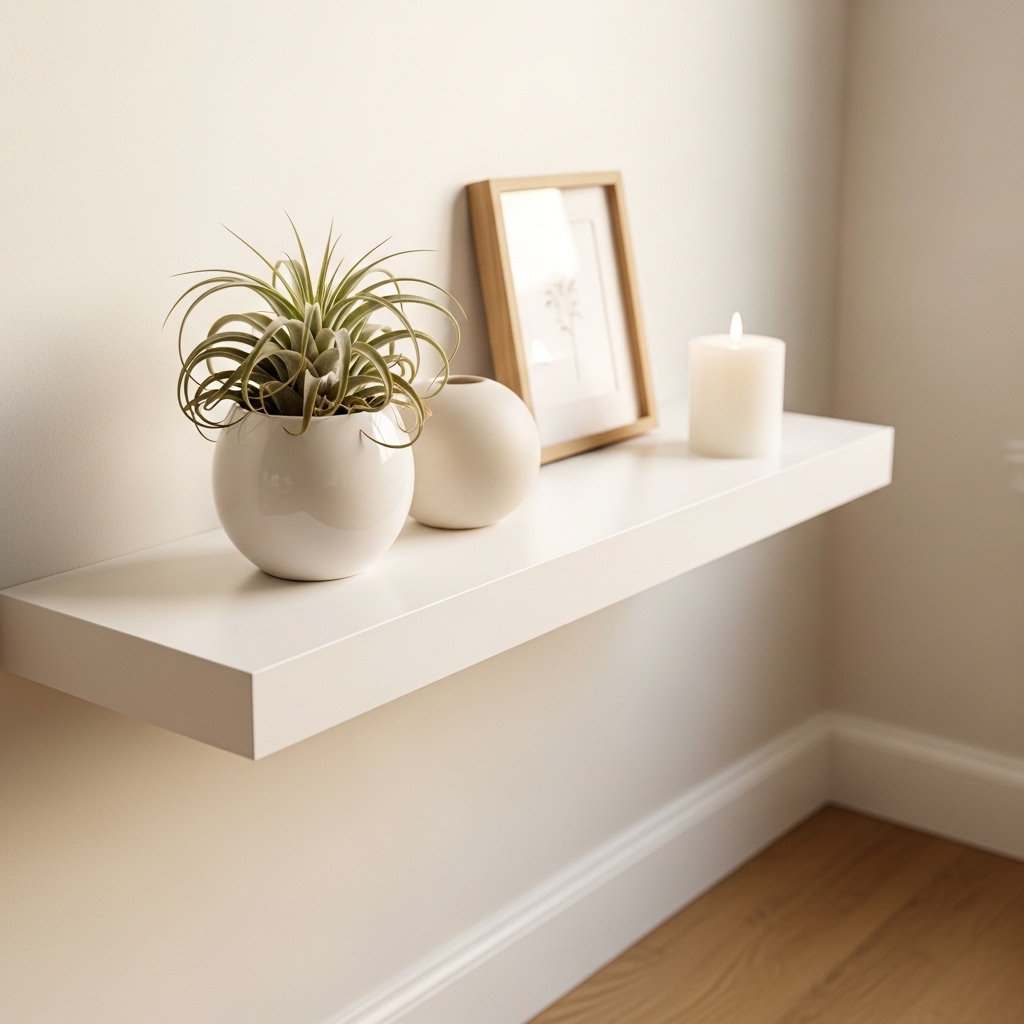
A neutral toned shelf vignette proves that a single air plant can anchor an entire decorative display without any extra effort or investment. Pairing an air plant in a clean white ceramic holder with 2 or 3 complementary neutral objects creates a shelf moment that feels curated, calm, and deliberately styled. Furthermore, air plants require no soil, no drainage holes, and no mess, making them the most maintenance-free option for beautifully styled shelf displays. Additionally, this beginner-friendly indoor plant placement idea suits minimalist, Japandi, Scandinavian, and neutral farmhouse aesthetics equally well without modification. You achieve a polished, pinnable shelf display in under 5 minutes using items you likely already own throughout your home.
- Air plants need zero soil or drainage
- Pair with cream objects for cohesive vignette
- Suits minimalist and Japandi aesthetics
- Achieves polished display in under 5 minutes
- Use objects you already own at home
Refreshing a neutral shelf vignette seasonally keeps your living room feeling current without requiring a full room makeover. You swap the air plant holder for a small bud vase with a fresh eucalyptus stem in spring, or add a tiny pinecone cluster in winter beside your existing ceramic objects. Moreover, the base neutral objects , white candle, round ceramic, minimal framed print , stay constant across every seasonal update, which saves money and reduces decision fatigue significantly. Additionally, keeping the shelf intentionally minimal with only 3 to 4 objects total prevents visual clutter and maintains the clean, breathable aesthetic that makes neutral vignettes so universally appealing. That’s why this approach remains a favorite among beginner decorators and experienced interior stylists alike.
Conclusion
Every beautiful, plant-filled home you admire on Pinterest started with one single plant placed in one single spot. These beginner friendly indoor plant placement tips prove that you do not need expertise, money, or a perfect home to start. You simply need one good idea and the confidence to try it. Furthermore, small changes like a pothos on a shelf or a snake plant on a nightstand create real, lasting transformation in any space. I’ve seen how the right plant in the right spot completely shifts a room’s energy and warmth. Save this post, try one idea today, and share it with a friend who needs this inspiration.
Frequently Asked Questions
What is the easiest indoor plant for a complete beginner?
The pothos plant is the easiest option for beginners. It survives low light, irregular watering, and most indoor environments without complaint. You can grow it in water or soil. It trails beautifully from shelves and hangers. Most garden stores sell pothos for under $10.
Where should I place indoor plants in a small apartment?
Use vertical spaces first. Window sills, floating shelves, hanging macramé planters, and bookshelf edges work perfectly in small apartments. Additionally, tiered plant stands hold 3 plants while occupying only 12 square inches of floor space. You maximize greenery without sacrificing any living area.
How do I keep indoor plants alive as a beginner?
Water plants only when the top inch of soil feels dry to the touch. Most beginner plants die from overwatering, not underwatering. Furthermore, place plants near a natural light source. Choose low-maintenance varieties like snake plants, ZZ plants, and pothos as your starting collection.
Can I have indoor plant in a room with no windows?
Yes. Air plants and pothos survive under cool-spectrum LED artificial lighting without any natural sunlight. Additionally, bathroom vanity lights provide enough spectrum to sustain air plants in windowless spaces. You simply soak air plants in water for 20 minutes every 7 days to keep them thriving.
How many plants should a beginner start with?
Start with 3 plants maximum. Buying too many plants at once overwhelms beginners and increases the chance of losing plants to incorrect care. Choose 3 low-maintenance varieties with similar watering schedules. Furthermore, add 1 new plant every 3 to 4 weeks as your confidence and knowledge grow steadily.
Do indoor plant really improve air quality at home?
Yes, studies confirm that indoor plants reduce airborne toxins like formaldehyde and benzene measurably. Spider plants, peace lilies, and snake plants perform especially well as natural air filters. Moreover, plants increase humidity slightly, which benefits dry indoor environments during winter heating months significantly.
What pots work best for beginner indoor plants?
Terracotta pots work best for most beginner plants because they allow excess moisture to evaporate through the walls naturally. This fast drainage prevents root rot, which is the most common beginner mistake. Additionally, always choose a pot with a drainage hole at the bottom regardless of material.