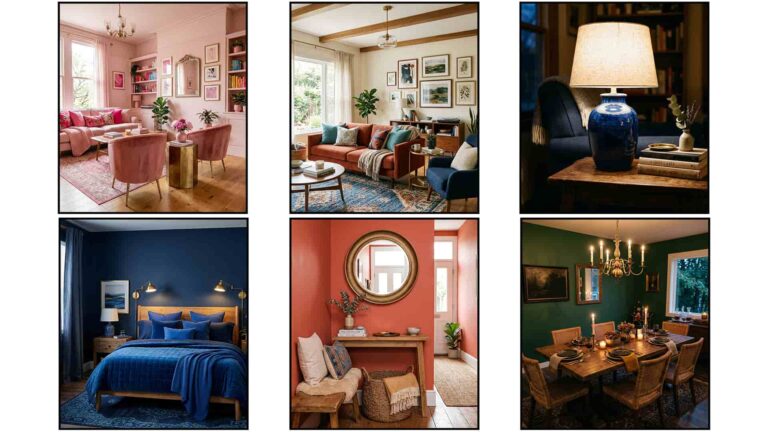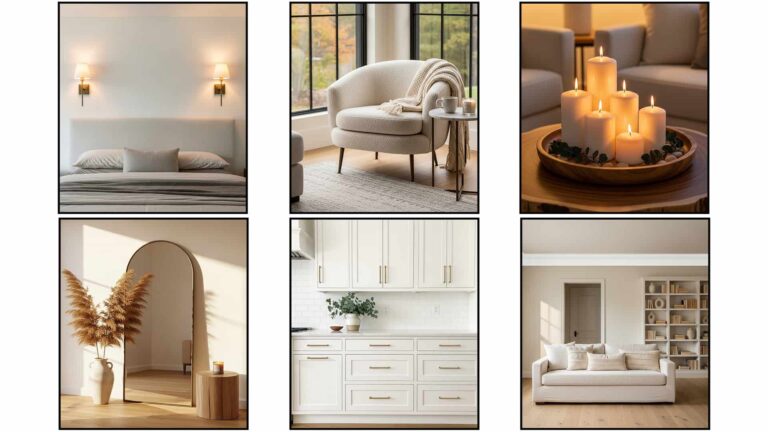
28 Brilliant living room organization ideas For 2026
Your living room is the heart of your home , yet for most people, it quietly becomes the most cluttered room in the house. Bags land on the sofa. Remotes disappear into cushions. Books pile up on every flat surface. You walk in after a long day and instead of feeling calm, you feel overwhelmed. Sound familiar? You are not alone.
The truth is, a disorganized living room does not reflect a messy person , it reflects a room that lacks the right living room organization ideas. I’ve noticed that most cluttered living rooms are not short on space. They are short on smart, purposeful storage solutions that fit the way real families actually live.
Experienced interior designers and professional home organizers understand this deeply. They know that the right furniture placement, the right storage pieces, and the right styling habits can completely transform how a living room looks and feels every single day. You do not need a full renovation. You do not need a large budget. You need the right ideas applied in the right places.
This article covers 28 brilliant, practical, and visually stunning room organization ideas for 2026. Every single idea is beginner-friendly, budget-conscious, and designed to create a real, lasting difference in your home. Start reading, save your favorites, and prepare to fall in love with your living room again.
Floating Wall Shelves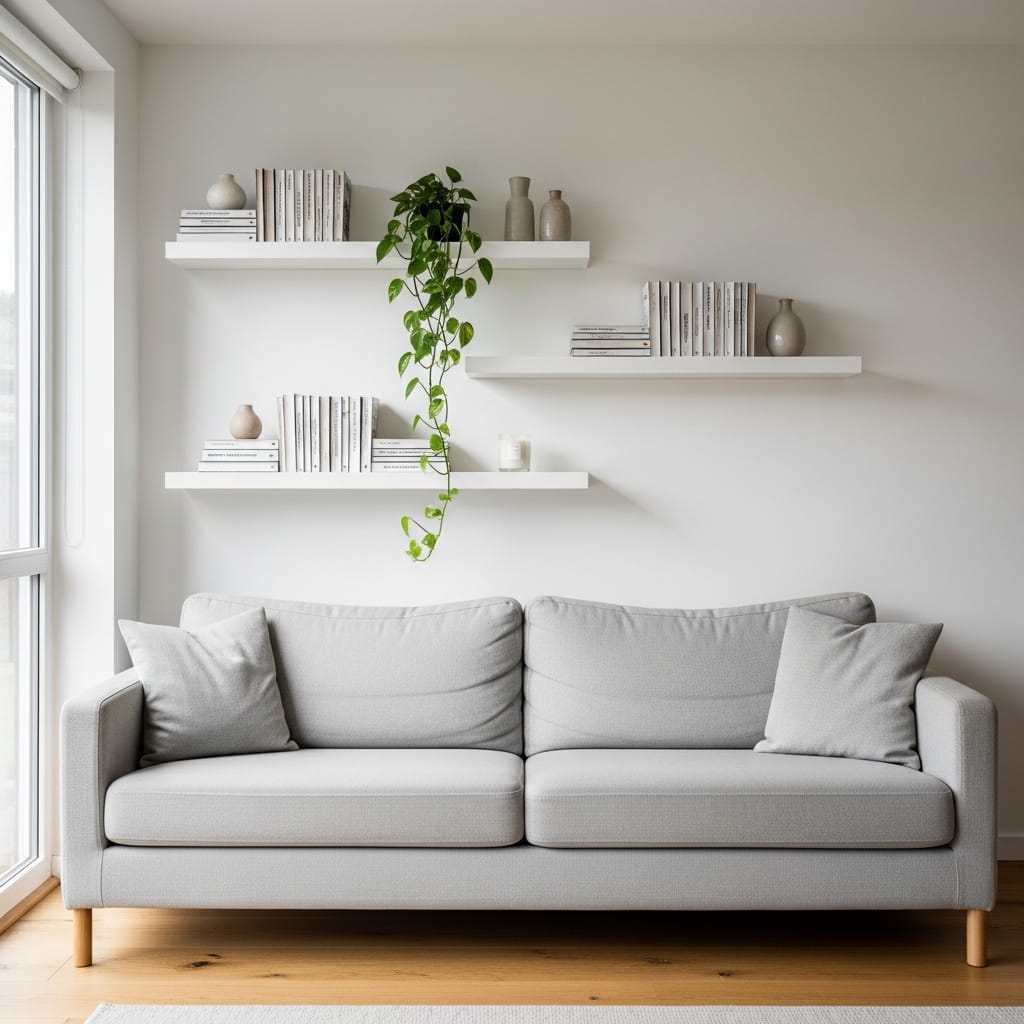
Floating wall shelves are one of the smartest living room organization ideas because they use vertical wall space that most people completely ignore. You display books, plants, and small decor items at eye level without consuming a single inch of floor space. This storage solution suits small apartments, rental homes, and any living room where floor space feels limited or precious.
White or light oak floating shelves suit almost every living room color palette because their neutral tone connects naturally to both warm and cool interior color schemes. You install three shelves at staggered heights to create visual movement on an otherwise flat wall surface. That staggered arrangement prevents the shelves from looking like office storage and keeps the living room feeling styled and intentional.
- Adds vertical storage without floor clutter
- Displays books and decor at eye level
- Suits small apartment living room layouts
- Staggered heights create visual interest
- Rental-friendly with simple bracket installation
Trailing plants on floating shelves add a living organic element to the storage display that makes the wall feel genuinely warm and alive. A single pothos or philodendron in a small ceramic pot on the top shelf costs under fifteen dollars and grows beautifully in indoor conditions. I’ve noticed that living room walls with at least one plant on the shelves consistently look more welcoming and finished than shelves styled with objects alone.
The key to beautiful floating shelf styling is the rule of three , group items in sets of three at varying heights within each shelf level. One tall object, one medium object, and one small object per shelf grouping creates a naturally balanced vignette that looks curated rather than cluttered. That simple styling rule takes under ten minutes to apply and makes a dramatic difference to how organized and intentional the entire living room wall looks.
Storage Ottoman Coffee Table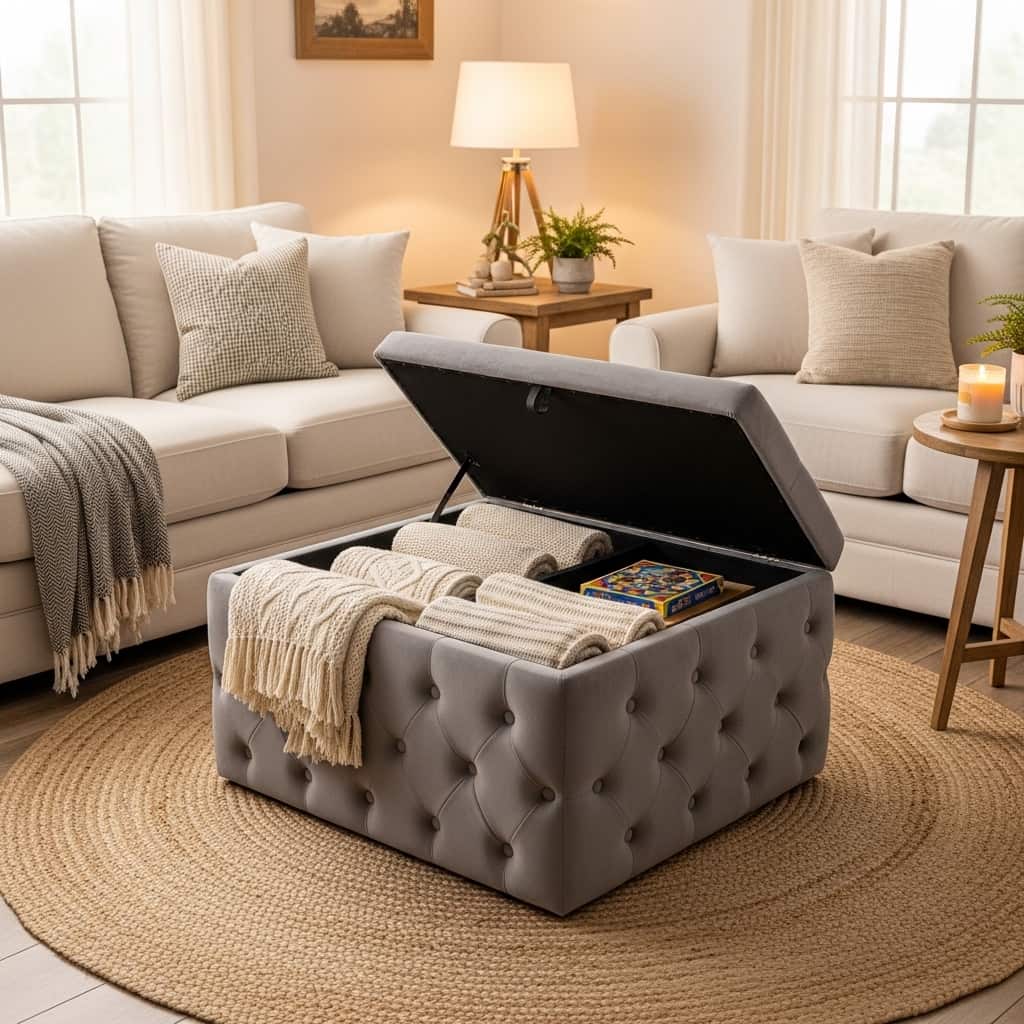
A storage ottoman used as a coffee table solves two living room problems at once , it provides a central surface for drinks and books while hiding blankets, board games, and remote controls inside its lidded base. The hidden interior storage keeps everyday clutter completely out of sight without requiring any additional furniture piece in the room. This dual-function furniture idea suits living rooms of every size but delivers the most dramatic impact in compact spaces.
A large square velvet ottoman in a neutral gray or cream tone suits both contemporary and farmhouse living room aesthetics equally well. You add a simple wooden tray on top of the ottoman surface to create a stable flat area for drinks, candles, and a small vase. That tray-on-ottoman styling technique is one of the most widely recommended living room organization tips because it makes a soft ottoman function practically as a rigid coffee table surface.
- Hides blankets and remotes inside the base
- Tray on top creates stable coffee table surface
- Dual-function piece saves valuable floor space
- Velvet or linen finish suits any living room style
- Perfect for small living room furniture layouts
A round woven jute rug under the storage ottoman anchors the central seating area and grounds the soft ottoman piece with a natural textural contrast at floor level. The jute rug’s warm brown fiber tone connects naturally to warm wood tones throughout the living room and adds an organic, layered quality to the central seating zone. That rug-and-ottoman pairing at the center of the room creates a clearly defined gathering area that makes even an open-plan living space feel purposefully arranged.
I’ve seen this single furniture swap , replacing a standard coffee table with a storage ottoman , completely change how a cluttered living room functions on a daily basis. The hidden storage capacity of a large ottoman typically holds six to eight folded throws, two board games, and a full remote control collection. That storage volume replaces the need for a separate blanket basket or media console drawer in many compact living rooms.
Built-In Bookcase Wall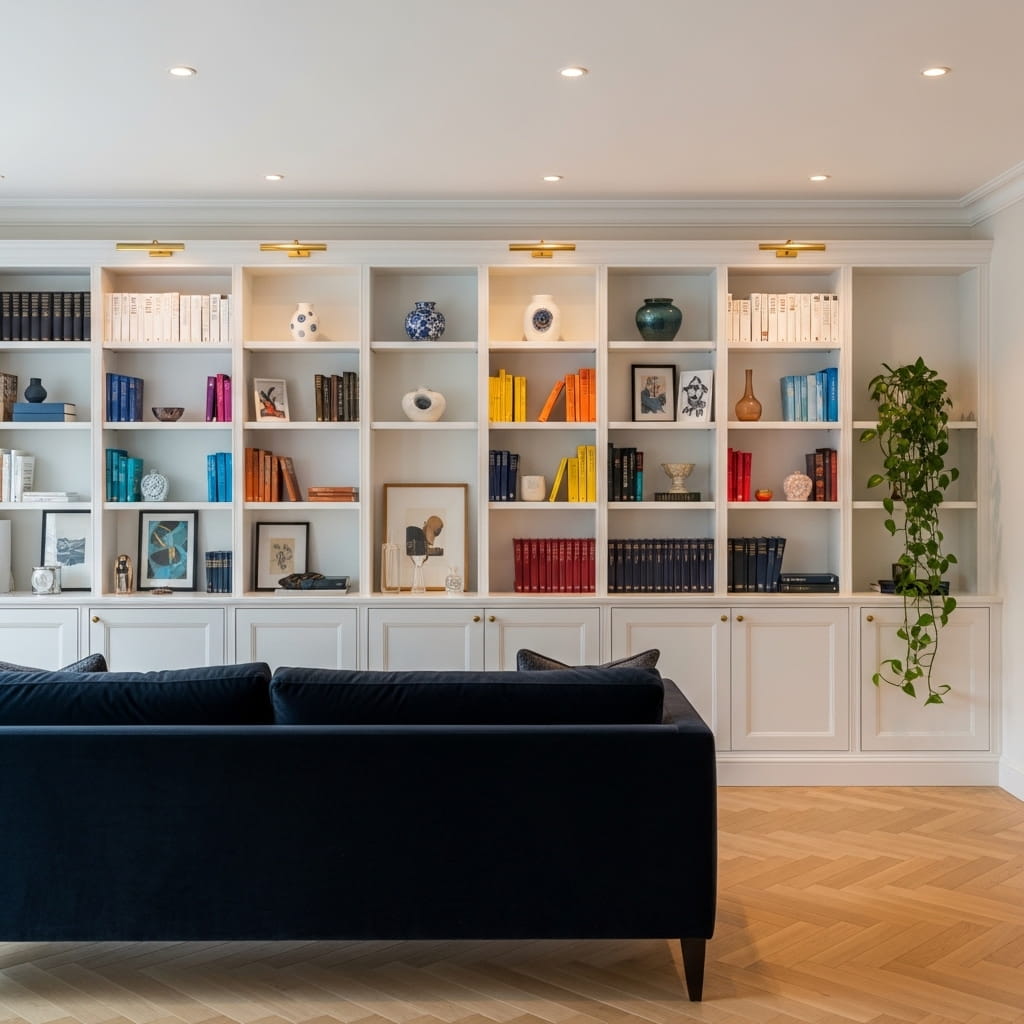
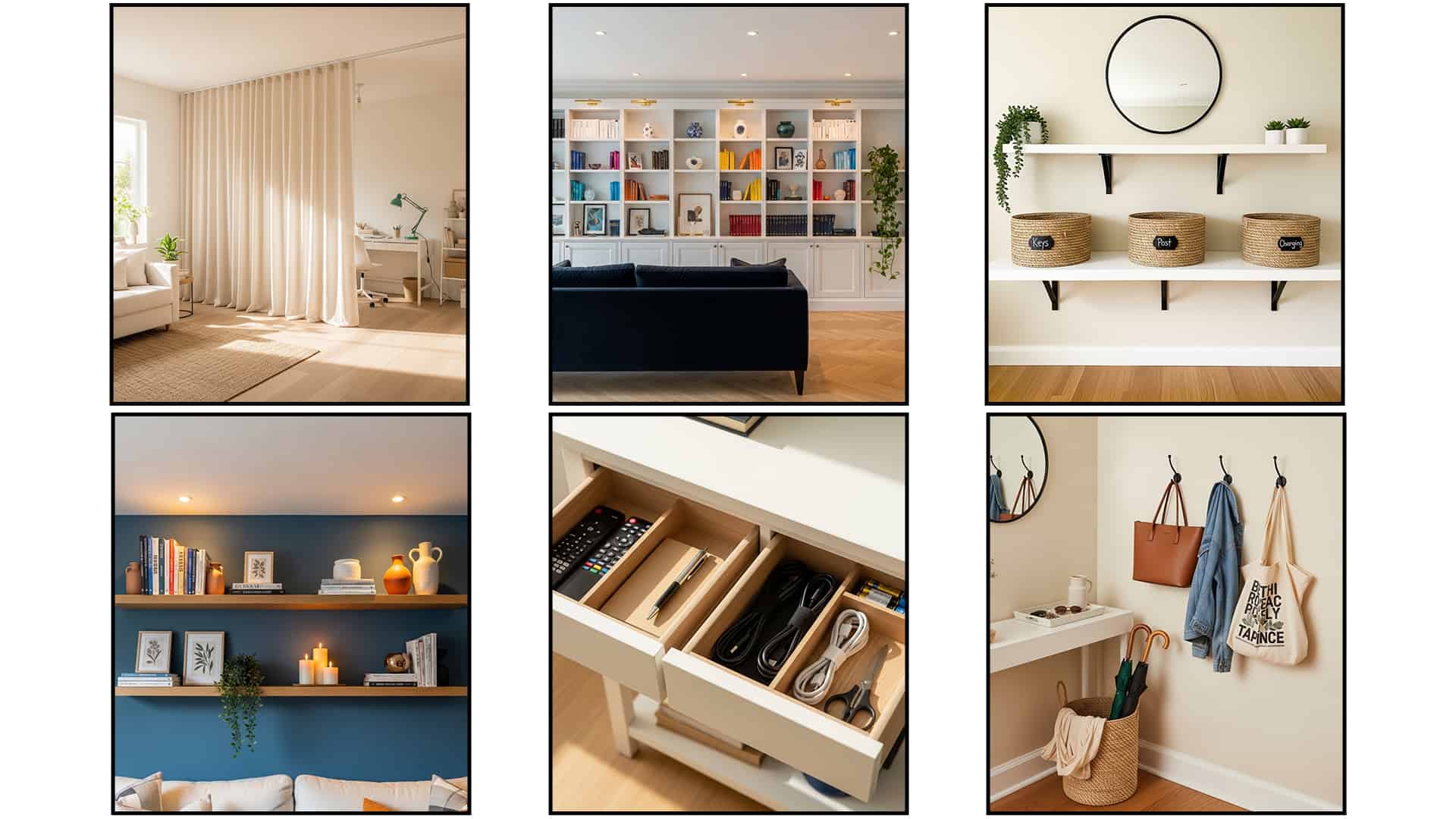
A floor-to-ceiling built-in bookcase wall creates the most storage capacity available in a living room without consuming any additional floor footprint beyond the wall depth it occupies. The full-wall bookcase stores hundreds of books, dozens of decorative objects, and all media equipment within a single, architecturally integrated structure that becomes the most visually dominant and impressive feature in the room. This living room storage idea suits both large formal living rooms and compact open-plan apartments.
Color-coordinating the books on the built-in shelves , arranging them in gradients from white through cream, yellow, orange, red, and deep navy , creates a visually striking display that makes the bookcase wall look like a designed installation rather than a random book collection. That color-gradient book organization technique takes approximately ninety minutes to apply and transforms a standard bookcase into a Pinterest-worthy living room feature wall.
- Floor-to-ceiling shelves maximize vertical wall storage
- Color-coordinated books create gallery-worthy display
- Houses books, decor, and media equipment together
- Built-in design adds architectural value to the home
- Perfect for living rooms with high ceilings
Warm recessed ceiling lighting above the bookcase wall illuminates the shelves from above and creates a soft, even light distribution across the full height of the bookcase display. That overhead shelf lighting makes the bookcase visible and beautiful during evening hours and turns the entire wall into a warm, glowing focal point when natural light fades. I’ve noticed that lit bookcases in living rooms consistently generate the most positive reactions from guests and visitors in real homes.
A deep navy velvet sofa positioned in front of the white built-in bookcase creates a bold color contrast between the rich dark sofa and the bright white shelving behind it. The navy sofa makes the white bookcase look even crisper and more architectural in contrast, while the white shelving makes the navy velvet look richer and more saturated. That deliberate color contrast between the sofa and the bookcase wall is one of the most effective living room styling combinations trending across USA interiors in 2026.
Media Console With Drawers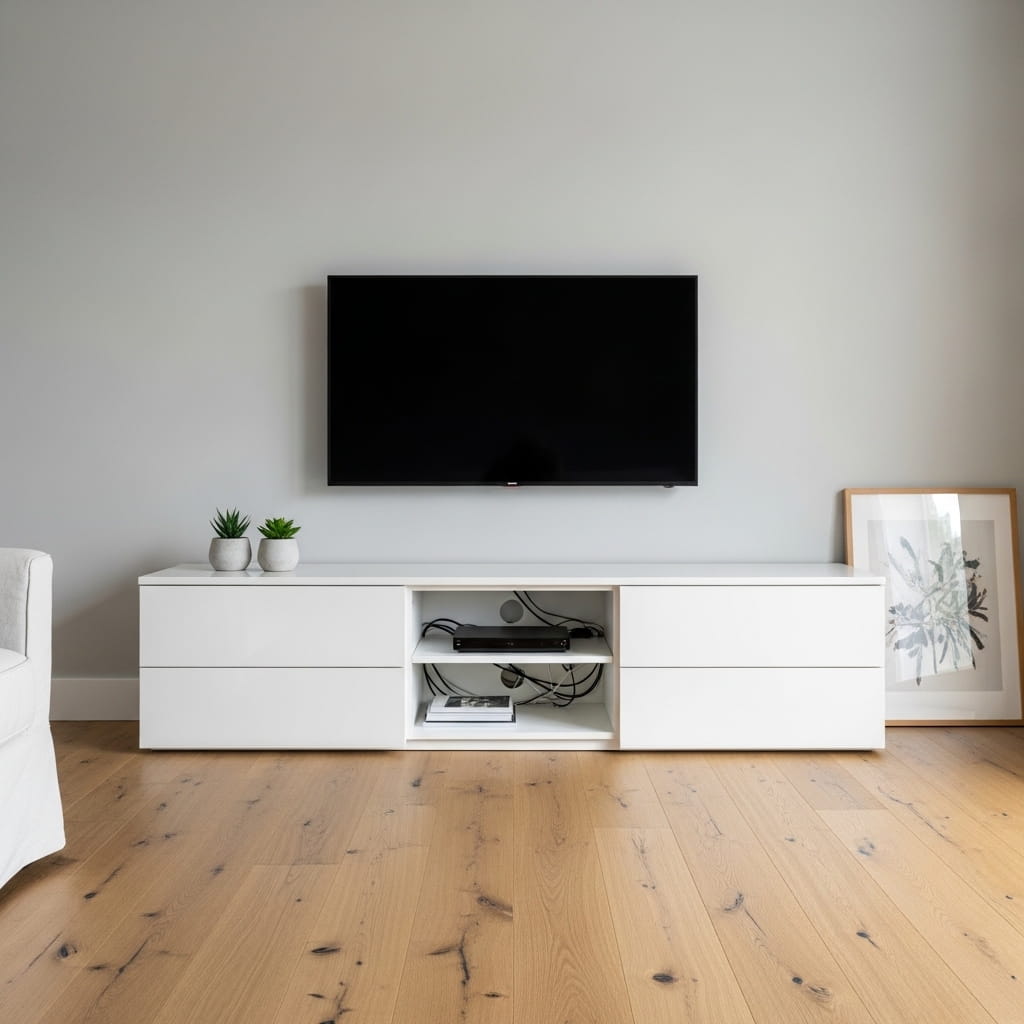
A low-profile media console with drawers creates a dedicated organizational hub for every living room electronic item , remote controls, gaming controllers, charging cables, streaming device accessories, and DVD collections , in a single piece of furniture that hides clutter behind clean drawer faces. The open center shelving accommodates the cable box and streaming devices while keeping them accessible, while the drawers contain everything else out of sight.
Choosing a media console in white or light oak finish keeps the TV wall looking clean and visually light rather than heavy and furniture-dominated. A console that sits low to the floor , under twenty inches in height , makes the TV wall feel taller and the room feel more spacious by keeping the visual weight of the furniture in the lower third of the wall. That low-profile silhouette is one of the key furniture choices that makes a living room feel designed rather than simply furnished.
- Drawers hide remotes and cables completely
- Open shelving keeps media devices accessible
- Low-profile height makes rooms feel taller
- White or oak finish suits any living room palette
- Solves the living room cable management problem
Proper cable management behind the media console is one of the most underrated living room organization upgrades available. You use simple cable clips or a fabric cable sleeve to bundle all TV, streaming, and speaker cables into one clean group routed along the back of the console. That single cable organization step takes under thirty minutes and removes the most visually disruptive element from the entire TV wall.
Two small potted succulents on the media console surface add a natural, organic detail at the base of the TV wall that softens the hard electronic surfaces above them. The succulents require minimal maintenance , watering once every two weeks , and add a living green element to the console styling that makes the entire TV wall feel warmer and more personal. A leaning art print beside the console adds a second decorative layer without requiring any wall mounting.
Woven Basket Collection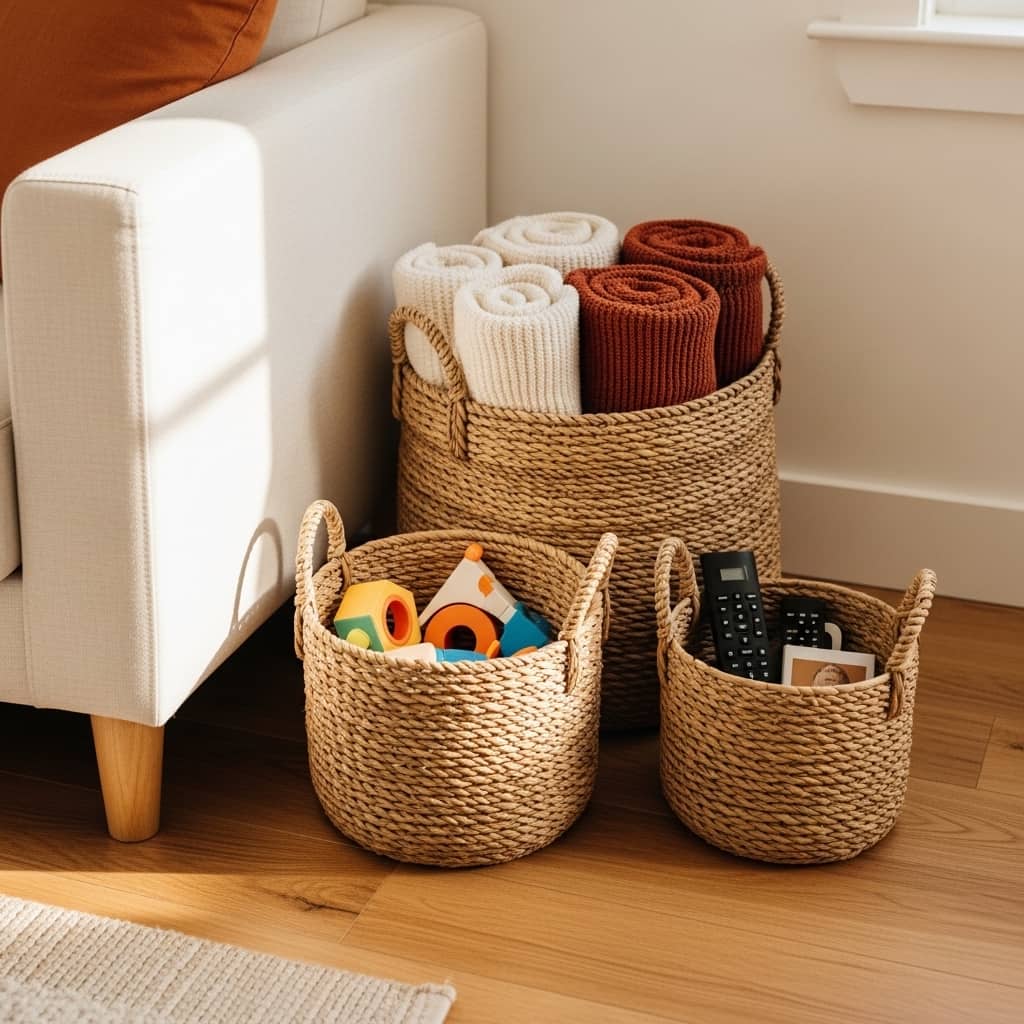
Woven baskets are the most affordable, flexible, and visually warm living room storage solution available because they store everything from blankets and toys to books and remotes while actively enhancing the room’s organic, natural aesthetic at the same time. Unlike plastic bins or rigid boxes, woven seagrass or rattan baskets look intentionally decorative on the living room floor and belong naturally to warm, organic modern, farmhouse, and coastal interior styles.
Grouping three baskets in graduating sizes , large, medium, and small , beside the sofa or in a living room corner creates a styled vignette that looks like a deliberate decor choice rather than a storage solution. That size-graduated basket grouping is one of the most widely shared living room storage tips across Pinterest home decor content and suits every budget because quality seagrass baskets cost between twelve and forty dollars each.
- Natural baskets add warm organic room texture
- Graduated sizes create styled storage grouping
- Hides toys, blankets, and remote collections
- Suits farmhouse, coastal, and organic modern styles
- Budget-friendly at $12–$40 per basket
A large woven basket beside the sofa holding four to six neatly rolled knit throws creates a practical blanket storage solution that also functions as a rich textural accent piece at floor level. The rolled throws in cream, rust, and terracotta tones visible above the basket rim add a layer of warm color and soft material interest to the living room corner. That visible-but-organized storage approach makes the living room feel intentionally styled rather than casually organized.
That’s why many stylists recommend woven baskets as the first storage purchase for any living room declutter project. They require zero installation, work in rental homes and owned properties equally, and hide a significant volume of everyday clutter in an aesthetically attractive format. A set of three graduated baskets can store an entire family’s collection of remote controls, throw blankets, and children’s small toys simultaneously.
Corner Ladder Shelf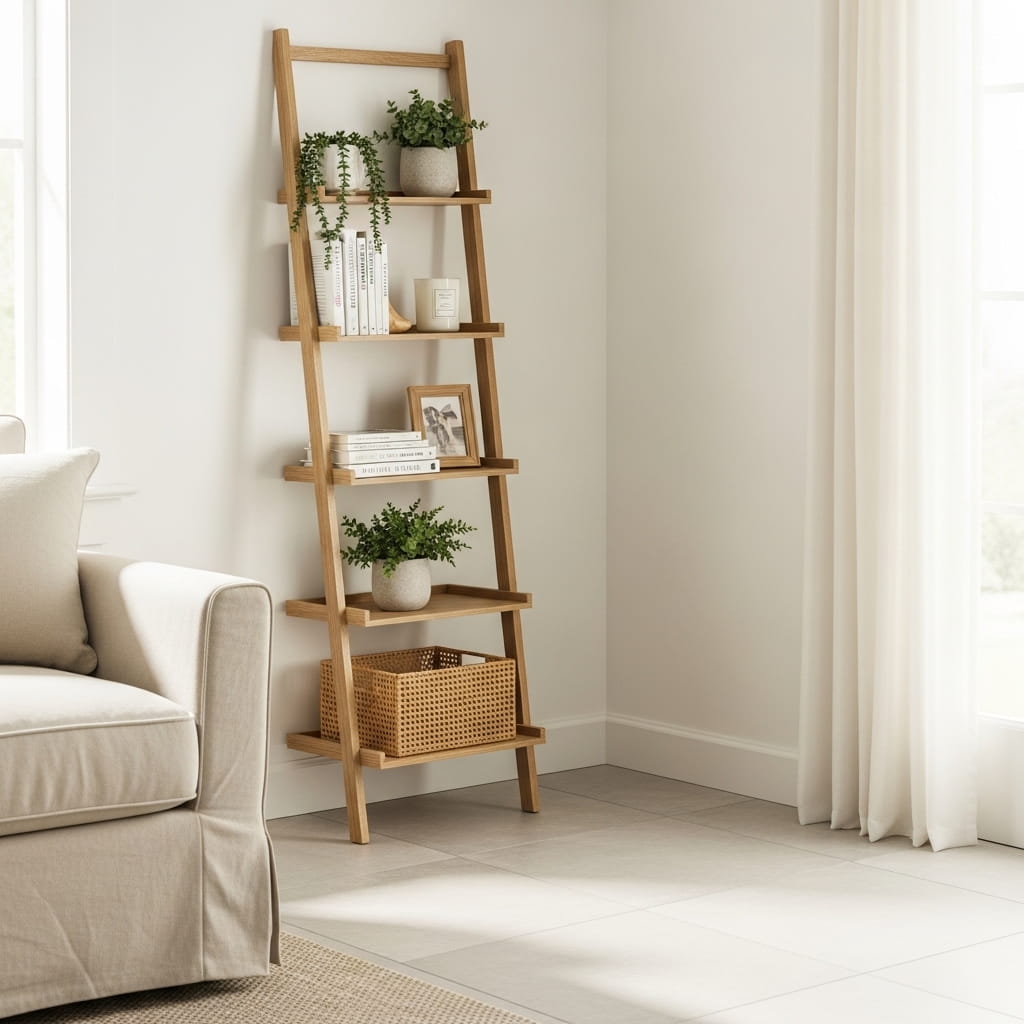
A corner ladder shelf transforms one of the most underused areas of any living room , the corner , into a functional, visually attractive multi-level display and storage zone. The ladder shelf’s leaning format requires zero wall mounting and no tools for installation, making it one of the most rental-friendly living room storage solutions available. This compact storage idea suits small apartment living rooms particularly well because it occupies only the small triangular floor area immediately at the wall corner.
Natural oak or warm wood ladder shelves suit Scandinavian, organic modern, and farmhouse living room aesthetics with equal visual ease. You style the five rungs with a mix of small potted plants, books, a ceramic candle, and one woven basket on the bottom rung for practical storage. That mixed-content styling , plants plus books plus objects plus basket , creates a layered, personal display that makes the corner feel like a curated lifestyle vignette.
- Uses corner space most living rooms ignore
- No wall mounting required for installation
- Five rungs hold plants, books, and small objects
- Rental-friendly and easily relocatable
- Suits Scandinavian and organic modern rooms
A small woven rattan basket on the bottom rung of the ladder shelf provides a practical hidden storage spot for items that don’t belong on display , phone chargers, small notebooks, and spare batteries. The basket’s natural woven texture at the base of the ladder shelf adds organic warmth at floor level and connects the shelf visually to any woven rug or natural fiber accessory nearby in the living room. That tactile material connection between the shelf base and the floor creates a grounded, finished quality in the corner arrangement.
Small potted plants on the upper rungs of the ladder shelf add living vertical greenery that draws the eye upward and makes the ceiling feel higher than it actually measures. Three small succulent or trailing ivy plants on the top two rungs cost under twenty dollars total and create a vibrant, natural atmosphere in the living room corner that no artificial plant can replicate. Those living green accents on the ladder shelf are what make the corner feel genuinely fresh and alive.
Under-Sofa Drawer Storage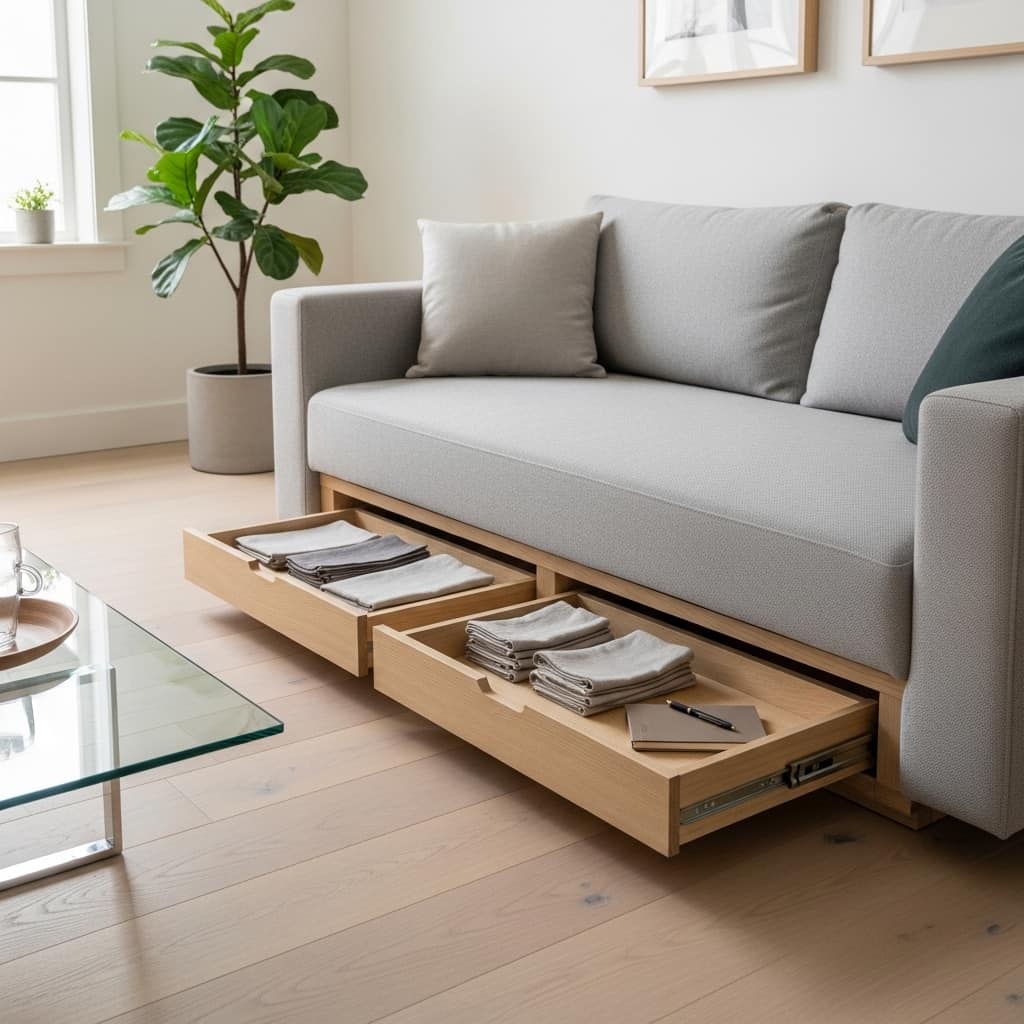
The space under the sofa is one of the most overlooked and wasted storage zones in any living room , and a platform sofa with integrated pull-out drawer units turns that wasted cavity into a genuinely useful hidden storage area for frequently used items. Under-sofa drawers work best for storing items you need close to the sofa but don’t want visible , spare linen napkins for hosting, reading glasses, a small notebook, and extra phone charging cables.
Platform sofas with built-in under-seat storage are one of the defining furniture trends for organized living rooms in 2026 because they combine sleek, low-profile sofa aesthetics with practical concealed storage in a single furniture piece. The pull-out drawer format suits items that need regular access but shouldn’t occupy visible shelf or basket space in the main living room. That combination of aesthetic cleanliness and genuine practicality is what makes under-sofa storage so effective in daily living.
- Uses wasted under-sofa floor space effectively
- Pull-out drawers provide accessible hidden storage
- Suits items needing daily but discreet access
- Low-profile platform sofa looks modern and clean
- Perfect for small living room organization needs
A minimal glass coffee table above the open sofa base allows the under-sofa drawer units to remain visible and accessible without any visual obstruction from heavy coffee table legs blocking the drawer pull handles. The transparency of the glass tabletop also maintains the open, airy floor plane of the living room without adding visual weight at the center of the seating area. That combination of glass table and low platform sofa creates a living room floor zone that feels genuinely light and spacious.
A single large fiddle leaf fig in a tall ceramic pot in the living room corner draws the eye away from the organized furniture base and upward toward the room’s natural light source. The tall fig plant adds a dramatic organic focal point that prevents the clean, minimal room from feeling sterile or over-organized. In my experience, one large architectural plant in a well-organized living room creates the perfect balance between deliberate order and natural, living warmth.
Gallery Wall With Hooks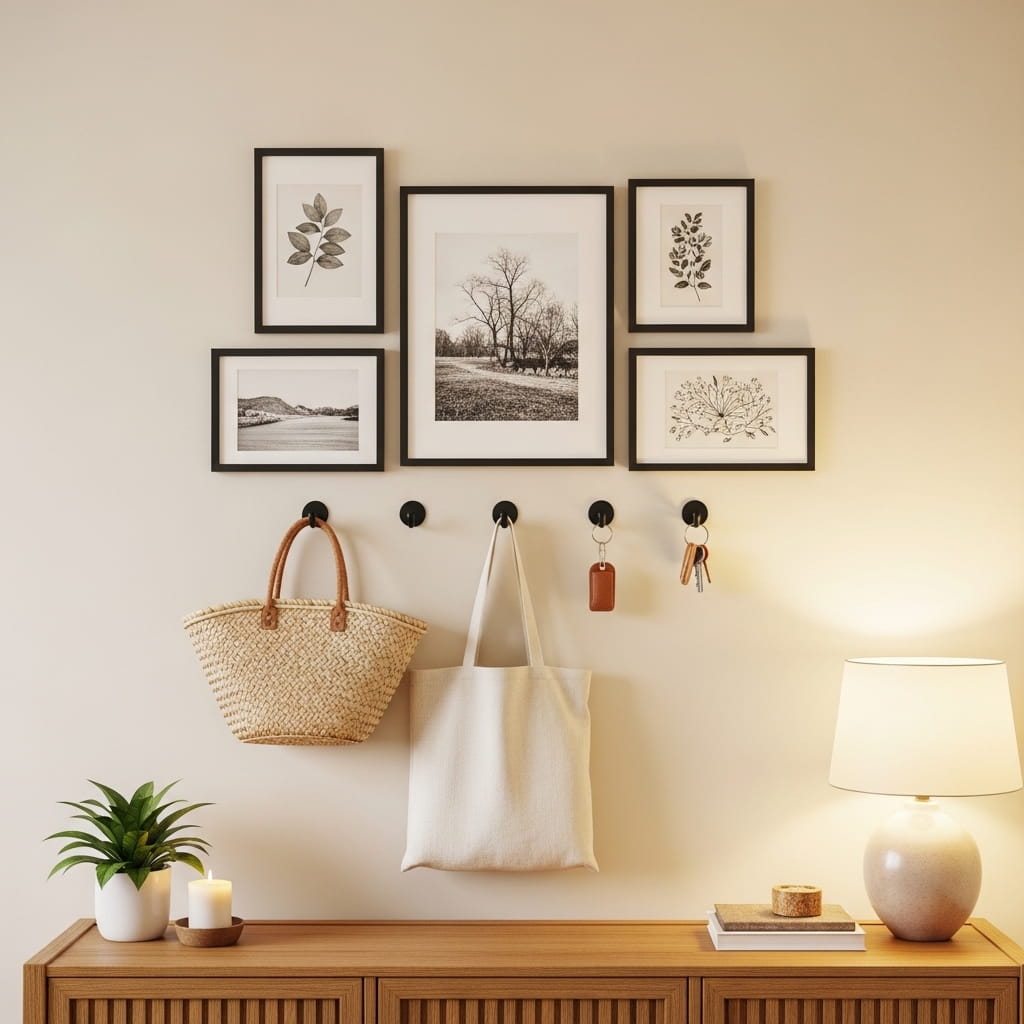
A gallery wall combined with matte black wall hooks below the frames creates a dual-purpose living room wall that serves both as a decorative art display and a practical everyday storage surface for bags, hats, keys, and reusable totes. The gallery frames above give the hooks visual context and make them look like a deliberate design choice rather than a simple functional addition to the wall. This living room wall organization idea works especially well on the wall beside the main living room entrance.
Five frames in matching black matte finishes at varying sizes , two large, two medium, and one small , create a cohesive, gallery-style arrangement that looks professionally installed without requiring a designer’s help. You center the overall arrangement at eye level and space each frame between two and four inches apart for a clean, intentional gallery look. That consistent frame finish and eye-level centering are the two most important rules for a gallery wall that looks curated rather than randomly assembled.
- Hooks below frames make wall fully functional
- Matching black frames create cohesive gallery look
- Stores bags, hats, and keys attractively
- Works best beside the living room entrance
- Matte black hooks suit any wall color easily
A warm oak console table positioned directly below the gallery wall and hook arrangement creates a three-level storage vignette , art above, hooks in the middle, and console surface below , that turns one living room wall into a completely organized functional zone. The console surface holds a small tray for keys and mail, a plant, and a candle, while the drawers below store the items that don’t belong on display. That layered wall-to-floor storage system makes the living room entrance area feel genuinely organized and beautifully styled simultaneously.
I’ve seen this gallery-plus-hooks wall concept completely resolve the “dumping ground” problem that most living room entryways develop over time , bags drop on the floor, keys disappear, and daily accessories pile up on every available surface. Three dedicated hooks below a beautiful gallery arrangement give every daily-use item a designated and visible home that encourages consistent use and keeps the living room floor permanently clear.
Modular Cube Shelving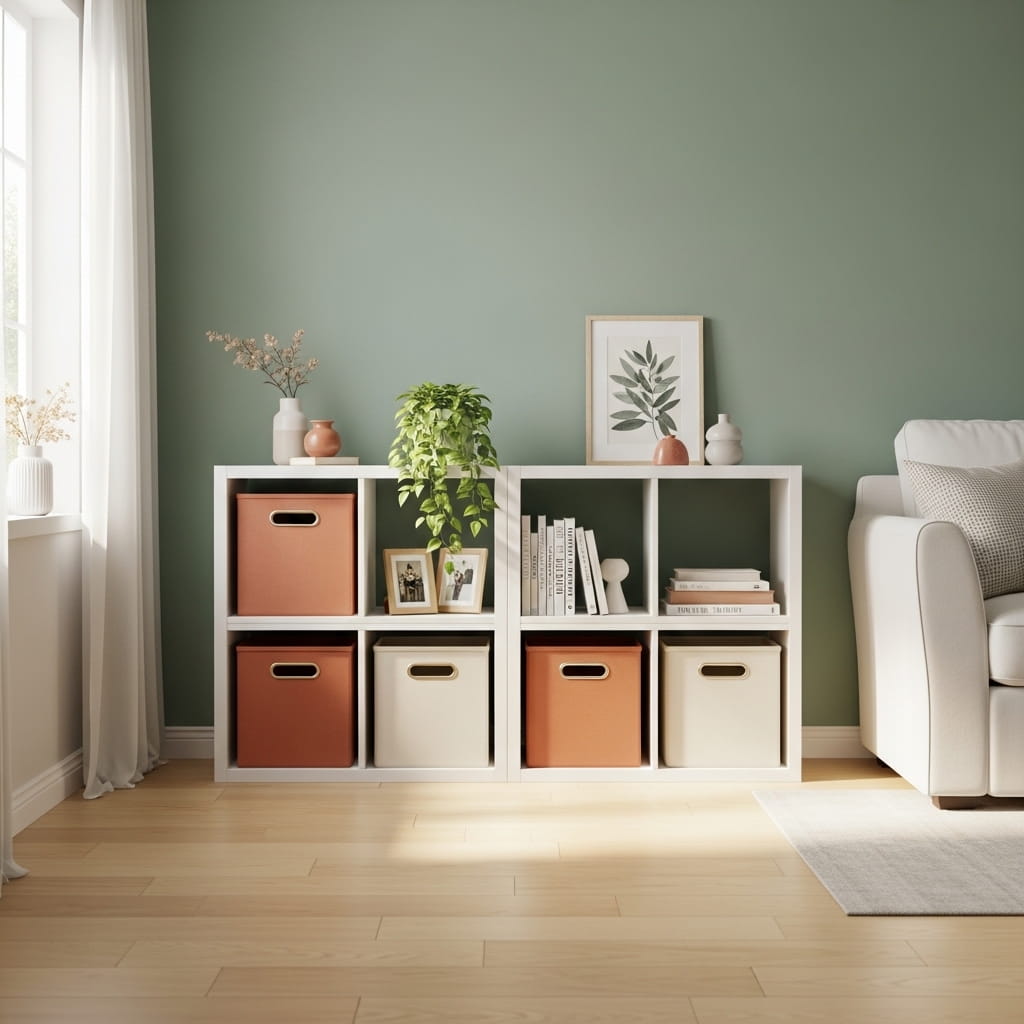
Modular cube shelving offers the most flexible and affordable living room storage system available because each cube unit functions independently , you buy exactly as many cubes as your storage needs require and arrange them in any configuration that suits your living room wall space. You mix open display cubes with fabric-bin-filled closed cubes to create a perfectly balanced combination of visible decorative display and hidden practical storage within the same unit. This room organization approach suits families with children particularly well.
Fabric storage bins in coordinating colors , terracotta, cream, sage, and rust , inserted into the closed cube openings create a color-blocked display effect that makes the modular unit look like a designed installation rather than flat-pack storage furniture. Those fabric bins completely hide toys, craft supplies, extra throws, and gaming accessories behind a clean, color-coordinated face that contributes to rather than detracts from the living room’s overall design aesthetic.
- Mix open and closed cubes for balanced storage
- Fabric bins hide toys and daily clutter effectively
- Modular system grows with changing storage needs
- Color-coordinated bins add visual design interest
- Suits family living rooms and small apartments
A sage green accent wall behind the modular cube shelving unit creates a strong color backdrop that makes the white cube structure pop with clean contrast. The sage green and white combination belongs to the organic modern interior trend dominating USA living room design in 2026 and creates a sophisticated, intentional look from an affordable flat-pack shelving unit. That accent wall color behind a storage piece is one of the simplest and most effective visual upgrades for making budget storage furniture look high-end.
That’s why many home organizers recommend modular cube shelving as their first furniture recommendation for families who need flexible living room storage that can adapt as children grow and storage needs change. A six-cube unit purchased for under two hundred dollars at most major home stores holds an entire family’s collection of living room essentials , from children’s toys to adult book collections , in a single organized wall-mounted system.
TV Unit With Hidden Storage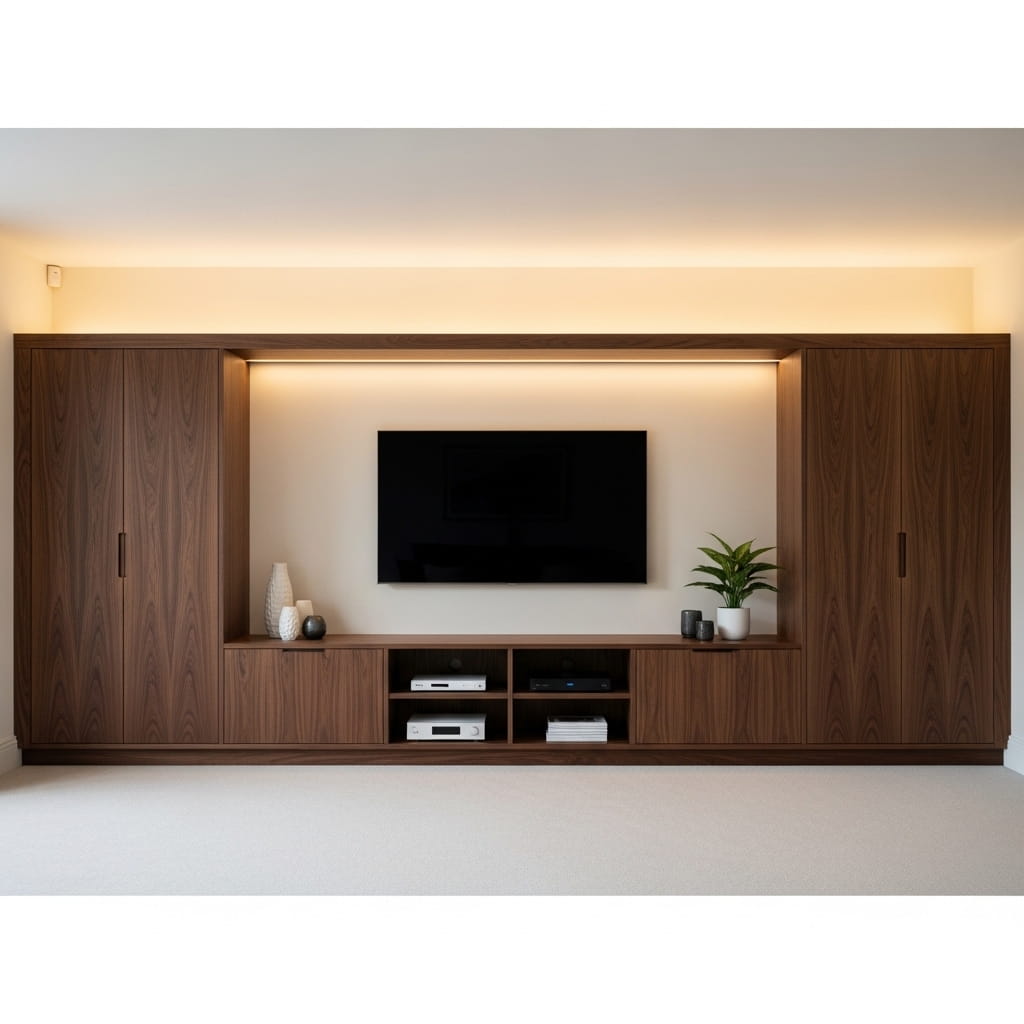
A full-width TV unit with closed cabinet doors on either side creates the most storage-dense living room wall configuration available without building permanent shelving. The closed cabinet interiors hide media consoles, gaming equipment, cable boxes, DVD collections, and spare remote controls completely behind clean door faces, while the open central section provides display space for decorative objects at the base of the TV. This smart living room furniture choice suits living rooms where media equipment clutter is the primary organizational challenge.
Dark walnut finish on a full-width TV unit creates a visually grounded, sophisticated TV wall that suits both contemporary and transitional living room aesthetics. The dark wood tone adds warmth and depth to the TV wall that lighter finishes cannot achieve, and it creates a strong horizontal visual anchor across the full width of the room. That full-width horizontal furniture piece makes the living room walls look longer and the ceiling feel higher in proportion.
- Closed cabinet doors hide all media clutter
- Full-width unit spans wall for maximum storage
- Warm LED strip adds atmospheric evening lighting
- Dark walnut adds sophisticated depth to any room
- Solves gaming and media equipment storage needs
Warm LED strip lighting along the top edge of the TV unit creates a soft ambient glow at high level that makes the entire TV wall feel intentionally lit and architecturally considered during evening use. That LED strip detail costs under thirty dollars to install and dramatically shifts the living room atmosphere from functional to genuinely designed. I’ve noticed that LED-lit TV units consistently look more expensive and more considered in finished room photographs than identical units without the lighting detail.
Open central shelving at the base of the TV unit , visible between the two closed cabinet sections , provides a designated display zone for three to four decorative objects without giving daily clutter any accessible open storage invitation. Keeping the open shelving area disciplined , one plant, one ceramic object, and one small stack of books , prevents the open section from becoming a dumping zone that undermines the organized, clean aesthetic of the closed cabinet TV unit on either side.
Entryway Drop Zone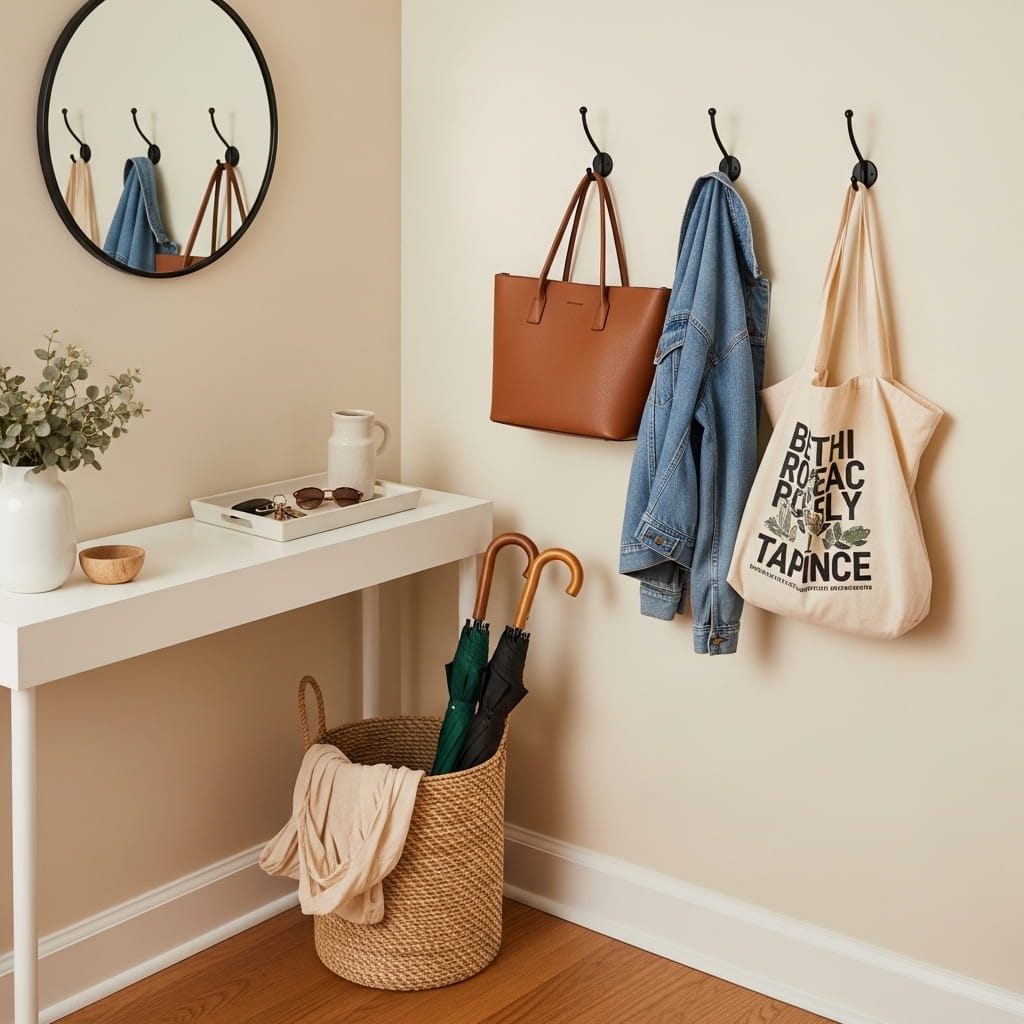
A dedicated drop zone in the living room entryway corner resolves the single most common household clutter problem , the chaotic daily arrival pile of keys, bags, jackets, and accessories that accumulates on every available surface near the front door. A narrow console table, three wall hooks above it, and one woven floor basket beside it create a complete entryway system that gives every daily-use item a specific home. That three-piece drop zone system takes under two hours to assemble and style.
A small ceramic tray on the console table surface becomes the dedicated home for keys, sunglasses, and small daily accessories that previously disappeared into pockets, bags, and sofa cushion gaps. The tray contains these small items in one visible, accessible location that makes morning departures significantly faster and less stressful. That’s why many home organizers describe a dedicated key tray as the most impactful single organizational purchase you can make for a household.
- Tray on console catches keys and daily accessories
- Wall hooks give jackets and bags a specific home
- Floor basket holds umbrellas and reusable bags
- Eliminates the “arrival pile” living room clutter habit
- Suits any living room entrance or hallway corner
Three matte black wall hooks above the console table at coat-hanging height create a functional daily storage system for jackets, structured totes, and reusable shopping bags that previously draped over chairs and piled on the sofa. The matte black hook finish suits white, cream, gray, and sage walls equally and adds a clean graphic detail to the entryway wall without requiring any decorative framing or art around it.
A small round mirror above the entryway hooks adds a practical reflective surface for last-minute appearance checks before leaving the home while also amplifying the natural light in the entryway corner and making the living room entrance feel more open and welcoming. The round mirror’s soft circular form creates a pleasing contrast against the angular console table, rectangular tray, and straight hook lines below it , and that geometric contrast is what gives the entryway corner its styled, finished quality.
Sofa Side Table Tray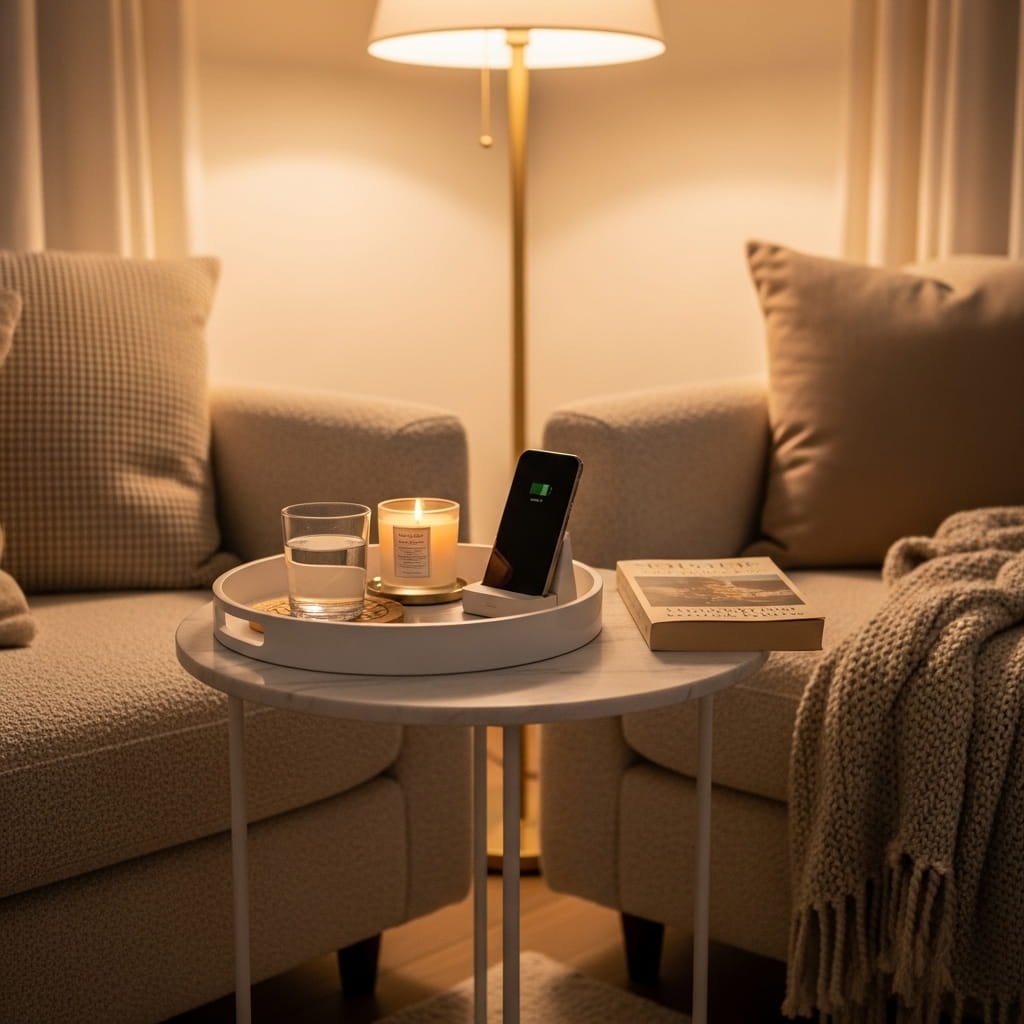
A round marble-top side table beside the sofa with a small organizational tray on its surface creates a personal command station at arm’s reach that keeps the most frequently used living room items , phone, charger, book, water glass, and candle , in one contained, styled grouping rather than scattered across the sofa, the coffee table, and the floor. This compact living room organization technique requires zero additional storage furniture and costs under fifty dollars to implement.
A white lacquer tray on the side table surface contains all the small daily-use items within a defined boundary that makes the side table look styled and intentional rather than cluttered. The tray’s rectangular boundary signals to the eye that the objects within it belong together as a deliberate collection, which creates a sense of order that a randomly arranged side table surface simply cannot convey. That single tray detail transforms the side table from a clutter magnet into an organized lifestyle vignette.
- Tray contains daily items in one styled grouping
- Marble side table suits any living room aesthetic
- Phone charging dock keeps device organized nearby
- Warm lamp light activates the cozy sofa corner
- Simple $50 solution eliminates sofa-side clutter
A tall floor lamp positioned behind the sofa creates the most flattering and atmospheric lighting for the sofa side table vignette. The warm arc of light from behind the sofa illuminates the tray contents , the candle, the book, and the glass , from above and creates the signature warm pool of evening light that makes a sofa corner feel genuinely cozy and intentional. That over-shoulder lamp light is the defining atmospheric detail that separates a beautiful living room corner from an ordinary one.
A soft knit throw draped loosely over the sofa arm beside the side table adds a third layer of textural warmth to the sofa corner that connects the soft boucle sofa fabric to the organic warmth of the wood side table and the natural candlelight on the tray above it. Those three warm material references , boucle sofa, wood table, knit throw , create a cohesive, sensory-rich corner that feels genuinely restful and welcoming at any hour of the day.
Pegboard Accent Wall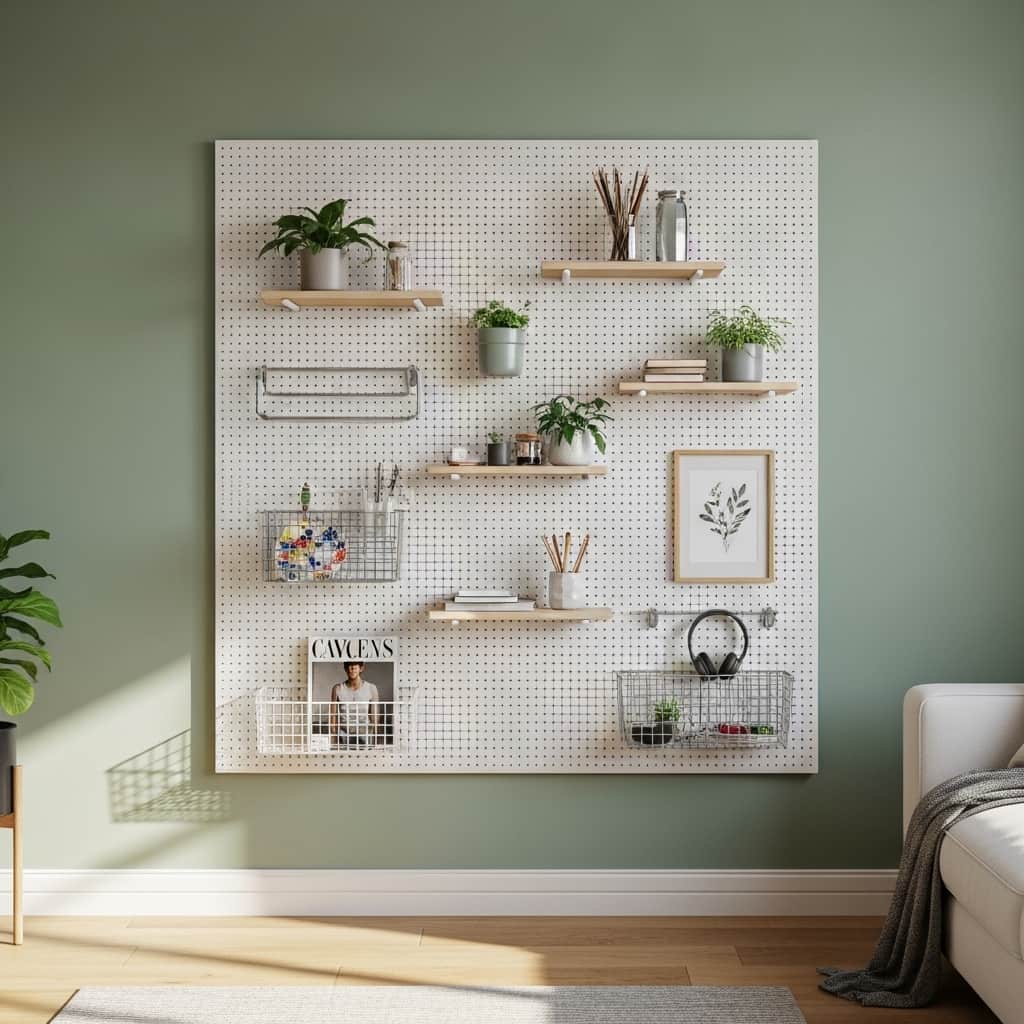
A white pegboard panel mounted on a living room wall creates the most fully customizable and rearrangeable organizational display surface available for any room. You reposition the wooden shelves, metal hooks, and wire baskets at any time without any additional wall holes or hardware, adapting the pegboard layout to changing storage needs throughout the year. This living room wall organization idea suits creative households, home workers, and anyone who values flexible, visible storage over fixed cabinet solutions.
A sage green accent wall behind the white pegboard creates a color contrast that makes the pegboard arrangement pop as a designed installation rather than a functional office supply. The sage green and white combination gives the pegboard a warm, organic quality that suits living room aesthetics far better than the plain white or natural wood backgrounds that pegboards typically occupy in kitchen and office contexts.
- Fully rearrangeable without extra wall holes
- Shelves, hooks, and baskets adapt to any need
- Accent wall behind it creates display impact
- Suits creative households and home workers
- Visible storage keeps daily items accessible
Small plants in tiny ceramic pots on the pegboard wooden shelves add a living botanical element to the organizational display that makes the wall feel genuinely warm and personal rather than purely functional. A small trailing plant, a succulent, and a sprig of dried eucalyptus on three separate shelf levels create a vertical botanical garden within the pegboard display that costs under thirty dollars to assemble. Those plant elements are what prevent the pegboard from looking like an office supply wall in a living room context.
A pegboard panel measuring twenty-four by thirty-six inches provides enough surface area to organize a complete collection of living room daily-use items , headphones, a magazine, charging cables, sunglasses, a small plant collection, and art supply accessories , within a single wall-mounted display. That organizational density in a confined wall area is what makes pegboard one of the most space-efficient living room storage solutions available for compact apartments and small homes.
Window Seat With Storage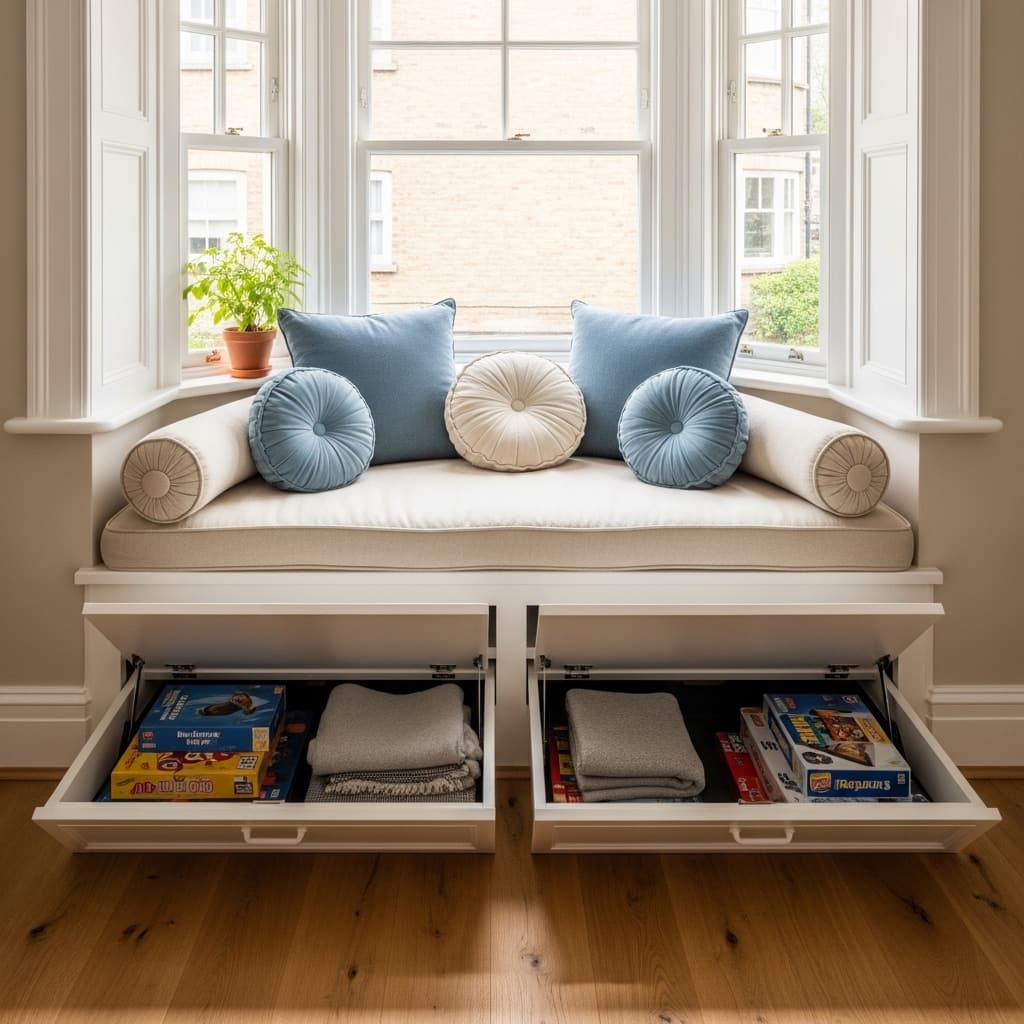
A built-in window seat with lift-top storage compartments below the seat cushion turns an otherwise awkward bay window area into the most charming and functional corner of the entire living room. The window seat provides extra seating for four to five guests during gatherings while the lift-top storage base holds a large volume of living room essentials , folded blankets, board games, and seasonal cushion covers , completely hidden below the seat cushion surface.
Natural daylight flooding through the window above the storage seat makes the window seat corner the brightest, most inviting spot in the living room at every hour of the day. That natural light quality is what makes window seat areas so consistently popular in USA living room design , the combination of comfortable seating, abundant natural light, and hidden storage below the seat creates a living room corner that serves multiple functions simultaneously and beautifully.
- Hidden storage below seat holds blankets and games
- Window seat adds seating for 4–5 extra guests
- Natural daylight makes window corner most inviting
- Bolster pillows add decorative layered comfort
- Suits bay windows and any recessed wall niche
Lift-top storage compartments in a window seat base typically provide between six and ten cubic feet of hidden storage capacity , enough to hold eight folded throws, four board games, and a full collection of seasonal cushion covers simultaneously. That storage volume in a space that previously held nothing , an empty bay window cavity , represents one of the most efficient spatial upgrades available in any home renovation or styling project.
Three round bolster pillows in dusty blue and cream arranged along the back of the window seat cushion add decorative layering and back support comfort that makes the seat genuinely inviting for extended sitting rather than a decorative surface that looks comfortable but isn’t. The bolster pillow format suits window seats particularly well because its cylindrical shape fits naturally against the vertical window frame behind it, creating a comfortable backrest that flat square pillows cannot replicate.
Reading Nook Corner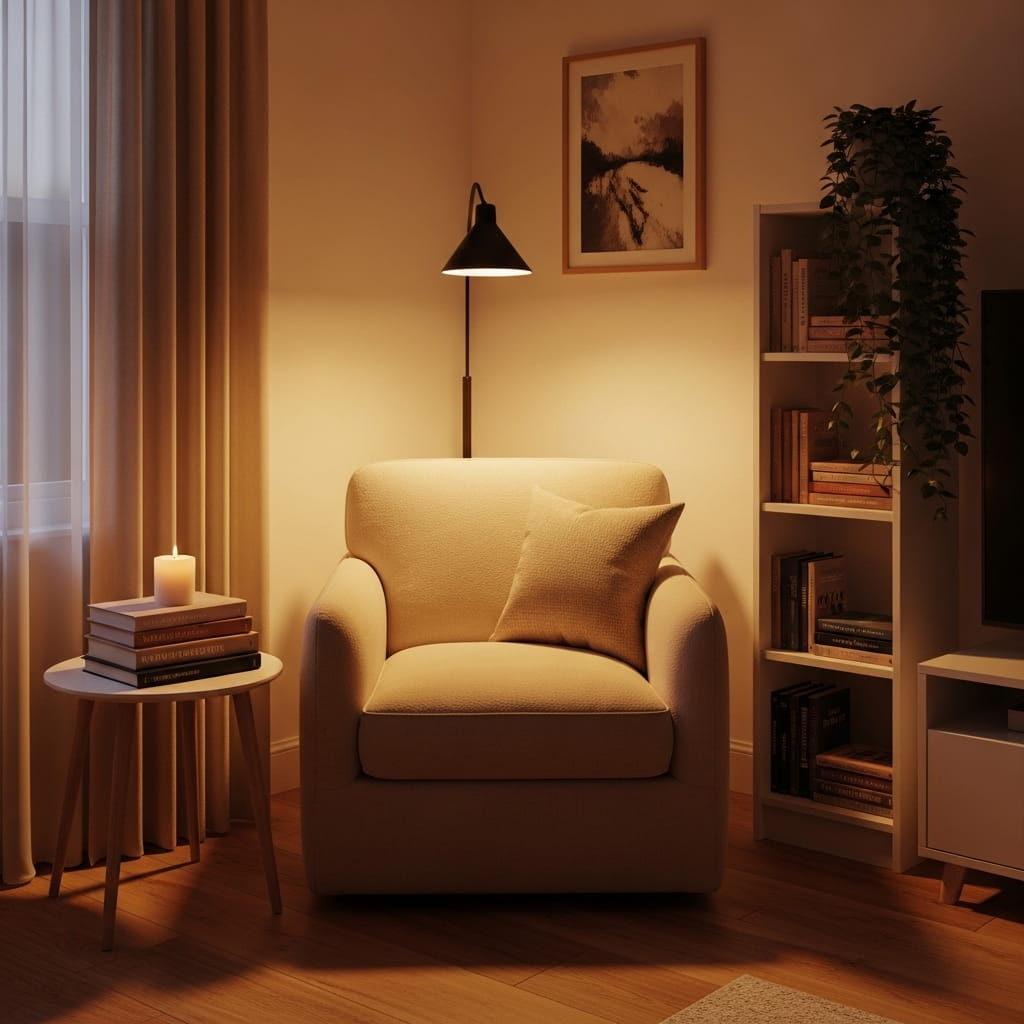
A dedicated reading nook corner gives every book lover a clearly defined personal zone within the living room where reading materials, lighting, and seating all exist in one purposeful, organized arrangement. The corner placement uses the two intersecting walls to create a naturally enclosed, intimate feeling without any additional room dividers or structural changes. This small living room zoning idea creates a sense of spatial intention that makes the whole room feel more thoughtfully organized.
A tall narrow bookcase positioned beside the armchair keeps the reading nook’s entire book collection within arm’s reach of the seat, eliminating the need for books to scatter across the coffee table, sofa armrests, and side table surfaces throughout the rest of the living room. That contained book storage beside the reading chair is one of the most practical living room organization techniques for households with large book collections.
- Corner placement creates natural intimate enclosure
- Tall bookcase keeps books at arm’s reach
- Arc floor lamp provides dedicated reading light
- Organizes books away from main living surfaces
- Suits small apartments and open-plan living rooms
A warm arc floor lamp positioned behind the armchair creates a dedicated focused light source for the reading nook that operates independently from the main living room overhead lighting. That reading-specific light source allows one person to read comfortably in the nook while other household members use the main living room at different light levels simultaneously. I’ve seen this simple reading nook arrangement completely change how families use and enjoy their living rooms on evenings at home.
A small round side table beside the armchair holds the current reading stack, a glass of water, and a single candle within a deliberately contained three-item arrangement that prevents the side surface from accumulating the random daily clutter that typically colonizes every available horizontal surface in a living room. That disciplined three-item side table rule keeps the reading nook looking permanently organized without requiring daily tidying effort.
Drawer Divider System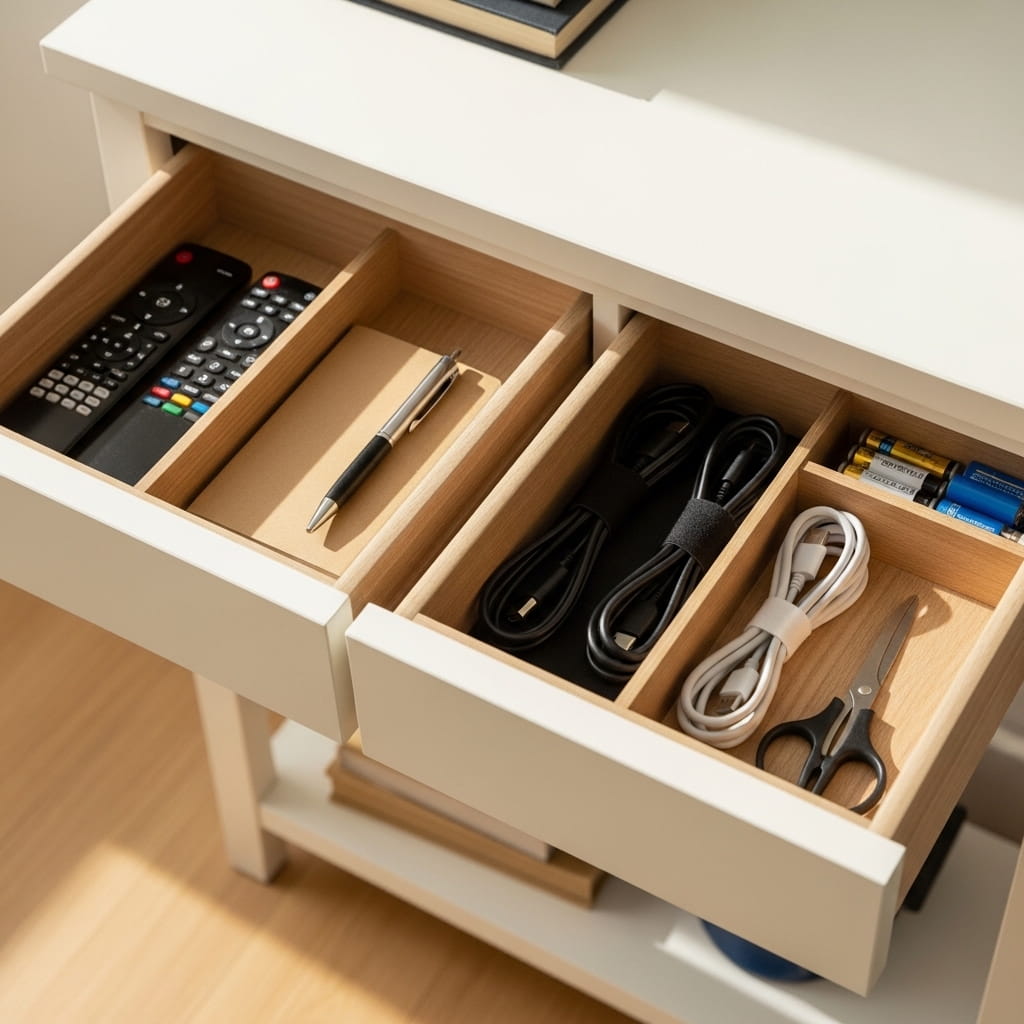
Drawer dividers inside living room console or side table drawers create a fully organized interior storage system that prevents the single most frustrating everyday clutter problem , the junk drawer. Without dividers, every living room drawer becomes a chaotic mix of remote controls, tangled charging cables, spare batteries, and forgotten accessories that wastes minutes of searching time every single day. With dividers, every item has a specific dedicated slot that makes finding and replacing items fast and effortless.
Bamboo or clear acrylic drawer dividers cost between eight and twenty-five dollars per drawer and transform a cluttered junk drawer into an organized accessory storage system in under thirty minutes. You assign each divider section a single category , one section for TV remotes, one for charging cables, one for spare batteries, and one for small scissors and stationery. That category-based divider system reduces morning searching time to under ten seconds per item.
- Drawer dividers eliminate the junk drawer problem
- Category sections reduce daily searching time
- Bamboo dividers cost $8–$25 per drawer
- Keeps remotes, cables, and batteries organized
- Works in any living room console or side table
A cable organizer insert in the drawer section dedicated to charging cables keeps individual cables from tangling together into the frustrating knot that makes finding a specific cable a multi-minute untangling exercise. You use small velcro cable ties to keep each individual charging cable rolled and labeled within its divider section. That velcro-tied, labeled cable system is the single most impactful drawer organization upgrade for households with multiple phone, tablet, and laptop charging cables.
That’s why many professional home organizers recommend drawer dividers as the very first organizational purchase for any living room declutter project. The immediate visual impact of opening a perfectly organized drawer , every item in its designated section, every cable rolled and stored cleanly , delivers the most instant and satisfying organizational result of any living room storage product available at any price point.
Stackable Side Tables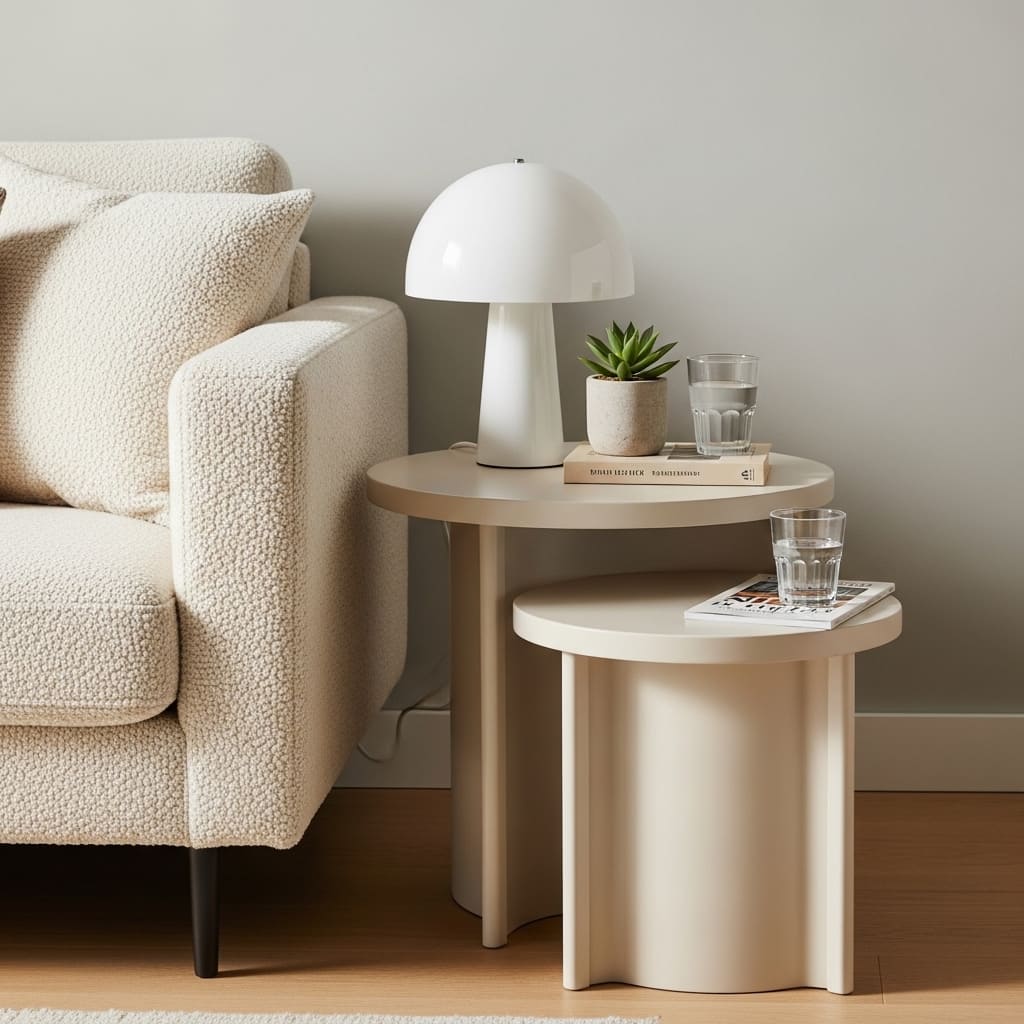
Stackable side tables in two graduated sizes deliver flexible furniture storage that adapts to whatever the living room needs at any given moment , stacked together as a compact single unit when space is tight, or separated into two independent surfaces when extra table area is needed for hosting guests. That flexibility is what makes stackable side tables one of the most genuinely practical small living room furniture solutions available in 2026.
Natural oak or white lacquer nested side table sets cost between forty and one hundred and twenty dollars and suit Scandinavian, minimalist, and organic modern living room aesthetics equally well. The graduated circle format of the two tables creates a pleasing geometric relationship between the two pieces that makes the stacked arrangement look like a deliberate design choice rather than a space-saving compromise.
- Two tables provide double surface area when needed
- Stack together to save floor space when not in use
- Suits guests and everyday daily use equally
- Organic wood finish suits any living room palette
- Affordable at $40–$120 per set of two
The smaller table separated from the stack and positioned at knee height beside an armchair creates a perfect individual drink holder for a second seating position in the living room without requiring a permanent side table installation at that location. That flexible deployment , nested when not needed, separated when in use , is the organizational intelligence that makes stackable side tables genuinely earn their floor space in a compact living room layout.
A single white ceramic table lamp on the larger table in the stacked arrangement provides warm ambient lighting for the sofa corner while keeping the table surface styled with a minimum of just two additional items , one plant and one book. That three-item table surface rule , lamp, plant, book , keeps the side table permanently looking organized and intentional without requiring any daily tidying.
Magazine Rack Display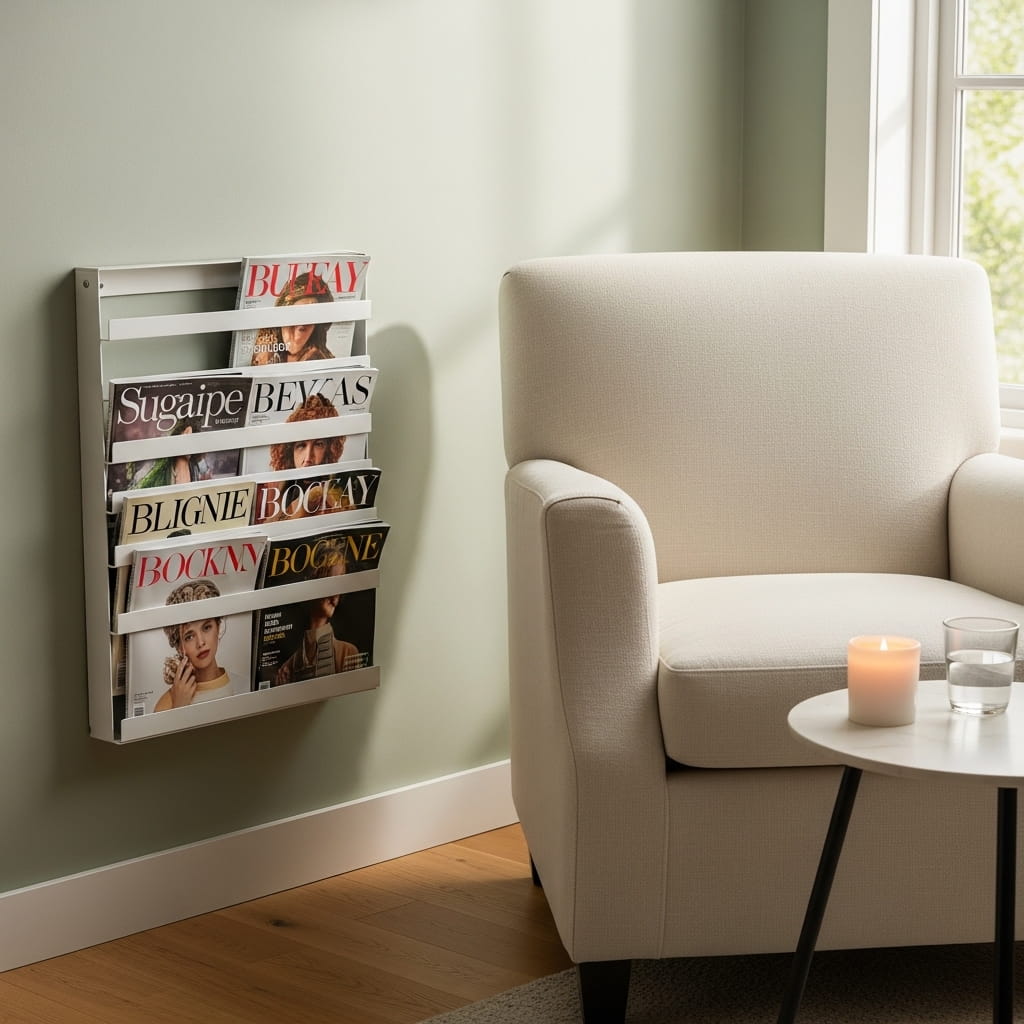
A wall-mounted magazine rack beside the living room armchair or sofa creates a designated vertical display home for magazines, newspapers, and current-read books that eliminates the sprawling pile of publications that typically colonizes coffee tables, sofa armrests, and side table surfaces. The wall-mounted format keeps the publication collection completely off every horizontal surface in the room while displaying the colorful magazine covers as a casual art display at the same time.
A slim white metal wall-mounted magazine rack suits virtually any living room wall color because its thin metal profile occupies minimal visual space and its white finish connects naturally to both warm cream and cool gray interior palettes. You mount the rack at arm’s reach beside the primary reading seat so the publication collection stays accessible during use and returns to the rack immediately after each reading session. That accessible-return-path is the organizational principle that keeps the magazine collection permanently tidy.
- Wall-mounted rack keeps magazines off all surfaces
- Magazine covers display as casual living room art
- Slim metal profile adds minimal visual weight
- Accessible placement encourages consistent tidying
- Costs under $30 at most home organization stores
Six magazines arranged with their colorful front covers facing outward create a casual, gallery-like display of art, fashion, and lifestyle publications that adds genuine visual interest to the wall beside the reading chair. That visible-cover display technique transforms a practical storage rack into a decorative wall feature that suits the casual, everyday aesthetic of a well-lived-in living room. The colorful cover arrangement changes naturally every month as new issues arrive and old ones depart.
A sage green wall behind the white magazine rack creates a warm color backdrop that makes the metal rack and the colorful publication covers pop with clear visual definition. Sage green and white magazine racks belong to the same organic modern interior language that dominates USA living room design trends in 2026, making this storage solution feel both practically organized and genuinely stylish within the current design moment.
Vertical Bookshelf Styling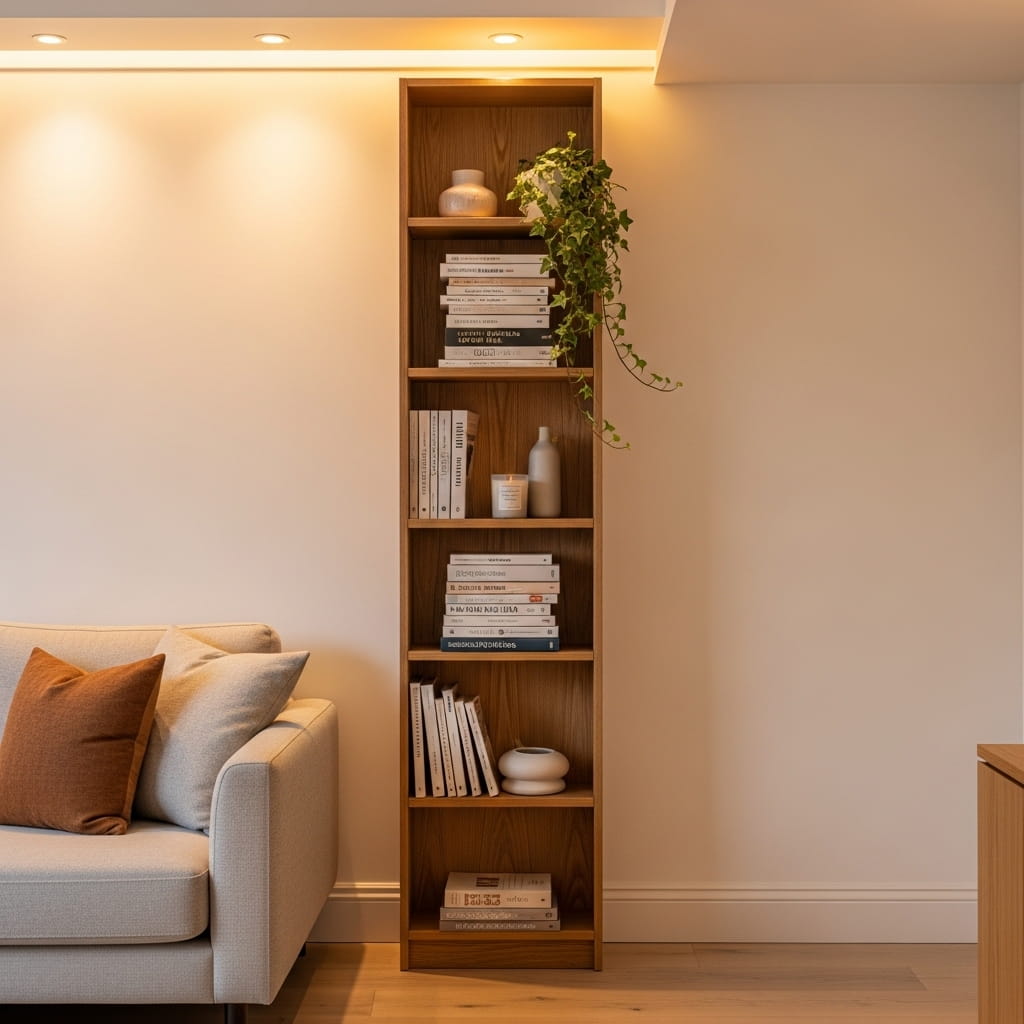
A slim floor-to-ceiling vertical bookshelf uses the full height of the living room wall rather than only the lower four feet that standard-height furniture occupies, creating dramatic vertical storage presence while consuming only twelve to sixteen inches of floor depth. The full-height shelf draws the eye powerfully upward and makes the living room ceiling feel higher than it actually measures , a spatial benefit that makes this vertical storage choice particularly valuable in compact living rooms with standard eight-foot ceilings.
Alternating between vertically upright books and horizontally stacked book piles within the same shelf creates visual rhythm and variety across the full shelf height that prevents the bookcase from looking like a uniform, monotonous wall of spines. That alternating upright-and-stacked arrangement is one of the most widely shared bookshelf styling techniques in home decor content because it creates the right amount of organized visual variety without looking disorderly.
- Full height bookcase draws the eye upward
- Makes standard ceilings feel measurably taller
- Alternating book arrangement creates visual rhythm
- Small ceramics between books add styling detail
- Suits literary households in any living room size
Small ceramic objects , a tiny sculptural vase, a small geometric figurine, or a miniature plant pot , tucked between book sections at varying heights across the bookshelf break the visual regularity of the book spines and add decorative dimension to the organizational display. Those ceramic punctuation points within the book arrangement give the eye multiple resting points as it travels up the full shelf height and create the curated, collected quality that distinguishes a beautifully styled bookshelf from a simply organized one.
A trailing ivy plant on the top shelf adds a cascading organic element that softens the sharp upper edge of the tall bookcase and connects the vertical shelf structure to the living room’s broader organic material story. The ivy’s trailing vines grow downward over time, adding an increasingly dramatic living green element to the upper bookshelf zone that no artificial accessory can replicate. I’ve noticed that living room bookshelves with one trailing plant at the top generate significantly more Pinterest saves than identically styled shelves without the plant.
Sofa Back Console Table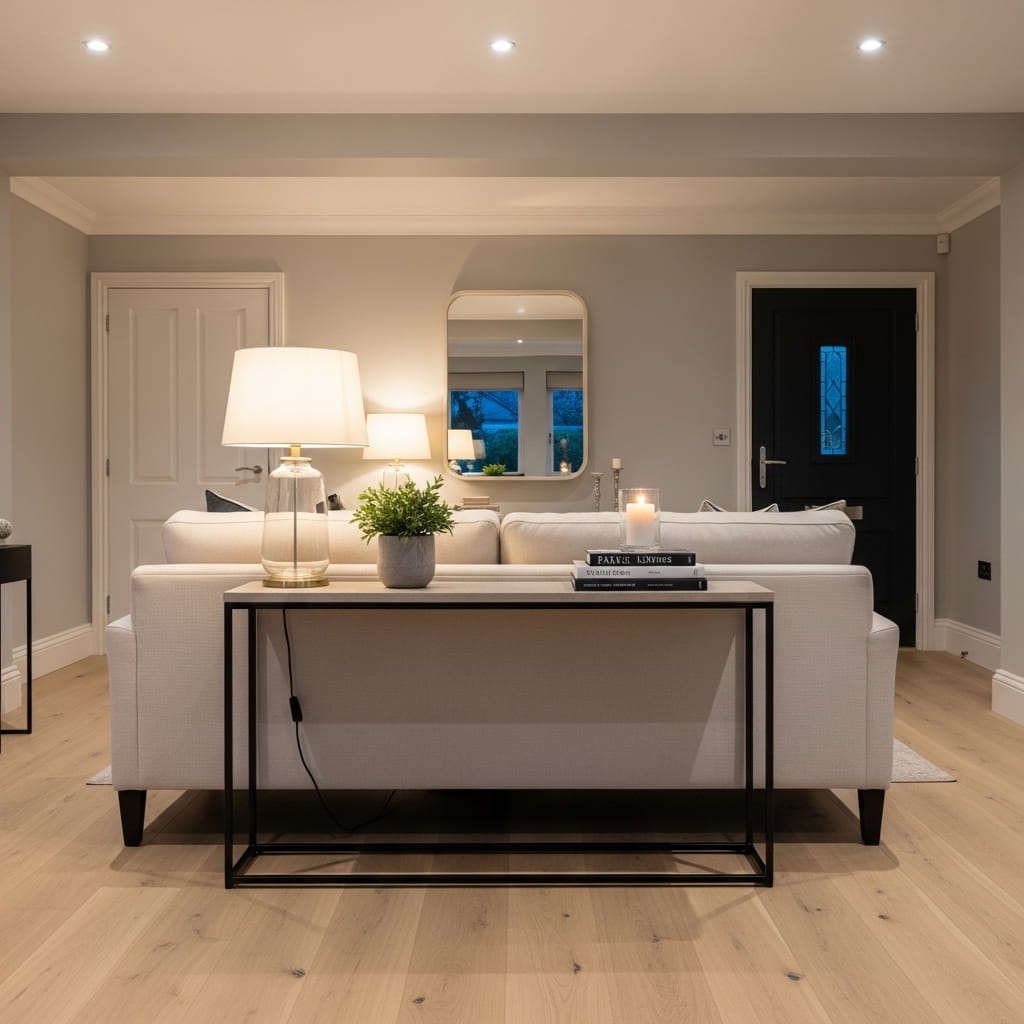
Positioning a slim console table directly behind the sofa in an open-plan living room serves three important organizational functions simultaneously , it visually separates the living area from the dining or entryway zone behind it, provides a secondary surface for lamps and decorative objects, and creates a natural boundary that prevents the sofa from floating awkwardly in the center of the room. This clever living room furniture placement technique is one of the most recommended layout solutions by interior designers for open-plan home layouts in 2026.
A slim console table measuring no more than twelve inches in depth suits the narrow gap between the sofa back and the room behind it without creating an obstacle for walking. You choose a console in the same wood finish as your other living room furniture , light oak, dark walnut, or white lacquer , to maintain a visually cohesive material story across the full room. That material consistency between the console and the existing furniture prevents the sofa-back placement from looking like an afterthought addition.
- Console behind sofa defines open-plan living zones
- Creates secondary surface for lamps and objects
- Visually prevents sofa from floating mid-room
- Slim 12-inch depth fits most sofa-wall gaps
- Suits open-plan apartments and living areas
A table lamp on the console table behind the sofa creates a warm rear-light source that illuminates the sofa from behind and adds a layered, sophisticated lighting dimension to the living room that a single overhead ceiling fixture cannot achieve alone. That rear lamp light source behind the sofa is a professional interior design trick that makes the seating area look genuinely designed and photographed beautifully in both natural and evening lighting conditions.
A small potted plant, a stack of three art books, and a single candle on the console surface create a styled three-item vignette that keeps the console surface organized and visually purposeful. Those three object types , organic, literary, and atmospheric , represent the same styling categories that interior designers use when composing living room coffee table and shelf vignettes. That deliberate three-category vignette formula is the simplest and most reliable console table styling method for a living room that always looks organized.
Decorative Tray Organization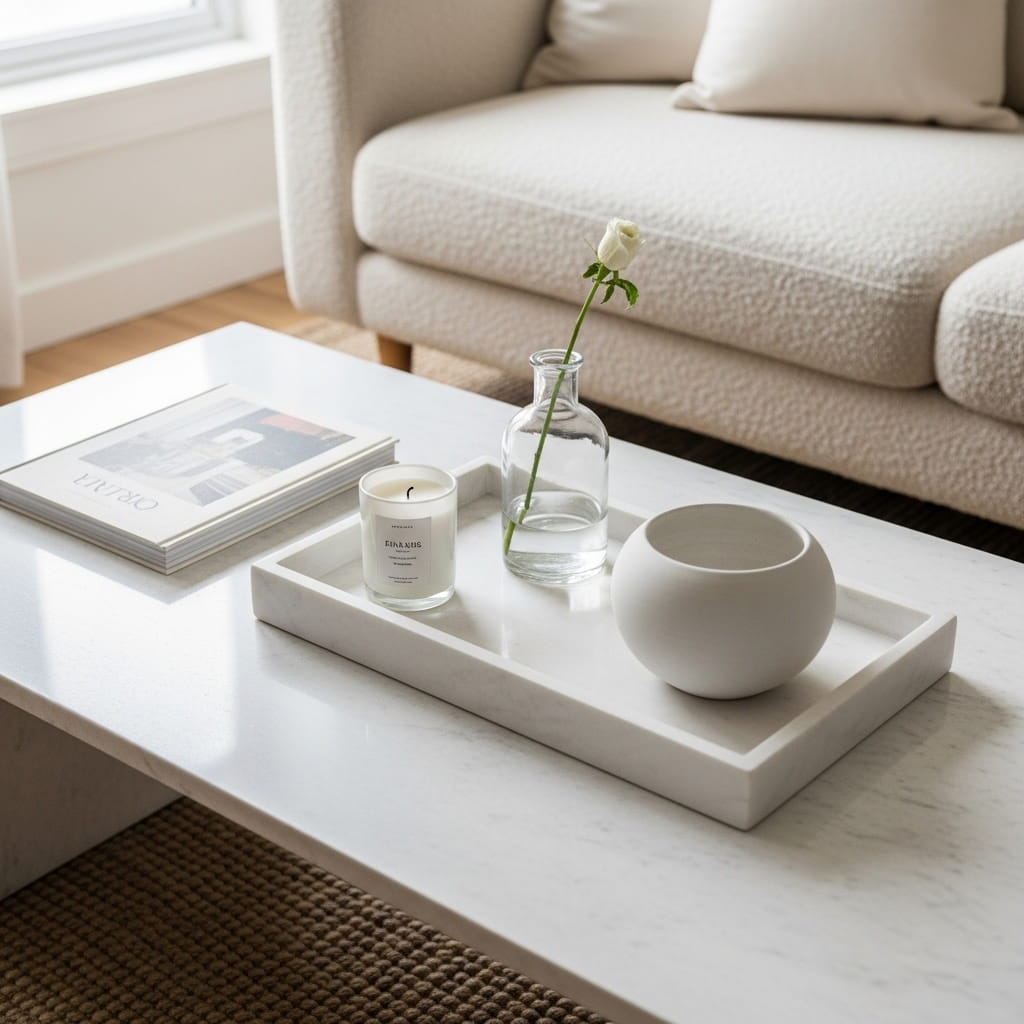
A large decorative tray on the coffee table surface is the simplest and most affordable living room organization upgrade available , it costs under thirty dollars and immediately transforms a scattered collection of random coffee table objects into a single cohesive, contained vignette that looks deliberately styled rather than casually dumped. The tray’s rectangular or circular boundary signals to every member of the household that only specific, purposeful items belong within its frame.
A white marble tray suits cream, gray, warm white, and sage green living room color palettes with equal visual ease because marble’s natural pattern contains both warm and cool undertones simultaneously. The marble surface adds a layer of material luxury to the coffee table styling that plain wood or plain lacquer trays cannot replicate at a similar price point. That material luxury quality is why marble trays appear on more styled coffee tables in USA home decor content than any other tray material.
- Tray creates a contained, purposeful coffee table zone
- Marble surface adds affordable material luxury
- Three to four items maximum keeps the tray clean
- Sets a household boundary for coffee table clutter
- Suits any living room color palette easily
The three to four item rule within the coffee table tray , one candle, one bud vase, one book, and one small bowl , keeps the tray display clean, restful, and consistently organized without requiring daily rearranging. You replace the single stem in the bud vase with seasonal flowers or foliage to refresh the coffee table display every one to two weeks at minimal cost. That simple seasonal stem swap keeps the living room coffee table feeling current and alive with minimal ongoing styling effort.
A rounded white ceramic bowl within the coffee table tray holds any small daily-use items , a TV remote, a hair tie, or a lip balm , that would otherwise scatter across the entire coffee table surface. That bowl serves as an inner tray within the outer tray, creating two levels of organizational containment on the coffee table and giving every daily item a specific visual home that keeps the main tray display permanently clean and styled.
Accent Wall Shelving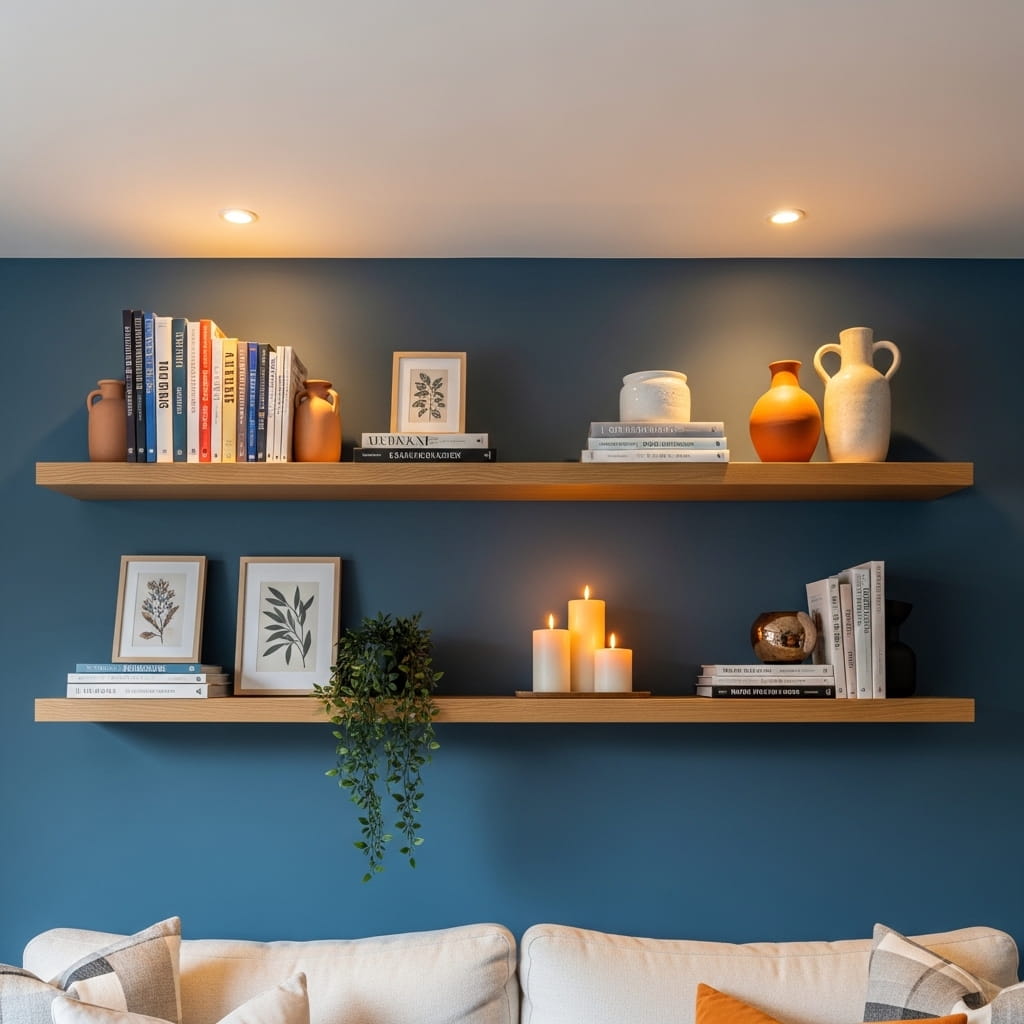
A dusty blue accent wall with wide floating oak shelves creates the most visually dramatic and organizationally functional wall treatment available in a living room without a permanent built-in renovation. The bold wall color behind the floating shelves makes the shelf contents , books, ceramics, plants, and prints , pop with vivid three-dimensional visual presence against the rich blue backdrop. This living room accent wall organization idea suits contemporary, eclectic, and warm modern aesthetics with outstanding design confidence.
Wide floating oak shelves , measuring at least twelve inches in depth , hold a significantly richer and more varied display collection than standard narrow shelves because their depth accommodates full-height art books, leaning framed prints, and larger ceramic objects that narrow shelves cannot support. That extra shelf depth is what allows this accent wall storage solution to look genuinely gallery-like rather than simply functional at every styling angle.
- Bold accent wall makes shelf contents pop visually
- Wide oak shelves accommodate books and leaning prints
- Earthy ceramics and plants add organic warmth
- Warm recessed lighting activates the shelf display
- Suits contemporary and warm modern living rooms
Warm amber recessed ceiling lighting positioned directly above the floating accent wall shelves illuminates the shelf contents from above and creates a warm glow that fills the dusty blue wall with rich, atmospheric color during evening hours. That dedicated shelf lighting makes the accent wall display look genuinely curated and gallery-worthy after dark and transforms the living room’s focal point from the TV wall to the beautifully lit accent wall display.
Leaning small framed prints against the accent wall behind the shelf objects creates a layered depth effect that makes the shelf display look genuinely gallery-like at multiple visual distances. The leaning prints sit slightly in front of the wall and slightly behind the ceramic objects, creating a front-to-back depth arrangement that no flat-mounted wall art can replicate. That subtle layered depth is the single styling detail that makes accent wall shelves look professionally designed.
Toy Storage Bench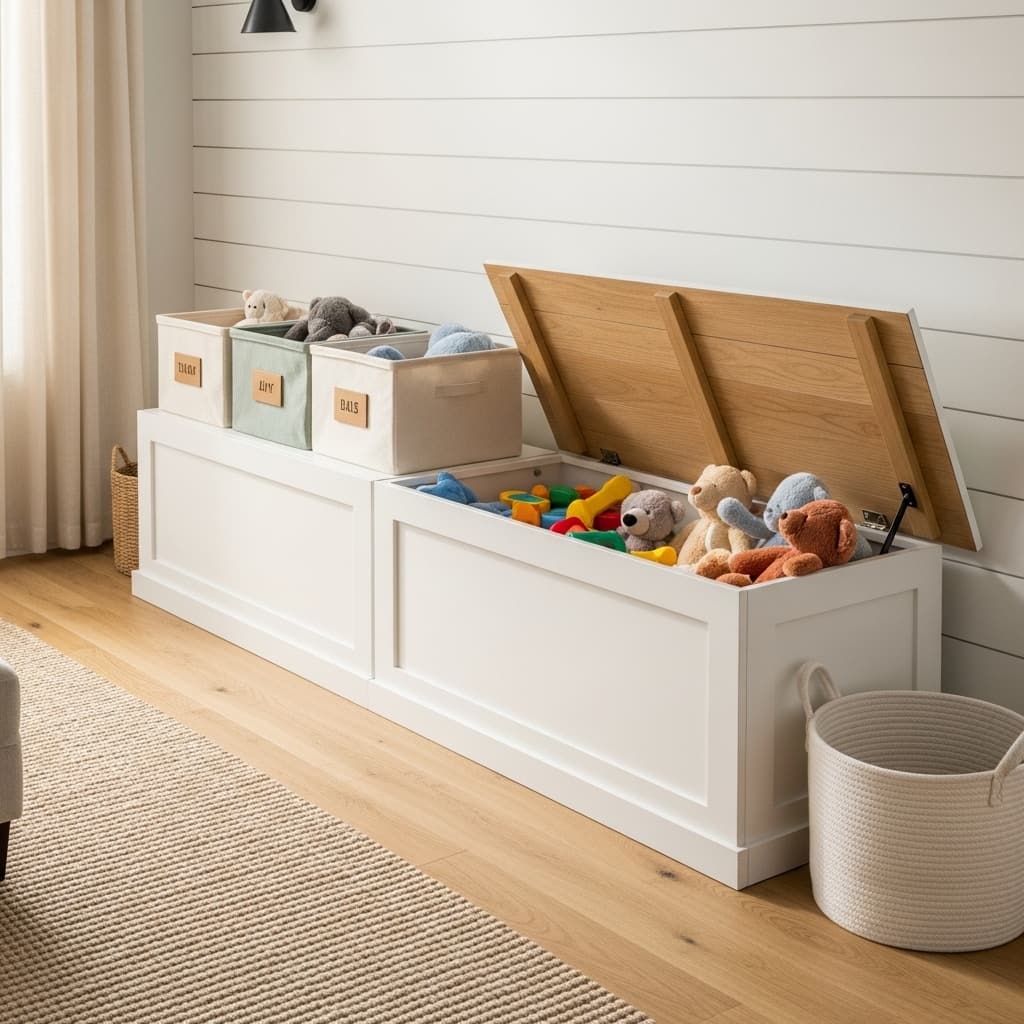
A wide storage bench along the living room wall is the most family-friendly and visually clean toy storage solution for living rooms that double as play spaces. The lift-top bench interior holds a large volume of toys, soft animals, and games completely out of sight beneath a clean seat surface, while the top of the bench serves as additional seating for two adults or three children. That dual-function furniture piece eliminates the need for a dedicated toy bin arrangement on the living room floor.
Labeled fabric storage bins on top of the bench surface , one for building blocks, one for art supplies, and one for soft toys , create an organized above-bench system for toys that need daily access and cannot be stored inside the lidded base every time. The clear fabric bin labels teach children the organization habit of returning specific toys to their correct bin, which reduces the daily toy pickup workload for the entire household significantly.
- Lift-top bench hides toys inside a clean surface
- Bench top provides seating for 2–3 people
- Labeled bins teach children consistent tidying habits
- Three bin categories organize by toy type easily
- Suits family living rooms in any home size
A white shiplap wall behind the toy storage bench creates a clean, farmhouse-inspired backdrop that makes the organized bench arrangement look like a purposeful mudroom-style storage zone within the living room. That shiplap wall detail connects the storage bench to the broader modern farmhouse interior aesthetic that suits family homes throughout the USA and gives the organizational storage piece a designed, intentional context rather than a purely functional one.
In my experience, family living rooms that include one dedicated and clearly labeled toy storage furniture piece , whether a bench, a cube unit, or a basket collection , maintain significantly cleaner daily baseline tidiness than those relying on the sofa, coffee table, and floor as informal toy storage zones. One clearly designated toy home reduces the daily evening pickup routine from twenty minutes to under five minutes in most family households.
Entryway Shelf With Bins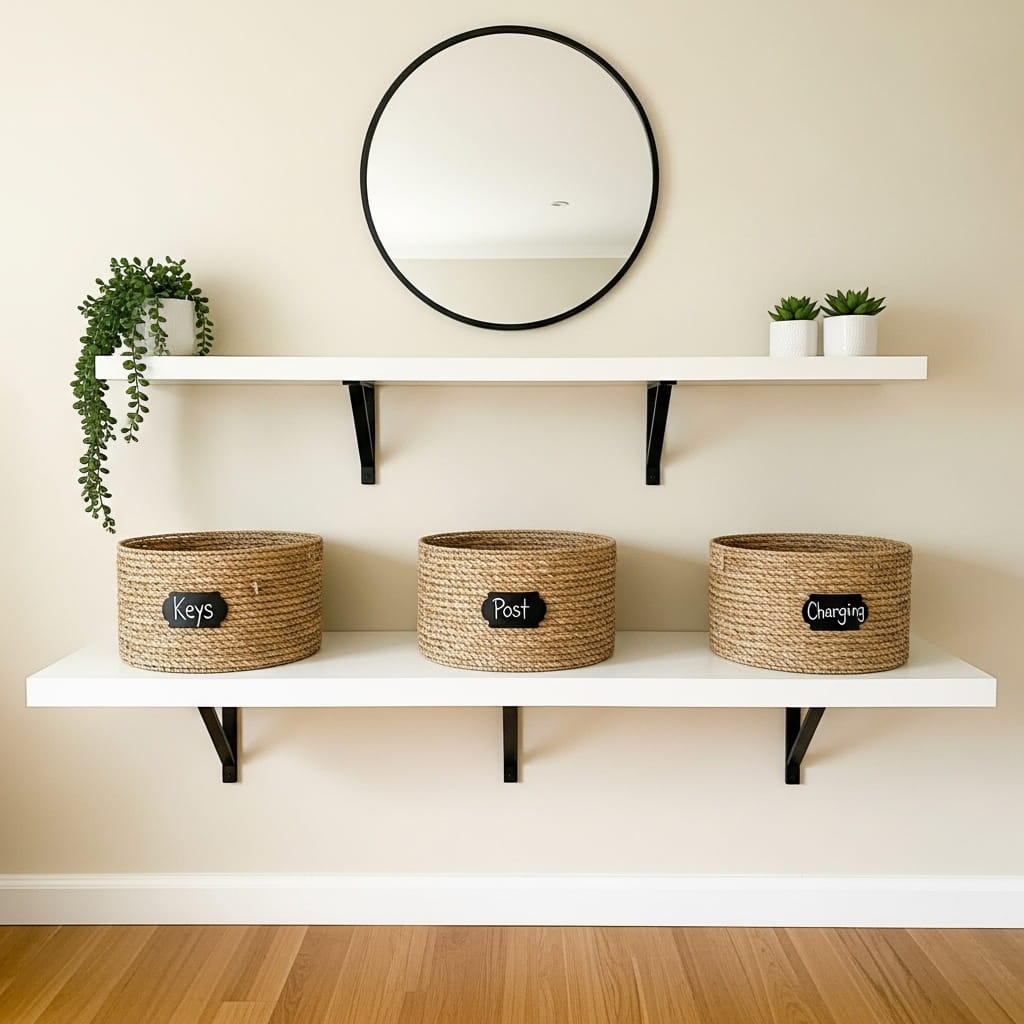
A floating entryway shelf with three labeled woven bins creates a completely organized incoming-mail, key, and daily-accessory management system for the living room entrance without consuming any floor space. Each bin’s chalk label tells every household member exactly where specific daily-use items belong , keys in the Keys bin, incoming mail in the Post bin, and phone chargers in the Charging bin , which eliminates the searching-for-lost-items morning frustration completely.
Identical woven seagrass bins in the same size and material across all three positions on the shelf create a clean, uniform display row that looks deliberately styled rather than randomly assembled. The three-bin uniform row format suits minimal, Scandinavian, and farmhouse living room aesthetics because the repetition of identical organic material objects at equal spacing creates a sense of deliberate, restful order.
- Three labeled bins organize daily entryway items
- Identical bins create clean uniform shelf display
- Chalk labels teach household members bin habits
- Floating shelf adds zero floor depth to the room
- Eliminates morning key and charger searching time
A small round mirror above the entryway shelf provides a quick last-look reflective surface before leaving home while also expanding the perceived visual depth of the entryway corner by reflecting the room’s natural light and spatial depth back into the living room. That mirror placement above an organizational shelf serves double duty , practical reflective function and spatial expansion illusion , in a single wall-mounted piece that costs under forty dollars.
A small succulent plant on the shelf beside the three bins adds an organic, living element to the organizational display that prevents the functional bin arrangement from looking purely utilitarian. That single small plant beside the organizational bins signals that the entryway shelf is a designed living space element rather than simply a utility rack. Those two different purposes , organized storage and warm decoration , coexisting on the same shelf surface are what make the entryway shelf organization concept so consistently effective and visually satisfying.
Curtain Room Divider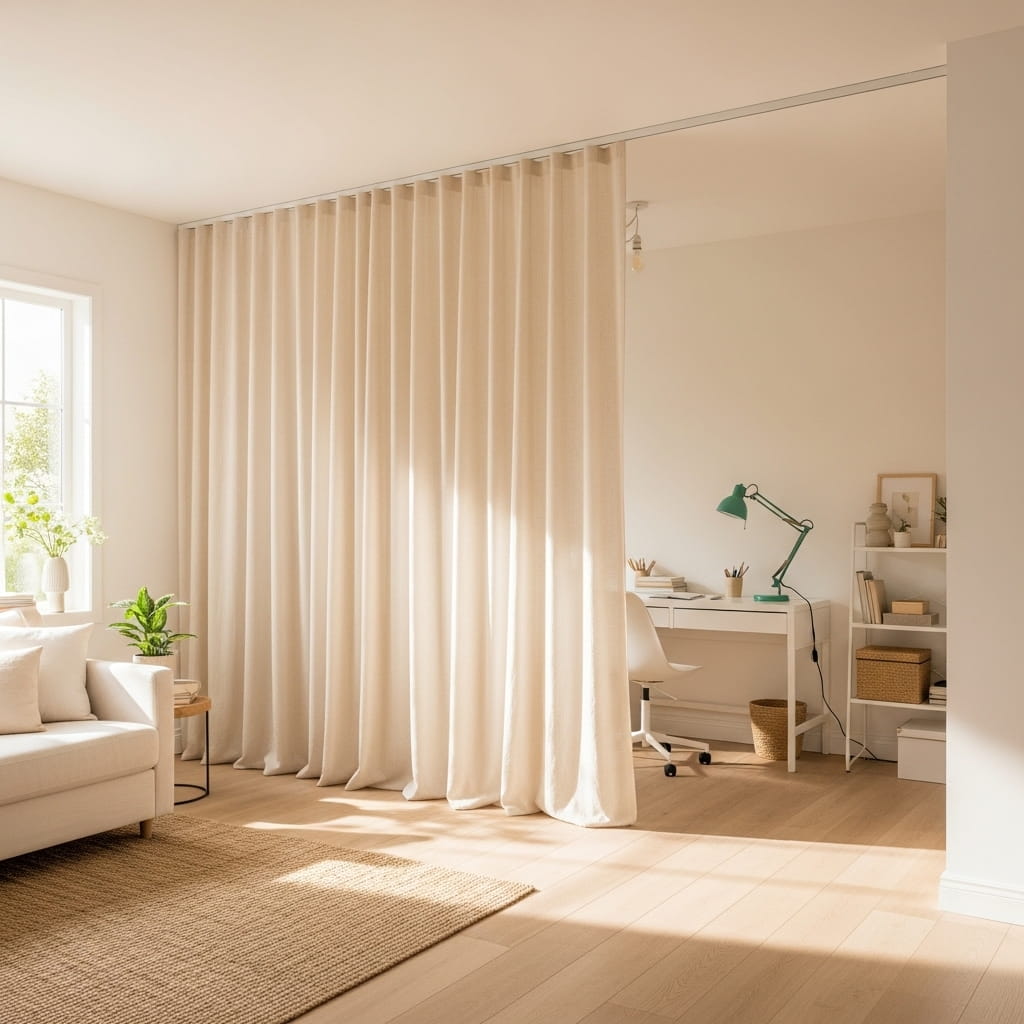
A floor-to-ceiling linen curtain panel on a ceiling-mounted track creates an instant room division in an open-plan living space that completely hides a home office, storage area, or messy utility zone behind a beautiful fabric wall. The curtain panel slides open for full access when needed and closes in under five seconds to restore the clean, clutter-free living room aesthetic at any moment. This flexible living room organization solution suits rental apartments and owned homes equally because ceiling track systems require minimal wall damage.
Cream or white linen curtain panels suit open-plan living rooms particularly well because their light, neutral tone matches most living room wall colors and allows natural light to filter softly through the fabric even when the curtain is closed. That light-filtering quality prevents the closed curtain from creating a dark, blocked zone in the living room and maintains the bright, airy quality of the open plan even after the divider is deployed.
- Curtain hides home office or storage behind fabric
- Opens and closes in under five seconds
- Rental-friendly ceiling track installation
- Linen fabric filters light when closed softly
- Divides open-plan rooms without permanent walls
A ceiling-mounted straight track rail for the curtain panel costs between forty and eighty dollars and installs with four to six ceiling screws that leave only small holes requiring minimal repair at the end of a tenancy. That minimal installation footprint makes the curtain room divider one of the most genuinely rental-friendly living room organization ideas on this entire list. I’ve seen this curtain divider solution completely resolve the open-plan home office visibility problem for dozens of remote-working households.
The living room side of the curtain divider maintains its clean, styled sofa-and-rug aesthetic regardless of what organizational state exists on the hidden home office side of the fabric panel. That visual separation between the organized living display area and the functional working mess behind the curtain is what makes remote workers who live in open-plan apartments feel psychologically separated from their work during non-working hours , a genuine daily wellbeing benefit that goes far beyond simple room organization.
Blanket Ladder Display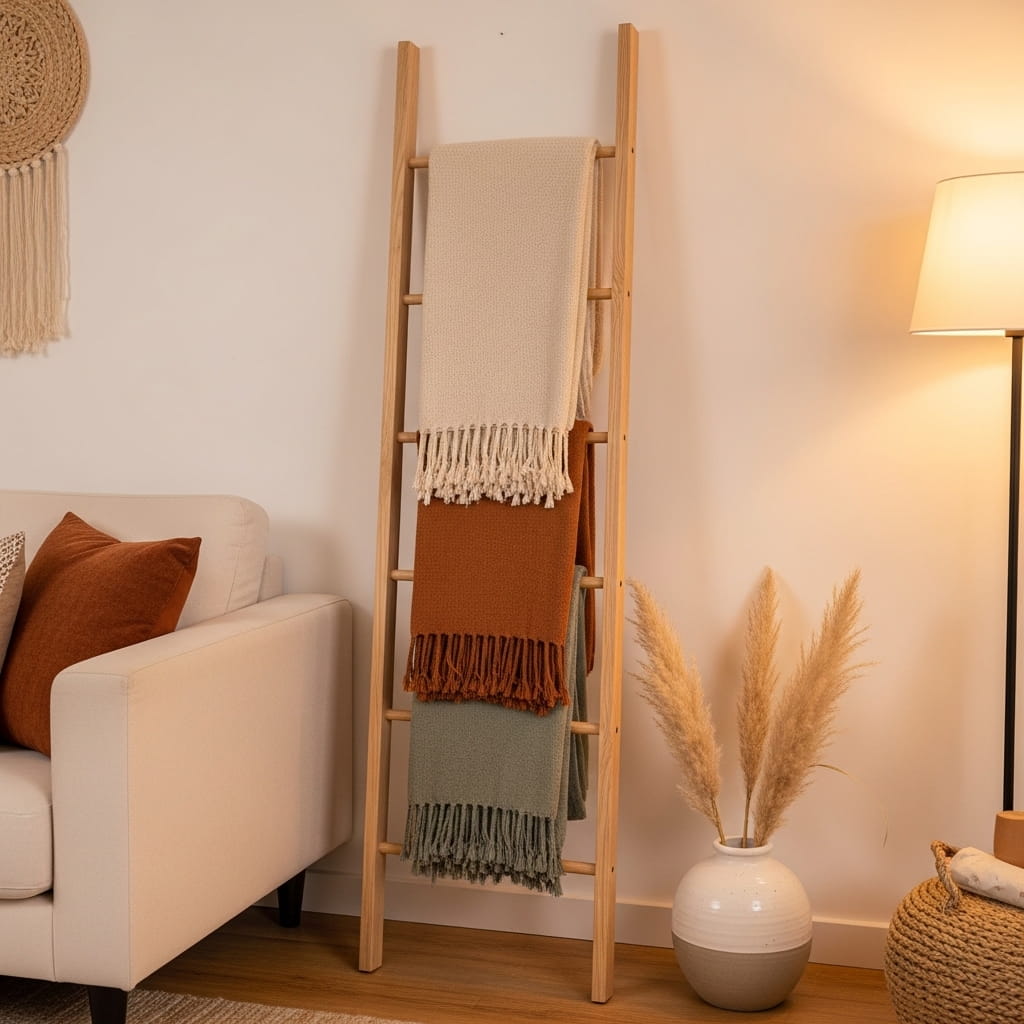
A blanket ladder leaning against the living room wall beside the sofa creates one of the most Pinterest-popular and practically effective throw blanket storage solutions available because it stores six to eight folded throws in a visually attractive vertical display that actively enhances the room’s warm, organic aesthetic. Each folded throw draped over a rung adds a layer of soft color and natural fiber texture to the living room corner that a closed storage box or basket cannot display.
Natural ash, oak, or pine wood ladder frames suit Scandinavian, farmhouse, coastal, and organic modern living room styles with equal visual ease. A slim ladder frame measuring only eighteen inches in width occupies a minimal floor footprint , leaning entirely against the wall and consuming only the small triangular floor area directly at the wall base , making it one of the most space-efficient blanket storage solutions for compact living rooms.
- Stores 6–8 throws in visual vertical display
- Blanket color adds decorative warmth to corners
- Slim 18-inch frame suits compact living rooms
- Rental-friendly zero-installation storage piece
- Suits farmhouse, coastal, and Scandinavian rooms
Folded throws in a coordinated color family , cream, rust, and sage green , draped across the ladder rungs create a color-blocked textile display that looks intentionally styled rather than casually stored. You fold each throw to a consistent width before draping it over the rung so the visible folded edge remains clean and even across the full height of the ladder display. That consistent folding width is the single detail that makes a blanket ladder look beautifully organized rather than simply occupied.
A small ceramic pot of dried pampas grass placed at the floor beside the ladder base adds an organic botanical accent at ground level that connects the ladder display to the broader natural material story of the living room. The dried pampas fronds extend upward toward the ladder frame and create a gentle visual transition between the floor and the textile display above. That floor-level botanical addition completes the blanket ladder corner into a fully realized, warm living room styling moment.
Floating Corner Shelf Unit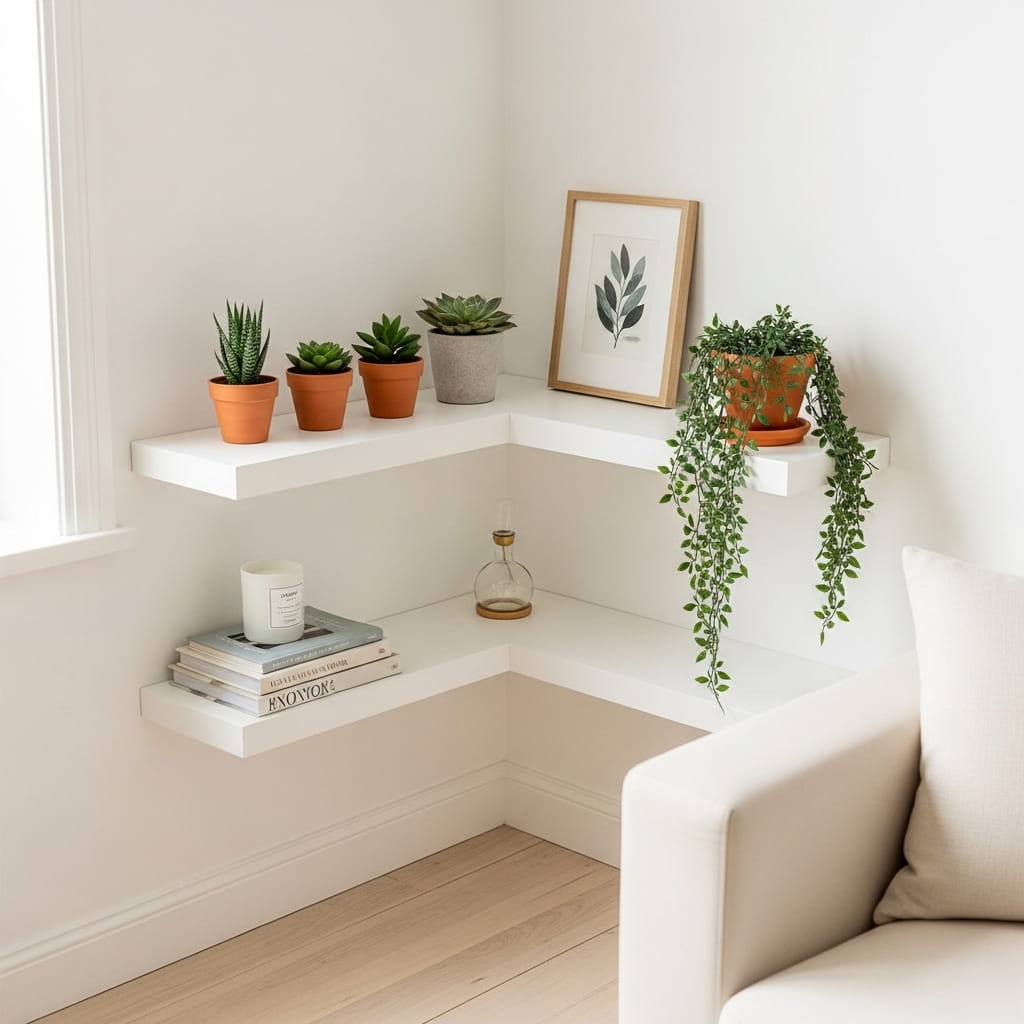
An L-shaped floating corner shelf unit mounts at the exact meeting point of two adjacent living room walls and creates a continuous two-arm shelf display that occupies the corner without consuming any floor space at all. The L-shape allows the shelf display to read as a single connected installation while each arm provides independent display and storage space suited to different object types and sizes. This corner-specific storage format uses the one living room area that standard rectangular wall shelves physically cannot reach.
White painted L-shaped corner shelves suit virtually every living room wall color because white floats against any background without creating visual competition. The clean white shelf surface keeps the focus entirely on the objects displayed on it , plants, books, ceramics, and prints , rather than on the shelf structure itself. That background-neutral quality of white shelving is why professional home stylists consistently choose white for floating shelves in living rooms with complex or saturated wall colors.
- L-shape reaches the corner no standard shelf fits
- Both arms provide independent display storage
- White shelves suit any living room wall color
- Zero floor depth makes them invisible in the room
- Perfect for compact apartments and small rooms
Styling the two shelf arms with different object types , plants and ceramics on one arm, books and prints on the other , creates a gentle visual distinction between the two sides of the L-shape that prevents the corner unit from looking symmetrically repetitive. That left-and-right differentiation within a unified shelf unit is what gives the corner display genuine visual interest and a naturally collected, personal quality that identical styling on both arms cannot achieve.
A trailing plant in a terracotta pot on the right shelf arm with vines extending toward the corner meeting point creates a living botanical connection between the two shelf arms that softens the hard architectural right angle at the corner junction. That trailing vine reaching toward the shelf corner is the organic detail that makes the L-shaped corner unit look genuinely warm and alive rather than cleanly architectural. This small plant placement decision consistently generates the most Pinterest saves of any corner shelf styling choice.
Minimalist Living Room Reset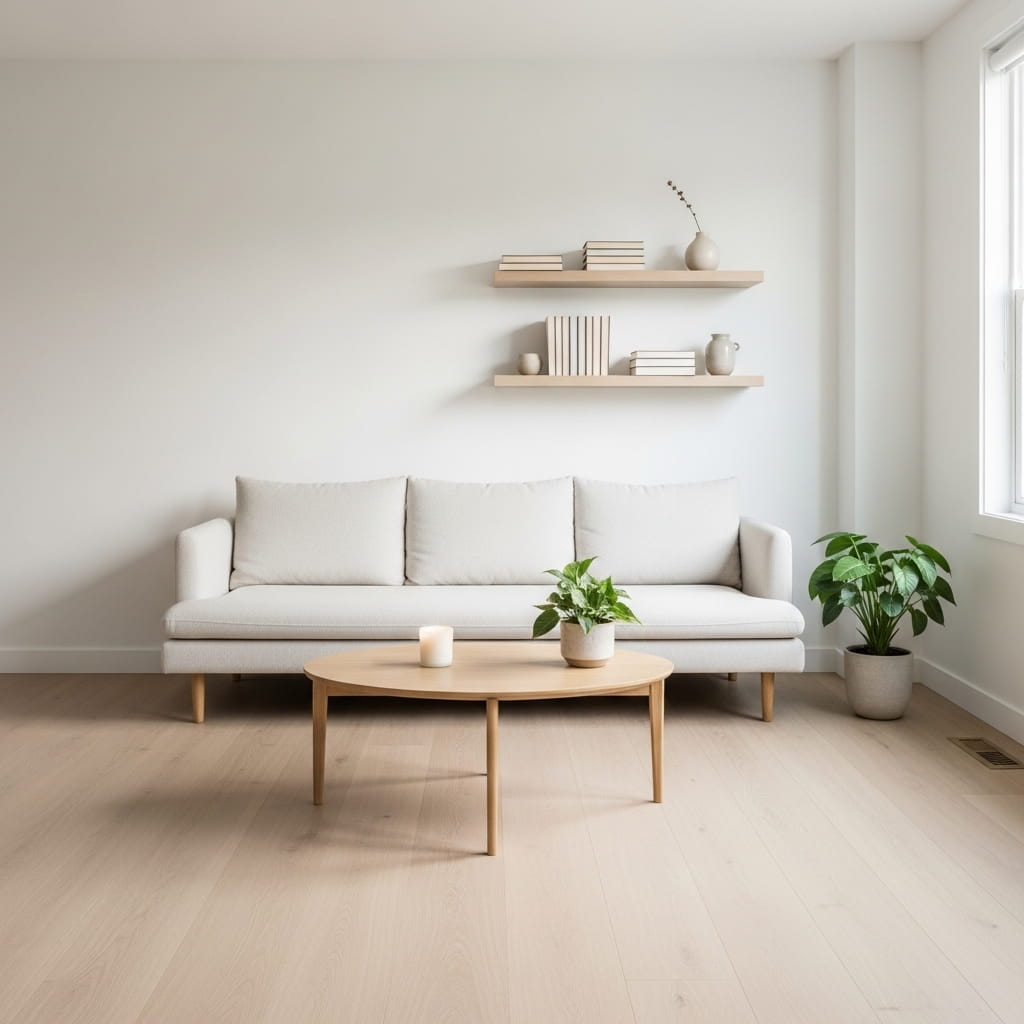
A full living room organization reset , removing every non-essential object from every surface, shelf, and floor zone simultaneously and then returning only the items that genuinely belong , is the most transformative single action available for any cluttered living space. The reset process reveals the actual spatial generosity of the room that accumulated objects have been hiding, often demonstrating that the living room felt small because of clutter rather than actual square footage limitations.
The minimalist reset rule is straightforward: every object that returns to the living room after the reset must serve either a clear practical function or a genuine decorative purpose , and objects that do neither go directly to storage, donation, or disposal. Applying that strict return-criteria to every living room object typically removes between thirty and fifty percent of previously displayed items and immediately makes the room feel measurably larger, calmer, and more intentional.
- Remove everything first to reveal the room’s true size
- Return only items with clear purpose or beauty
- Most rooms lose 30–50% of objects in a reset
- Clear floors instantly make rooms feel larger
- Suits any living room overwhelmed by accumulated clutter
Natural morning light flooding through cleared living room windows after a declutter reset activates the full warmth and spatial quality of the room in a way that clutter-blocked windows and surface-covered furniture simply cannot allow. Clear windows, clear floors, and clear surfaces together create a living room that feels genuinely larger, calmer, and more welcoming within minutes of the reset completion. That combined clarity , light, space, and surface , is the living room’s natural condition that organized storage maintains every single day.
The minimalist reset is not a one-time project , it is a repeatable monthly habit that takes under thirty minutes once the initial full reset establishes the correct baseline. You spend five minutes on the first of each month removing any newly accumulated objects that crept back onto surfaces, shelves, and floors during the previous four weeks. That monthly five-minute maintenance habit keeps the living room permanently at its most beautiful and intentional baseline state. I’ve seen this simple monthly reset habit become the single most transformative organizational practice in a household.
Conclusion
Your living room deserves to feel as beautiful as it looks in your imagination. These 28 living room organization ideas prove that clearing clutter, adding smart storage, and styling your space with intention creates a genuinely transformative daily home experience. You do not need to tackle all 28 ideas at once. Start with one. Try the storage ottoman, the woven basket corner, or the floating shelf. I’ve seen one small organizational change completely shift how a household feels and functions every day. Save this post on Pinterest, share it with a friend who needs a living room refresh, and take that first step today. Your most organized, beautiful living room is waiting.
Frequently Asked Questions
How do I start organizing a messy living room?
Start by removing everything from every surface at once. Sort items into three groups , keep, donate, and discard. Return only items that serve a clear purpose or add genuine beauty. Assign every kept item a specific storage home. Repeat this process once monthly to maintain the clean baseline consistently.
What is the best storage solution for a small living room?
A storage ottoman coffee table delivers the highest storage return for small living rooms. It hides blankets, remotes, and games inside its base while functioning as a coffee table surface above. Floating wall shelves are the second-best choice because they add storage without consuming any floor space at all.
How do I keep my living room tidy every day?
Assign every daily-use item a specific, accessible home , a tray for remotes, a basket for throws, a hook for bags. Spend five minutes each evening returning items to their homes. That five-minute daily habit prevents the weekly clutter buildup that makes tidying feel overwhelming and time-consuming consistently.
What furniture helps most with living room organization?
A media console with closed cabinet doors, a storage ottoman, and a floating bookcase deliver the most combined storage impact. Each piece hides a different category of living room clutter. Together, they eliminate surface mess, floor clutter, and cable chaos in one coordinated furniture arrangement that suits any room size.
How do I organize a living room with kids and toys?
A labeled storage bench against one wall hides the largest toy volume behind a clean lid. Add three labeled fabric bins on top for daily-access toys sorted by category. Teach children to return toys to their specific bin after play. That two-tier system reduces daily toy pickup time to under five minutes.
What color storage bins look best in a living room?
Neutral tones , cream, sage green, terracotta, and warm gray , suit living room aesthetics far better than bright primary colors. Natural seagrass and rattan bins add organic warmth while hiding contents completely. Choose bins in colors that already exist elsewhere in your living room for a cohesive, intentional appearance.
How do I organize a living room without built-in storage?
Use freestanding furniture with built-in storage capacity , a media console, storage ottoman, modular cube shelving, and a blanket ladder. Add floating wall shelves for vertical display storage. Use decorative trays on every surface to contain small daily items. That combination provides full living room storage without any built-in construction required.