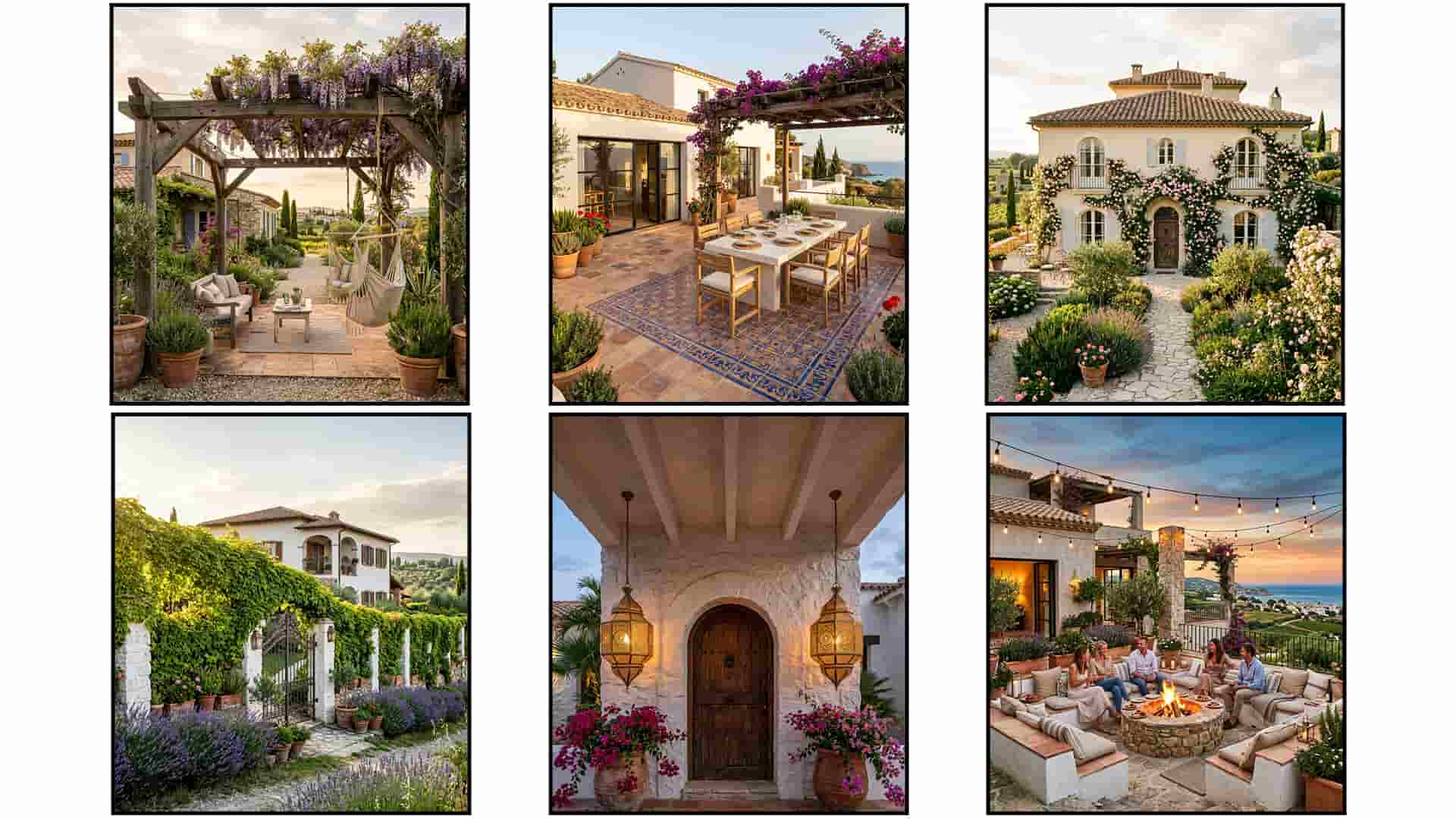
32 Modern Mediterranean House Exterior Design
Picture a sun-warmed whitewashed facade draped in vivid pink bougainvillea, terracotta tiles glowing in the afternoon light, and the gentle sound of a stone fountain from behind an arched garden gate. That image stops the scroll every single time.
Mediterranean house exterior design captures something that most architectural styles simply cannot , a genuine sense of warmth, history, and effortless outdoor living all wrapped into one beautifully cohesive aesthetic.
The good news is that achieving this look does not require building a villa in Tuscany or remodeling an entire property. In my experience, even three or four well-chosen exterior elements , a terracotta planter display, a climbing rose facade, or a pair of arched windows , can completely shift how a home feels from the street.
This article covers 32 creative and modern Mediterranean exterior design ideas drawing from Spanish Colonial, Italian villa, French Provençal, Greek island, Moroccan, and Andalusian traditions. Each idea suits a different budget, plot size, and climate zone.
Professional architects, landscape designers, and exterior stylists consistently highlight the Mediterranean style as one of the most livable, visually timeless, and property-value-positive exterior design approaches available to homeowners in warm climates.
Whether you want to refresh a single entry detail or reimagine your entire facade, this list gives you practical, visually stunning starting points for every ambition and budget level in 2026.
Whitewashed Stone Facade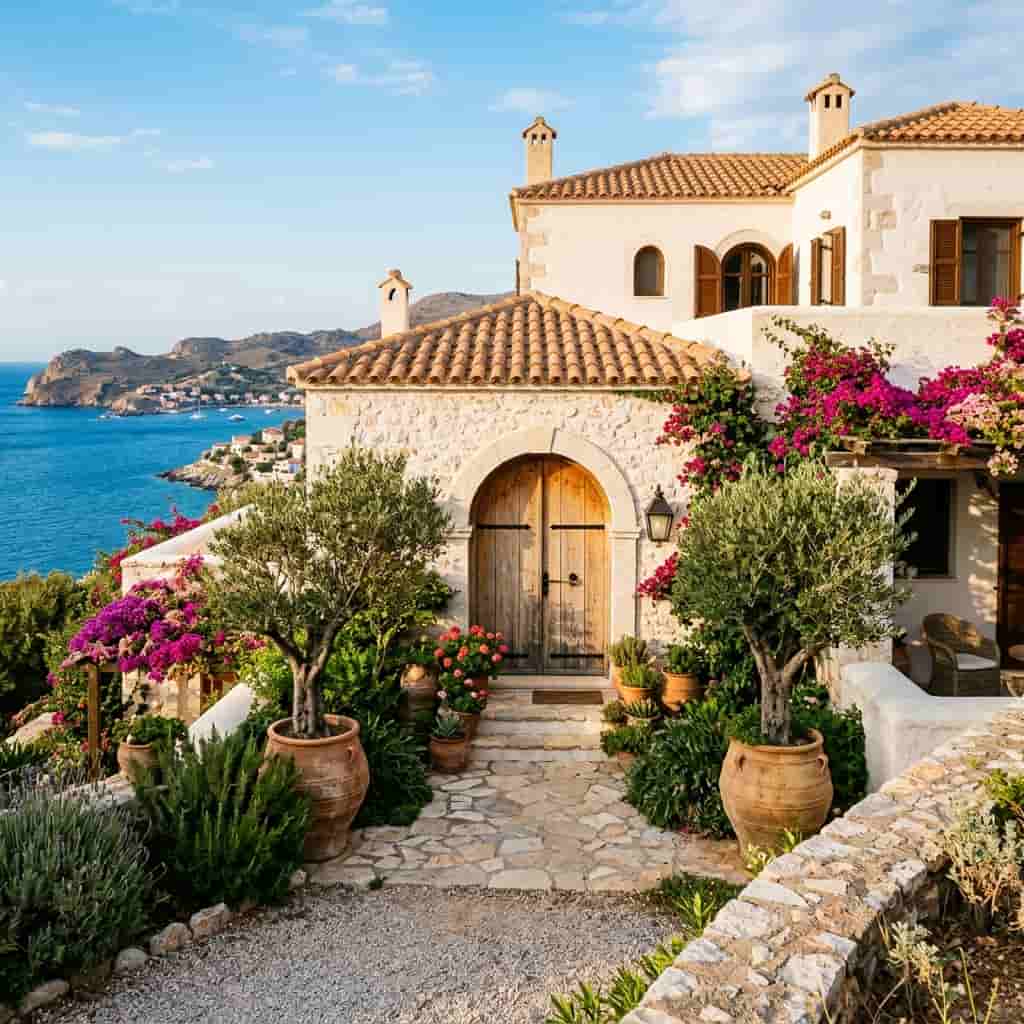
A whitewashed stone facade instantly delivers the warm, sun-soaked character that defines authentic Mediterranean house exterior design across coastal European and American homes.
Rough-hewn stone beneath crisp white lime wash creates beautiful surface texture that catches golden light differently throughout the day. Terracotta planters with olive trees complete the look.
- Whitewash adds instant coastal character
- Stone texture catches light beautifully
- Suits warm and sunny climates
- Low-maintenance and highly durable
Whitewashed stone exteriors age beautifully over time, developing a natural patina that actually enhances the Mediterranean character rather than degrading the overall appearance of the facade.
This exterior style works best in warm, dry climates like California, Texas, Florida, and the American Southwest where Mediterranean architecture already feels naturally at home year-round.
Terracotta Tile Roofline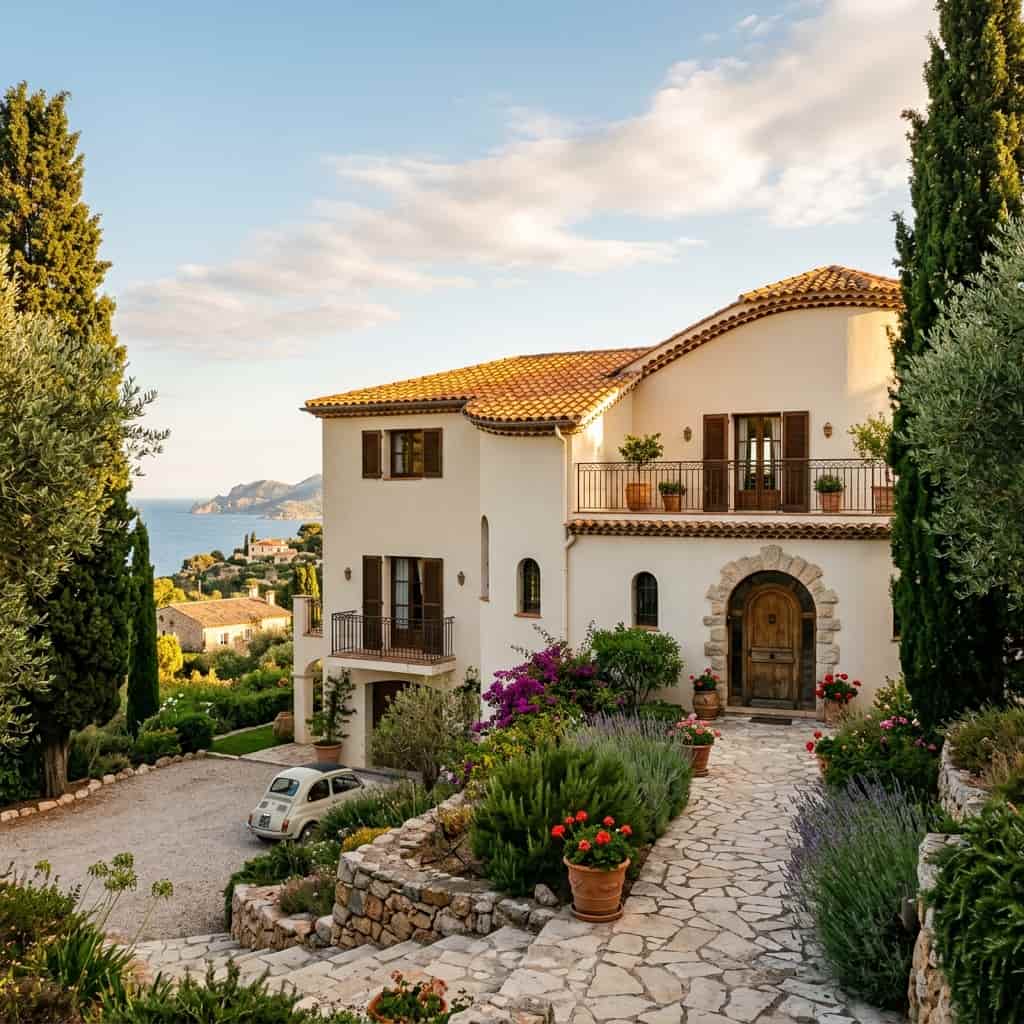
A curved terracotta tile roofline is the single most recognizable visual signature of authentic Mediterranean exterior architecture across every regional variation and climate zone.
Warm clay-colored roof tiles against smooth ivory stucco walls create a naturally harmonious color palette that references centuries of Southern European coastal building tradition beautifully.
- Terracotta tiles define Mediterranean style
- Clay color pairs with ivory stucco
- Curved profile adds classical elegance
- Extremely durable and weather-resistant
That’s why many architects recommend terracotta rooflines for Mediterranean revival homes , the clay material naturally regulates roof temperature in warm climates far better than standard asphalt shingles.
Terracotta roof tiles suit homes in California, Arizona, New Mexico, and Florida particularly well. The clay material handles intense sun exposure and dry heat without cracking or fading significantly.
Arched Entry Gate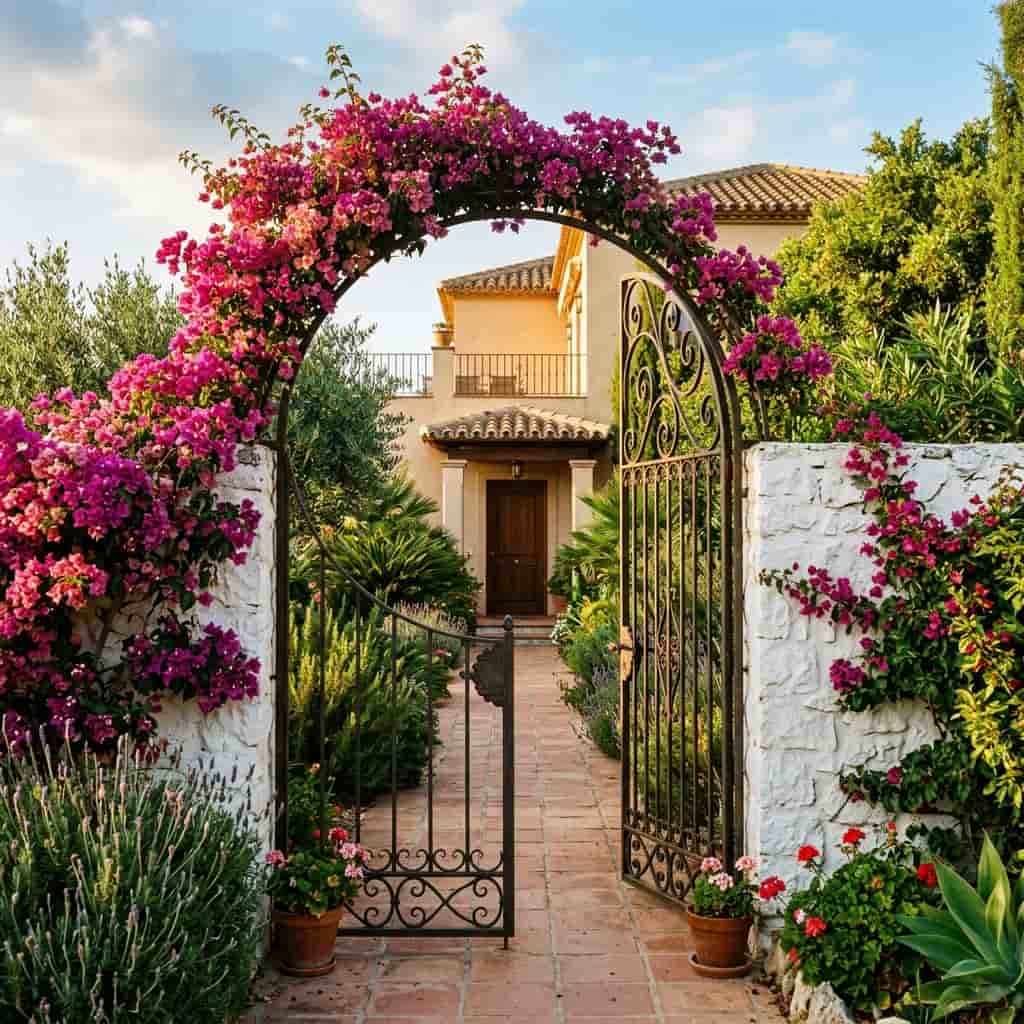
A tall arched wrought iron entry gate set into a whitewashed perimeter wall creates an immediately dramatic and romantic first impression for any Mediterranean-style home exterior.
The combination of curved ironwork and climbing bougainvillea against a whitewashed wall references the grand villa gates found throughout Southern Spain, Italy, and coastal Greece authentically.
- Arched gate adds immediate drama
- Wrought iron suits Mediterranean styling
- Bougainvillea softens the hard gate
- Creates strong curb appeal instantly
In my experience, arched entry gates create the strongest first impression of any single exterior element on a Mediterranean-style home, setting the tone before guests reach the front door.
This gate style works beautifully year-round in warm climates. Powder-coated wrought iron resists rust and corrosion effectively, requiring only occasional repainting every five to seven years for lasting protection.
Stucco Exterior With Blue Shutters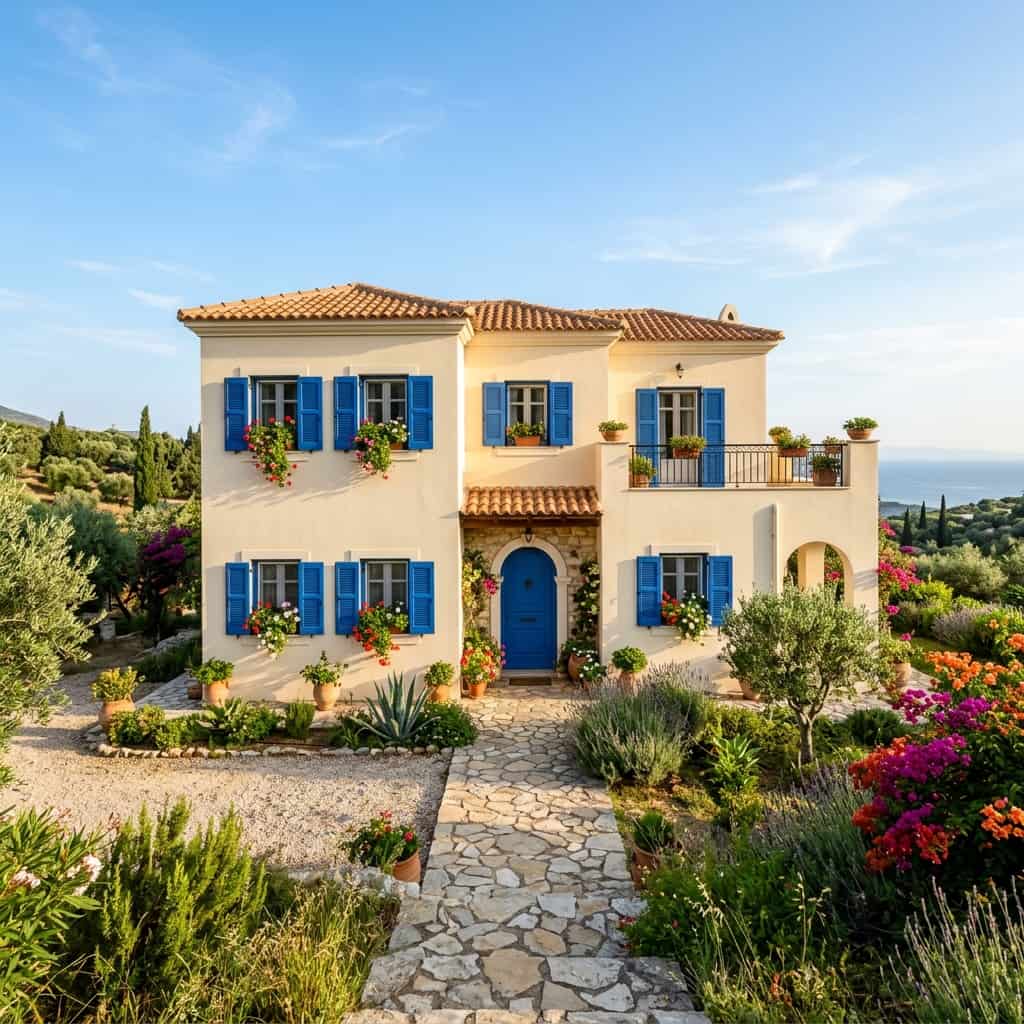
Smooth ivory stucco walls paired with cobalt blue painted shutters capture the most iconic color combination associated with Greek island and coastal Mediterranean exterior architecture worldwide.
Cobalt blue shutters against warm stucco create a high-contrast, visually arresting facade that photographs beautifully and generates consistently strong engagement on Pinterest home exterior boards.
- Cobalt blue adds coastal vibrancy
- Stucco stays smooth and durable
- Shutters frame windows beautifully
- Iconic Greek island color palette
That’s why many exterior designers recommend this blue and ivory stucco combination for Mediterranean revival homes , the color pairing feels authentic, timeless, and completely climate-appropriate for warm regions.
This exterior color scheme works best on south or west-facing facades where strong afternoon sunlight makes the cobalt blue shutters glow most vividly against the warm stucco background.
Courtyard Fountain Entry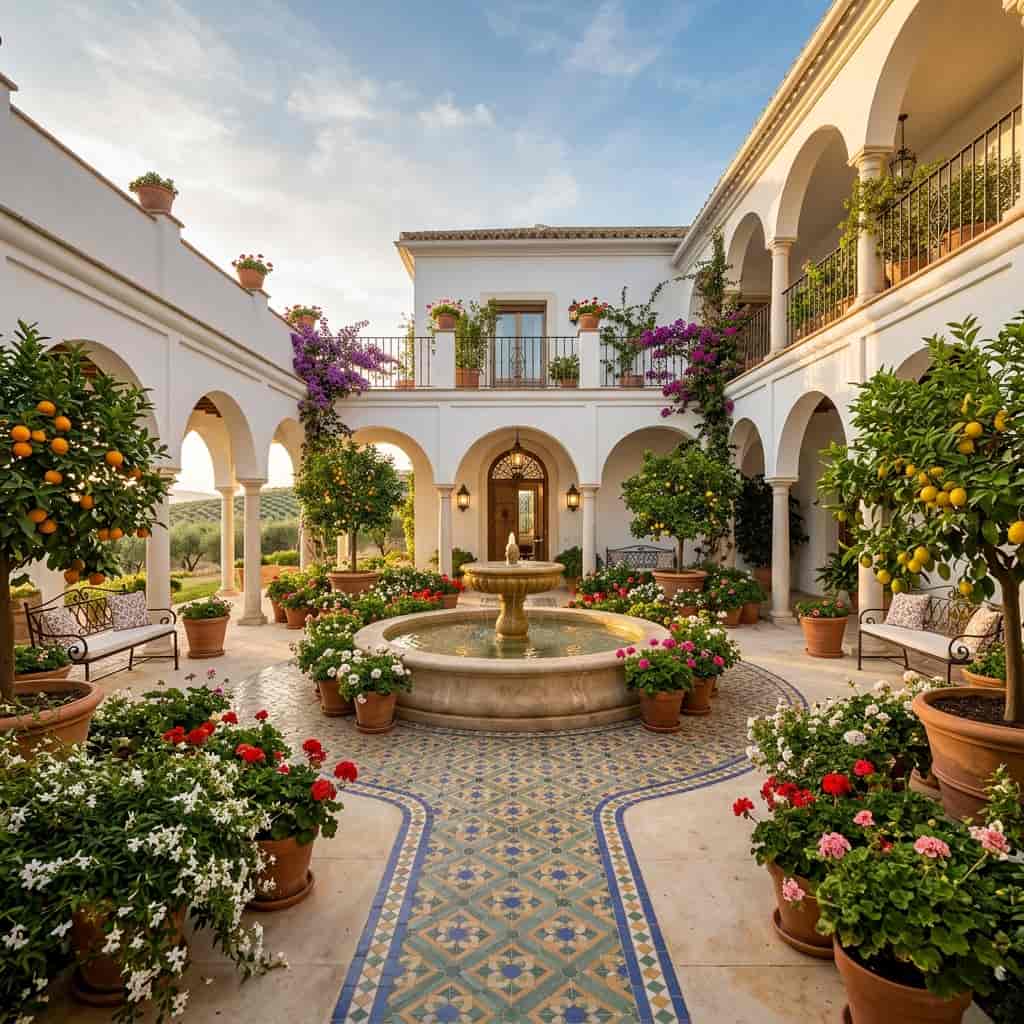
A central courtyard fountain enclosed by whitewashed arched walls creates the most authentically Andalusian and romantically Mediterranean exterior entry experience possible for any home.
Stone fountains surrounded by citrus trees, terracotta planters, and trailing jasmine reference the private garden courtyards of traditional Spanish and Moorish architectural heritage deeply and beautifully.
- Courtyard fountain adds romantic drama
- Citrus trees enhance Mediterranean mood
- Jasmine adds natural fragrance
- Mosaic tiles add color and detail
I’ve seen courtyard fountain entries completely transform the arrival experience at Mediterranean-style homes. The sound of moving water combined with lush planting creates an immediate sense of private luxury.
This entry courtyard design suits larger Mediterranean home plots most effectively. Professional landscapers recommend drought-tolerant citrus, olive, and jasmine plantings for low-maintenance Mediterranean courtyard gardens in warm climates.
Wrought Iron Balcony Rail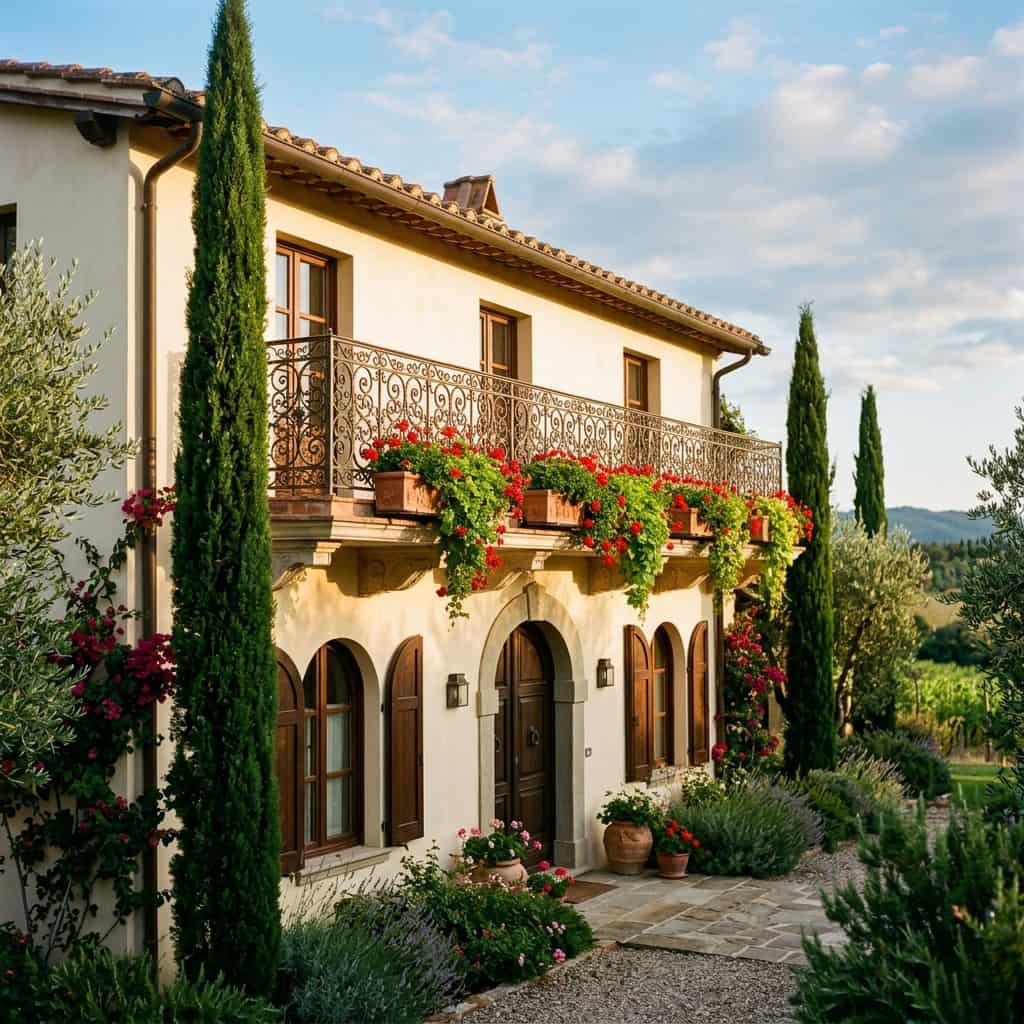
An ornate wrought iron balcony railing along a second-floor terrace adds classical European elegance and authentic architectural detail to any Mediterranean-style home exterior facade.
Trailing red geraniums spilling from terracotta window boxes beneath a wrought iron balcony create a quintessentially Italian villa scene that feels genuinely romantic and timelessly beautiful.
- Wrought iron adds classical elegance
- Geraniums bring vivid color
- Balcony creates vertical visual interest
- Suits Italian and Spanish villa styles
Wrought iron balcony railings require sealing and repainting every five to seven years in humid coastal climates. Powder-coating extends the finish lifespan significantly and reduces ongoing maintenance requirements considerably.
This balcony style suits Mediterranean homes in coastal California and Florida particularly well. The ornate ironwork feels naturally cohesive alongside stucco walls and terracotta tile rooflines.
Olive Tree Lined Driveway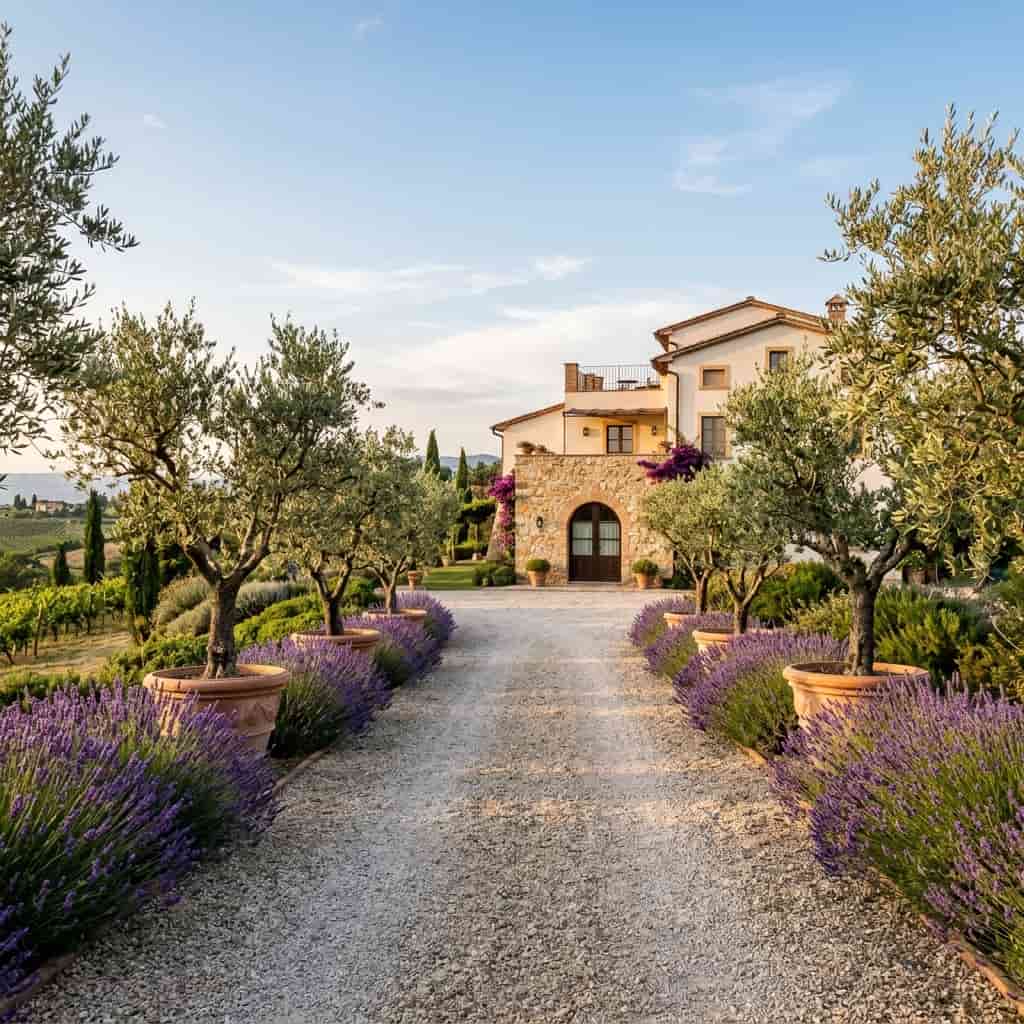
A gravel driveway lined with mature olive trees in large terracotta planters creates an immediately grand and Tuscan-inspired arrival sequence for any Mediterranean exterior home.
Lavender planted along driveway edges adds soft purple color, natural fragrance, and drought-tolerant ground cover that perfectly complements the silver-green foliage of mature olive trees above.
- Olive trees add Tuscan grandeur
- Gravel driveway suits Mediterranean styling
- Lavender borders add soft color
- Drought-tolerant and low-maintenance planting
That’s why many Mediterranean landscape designers recommend olive tree driveway linings , the trees thrive in hot, dry conditions while delivering year-round visual impact and genuine European character.
This driveway design suits Mediterranean homes on larger plots in California, Arizona, and Texas. Olive trees grow slowly and require minimal watering once established, making them ideal long-term landscaping investments.
Mosaic Tile Front Step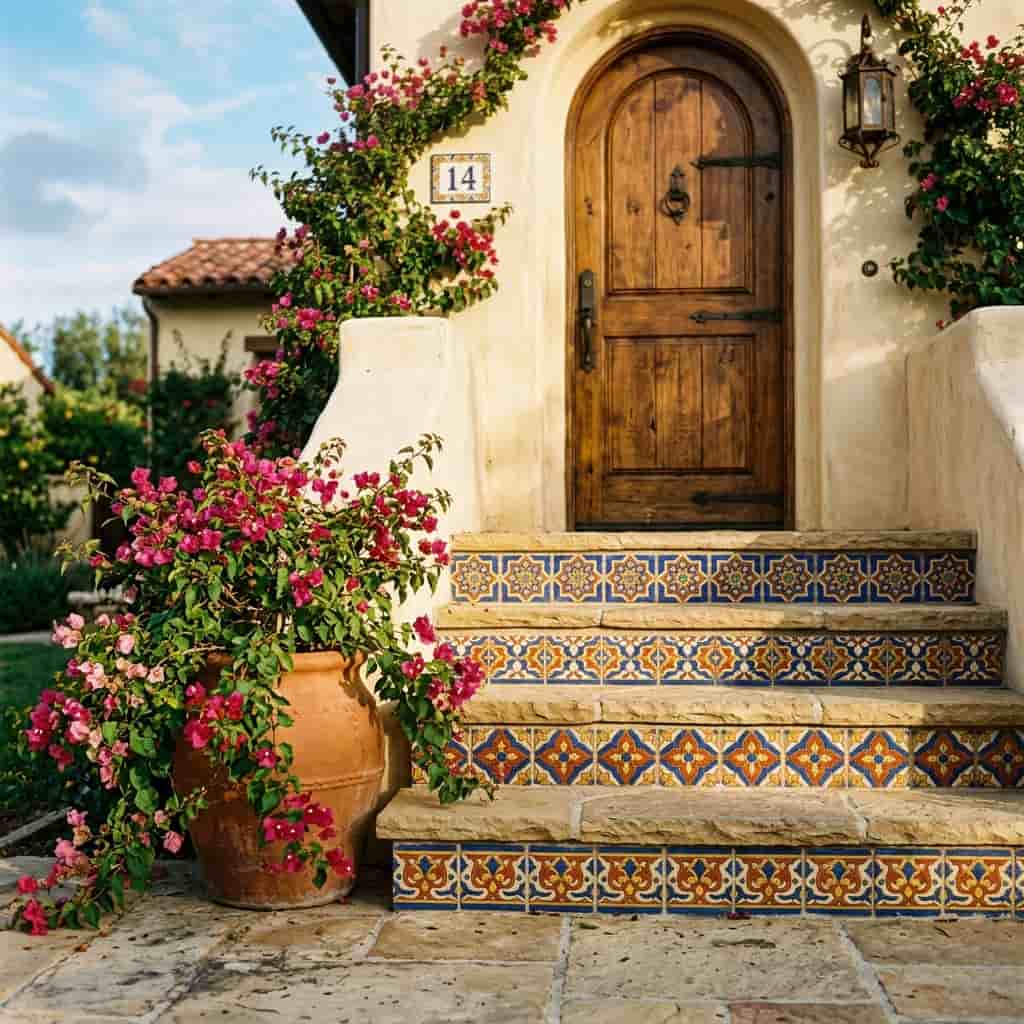
Handmade mosaic tile risers on stone front steps add vivid artisanal color and unmistakable Mediterranean craftsmanship to any home entry in a deeply personal and eye-catching way.
Cobalt blue, terracotta orange, and warm cream geometric mosaic patterns reference Moroccan, Spanish, and Southern Italian tile-making traditions that have defined Mediterranean decorative arts for centuries.
- Mosaic tiles add artisanal color
- Cobalt and terracotta feel authentic
- Entry steps become focal point
- Handmade tiles feel genuinely unique
In my experience, mosaic tile front steps generate more guest compliments and Pinterest saves than almost any other single exterior detail on a Mediterranean-inspired home facade.
Porcelain mosaic tiles sealed with outdoor-grade grout sealant withstand heavy foot traffic and freeze-thaw cycles effectively. Annual resealing keeps the grout lines looking clean and fresh year-round.
Bougainvillea Covered Pergola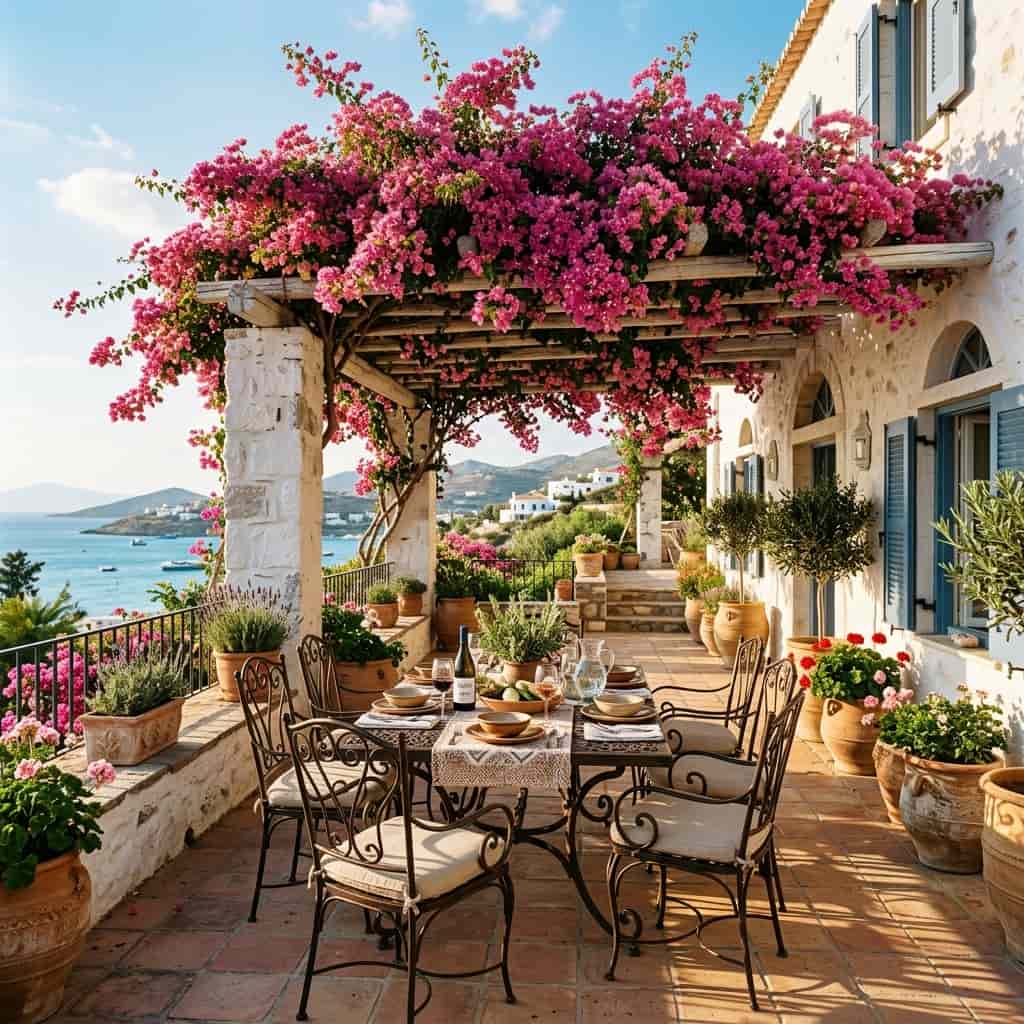
A whitewashed stone pergola draped in vivid pink bougainvillea creates one of the most romantically beautiful and shareable outdoor dining spaces in Mediterranean exterior design.
The contrast between bright pink bougainvillea blooms and stark white stone creates a dramatic, high-impact visual that defines the outdoor living areas of Spanish and Italian Mediterranean villas.
- Bougainvillea creates natural canopy shade
- Pink blooms contrast white stone beautifully
- Pergola defines outdoor dining zone
- Suits warm and sunny climates
That’s why many Mediterranean landscape designers consider bougainvillea-covered pergolas the single most impactful outdoor feature for creating authentic coastal villa atmosphere in warm residential gardens.
Bougainvillea thrives in USDA hardiness zones 9 through 11, making it ideal for California, Florida, Texas, Arizona, and Gulf Coast Mediterranean-style homes with full sun exposure year-round.
Limestone Block Exterior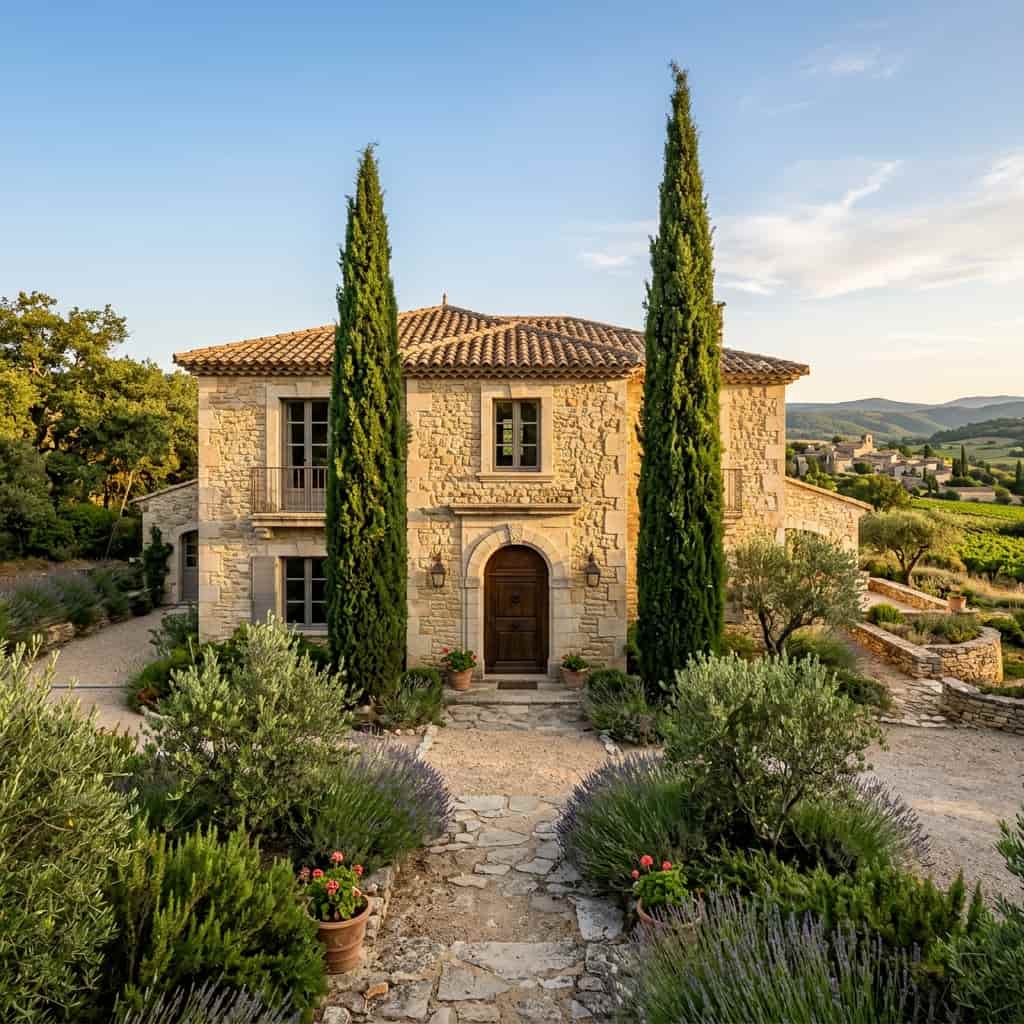
Cut limestone block exterior walls deliver a sense of substantial permanence and warm European elegance that no painted render or standard stucco facade can fully replicate.
Warm honey and soft cream limestone tones reference the grand farmhouses and village homes of Provence, Tuscany, and Southern Spain where natural stone has built homes for centuries.
- Limestone adds permanent European elegance
- Warm honey tones feel timeless
- Suits Provençal and Tuscan styles
- Extremely durable and long-lasting material
Limestone block exteriors require sealing every three to five years to prevent moisture absorption in rainy climates. In dry Southwest and California climates, maintenance requirements reduce significantly over time.
This exterior material suits larger Mediterranean revival homes in warm, dry climates most effectively. The substantial visual weight of cut limestone blocks demands generous plot proportions and mature landscaping.
Blue Mosaic Pool Surround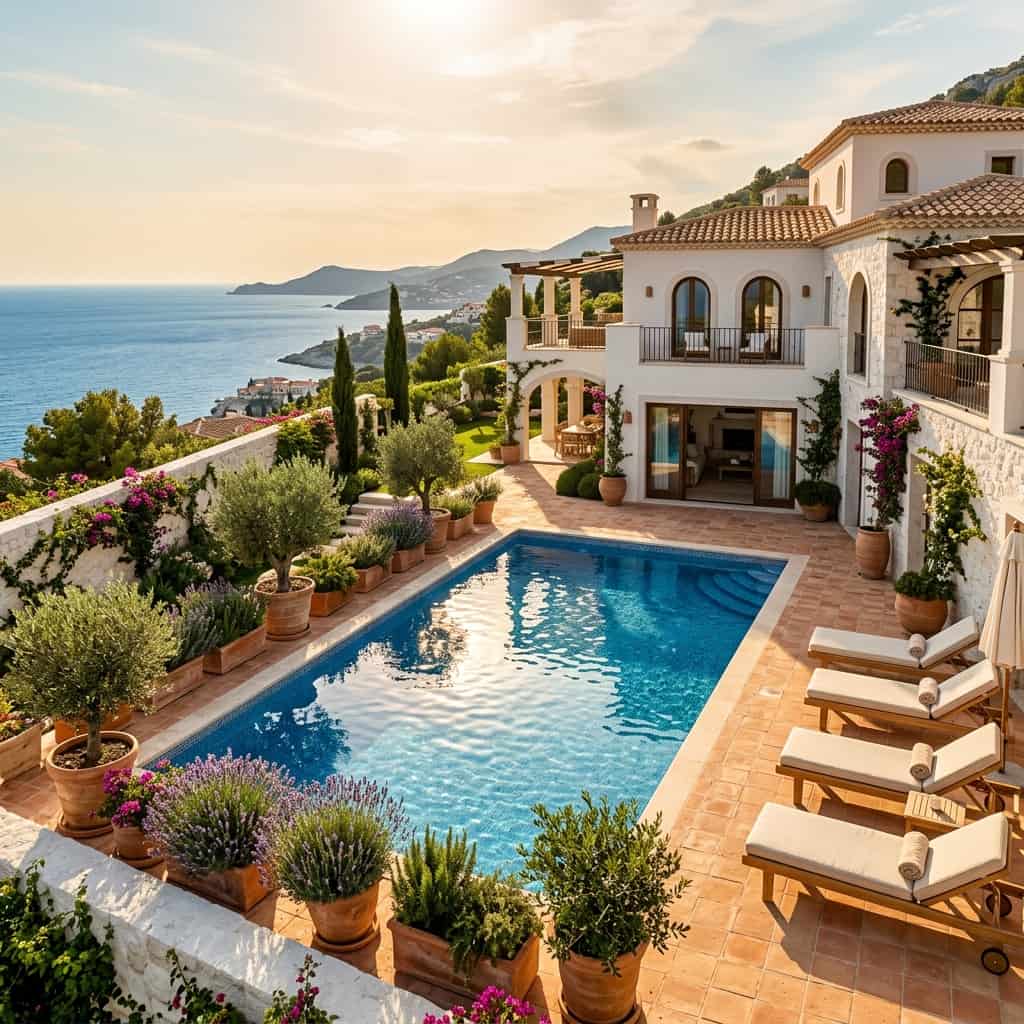
A blue mosaic tile pool with a terracotta deck surround creates the most quintessentially Mediterranean outdoor living feature any warm-climate home exterior can possibly include.
Cobalt and sapphire mosaic tiles inside the pool reflect sunlight beautifully, creating a glowing jewel-like water surface that makes the garden feel like a private coastal villa.
- Blue mosaic tiles glow under sunlight
- Terracotta deck adds warm contrast
- Pool defines outdoor living zone
- Suits luxury Mediterranean home plots
I’ve noticed that blue mosaic pool surrounds create the strongest Pinterest engagement of any Mediterranean exterior outdoor feature, generating saves across both home design and travel inspiration boards consistently.
Professional pool designers recommend cobalt mosaic tiles for Mediterranean-style pools in warm climates because the vivid blue color intensifies beautifully as water depth increases across the pool interior.
Arched Window Surrounds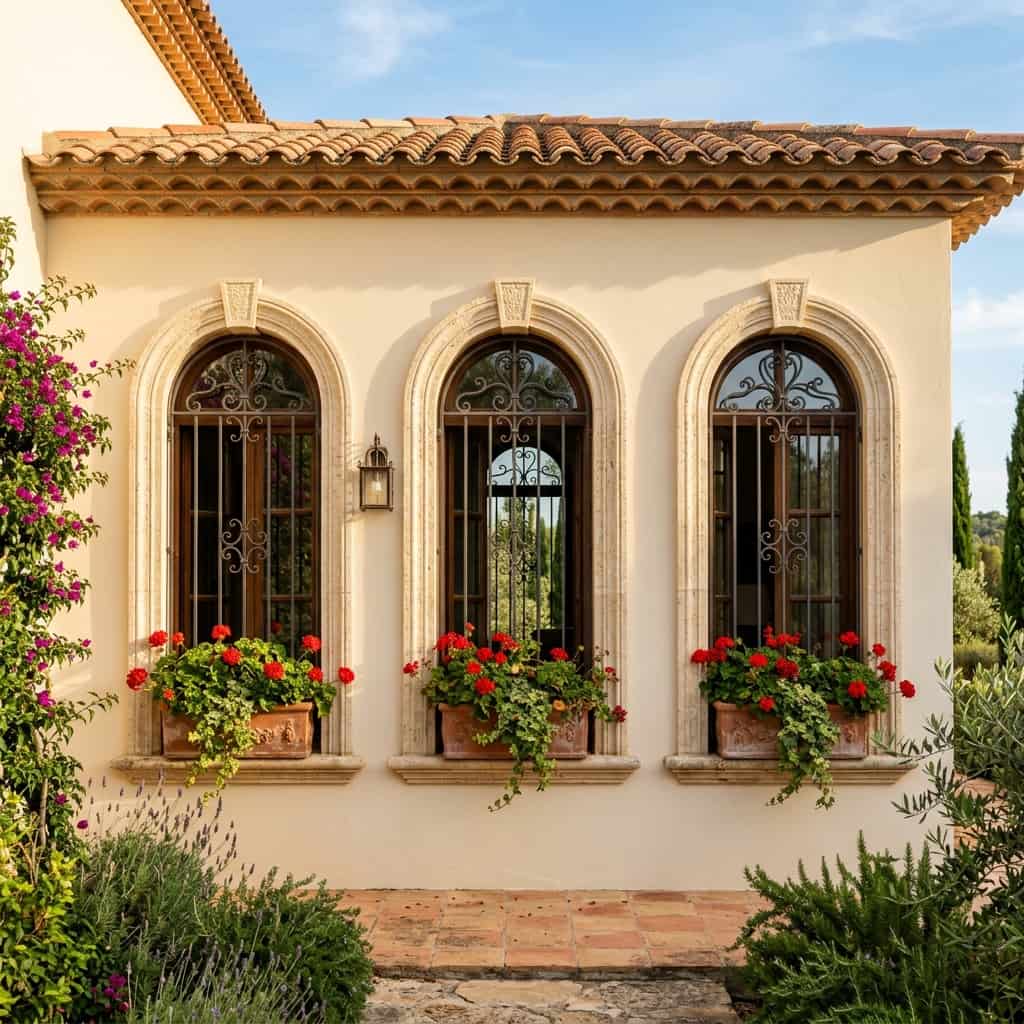
Tall arched windows with decorative stone surrounds give any Mediterranean exterior facade its most recognizably classical and architecturally distinguished visual detail without requiring full renovation work.
Stone-carved arch surrounds set into smooth ivory stucco walls reference the grand palazzo and hacienda architecture of Italy, Spain, and Southern France in the most authentic way.
- Arched windows add classical distinction
- Stone surrounds elevate plain stucco
- Geranium boxes add vivid color
- Suits Italian and Spanish styles
That’s why many Mediterranean revival architects prioritize arched window surrounds as the first exterior architectural detail to specify , the curved profile immediately signals the style with unmistakable clarity.
Arched window surrounds work beautifully on both single and double-story Mediterranean homes. Cast stone surrounds offer the most cost-effective route to achieving authentic carved limestone detailing on new builds.
Rustic Wooden Front Door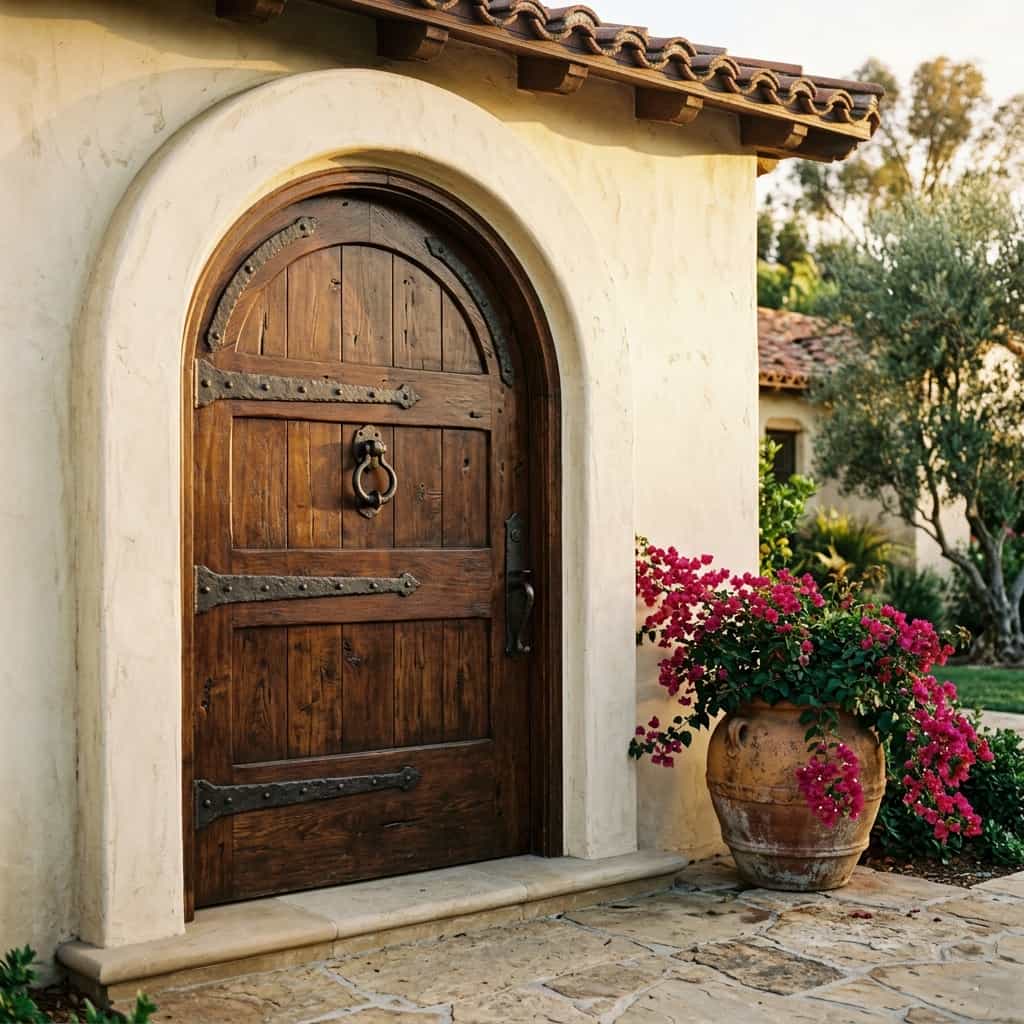
A large solid wood arched front door with heavy wrought iron hardware creates an instantly commanding entry statement that anchors the entire Mediterranean house exterior with confidence.
Deep walnut brown wood paired with hand-forged iron strap hinges and a traditional iron door knocker references the grand hacienda and Spanish Colonial entry doors of the American Southwest.
- Solid wood door feels substantial
- Iron hardware adds rustic authenticity
- Arched profile defines Mediterranean entry
- Walnut brown suits stucco facades
In my experience, a well-chosen solid wood arched front door elevates the entire Mediterranean exterior more significantly than any other single architectural element or landscaping addition combined.
Solid wood exterior doors require refinishing every two to three years in direct sun. Teak and mahogany offer the best natural weather resistance for warm Mediterranean climates.
Terracotta Planter Garden Wall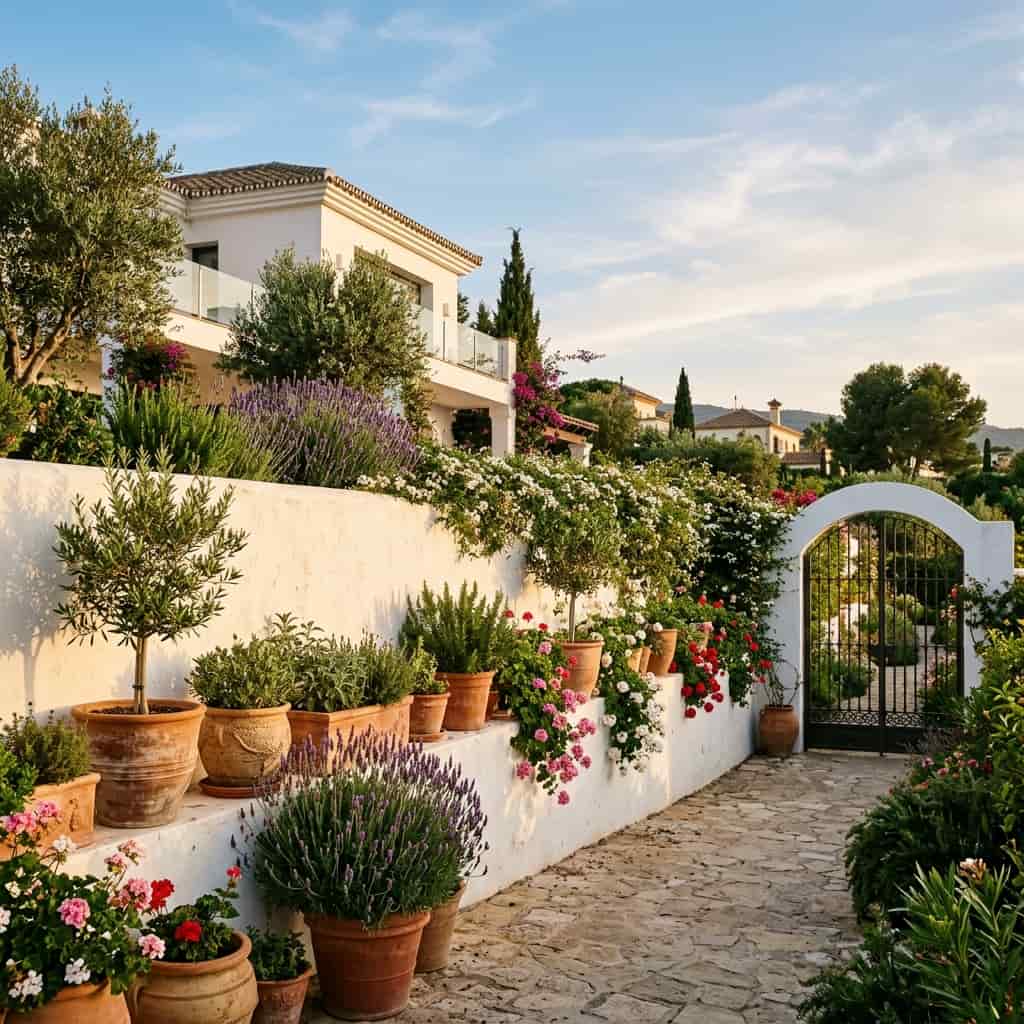
A whitewashed garden wall lined with terracotta planters of varying heights creates a richly layered, fragrant, and authentically Mediterranean exterior garden boundary full of character.
Olive trees, lavender, rosemary, and trailing geraniums planted in terracotta pots deliver year-round Mediterranean garden character while remaining drought-tolerant and low-maintenance in warm, sunny climates.
- Terracotta planters add layered depth
- Lavender and rosemary add fragrance
- Whitewashed wall creates strong backdrop
- Drought-tolerant and low-maintenance plants
That’s why many Mediterranean landscape designers recommend terracotta planter garden walls , the combination of whitewashed masonry and clay pots creates authentic European garden character with minimal ongoing care.
This garden wall idea suits Mediterranean homes on narrow urban plots where traditional garden beds lack space. Vertical planting through tiered terracotta planters maximizes greenery within compact outdoor areas.
Covered Loggia Outdoor Room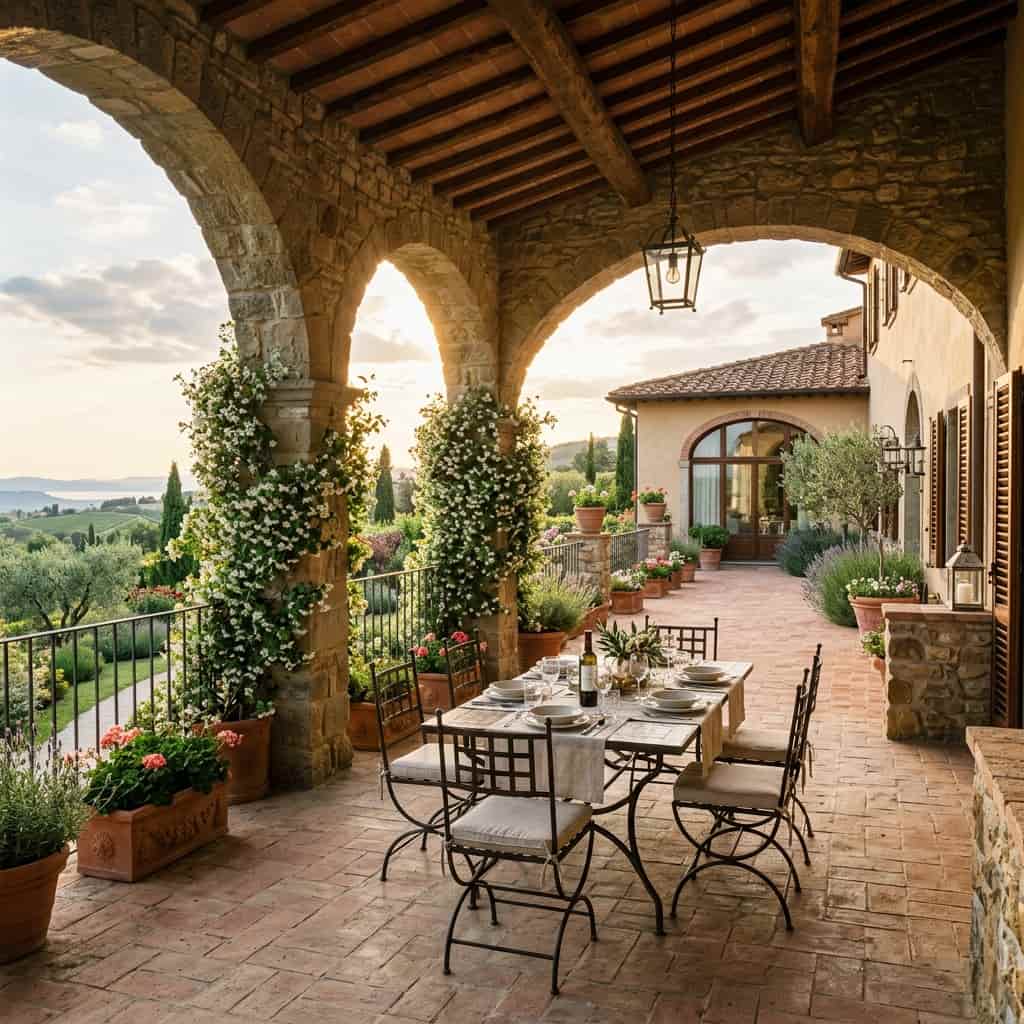
A covered stone loggia with arched openings creates a fully sheltered outdoor dining and living room that defines the most livable feature of authentic Italian villa exterior design.
Stone columns supporting arched loggia openings frame garden terrace views beautifully while providing shade and shelter that extends outdoor entertaining season across all twelve months of the year.
- Loggia creates sheltered outdoor living
- Arched openings frame garden views
- Stone columns add classical detail
- Extends outdoor entertaining year-round
I’ve seen covered loggia additions completely transform Mediterranean home exteriors from standard stucco facades into genuinely grand residential architecture that commands immediate attention and admiration from the street.
Covered loggias suit Mediterranean homes in California, Florida, and the Gulf Coast where outdoor living extends year-round. Professional architects recommend minimum 10-foot ceiling heights for comfortable loggia proportions.
Clay Pot Staircase Display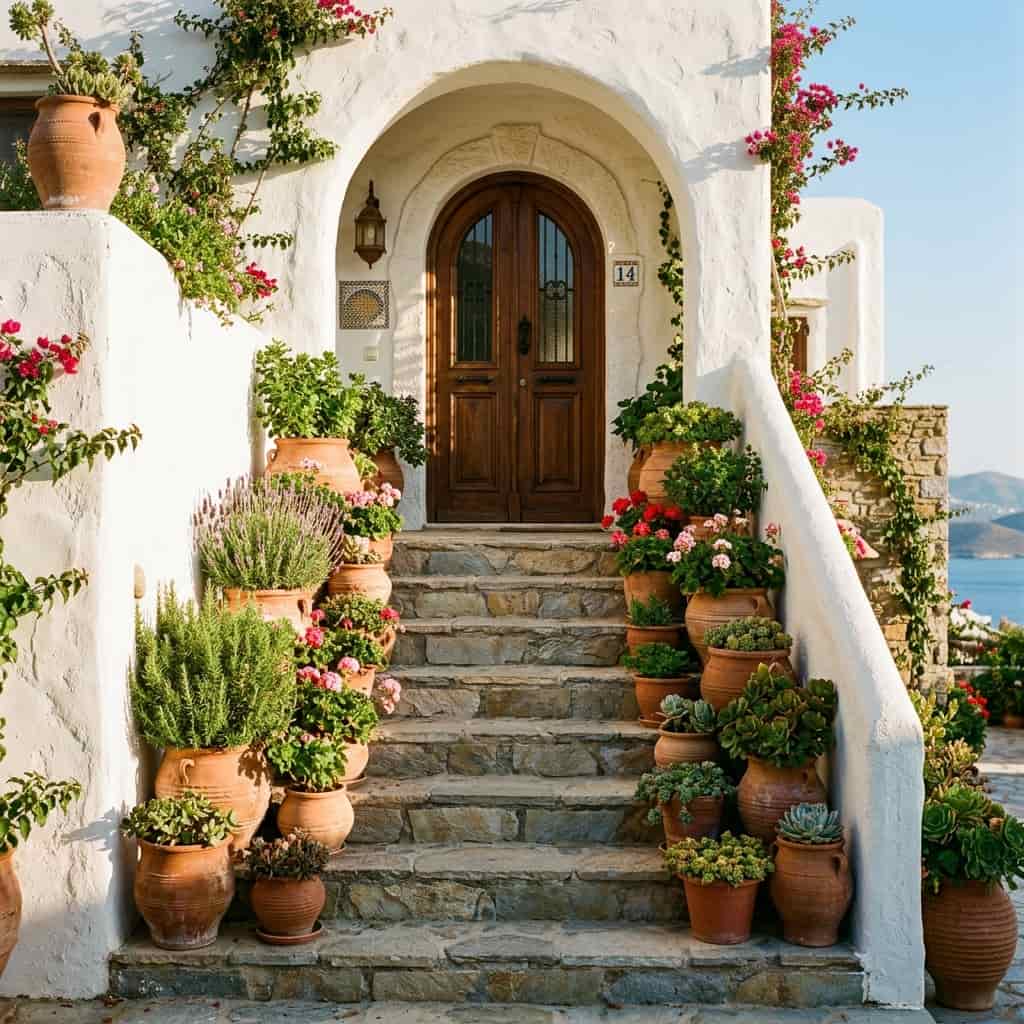
Terracotta clay pots of varying sizes arranged across each stone stair step create a charming, artisanal entry display that feels genuinely Mediterranean and welcomingly personal.
Trailing rosemary, lavender, geraniums, and succulents planted across the staircase pots deliver fragrance, color, and texture that greet every visitor arriving at the front door with sensory warmth.
- Varied pot sizes add visual rhythm
- Trailing plants soften stone steps
- Fragrant herbs enhance the entry
- Budget-friendly and easily refreshed
That’s why many Mediterranean home stylists recommend clay pot staircase displays for smaller home exteriors , the arrangement creates maximum charm and botanical richness without requiring large garden plot space.
This display refreshes easily with seasonal plantings throughout the year. Summer geraniums transition to winter herbs like rosemary and thyme, keeping the staircase display looking intentional across every season.
Carved Stone Fountain Wall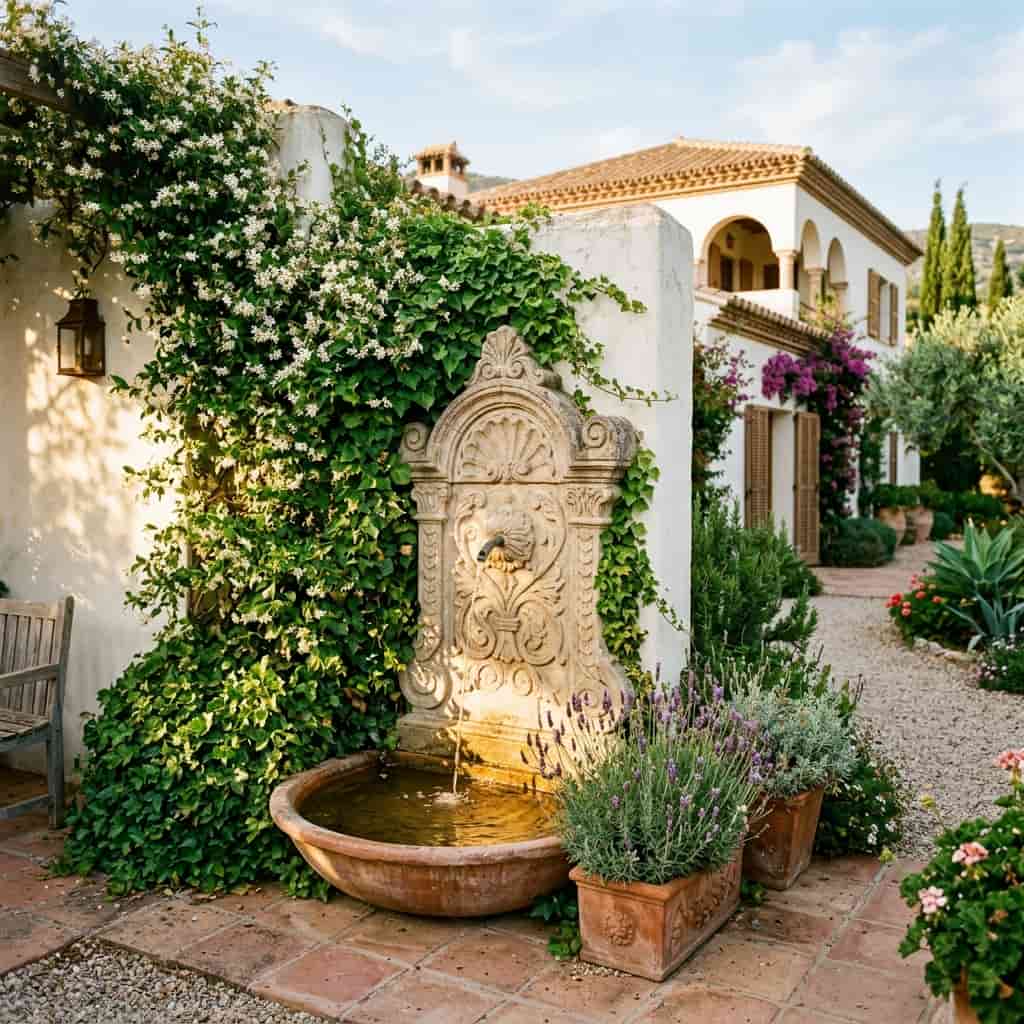
A carved stone wall fountain mounted on a whitewashed garden wall creates an instantly romantic and authentically Moorish focal point for any Mediterranean home exterior garden space.
The gentle sound of flowing water combined with surrounding jasmine fragrance transforms a plain garden wall into a genuinely sensory and deeply atmospheric outdoor living experience.
- Wall fountain adds romantic atmosphere
- Moving water creates sensory experience
- Jasmine fragrance enhances the setting
- Suits Andalusian and Moorish styling
That’s why many Mediterranean landscape designers consider wall fountains the single most impactful garden feature for creating authentic Spanish and Moorish courtyard atmosphere in residential exterior spaces.
Wall fountains suit compact Mediterranean garden spaces particularly well. A recirculating pump system requires minimal water consumption and only occasional cleaning to maintain clear, fresh-flowing water year-round.
Cypress Tree Flanked Entry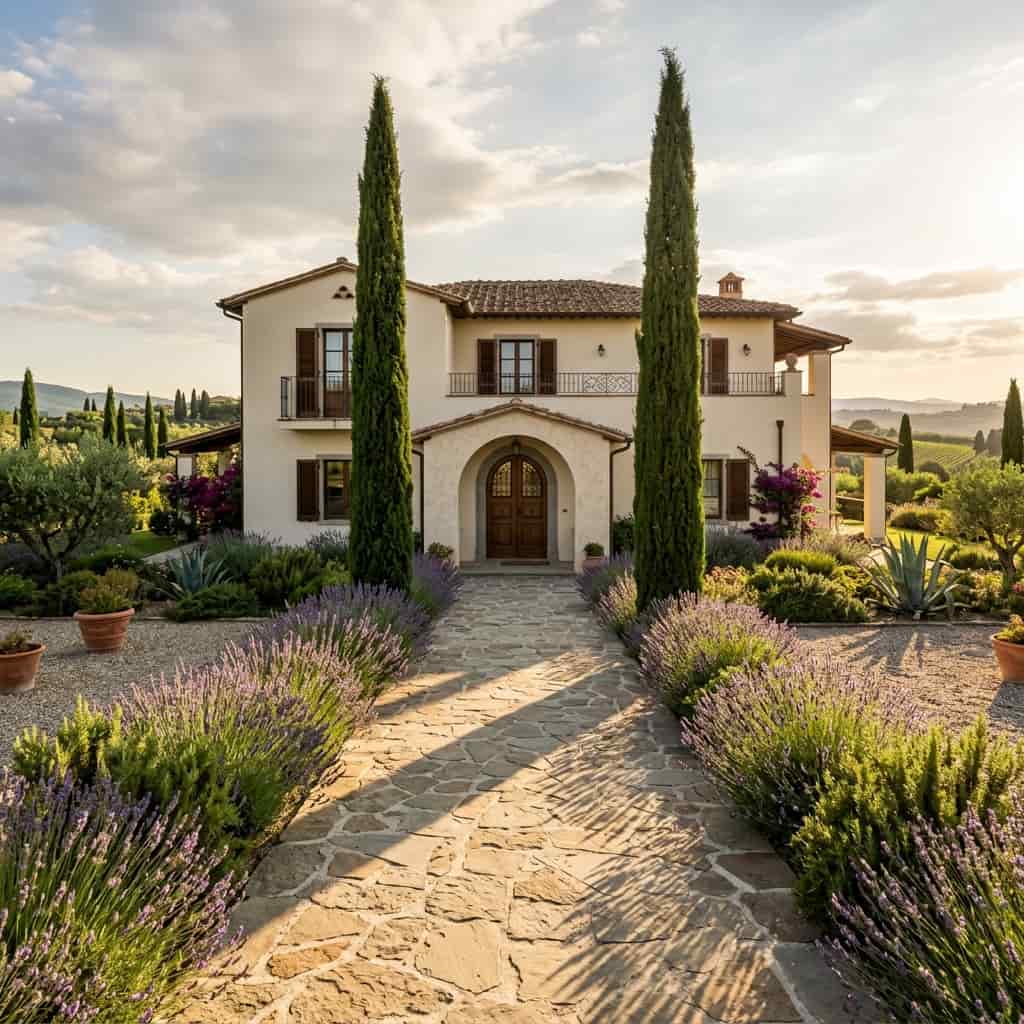
Two tall Italian cypress trees flanking a stone entry pathway create the most classically Tuscan and formally elegant approach to any Mediterranean home exterior front entry.
Slender vertical cypress silhouettes frame the front facade beautifully while drawing the eye naturally upward toward the terracotta roofline and arched front door above the pathway.
- Cypress trees add Tuscan formality
- Vertical silhouettes frame the facade
- Lavender borders soften stone pathway
- Suits formal Mediterranean villa entries
In my experience, Italian cypress tree flanked entries create the strongest sense of arrival drama on Mediterranean-style homes, establishing a grand European villa atmosphere before guests reach the door.
Italian cypress trees thrive in USDA zones 7 through 11 and tolerate drought well once established. Plant them at least six feet from foundation walls for safety.
Terracotta Tile Outdoor Kitchen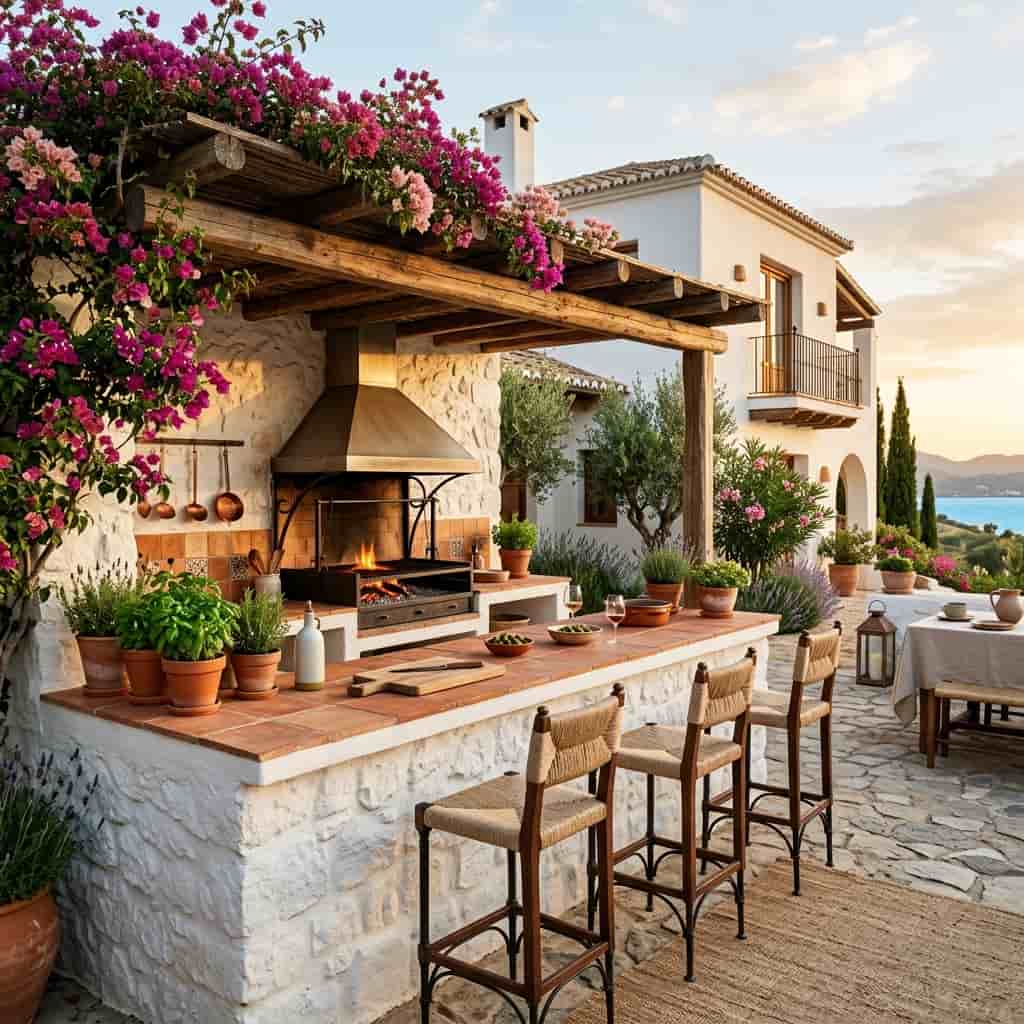
A whitewashed stone outdoor kitchen with a terracotta tile countertop beneath a bougainvillea pergola creates the most functionally beautiful and authentically Mediterranean al fresco cooking space.
Integrated wrought iron grilling surfaces combined with fresh herb planters on the counter reference the rustic outdoor cooking traditions of Southern Spain and coastal Italian villa living.
- Terracotta tiles add authentic warmth
- Stone construction feels permanent
- Fresh herb planters add function
- Suits warm climate outdoor entertaining
That’s why many outdoor kitchen designers recommend terracotta tile surfaces for Mediterranean-style exterior kitchens , the clay material stays cool to the touch under direct sunlight and ages beautifully.
This outdoor kitchen design suits Mediterranean homes in California, Texas, and Florida where warm weather extends outdoor cooking season across nine to twelve months of every year.
Arched Doorway Garden Passage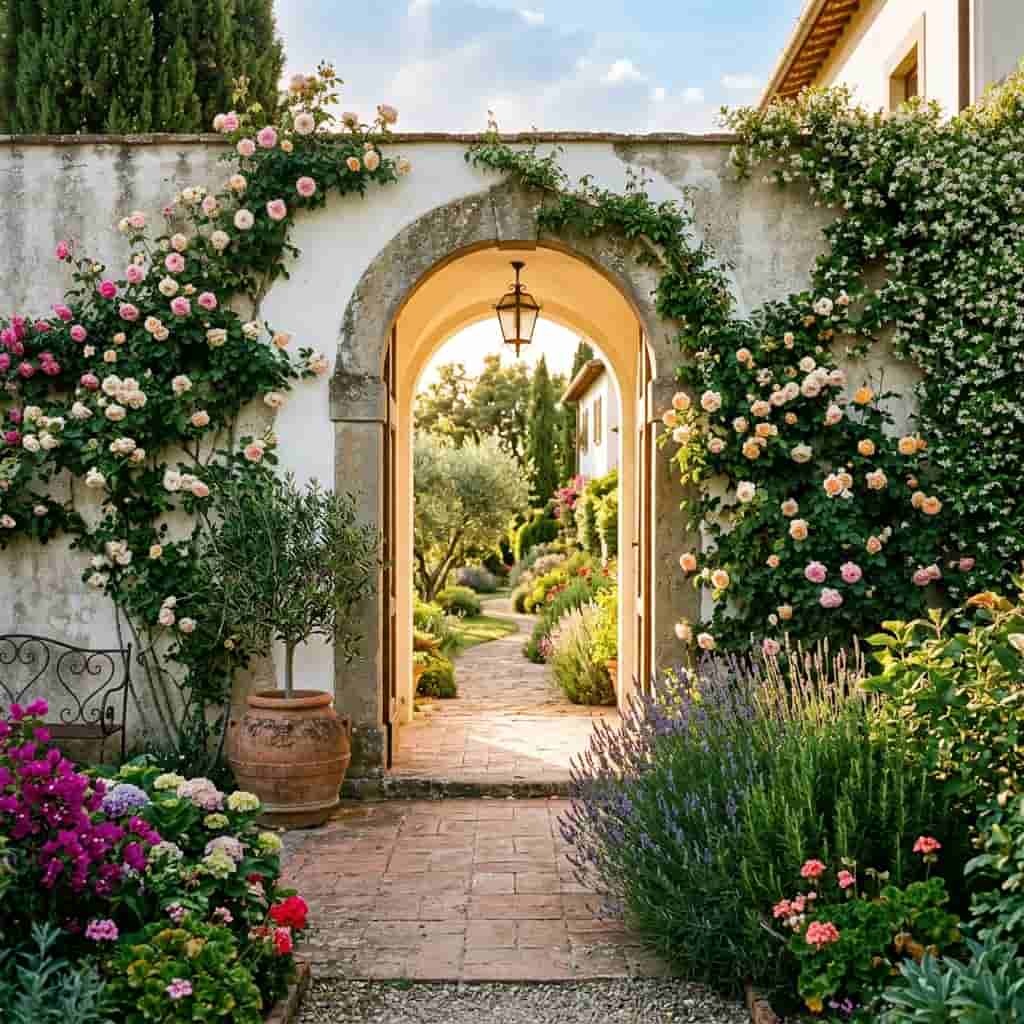
A tall whitewashed arched stone doorway set into a garden wall creates a breathtakingly romantic garden passage that divides outdoor spaces with genuine architectural drama and beauty.
Climbing roses and trailing jasmine framing the arch on both sides create a lush, fragrant, and deeply romantic garden feature that photographs beautifully in warm afternoon light.
- Arched passage creates garden drama
- Climbing roses add romantic softness
- Jasmine fragrance enhances the arch
- Divides garden zones beautifully
I’ve seen arched garden doorways become the most photographed and shared exterior feature on Mediterranean-style homes. The combination of carved stone arch and climbing botanicals feels genuinely timeless and magical.
This garden arch idea suits Mediterranean properties with multiple distinct garden zones or terraced hillside plots. Professional stonemasons recommend cast stone arch kits for a cost-effective installation approach.
Painted Tile House Number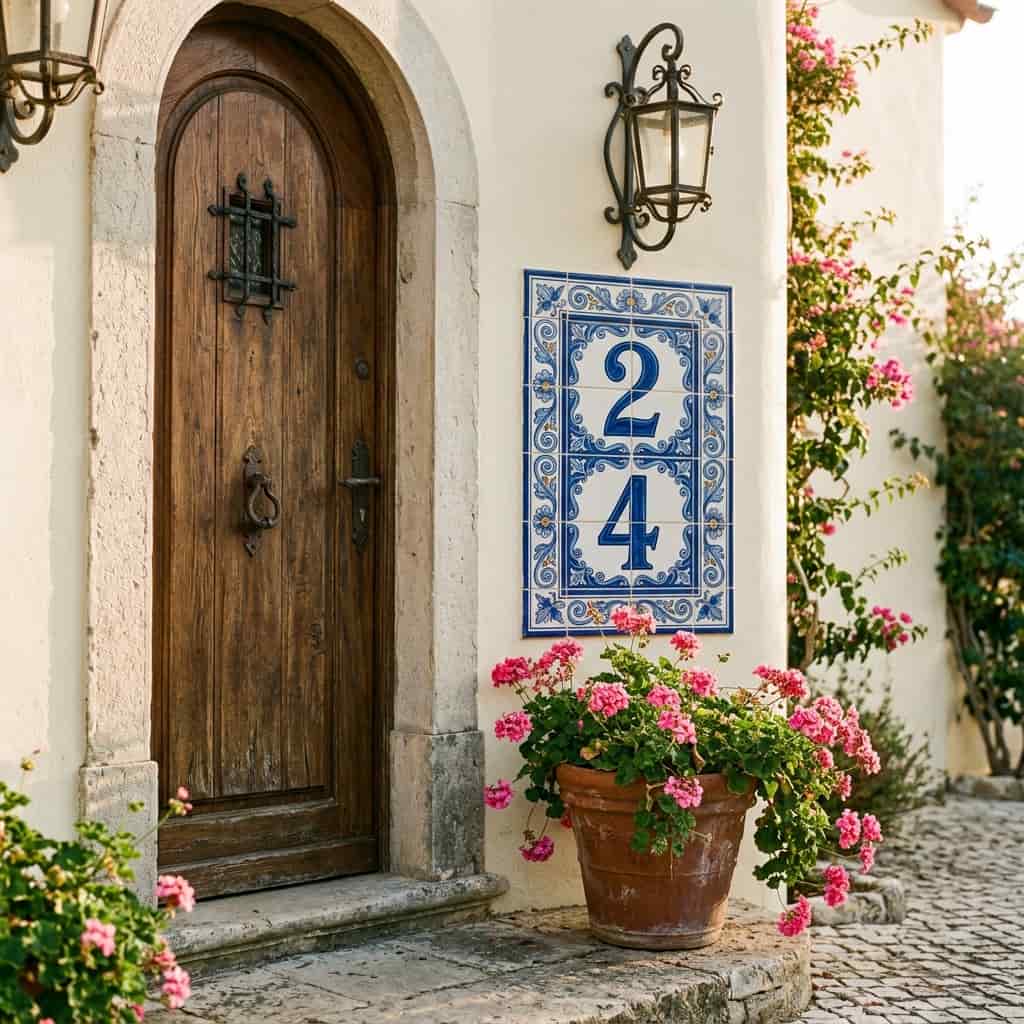
Hand-painted ceramic tile house numbers mounted on smooth stucco beside a wooden front door add an instantly charming and artisanal detail that elevates the entire Mediterranean entry experience.
Cobalt blue and warm white painted tile numbers reference the azulejo tile-making tradition of Portugal and Spain, bringing authentic Iberian craft detail to any modern Mediterranean home exterior.
- Painted tiles add artisanal charm
- Cobalt blue feels authentically Iberian
- Small detail creates big impact
- Weather-resistant ceramic lasts for years
That’s why many Mediterranean home stylists recommend hand-painted tile house numbers , the small ceramic detail creates a genuinely distinctive and personalized entry that mass-produced metal numbers cannot replicate.
Glazed ceramic tiles withstand direct sun exposure, rain, and freeze-thaw cycles effectively in most climates. Mounting with exterior-grade adhesive and grout ensures the tile numbers stay secure year-round.
Stone Garden Bench Nook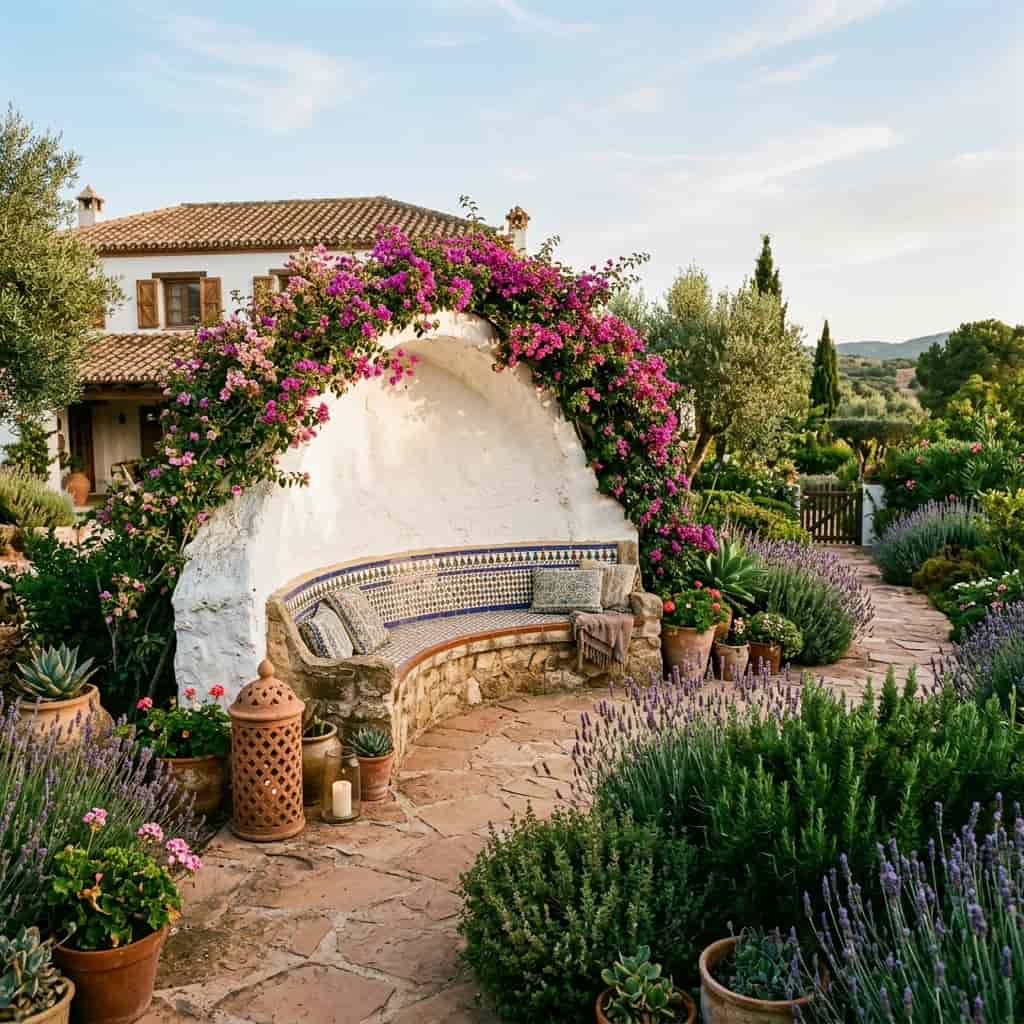
A curved built-in stone garden bench set into a whitewashed alcove wall creates a sheltered, intimate garden nook that feels genuinely Andalusian and deeply inviting year-round.
Mosaic tile bench surfaces combined with surrounding lavender, rosemary, and bougainvillea deliver sensory richness , fragrance, color, and texture , that makes the garden nook feel like a private outdoor sanctuary.
- Built-in bench creates intimate nook
- Mosaic tiles add artisanal detail
- Lavender and rosemary add fragrance
- Whitewashed alcove provides sheltered shade
That’s why many Mediterranean landscape designers recommend built-in stone bench nooks , the permanent seating feature becomes a beloved garden destination that increases outdoor living enjoyment throughout every season.
This garden nook suits Mediterranean homes with walled garden enclosures or courtyard spaces. Professional stonemasons can build a curved stone bench nook for between $800 and $2,500 depending on complexity.
Lavender Border Pathway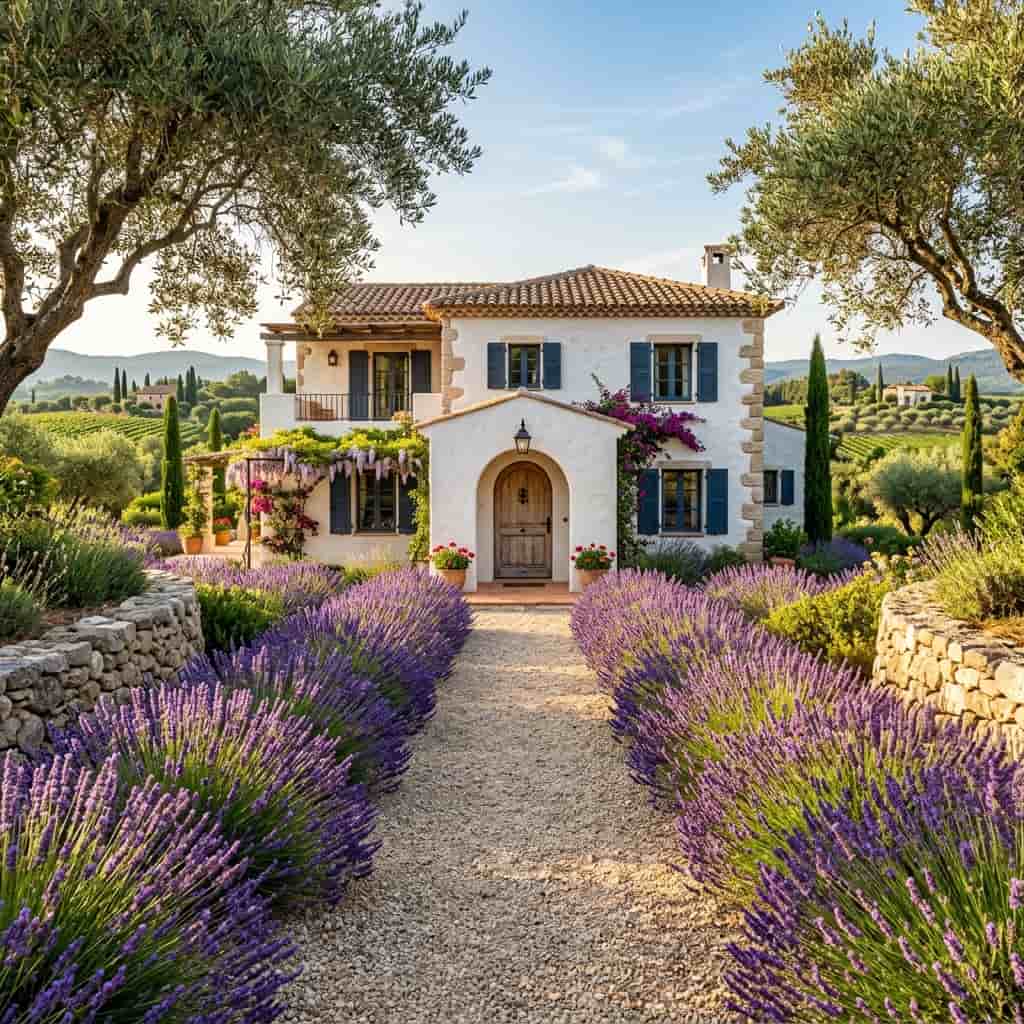
A gravel pathway bordered by dense lavender in full purple bloom creates an immediately fragrant and visually stunning approach to any Mediterranean home exterior front entry.
The combination of silver-gray gravel, vivid purple lavender blooms, and silver-green olive tree foliage creates a naturally harmonious Provençal color palette that photographs beautifully in afternoon light.
- Lavender borders add vivid purple
- Gravel pathway suits Mediterranean styling
- Olive trees provide gentle canopy
- Fragrant and drought-tolerant planting
I’ve noticed that lavender-bordered pathways generate the highest Pinterest engagement of any Mediterranean exterior landscaping element, consistently outperforming rose gardens, pool surrounds, and terracotta planter displays in saves.
Lavender thrives in USDA zones 5 through 9 and requires minimal watering once established. Professional landscapers recommend planting English lavender varieties for the densest and most fragrant border display.
Whitewashed Chimney Stack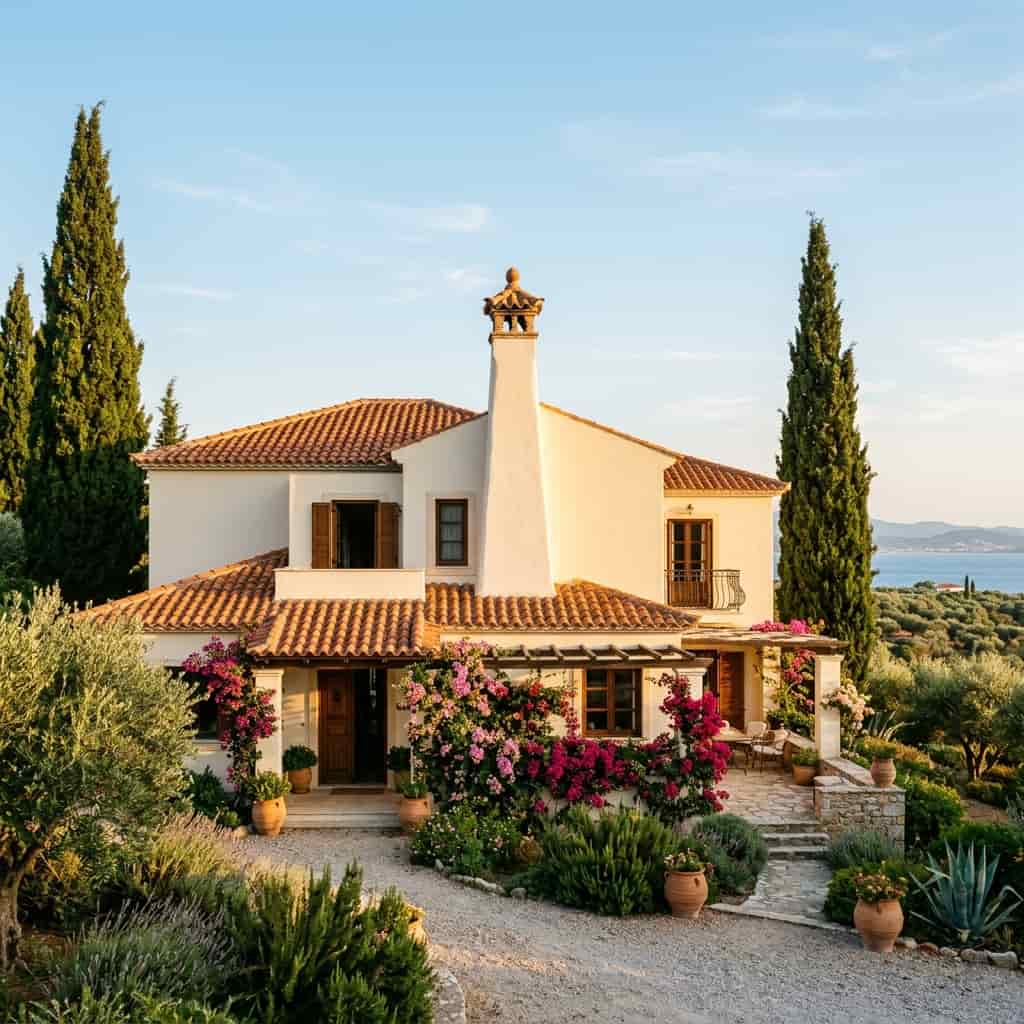
A whitewashed chimney stack with a traditional clay chimney pot crown adds a classically authentic roofline detail that completes the silhouette of any Mediterranean-style home exterior beautifully.
The vertical white chimney rising above warm terracotta roof tiles creates a strong architectural contrast that references the whitewashed village homes of Southern Spain, Greece, and coastal Italy.
- Whitewashed chimney completes roofline silhouette
- Clay pot crown adds classical detail
- Contrasts beautifully with terracotta tiles
- Suits Southern European village styling
That’s why many Mediterranean architects specify whitewashed chimney stacks with clay pot crowns , the roofline detail adds authentic regional character that significantly enhances overall home exterior curb appeal.
This chimney detail suits Mediterranean revival homes across all warm climate regions. Lime wash applied over rendered masonry creates the most authentic whitewashed chimney finish at minimal material cost.
Shuttered Window Box Garden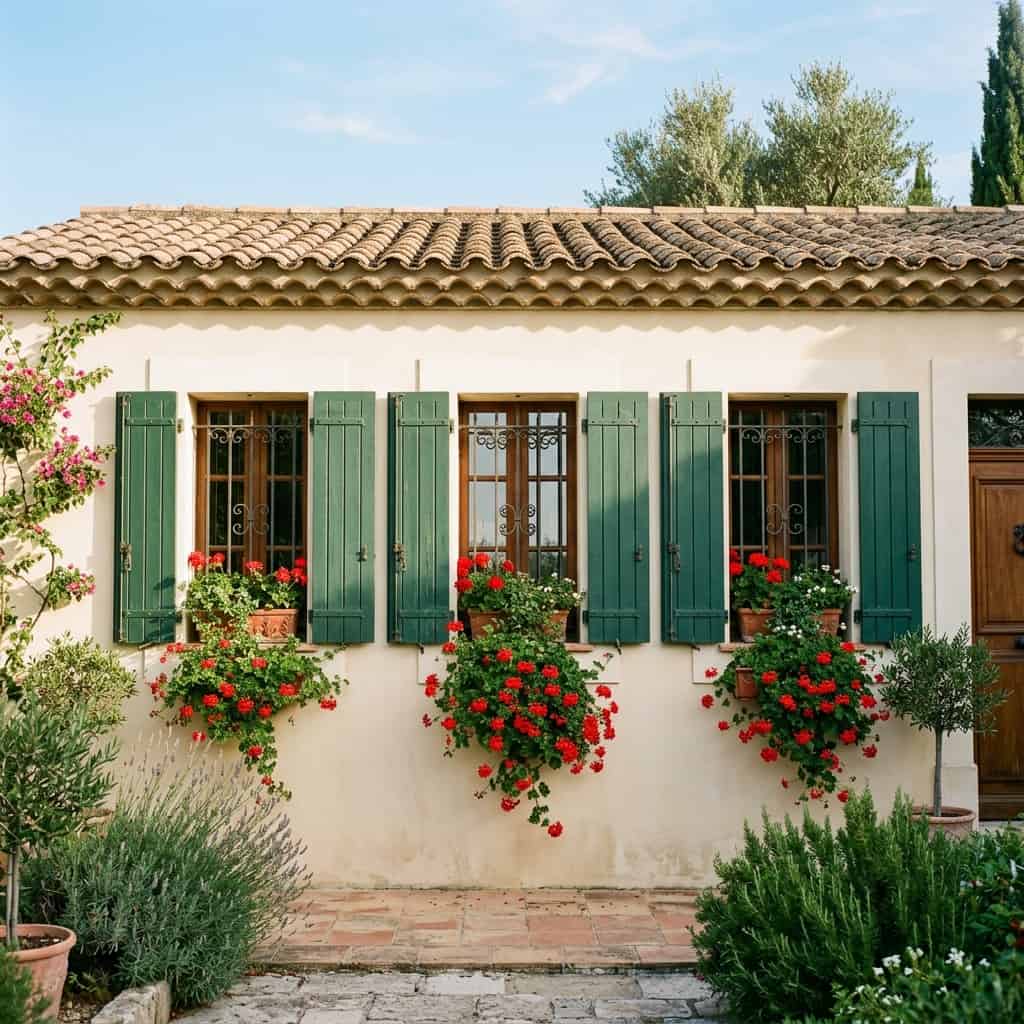
Deep forest green painted shutters paired with terracotta window boxes overflowing with cascading red geraniums create a quintessentially Provençal Mediterranean exterior window display full of charm.
The rich color contrast between deep green shutters, warm terracotta boxes, and vivid red geranium blooms creates a vibrantly layered window display that photographs beautifully from the street.
- Green shutters contrast red geraniums
- Window boxes add cascading color
- Terracotta boxes suit Mediterranean styling
- Easy seasonal planting refresh option
That’s why many Mediterranean home stylists recommend green-shuttered window box gardens , the color combination feels genuinely European without requiring structural renovation or significant landscaping investment.
Window boxes filled with geraniums cost between $30 and $80 per window to establish fully. Geraniums bloom prolifically from spring through autumn with minimal watering in warm sunny climates.
Exposed Beam Exterior Overhang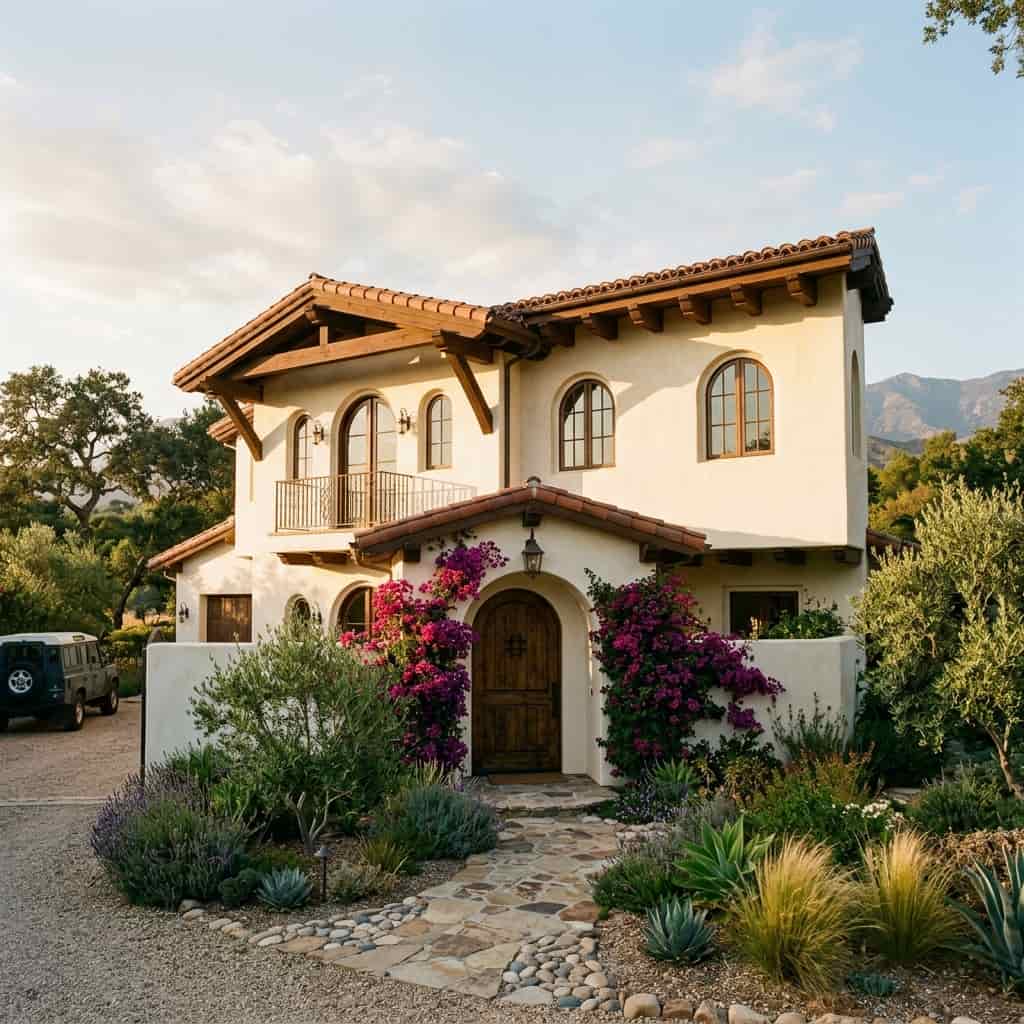
Exposed dark wooden beam overhangs projecting from smooth stucco walls add rustic structural authenticity and deep shadow lines that define the Spanish Colonial Mediterranean exterior style.
Dark walnut beam tones contrast powerfully against ivory stucco, creating a bold visual grid across the facade that references traditional Californian Spanish Colonial and Southwestern hacienda architecture.
- Exposed beams add rustic authenticity
- Dark wood contrasts ivory stucco
- Shadow lines define the facade
- Suits Spanish Colonial and hacienda styles
In my experience, exposed beam overhangs create the most architecturally distinctive Mediterranean facades in California and the American Southwest, where the Spanish Colonial tradition runs deepest and most authentically.
Pressure-treated Douglas fir or reclaimed oak beams provide the best weather resistance for exterior overhang applications. Professional contractors recommend sealing exposed beams every three years in wet coastal climates.
Terrace Fire Pit Seating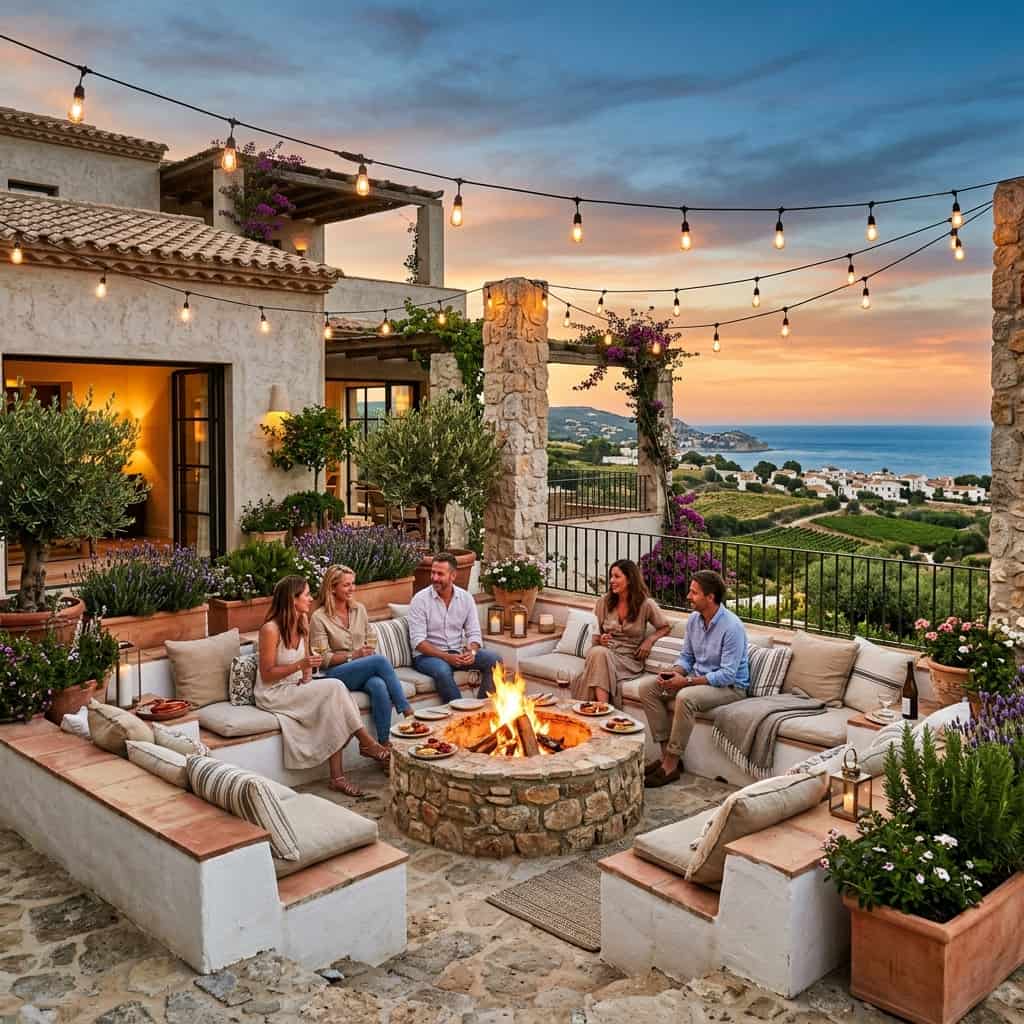
A circular stone fire pit surrounded by low whitewashed stone seating walls creates a cozy and deeply inviting outdoor gathering space on any Mediterranean home terrace or garden.
Linen outdoor cushions on terracotta-topped stone seating walls combined with surrounding olive trees and lavender create a warm, fragrant, and genuinely atmospheric evening entertaining environment year-round.
- Stone fire pit anchors the terrace
- Low seating walls feel permanent
- String lights add evening warmth
- Suits year-round outdoor entertaining
That’s why many Mediterranean outdoor designers recommend built-in stone fire pit seating areas , the permanent feature creates a beloved outdoor destination that increases residential property value significantly over time.
This terrace fire pit design suits Mediterranean homes in California, Texas, and Arizona where outdoor evening entertaining extends across ten to twelve months of the year comfortably.
Climbing Rose Facade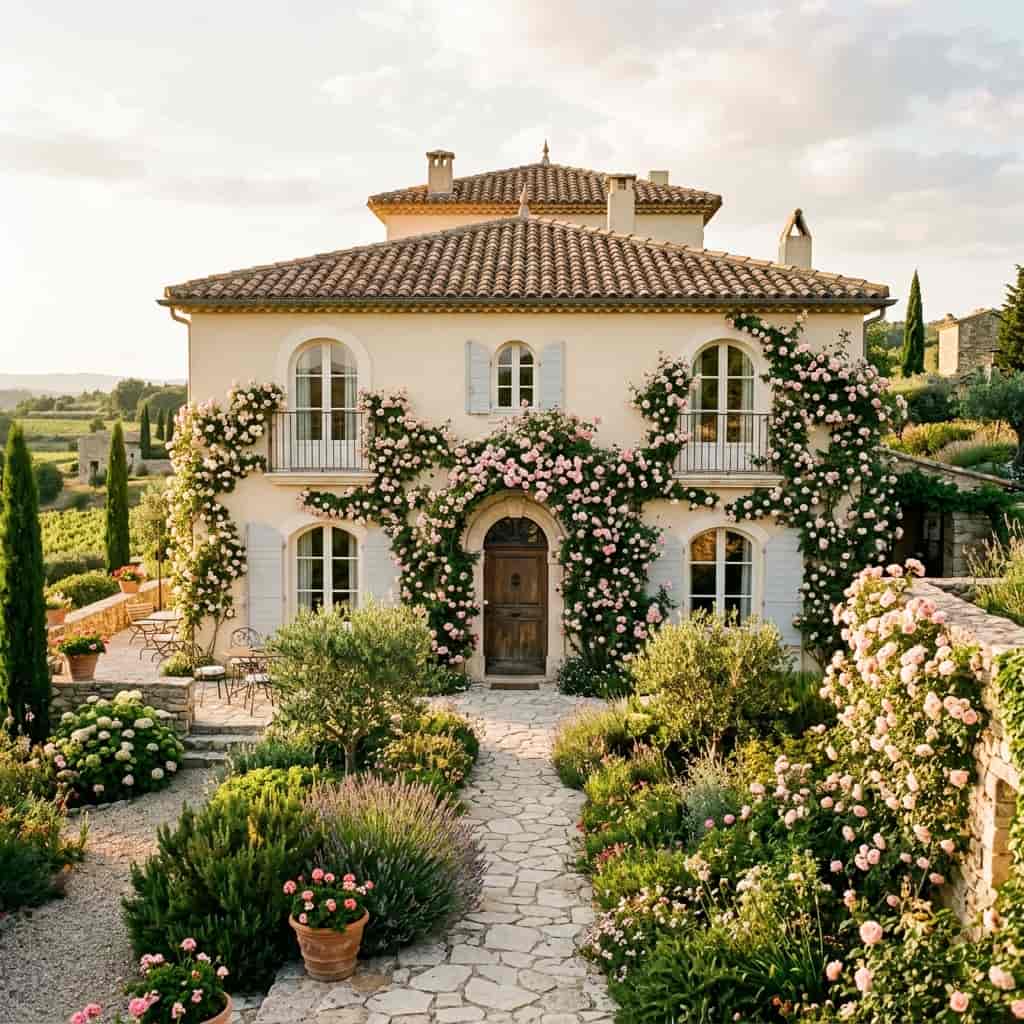
Climbing pale pink roses trained across a smooth stucco facade create one of the most romantically beautiful and timelessly charming Mediterranean home exterior displays possible in any warm climate.
Rose-framed arched windows and a flower-draped front doorway reference the grand Provençal farmhouse and English Mediterranean villa tradition where climbing roses define the entire character of the home.
- Climbing roses create romantic facade
- Pale pink suits ivory stucco beautifully
- Rose-framed doorway feels timeless
- Suits Provençal and cottage styles
I’ve seen climbing rose facades completely transform plain stucco Mediterranean homes into genuinely breathtaking exterior showpieces that consistently generate the strongest emotional responses from visitors and passersby alike.
Climbing roses require annual pruning and training on masonry vine anchors. ‘New Dawn’ and ‘Cecile Brunner’ varieties offer the best performance on warm Mediterranean-style home stucco facades.
Moroccan Lantern Entry Lighting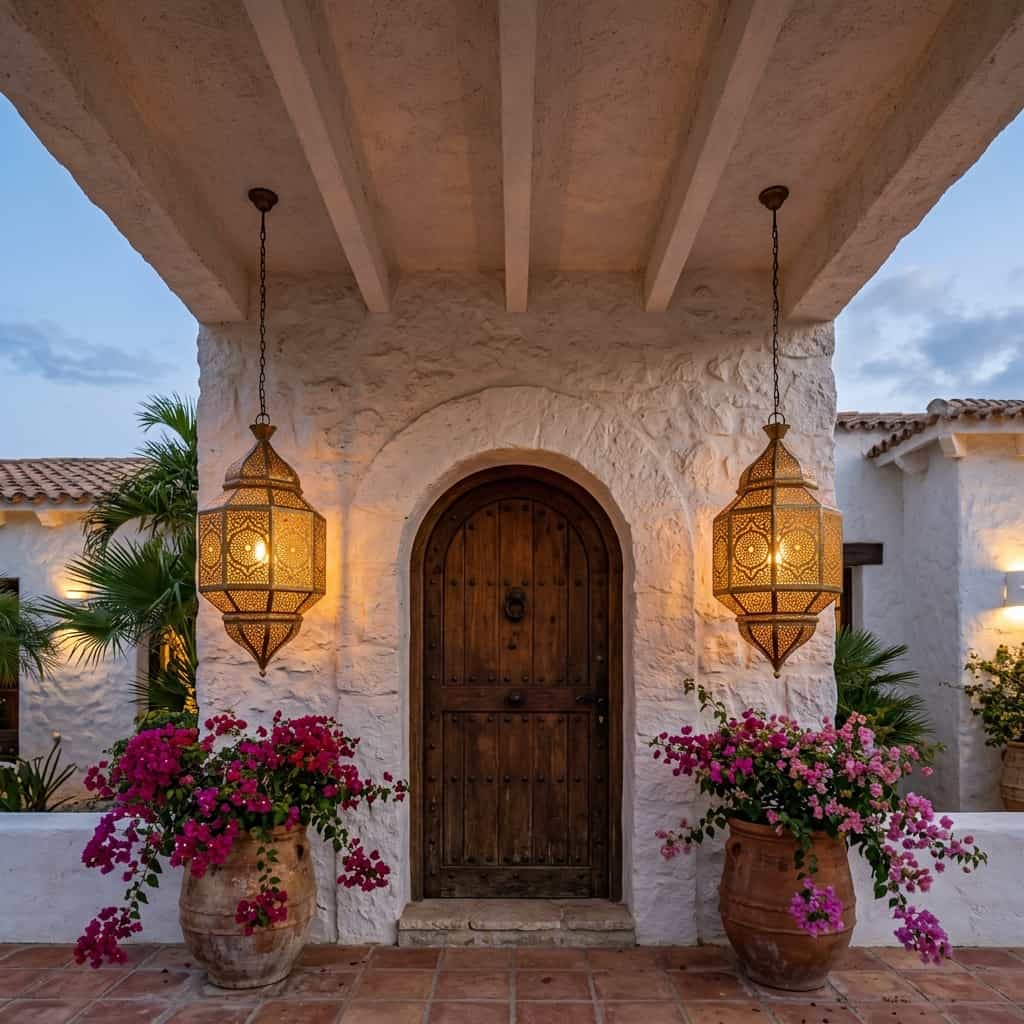
Large hanging Moroccan brass lanterns with geometric cutout patterns suspended from an entry portico ceiling create an exotic and deeply atmospheric evening entry lighting display.
Warm amber light filtering through intricate brass geometric cutouts casts enchanting shadow patterns across whitewashed entry walls and stone floors that transform the front entry after dark.
- Moroccan lanterns add exotic atmosphere
- Geometric cutouts cast enchanting shadows
- Brass finish suits Mediterranean styling
- Transforms entry lighting after dark
That’s why many stylists recommend Moroccan lantern entry lighting , the geometric shadow patterns and warm amber glow create an evening entry atmosphere that standard exterior fixtures cannot match.
Solid brass Moroccan lanterns cost between $80 and $250 per piece and withstand outdoor weather conditions effectively. Annual polishing maintains the warm brass finish and prevents surface oxidization over time.
Tiled Outdoor Dining Terrace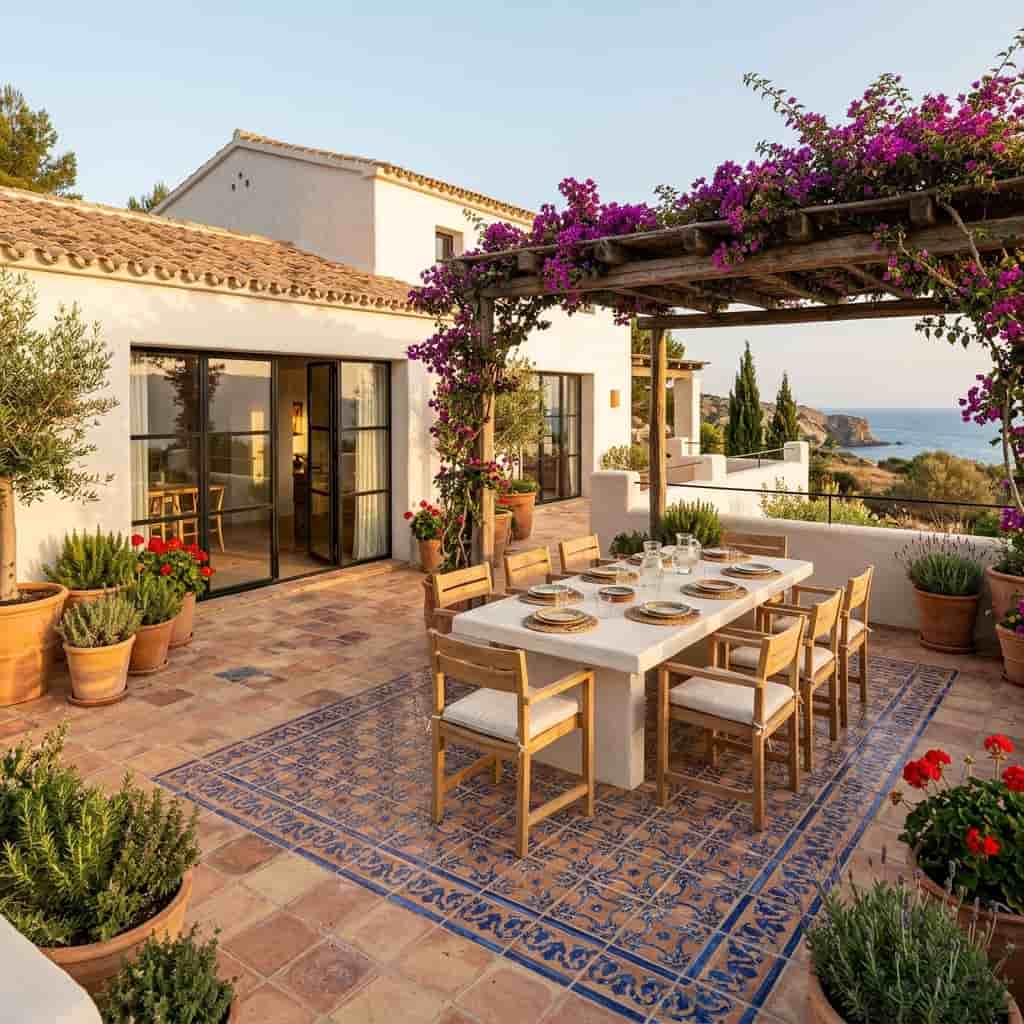
A large outdoor dining terrace paved with hand-painted terracotta and cobalt blue ceramic tiles creates the most vibrantly artisanal and authentically Mediterranean al fresco dining environment imaginable.
The colorful tile surface combined with a bougainvillea pergola overhead and surrounding herb planters transforms a plain outdoor space into a genuinely immersive Mediterranean dining destination year-round.
- Patterned tiles add vibrant artisanal color
- Bougainvillea pergola provides natural shade
- Herb planters add fragrance and function
- Suits warm climate outdoor dining
I’ve noticed that tiled outdoor dining terraces generate exceptional Pinterest engagement, consistently outperforming plain stone and concrete terrace designs across home exterior and outdoor living inspiration boards.
Outdoor ceramic tiles require sealing with exterior-grade tile sealant every two years to prevent moisture penetration and staining. Professional tile installers recommend frost-resistant ceramic varieties for climates below freezing.
Vine Covered Stone Wall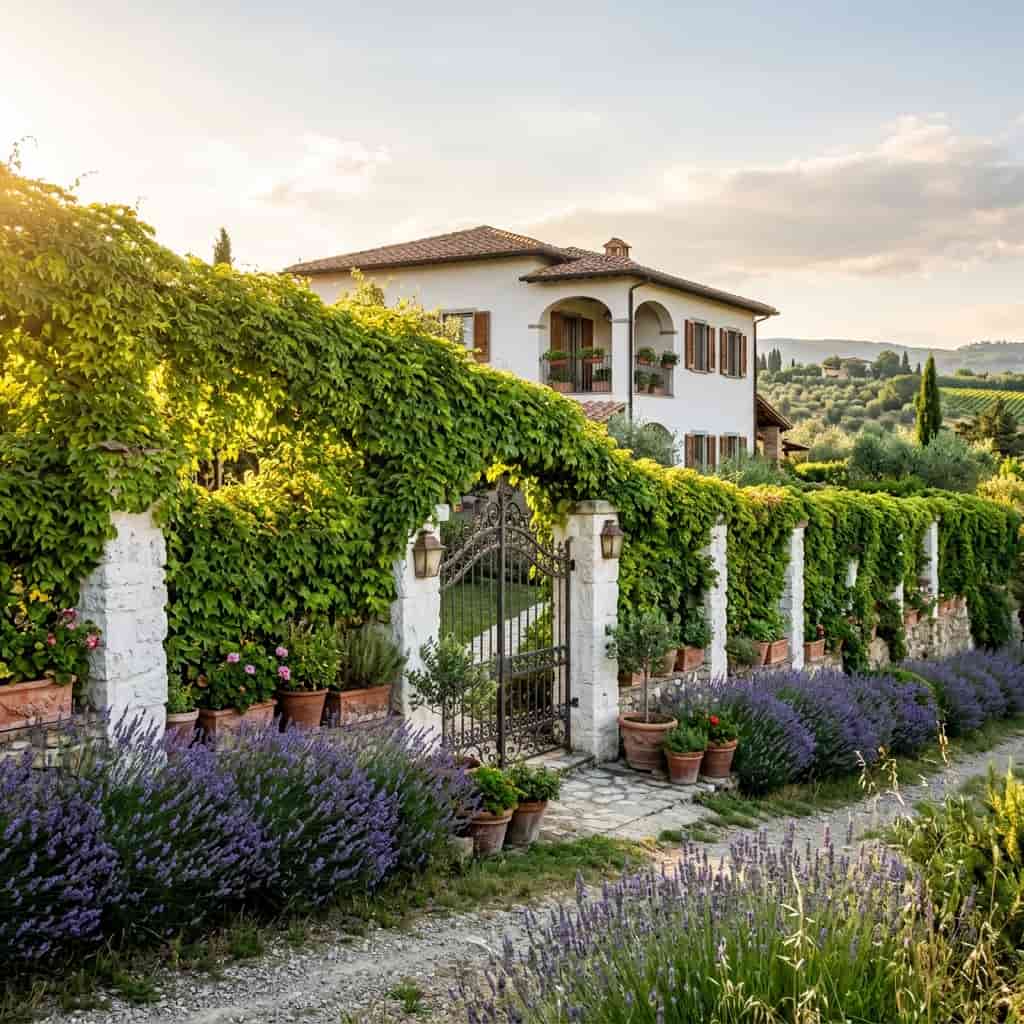
A long stone perimeter wall densely covered in climbing Virginia creeper and ivy creates a lush, naturally green garden boundary that defines romantic Italian Mediterranean garden character.
White stone columns punctuating the vine-covered wall at regular intervals add classical architectural rhythm that prevents the green canopy from appearing unstructured or overgrown from the street.
- Climbing ivy adds lush green density
- Stone columns add classical rhythm
- Vine wall creates natural privacy
- Low-maintenance once fully established
That’s why many Mediterranean landscape designers recommend vine-covered stone walls for residential boundary treatments , the combination of masonry and climbing botanicals creates a privacy screen that improves with age.
Virginia creeper and climbing ivy establish fully within three to five years in warm climates. Annual pruning around windows, gates, and gutters prevents the vine growth from becoming invasive.
Rustic Wooden Pergola Shade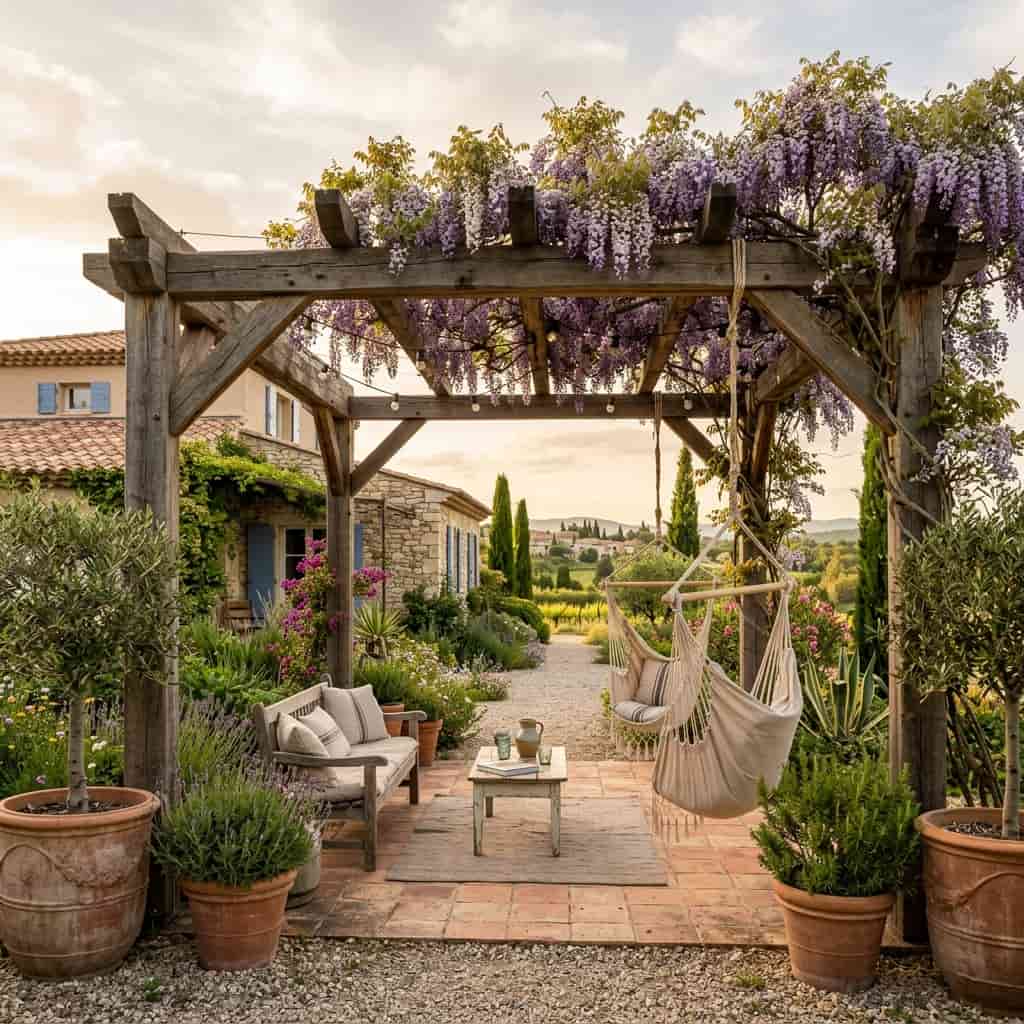
A large rustic wooden pergola draped in cascading purple wisteria above a terracotta tile lounging area creates a breathtakingly beautiful and deeply relaxing Mediterranean outdoor living space.
Rough-hewn timber beams supporting a natural wisteria canopy reference the pastoral farmhouse gardens of Southern France and Tuscany where outdoor shade structures define summer living completely.
- Wisteria drapes create natural canopy
- Rough timber beams feel rustic
- Terracotta tiles ground the space
- Suits pastoral and Provençal styling
I’ve seen wisteria-draped wooden pergolas become the most beloved outdoor feature on Mediterranean-style homes. The fragrant purple blooms in spring create an outdoor experience that no built structure alone replicates.
Wisteria requires five to seven years to reach full coverage on a new pergola structure. Professional landscapers recommend training wisteria stems horizontally across the overhead beams from the first year.
CONCLUSION
The beauty of Mediterranean exterior design is that it rewards every level of investment , from a single terracotta planter beside the front door to a full limestone block facade with a bougainvillea-covered loggia.
Every Mediterranean house exterior design idea in this list draws from centuries of sun-soaked European and North African building tradition, adapted beautifully for modern residential homes across warm American climates.
I’ve seen how even one well-chosen exterior detail , a mosaic tile step, a Moroccan lantern, or a lavender-bordered pathway , completely changes the character and curb appeal of a home.
Save this article on Pinterest, try one idea this season, and share it with anyone dreaming of their own Mediterranean-inspired home exterior today.
Frequently Asked Questions
What defines a Mediterranean house exterior design style?
Mediterranean exterior design features whitewashed or stucco walls, terracotta tile rooflines, arched windows and doorways, wrought iron details, and lush drought-tolerant planting. The style draws from Southern European and North African building traditions and suits warm, dry climates across the American Southwest, California, Florida, and the Gulf Coast region.
What is the easiest Mediterranean exterior upgrade on a budget?
Terracotta planters filled with olive trees, lavender, and geraniums are the easiest and most budget-friendly Mediterranean exterior upgrade available. A display of three to five terracotta pots costs between $50 and $150 and instantly adds authentic Mediterranean character to any front entry or porch step.
What colors are used in Mediterranean house exteriors?
Mediterranean exteriors primarily use warm ivory, soft white, and honey-toned stucco or stone for walls. Roof tiles appear in warm terracotta clay tones. Shutters and ironwork use cobalt blue, deep forest green, or matte black. Planting adds vivid pink from bougainvillea and soft purple from lavender across the facade and garden.
Which climbing plants work best on Mediterranean home exteriors?
Bougainvillea, climbing roses, wisteria, jasmine, and Virginia creeper work best on Mediterranean home exteriors. Bougainvillea and climbing roses thrive in USDA zones 8 through 11. Wisteria and jasmine suit zones 5 through 9. All four plants deliver vivid seasonal color and fragrance across warm residential facades.
How do I add Mediterranean style to a small home exterior on a budget?
Focus on three high-impact details: painted wooden shutters in cobalt blue or forest green, terracotta window boxes filled with geraniums, and hand-painted ceramic house numbers. These three upgrades cost between $100 and $300 combined and deliver significant Mediterranean character without structural renovation or large landscaping investment.
What landscaping suits a Mediterranean house exterior best?
Mediterranean landscaping uses drought-tolerant plants including olive trees, Italian cypress, lavender, rosemary, bougainvillea, and climbing roses. Gravel pathways, terracotta planters, and whitewashed stone walls complete the landscape design. Professional landscapers recommend plant groupings that reference Southern European and North African garden traditions for the most authentic and cohesive result.
Does Mediterranean exterior design work in cold climates?
Mediterranean exterior design works best in USDA hardiness zones 7 through 11 where winters remain mild. In colder climates, stucco facades and terracotta roof tiles can crack under repeated freeze-thaw cycles. Homeowners in zones 5 and 6 can incorporate Mediterranean-inspired color palettes, arched windows, and wrought iron details while using frost-resistant building materials throughout.