30 Minimalist Wall Decor Ideas For Clean Homes 2026
Your walls are completely bare , and your home feels unfinished because of it. You own great furniture, you keep things clean and tidy, but something important is still missing. That missing element is intentional, well-chosen wall decor that gives your clean home its final layer of personality, warmth, and visual completeness.
Minimalist wall decor ideas solve one of the most common decorating problems real homeowners face in 2026. Most people add furniture first and completely forget about their walls until the room still feels flat and cold despite every other effort. I’ve noticed this pattern in nearly every home styling situation I’ve encountered , the walls hold the entire room together, yet they get the least attention and the smallest share of the decorating budget.
This article covers 30 specific, beautiful, and budget-conscious wall decor ideas designed for clean, minimal homes. Each idea works in real apartments, compact bedrooms, modern living rooms, and simple rental spaces across the USA. Experienced interior stylists and home decorators consistently point to intentional wall art as the single highest-impact upgrade available in any clean, minimal interior. You will find ideas here ranging from $3 digital art downloads to handcrafted ceramic wall sculptures and everything between. Pick your favorite ideas, start with one wall this weekend, and watch your entire home feel genuinely complete for the first time.
Single Line Art Print
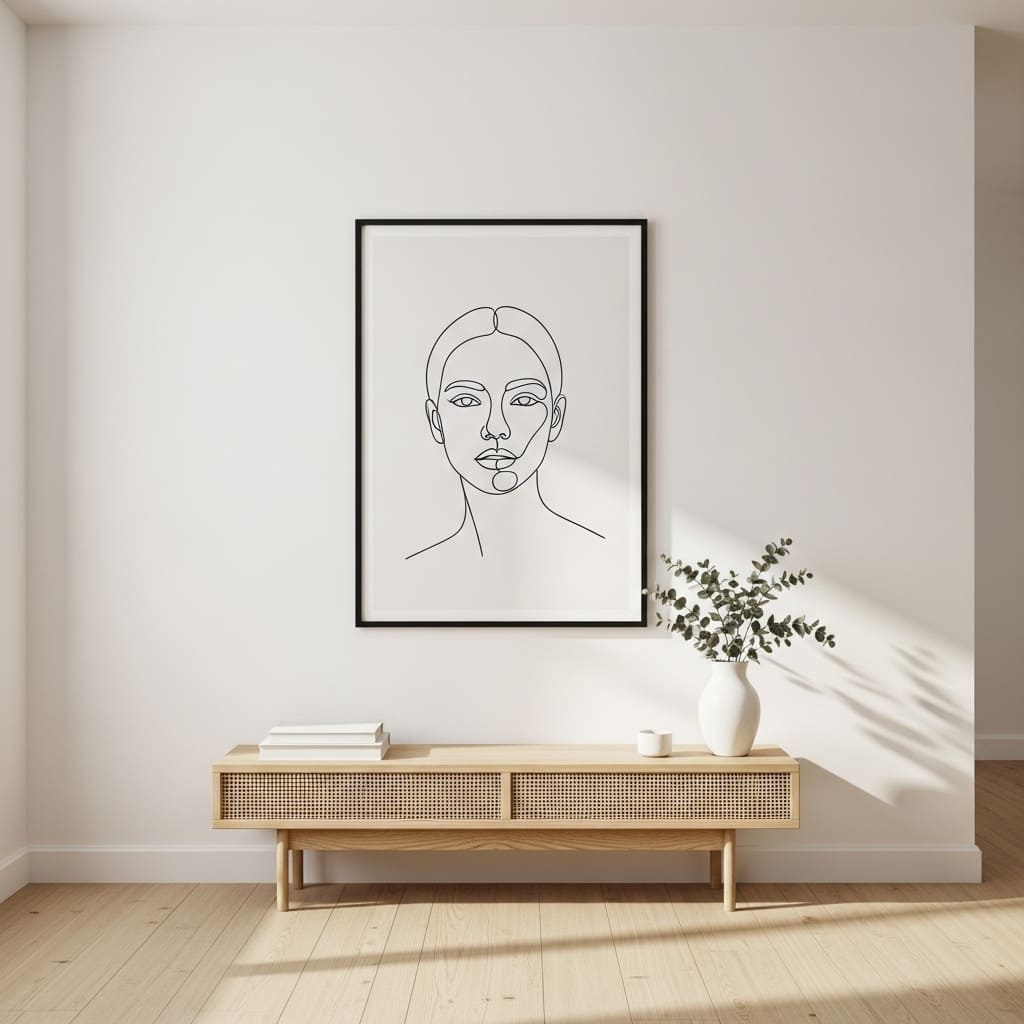
One well-chosen line art print does more for a clean, minimal room than a wall filled with ten average pieces ever could. I’ve noticed that rooms with a single deliberate artwork feel more confident and curated than rooms packed with decorative clutter. A continuous-line portrait or botanical sketch in a slim black frame instantly communicates restraint, taste, and intentional style. This approach works beautifully in compact living rooms, hallways, and modern home offices alike.
Choosing a cream or off-white paper background for the line illustration keeps the print light and visually open against a white wall. The subtle tonal relationship between the cream print and the white wall creates depth without contrast. That’s why many minimalist interior stylists recommend line art as the single best entry point into clean home decorating for beginners who feel overwhelmed by art selection and placement decisions in their first apartment or newly renovated space.
- Adds sophistication without visual clutter
- Works in clean modern home office walls
- Slim frames suit minimalist room styling
- Affordable printable download option available
- Pairs with any neutral wall color effortlessly
A 16×20 inch print inside a wide white mat in a simple black frame creates a gallery-quality presentation at a fraction of gallery prices. The mat adds visual breathing room around the delicate line drawing and makes the artwork feel genuinely considered rather than simply printed and hung. Most people underestimate how significantly matting upgrades a basic print, but the difference in visual quality is immediately noticeable in person.
Digital line art downloads on Etsy cost between $3 and $8 per file. Printing at 16×20 size at a local print shop adds roughly $12 to $18 to the total investment. The finished framed piece looks like it belongs in a Scandinavian design studio, not a budget apartment. In my experience, this specific combination, a quality mat plus a clean frame, delivers the highest perceived value per dollar of any minimalist wall decor option currently available.
Neutral Abstract Canvas
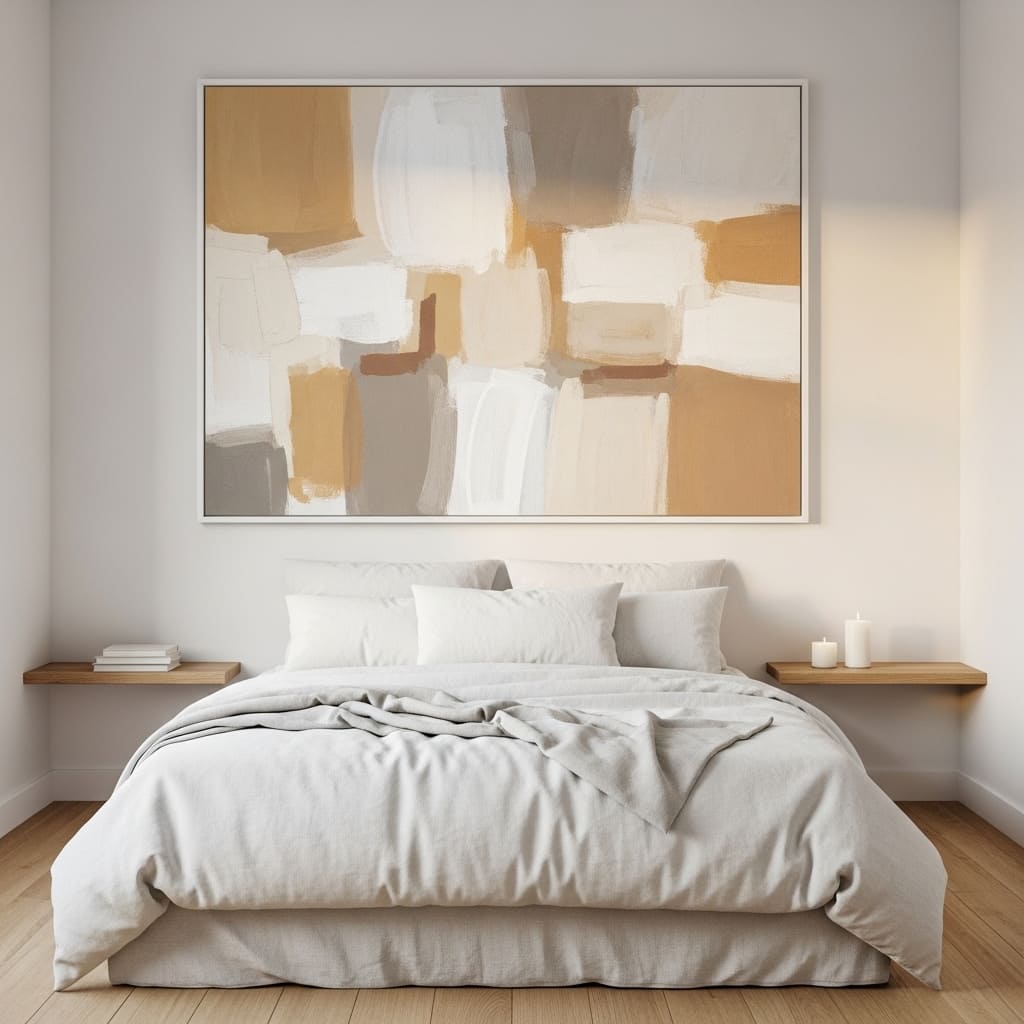
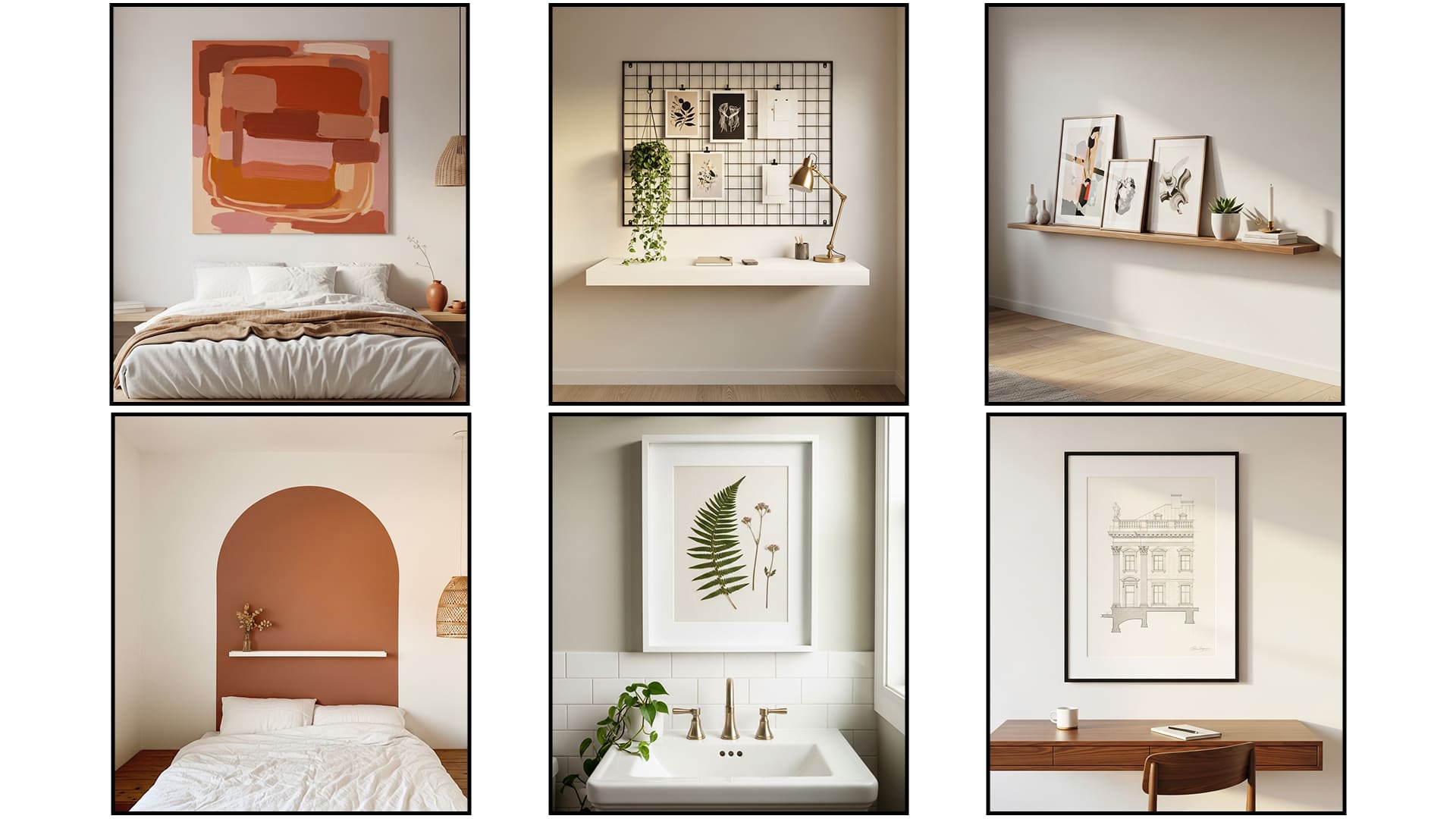
A large neutral abstract canvas above the bed sets the entire visual tone of a minimalist bedroom without requiring a single additional wall piece. The soft brushstroke palette in warm ivory, sand, and taupe tones reflects natural light beautifully and adds depth to a flat white wall. I’ve seen this exact setup work in compact bedrooms, open studio apartments, and larger primary suites with equal visual success across every room size and proportion.
Neutral abstract art suits 2026 minimalist home decor trends perfectly because the current design direction favors warmth over starkness. Designers are moving away from cold white-and-black minimalism toward softer, more human-feeling palettes that still maintain clean simplicity. A warm abstract canvas in sand or ivory tones delivers this exact quality, giving the bedroom a refined, gallery-quality atmosphere that feels genuinely lived-in and emotionally comfortable rather than sterile and clinical.
- Warms up cold white bedroom walls
- No frame needed with gallery-wrap canvas
- Suits Japandi and Scandi bedroom styles
- One large piece replaces multiple smaller prints
- Creates a calm, hotel-quality bedroom look
Sizing the canvas at 30×40 inches or larger creates the correct visual weight above a standard queen bed. Going smaller makes the artwork look accidentally undersized and disconnected from the furniture below it. The canvas should ideally span at least half the bed’s width to establish a proper anchor point for the entire wall. Most people order too small on their first canvas purchase and then replace it within six months with a larger piece.
Gallery-wrap canvases with finished edges remove the need for a frame entirely and keep the presentation clean and flush against the wall. The frameless format suits minimalist rooms especially well because it removes one visual element, the frame itself, and lets the artwork exist as a pure object on the wall surface. Hanging it centered at 57 to 60 inches from the floor to the canvas center places the artwork at the ideal eye-level viewing height for most adults.
Floating Wooden Ledge
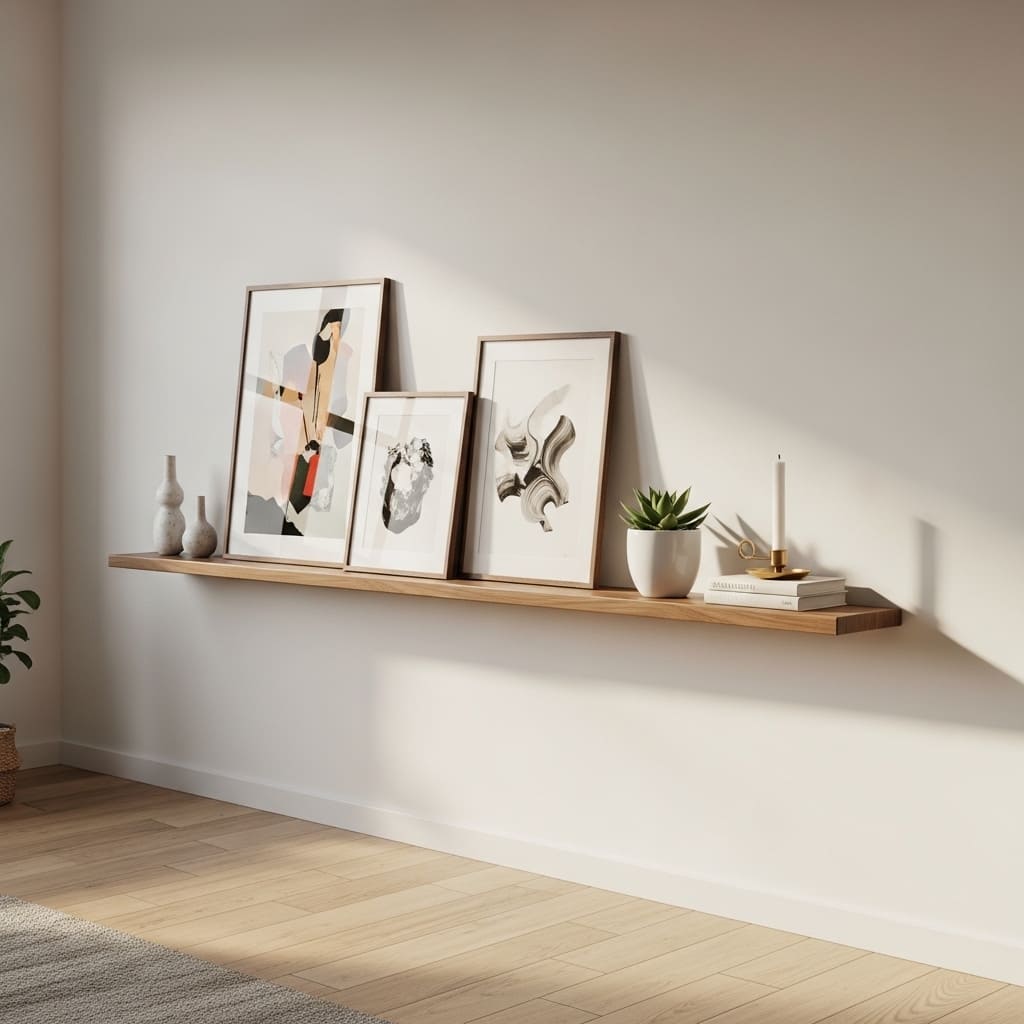
A single floating picture ledge transforms a bare wall into a flexible, gallery-style display that requires almost no commitment from the homeowner. You swap prints forward, add a small plant, or remove a frame entirely, and the whole look shifts in minutes. This flexibility makes the ledge one of the most practical minimalist wall solutions available for renters, first-time decorators, and anyone who likes refreshing their space seasonally without spending money on new wall holes or new hardware.
Keeping the ledge display to exactly three items, two leaning prints plus one small organic accent like a succulent or tiny ceramic piece, prevents the minimal setup from tipping into clutter. The rule of three applies powerfully on a narrow ledge because each item needs visible breathing room around it to read as intentional rather than crowded. That’s why many minimalist stylists describe the picture ledge as one of the most discipline-testing wall decor formats available. Restraint here is everything.
- Flexible display, no extra wall holes needed
- Three-item maximum keeps the look clean
- Works in minimalist living room wall styling
- Easy seasonal print updates, zero commitment
- Natural wood ledge suits warm neutral rooms
IKEA’s MOSSLANDA ledge at $12 to $15 delivers a clean, functional result that looks identical to custom millwork once styled. Installing it at mid-wall height creates a natural eye-level anchor without requiring a second shelf or additional wall elements. A single well-styled ledge on one focused wall section reads as a complete design decision in a minimal room rather than an unfinished decorating attempt that needs more items added around it.
Choosing two prints in the same warm frame finish and one slightly different frame as a subtle accent adds visual rhythm without breaking the cohesive minimal palette. All-matching frames can look rigid and overly uniform. One gentle variation in frame weight or finish creates the organic, collected quality that distinguishes truly styled minimalist spaces from simply sparse ones. This single small detail separates rooms that feel designed from rooms that merely feel empty.
Japandi Ink Brush Print
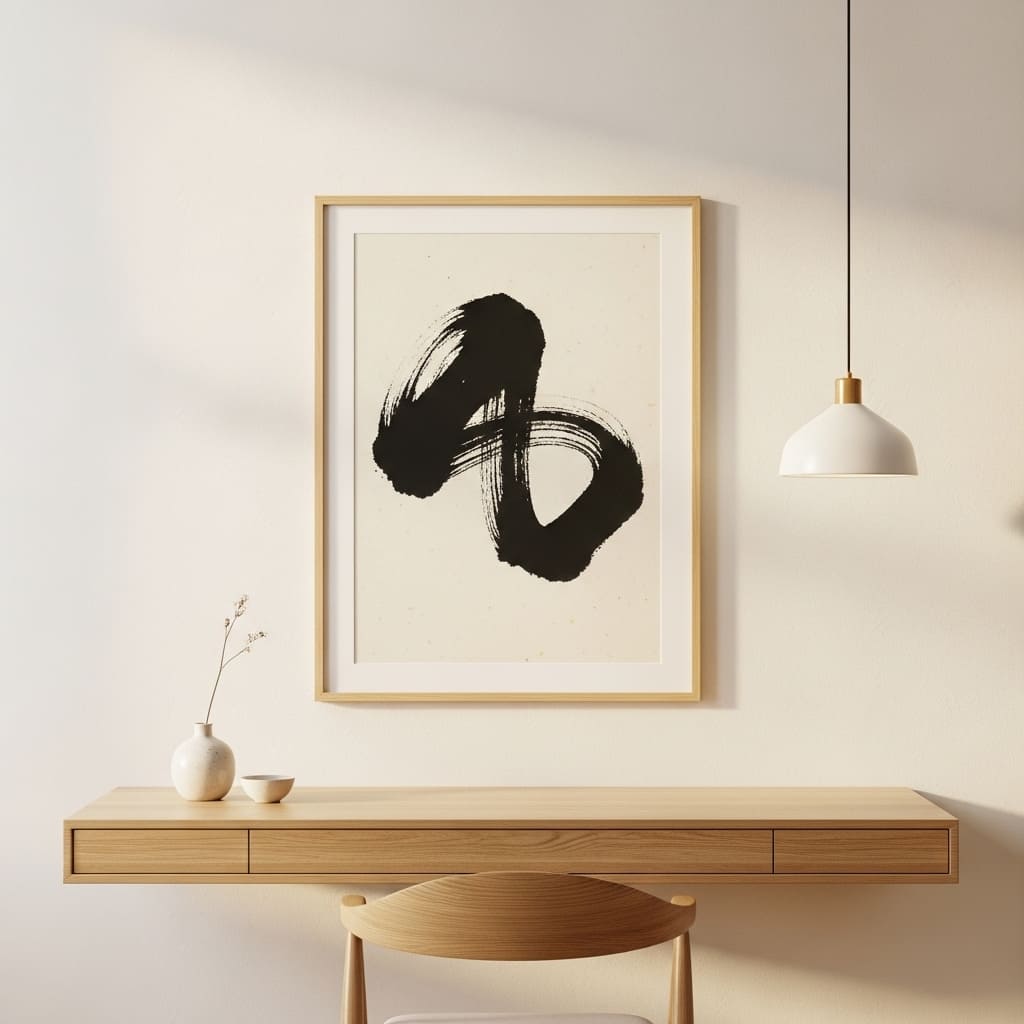
A Japandi ink brush print communicates an entire design philosophy in one single wall piece. The loose, expressive brushstroke on cream paper captures the Japanese wabi-sabi principle that imperfection holds beauty, while the clean bamboo frame reflects Scandinavian appreciation for honest, natural materials. Together, the two design cultures produce a wall piece that feels profoundly calm, deeply considered, and visually complete without requiring anything else on the surrounding wall surface.
Japandi wall art remains one of the strongest performing minimalist home decor categories on Pinterest in 2026. The aesthetic appeals equally to people who love clean modern design and to people who want their minimal spaces to feel warm rather than cold. I’ve noticed that Japandi ink prints generate unusually high save rates on home decor boards because the combination of natural materials and expressive mark-making feels both sophisticated and emotionally resonant to a very wide audience across different ages and interior styles.
- Creates a calm, philosophical wall focal point
- Bamboo frames add warm natural material texture
- Works beautifully in home office wall decor
- Suits both modern and organic interior styles
- High-save Pinterest aesthetic for minimal rooms
Printing a Japandi ink brush design at 18×24 inches or larger captures the expressive quality of the brushstroke at a scale that reads clearly from across the room. Smaller prints lose the gestural energy of the brushwork and make the piece look like a generic pattern rather than an expressive artistic mark. Scale is particularly important for ink brush art because the looseness of the stroke only communicates its intended power and confidence at a generous viewing size.
Pairing the ink brush print with one small ceramic bud vase and a single dried stem on the desk or console below creates a complete Japandi vignette. The organic, imperfect shape of the ceramic vessel mirrors the loose energy of the ink brushstroke above it, creating a visual dialogue between the wall art and the surface below. This intentional material and form relationship is exactly what separates a styled Japandi space from a room that simply contains Japanese-inspired objects without context or connection.
Linen Framed Textile
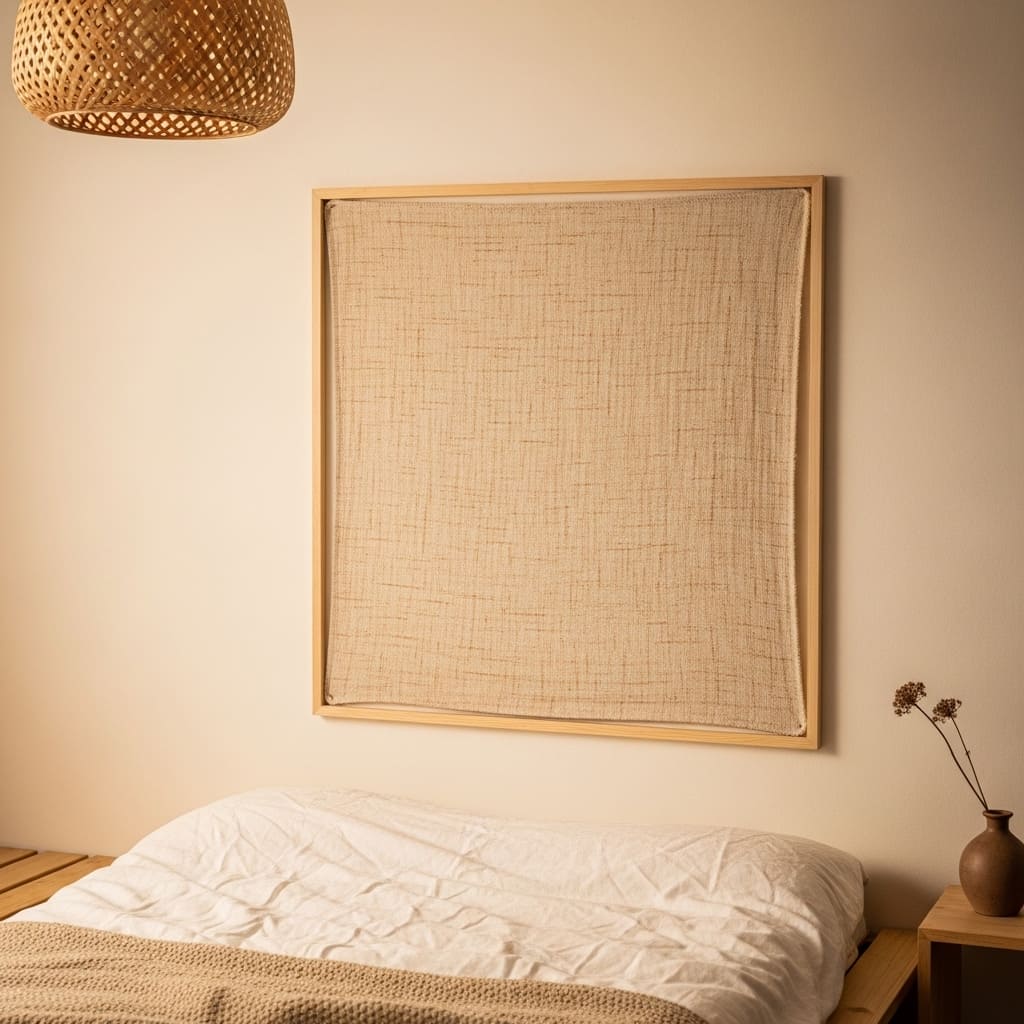
A stretched linen panel on a bedroom wall adds rich, tactile texture that no printed artwork can replicate from a distance. The natural woven surface of the linen catches light in subtle, shifting ways throughout the day, creating a quietly dynamic wall element that changes character from morning to evening light. This idea works particularly well in organic minimalist and Japandi-inspired bedrooms where texture serves as the primary design language and color stays deliberately muted and restrained throughout the entire room.
Linen textile panels suit clean home decor goals perfectly because they add visual warmth and surface interest without introducing pattern, color, or complexity to the wall. The material itself does all the decorative work. I’ve tried this approach in a bedroom that previously felt bare and cold despite having white walls and quality furniture, and the addition of one stretched linen panel immediately resolved the room’s flatness and brought the space into a warm, complete feeling that no printed artwork had managed to achieve previously.
- Adds natural texture without color or pattern
- Works in organic minimalist bedroom styling
- Linen surface creates a warm, tactile wall piece
- No print required, the material is the art
- Pairs with rattan, clay, and dried botanicals
Stretching the linen over a 12×12 or 16×16 inch square frame creates a compact, clean wall piece that suits narrow walls and tight spaces equally well. Square proportions work especially well in minimal rooms because the equal-sided geometry reinforces the clean, balanced quality of the overall space. A rectangular linen panel works for wider walls, but the square format suits minimalist interiors most naturally because of its calm, non-directional symmetry.
Natural, undyed linen in its raw cream or warm sand tone works better than white linen in most minimalist rooms because it adds warmth without the clinical brightness of stark white fabric. White linen against a white wall disappears entirely and delivers no visual benefit. The slight warmth of natural linen creates a gentle, tonal contrast against the wall that makes the panel readable and beautiful without disrupting the room’s calm, neutral palette in any way.
Minimal Black Wall Clock
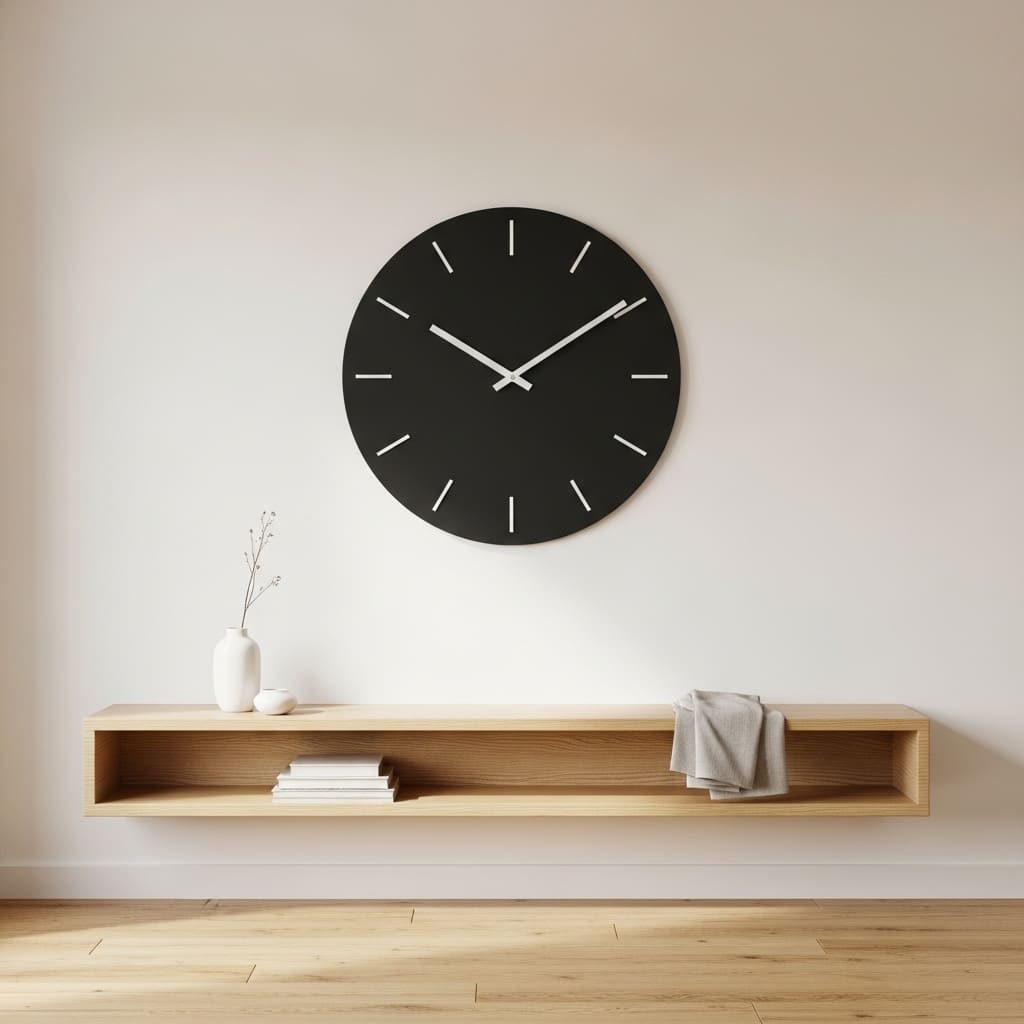
A minimal wall clock with clean hands and no numerals functions as both a practical timepiece and a genuine design object on a blank living room wall. The restrained geometry of a simple clock face, two thin hands against a flat surface, creates a visual focal point that feels intentional and curated rather than merely decorative. This approach suits minimalist clean home aesthetics in 2026 because the object serves a clear daily purpose while contributing a precise, considered element to the wall composition.
Choosing a flat black or matte charcoal clock against a warm white wall creates the cleanest possible contrast without the cold harshness of a pure black-and-white room. The subtle warmth of an off-white wall softens the sharp geometry of the clock face and makes the object feel at home in an organic, human-centered minimal space. That’s why many Scandi-inspired interior stylists include a quality wall clock as one of their standard recommendations for completing a minimal living room wall without adding decorative clutter.
- Adds function and clean design to blank walls
- No-numeral face suits minimalist room styling
- Works in living rooms and minimal home offices
- Flat black suits warm white and cream walls
- One functional object counts as genuine wall decor
Sizing the clock at 12 to 16 inches in diameter delivers enough visual presence to anchor a standard living room wall without looking oversized or domineering. Smaller clocks at 8 to 10 inches look like afterthoughts on most wall surfaces above furniture. The 12 to 16 inch range hits the correct proportional relationship between the clock and the console or sofa below it, making the clock feel like a deliberate design choice rather than a functional item placed without aesthetic consideration.
Mounting the clock at eye level, approximately 57 to 60 inches from the floor to the clock center, keeps it comfortably readable from a seated position across the room. Clocks mounted too high near the ceiling look architecturally awkward and read poorly from normal viewing distances. The eye-level placement integrates the clock naturally into the room’s visual composition, connecting it to the furniture below rather than floating it in an undefined upper wall zone with no visual relationship to anything else in the space.
Dried Botanical Frame
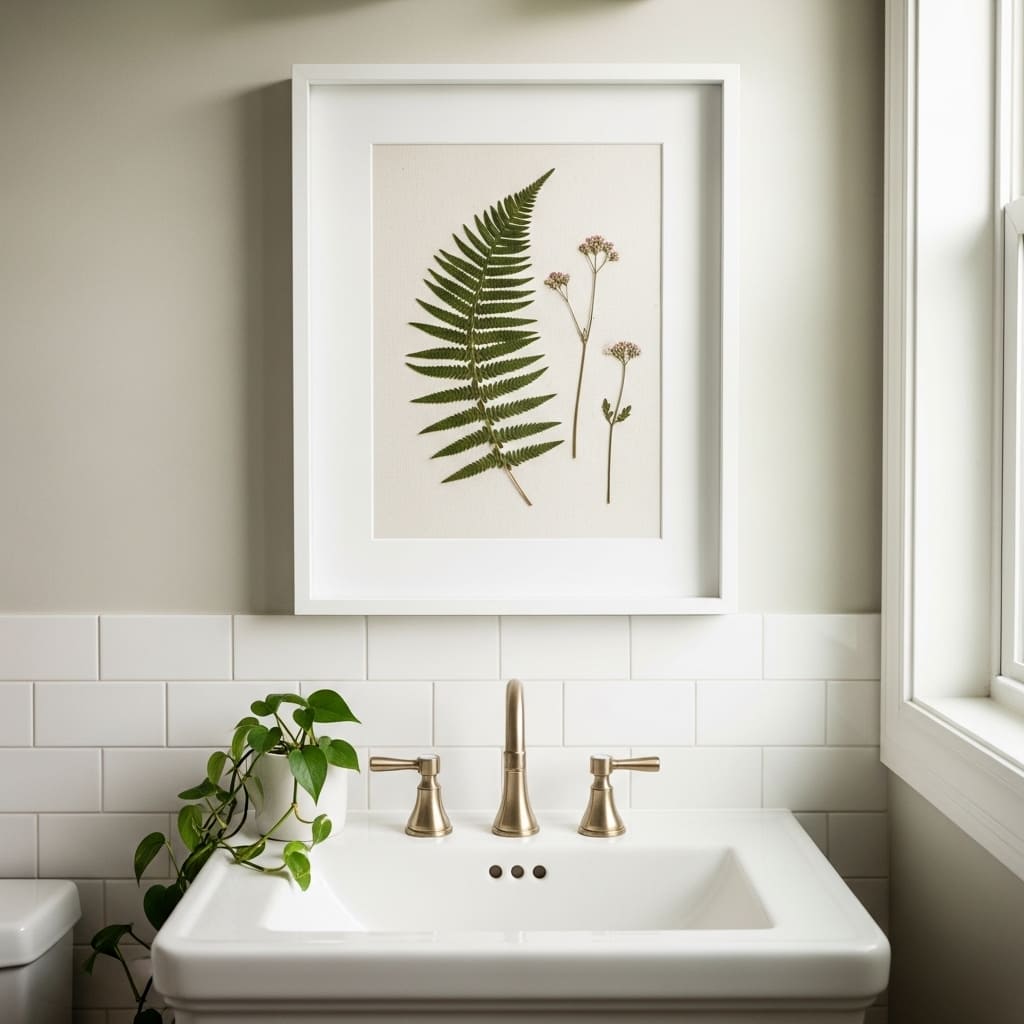
A single pressed botanical frame above the sink turns a plain bathroom wall into a quiet, spa-inspired display that feels genuinely thoughtful and handcrafted. The natural organic material of a pressed fern or dried wildflower arrangement adds a living quality to a room that typically contains only hard, reflective surfaces like tile, glass, and ceramic. I’ve seen this single addition transform a generic apartment bathroom into a room that guests consistently describe as serene, beautiful, and surprisingly personal.
Pressed fern fronds and dried wildflowers hold their shape and subtle color beautifully for 12 to 18 months behind UV-protective glass when kept away from direct moisture and steam. Placing the shadow box on a wall away from the shower spray zone prevents moisture damage and extends the life of the pressed specimens considerably. That’s why many home stylists recommend the wall above the sink or vanity, rather than the wall beside the shower, as the best placement for any organic botanical wall display in a small bathroom space.
- Adds a handcrafted botanical spa wall piece
- Works beautifully in small bathroom decor
- Pressed specimens last 12 to 18 months
- UV glass protects natural material from fading
- One frame creates a complete wall statement
Choosing a deep shadow box frame with at least 1 inch of internal depth allows the pressed stems and flower heads to sit naturally without being crushed flat against the backing material. Standard picture frames press botanical specimens too tightly, which damages delicate petals and removes the gentle dimensional quality that makes pressed botanical art beautiful. The depth of a proper shadow box gives the arrangement breathing room and produces a more elegant, layered appearance at close viewing distance.
Mounting the shadow box at eye level, centered precisely above the sink basin, creates the most natural and balanced bathroom wall composition. The symmetrical relationship between the centered frame above and the centered sink below anchors both objects to the same vertical axis and makes the entire wall feel organized and intentional. Adding one small potted trailing plant on the counter directly below the frame connects the wall piece to the surface styling and completes the full botanical vignette from wall to countertop.
Monochrome Photo Print
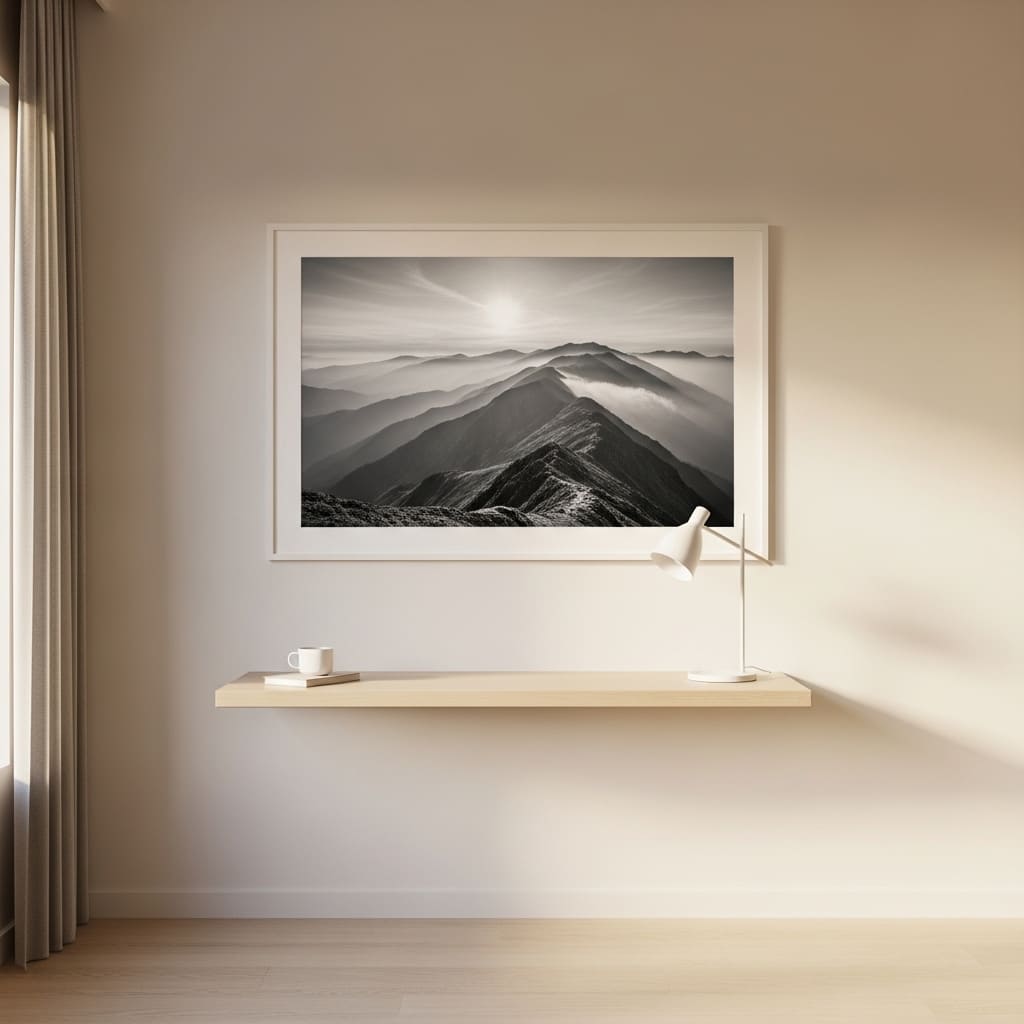
A single large black-and-white photograph on a clean wall delivers dramatic visual depth and quiet emotional resonance in any minimalist room. The absence of color in a monochrome photograph actually intensifies the viewer’s connection to the image because the eye focuses entirely on composition, light, and subject rather than being distracted by hue. This quality makes black-and-white photography one of the most powerful and enduring choices within the broader minimalist wall decor ideas category for both bedrooms and home workspaces.
Misty landscapes, architectural details, and close-up nature studies work especially well as monochrome prints in minimal rooms because these subjects contain the dramatic tonal range of dark shadows and bright highlights that make black-and-white photography most compelling. A flat, evenly lit subject in black and white loses its visual interest quickly. The most effective monochrome wall prints contain at least three distinct tonal zones: deep shadows, bright highlights, and mid-tone areas that create a rich, three-dimensional quality on the flat wall surface.
- Creates dramatic depth on clean white walls
- Black-and-white suits every minimal color scheme
- Works in modern home office wall decor
- Large scale amplifies the tonal depth impact
- Slim white frame keeps the look clean and sharp
Printing the photograph at 20×30 inches or larger creates the visual scale needed to anchor a wall above a desk or sofa properly. Smaller monochrome prints lose their atmospheric quality because the fine tonal gradations that make landscape photography beautiful require sufficient size to be visible and appreciated from a normal viewing distance. Most people choose prints that are too small for their wall and then wonder why the space still feels incomplete and underdecorated despite having art on the wall.
A slim white or light natural wood frame complements the cool tones of a black-and-white photograph without adding warm or competing color to the wall. Black frames work well for urban and industrial subjects but can feel heavy against the subtle atmosphere of a misty landscape or nature study. The white or light frame keeps the presentation feeling clean, open, and aligned with the minimal aesthetic of the room, allowing the photograph’s own tonal drama to remain the primary visual experience.
Oversized Abstract Print
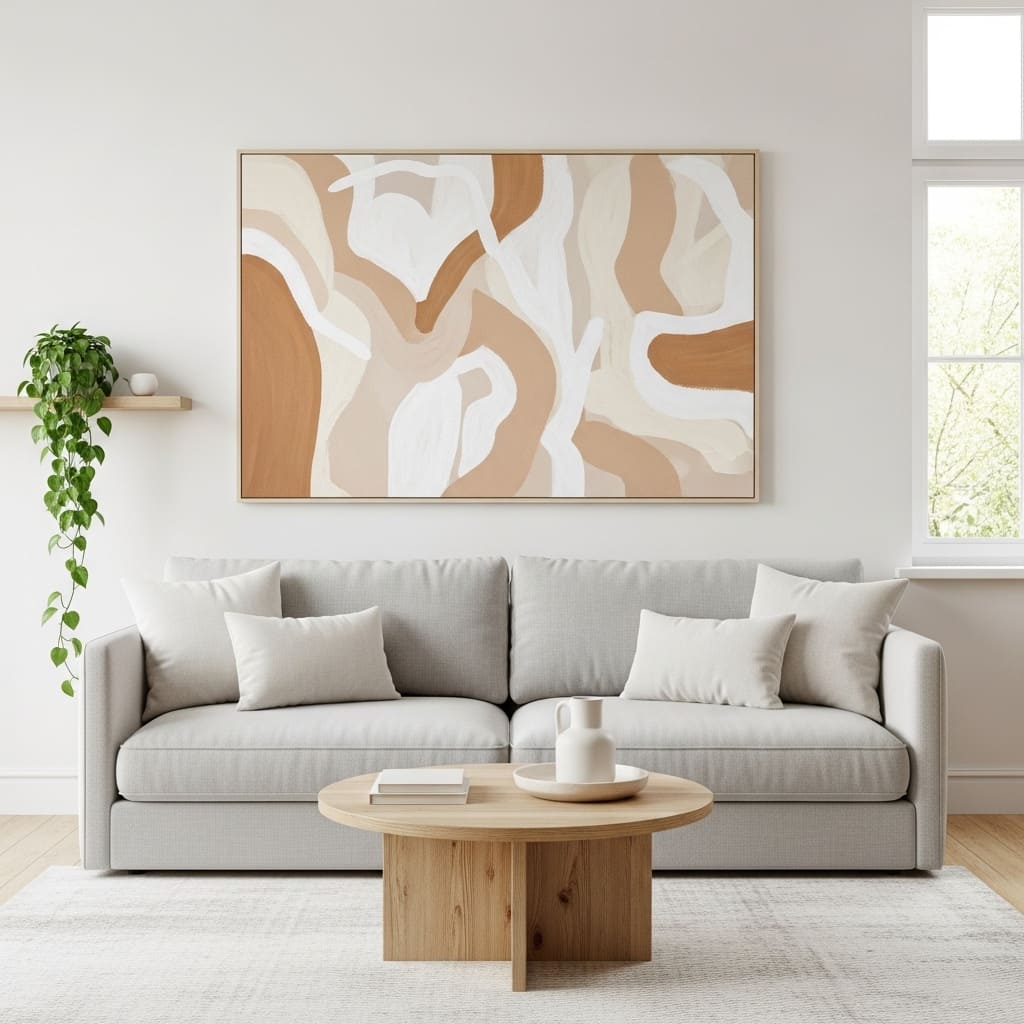
One oversized abstract print replaces an entire gallery wall and makes a minimal living room feel immediately complete, confident, and gallery-quality. Interior design research from 2026 confirms that demand for large-scale statement artwork has grown significantly as homeowners move away from cluttered multi-frame arrangements toward single pieces with strong visual presence. A canvas at 36×48 inches or larger anchors the full sofa wall and delivers the kind of quiet authority that ten small prints arranged together simply cannot achieve in the same space.
Soft modern palettes in cloud dancer white, warm sand, and pale taupe perform especially well in 2026 minimal living rooms because these tones align directly with the year’s dominant interior color direction. Pantone’s 2026 Color of the Year, Cloud Dancer, reflects a broad cultural shift toward calm, clarity, and intentional simplicity in the home environment. Choosing abstract artwork within this soft, billowy palette ensures the piece remains visually relevant and emotionally resonant well beyond a single decorating season.
- One large canvas replaces multiple small prints
- Cloud Dancer palette suits 2026 minimal rooms
- Frameless gallery-wrap keeps the look clean
- Anchors the sofa wall with confident presence
- Works beautifully in modern clean living rooms
Hanging the oversized canvas so its center sits at 57 to 60 inches from the floor keeps the artwork at the correct eye-level position relative to the seated sofa view. Many people hang large canvases too high on the wall, creating an awkward visual disconnect between the art above and the furniture below. The eye-level rule applies even more critically to large canvases because the oversized format amplifies any vertical misalignment and makes the wall composition look unbalanced and unanchored.
Leaving at least 6 to 8 inches of clear wall space on each side of the canvas, rather than pushing the sofa flush to the edges, gives the large format artwork visual breathing room. This negative space around the canvas signals deliberate restraint and confidence in the single-piece approach. I’ve noticed that rooms where the oversized canvas has generous surrounding wall space consistently feel more sophisticated and designed than rooms where the canvas nearly touches the adjoining walls on both sides.
Round Woven Mirror
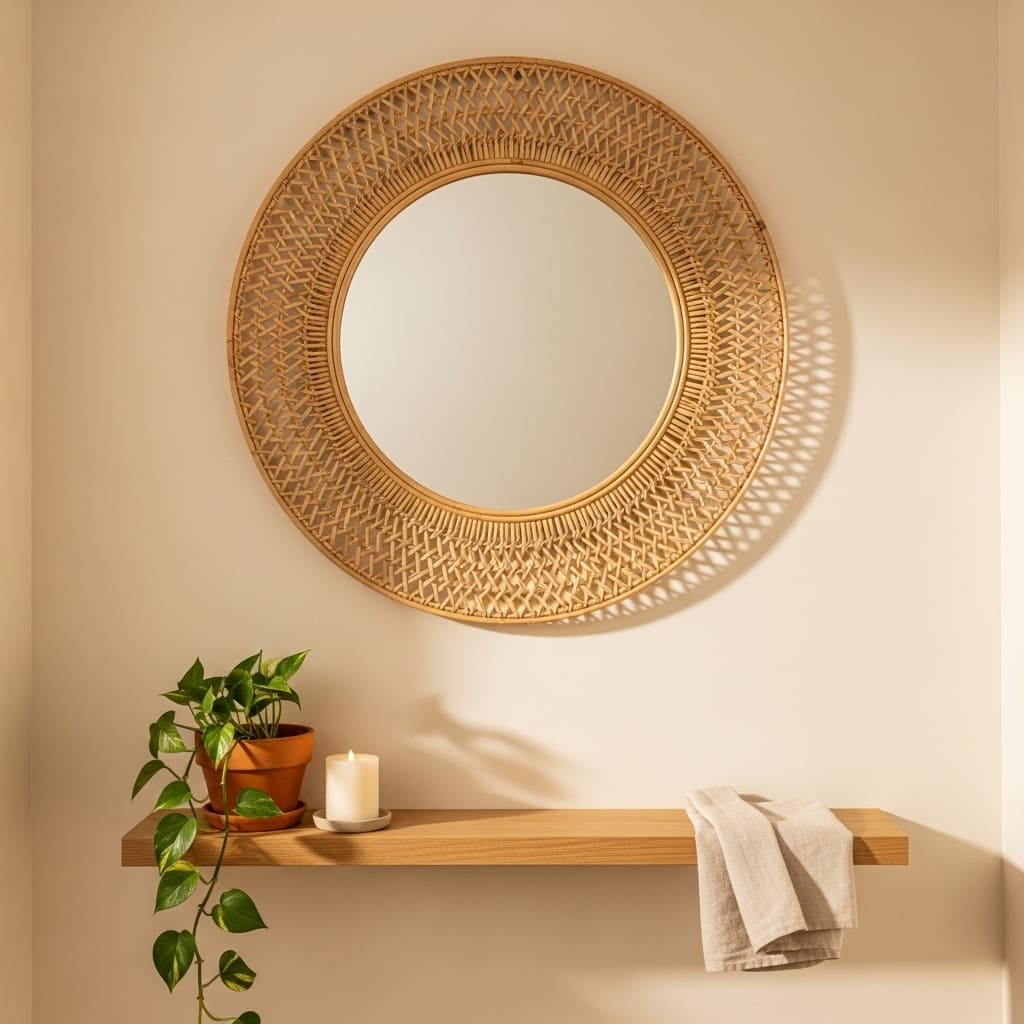
A round rattan-framed mirror in a clean entryway communicates a complete design aesthetic in one single wall piece. The circular shape softens the hard rectangular geometry of a typical hallway while the natural rattan frame adds organic texture that connects the entryway visually to the broader earthy material palette of the home. I’ve seen this exact setup in dozens of minimal apartment entryways, and it consistently delivers the strongest first impression per dollar of any single wall decor investment available for a compact entry space.
The mirror’s reflective surface doubles the entryway’s perceived light and depth, making a narrow hallway feel significantly more open and welcoming. Natural rattan frames have maintained strong relevance across multiple design seasons because the organic weave texture suits Japandi, boho-minimal, and modern organic interiors equally well. That’s why many interior stylists describe the rattan round mirror as the single most versatile investment in the current clean home aesthetic category, suitable for virtually any neutral-toned interior regardless of specific style direction.
- Reflects light and depth in narrow entryways
- Rattan frame suits Japandi and boho styles
- Round shape softens rectangular hallway geometry
- Works as complete entryway wall decor alone
- Natural material suits every neutral palette
Sizing the rattan mirror at 24 to 30 inches in diameter creates the ideal proportional relationship with a standard entryway wall above a slim console shelf. A smaller mirror at 16 to 18 inches looks undersized and loses the light-reflecting benefit that makes mirrors so effective in compact entry spaces. The 24 to 30 inch range delivers sufficient reflective surface to genuinely brighten the hallway while maintaining proportional balance with the shelf and accessories arranged below it.
Positioning the mirror center at approximately 57 to 60 inches from the floor allows it to function practically for a quick check before leaving the home while also sitting at the visually correct height for the entryway composition. Mirrors hung too high serve only a decorative function and fail their daily practical purpose entirely. The eye-level placement ensures the rattan mirror works as both a functional daily-use object and a genuine design statement in the clean, minimal entryway space.
Limewash Accent Wall
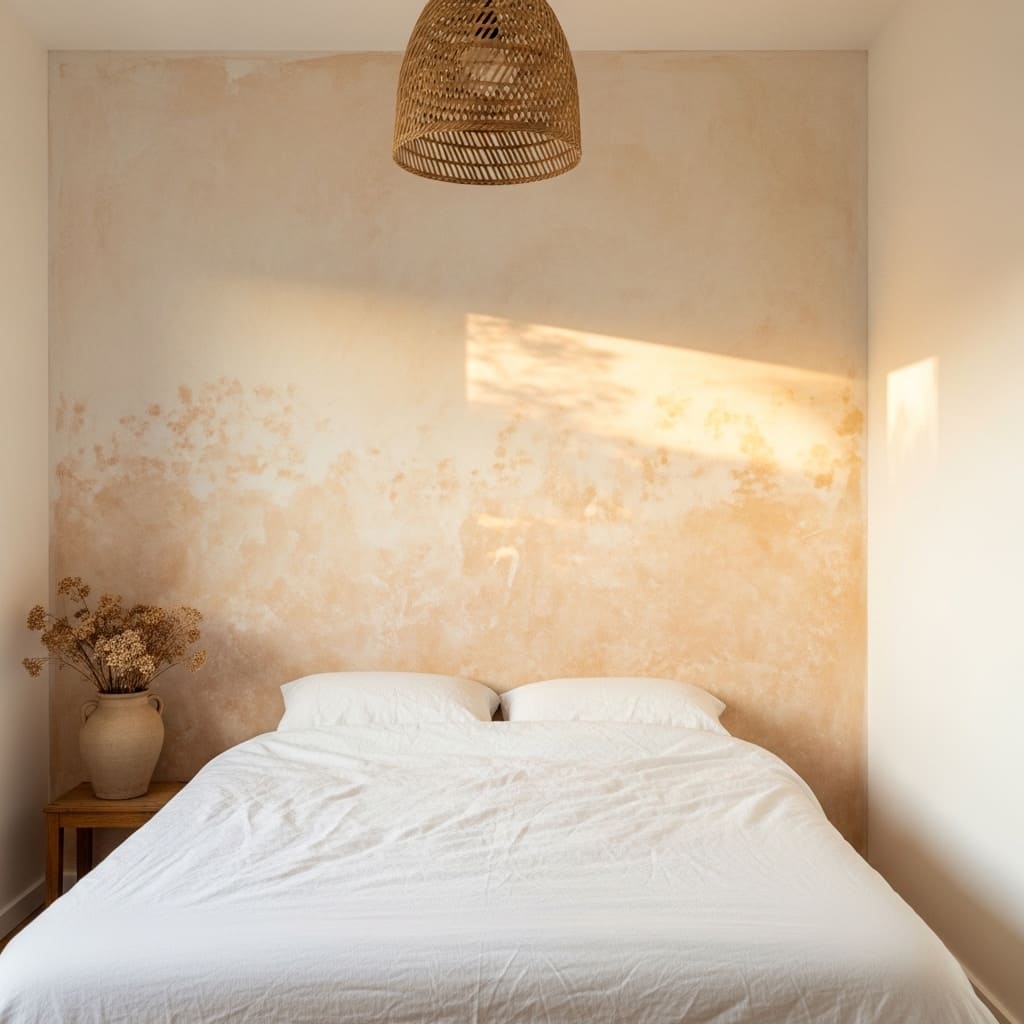
A limewash accent wall adds sculptural depth and artisan warmth to a minimal bedroom that no flat paint color can replicate regardless of shade or finish quality. The organic, mottled surface of limewash absorbs and reflects light in shifting, subtle ways throughout the day, creating a wall that feels genuinely alive and handcrafted rather than merely painted. Demand for textured wall finishes in organic, earthy tones has grown by over 40% year-over-year in 2026 home decor reports, confirming this approach as one of the strongest performing minimalist wall trends currently available.
Limewash paint in warm ivory, aged linen, or soft sand tones suits 2026 minimal home aesthetics perfectly because the finish delivers texture and warmth simultaneously without introducing color, pattern, or complexity to the wall surface. The material itself becomes the entire decor statement. That’s why many interior designers choose limewash as their single most recommended wall treatment for clients who want their minimal spaces to feel genuinely warm and human rather than clinically spare and emotionally cold.
- Adds sculptural texture without color or pattern
- Warm ivory tones suit 2026 minimal bedrooms
- DIY-friendly with a basic wide rubber trowel
- Creates a handcrafted Mediterranean wall quality
- One-wall treatment transforms the entire room
Applying limewash paint in two to three thin, slightly overlapping coats with a wide natural-bristle brush creates the authentic mottled texture that distinguishes genuine limewash from standard paint applied with a foam roller. Each coat should dry for at least two hours before the next application. Working in irregular, cross-hatched brush strokes rather than straight parallel lines produces the most natural, organic surface variation that makes the limewash finish look professionally applied rather than DIY-amateur.
Quality limewash paint brands like Portola Paints, Roman Sandstone, or LIMELIT cost between $60 and $90 per gallon and cover a standard bedroom accent wall in two complete coats. The total project cost for a 10-foot-wide accent wall stays well under $120 including the brush and painter’s tape. In my experience, the limewash accent wall delivers the most dramatic room transformation per dollar of any wall treatment currently available in the minimalist home decor category.
Ceramic Wall Sculpture
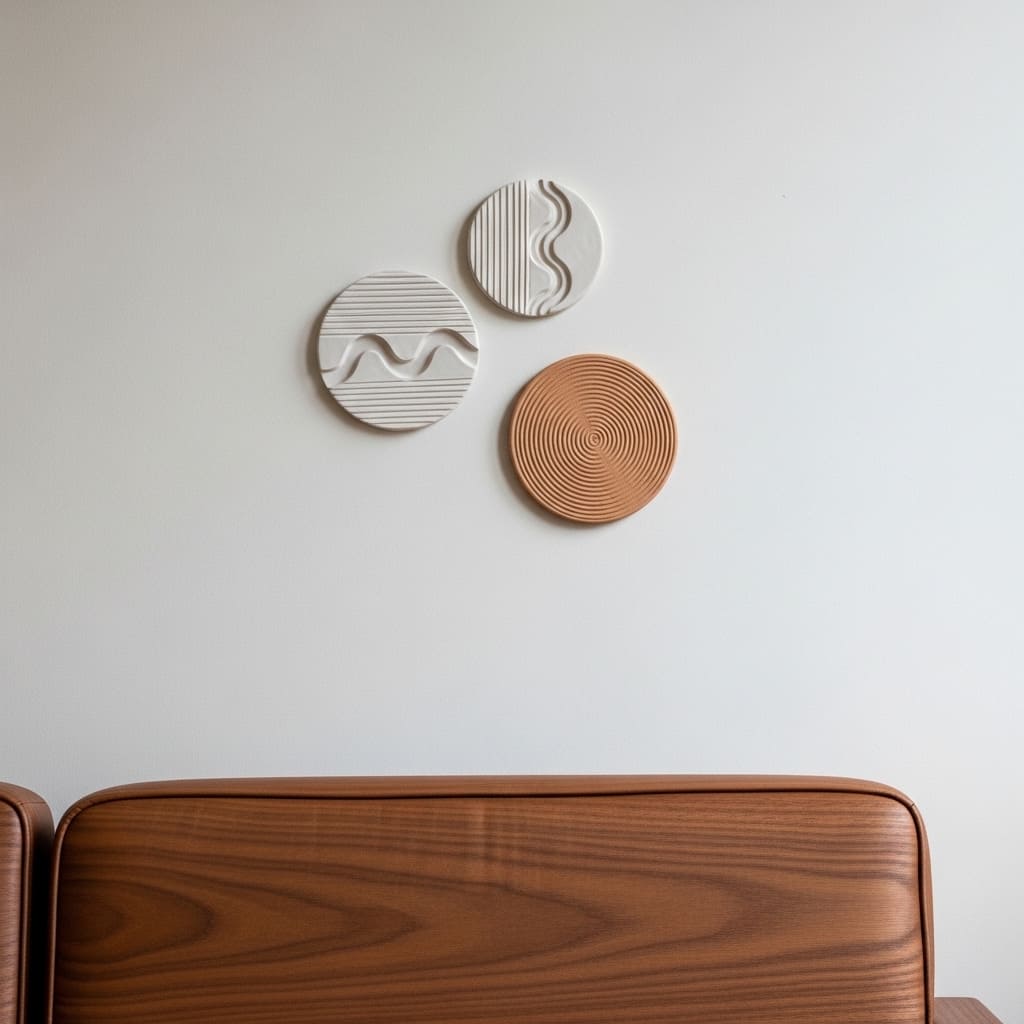
Ceramic wall sculptures bring a three-dimensional, handcrafted quality to a clean room wall that flat artwork simply cannot deliver. Each ceramic disc or panel casts its own subtle shadow depending on the angle and intensity of the ambient light, creating a quietly dynamic wall display that shifts its character from morning to evening. This tactile dimension makes ceramic wall art one of the most sophisticated choices within the broader clean home wall decor category, particularly for minimalist rooms where texture serves as the primary design language.
Small-batch ceramic wall pieces from independent makers on Etsy typically cost between $25 and $75 per disc depending on size and complexity. Grouping three pieces of slightly different sizes in a loose asymmetric cluster creates a composed, gallery-quality arrangement that looks far more considered than a single piece mounted in isolation. That’s why many minimal interior stylists recommend the three-piece ceramic cluster as their go-to wall recommendation for clients who want handcrafted texture without the visual complexity of a full gallery wall installation.
- Adds three-dimensional texture to clean walls
- Handcrafted quality suits organic minimal rooms
- Three-piece clusters create gallery-quality displays
- Ceramic shadows shift beautifully with light changes
- Artisan Etsy pieces cost $25 to $75 each
Mounting the three ceramic discs in a loose triangular arrangement, with one piece at the top and two pieces below at slightly different heights, creates the most naturally balanced asymmetric composition. Equal-height mounting of all three pieces produces a rigid, line-up quality that removes the organic, discovered feeling that makes ceramic clusters most appealing. The slight height variation across the three pieces mimics the natural irregularity of handmade objects and reinforces the artisan quality of the entire wall display.
Choosing ceramic pieces in a cohesive tonal family, like all-matte white, all-warm clay, or a mix of both within the same temperature range, keeps the cluster feeling unified despite the variation in individual surface textures and relief patterns. Mixing warm clay tones with cool gray ceramics creates a visual tension that undermines the calm, cohesive quality that makes a minimal wall display feel genuinely restful. Tonal unity across the three pieces allows the textural differences to read as interesting variation rather than accidental mismatch.
Soft Sage Green Panel
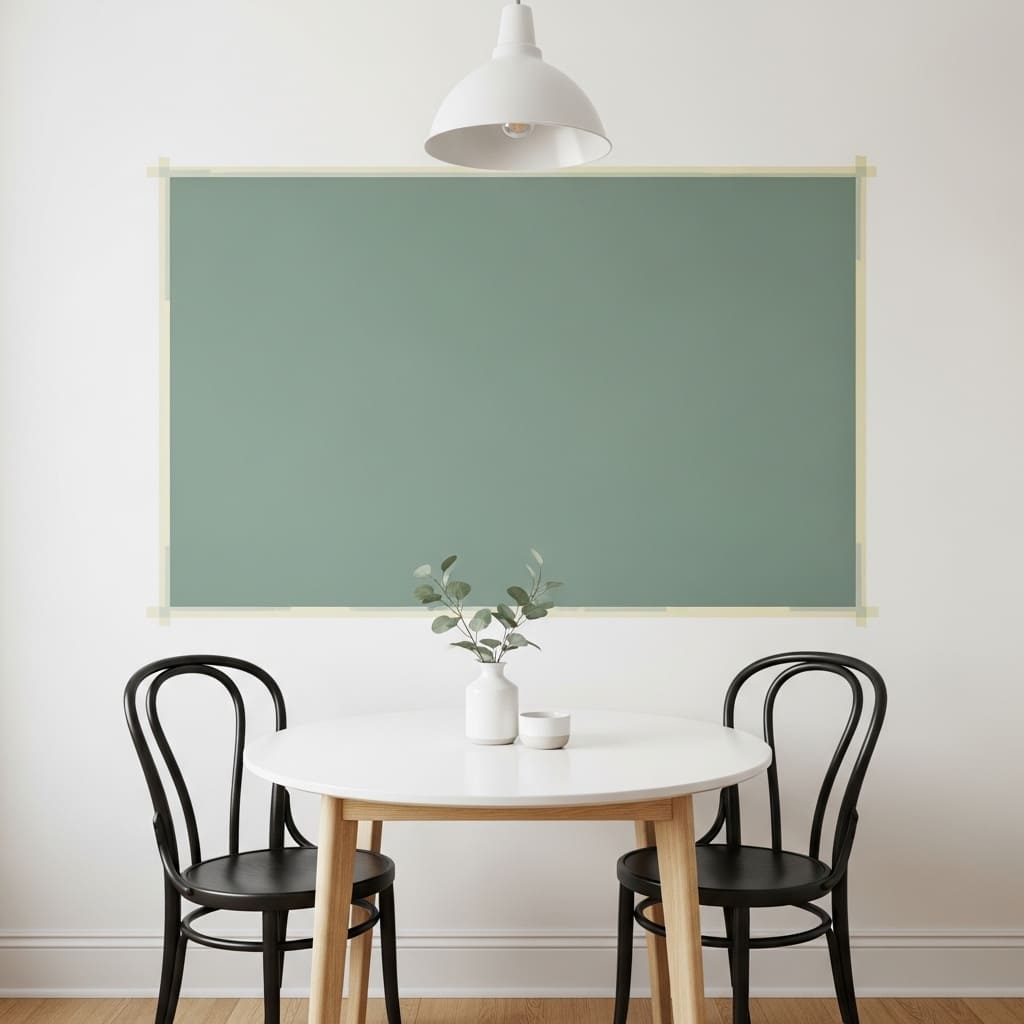
A painted sage green panel on a dining room wall creates an instant architectural focal point that makes the entire eating area feel designed and intentional without requiring furniture changes or significant investment. The muted, dusty quality of sage green in 2026 sits perfectly within the warm neutral direction that dominates current minimal home aesthetics. Sage reads as naturally calm, gently fresh, and visually grounding, which makes it one of the most recommended accent colors for clean, minimal interior spaces this year.
Containing the color block to the wall section directly behind the dining table keeps the painted feature proportionally connected to the furniture it frames. The color block should extend approximately 8 to 12 inches beyond the table’s width on each side to create a visually generous frame around the dining zone without covering the entire wall. I’ve tried both contained color blocks and full accent walls in dining spaces, and the contained block approach consistently looks more architecturally refined and deliberately considered in rooms of modest size.
- Creates an architectural dining room focal point
- Sage green suits warm 2026 minimal palettes
- Costs under $15 in wall paint total
- Crisp edges require quality painter’s tape
- Works beautifully behind round dining tables
Choosing a matte finish for the sage green panel keeps the color looking sophisticated and flat rather than shiny or plastic. Eggshell and satin finishes catch overhead light and create visible sheen patches that cheapen the painted feature’s overall appearance. A flat or matte finish absorbs light evenly and produces the rich, velvety color depth that makes painted color blocks look professionally done rather than DIY-approximate. Most quality matte wall paints in sage or dusty green cost between $35 and $55 per quart.
Pairing the sage green color block with a white round dining table and simple bentwood chairs in natural wood tones creates the most balanced, harmonious composition around the painted feature. The white table surface reflects the sage green color softly and creates a visual conversation between the wall color and the furniture below it. One single eucalyptus or olive sprig in a white ceramic vase on the table reinforces the organic green palette of the wall color and ties the full dining vignette together with a live botanical accent.
Natural Wood Slice Art
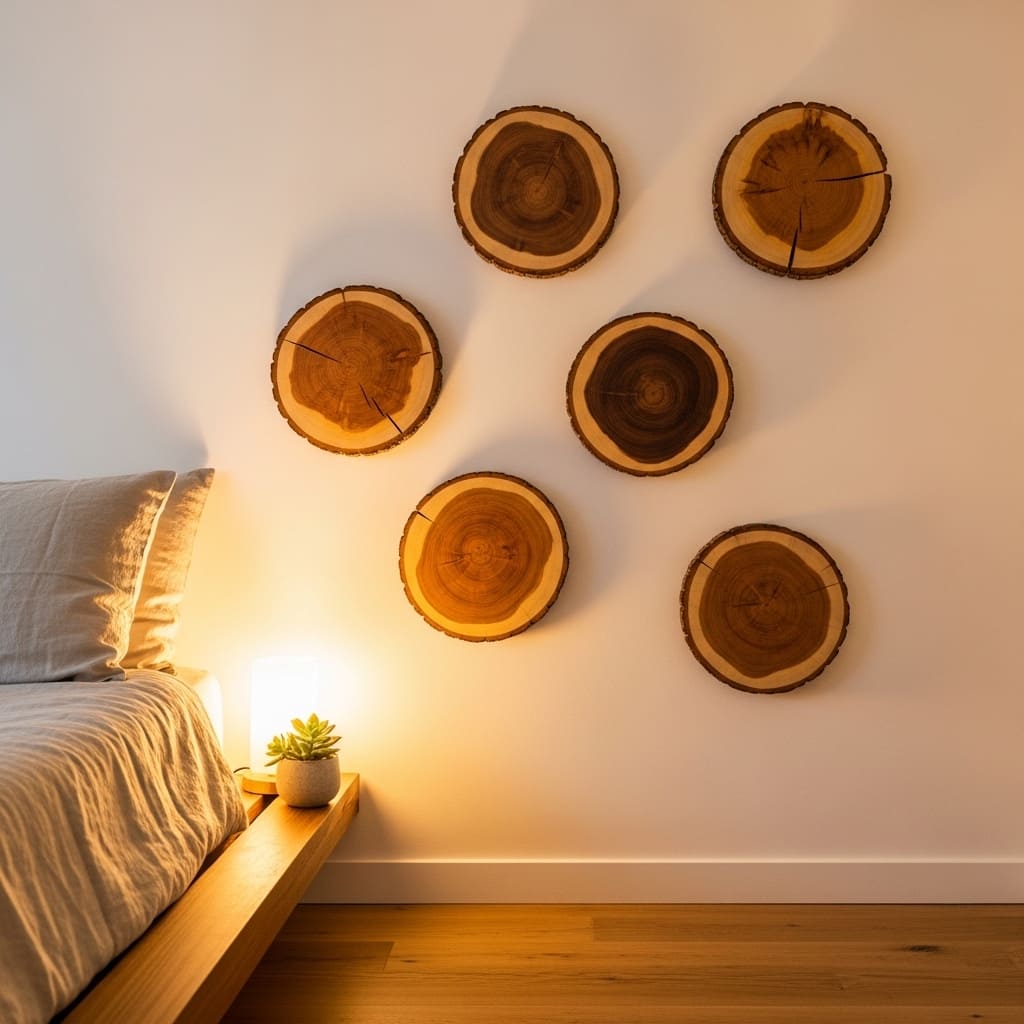
Natural wood slice wall art brings the organic grain and warm tonal variation of real wood directly onto the bedroom wall as a completely textural, nature-inspired display. No two wood slices share identical grain patterns, which gives this wall arrangement an inherently handmade, collected quality that mass-produced prints cannot replicate. I’ve seen this approach work beautifully in bedrooms that need warmth and organic character without the weight and visual complexity of a full gallery wall installation.
The scattered diagonal arrangement of five wood slices across the wall creates a dynamic, naturally flowing composition that feels organic rather than rigidly symmetrical. Varying the diameters between 4 and 10 inches adds visual rhythm and scale contrast across the arrangement. That’s why many nature-inspired interior stylists recommend the diagonal scatter rather than a grid layout for wood slice wall art, because the angled arrangement mirrors the natural, unpredictable quality of organic material and prevents the display from looking commercially assembled.
- Adds warm organic grain texture to bedroom walls
- No two slices share identical natural patterns
- Diagonal scatter arrangement feels naturally organic
- Works beautifully in earthy modern bedroom decor
- Affordable DIY option with basic craft supplies
Wood slice sets are widely available on Etsy and Amazon for between $18 and $35 per set of five to eight pieces. Many craft stores also sell individual raw wood slices that you can sand smooth and seal with a light coat of clear matte varnish before mounting. The varnish protects the natural wood surface from dust accumulation and prevents the raw grain from absorbing moisture in more humid rooms over time.
Mounting the wood slices using standard picture-hanging strips rated for 1 to 2 pounds each keeps the installation damage-free and renter-safe. The lightweight nature of thin wood slices means even standard adhesive strips handle them securely on most wall surfaces. Arranging the five slices on the floor first, photographing the layout from above, and using that photo as a hanging guide prevents misalignment and eliminates the trial-and-error process that typically results in multiple unnecessary holes during installation.
Minimalist Wall Sconce Pair
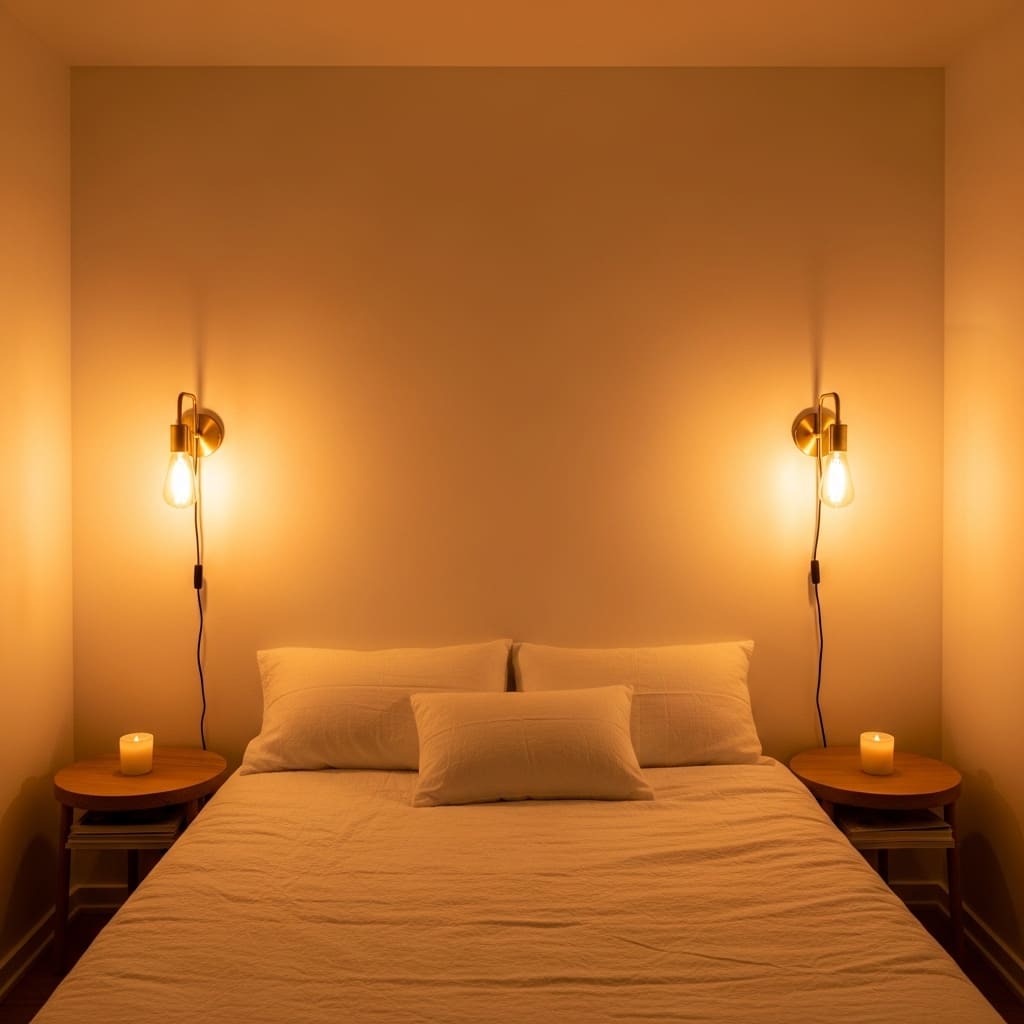
A matched pair of wall sconces on a minimal bedroom wall functions simultaneously as ambient lighting, architectural detail, and genuine wall decor in a single installation. Replacing bedside table lamps with wall-mounted sconces clears the nightstand surface entirely and creates a clean, hotel-quality visual order that defines the best minimalist wall decor ideas in 2026. The freed surface space on each nightstand allows for a far more intentional and curated bedside styling arrangement with just one or two carefully chosen objects.
Slim brass sconces with exposed bulb fittings suit the current warm minimalist direction perfectly because the metal tone adds warmth, the clean silhouette maintains restraint, and the visible filament bulb adds a subtle, cozy glow that feels human and inviting rather than cold and functional. That’s why many interior designers now specify wall sconces as their preferred bedside lighting solution in any minimal bedroom makeover, regardless of the client’s overall budget or the room’s existing furniture style.
- Clears nightstand surfaces for cleaner styling
- Creates hotel-quality bedroom wall symmetry
- Brass tone suits warm 2026 minimal aesthetics
- Replaces table lamps with wall-mounted lighting
- Warm Edison bulbs add cozy ambient bedroom glow
Installing the sconces at 60 to 65 inches from the floor, measured to the center of the fixture, positions the light source at the correct reading height for a person sitting upright in bed. Too low and the sconce glares directly into sitting eyes. Too high and the light misses the reading zone entirely and contributes only ambient ceiling wash rather than practical directional illumination. The 60 to 65 inch range consistently delivers the best balance of practical reading light and decorative wall presence.
Hardwired sconces provide the cleanest installation but require an electrician and are not suitable for renters. Plug-in sconces with a slim cord tucked behind a narrow cord cover deliver nearly identical visual results without any electrical work. Cord covers in white or matching wall color at approximately $8 to $12 per pair are nearly invisible against a painted wall and allow a clean, minimal sconce installation that looks professionally hardwired to most casual observers viewing the finished bedroom.
Monochromatic Gallery Wall
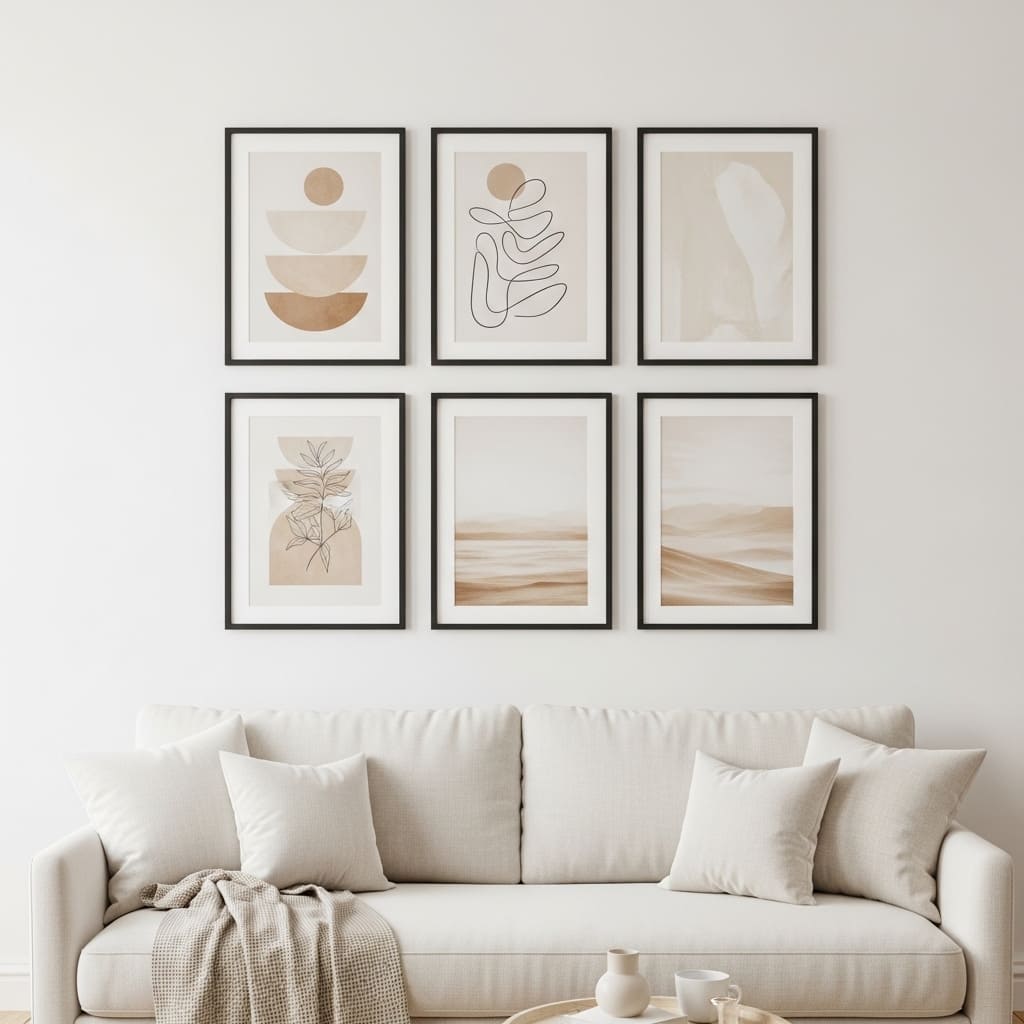
A monochromatic gallery wall uses one cohesive tonal palette across all prints and frames to create the visual impact of a full gallery arrangement while maintaining the calm, unified quality of a minimal room. The key difference between a standard gallery wall and a monochromatic one lies entirely in the color discipline. Every print in the arrangement stays within the same tonal family, warm creams, soft sands, and muted taupes, which prevents the wall from feeling busy or visually competitive despite containing six individual pieces.
Choosing a consistent matte black frame finish across all six prints provides the organizing visual structure that holds the monochromatic arrangement together. The identical frame finish creates a single repeating grid element that the eye follows across all six pieces and reads as one unified wall composition rather than six separately hung prints. In my experience, a monochromatic gallery wall with consistent frames always photographs better and reads more confidently as a complete design decision than mixed-frame gallery arrangements of any size or configuration.
- Unifies six prints through one color palette
- Consistent frames hold the gallery grid together
- Warm cream tones suit 2026 minimal living rooms
- Equal spacing creates a clean rectangular grid
- Works above sofas in modern clean home styling
Planning the rectangular grid layout before hanging any frame ensures consistent 2-inch spacing across all six pieces. A three-across, two-down grid works ideally for the space above a standard sofa because the wider-than-tall format mirrors the horizontal proportions of the sofa below it. This proportional mirroring between the gallery grid’s shape and the furniture’s silhouette creates the visual harmony that separates a professionally installed gallery wall from a randomly assembled collection of framed prints.
Printing all six pieces as downloadable art files and having them output at a consistent 8×10 size creates a perfectly matched set for under $60 total including printing and frames. The visual uniformity of identical print sizes within a monochromatic palette produces a gallery wall that looks extensively curated and deliberately expensive despite being assembled entirely from affordable digital downloads. Size consistency across all frames is more important to the final result than the quality or cost of any individual print in the arrangement.
Arch Niche Paint Effect
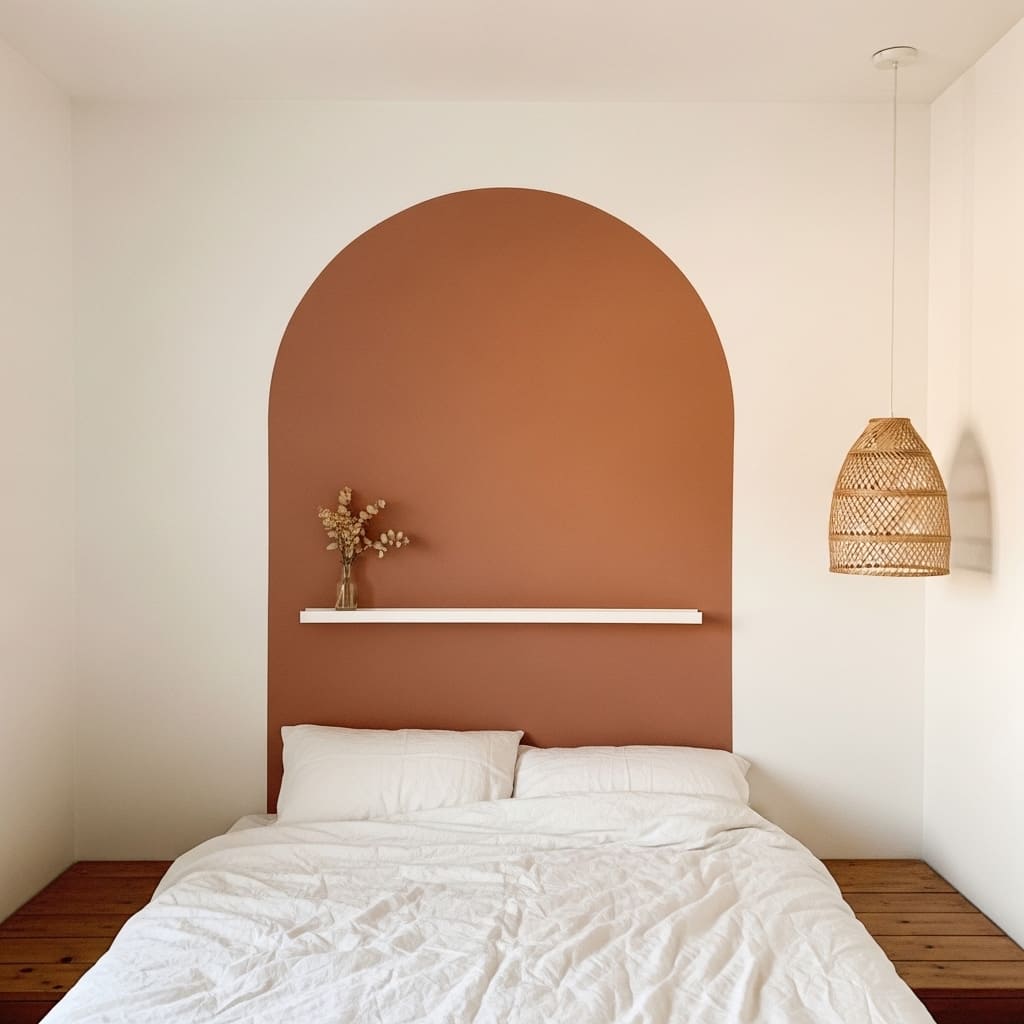
A painted arch niche effect on the bedroom wall creates a custom, architectural quality that makes a rental room look like it was designed by a professional interior architect. The arch shape frames the bed as though it sits inside a built-in alcove, adding a sense of depth and structure to a completely flat wall surface. This DIY wall technique costs under $20 in paint and produces one of the most scroll-stopping, Pinterest-viral bedroom focal points in the current minimalist wall decor ideas landscape for 2026.
Using a warm terracotta or dusty clay tone for the arch keeps the painted feature firmly within the earthy, warm-neutral direction that dominates minimal home aesthetics this year. The muted warmth of terracotta against a white wall creates a tonal relationship that feels deliberately considered rather than boldly contrasting. That’s why many interior design bloggers and stylists describe the terracotta painted arch as their single most recommended DIY bedroom project for readers who want a dramatic room upgrade on a truly minimal decorating budget.
- Creates an architectural focal point for under $20
- Terracotta suits warm 2026 minimal aesthetics
- Arch shape makes flat walls look custom-built
- Works directly above beds in small bedrooms
- One paint project changes the entire room mood
Tracing the arch using a large piece of cardboard cut and folded to achieve a symmetrical curved shape keeps both sides of the arch equal without requiring artistic drawing skill. Mark the arch outline lightly in pencil, then apply painter’s tape precisely along the outer edge before painting inside the shape. Two smooth coats of matte wall paint in the chosen arch color deliver clean, professional-looking edges that look intentional and deliberate from every viewing distance and angle.
Adding a single slim floating shelf inside the painted arch, positioned roughly two-thirds up the arch height, creates a small display zone that reinforces the alcove illusion. One small dried flower arrangement or a single ceramic vase on the shelf inside the arch completes the architectural staging and makes the painted feature read as a genuine built-in room element rather than a flat paint effect on an otherwise ordinary wall surface. This one small addition dramatically increases the realistic depth impression of the painted arch technique.
Woven Grass Wall Panel
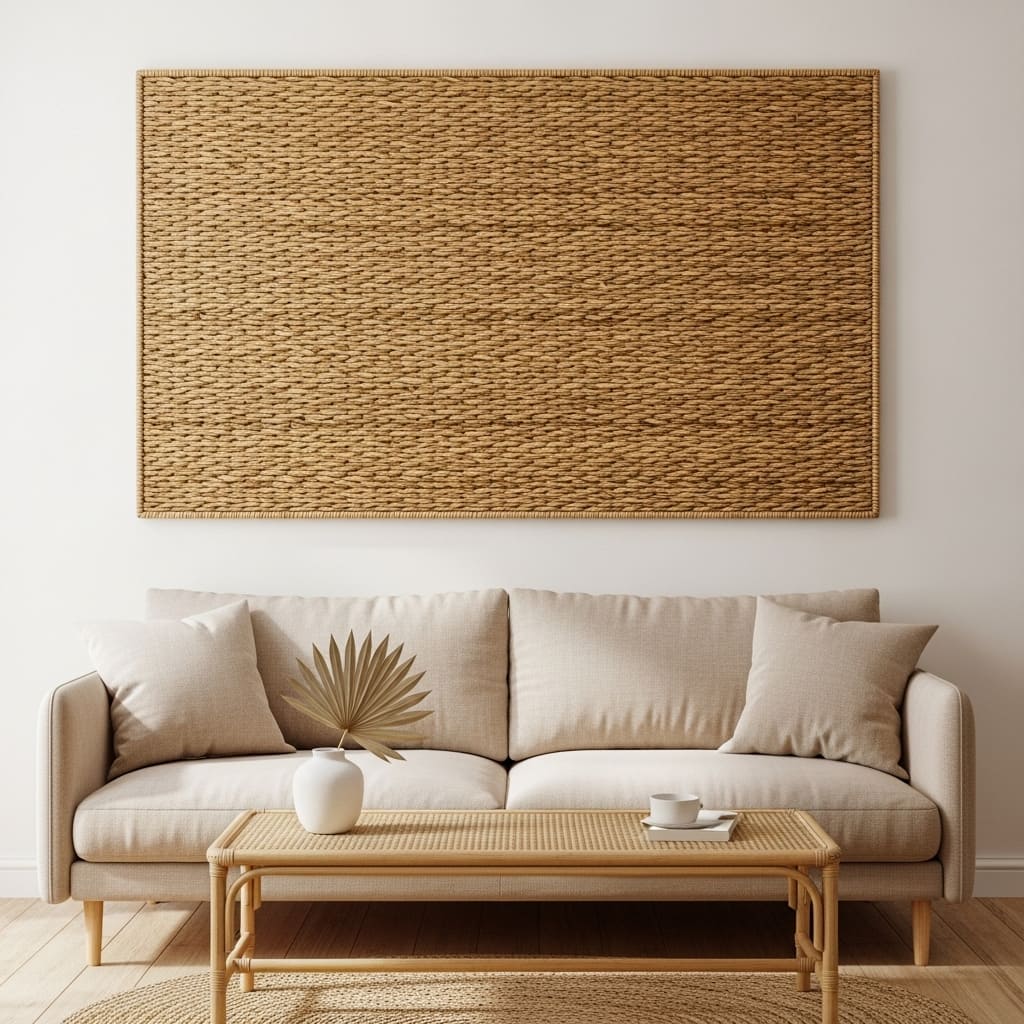
A large woven seagrass panel adds rich organic texture to a minimal living room wall in a way that feels grounded, natural, and completely timeless. Unlike printed artwork, a woven grass panel works through pure material quality , the tight weave pattern, the warm honey tones, and the subtle dimensional surface all communicate a tactile richness that photographs compellingly and rewards close inspection in person equally well. Biophilic and natural texture wall pieces rank among the top 3 trending wall art directions for 2026 across major interior platforms.
Natural seagrass panels work beautifully in minimal rooms because the material palette, warm honey and tan tones against white walls, requires no additional color or pattern to complete the visual composition. The woven panel becomes both the artwork and the texture story of the entire wall simultaneously. That’s why many organic minimalist interior designers recommend a single large woven panel as the complete wall decor solution for a living room where the homeowner wants warmth and natural material character without introducing complexity or a busy visual arrangement.
- Adds biophilic warmth to clean white walls
- Natural grass tones suit warm neutral rooms
- One large panel completes the full wall look
- Organic weave texture suits Japandi interiors
- Pairs beautifully with rattan and linen furniture
Sizing the seagrass panel at 24×36 inches or larger creates the visual weight needed to anchor the sofa wall properly without requiring any additional wall pieces flanking it. A smaller panel at 16×20 inches loses its impact against the broad horizontal expanse of a sofa wall and looks more like a decorative accent than a deliberate wall design statement. The larger format gives the woven material enough surface area to communicate its texture quality fully from a normal viewing distance across the room.
Mounting the panel using picture-hanging hardware rated for 10 to 15 pounds handles the weight of most standard seagrass panels securely. Panels from retailers like World Market, Pottery Barn, and independent Etsy weavers typically cost between $45 and $120 depending on size and weave complexity. In my experience, the seagrass wall panel consistently delivers one of the highest visual-quality-per-dollar results of any large-format minimal wall decor option currently available at accessible retail price points.
Sunburst Mirror Detail
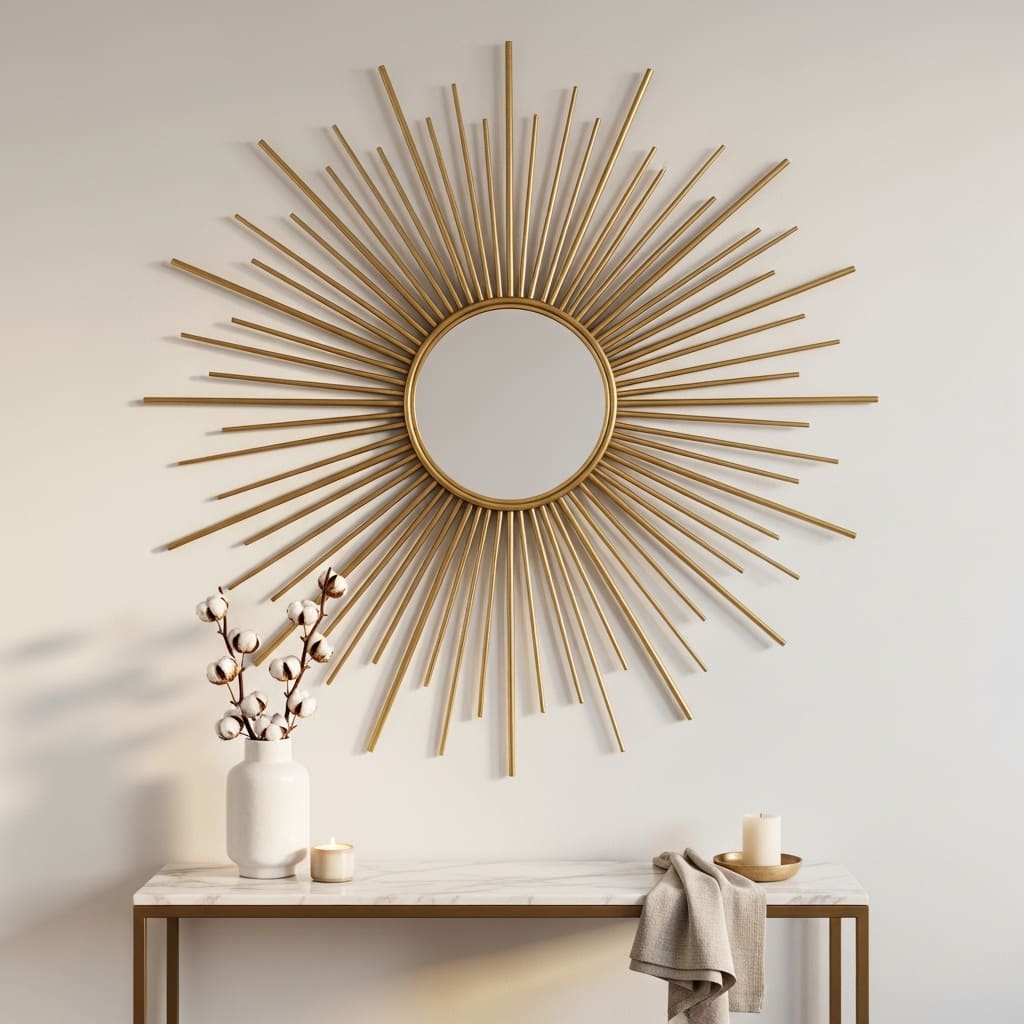
A brass sunburst mirror on a clean entryway wall introduces geometric glamour and architectural drama to a minimal space without adding a single additional wall piece. The radial ray design creates a strong visual focal point that commands attention from the moment someone enters the home, and the central mirror surface simultaneously reflects light and adds depth to the hallway. Neo Deco aesthetics, featuring geometric sunburst shapes and chrome or brass accents, saw an 80% Pinterest search increase in the lead-up to 2026, confirming this style as one of the year’s most significant wall decor directions.
The warm antique gold tone of a brass sunburst mirror suits the 2026 interior color direction perfectly because it aligns with the broader shift toward warm metals and rich, human-feeling finishes over the cold chrome and stainless steel that dominated interiors for the previous decade. Antique brass adds aged warmth and quiet luxury to a clean minimal room without disrupting the restrained, simple quality of the overall aesthetic. I’ve noticed that a well-chosen sunburst mirror in antique brass consistently becomes the most photographed and commented-on feature in any minimal entryway or living room it occupies.
- Adds geometric glamour to clean entryway walls
- Brass rays reflect warm light outward naturally
- Neo Deco style saw 80% Pinterest search growth
- Works above console tables in minimal entryways
- Central mirror adds depth to narrow hallways
Sizing the sunburst mirror at 28 to 36 inches in total diameter, including the rays, creates the ideal visual impact for a standard entryway wall above a console table. Smaller sunburst mirrors at 18 to 20 inches look decorative but lack the commanding presence that makes this style of mirror genuinely sculptural on the wall. The larger size allows the brass ray pattern to read clearly and completely from across the full entryway depth, which is where most people first experience the piece.
Pairing the sunburst mirror with an extremely restrained console styling below keeps the entryway looking minimal and intentional rather than overly decorated. One or two carefully chosen objects on the console, a single ceramic vase and one candle, allow the sunburst mirror to remain the clear focal point of the entire entryway composition. Adding too many console accessories around the base of a statement mirror dilutes the mirror’s visual authority and makes the entryway feel busy rather than confidently curated.
Framed Architectural Print
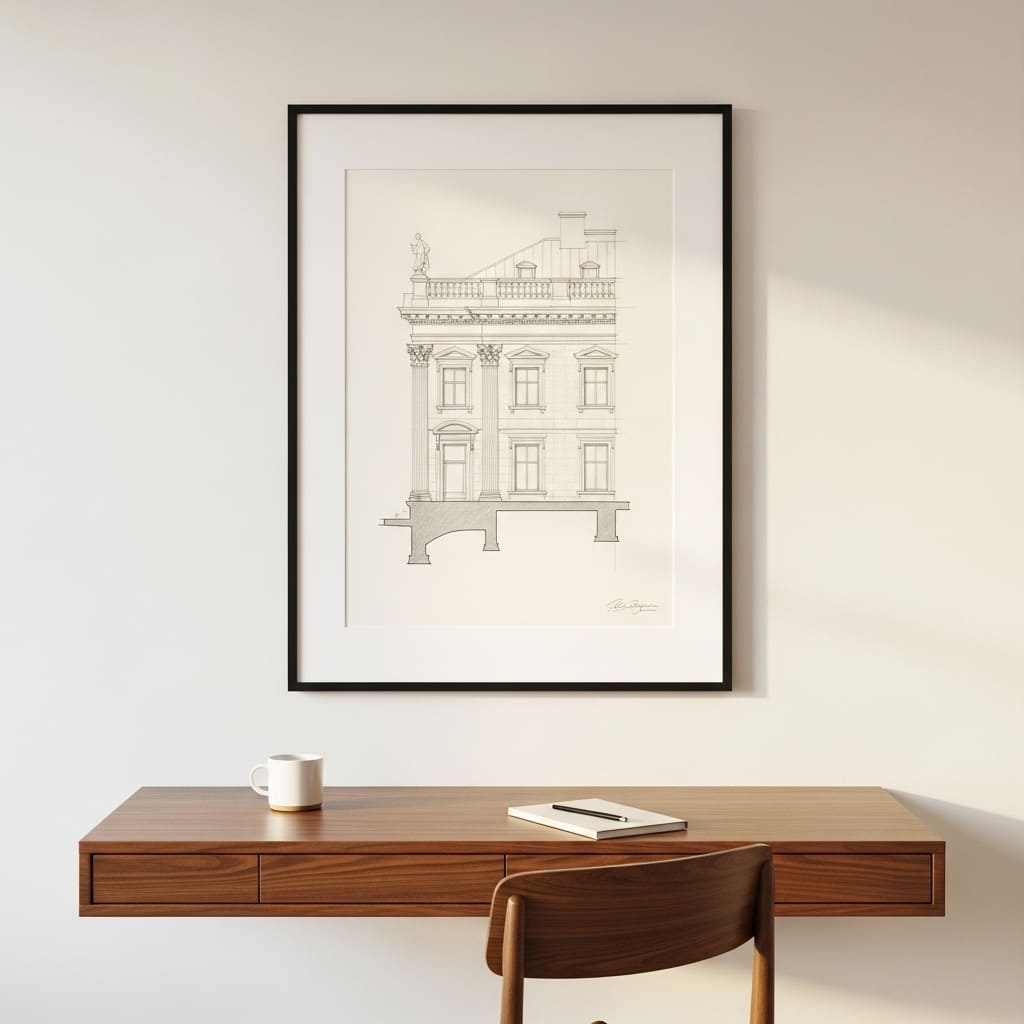
A framed architectural drawing print brings a refined, intellectual quality to a minimal home office or living room wall that abstract or botanical art cannot fully replicate. The fine graphite line work of a classical building cross-section communicates precision, history, and craft simultaneously, adding a quietly scholarly atmosphere to the room without introducing pattern, color, or visual noise. I’ve seen this specific print type work beautifully in both dark academic styled home offices and in clean, bright modern living rooms where the graphite-on-cream palette suits the room’s neutral base perfectly.
Vintage architectural drawings and Beaux-Arts building elevation prints are widely available as high-resolution digital downloads on Etsy and public domain archives for $0 to $10 per file. Printing at 16×20 size with a 4-inch white mat inside a slim black frame creates a presentation that looks museum-quality from any viewing distance. That’s why many minimal interior decorators recommend architectural prints as one of their most reliable go-to options for clients who want wall art that feels genuinely considered, historically rich, and aesthetically timeless in equal measure.
- Adds scholarly, intellectual depth to clean walls
- Graphite on cream suits every neutral palette
- Free public domain architectural prints available
- Works in dark academic home office wall styling
- Wide white mat adds gallery-quality presentation
Choosing a building facade, interior cross-section, or detailed staircase drawing works better than simple floor plans for wall display purposes because these subjects contain the vertical scale, dimensional detail, and compositional complexity that translate most powerfully into a compelling wall print. A basic rectangular floor plan lacks the visual interest and tonal variation needed to hold attention as a decorative wall piece beyond an initial glance. The three-dimensional perspective drawings consistently produce the most visually engaging results in a framed presentation.
Scaling the drawing to fill most of the print area, leaving only a small white margin inside the mat, prevents the fine graphite lines from becoming too small to appreciate from a normal viewing distance. Fine architectural line work requires sufficient print size to be visible and admirable in detail without requiring the viewer to stand uncomfortably close to the wall. A final print size of at least 16×20 inches inside the mat boundary ensures the line weight and detail quality of the original drawing remain fully legible and visually satisfying at normal room viewing distances.
Tall Dried Pampas Display
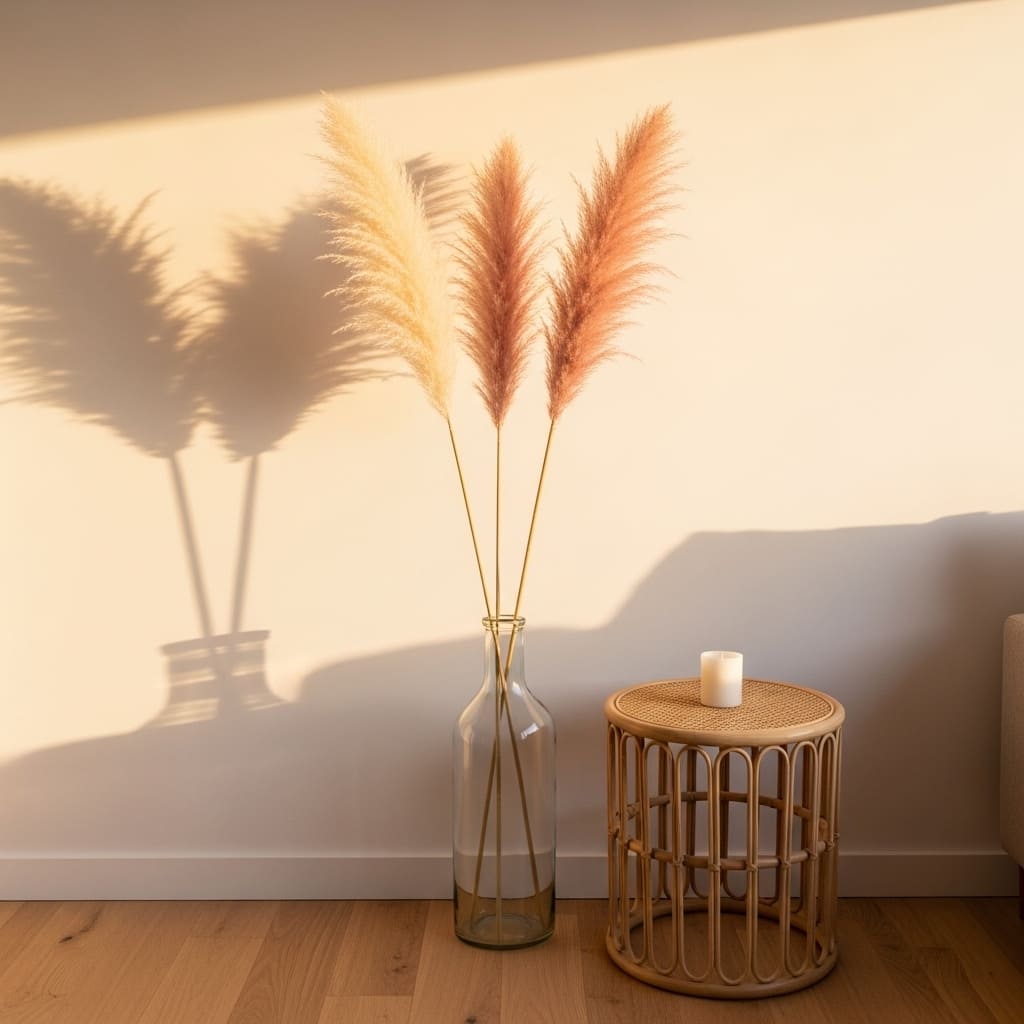
Tall dried pampas grass in a floor vase against a clean white wall creates a complete wall moment without a single nail, frame, or mounting hardware. The pampas plumes rise against the wall surface and function as an organic, living-quality wall display that adds height, movement, and natural texture to an otherwise bare corner or wall section. In my experience, a single glass floor vase with two or three full pampas plumes beside a sofa or in a living room corner consistently delivers one of the most scroll-stopping, high-save results of any minimal wall decor arrangement across Pinterest home decor boards.
Dried pampas grass in cream and soft blush tones suits the 2026 warm neutral interior palette perfectly and requires zero maintenance beyond an occasional gentle shake to remove settled dust from the fluffy seed heads. Unlike fresh flowers, dried pampas holds its shape, color, and texture for 12 to 24 months when kept away from direct sunlight and high humidity. That’s why many minimal home decorators and busy homeowners consistently choose dried botanicals over fresh arrangements as their preferred living-quality wall decor solution for compact rooms and small apartments.
- Creates a wall moment with zero wall mounting
- Dried pampas lasts 12 to 24 months naturally
- Adds height and organic movement to bare corners
- Cream and blush tones suit warm neutral rooms
- Renter-friendly, floor-based wall decor solution
A tall clear glass or matte white ceramic floor vase at 18 to 24 inches in height allows the pampas plumes to arch naturally upward and outward to a total height of 48 to 60 inches, filling the vertical wall space beside a sofa or in a room corner effectively. A shorter vase restricts the natural arc of the plume stems and prevents the arrangement from reaching the vertical scale needed to register as a genuine wall element rather than simply a floor decoration placed against the wall by default.
Grouping two or three pampas plumes of slightly different heights and angles within the same vase creates the most natural, organically composed arrangement. A single perfectly vertical plume looks stiff and artificial compared to the soft, arching quality of multiple stems leaning gently in different directions. The slight asymmetry between stems of varying heights mirrors the way pampas grows naturally in open fields and reinforces the authentic botanical quality that makes this type of minimal wall display so visually appealing and emotionally warm.
Abstract Terracotta Canvas
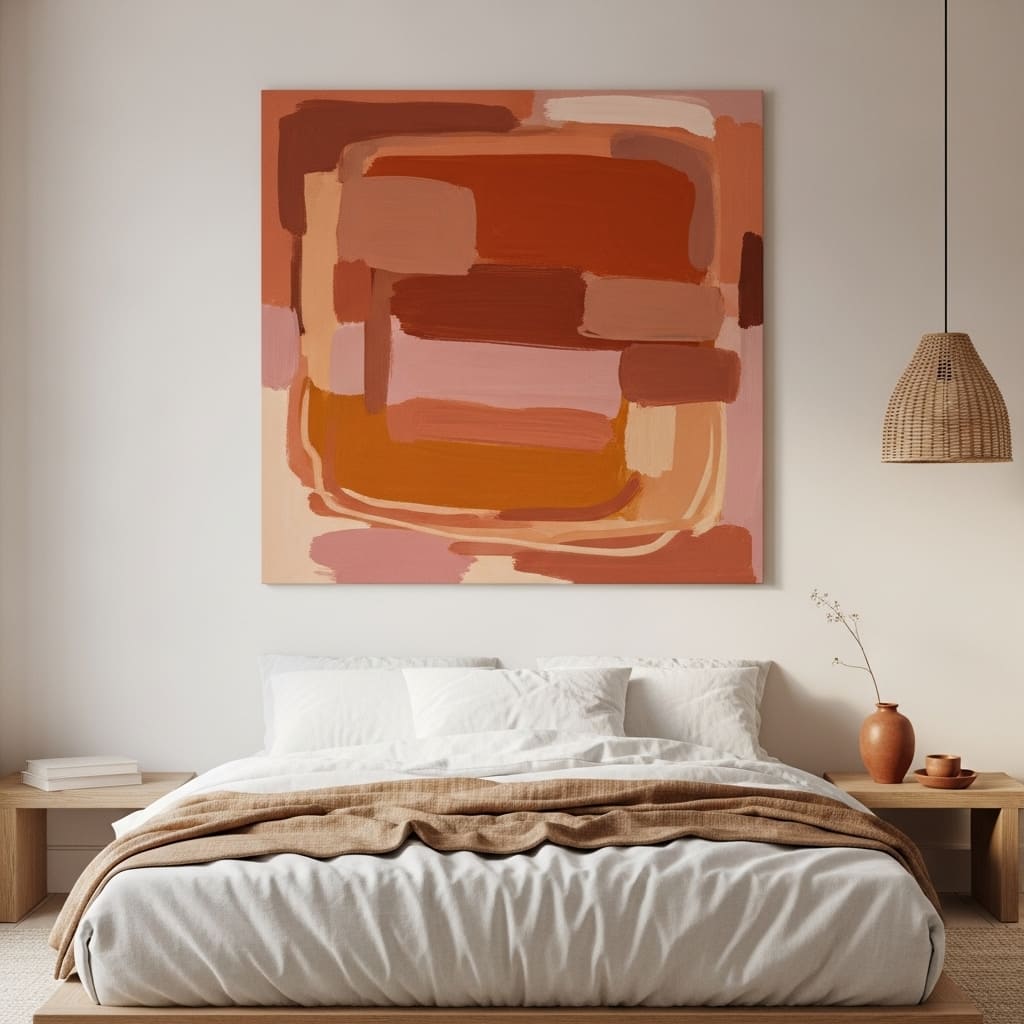
An abstract terracotta canvas in warm earth tones adds deeply human, emotionally resonant warmth to a minimal bedroom wall that cool neutral abstract art rarely achieves at the same intensity. The burnt sienna, warm rust, and dusty clay tones in a loosely gestural composition carry a quality of organic earthiness that connects the bedroom to the broader natural world in a way that feels genuinely comforting rather than merely decorative. Soft surrealism and expressive warm-toned abstract art rank among the top 5 performing wall art categories on social platforms and design search engines for 2026.
Terracotta and burnt sienna abstract canvases suit the current minimal home color direction particularly well because these tones align precisely with the earthy warmth trend that has replaced the cold white minimalism of the previous design decade. A terracotta abstract piece brings the same warm earthen quality as a limewash wall but at a fraction of the effort and cost, making it the most accessible entry point into the warm-toned minimal aesthetic for anyone decorating a bedroom on a tight budget or a limited decorating timeline.
- Adds deeply warm, earthy tone to bedroom walls
- Gestural brushstrokes suit organic minimal rooms
- Terracotta canvas ranks high in 2026 art trends
- One square canvas anchors the full bed wall
- Warm earth tones replace cold gray minimalism
Choosing a square canvas format at 24×24 or 30×30 inches creates a strong, visually balanced focal point above the bed without the directional tension of a rectangular format. Square canvases suit minimal bedrooms especially well because the equal-sided geometry reinforces the calm, non-hierarchical quality of a restful sleeping space. The format avoids the implied horizontal or vertical directionality of rectangular canvases and allows the abstract brushwork to exist as a pure color and texture experience rather than a composition with an obvious orientation or reading direction.
Hanging the terracotta canvas so its lower edge sits 8 to 10 inches above the pillow line creates the most natural visual relationship between the artwork and the bed below it. This specific gap ensures the canvas reads as directly connected to the bed rather than floating independently in the upper wall zone above the sleeping surface. I’ve noticed that this 8 to 10 inch rule applies consistently across canvas sizes and bed heights, always producing a more grounded, intentional bedroom wall composition than canvases hung with larger or smaller gaps above the pillows.
Black Iron Grid Panel
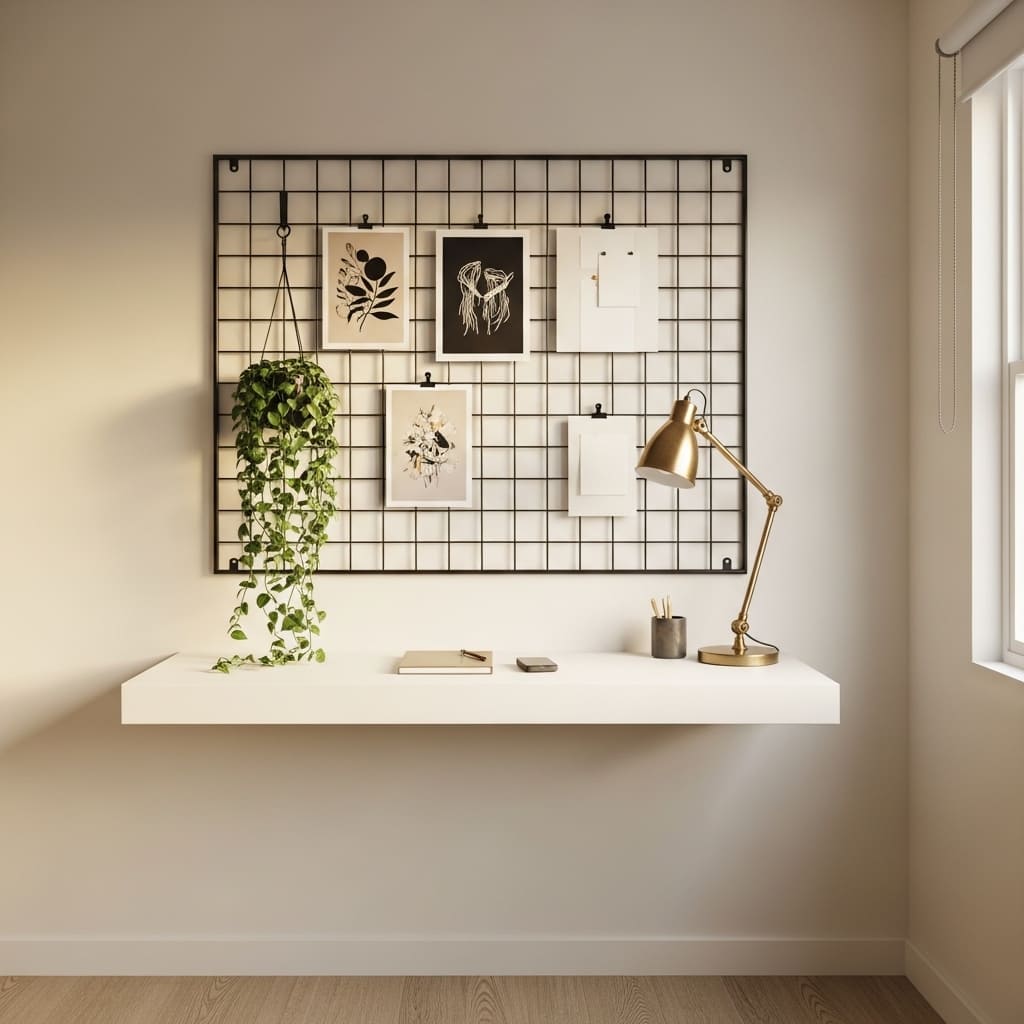
A matte black iron grid panel combines functional organization with clean, modern wall styling in a single wall-mounted object. The grid accepts hanging art prints, small plant pots, clip lights, and memo clips, transforming a blank wall above a desk into an organized, visually rich work zone without requiring multiple separate installations across the wall surface. I’ve tried this setup in a compact home office where the wall space above the desk was the only available wall real estate in the entire room, and the grid turned that single constrained zone into a fully functional, beautifully styled work wall.
The matte black finish suits clean minimal aesthetics because the flat, non-reflective surface absorbs light evenly and reads as a precise, deliberate architectural element rather than a shiny decorative add-on. Against a warm white wall, the black grid creates a strong graphic contrast that organizes the wall visually and gives every item hanging from it, the prints, the plant, the light, a clean, defined context. That’s why the black metal grid panel remains one of the most consistently recommended minimal home office wall solutions across interior design platforms year after year.
- Combines wall decor and organization in one piece
- Matte black suits clean modern home office walls
- Accepts art, plants, clips, and lighting together
- Works in compact home office wall styling perfectly
- One grid replaces multiple separate wall installations
Standard 24×36 inch black iron grid panels at retailers like Amazon, H&M Home, and Urban Outfitters cost between $25 and $55 depending on wire gauge and finish quality. Heavier gauge grids with thicker wire hold more weight and look more substantial on the wall, while thinner wire versions look more delicate and suit lighter decorative arrangements. For a home office that needs to hold a clip light plus several prints, a medium to heavy gauge grid rated for at least 10 pounds total load capacity works most reliably.
Mounting the grid at a height where its lower edge sits approximately 6 to 8 inches above the desk surface creates the most functional relationship between the grid and the work surface below it. This gap allows items on the desk to sit comfortably without being blocked by items hanging low from the grid. The upper portion of the grid, above eye level when seated, works best for purely decorative items like small hanging plant pots and art prints, while the lower portion suits functional clips and memo cards that need to be within easy reach during working hours.
Neutral Textile Tapestry
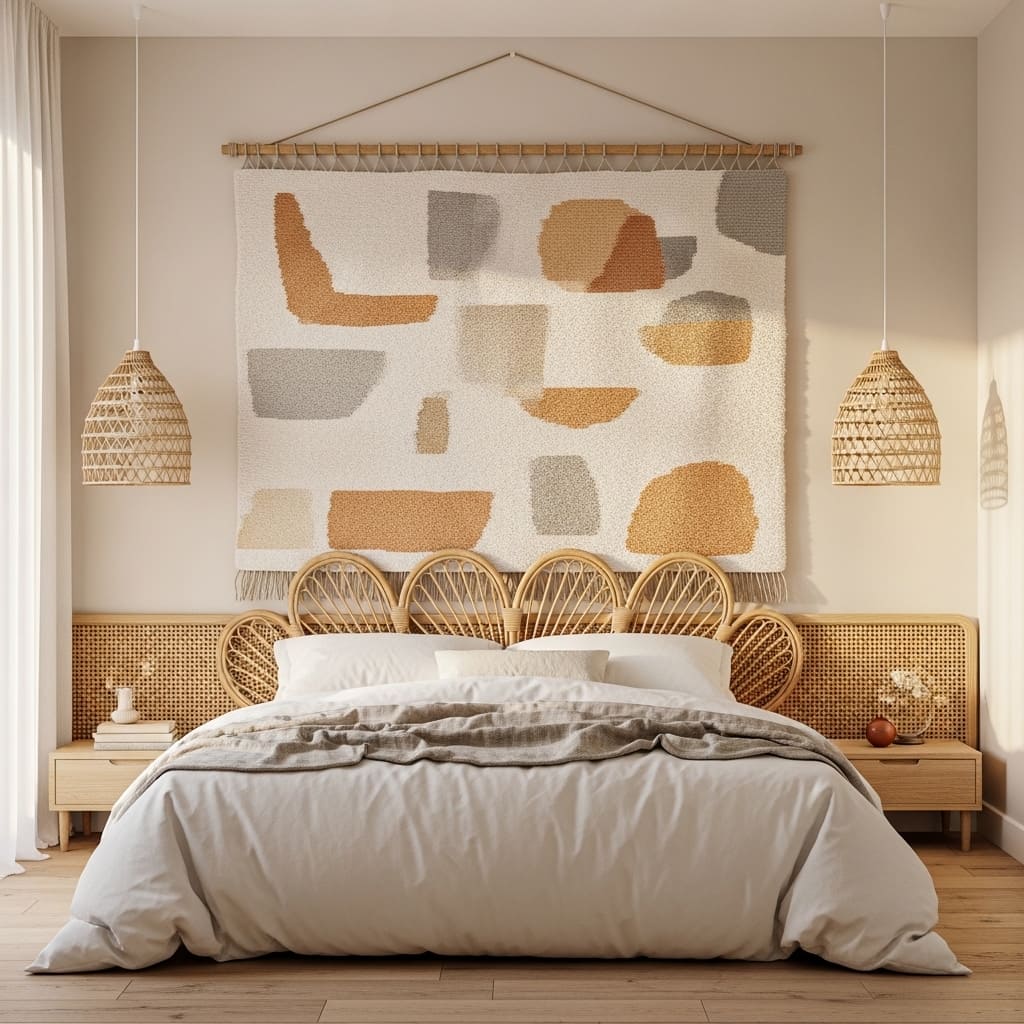
A neutral-toned woven tapestry behind the bed delivers large-format wall coverage and rich textile texture in a single renter-friendly installation that requires only one nail and a wooden dowel. The soft geometric weave pattern in cream, warm sand, and pale gray adds visual complexity without introducing bold color or directional design elements that could overwhelm a minimal bedroom aesthetic. This specific approach, a muted geometric weave on a natural backing, perfectly satisfies the 2026 design appetite for texture-rich minimalism that feels warm and human rather than bare and cold.
Hanging the tapestry from a natural wood dowel using knotted jute cord creates a finished, intentional display with an organic material quality that suits minimal boho and Japandi bedrooms equally well. The visible hanging hardware becomes part of the aesthetic story rather than something to hide, which aligns directly with the 2026 interior trend toward honest, exposed natural materials in every element of a room’s design. That’s why many minimal interior stylists recommend the natural dowel hanging method as the most authentic and visually satisfying way to display any textile wall piece in a clean, nature-inspired bedroom space.
- Adds large-format textile texture to bedroom walls
- Natural dowel hanging suits organic minimal rooms
- Muted geometric weave adds pattern without color
- Renter-friendly single-nail installation method
- Organic boho and Japandi styles both benefit
Choosing a tapestry width that matches or slightly exceeds the width of the bed below it creates the most proportionally balanced wall composition. A tapestry that is narrower than the bed looks undersized and disconnected from the furniture it is meant to anchor visually. For a queen bed at 60 inches wide, a tapestry of at least 60 to 70 inches in width creates the correct proportional relationship and ensures the textile piece reads as the intentional backdrop for the entire sleeping zone rather than a separate decorative element floating above it independently.
Natural cotton and cotton-linen blend tapestries drape more beautifully and hold their shape more consistently than synthetic fiber alternatives over time. A 100% cotton tapestry maintains its crisp geometric weave pattern without the pilling or static cling issues that synthetic blends develop after repeated handling and occasional washing. Most quality woven tapestries at this size and material specification cost between $35 and $80 at retailers like Amazon, Society6, or independent Etsy weavers, making this one of the most affordable large-format wall decor options in the minimal bedroom category.
Stone Texture Wallpaper Strip
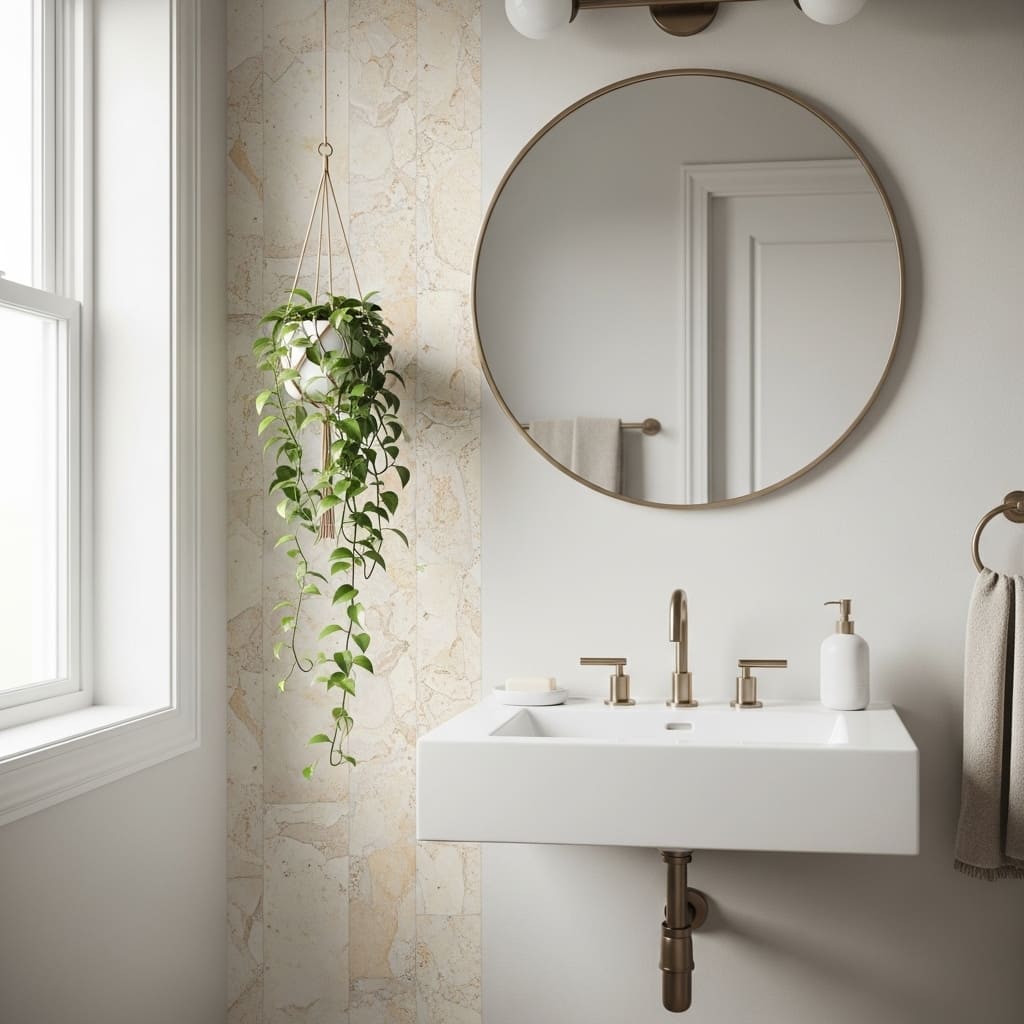
A single vertical strip of stone texture wallpaper on a bathroom wall delivers the visual impact of a full natural stone installation at a fraction of the cost and without any of the structural complexity of real tile or stone work. The warm limestone-style surface in soft ivory and cream tones adds a subtle, spa-quality richness to a plain bathroom wall that white paint alone never achieves regardless of finish or sheen level. I’ve seen this single-strip approach completely change the perceived quality level of a basic apartment bathroom without requiring a single tool beyond a smoothing squeegee and clean hands.
Peel-and-stick stone texture wallpaper at retailers like Chasing Paper, Tempaper, and Amazon costs between $30 and $65 per roll depending on the print quality and material weight. A standard roll covers approximately 20 to 25 square feet, which handles a full accent strip beside a bathroom vanity comfortably within one roll. That’s why many apartment decorators and budget-conscious homeowners choose the peel-and-stick stone strip as their first bathroom upgrade, because the dramatic visual payoff far exceeds the modest financial and time investment the project actually requires.
- Adds spa-quality stone texture to bathroom walls
- Peel-and-stick installation suits rental apartments
- Warm limestone tones complement brass fixtures
- One roll covers a full vanity accent strip
- Dramatic visual upgrade at under $65 total cost
Applying the wallpaper strip to the wall section between the vanity mirror and the adjacent wall corner creates the most natural, architecturally logical placement for the stone texture feature. This zone reads as a deliberate accent panel because it is bounded on one side by the mirror edge and on the other by the wall corner, giving the stone strip clear visual borders that make it look purposeful rather than randomly placed. The contained strip also prevents the small bathroom from feeling visually overwhelmed by too much pattern across multiple wall surfaces.
Warming the wallpaper strip with proper surface preparation ensures a secure, long-lasting adhesion that prevents peeling at the edges over time. The wall surface must be completely clean, dry, and free of grease, dust, or paint chips before application. Wiping the wall with a damp cloth and allowing it to dry completely for at least two hours before applying the first panel prevents adhesion failures at the edges that are the most common cause of peel-and-stick wallpaper looking cheap and temporary rather than clean and purposeful in a finished bathroom space.
Vintage Poster Frame
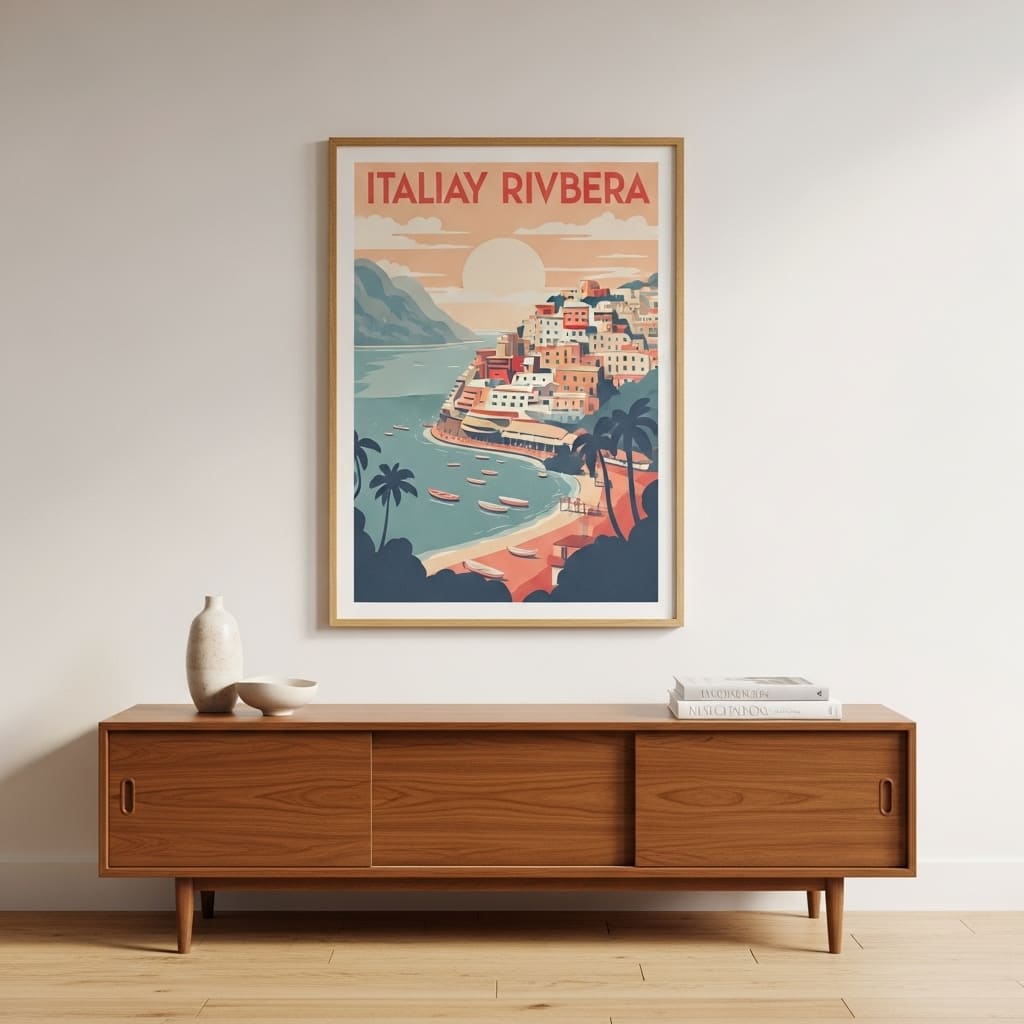
A single large vintage travel poster in a natural frame above a credenza or console brings nostalgic warmth, graphic clarity, and a quietly personal story to a minimal living room wall. The best vintage poster reproductions use softened, naturally faded color palettes that suit modern minimal rooms perfectly because the aged tones read as warm and timeless rather than bold and demanding. I’ve noticed that vintage travel posters from Italian Riviera, mid-century Japanese, and retro national park series consistently generate the highest Pinterest save rates within the broader vintage print category for minimal home interiors.
The graphic simplicity of a great vintage poster, clear subject, restrained color palette, strong compositional framing, aligns directly with minimalist wall decor principles despite the poster’s historical origins in commercial art rather than fine art traditions. The best vintage poster reproductions available today as digital downloads combine graphic boldness with tonal restraint in a way that suits clean rooms without disrupting the neutral, calm quality of the overall interior palette. That’s why many minimal interior stylists include a carefully chosen vintage poster as their recommended alternative to generic abstract prints for clients who want a wall piece with genuine visual personality and historical character.
- Adds nostalgic warmth and graphic clarity to walls
- Faded vintage tones suit modern minimal palettes
- Travel posters generate high Pinterest save rates
- Works beautifully above credenzas and console tables
- Natural oak frames suit mid-century minimal rooms
Sizing the vintage poster print at 24×36 inches creates the visual presence needed to anchor the wall above a standard credenza or sideboard comfortably. The 24×36 format matches the most common vintage poster proportions and allows the original graphic composition to display at its intended scale without awkward cropping or proportional distortion. Most print shops and online printing services offer 24×36 as a standard size option, which makes sourcing a quality output straightforward and affordable for any vintage digital download file.
Sourcing vintage poster images from the Library of Congress digital archive, Europeana, or the Smithsonian open access collection provides free, high-resolution, fully public domain files of genuine historical poster art. These authentic vintage originals carry far more visual character and historical richness than modern imitations designed to look old. Printing a genuine 1930s Italian railway poster or a 1950s US national park illustration from a public domain source delivers wall art with real historical provenance rather than a commercially manufactured approximation of vintage style.
Single Branch Ikebana Display
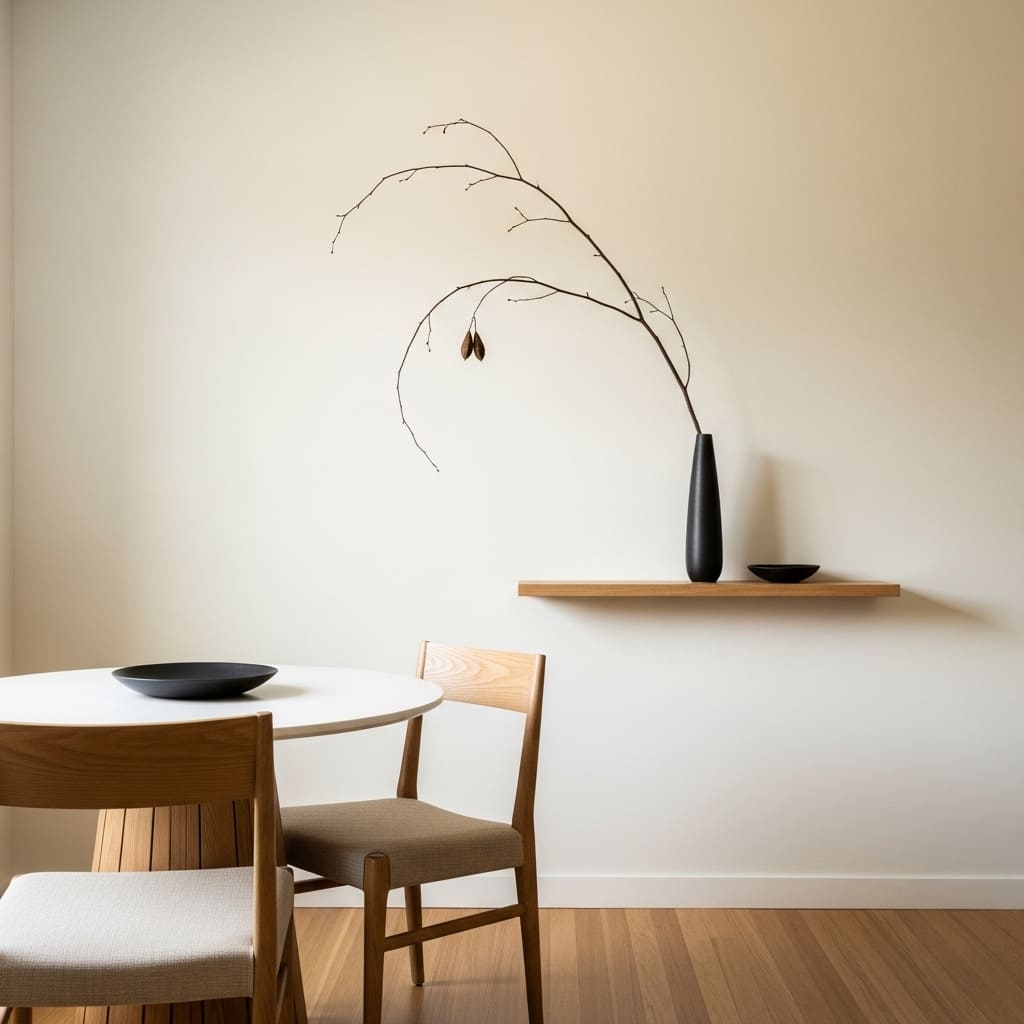
A single ikebana-style branch display on a minimal wall shelf communicates a level of decorating restraint and intentionality that no other wall arrangement can replicate with such elegant simplicity. The Japanese practice of ikebana uses negative space as deliberately as it uses the branch, stem, or leaf itself, making the empty wall around the arrangement as much a part of the composition as the object placed within it. That’s why Japandi-inspired minimal interiors consistently achieve their most powerful visual moments with the fewest, most carefully chosen natural elements rather than layered, complex displays.
One bare branch with natural curves, a single dried seed pod, or a sculpted driftwood piece in a slim ceramic vase on a floating wall shelf creates a complete wall moment that rewards quiet observation and daily contemplation. This approach aligns perfectly with the 2026 interior direction toward warmth minimalism, where intentional natural objects replace decorative clutter and the quality of each chosen piece matters far more than the quantity of items assembled on or around the wall surface. I’ve noticed that rooms styled with this level of disciplined simplicity consistently feel the most sophisticated and genuinely peaceful.
- Creates a profound wall moment with one object
- Ikebana philosophy treats negative space as design
- Suits Japandi and warm minimalist room styling
- One curved branch on a shelf is completely sufficient
- Natural forms add organic sculpture to clean walls
A matte black or warm charcoal ceramic vase in a slim, cylindrical shape suits the ikebana-inspired display format most authentically because the simple vessel does not compete with the organic character of the branch or stem it holds. Wide-mouth or decoratively shaped vases draw visual attention to themselves and undermine the intended focus on the natural form rising above the vessel’s rim. The vessel should quietly support the branch rather than share or compete for the viewer’s attention within the composition.
Mounting the floating shelf at approximately 48 to 54 inches from the floor, slightly below standard eye level, allows the branch to rise naturally upward to eye level and above while the shelf itself sits at a comfortable mid-wall position. This vertical relationship between the low shelf and the upward-reaching branch creates a dynamic, aspirational quality in the wall display that feels alive and directional rather than static and contained. The branch’s natural upward movement draws the eye from the shelf surface up toward the ceiling and makes the entire wall zone feel taller and more architecturally significant.
Soft Surrealist Print
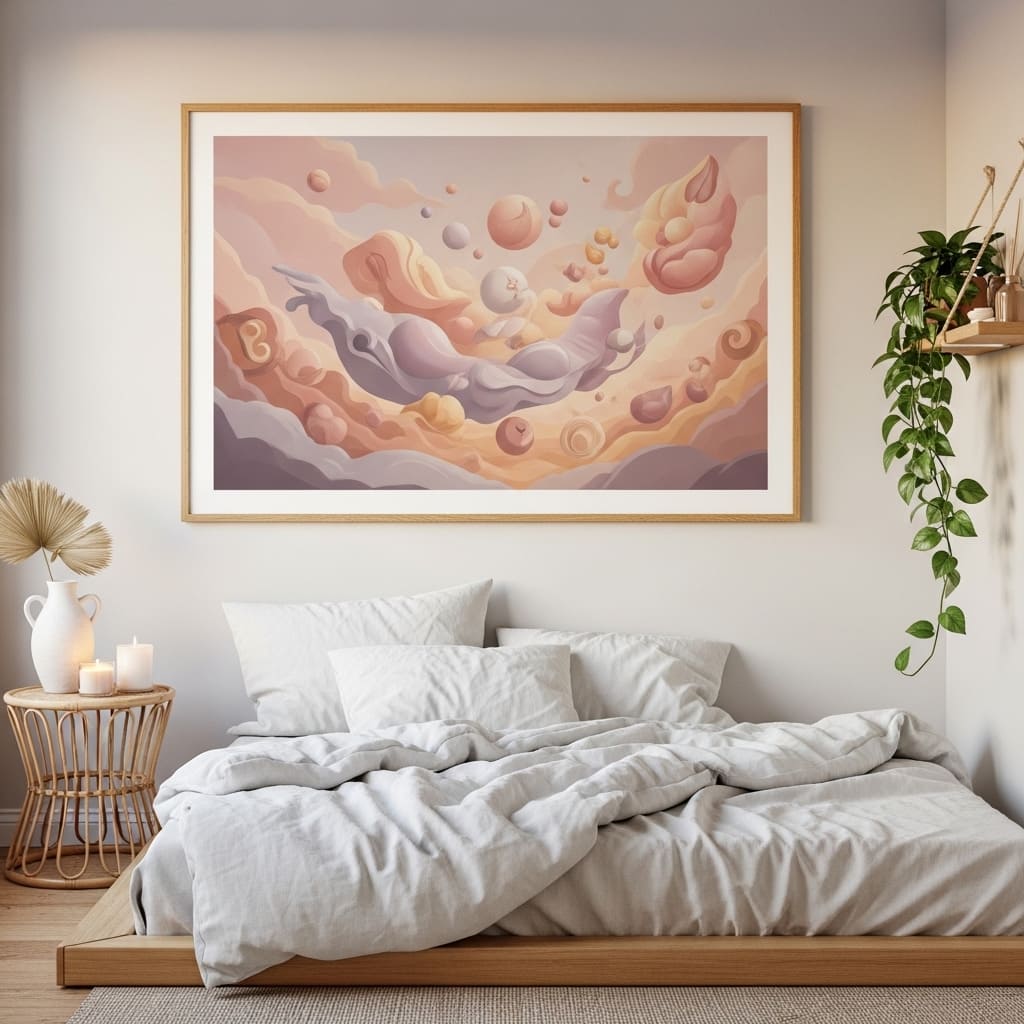
Soft surrealist wall art brings a quietly dreamlike, emotionally resonant quality to a minimal bedroom that no abstract or photographic print can fully replicate. The gentle floating forms, fluid shapes, and warm pastel tones of a well-chosen soft surrealist print create an atmosphere of calm wonder that makes the bedroom feel like a genuinely personal, imaginative space rather than a simply furnished sleeping room. Soft surrealism ranks among the top 5 fastest-growing wall art categories across Pinterest and print-on-demand platforms for 2026, with search interest growing steadily throughout the past 18 months.
Pastel tones in blush, dusty lavender, warm cream, and soft sage suit the 2026 minimal bedroom color direction because these hues add gentle warmth and delicate color presence without disrupting the room’s calm, neutral base. The dreamlike quality of the imagery provides emotional depth and personality to a room that might otherwise feel visually under-expressive with purely abstract or geometric art. That’s why many interior stylists now recommend soft surrealist prints specifically for bedrooms where the client wants the space to feel personal, warm, and gently imaginative rather than strictly modern and coolly restrained.
- Adds dreamlike warmth to minimal bedroom walls
- Blush and lavender tones suit 2026 palettes
- Soft surrealism ranks top 5 in 2026 art trends
- Creates emotional depth without pattern or clutter
- One large print anchors the full bed wall beautifully
Sizing the soft surrealist print at 24×30 or 24×36 inches creates sufficient scale for the dreamlike imagery to communicate its atmospheric quality fully from across the bedroom. Smaller prints reduce the floating forms and fluid shapes to details too small to appreciate from a normal viewing distance, which removes the immersive, enveloping quality that makes soft surrealist art most effective as a bedroom wall statement. The larger format allows the viewer to genuinely enter the visual world of the print rather than simply observe it as a small decorative object on a distant wall.
Choosing a slim natural oak or light wood frame rather than a black frame keeps the soft surrealist print feeling warm, gentle, and dreamily organic rather than sharply graphic and modernist. The warm wood tone of the frame aligns with the pastel warmth of the image and creates a unified, harmonious presentation from edge to edge. I’ve noticed that soft surrealist prints in black frames consistently feel more contemporary and edgy than the dreamy, human-centered bedroom atmosphere most people want when choosing this particular art style for their sleeping space.
Pegboard Kitchen Wall
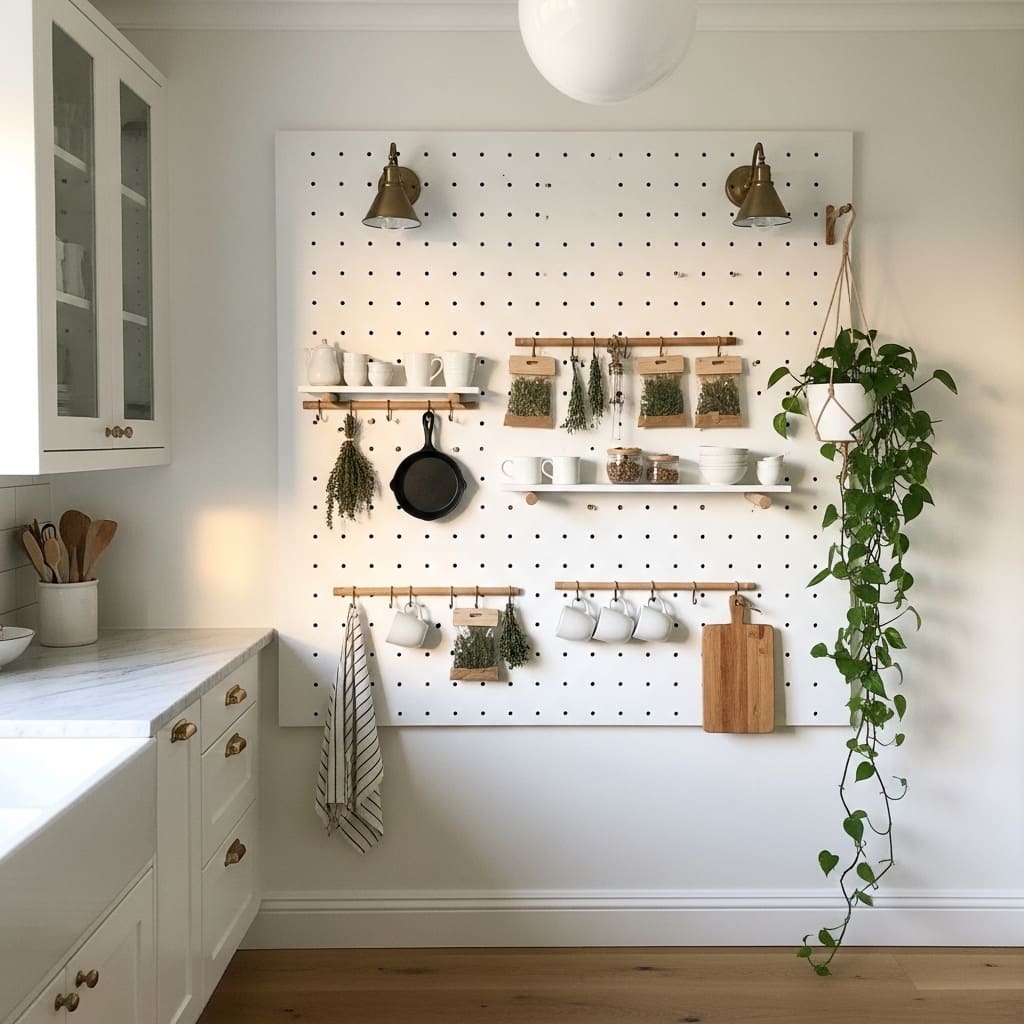
A painted kitchen pegboard wall combines complete functional organization with clean, intentional wall styling in a single installation that suits minimal kitchens perfectly. The pegboard keeps every daily-use item off the counter surface while turning the wall above the countertop into an organized, beautifully styled display that reflects the cook’s personal rhythm and the kitchen’s material palette simultaneously. I’ve tried this approach in a compact galley kitchen where counter space was severely limited, and the pegboard wall immediately resolved both the storage problem and the bare-wall problem in one practical, visually satisfying solution.
Painting the pegboard the same color as the kitchen wall, bright white in a Scandi kitchen or warm cream in an earthy minimal one, creates a seamless, built-in appearance that makes the pegboard look like a custom architectural feature rather than a shop-bought functional panel. The color-matched background causes the pegboard’s grid texture to recede visually while the curated items hanging from it come forward as the deliberate display. That’s why many minimal kitchen designers now specify color-matched pegboards as their preferred open-storage wall solution for compact cooking spaces with limited cabinetry.
- Solves storage and styling in one wall installation
- White pegboard suits clean Scandi kitchen walls
- Color-matching pegboard to wall creates built-in look
- Natural wood hooks add warm organic material texture
- Works perfectly in compact kitchen wall decor setups
Choosing natural wood hooks, small oak shelves, and woven hanging baskets for the pegboard accessories reinforces the warm, organic material palette of a minimal Scandi kitchen beautifully. The combination of white-painted pegboard grid, warm wood hooks, white ceramic mugs, and a small trailing pothos creates a kitchen wall that photographs as compellingly as any professionally styled kitchen in a home decor magazine. Each item on the pegboard should earn its visible position by being either genuinely beautiful, regularly used, or ideally both simultaneously.
Sizing the pegboard panel to cover the full wall section between the upper cabinets and the countertop backsplash zone creates a complete, purpose-built display surface with natural visual boundaries on all four sides. A pegboard that ends mid-wall or stops before reaching the adjacent cabinet faces looks unfinished and provisional rather than designed. The full-width, full-height installation between defined architectural boundaries gives the pegboard the same purposeful, built-in quality as a custom tiled backsplash at a fraction of the installation cost and complexity.
Raw Cotton Wall Hanging
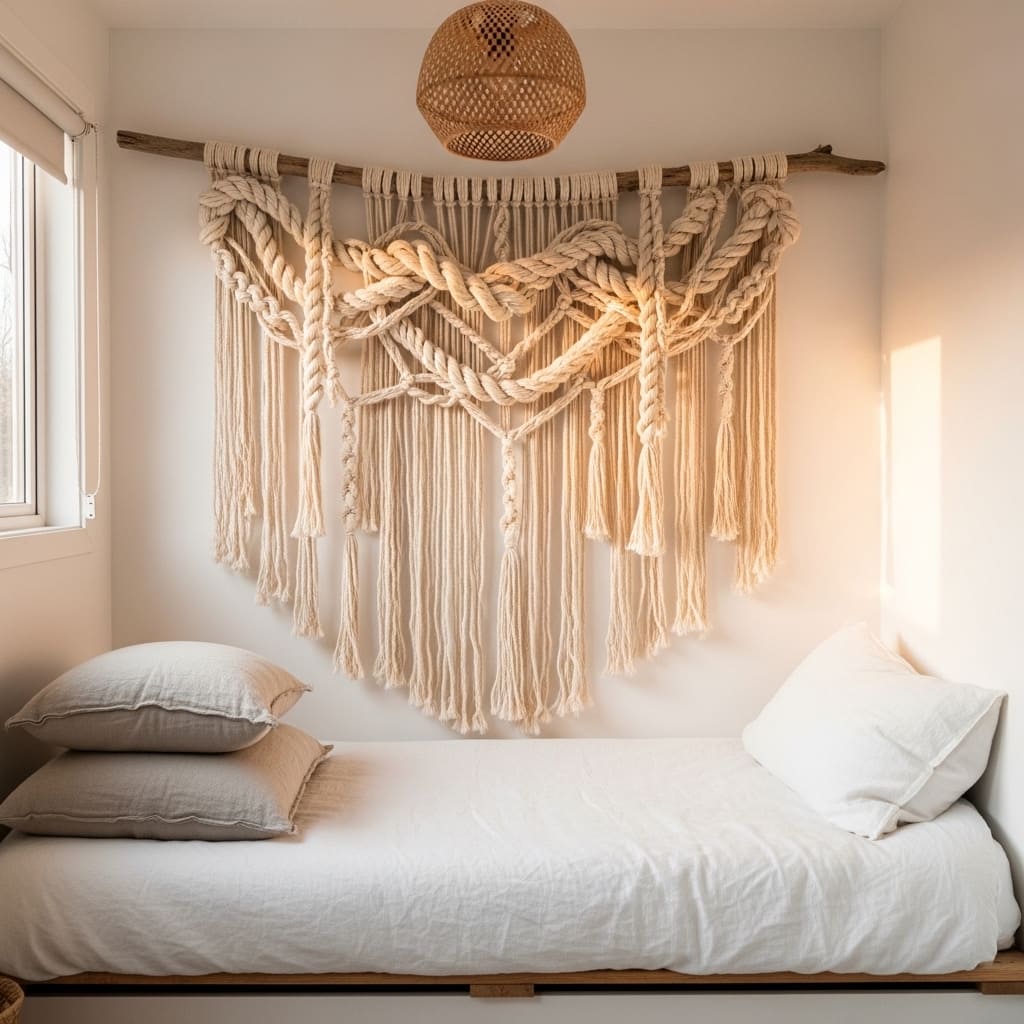
A handmade raw cotton wall hanging above the bed creates the most tactile, deeply organic wall moment available within the broader minimalist wall decor ideas category for 2026. The natural off-white cotton fiber in its unspun, loosely twisted state adds a raw, handcrafted authenticity that no manufactured wall piece can replicate. Each raw cotton hanging carries visible irregularities and natural fiber variations that signal genuine handwork and ensure no two pieces look exactly alike, giving the bedroom wall a uniquely personal quality that mass-produced decor fundamentally cannot deliver.
The understated, tonal simplicity of natural cotton fiber in off-white and warm cream tones suits the warm minimalism aesthetic that dominates 2026 interior design because the material adds rich texture and visual depth without introducing color, pattern, or complexity to the wall. That’s why many organic minimal and slow-living interior stylists describe raw cotton wall hangings as the single most authentic expression of warm minimalism available for a bedroom wall, combining natural material honesty, handmade craft quality, and visual restraint in one cohesive, deeply satisfying wall display.
- Adds the most tactile, raw organic texture available
- Natural cotton fiber suits warm minimalist bedrooms
- Handmade irregularities create a uniquely personal piece
- Driftwood rod adds a second natural material layer
- Works beautifully above beds in organic minimal rooms
Sizing the raw cotton hanging to span at least two-thirds of the bed width below it creates the correct proportional anchor relationship between the textile piece and the sleeping surface it crowns. A hanging that is too narrow for the bed width looks accidentally undersized and loses the enveloping, cozy quality that makes large textile wall pieces so visually powerful in bedrooms. For a queen bed at 60 inches wide, a hanging of at least 40 to 48 inches in width creates the minimum proportional coverage needed to anchor the bed wall convincingly.
Hanging the cotton piece using a natural driftwood rod rather than a painted dowel or metal rod adds a second organic material element that reinforces the raw, nature-found quality of the entire wall display. Driftwood rods carry their own subtle sculptural character through their natural curves, surface weathering, and warm gray-brown tones, which complement the warm cream cotton fiber hanging below them more authentically than any uniformly shaped manufactured alternative. In my experience, the driftwood rod transforms a beautiful cotton hanging into a complete, fully considered wall installation that reads as genuinely artisanal from every viewing angle and distance.
Conclusion
Your clean home deserves walls that feel as considered and intentional as everything else inside it. Every idea in this article proves that minimalist wall decor does not require a large budget, professional help, or weeks of planning. One well-chosen print, one woven panel, or one carefully placed mirror can completely shift how your room looks and how your home feels every single day. I’ve seen the right wall decor choice give people a genuine sense of pride and comfort in their own space. Save this post on Pinterest, try at least one idea this week, and share it with a friend whose walls need exactly this kind of inspiration.
Frequently Asked Questions
What is the best minimalist wall decor for a small bedroom?
A single large neutral abstract canvas or a stretched linen panel works best. Both add warmth and visual depth without cluttering the wall. Keep the frame simple and the palette neutral. One deliberate wall piece always outperforms multiple average ones in a compact bedroom.
How do I decorate a clean white wall without making it look cold?
Add organic textures like a woven seagrass panel, a raw cotton hanging, or a dried botanical frame. Warm materials in cream, sand, and natural tones bring immediate life to a stark white wall. One textured piece creates warmth far more effectively than multiple flat prints combined.
What size wall art works best in a minimal living room?
Go larger than feels comfortable. A canvas spanning at least two-thirds of the sofa width looks correctly proportioned. Most people choose art that is too small and then wonder why the room still feels incomplete. A 30×40 inch canvas above a standard sofa delivers the right visual anchor.
Can I do minimalist wall decor in a rental apartment?
Absolutely. Peel-and-stick wallpaper strips, leaning mirrors, washi tape geometric designs, picture ledge shelves, and tapestry hangings all work without permanent damage. Many of these ideas require zero drilling. Always check your lease before installing anything that requires wall anchors or bolts.
How many wall pieces should a minimalist room have?
Most minimal rooms look best with one to three intentional wall pieces per room. One strong focal point beats a scattered collection of unrelated items every time. Restraint is the core principle of clean home styling. Each piece you choose should earn its place with either beauty, function, or both.
What colors work best for minimalist wall art in 2026?
Warm neutrals perform strongest this year. Cream, warm sand, ivory, dusty terracotta, and soft sage green align with 2026’s dominant interior color direction. Cool grays and stark black-and-white combinations are being replaced by warmer, more human-feeling tones across minimal home aesthetics industry-wide.
Is DIY wall decor a good option for a minimalist home?
Yes, when executed with care and restraint. A painted color block, a limewash accent wall, or a washi tape geometric design all cost under $20 and produce genuinely striking results. The key is clean execution. Precise edges, quality paint, and a deliberate limited color choice make DIY wall decor look professionally planned.