26 Bohemian Interior Design Ideas for a Dream Home 2026
Picture walking into a home where every single room feels genuinely alive. Warm terracotta walls catch the afternoon light. Trailing plants cascade from ceiling hooks. Handmade ceramics and global textiles fill every shelf with personal meaning. That feeling , warm, layered, imperfect, and deeply human , is exactly what bohemian interior design delivers at its very best.
Most people spend years feeling like their home looks finished but never quite feels right. The furniture is there. The rugs are down. The walls have art. But something essential is missing , the sense that the space genuinely reflects who lives inside it. Bohemian interior design ideas solve that specific problem better than any other decorating approach available.
The boho aesthetic builds homes from natural materials, handcrafted objects, global influences, and the slow accumulation of personally meaningful pieces rather than matched furniture sets and trend-driven purchases. Rattan, reclaimed wood, linen, jute, terracotta, and aged brass form the material vocabulary. Earthy tones, trailing plants, layered textiles, and warm ambient lighting create the atmosphere.
In my experience, the homes that feel most genuinely beautiful and most personally satisfying to live inside are never the ones decorated in a single shopping weekend. They are the ones built slowly and intentionally , one meaningful object, one layered textile, one carefully chosen plant at a time.
This guide covers twenty-six specific, actionable bohemian interior ideas for 2026 spanning every room in the home , from curved arch doorways and limewash walls to wabi-sabi minimalism, maximalist bedrooms, boho rooftop terraces, and complete studio apartment transformations. Interior stylists and experienced home decorators consistently identify layered natural materials and personal meaning as the twin foundations of every successful free-spirited interior, and every idea here builds directly on both principles.
Whether you rent a studio apartment, own a family home, or are styling your first independent space on a modest budget, these ideas meet you exactly where you are. Start with one wall. Start with one shelf. Start with one plant in a terracotta pot on a windowsill. The rest follows naturally from there.
Curved Arch Doorway
A curved arch doorway is one of the most architecturally transformative details any bohemian home can feature. The soft rounded form replaces hard right-angle transitions with organic, flowing movement that instantly makes an interior feel warmer, older, and more personally designed.
Bohemian interior design ideas rooted in architectural softness like arched doorways create a home that feels genuinely crafted rather than simply assembled from standard builder-grade components. Even a faux plaster arch applied over an existing rectangular doorway opening delivers a remarkably authentic result.
- Soft arch form warms any interior instantly
- Plaster finish suits earthy boho palettes
- Trailing plants frame arches beautifully
- Creates visual flow between connected rooms
- DIY arch kits available for rental homes
Arched doorways work especially well in open-plan layouts where the transition between the living room and dining area benefits from a defined but visually open boundary. The curved opening frames the room beyond like a painting, creating a composed view that makes both spaces feel more intentional and beautiful.
I’ve seen this single architectural change completely redefine the character of otherwise plain apartments. The arch communicates age, craft, and personality before a single piece of furniture is placed, which gives the entire interior a head start on warmth that flat rectangular doorways can never provide.
Warm Plaster Wall Finish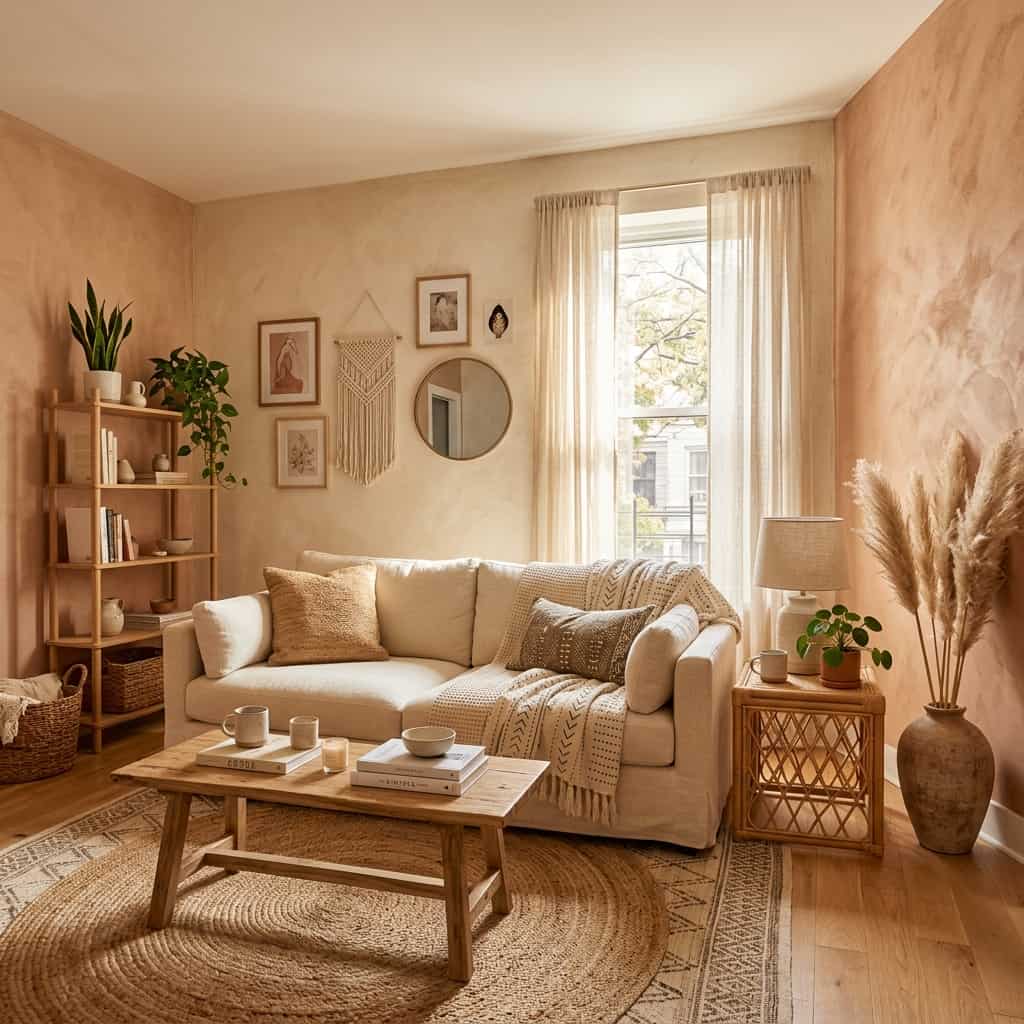
Limewash and Venetian plaster wall finishes create a living, breathing wall surface that no flat latex paint can replicate. The subtle tonal variation across the textured surface shifts throughout the day as light moves, giving the room a warmth and depth that genuinely improves with every passing hour of natural light.
These textured wall finishes suit boho interiors perfectly because they share the same organic, imperfect quality that defines natural materials like rattan, jute, and handmade ceramics. The wall itself becomes a textural element rather than simply a neutral backdrop, contributing actively to the room’s layered aesthetic.
- Limewash shifts beautifully with changing light
- Terracotta tones complement all natural materials
- Textured walls reduce need for excess wall art
- DIY limewash kits available under forty dollars
- Works on existing smooth painted wall surfaces
Limewash paint application requires no professional skill and produces genuinely beautiful results with a simple brush and a slightly irregular application technique. The deliberate imperfection of the limewash method actually makes DIY application look more authentic than a perfectly uniform professional finish would in this context.
That’s why many interior designers specifically recommend limewash as the first and most impactful upgrade for anyone attempting a bohemian interior transformation on a modest budget. One weekend, one bucket of limewash paint, and a wide natural bristle brush produce results that look genuinely extraordinary in person.
Sunken Living Room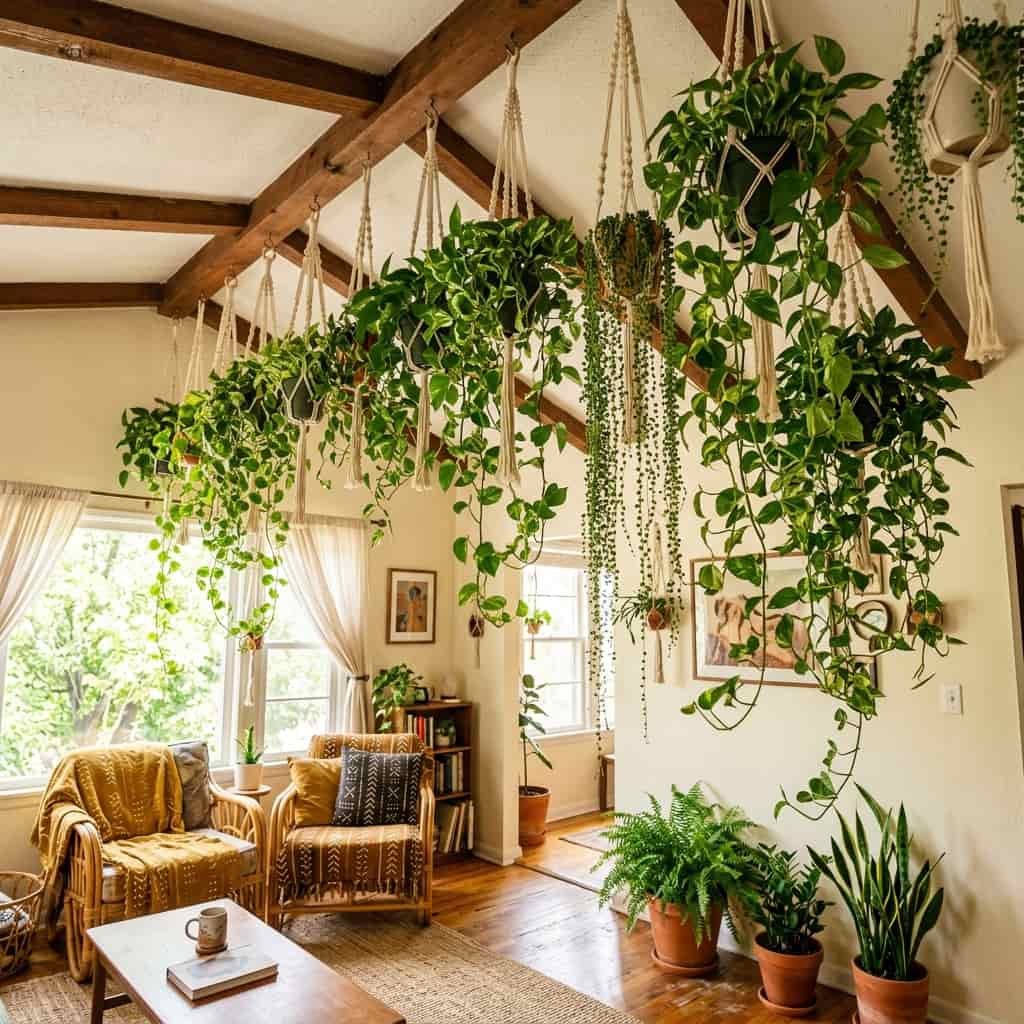
A sunken conversation pit is one of the most dramatically immersive interior design features a bohemian home can have. The lowered floor level creates an instant psychological sense of enclosure and intimacy that no amount of furniture arrangement on a flat floor can replicate, making gatherings feel genuinely cocooned and special.
This retro architectural feature has experienced a powerful revival within free-spirited interior aesthetics for 2026 because it perfectly embodies the bohemian commitment to unconventional, human-centered living. Floor cushions, layered rugs, and low wooden tables inside the pit create a gathering space that feels ancient, communal, and deeply welcoming.
- Sunken pit creates powerful psychological intimacy
- Floor cushion seating suits the lowered level
- Layered vintage rugs soften the sunken floor
- Candle lighting amplifies the cocooned atmosphere
- Works best in open-plan living room spaces
The sunken living room works brilliantly as a focal point in larger open-plan spaces where defining a specific gathering zone without physical walls is both practically and aesthetically challenging. The change in floor level creates a natural boundary that no rug, sofa arrangement, or room divider can achieve as effectively.
For those unable to structurally lower a floor, a raised platform approach achieves a similar psychological effect in reverse , elevating a seating area two steps above the main floor level creates the same sense of defined, intentional gathering space with genuine visual drama and without any excavation.
Indoor Hanging Vines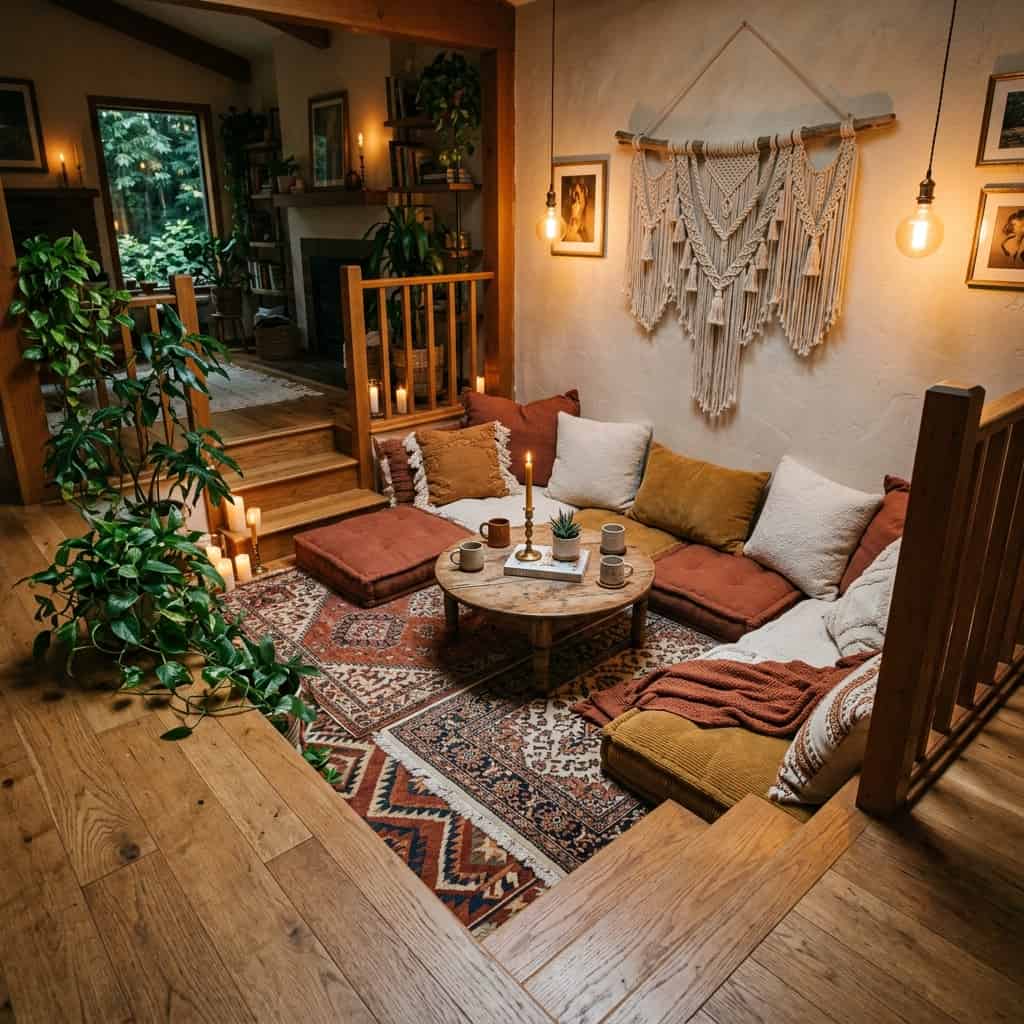
Few interior design moves create the immediate visual impact of a ceiling filled with cascading indoor vines. When trailing pothos, string-of-hearts, and philodendron plants are suspended at three or four different heights, the combined effect creates a living green canopy that makes the interior feel like a lush private garden.
This dramatic plant installation suits bohemian interiors because it represents the style’s core commitment to bringing the natural world indoors as forcefully and beautifully as possible. The organic, unpredictable trail of each vine against the white ceiling creates exactly the kind of beautiful imperfection that free-spirited design celebrates most.
- Cascading vines create a living green canopy
- Stagger heights for maximum visual depth
- Pothos and philodendron trail most dramatically
- Macramé hangers add double texture value
- Improves indoor air quality naturally over time
Placing hanging vines near windows where they receive adequate natural light ensures they remain lush and actively growing rather than slowly declining. Healthy, actively growing plants look dramatically better than struggling ones, which makes light access the single most important practical consideration for any ceiling plant installation.
I’ve noticed that rooms with ceiling plant arrangements consistently photograph more beautifully than rooms with only floor and shelf plants. The overhead green layer adds a dimension that ground-level plants simply cannot provide, creating a fully immersive natural environment that surrounds rather than merely decorates.
Mixed Metal Fixtures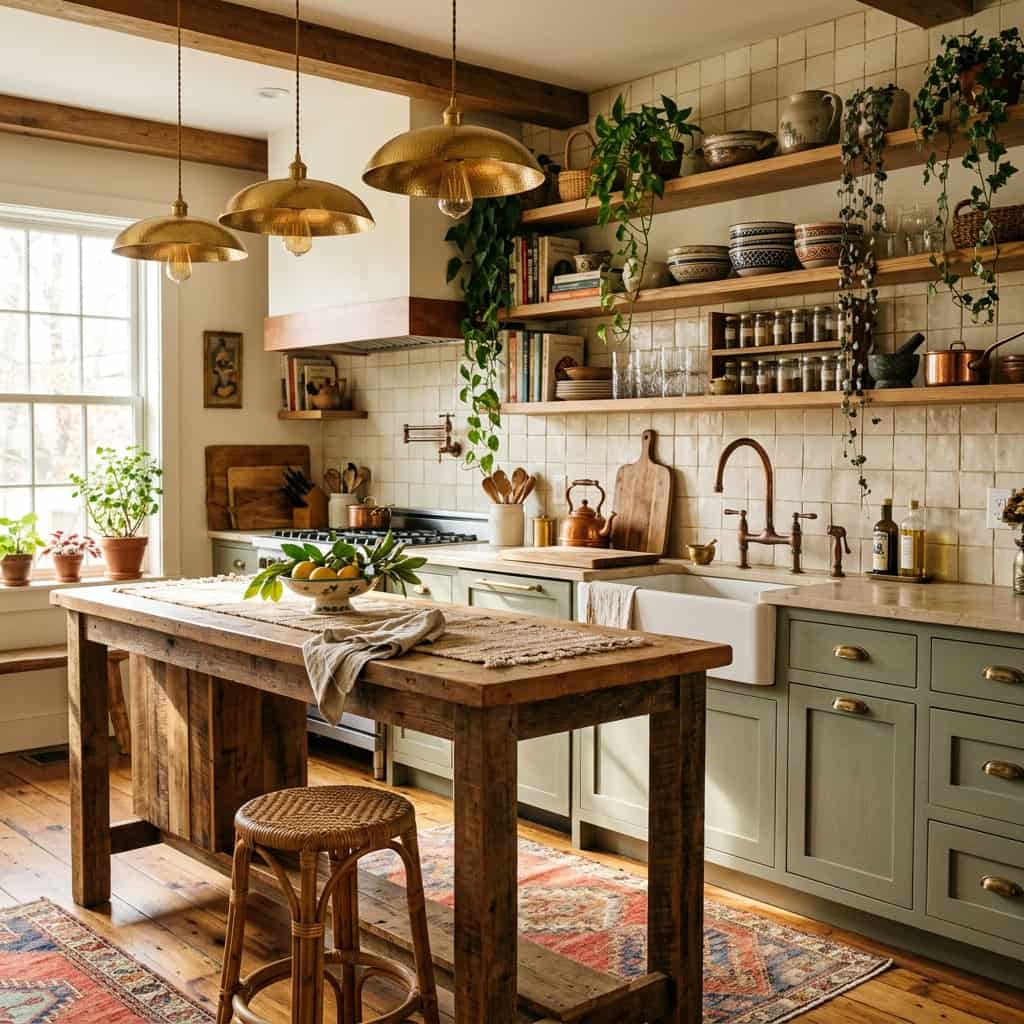
Mixing warm metal finishes throughout a kitchen or bathroom creates a layered, globally collected quality that perfectly matched hardware sets can never achieve. Aged brass handles beside an antique copper faucet beside gold pendant lights together tell a story of spaces built slowly over time with genuine intention and discernment.
The key to successful mixed metal styling lies in keeping all chosen finishes within the warm tone family , aged brass, antique copper, unlacquered brass, and matte gold all share the same underlying warmth that makes them visually harmonious even when their surface textures and finishes vary considerably from piece to piece.
- Keep all metals within the warm tone family
- Aged brass hardware suits boho kitchen aesthetics
- Antique copper adds genuine patina and character
- Gold pendant lights warm the space overhead
- Mixed metals photograph richly and beautifully
Replacing flat chrome or brushed nickel hardware with warm brass or copper alternatives is one of the most cost-effective and impactful upgrades available for any kitchen or bathroom attempting a bohemian interior direction. Cabinet hardware replacement costs under sixty dollars for a standard kitchen and takes less than one afternoon to complete.
That’s why hardware upgrades appear consistently at the top of budget-conscious interior styling advice for boho kitchens and bathrooms. The visual shift from cold modern chrome to warm aged brass changes the entire room’s emotional temperature immediately and definitively without touching a single wall, tile, or fixed surface.
Wabi-Sabi Minimalism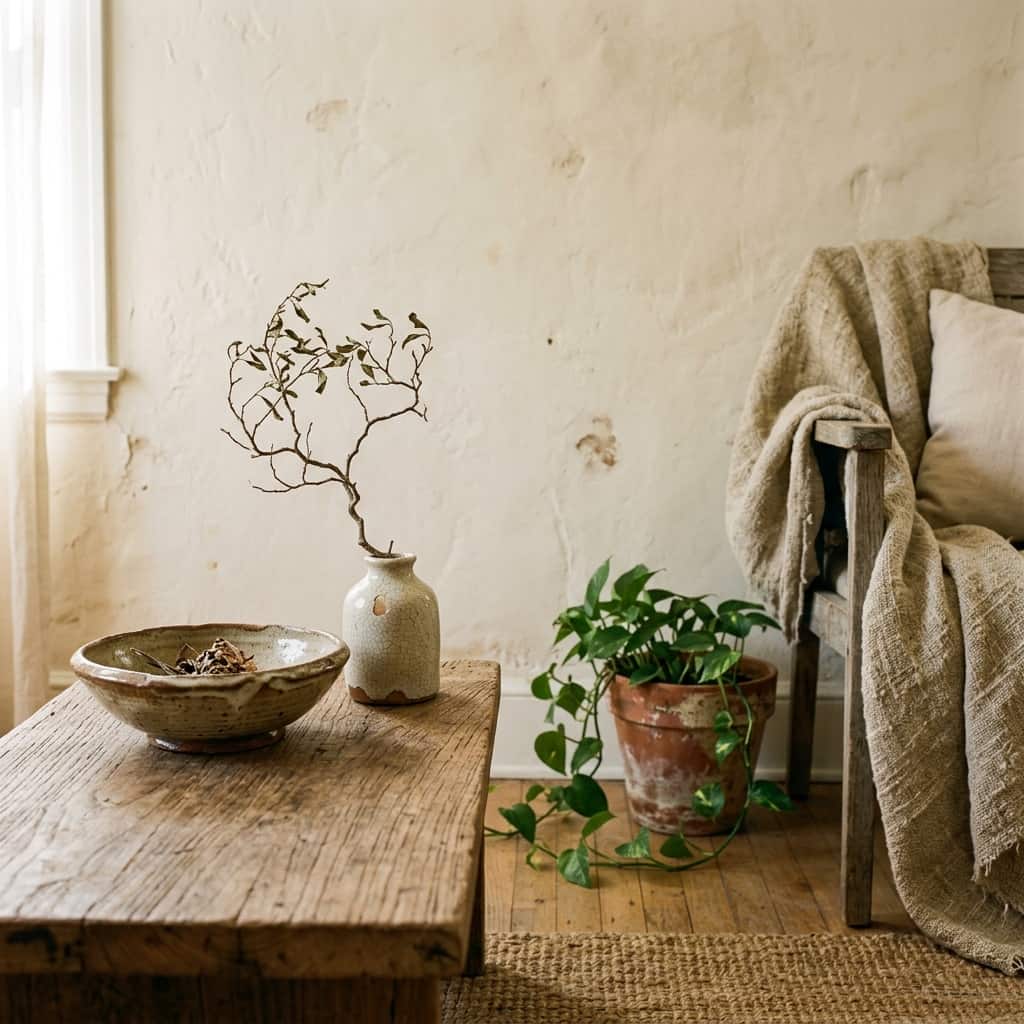
Wabi-sabi , the Japanese philosophy of finding beauty in imperfection and transience , aligns so naturally with bohemian interior design that the two aesthetics have become deeply intertwined within 2026’s most celebrated home styling directions. Both celebrate aged materials, handmade objects, organic forms, and the visible evidence of time passing.
A wabi-sabi styled room contains objects chosen specifically for their imperfections , a ceramic bowl with an irregular rim, a linen throw with visible weave irregularities, a dried branch displayed as sculpture. Each imperfect object contributes a quiet authenticity that mass-produced perfection can never replicate at any price point.
- Choose objects specifically for their imperfections
- Cracked glaze ceramics suit wabi-sabi beautifully
- Dried botanicals honor natural transience honestly
- Raw wood surfaces show aging gracefully over time
- Restraint and emptiness are essential design elements
Wabi-sabi boho interiors work best in spaces where the temptation to over-decorate has been consciously resisted. Each object must earn its place through genuine beauty, meaning, or functional purpose. Removing three objects for every one added is a reliable practical discipline for achieving the authentic restraint wabi-sabi requires.
This approach suits people who find maximalist boho interiors visually overwhelming but still crave the warmth, naturalness, and authenticity that define the free-spirited aesthetic at its most essential. Wabi-sabi provides a quieter, more meditative path to the same destination of genuine, lived-in home beauty.
Sculptural Driftwood Decor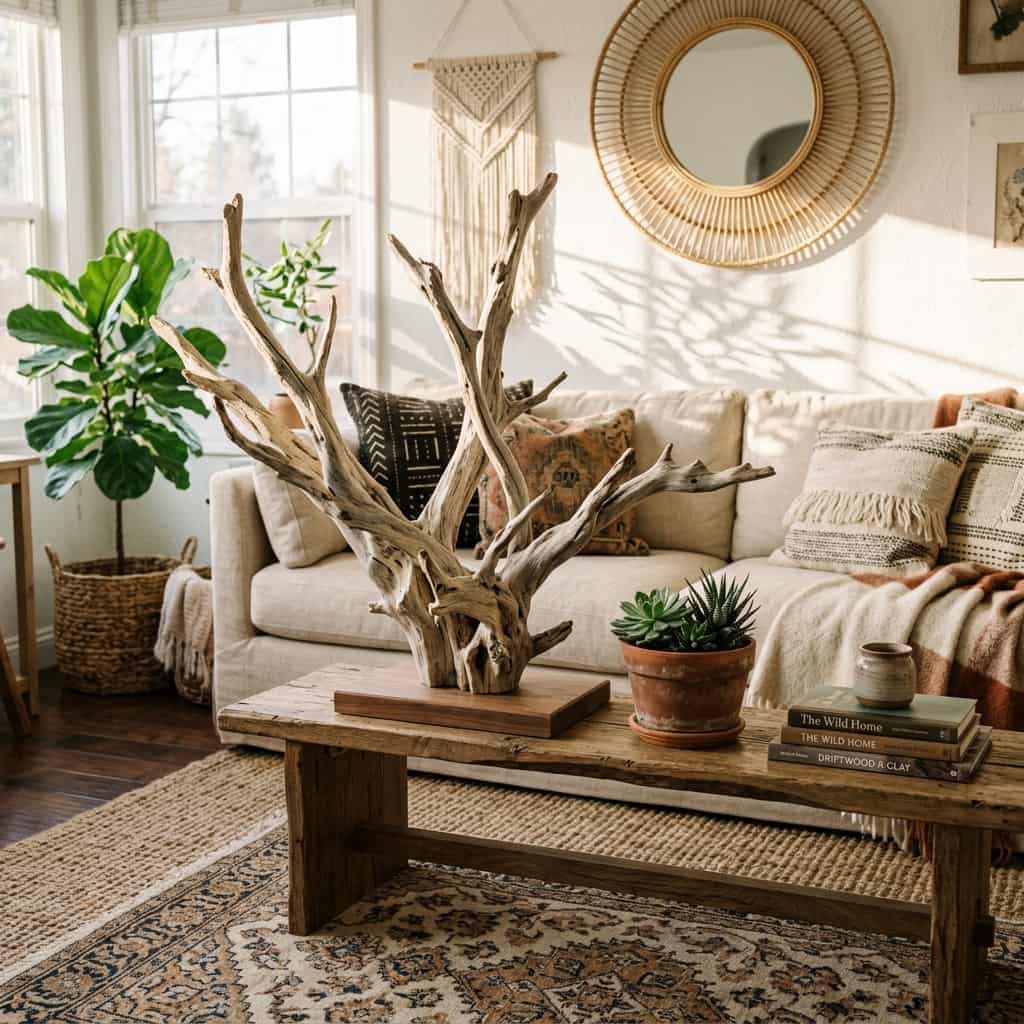
A large sculptural driftwood piece displayed as the room’s primary art object announces a confidence in natural form that purchased art rarely achieves. The complex, weathered organic shape of aged driftwood , pale gray, bleached cream, and silver in tone , creates a sculptural presence that shifts dramatically with changing light throughout the day.
Driftwood sourced from beaches, riverbanks, or online artisan sellers costs a fraction of gallery sculpture while delivering comparable visual impact in a bohemian interior context. The ocean-worked smoothness and natural branching complexity of driftwood pieces create genuine sculptural interest that no manufactured object can convincingly replicate.
- Driftwood costs a fraction of gallery sculpture
- Organic form creates natural sculptural interest
- Pale gray tones complement every neutral palette
- Mounted on a base it becomes serious room art
- Shadow patterns shift beautifully throughout the day
Positioning a large driftwood sculpture near a window where afternoon light can cast its branching shadows across a limewash or plaster wall creates one of the most atmospheric and photographically compelling moments any bohemian interior can offer. The interaction between natural object and natural light produces constantly shifting results.
I’ve seen large driftwood pieces collected from public beaches , completely free , become the most commented-upon decorating feature in beautifully styled homes. The story of where the piece came from, what water carried it, and what weather shaped it adds a personal narrative layer that purchased objects simply cannot provide.
Arched Brick Fireplace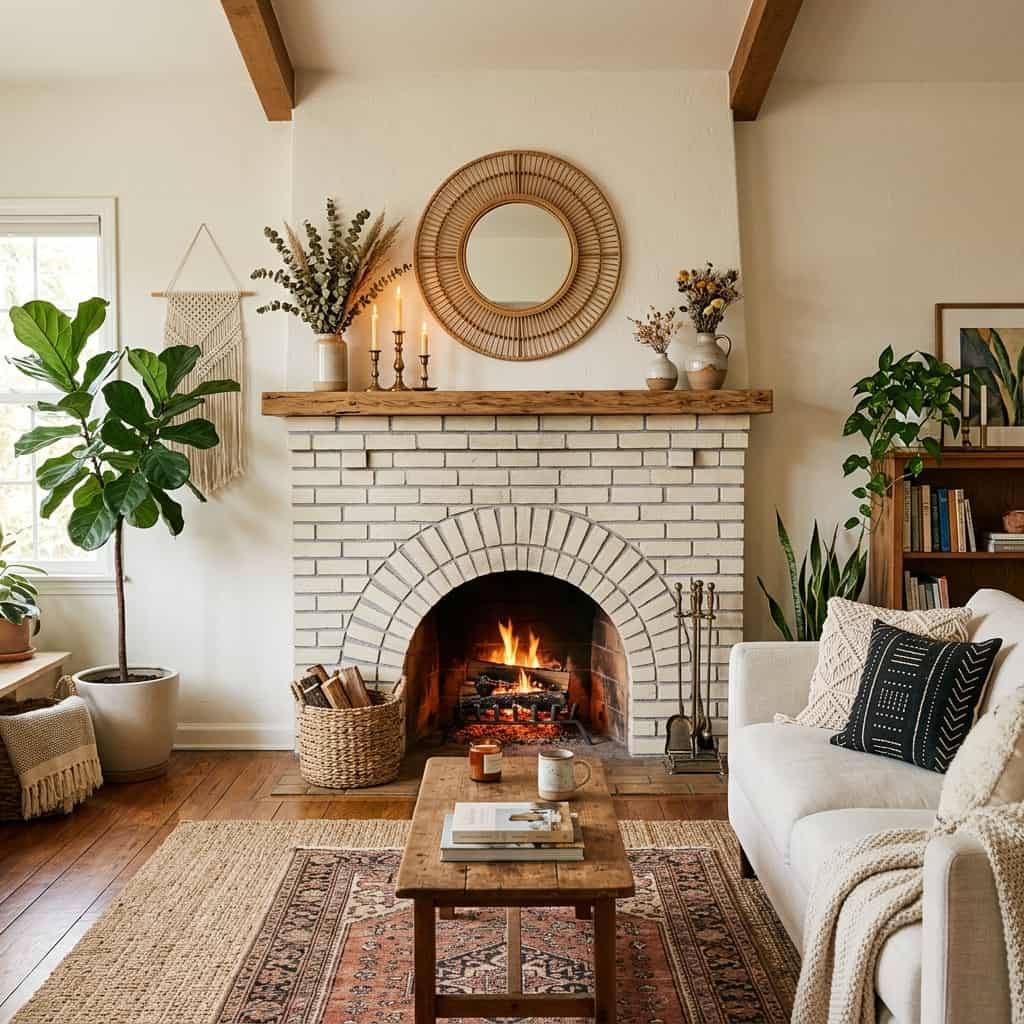
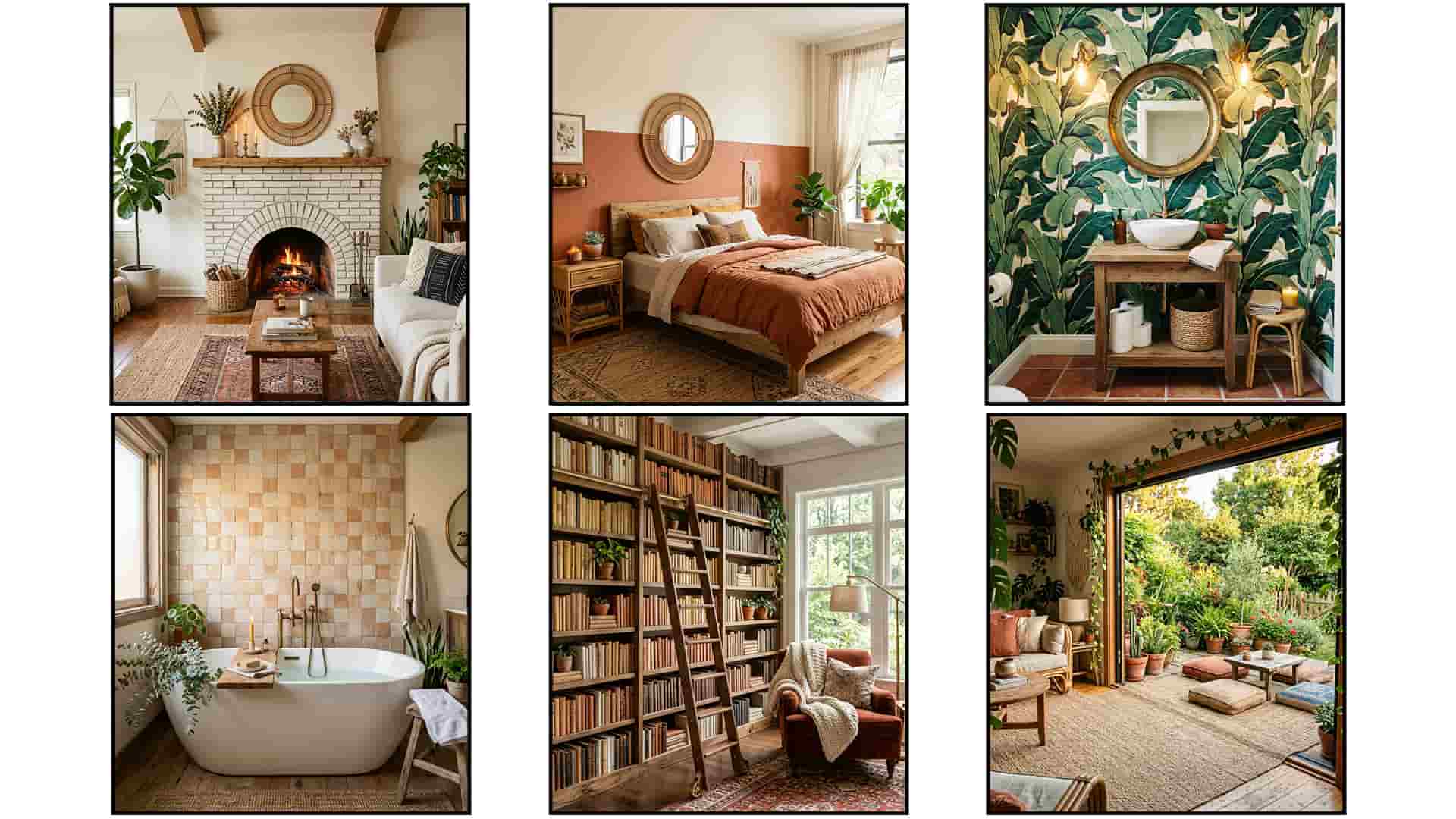
A whitewashed arched brick fireplace creates the strongest possible architectural focal point a bohemian living room can have. The combination of textured brick, organic arch form, warm plaster whitewash, and glowing firelight produces a wall of layered natural beauty that every other decorating element in the room orbits naturally.
Whitewashing existing brick , or installing a brick veneer panel on an existing flat wall , transforms a standard living room into one with genuine architectural character and historical warmth. The whitewash technique allows the brick texture to show through while lightening the tone to suit a warm cream and natural material palette.
- Whitewashed brick lightens while preserving texture
- Arch form softens the fireplace’s visual weight
- Brass mantel accessories complement warm brick tones
- Rattan mirror above reflects firelight beautifully
- Brick veneer panels work on flat rental walls
Styling the mantel above a whitewashed brick fireplace follows the same layered vignette principle as coffee tables and console surfaces , one tall element, two medium objects, two low accessories, and one trailing plant at the far end creates a natural landscape arrangement that looks professionally composed.
The fireplace focal wall also anchors the entire living room furniture arrangement. Orienting the primary sofa directly toward the fireplace rather than toward a television creates a conversation-centered room layout that prioritizes human connection over screen consumption , a fundamentally bohemian living philosophy.
Outdoor-Indoor Transition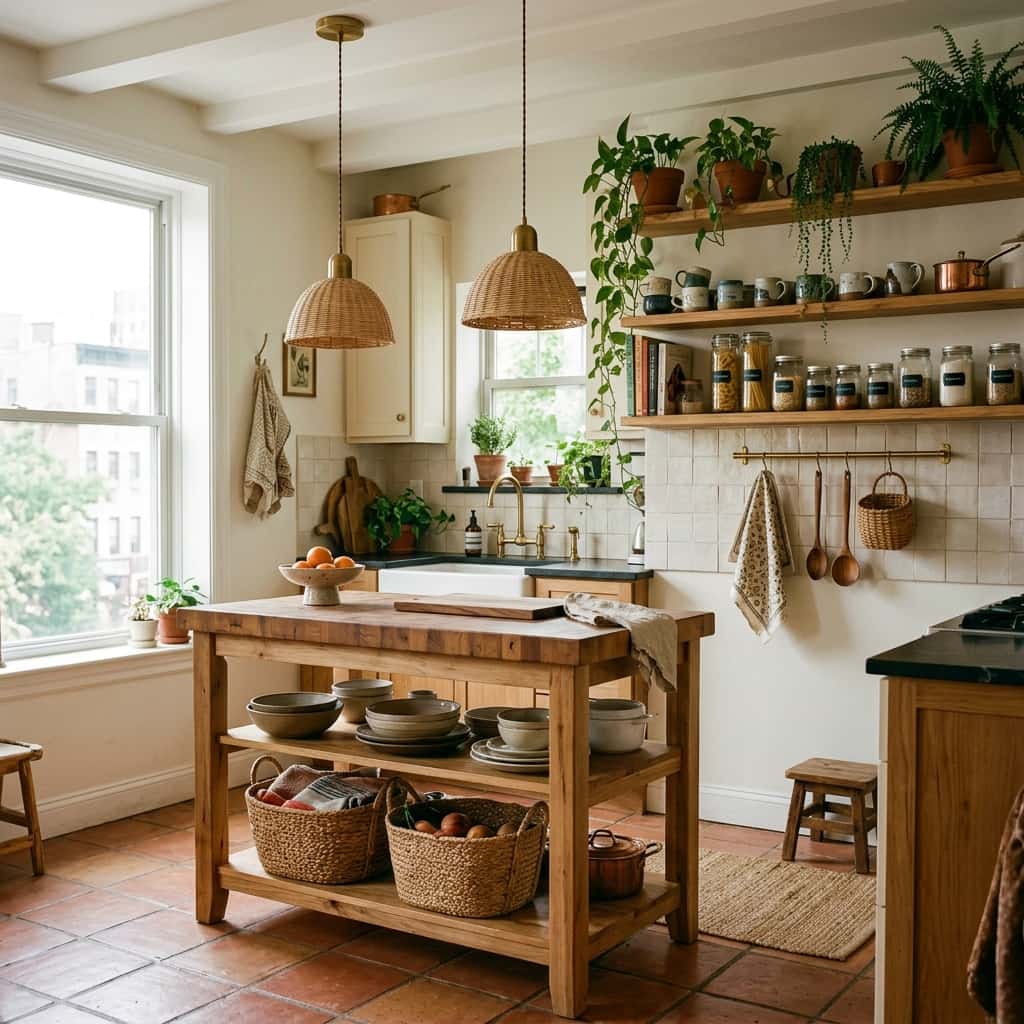
Dissolving the boundary between indoor and outdoor living is one of the most powerful design moves available to bohemian home styling in 2026. When large glass doors fold fully open and the interior rug, plant palette, and furniture material story continue directly onto the outdoor patio, the home feels dramatically larger and more connected to the natural world.
This indoor-outdoor continuity works through deliberate material repetition , the same jute rug tone echoed in an outdoor stone patio, the same terracotta plant pots appearing inside and outside, the same cream and rust textile palette in both the interior cushions and the weather-resistant outdoor seat covers.
- Matching indoor and outdoor palettes create continuity
- Jute rug tones echo naturally in stone patio
- Terracotta pots work beautifully in both environments
- Open glass doors dramatically extend living space
- Plant framing softens the doorway transition visually
That’s why many interior designers working with bohemian aesthetics prioritize the indoor-outdoor transition as a primary design consideration rather than an afterthought. The perceived square footage of a home increases dramatically when the living space flows visually and physically into an outdoor area without interruption.
Even small balconies and narrow terraces can achieve meaningful indoor-outdoor continuity through consistent material choices, matching plant selections, and a single weather-resistant outdoor rug in a tone that echoes the interior floor covering visible through the open doorway or window.
Boho Kitchen Island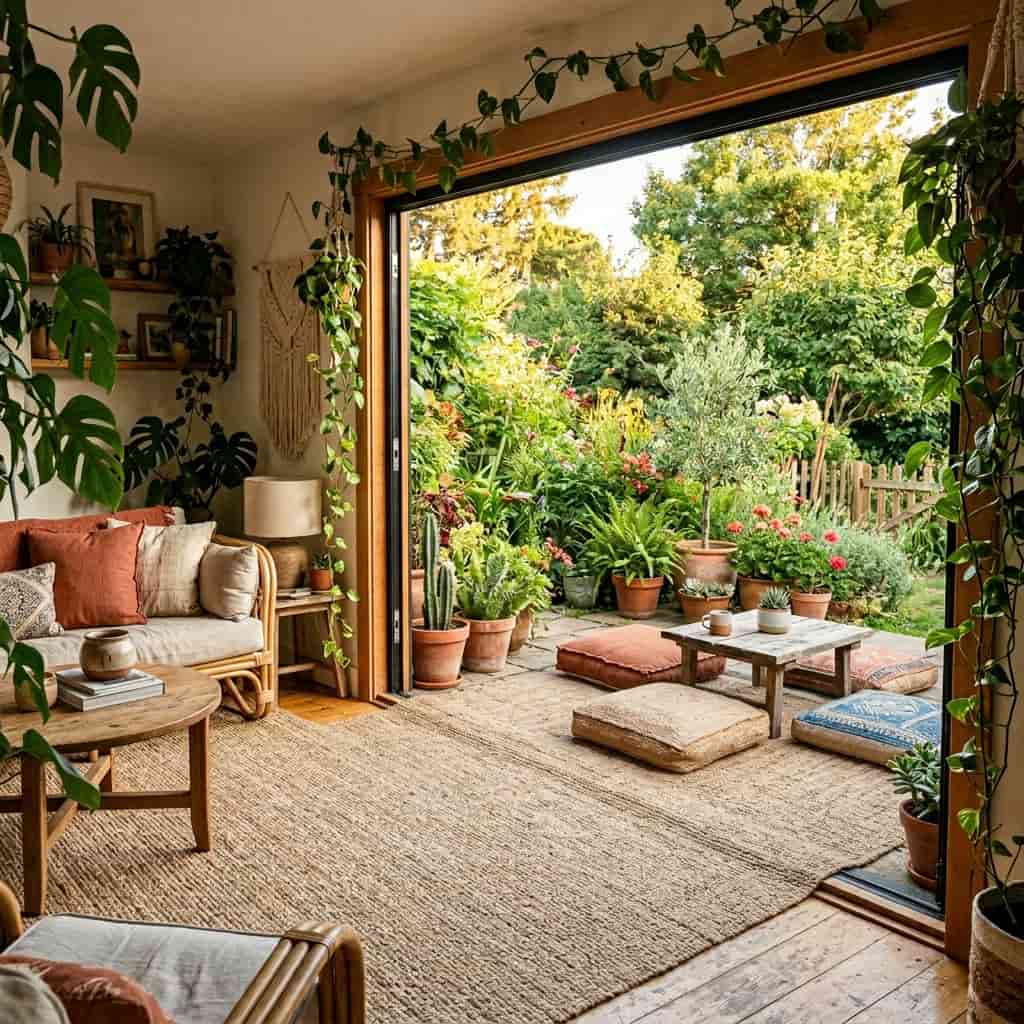
A freestanding wooden kitchen island with a butcher block top brings warmth, character, and functional flexibility that built-in kitchen islands rarely achieve. The natural wood grain, open lower shelving, and movable format create a kitchen centerpiece that feels gathered and personal rather than installed and permanent.
Pairing the wooden island with natural fiber pendant lights overhead, open ceramic-filled shelving on the walls, and terracotta floor tiles creates a complete bohemian kitchen material story where every surface speaks the same organic, warm language. The kitchen becomes a genuinely beautiful room rather than a purely functional one.
- Butcher block top adds warm natural texture
- Open lower shelving holds woven baskets attractively
- Natural fiber pendants filter warm amber light
- Freestanding format suits rental kitchens perfectly
- Terracotta floor tiles complete the earthy palette
Freestanding kitchen islands work especially well in rental apartments where permanent built-in modifications are prohibited. A quality butcher block topped island on wooden legs costs between two hundred and six hundred dollars and transforms a plain kitchen’s functionality and aesthetics simultaneously with zero permanent installation.
I’ve noticed that kitchens with natural wood islands and open ceramic shelving consistently inspire more cooking, more gathering, and more daily enjoyment of the kitchen space. The warmth and beauty of the environment actively encourage people to spend more time preparing food and gathering around the island together.
Global Souvenir Shelf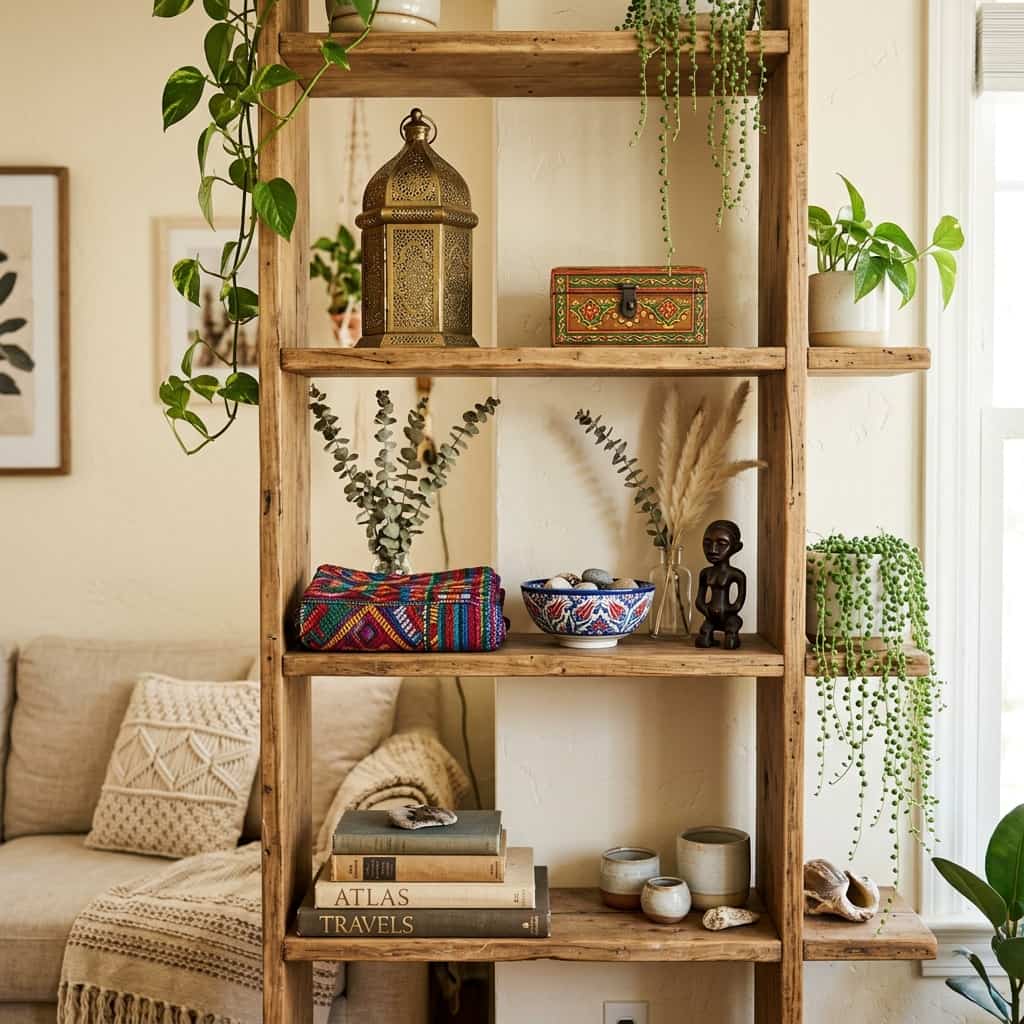
A shelf curated from genuine travel souvenirs and global craft objects creates an interior story that no styled showroom can replicate. Every object on a global souvenir shelf carries a real memory, a specific place, and a human maker , qualities that give the display a personal depth that mass-produced decorative objects fundamentally lack.
Moroccan brass lanterns, Indian hand-painted wooden boxes, Turkish ceramic bowls, and Guatemalan woven textiles together create a shelf that communicates curiosity, travel, and appreciation for global craft traditions. That combination of cultural breadth and personal memory is the purest expression of the bohemian interior philosophy.
- Genuine souvenirs carry personal memory and meaning
- Global craft objects suit every boho shelf arrangement
- Mix materials , brass, ceramic, wood, and textile
- Dried stems provide neutral breathing room between pieces
- Objects collected over years feel more authentic
Online artisan marketplaces now allow people to build globally inspired shelves without extensive travel budgets by purchasing directly from craft cooperatives in Morocco, India, Guatemala, and West Africa. Buying directly from makers ensures cultural authenticity while supporting the communities whose craft traditions these beautiful objects represent.
That access to genuine global craft at accessible prices makes the bohemian interior aspiration of a globally collected, personally meaningful home more achievable than ever for people at any income level in 2026. The shelf’s story no longer requires a passport , just intentional, curious purchasing choices made one meaningful object at a time.
Boho Color Blocked Walls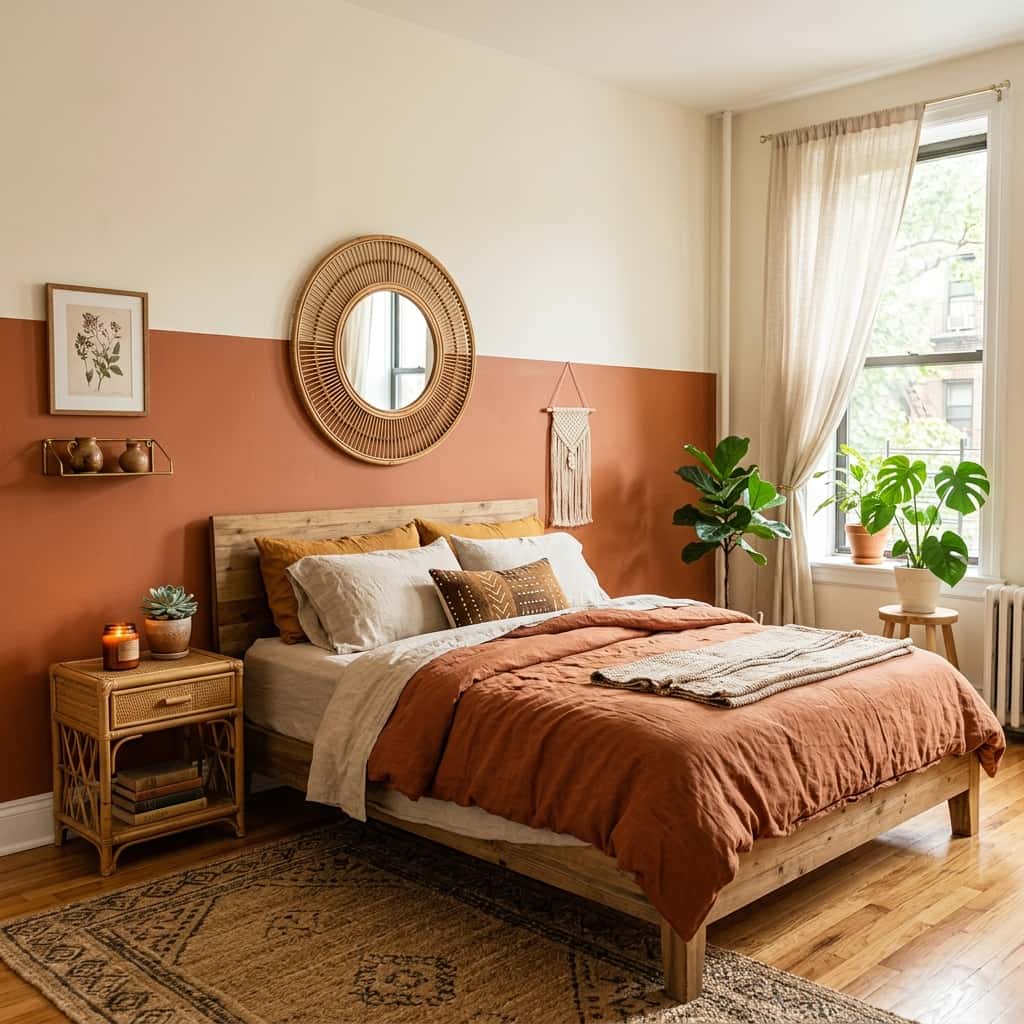
Color blocking , dividing a wall horizontally between two complementary tones , creates graphic boldness within a bohemian bedroom without requiring wallpaper, tile, or textured finishes. Terracotta on the lower two-thirds with soft cream above creates a grounded, earth-horizon effect that feels simultaneously ancient and completely current for 2026 interiors.
The horizontal division line between the two tones sits most naturally at chair rail height , approximately thirty-two to thirty-six inches from the floor , which visually anchors the room and creates a strong connection between the wall color and the furniture and textiles at floor level.
- Color blocking creates bold graphic wall interest
- Terracotta lower half grounds the room visually
- Cream upper half keeps the ceiling feeling light
- Round rattan mirror suits the color block wall
- Clean dividing line requires only painter’s tape
Color blocked walls work particularly well in bedrooms where the bed’s headboard and the majority of textiles sit within the lower terracotta zone, creating a warm, color-saturated backdrop for the bed that the softer upper cream zone balances perfectly without competing. The visual logic of the two zones feels immediately intuitive and satisfying.
I’ve tried this color blocking technique in three different bedroom projects and the result consistently impresses people who expect the bold choice to feel overwhelming. In practice, the earthy terracotta tone is warm enough to feel nurturing rather than aggressive, and the cream above it gives the eye a restful place to land.
Boho Bathroom Tile Feature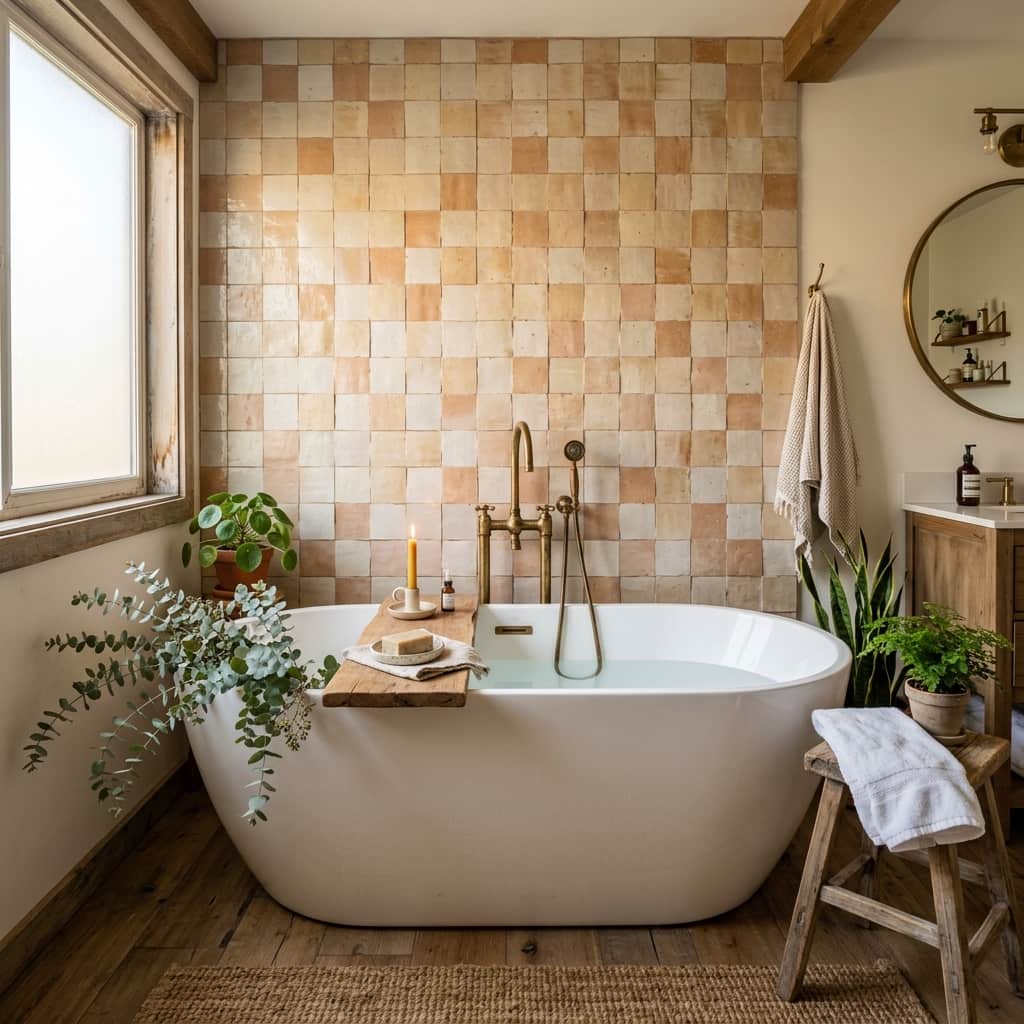
Zellige tiles , traditional Moroccan handmade ceramic tiles with characteristically irregular, jewel-like surface variation , create a bathroom feature wall of extraordinary beauty and craft. Each tile reflects light slightly differently from its neighbors, creating a shimmering, living wall surface that completely transforms a standard bathroom into a deeply personal, globally inspired retreat.
The irregular surface of authentic or authentic-style Zellige tiles suits bohemian interior design perfectly because the visible handcraft imperfection is the defining quality of the tile’s beauty. Paired with aged brass fixtures, a freestanding tub, and natural wood accessories, the result is a bathroom that feels more like a private spa than a functional utility room.
- Zellige tiles create shimmering, living wall surfaces
- Handmade irregularity defines their beautiful character
- Aged brass fixtures complement warm tile tones
- Freestanding tub maximizes the feature wall impact
- Trailing eucalyptus adds natural organic fragrance
Zellige-style tiles are widely available from online tile retailers at accessible price points that make feature wall installations achievable for standard bathroom renovation budgets. Installing the tile treatment only on the wall behind the tub rather than tiling all four walls limits material cost while maximizing visual impact from the most important sightline in the room.
That’s why many bathroom designers recommend the single feature wall approach for clients with limited budgets who want maximum visual transformation. One beautifully tiled wall behind a freestanding bath delivers approximately ninety percent of the atmospheric impact of a fully tiled bathroom at roughly thirty percent of the total material cost.
Reclaimed Wood Ceiling Beams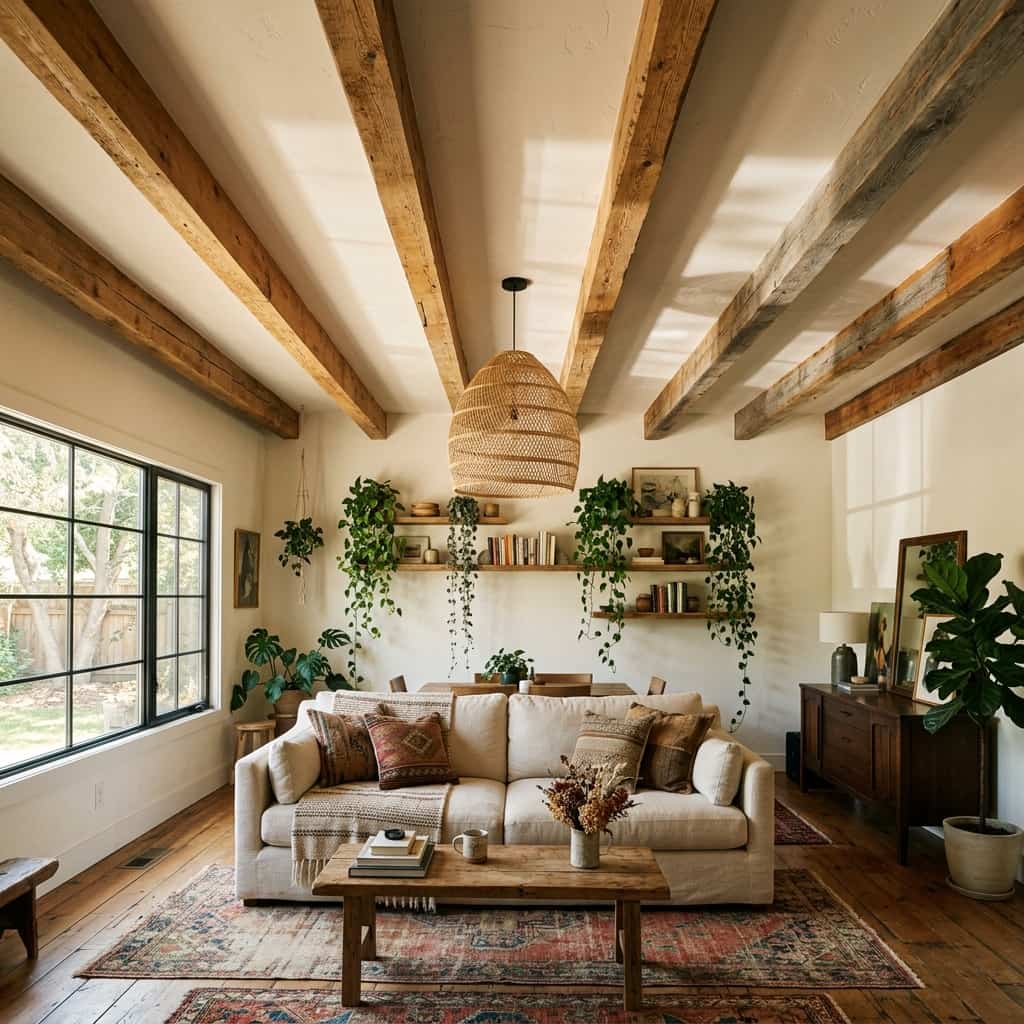
Reclaimed wood ceiling beams add more architectural character to a bohemian interior than almost any other single design element available. The aged timber , honey, gray, and silver-toned from decades of weathering , introduces genuine history and material depth overhead that new construction materials simply cannot replicate at any cost.
Even homes with flat drywall ceilings can achieve this look through decorative beam installation. Lightweight hollow wood beam casings designed specifically for surface mounting attach directly to existing ceilings without structural modification, making the look accessible for renters and homeowners alike at a fraction of structural timber costs.
- Aged timber adds genuine architectural history overhead
- Hollow decorative beams suit flat ceiling installation
- Honey and gray tones complement warm boho palettes
- Rattan pendants hang beautifully between ceiling beams
- Beams cast beautiful afternoon shadow patterns below
Spacing three to four beams evenly across a living room or bedroom ceiling creates the strongest visual impact without making the ceiling feel heavy or oppressive. The key measurement is keeping beam depth proportional to ceiling height , beams projecting four to six inches suit standard eight-foot ceilings without visually lowering the space uncomfortably.
I’ve seen decorative ceiling beam installations completely redefine the character of plain suburban living rooms within a single weekend. The transformation from flat white drywall ceiling to warm timber-beamed overhead is one of those rare DIY projects where the effort invested is dramatically disproportionate to the visual result achieved.
Vintage Furniture Mix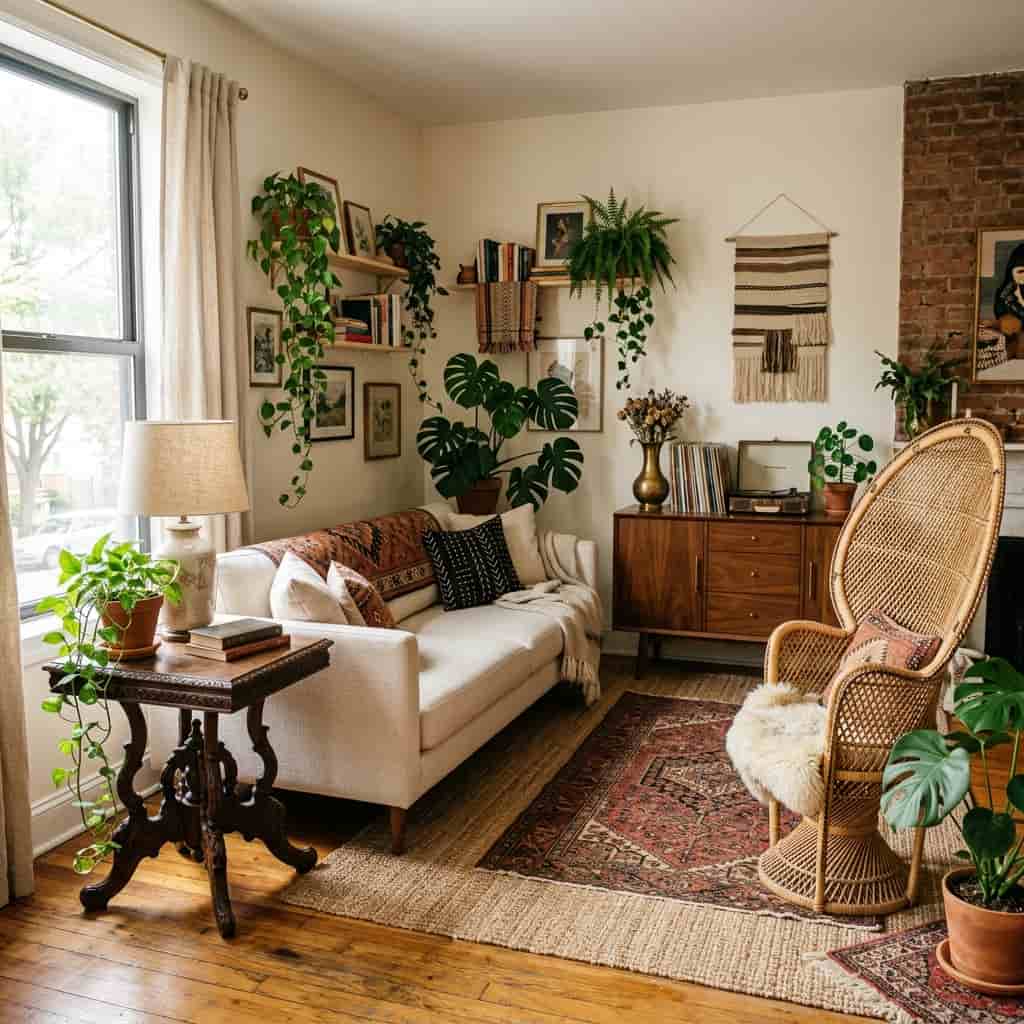
Mixing furniture from genuinely different eras and styles is one of the most sophisticated and distinctly bohemian interior design approaches possible. A mid-century walnut credenza beside a 1970s rattan peacock chair beside a Victorian carved side table creates a room that feels collected across decades rather than purchased in a single afternoon.
The unifying principle that makes multi-era furniture mixing work is material consistency rather than style matching. When every piece shares warm wood tones, natural fibers, or organic forms regardless of its specific period origin, the collection reads as harmonious and intentional rather than randomly assembled or stylistically confused.
- Warm wood tones unify furniture from different eras
- Mid-century pieces complement rattan and carved wood
- Thrift stores and estate sales offer best vintage finds
- One contemporary neutral piece grounds the collection
- Organic forms create visual harmony across styles
Thrift stores, estate sales, Facebook Marketplace, and architectural salvage shops provide the most authentic and affordable sources for genuine vintage furniture pieces. Buying secondhand also aligns perfectly with the bohemian philosophy of valuing existing objects and their histories over new manufactured replacements.
That’s why many stylists who specialize in free-spirited interiors spend years building furniture collections piece by piece rather than furnishing rooms in single shopping trips. The patience that approach requires produces results of infinitely greater personality, authenticity, and visual richness than any single retailer’s curated collection can deliver.
Woven Pendant Cluster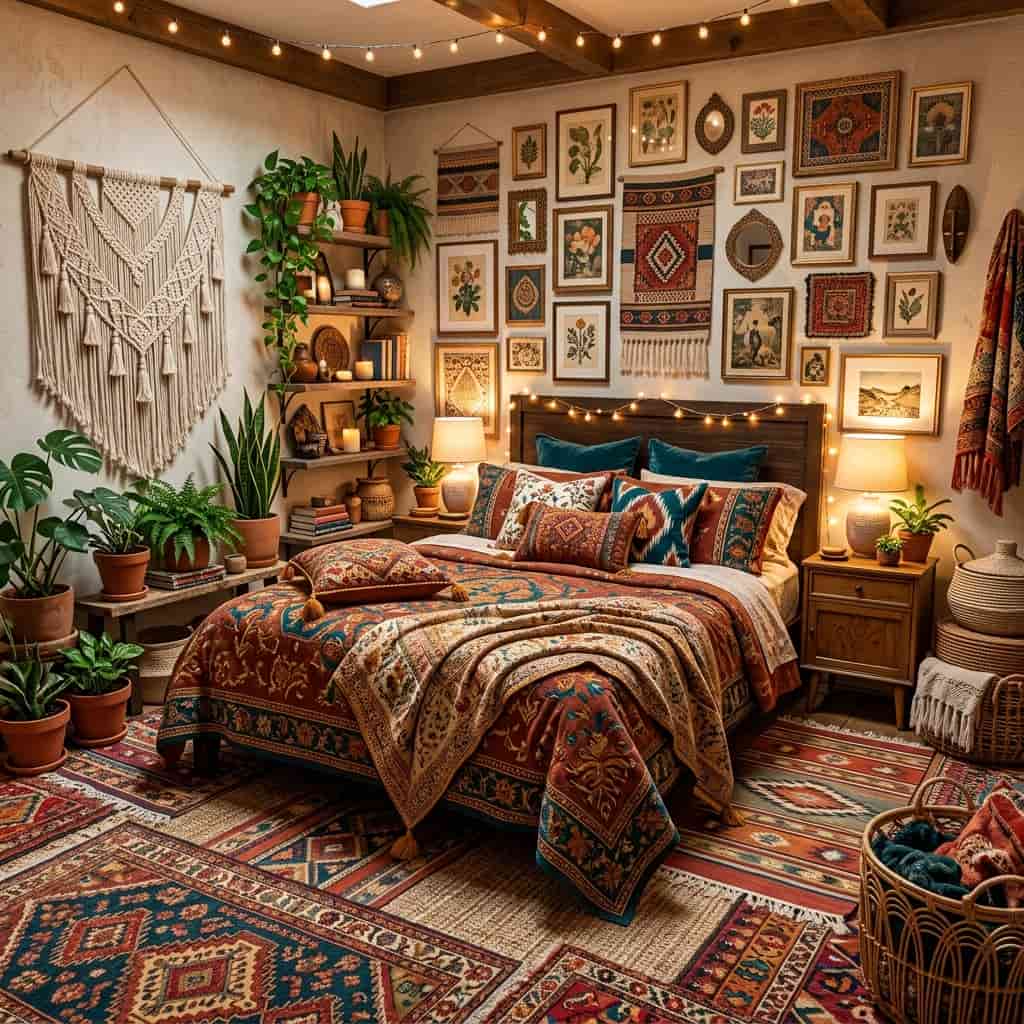
A cluster of three woven pendant lights hung at varying heights above a dining table creates a lighting installation of genuine visual drama that a single pendant can never match. The different shade sizes at different heights produce a layered overhead composition that looks designed rather than simply installed.
Choosing woven natural fiber shades , rattan, seagrass, and bamboo , in the same warm tone family but in three noticeably different sizes creates cohesion within the cluster arrangement. The variation in size prevents the grouping from looking monotonous while the shared material keeps it feeling unified and intentional.
- Three pendants at different heights create depth
- Varied shade sizes add cohesion with visual interest
- Open weave casts intricate shadow patterns below
- Warm amber light flatters every dining surface
- Plug-in versions suit rental dining rooms perfectly
Positioning the largest shade at the lowest point, the medium shade slightly higher, and the smallest shade at the highest position creates a naturally descending visual hierarchy that feels intuitively balanced and compositionally satisfying. That size-to-height relationship is the structural key to making pendant clusters look professionally designed.
For rental apartments with fixed ceiling junction boxes, plug-in pendant adaptors allow full pendant cluster installations using standard wall outlets and ceiling adhesive hooks for cord management. The result looks identical to hardwired installations while requiring zero electrical work and leaving zero permanent marks.
Boho Maximalist Bedroom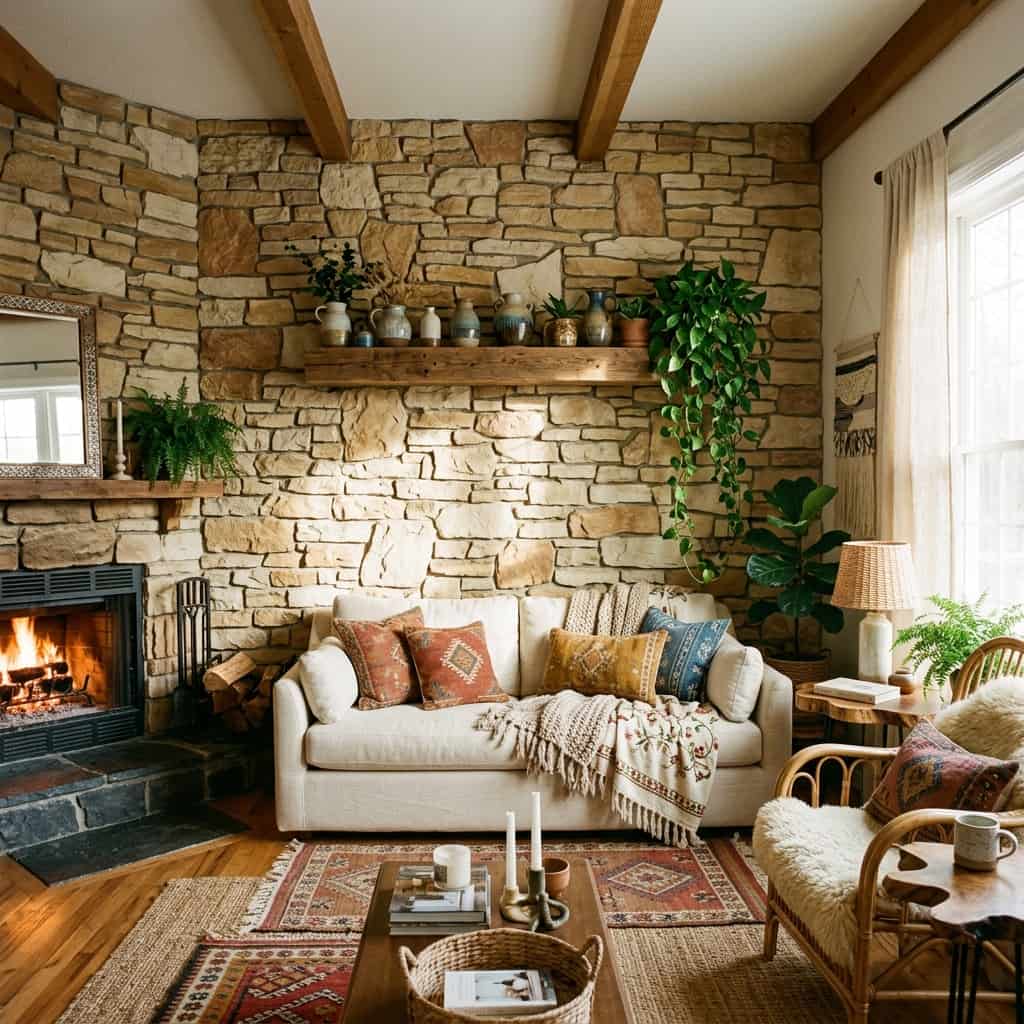
Maximalist bohemian bedrooms prove that more, when chosen with genuine intention and chromatic discipline, creates spaces of extraordinary visual richness rather than visual chaos. Every surface layered with embroidered textiles, global art, trailing plants, woven baskets, and warm lighting produces a bedroom that surrounds its inhabitant in beauty from every possible angle.
The discipline that makes maximalist boho bedrooms succeed rather than overwhelm lies entirely in color palette restraint. Limiting the entire room to three tone families , rust and gold, deep teal, and cream , regardless of how many individual objects and patterns are present keeps the maximalist accumulation feeling coherent and intentional.
- Three tone families unify maximalist accumulation
- Embroidered bedding anchors the room’s color story
- Global textiles on walls add cultural depth overhead
- Layered floor rugs create complete sensory warmth
- Fairy lights soften maximalist visual complexity beautifully
I’ve seen maximalist boho bedrooms styled on surprisingly modest budgets because the maximalist approach actually rewards affordable purchasing , thrifted textiles, market ceramics, printable art, and secondhand baskets all contribute equally to the layered richness that expensive curated collections aim for.
The key insight for maximalist bohemian styling is that the accumulation itself , the density of warmth, texture, and personal meaning , is the design statement. Each individual object matters less than the collective atmosphere every object together creates, which liberates the stylist from needing any single expensive statement piece.
Natural Stone Accent Wall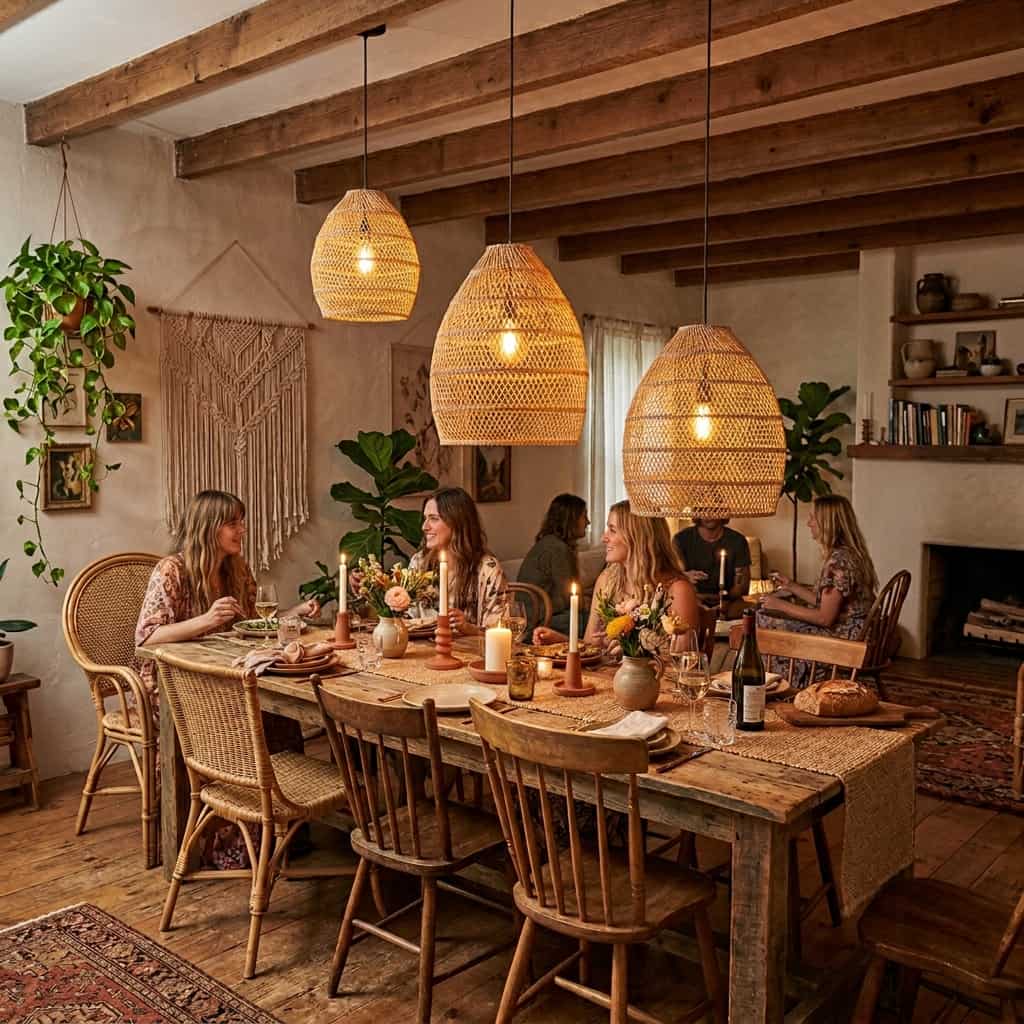
A natural stacked stone accent wall introduces the most elemental, earth-connected texture available to any interior space. The irregular surface of natural sandstone, limestone, or fieldstone creates depth, shadow, and a cave-like warmth that connects the interior viscerally to geological time and the natural world in a way no other surface material achieves.
Stone accent walls suit bohemian interiors as anchor pieces because their visual weight and material permanence provide a stable foundation around which every other lighter, more fluid element , linen textiles, trailing plants, handmade ceramics, and woven accessories , can orbit without the room feeling visually unstable or ungrounded.
- Natural stone creates elemental earth-connected texture
- Irregular stone surfaces catch light beautifully
- Reclaimed wood shelving mounts directly onto stone
- Stone walls need no additional art or decoration
- Stacked stone veneer panels suit flat wall installation
Stacked stone veneer panels designed for interior wall application install over any flat existing wall surface using standard construction adhesive, making the look accessible for homeowners without masonry skills or budgets. The panels interlock invisibly at their edges, creating a continuous natural stone surface indistinguishable from structural stone installation.
Floating a single reclaimed wood shelf directly on a stone accent wall and styling it with trailing ivy, handmade ceramics, and a single large beeswax candle creates a focused wall vignette of extraordinary natural beauty. The combination of stone, wood, plant, and candlelight covers every elemental material in one composed surface arrangement.
Boho Loft Bedroom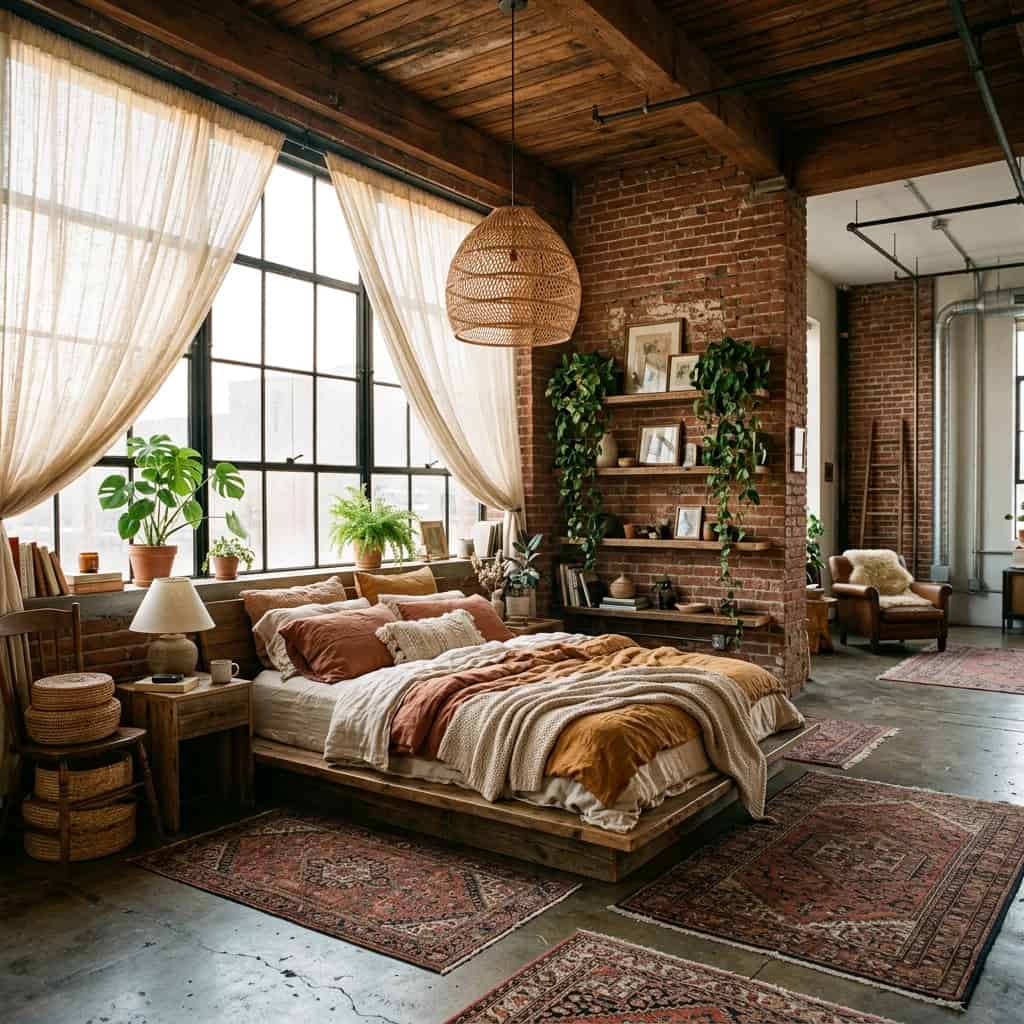
A bohemian loft bedroom makes creative use of the industrial architectural bones , exposed brick, concrete floors, steel windows, and visible structural beams , that loft spaces typically offer. Rather than softening or hiding these raw elements, boho loft styling layers natural textiles, warm lighting, rattan accessories, and abundant plants directly against the industrial surfaces to create a stunning material contrast.
The visual tension between raw industrial materials and warm organic textiles is precisely what makes bohemian loft bedrooms so compelling and photographically distinctive. Exposed brick beside linen bedding, concrete beside layered vintage rugs, and steel window frames beside sheer cream curtains , each pairing creates a contrast that makes both elements more beautiful than either would be alone.
- Industrial surfaces contrast beautifully with warm textiles
- Exposed brick needs no additional wall decoration
- Concrete floors welcome layered vintage rug warmth
- Steel window frames suit sheer cream curtain pairings
- Raw ceiling beams anchor rattan pendant placements
Loft bedrooms benefit from treating the ceiling height as a design asset rather than a challenge. Running floor-length curtains from ceiling to floor, hanging plants at multiple ceiling heights, and positioning tall bookshelves and ladder shelves that reach toward the beams all use vertical space in ways that make loft proportions feel intentional rather than awkward.
I’ve noticed that loft apartment dwellers who embrace rather than fight their industrial architectural elements consistently create more visually striking and personally satisfying homes than those who attempt to domesticate the raw surfaces with conventional finishes. The industrial bones are a gift, not a problem.
Boho Home Library Corner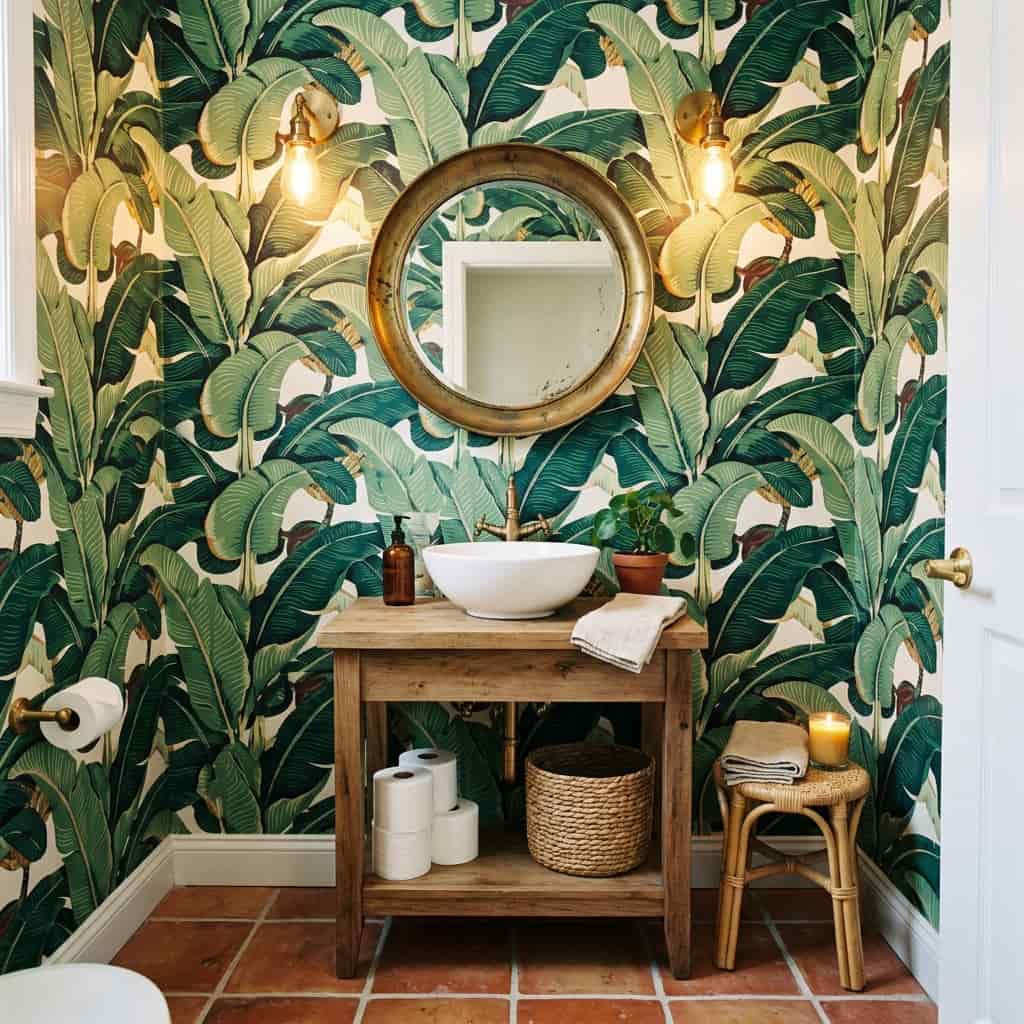
Floor-to-ceiling bookshelves covering an entire wall create the most intellectually and aesthetically rich feature wall any bohemian home can offer. Arranging books by spine color in warm earth tones , cream, rust, mustard, and brown , transforms the practical storage function of the shelving into a curated color installation of genuine beauty.
A rolling wooden library ladder leaning against color-arranged bookshelves is one of the single most visually compelling and aspirationally Pinterest-worthy elements any interior can contain. The combination of accessible height, warm wood tones, and the promise of a wall of books creates an image of home life at its most cultivated and comfortable.
- Color-arranged book spines create wall art installations
- Rolling library ladder adds incredible visual drama
- Rust velvet armchair invites extended reading sessions
- Brass floor lamp provides perfect directional reading light
- Small plants between book groups add organic breathing room
Arranging books by spine color rather than by author or subject requires a single afternoon of reorganization and produces a wall transformation of remarkable visual impact. Grouping cream and white spines together, warm rust and terracotta tones in the middle shelves, and mustard and brown tones in the lower section creates a gradient arrangement that reads as genuinely designed.
That color-by-spine approach also makes the bookshelf wall function as the room’s primary art installation, which means the adjacent walls can remain relatively calm and undecorated. One fully realized design feature always delivers more visual impact than four competing partial ones spread across all four walls simultaneously.
Boho Powder Room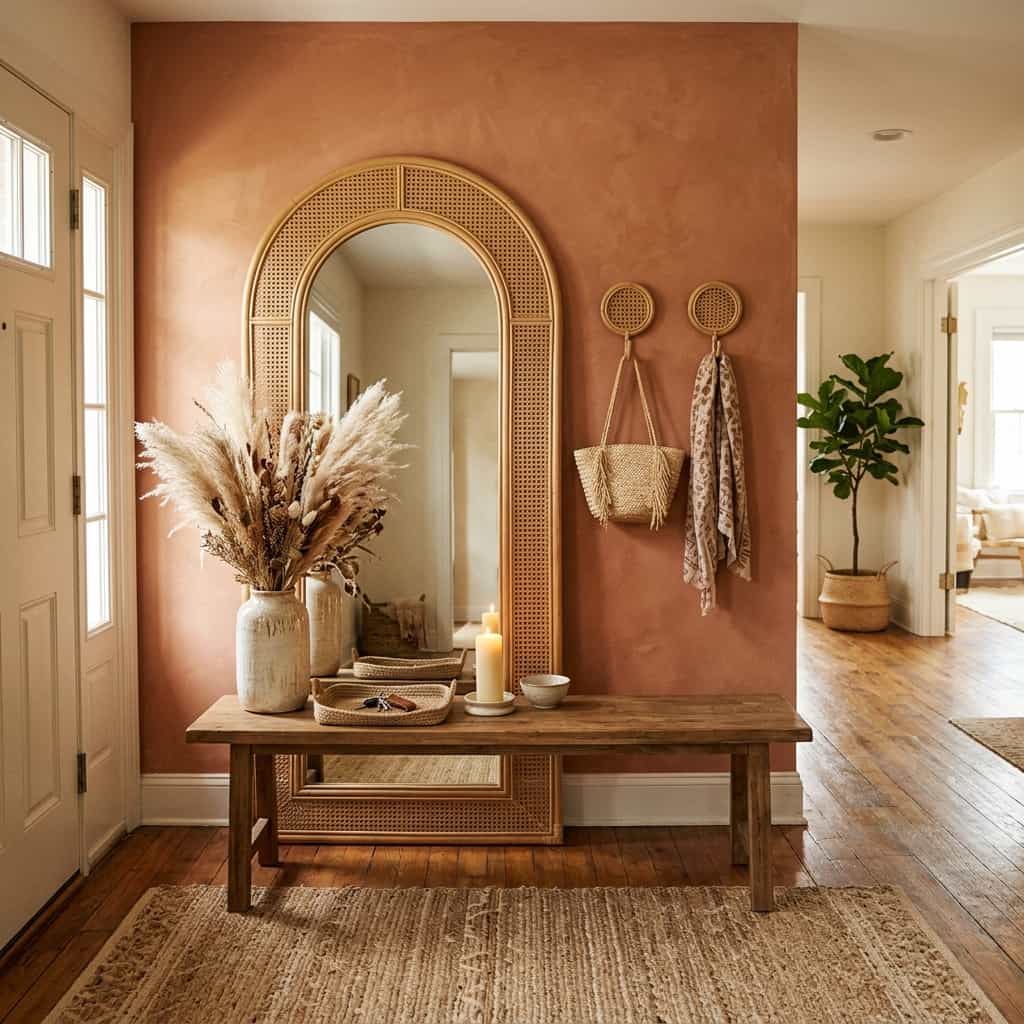
A powder room offers the most concentrated opportunity for bold bohemian interior expression in any home. Because of its small footprint and infrequent use for extended periods, the powder room tolerates dramatically bolder wallpaper, darker tones, and more daring material choices than any other room in the house without feeling oppressive to inhabit.
A large tropical leaf print wallpaper in deep green and cream creates an immersive, lush environment within a small powder room that feels genuinely transported , more botanical garden than bathroom utility space. Paired with aged brass fixtures, a vessel sink, and warm sconce lighting, the result is a room that surprises and delights every guest who enters it.
- Bold wallpaper suits small powder room scale perfectly
- Tropical prints create immersive botanical atmosphere
- Aged brass sconces add warm symmetrical lighting
- Vessel sink on wooden vanity adds natural warmth
- Terracotta floor tiles ground the lush green palette
I’ve noticed that powder rooms styled with bold bohemian choices become the most commented-upon rooms in any home almost without exception. Guests spend only two to three minutes in the powder room, which makes intense visual stimulation appropriate rather than overwhelming , the exact opposite of a bedroom where visual calm supports rest.
That’s why many interior designers recommend using the powder room as a testing ground for bold color and pattern choices that feel too risky for larger rooms. The small scale limits the financial investment, the limited daily exposure limits the risk of visual fatigue, and the guaranteed guest impact makes bold powder room choices the highest-return decorating investment in the home.
Boho Entryway Statement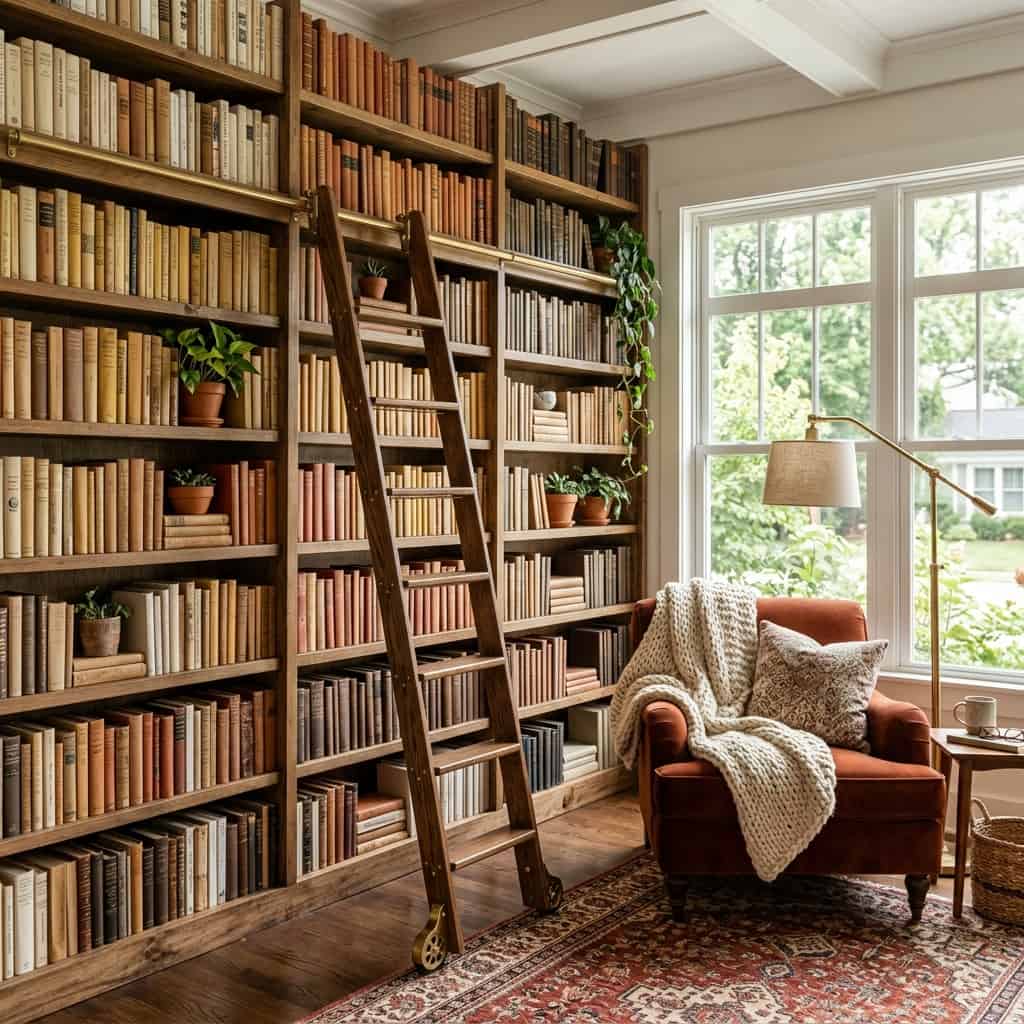
A large arched rattan mirror leaning against a terracotta limewash wall creates an entryway statement of genuine architectural drama that completely reframes the first impression any home makes. The oversized mirror reflects the warm wall color back into the space, doubling its visual warmth while making the narrow entryway feel significantly wider and taller.
Floor-leaning oversized mirrors suit bohemian entryways because their casual, unlabored placement communicates the same effortless, unhurried quality that defines the free-spirited aesthetic throughout the rest of the home. A perfectly centered, rigidly mounted mirror would feel too formal and controlled for a space that should signal relaxed welcome.
- Oversized leaning mirrors suit casual boho entry styling
- Arched rattan frame suits terracotta limewash walls
- Tall dried pampas creates strong vertical drama
- Floor-leaning placement communicates relaxed welcome
- Mirror doubles perceived entryway width and warmth
Choosing a mirror that reaches at least seventy percent of the ceiling height creates the most dramatic proportional impact in a standard-height entryway. A mirror that stops at mid-wall height looks like a compromise rather than a design choice, losing the imposing presence that makes oversized mirrors so visually commanding and Pinterest-worthy.
The entryway console styled with a tall dried botanical arrangement, a woven tray for daily essentials, and a single candle establishes the home’s aesthetic language immediately upon entry. Every guest forms their first impression of the home’s character from this three-object surface arrangement before seeing a single other room.
Earthy Tone Dining Room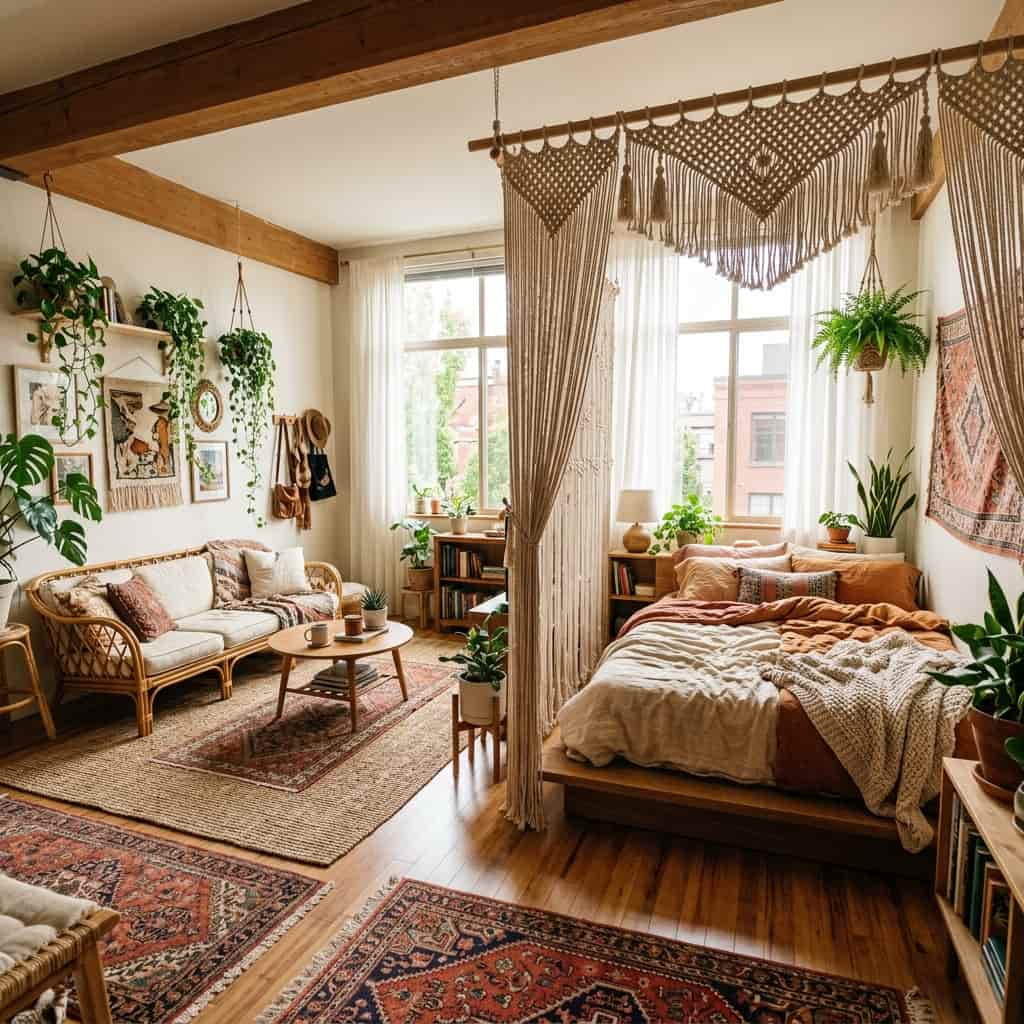
A dining room designed entirely in earthy tones , terracotta walls, reclaimed wood table, warm ceramic tableware, and amber pendant lighting , creates a space so atmospherically warm and visually cohesive that every meal served within it feels elevated simply by the beauty of the environment surrounding it. The room does half the entertaining work before food arrives.
Mismatched dining chairs unified by warm wood tones and cream linen seat pads create the collected, gathered-over-time quality that distinguishes genuinely bohemian dining rooms from conventionally furnished ones. No two chairs need to match , they simply need to share the same material warmth and tonal family.
- Terracotta walls create the warmest dining atmosphere
- Reclaimed wood table suits mismatched chair arrangements
- Handmade ceramic tableware completes the earthy story
- Rattan pendant cluster provides perfect intimate lighting
- Dried wheat stem centerpiece costs almost nothing
Setting a dining table with handmade ceramic plates, linen napkins folded casually rather than formally, terracotta candle holders, and a low dried botanical centerpiece takes less than ten minutes and transforms the practical act of serving food into a genuinely beautiful, atmospheric daily ritual worth lingering over.
I’ve seen earthy tone dining rooms inspire guests to stay at the table two to three hours longer than they planned simply because the environment feels so inherently comfortable, warm, and conducive to unhurried conversation. The room’s beauty actively encourages the slow, connected dining experience that the bohemian home philosophy values most.
Boho Studio Apartment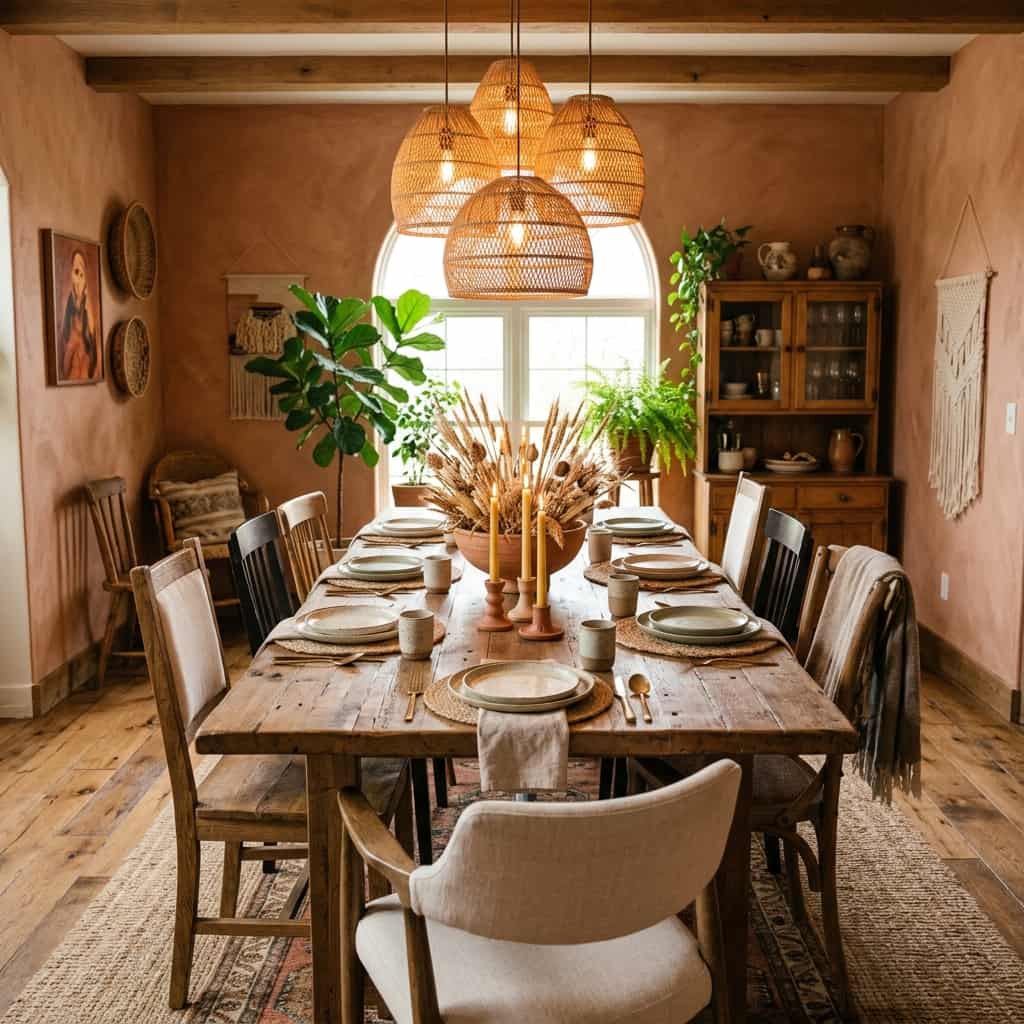
A bohemian studio apartment demonstrates that the most joyful, visually rich homes do not require large floor plans , they require intentional layering, thoughtful zone definition, and generous use of natural materials at every height and surface. A well-styled studio can feel more inspiring and personal than a poorly styled house ten times its size.
Zone definition without physical walls , using a macramé curtain divider, a strategic rug placement, or a bookshelf room divider , creates the psychological sense of separate rooms within a single open space. That mental separation between the sleeping area and the living zone dramatically improves both the functionality and the daily livability of studio apartment life.
- Zone definition creates multiple rooms without walls
- Macramé curtain divider maintains light and openness
- Ceiling-height curtains make studios feel dramatically taller
- Layered rugs across the whole floor unify all zones
- Plants at multiple heights fill vertical space beautifully
Keeping the entire studio apartment within a single warm color palette , cream, rust, and natural wood , prevents the small space from feeling fragmented by competing visual stories in adjacent zones. That palette consistency across furniture, textiles, and accessories is the single most important discipline for making small open-plan spaces feel coherently designed.
That’s why many small-space interior designers begin studio apartment styling projects with the palette decision rather than the furniture layout. Choosing three tones and applying them consistently across every zone before purchasing or placing a single piece of furniture produces significantly more cohesive and satisfying results than building zone by zone independently.
Boho Rooftop Terrace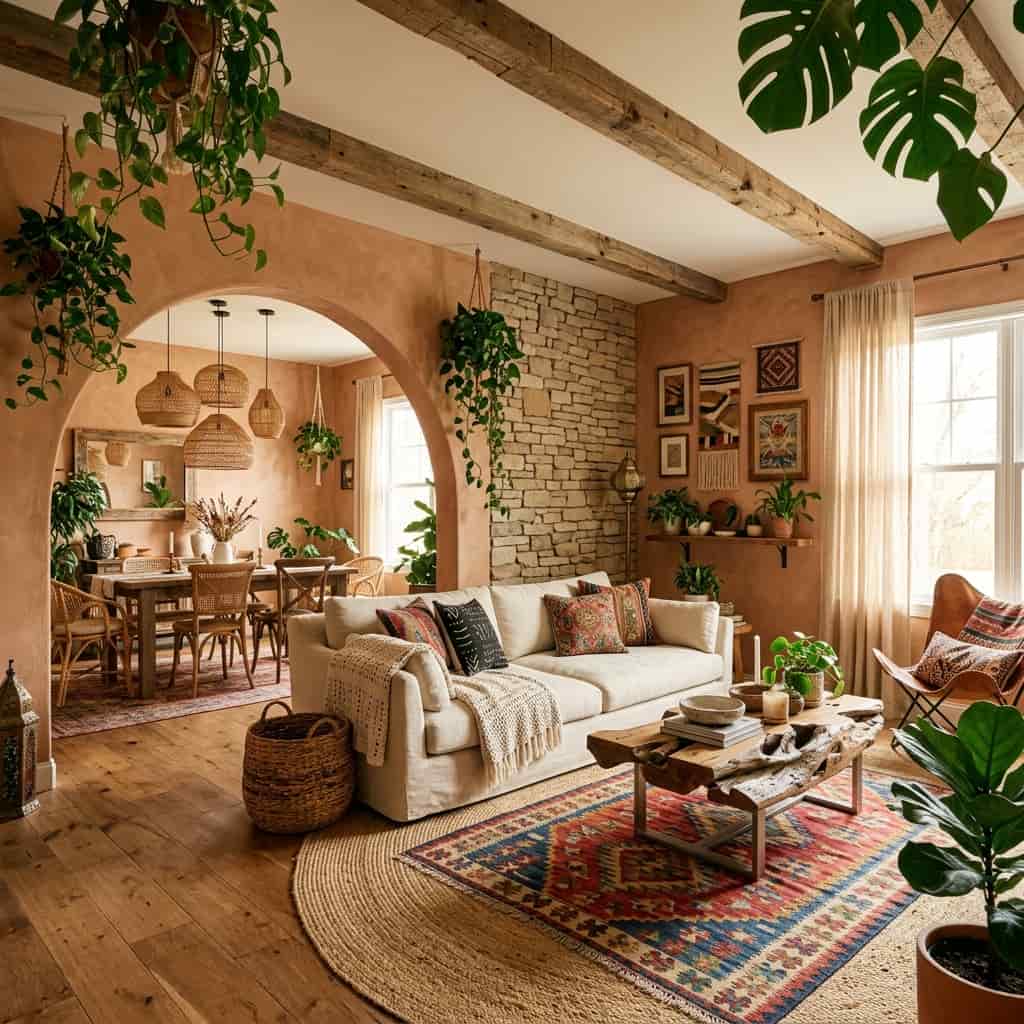
A rooftop terrace styled with a bohemian sensibility becomes the most extraordinary outdoor room a city home can possess. Low wooden daybeds, string light canopies, terracotta olive trees, and warm candlelight against an urban skyline backdrop create an outdoor living space of genuinely cinematic beauty that makes urban apartment living feel like a genuinely privileged experience.
Treating the rooftop as a true outdoor room rather than an occasional overflow space requires the same layered styling approach that interior bohemian spaces demand , rugs, cushions, plants, lighting, and accessories working together to create a complete atmospheric environment rather than a sparsely furnished outdoor platform.
- Outdoor daybed creates a luxurious rooftop focal point
- String light canopy extends usable hours into midnight
- Olive trees in terracotta suit rooftop conditions perfectly
- Layered outdoor cushions match interior textile palette
- Low coffee table keeps the rooftop feeling relaxed
Weather-resistant outdoor versions of interior boho materials , teak and eucalyptus wood, all-weather rattan, UV-resistant linen-look fabrics, and terracotta , allow the rooftop’s aesthetic to match the interior’s material language precisely. That indoor-outdoor visual continuity makes the rooftop feel like a genuine extension of the living space rather than a separate, differently styled outdoor area.
Planting a rooftop terrace perimeter with fragrant varieties , lavender, rosemary, jasmine, and trailing nasturtiums , adds sensory richness beyond the visual. The scent of a fragrant rooftop garden at sunset, combined with warm string light glow and the sounds of a city settling into evening, creates an experience of urban outdoor living at its absolute finest.
Complete Boho Interior Vision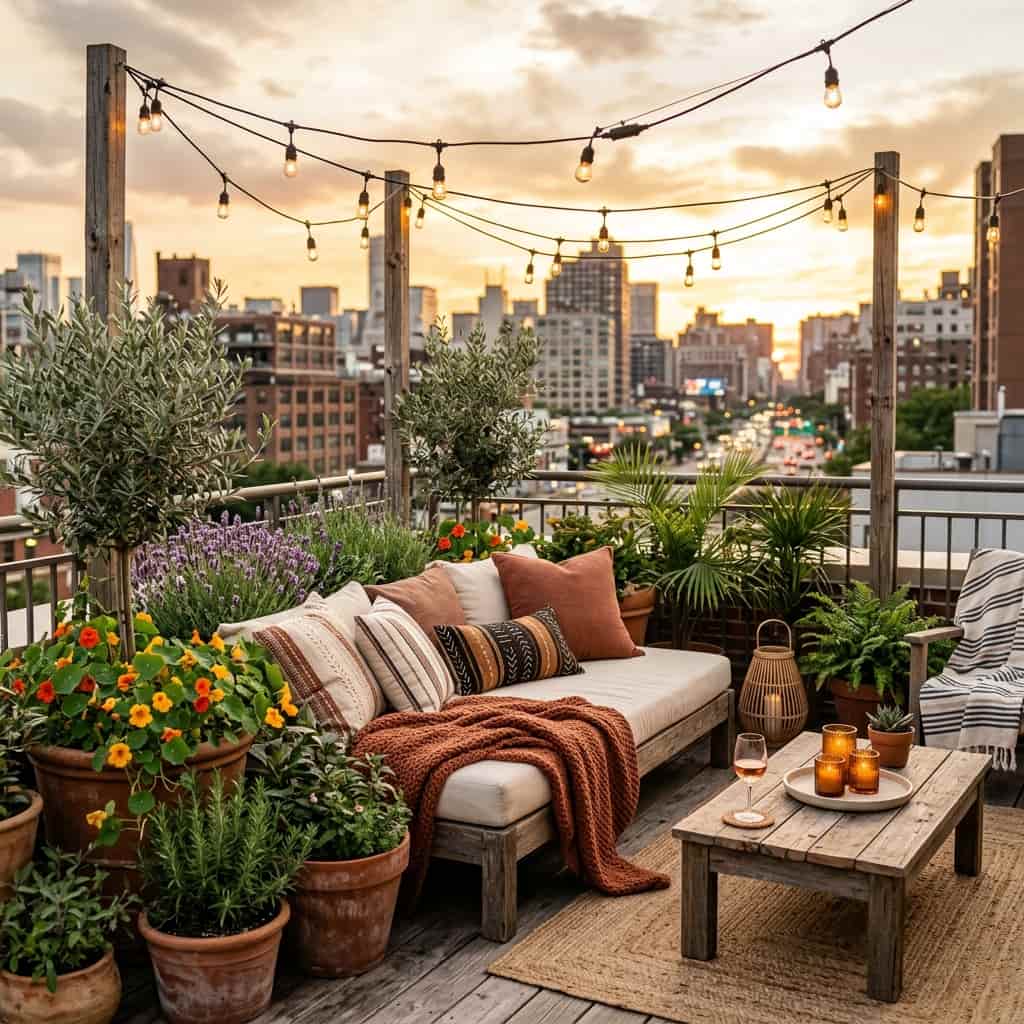
Every great bohemian interior begins as a vision of how a home should feel before a single object is purchased or a single wall is painted. The feeling comes first , warm, layered, globally curious, imperfect, alive with plants and handcraft, and unmistakably personal. Every specific design decision then serves that feeling rather than following a trend or replicating a showroom.
The twenty-six bohemian interior design ideas in this guide together describe a complete home philosophy as much as a decorating approach. Curved arches, limewash walls, reclaimed beams, global textiles, handmade ceramics, trailing plants, and aged brass fixtures are not isolated styling choices , they are a coherent language of warmth, nature, and human craft speaking consistently throughout every room.
- Every design choice must serve the feeling first
- Natural materials create whole-home visual language
- Imperfection and personality define every boho space
- Build the vision room by room, not all at once
- Personal meaning elevates any object above its cost
Starting with one room, one wall, or even one corner and applying the principles of layering, natural materials, and personal meaning produces momentum that eventually carries through every space in a home. The process is genuinely cumulative , each styled room makes the next one easier and more confident to approach.
I’ve seen people completely transform their relationship with their own homes by committing to one bohemian interior idea per month over the course of a single year. Twelve months, twelve intentional changes, and the home becomes a place they genuinely love inhabiting rather than simply a shelter they return to at the end of each day.
Conclusion
Every beautiful, soul-filled bohemian home started with one single intentional choice , a limewash paint sample tested on a wall, a rattan mirror leaned against an entryway, a trailing pothos hung from a ceiling hook, or a handmade ceramic placed on a plain wooden shelf. These twenty-six bohemian interior design ideas prove that creating a home filled with warmth, personality, and genuine beauty requires no unlimited budget and no professional design degree. It requires only curiosity, patience, and a willingness to choose meaning over matching. I’ve seen the right interior choices completely transform how people feel inside their own homes every single day. Save this article on Pinterest, choose one idea to try this weekend, and share it with anyone ready to make their home feel exactly like the free-spirited, beautiful space they have always imagined it could be.
Frequently Asked Questions
What defines bohemian interior design in 2026?
Bohemian interior design in 2026 combines natural materials like rattan, jute, linen, and reclaimed wood with global textiles, handmade ceramics, trailing plants, and warm earthy tones. The style celebrates imperfection, personal meaning, and the slow accumulation of collected objects over matched furniture sets and rigid decorating rules.
How do I start a bohemian interior makeover on a small budget?
Start with three high-impact changes under one hundred dollars total , a limewash paint sample on one wall, one trailing plant in a terracotta pot, and two throw pillows in earthy rust or mustard tones. These three additions immediately shift any room’s warmth, texture, and personality toward a genuine free-spirited aesthetic.
What colors work best for bohemian interior styling?
Terracotta, rust, mustard, sage green, warm cream, deep burgundy, and soft ochre form the core bohemian color palette for 2026. These earthy, nature-rooted tones complement natural materials beautifully and work equally well in both bright natural daylight and warm amber evening lamp light throughout every room type.
Can I achieve a bohemian interior look in a rental apartment?
Yes, completely. Limewash paint in rentals requires landlord permission but peel-and-stick versions exist for strict rentals. Leaning mirrors, removable adhesive hooks for macramé and baskets, freestanding ladder shelves, layered rugs, and plug-in pendant lights all create a full bohemian atmosphere with zero permanent wall damage or deposit risk.
What natural materials define the bohemian interior aesthetic?
Rattan, jute, linen, cotton, reclaimed wood, terracotta clay, seagrass, bamboo, natural stone, and aged brass are the core material vocabulary of bohemian interiors. These organic textures share a warm, earth-connected quality that makes them visually harmonious together even when individual pieces come from completely different global craft traditions and style periods.
How do I make a small apartment feel bohemian without overcrowding it?
Focus on vertical layering rather than horizontal accumulation. Ceiling-hung plants, floor-to-ceiling curtains, tall ladder shelves, and wall-mounted macramé add visual richness without consuming floor space. Keep large furniture pieces neutral and introduce personality through textiles, plants, ceramics, and wall art rather than additional furniture pieces.
What is the difference between bohemian and maximalist interior design?
Bohemian design builds richness through natural materials, global craft, personal meaning, and organic textures within an earthy color framework. Maximalist design accumulates objects, patterns, and colors across all categories simultaneously without a specific material or cultural anchor. Boho spaces feel warmly collected and nature-connected. Maximalist spaces feel deliberately abundant and visually bold throughout every surface and corner without a single unifying material philosophy.